Florida’s Bayfront College Campus Where The Sunset Steals Every Evening
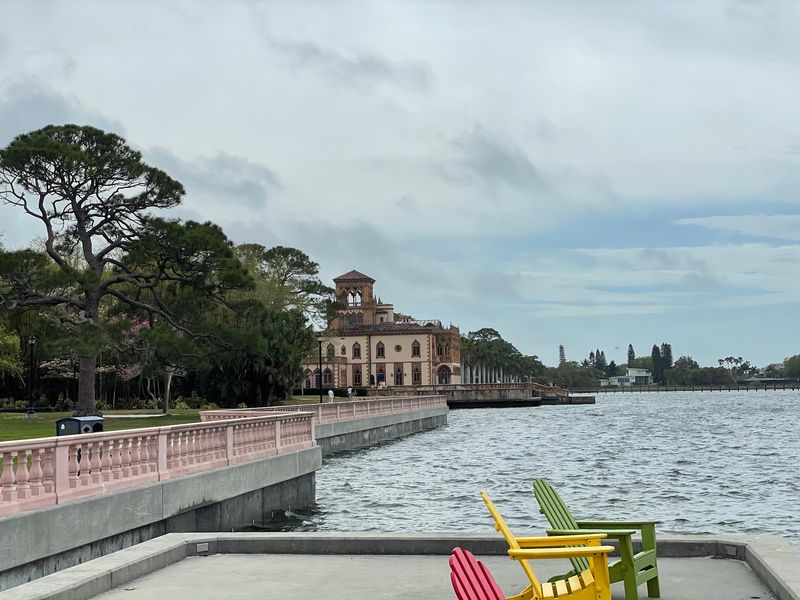
I went looking for a quiet place to sit by the water and ended up on a college lawn with pelicans for company. Florida has plenty of pretty shorelines, but this one sits behind classroom buildings, old mansions, and a boathouse.
The bay turns gold, then pink, then something close to purple while the campus goes about its day. Bring a folding chair, arrive early, and let the sky do the rest.
A Campus That Meets the Water
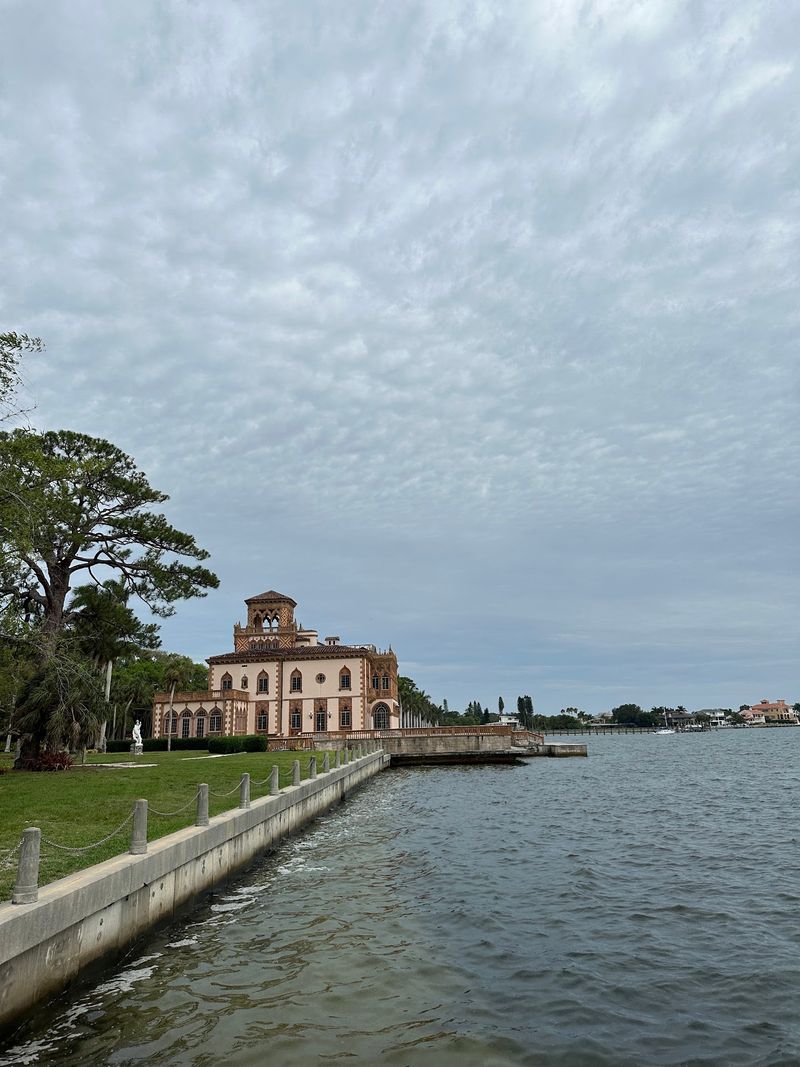
Grass gives way to sand, and sand gives way to Sarasota Bay. That is the whole layout of the Bayfront at New College of Florida, a public liberal arts college on Florida’s Gulf Coast.
The campus spreads across well over a hundred acres, with a long edge running right along the water. A private beach, a boathouse, and a clean, open lawn face west, which is exactly the direction you want when the sun starts sinking.
The grounds sit inside a larger public district that blends education, culture, and history, so the neighbors are museums and gardens instead of strip malls.
From the road, it looks like an ordinary school. Brick paths, parking areas, students hauling backpacks.
Walk a few minutes toward the bay, though, and the whole mood shifts. Mangroves frame the shoreline, boats drift past, and the horizon opens wide enough to make a person stop mid-step.
I came expecting a quick look. I stayed long enough to watch the light change three times.
The Bayfront itself is listed at 351 College Dr, Sarasota, Florida 34234, on the northern edge of the city near the airport and the Ringling museum grounds.
From Circus Estate to Classroom
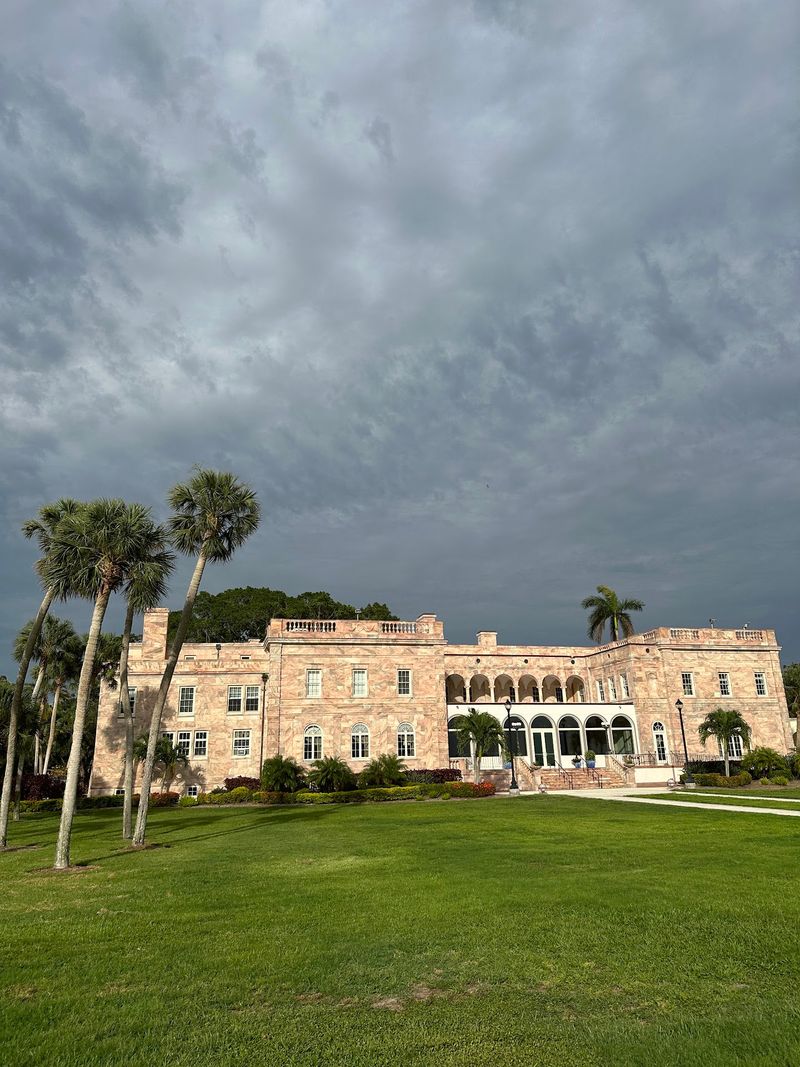
Long before lecture halls, this shoreline belonged to the Ringling family. Charles Ringling, one of the famous circus brothers, built his estate here, and his taste for grand homes still shapes the waterfront today.
Picture a winter retreat for a circus magnate: marble, wide porches, lawns rolling down to the bay. Those bones remain.
When the college took over the land, it kept the historic mansions and gave them new jobs as classrooms, offices, and reception spaces. The shift from private playground to public campus happened gradually, and the result feels layered instead of patched together.
Here is a fun detail. A student-run vegetarian cafe called the Four Winds sits inside a converted barn that once sheltered Ringling’s elephants.
Few colleges in Florida can claim anything like that, and it makes a sandwich taste a little more interesting.
The circus connection explains why the neighborhood holds so much culture. The John and Mable Ringling Museum of Art shares the same broader district, which means art, history, and the bay all line up within walking distance.
Understanding this backstory changes how the sunset feels. You are watching it from the same lawn a showman once chose for his own evenings.
Three Mansions on the National Register
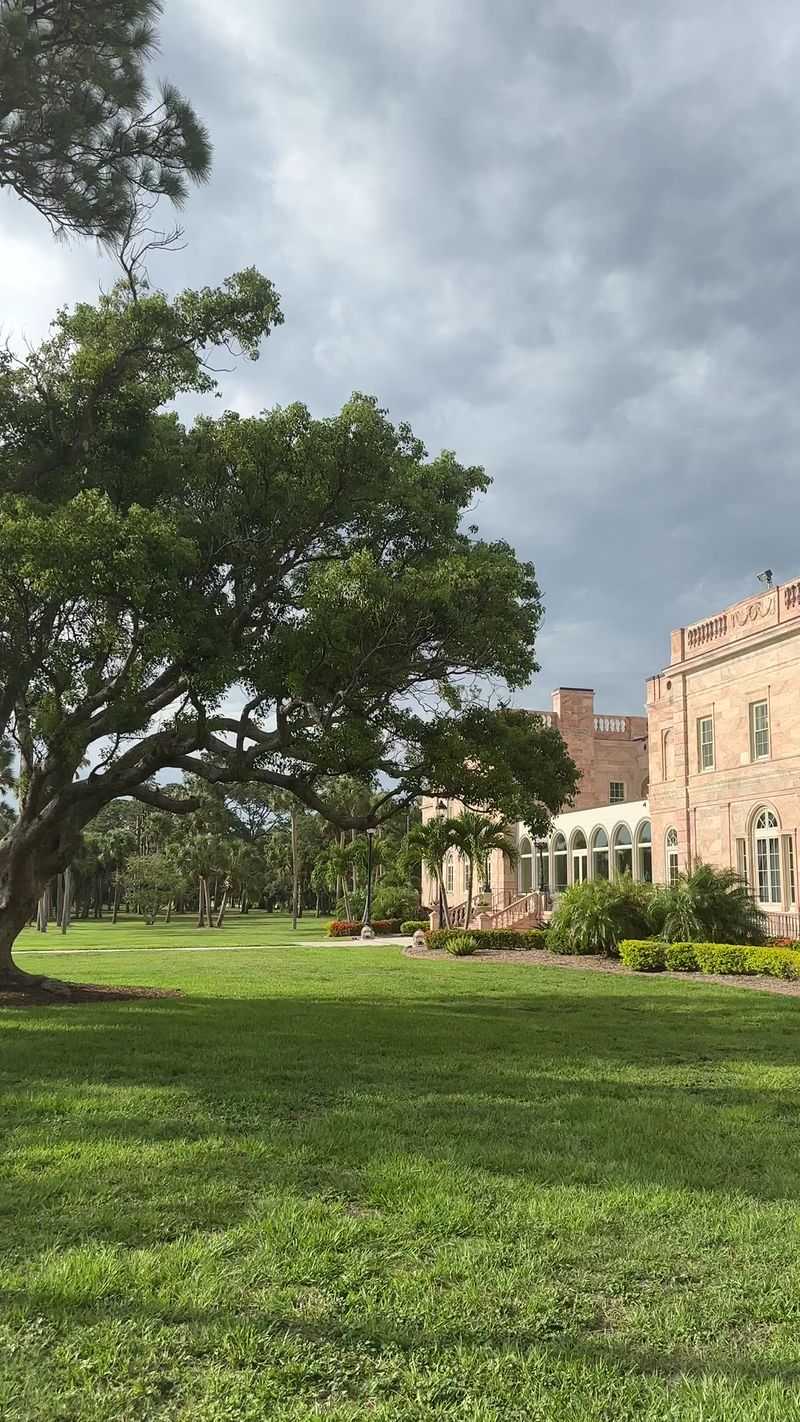
Marble steps, tall windows, and a view straight across the water. College Hall is the showpiece, and its steps rank among the finest seats on campus when evening arrives.
Three Gilded Age mansions stand along the bayfront: College Hall, Cook Hall, and Caples Hall. All three appear on the National Register of Historic Places.
They were built as homes for wealthy families, and the craftsmanship shows in the rooflines, porches, and heavy doors.
What surprised me most was how lived-in they feel. Instead of velvet ropes, you see notice boards and students cutting across the lawn with coffee.
These buildings host classes and meetings, not guided tours, so treat them as working spaces and keep voices low near open windows.
Around sunset, College Hall’s steps become a natural gathering spot. The stone holds a little warmth from the afternoon, and the bay spreads out below like a stage.
A couple sat two steps above me, sharing headphones and saying nothing, which seemed like the right idea.
Photographers, take note. The mansions look best with the sky lit up behind you, so shoot them first, then turn around for the water.
I.M. Pei Brings the Modern Side
Could two campuses be hiding inside one? Walk away from the old mansions and the architecture flips from Gilded Age elegance to bold, geometric modernism.
The famed architect I.M. Pei designed several buildings here, including student residences and the Hamilton Student Center.
Clean lines, repeating shapes, and courtyards define his work on this campus. It is a striking contrast with the ornate homes by the water, and the pairing makes the grounds feel like a small architecture lesson you can stroll through.
Palm Court sits among the Pei residences and serves as a social hub. Nearby, a sunken green called The Lawn rests at the base of the Four Winds Sculpture, with built-in benches that invite a pause before heading to the bay.
Because a highway splits parts of the campus, a pedestrian bridge links the sections. Crossing it gives a quick overview of how the college stretches from modern dorms toward the historic shoreline.
My advice: start on the Pei side in the late afternoon, wander through the courtyards, cross the bridge, and time your arrival at the water for golden hour. The walk builds toward the view like a good story.
The Back Yard Overlooking Sarasota Bay
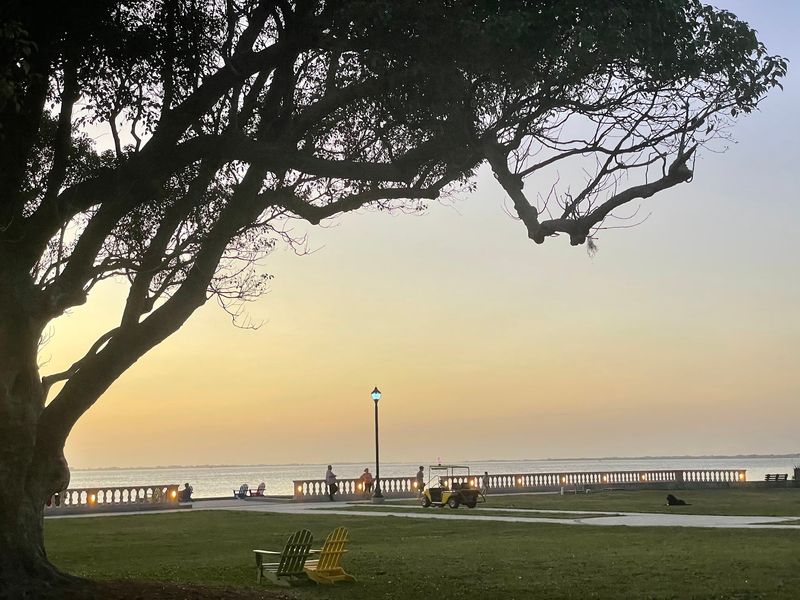
Soft grass underfoot, the smell of salt, and a breeze that tugs at your hat. The lawn behind the historic buildings works like a giant back yard pointed straight at the bay.
It is kept tidy, with open space for a blanket and enough shade from old trees to wait out the harsher afternoon sun. Paths lead to the edge of the water without much effort, which makes this a friendly stop for grandparents and anyone who would rather not hike.
Nothing here is fancy, and that is part of the appeal. You will not find vendors, loud speakers, or crowds jostling for a spot on a normal evening.
Just the lawn, the bay, and a handful of people doing the same thing you are.
I laid out a towel, set down a thermos of iced tea, and watched a heron stalk the shallows like it had somewhere important to be. Ten minutes later, it was still standing in the exact same place.
Bring a light blanket, bug spray for dusk, and something to drink. Pack out anything you bring in, since this is a working campus that stays clean because people respect it.
Where the Sun Drops Into the Bay
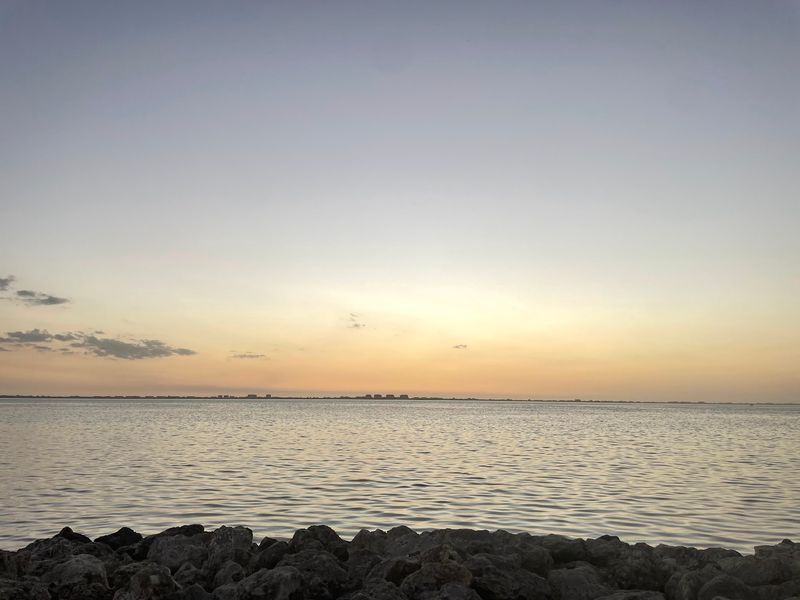
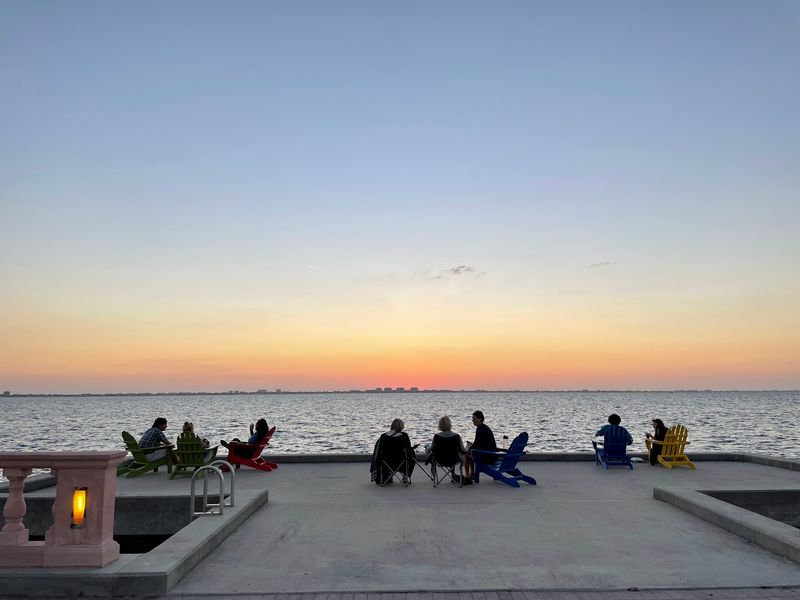
Around the last hour of daylight, the bay goes quiet and the sky starts showing off. Orange spills across the water first, then a band of pink, then a deep violet that lingers longer than you expect.
Facing west gives this shoreline a front-row seat. The sun slides down behind the far side of the bay, and the reflection stretches almost to your feet.
Clouds help. A few scattered ones catch the color and turn the whole show into something closer to a painting.
Timing matters in Florida. Summer sunsets arrive late and often follow afternoon thunderstorms, which can leave dramatic skies behind.
Winter brings earlier evenings, cooler air, and crisper colors. Check a sunset time app before leaving home, then arrive twenty or thirty minutes ahead.
Do not pack up the moment the sun disappears. The ten minutes after sunset often bring the strongest color, when the sky glows from below the horizon.
I stayed through that afterglow and watched the water turn from copper to steel gray. A sailboat drifted home with its lights just coming on.
Nobody on the lawn said a word, and nobody needed to.
A Private Beach With Public Charm
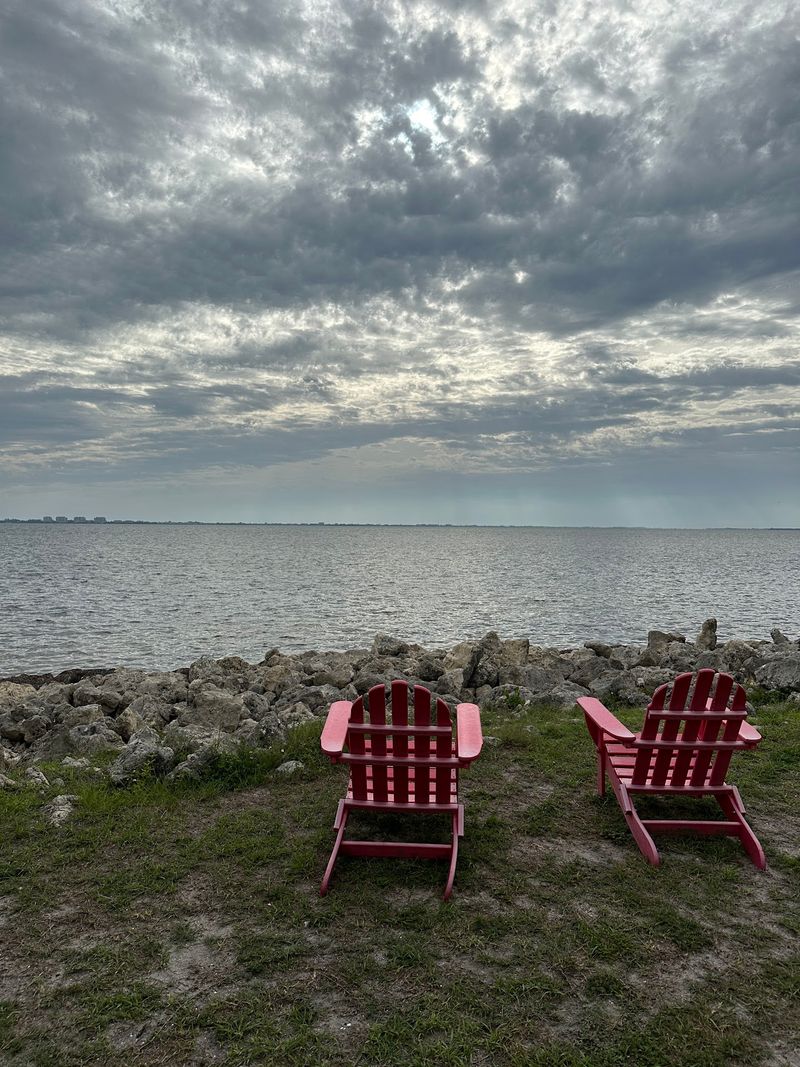
Most colleges offer a quad. This one offers a strip of sand along the water.
The private beach belongs to the college, and its purpose leans toward the campus community. Students swim, lounge, and launch small boats from here.
The water is calm bay water rather than crashing Gulf surf, so expect gentle ripples, mangroves, and the occasional mullet jumping for no clear reason.
Access follows campus rules, and the beach and boathouse keep sunrise to sunset hours. Since the Bayfront is part of a working university, treat it as a guest would treat a neighbor’s dock.
Stay respectful, keep noise down, and check current policies with the college before planning anything bigger than a stroll.
Wildlife adds plenty to the scene. Pelicans cruise low over the surface, wading birds poke through the shallows, and on lucky days a dolphin fin cuts the water offshore.
Manatees also travel Sarasota Bay, especially in warmer months, so scan the surface for slow, round shapes.
Footwear tip: bay bottoms can hide shells and oyster bits. Water shoes are a smart choice if you plan to wade even a short distance from the sand.
Kayaks, Paddleboards, and Sailboats at the Boathouse
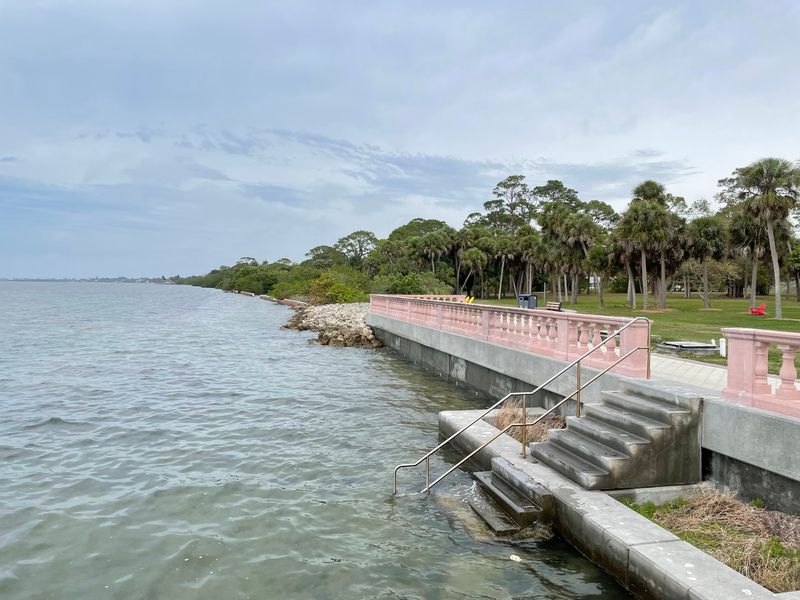
Students here can paddle to class, figuratively speaking. The Waterfront Program and Boathouse on the Caples Campus stocks kayaks, paddleboards, and sailboats for the college community.
The Sailing Club takes it further by offering free sailing and kayaking lessons. That means a first-year student who has never held a paddle can end the semester tacking across Sarasota Bay.
For a campus in Florida, that feels like a fitting skill to graduate with.
Seen from shore, the boathouse area has a relaxed energy. Kayaks rest on racks, a paddleboard leans against a post, and someone is always rinsing gear with a hose.
Late afternoon brings small boats back in, often timed to catch the colors on the return trip.
For outsiders, these programs serve students and the campus community, so they are not a rental shop. If you want your own paddle on the bay, Sarasota has public launches and outfitters nearby, and joining the water traffic at sunset is a lovely way to see the campus from the other side.
From the lawn, though, simply watching the boats glide past the mansions offers plenty of entertainment. No wet clothes required.
A 400-Foot Dock Built for Science
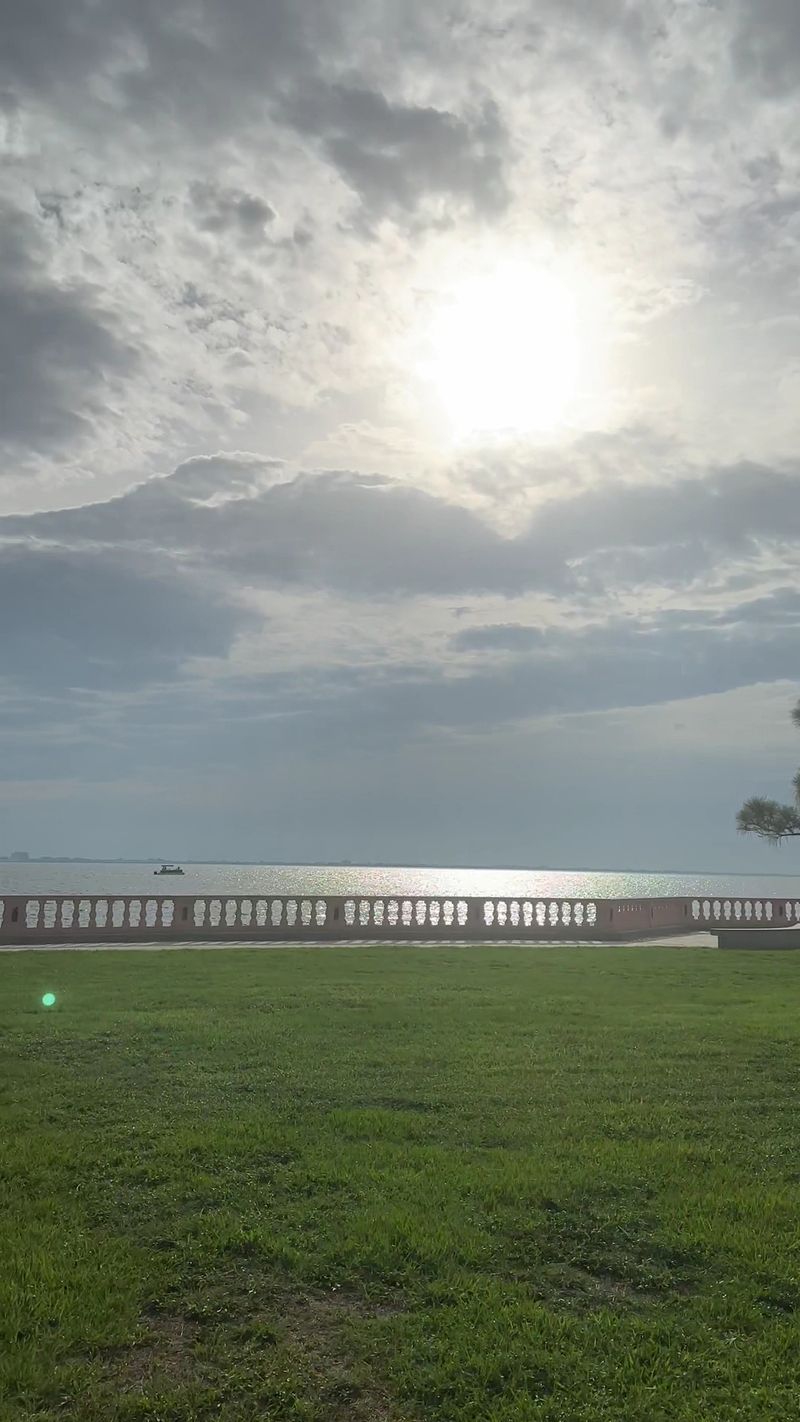
Stretching roughly 400 feet into Sarasota Bay, the dock is the longest straight line on the shoreline. It was completed in 2021 using environmentally friendly materials, which suits a college that studies the very water beneath it.
Marine biology research vessels tie up here alongside recreational boats. That mix tells you a lot.
One boat might carry students heading out to sample seagrass, while another carries a sailor in no hurry at all.
From the lawn, the dock draws the eye straight out toward the horizon. At sunset, it becomes a built-in composition line for photos, leading from the shore to the glowing water.
Silhouettes of anyone standing on it turn into instant postcards.
Access to the dock may be limited for safety and research reasons, so enjoy it from the shore unless posted signs or campus staff say otherwise. The view from land works just fine.
For a quick science lesson, look below the surface near the shoreline on calm days. Small fish dart through the shallows, crabs scuttle along the edges, and the bay reveals just how busy it is when nobody is splashing around.
Weddings and Celebrations by the Water
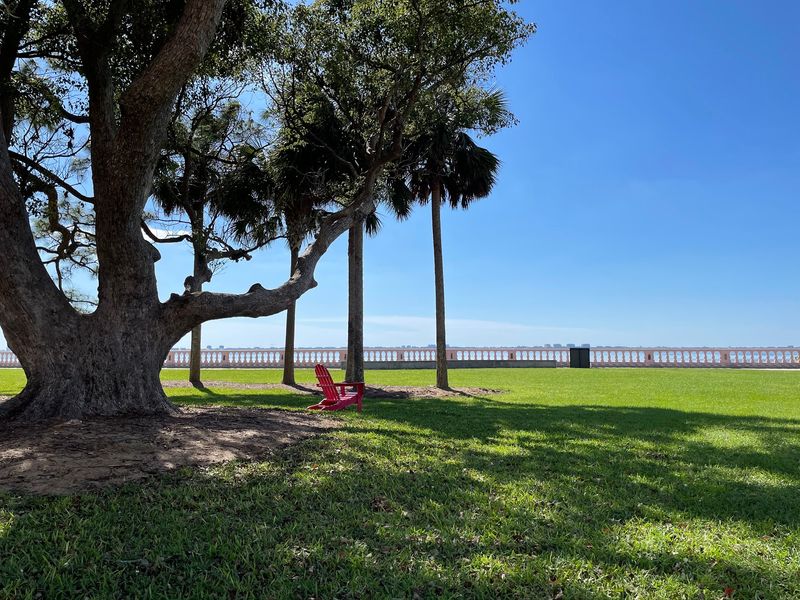
White tents on the grass. Tables set in neat rows.
A jazz combo warming up while the sky turns peach. On some evenings, the Bayfront hosts a celebration, and the setting makes it easy to see why.
Weddings and special events use the lawn and historic backdrop. With mansions on one side and open bay on the other, a couple hardly needs decorations.
The sunset handles the lighting, and the breeze handles the air conditioning, at least most of the year.
Stumbling onto an event is part of the charm, but it also calls for good manners. Keep a respectful distance, avoid photographing guests, and find another patch of shoreline to enjoy.
There is plenty of room along the water.
Anyone thinking about hosting something here should reach out to the college directly for rental details and availability. Event policies, fees, and dates change, so skip the guesswork and ask.
I caught the tail end of one such evening, with soft music drifting across the lawn as the last light faded. It felt like overhearing a happy ending to a story I would never know, and I walked back to my car smiling anyway.
Campus Atmosphere and Who It Suits
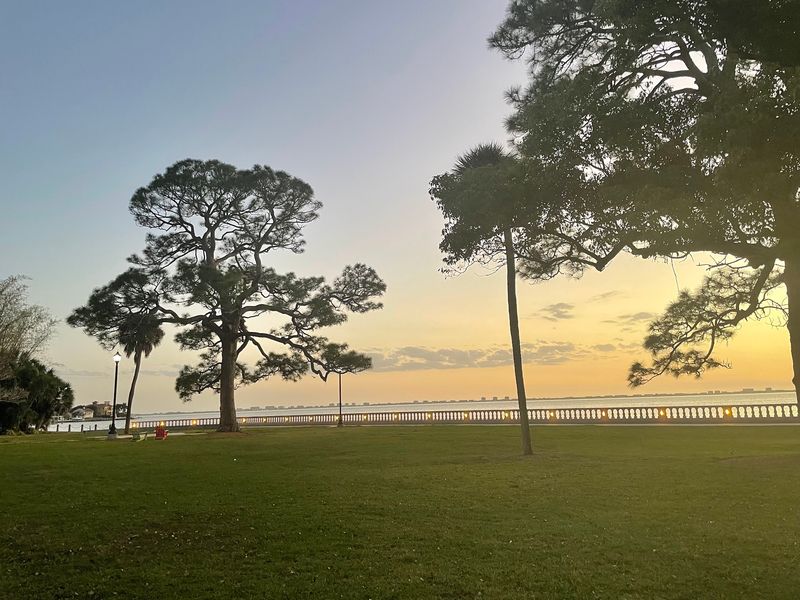
Quiet thinkers will feel at home here. New College is a small public liberal arts school, and the campus mood reflects it: thoughtful, relaxed, and a little independent.
Students read under oak trees, cluster at Palm Court, and grab plant-based meals at the Four Winds cafe. Academic intensity runs underneath everything, yet the bay softens the edges.
It is hard to stay stressed when a pelican is gliding past your study spot.
For outsiders, the Bayfront suits a certain kind of outing. Couples on a low-key date night, photographers chasing color, retirees who want an easy stroll with benches nearby, and prospective students touring Florida colleges all fit right in.
Families with young kids can enjoy the lawn too, as long as everyone remembers this is a school, not a park with a playground.
Noisy groups, drones, and big picnics do not match the setting. Keep things simple and respectful.
I noticed a student practicing guitar near the water, softly, as if the bay were the only audience. Nobody asked him to stop.
That sort of easy coexistence captures the place better than any brochure could.
Neighbors Worth Pairing With Your Evening
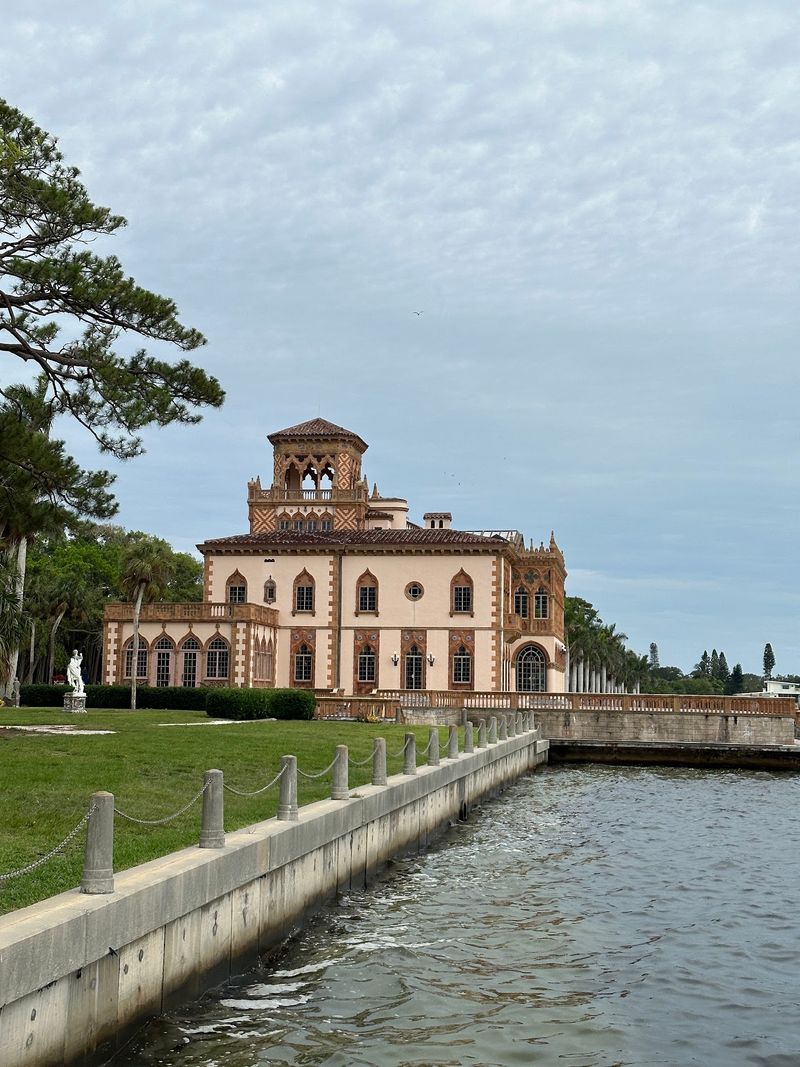
Why stop at the sunset? The Bayfront sits inside a larger cultural and historic district, and the neighbors make a full afternoon easy to plan.
Right next door, The John and Mable Ringling Museum of Art spreads across sprawling grounds with galleries, gardens, a circus museum, and the Ca d’Zan mansion on the water. Spending the afternoon there and wandering over to the college for sunset makes a natural pairing, since both share the same Ringling roots.
Downtown Sarasota lies a short drive south along the bay, with restaurants, shops, and a walkable waterfront. Farther west, the barrier island beaches of Lido Key and Siesta Key bring the Gulf surf the bay lacks.
My own plan went like this: museum galleries after lunch, a slow walk through the rose garden, a snack break, then a drive to the college lawn with a blanket. The timing worked perfectly, and my feet only complained a little.
Check the museum’s schedule before heading out, since its hours differ from the open campus grounds. Pack water, sunscreen, and patience for weekend traffic along the main roads during Florida’s busy winter season.
Getting There and Planning Your Visit
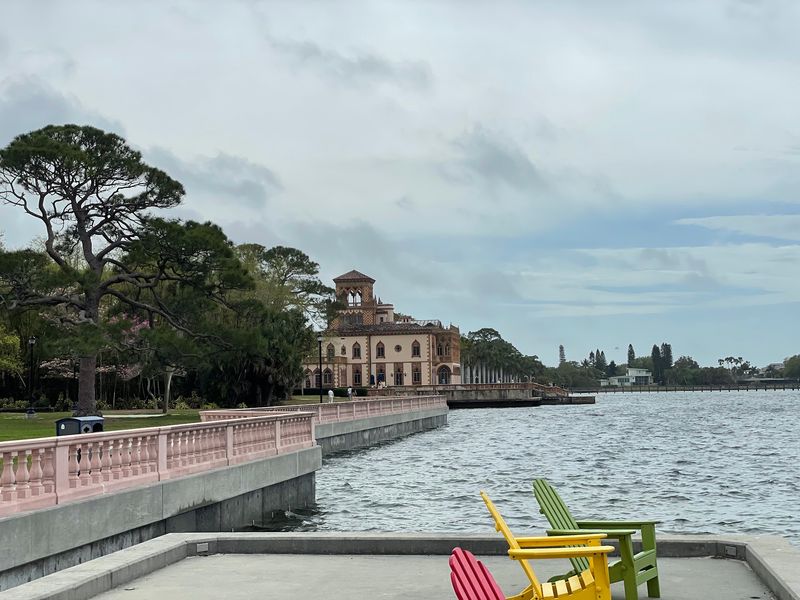
Finding the Bayfront is simple. The campus sits in north Sarasota, close to Sarasota Bradenton International Airport and a short hop off US-41, the Tamiami Trail.
From Tampa, plan roughly an hour south via I-275 and I-75, depending on traffic.
The Google listing shows the grounds as open around the clock, though the beach and boathouse keep sunrise to sunset hours. Access and parking follow campus rules, so check the college website or call ahead about visitor parking before driving out.
Admission to walk the grounds carries no fee as far as public information shows, but policies can shift.
Hurricane season runs June through November. During those months, glance at the weather before leaving, since afternoon storms roll in fast and the waterfront is no place to wait out lightning.
A few tactics help. Arrive thirty minutes before sunset.
Bring bug spray for the no-see-ums that appear at dusk. Wear comfortable shoes for crossing the pedestrian bridge and walking the paths.
Also pack a flashlight or phone light. Once the color fades, the walk back to your car gets dark quickly under the trees.
Why Florida’s Bayfront Campus Earns a Sunset Visit
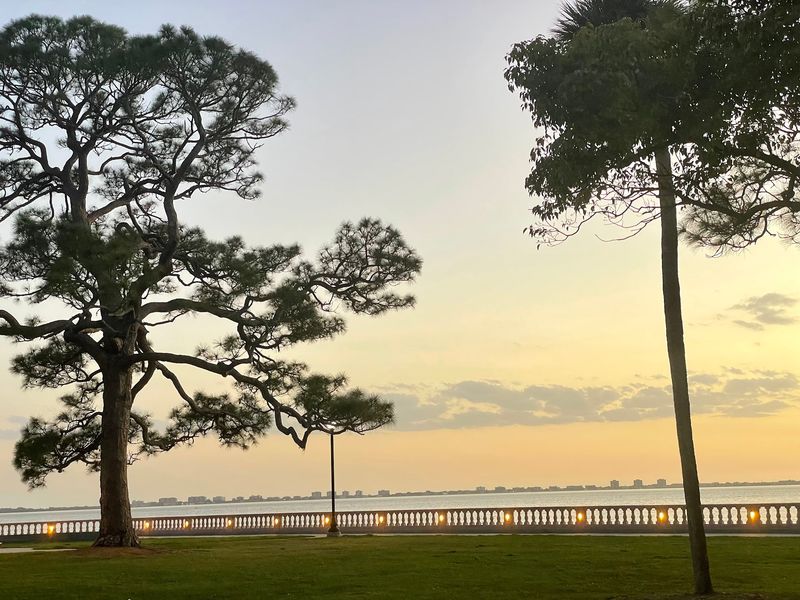
Ask me what I remember most, and the answer is not the architecture or the history. It is the hush that settled over the lawn as the last sliver of sun slipped into the bay.
Plenty of Florida waterfronts offer pretty evenings. This one layers them with circus-era mansions, I.M.
Pei modernism, a research dock, a tiny beach, and a boathouse full of kayaks. It feels less like a scenic overlook and more like a place with a life of its own that happens to share its view.
Treat it kindly. Respect the students, give any events their space, and leave the lawn as clean as you found it.
In return, the Bayfront hands over one of the calmest sunsets on the Gulf Coast without asking for a ticket.
Go on a weekday in winter if you can, when the air is cool and the sky tends to stay clear. Pair it with the Ringling museum next door, bring a blanket and a snack, and stay past the moment the sun disappears.
The best color usually comes a few minutes later, when almost everyone else has already packed up.