9 Georgia Places That Preserve The Story Of The State’s Native American Past
Every road in Georgia runs across much older ground. Long before highways, peach orchards, or city skylines, thriving Native American communities shaped this land.
They built towns along rivers. They farmed corn, beans, and squash.
They raised great earthen mounds by hand, one basket of soil at a time, and several still rise above the fields today. I find that thought powerful.
The past here is not only in books. It sits right in the landscape, waiting for curious visitors.
Some sites protect ancient ceremonial mounds. Others honor the Cherokee and Muscogee people through museums, restored buildings, and peaceful walking trails.
Each one offers a chance to learn, reflect, and see familiar places with fresh eyes. These stories deserve far more attention than they usually get.
For anyone eager to understand where Georgia truly begins, these sites make a meaningful first stop.
1. Ocmulgee Mounds National Historical Park, Macon
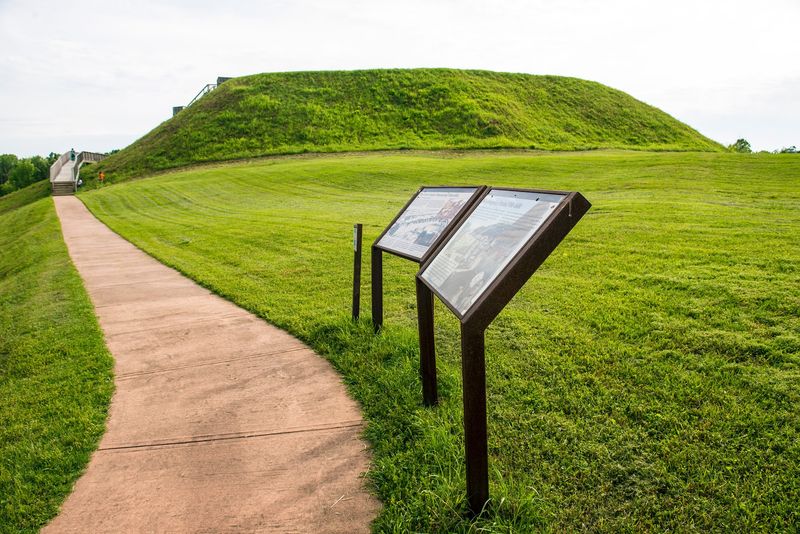
Stairs are usually boring, but not the ones climbing the Great Temple Mound. From the top, you can see the city skyline peeking over trees that shade over 12,000 years of human history.
People lived along this stretch of the Ocmulgee River for thousands of years. Around 900 AD, Mississippian people built huge earthen mounds here for ceremonies and leaders.
My favorite stop is the reconstructed Earth Lodge. You crawl through a low tunnel and enter a round room with a clay floor that dates back about a thousand years.
Look closely at the raised bench along the wall. It has seats shaped like a bird, and scientists believe town leaders gathered there for important meetings.
The visitor center is a great first stop before hiking. Its museum displays pottery, tools, and art found during big digs in the 1930s.
You will find the park at 1207 Emery Highway in Macon. Walking trails loop between mounds, wetlands, and woods, so wear comfy shoes and bring water.
Every September, the Ocmulgee Indigenous Celebration fills the grounds with music and dance. Muscogee (Creek) people, whose ancestors called this land home, often take part in the event.
Plan at least two hours for your visit. You will want extra time to sit on a mound top and simply enjoy the view.
2. Etowah Indian Mounds State Historic Site, Cartersville
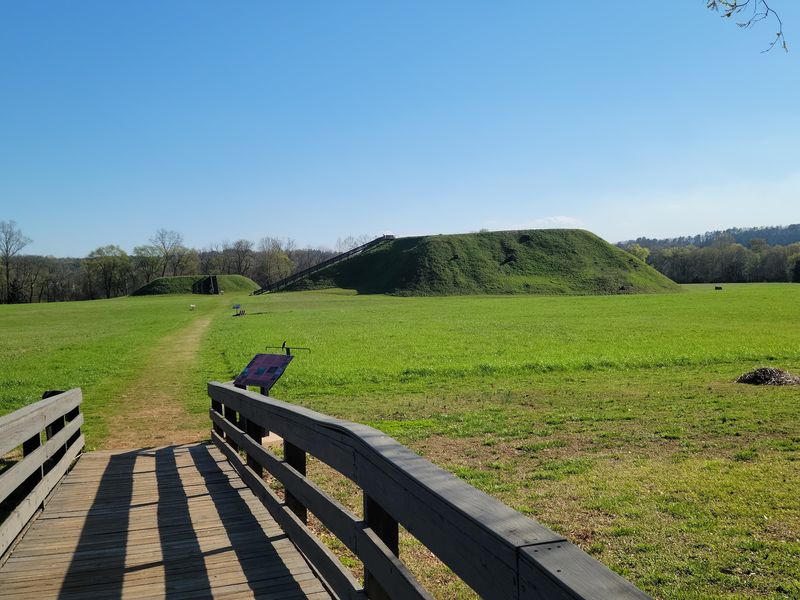
Picture a town with a six-story hill right in the middle. That is what the Etowah Valley looked like between about 1000 and 1550 AD.
Mound A rises about 63 feet and covers roughly three acres at its base. Climbing it gave my legs a workout, but the view of the river valley made every step worth it.
Workers carried the soil here basket by basket. Try imagining that job next time you complain about carrying groceries from the car.
Etowah is famous for two marble statues found during excavations. The pair shows a kneeling man and woman, and they are displayed in the on-site museum.
The museum also holds copper plates, shell carvings, and painted pottery. These objects show that people here traded with communities hundreds of miles away.
Out near the river, look for the remains of fish weirs. Builders arranged stones in V shapes to guide fish into traps, a clever trick for an easy dinner.
The site sits at 813 Indian Mounds Road SE in Cartersville. It is about an hour from Atlanta, which makes it a fun day trip for families.
A defensive ditch once circled the town for protection. Parts of it can still be seen today, so keep your eyes open as you walk the paths.
3. Kolomoki Mounds State Park, Blakely
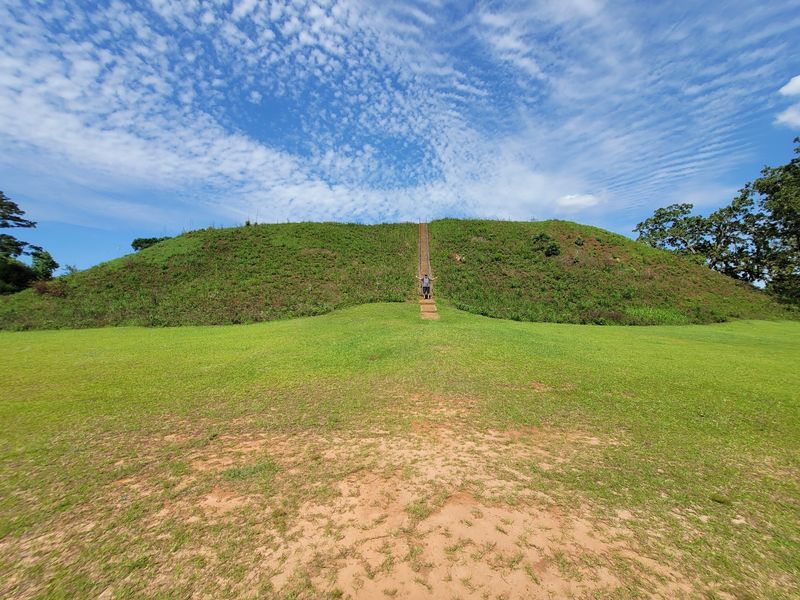
Some history lessons come with a side of fishing and paddle boats. Down in the southwest corner of the state, ancient mounds share space with lakes and campgrounds.
Kolomoki was one of the largest settlements in the Southeast between about 350 and 750 AD. It was built by Woodland period people, which makes it older than many other mound sites nearby.
The biggest structure is the Temple Mound, standing about 57 feet tall. From the top, the flat fields below look like a giant green game board.
Several smaller mounds dot the park, and each one had its own purpose. Some were used for burials, while others may have been part of special ceremonies.
The park museum is worth a stop before you explore. Displays explain how archaeologists studied the site and what they learned about daily life.
Find the entrance at 205 Indian Mounds Road in Blakely. It is a quiet, rural area, so pack snacks because stores are a short drive away.
Nature lovers will enjoy the hiking trails and two small lakes. I spotted turtles sunning on logs while walking between mounds, which felt like a bonus show.
Camping here lets you wake up next to thousands of years of history. Not many campgrounds can promise that kind of neighbor.
4. New Echota State Historic Site, Calhoun
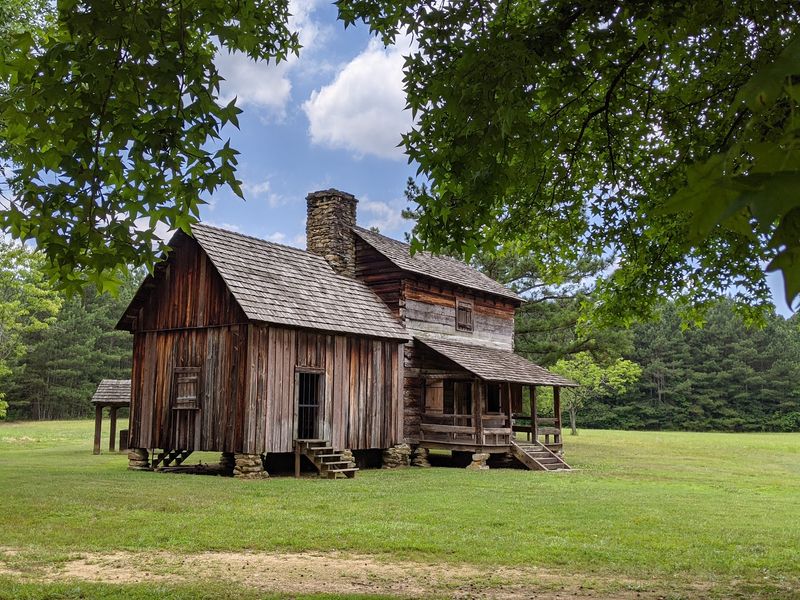
Newspapers usually cover the news, but one tiny print shop here made history itself. In 1828, the first Native American newspaper, the Cherokee Phoenix, rolled off its press.
New Echota became the capital of the Cherokee Nation in 1825. Leaders created a written constitution, a legislature, and a supreme court right on these grounds.
The newspaper was printed in both English and Cherokee. That was possible because Sequoyah created a Cherokee writing system, called a syllabary, in the early 1820s.
Walking through the rebuilt courthouse gave me chills. The simple wooden benches made it easy to picture leaders debating laws for their people.
The site includes original and reconstructed buildings spread across the property. You can peek inside a store, a council house, and the home of a missionary named Samuel Worcester.
Look for the address at 1211 Chatsworth Highway NE in Calhoun. The site is just a few minutes off Interstate 75, so it is an easy detour.
The visitor center shows a short film that sets up the story well. It covers the Cherokee removal in 1838, a hard chapter that visitors should understand.
Special events sometimes feature Cherokee crafts and demonstrations. Check the park calendar before you go, since those days add a lot of energy to the visit.
5. Chief Vann House State Historic Site, Chatsworth
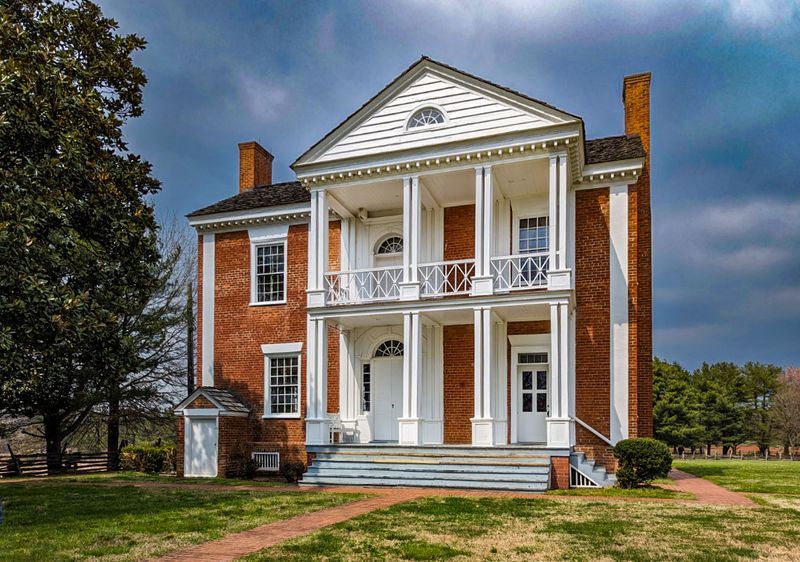
Red bricks and a floating staircase are not what most people expect from early Cherokee history. That surprise is exactly why the Vann House deserves a spot on your list.
Built in 1804, the mansion was known as the Showplace of the Cherokee Nation. James Vann, a wealthy Cherokee leader, owned the home and a large plantation.
Look up when you step inside the main hall. The cantilevered staircase seems to hang in the air, and it is believed to be the oldest of its kind in the state.
Hand-carved woodwork fills the rooms with color. Painted in bright blues, greens, reds, and yellows, the colors reflect Cherokee traditions and the natural world.
Guided tours explain the family story in clear detail. You will also learn about the enslaved people who worked this land, an important part of the full picture.
The house stands at 82 Highway 225 North in Chatsworth. It is only a short drive from New Echota, so you can easily visit both on one day.
Later, James Vann’s son Joseph ran the estate until the family lost it in the 1830s. The home was restored in the 1950s and now shares its story with visitors.
Bring a camera for the front lawn view. The bright brick against green trees makes a lovely photo in spring.
6. Chieftains Museum/Major Ridge Home, Rome
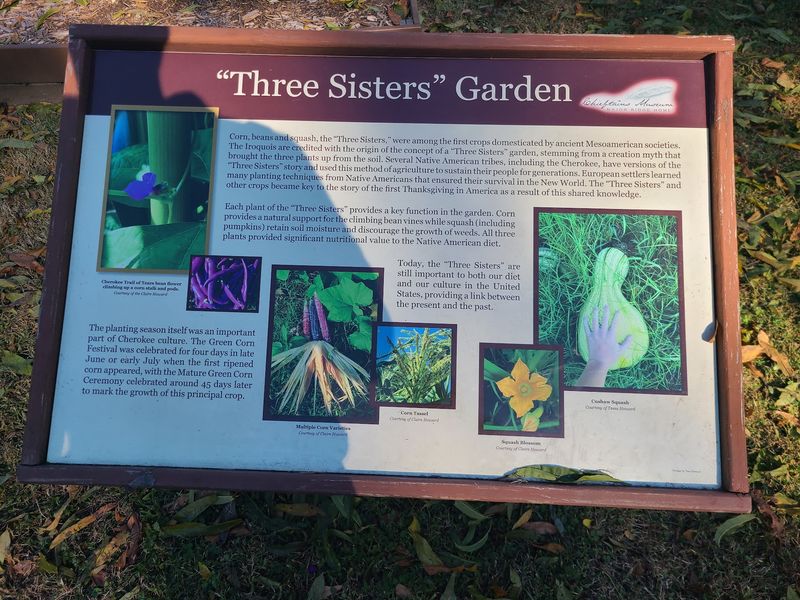
A log cabin hides inside the walls of a white riverside house. Peel back the layers, and you find the home of Cherokee leader Major Ridge.
Major Ridge built a simple log home here around 1794. Over time, he expanded it into a larger plantation house along the Oostanaula River.
He was a respected speaker and warrior in the Cherokee Nation. His name came from the way he walked the ridges and hills, which is a pretty memorable nickname.
Inside, exhibits trace Cherokee life, trade, and politics in the early 1800s. A display of original log walls lets you see how the house grew over the years.
Major Ridge signed the Treaty of New Echota in 1835. The museum explains why this decision was so controversial among Cherokee people at the time.
Plan your stop at 501 Riverside Parkway NE in Rome. The museum is small, so an hour gives you time to explore without rushing.
Archaeologists have also studied the grounds around the house. They found objects from a trading post and remains that help tell daily stories of the family.
The home is a National Historic Landmark and part of the Trail of Tears National Historic Trail. After your visit, a riverside stroll nearby is a nice way to reflect on everything you learned.
7. Track Rock Gap Petroglyph Site, Blairsville
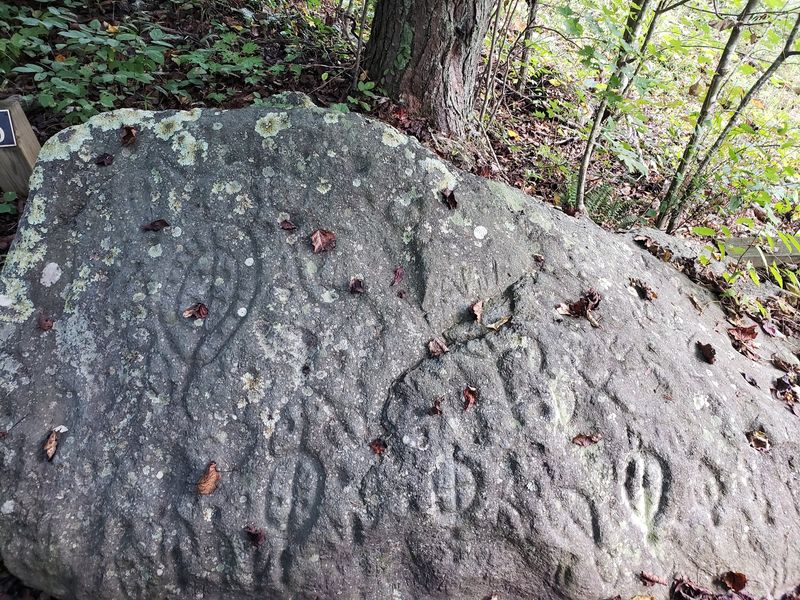
Mountain rocks covered in mystery doodles sound like something from an adventure movie. Up in the Blue Ridge Mountains, they are real and carved into soapstone.
Track Rock Gap holds more than 100 carvings spread across several boulders. The symbols include circles, crosses, footprints, and shapes that look like animal tracks.
That is how the site got its name. Early settlers thought the marks were tracks left by animals and people walking through soft rock.
Archaeologists believe ancestors of the Cherokee and Creek people made these carvings. Their meaning is still studied, and Cherokee tradition holds that the site is sacred.
The petroglyphs sit inside the Chattahoochee National Forest. You will find them along Track Rock Gap Road, about five miles east of Blairsville.
Metal grates protect the boulders from damage. I leaned in close, and the patterns were easier to see on a cloudy day with soft light.
Signs near the rocks share details about the carvings and local history. Take a moment to read them before snapping photos.
Please admire the carvings with your eyes only. Touching or chalking them can wear them down, and they have lasted for many centuries already.
Pair your stop with a mountain drive or picnic. The winding roads nearby show off gorgeous views, especially when fall leaves turn gold and red.
8. Funk Heritage Center, Waleska
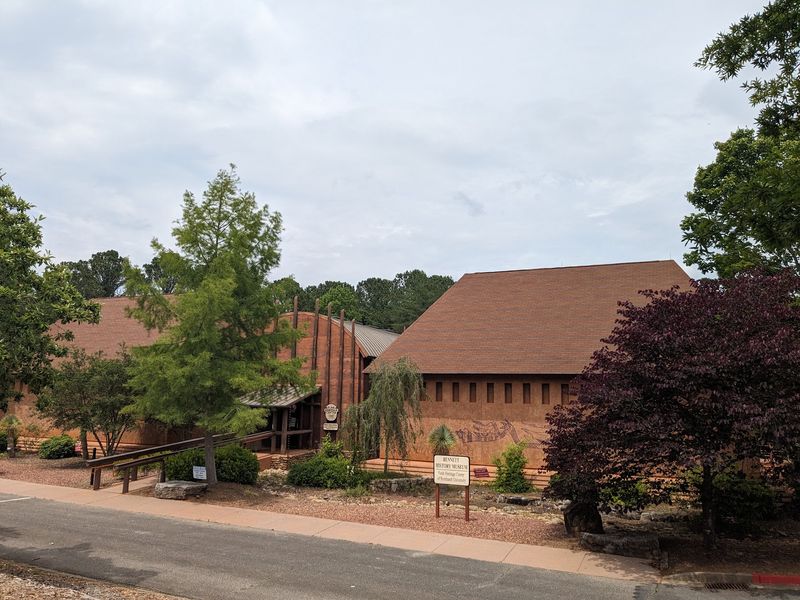
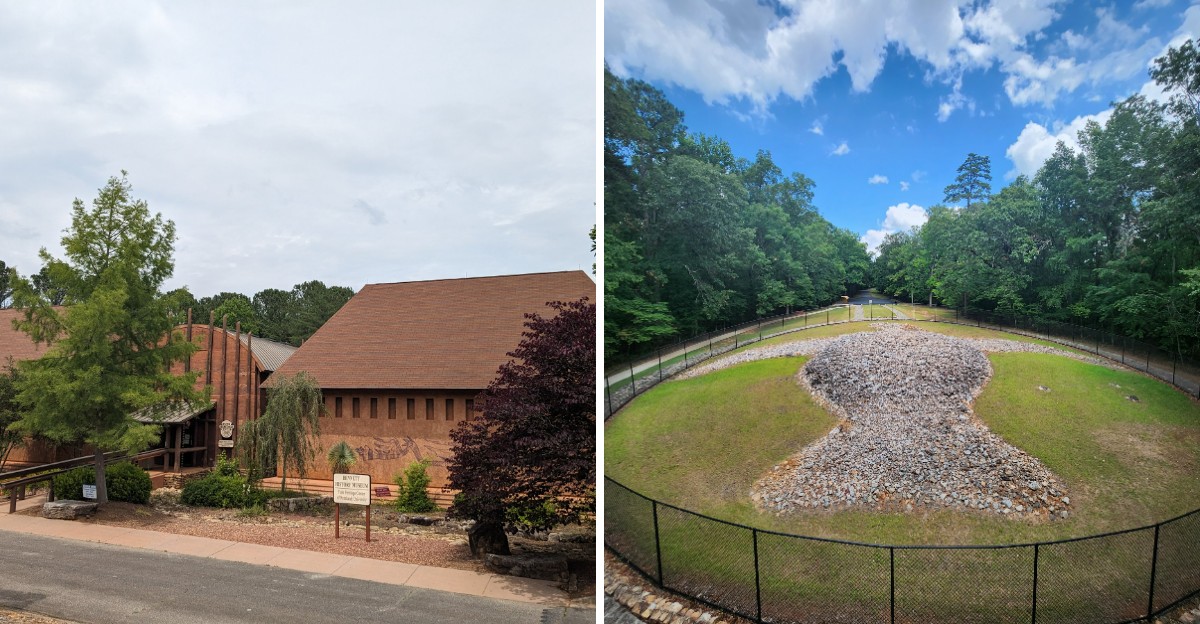
College campuses usually offer lectures and cafeteria food. At Reinhardt University, you also get one of the best Native American museums in the Southeast.
The Funk Heritage Center was named the official Frontier and Southeastern Indian Interpretive Center of the state. That title is a mouthful, but the exhibits are easy to enjoy.
A short film opens the visit and sets the scene nicely. After that, galleries walk you through thousands of years of Native life in this part of the country.
Life-size dioramas were my favorite part. They show scenes from different time periods, from early hunters to village farmers.
The Sellars Collection displays hundreds of hand tools from early settlers. It helps you compare how different cultures solved everyday problems.
Outside, the Appalachian Settlement brings together historic log buildings. Walking between them feels like flipping through the pages of a picture book.
You can find the center at 7300 Reinhardt Circle in Waleska. It is about an hour north of Atlanta and makes a relaxing weekend trip.
Nature trails wind around the property through quiet woods. Bring good shoes if you want to explore beyond the museum doors.
The center also connects to the Trail of Tears story with a special exhibit. It offers a thoughtful look at how removal affected Cherokee families in the 1830s.
9. Rock Eagle Effigy Mound, Eatonton
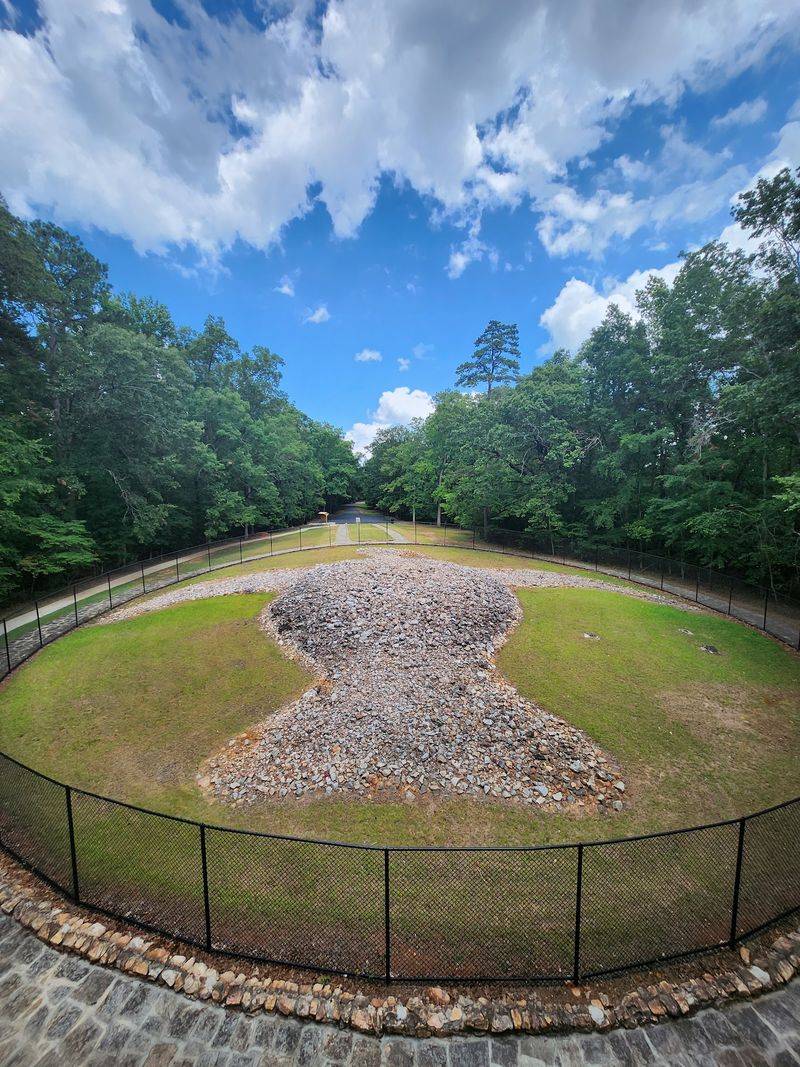
Most birds fly away when you get close, but this one stays put. It has been resting on the ground for somewhere between 1,000 and 3,000 years.
Rock Eagle is a giant bird shape made of piled milky quartz rocks. Its wings stretch about 120 feet across, and it measures about 102 feet from head to tail.
Nobody knows exactly who built it or why. Archaeologists think it served a ceremonial purpose for early Native people of the area.
Some experts call it a hawk or a buzzard instead of an eagle. I just call it impressive, because hauling all those rocks sounds exhausting.
The best view comes from a stone tower built in the 1930s. Climbing it lets you see the full outline of the wings and head below.
The mound sits at the Rock Eagle 4-H Center, 350 Rock Eagle Road NW in Eatonton. Thousands of students visit each year for camps and outdoor classes.
Visiting is free, and the site is easy to reach by car. A short path leads from the parking area to the tower and mound.
A second bird effigy, called Rock Hawk, sits at a nearby park in Putnam County. Seeing both on the same trip makes a fun bird-watching adventure of the ancient kind.