This Historic New Orleans Convent Is Still Linked To One Of Louisiana’s Strangest Vampire Legends
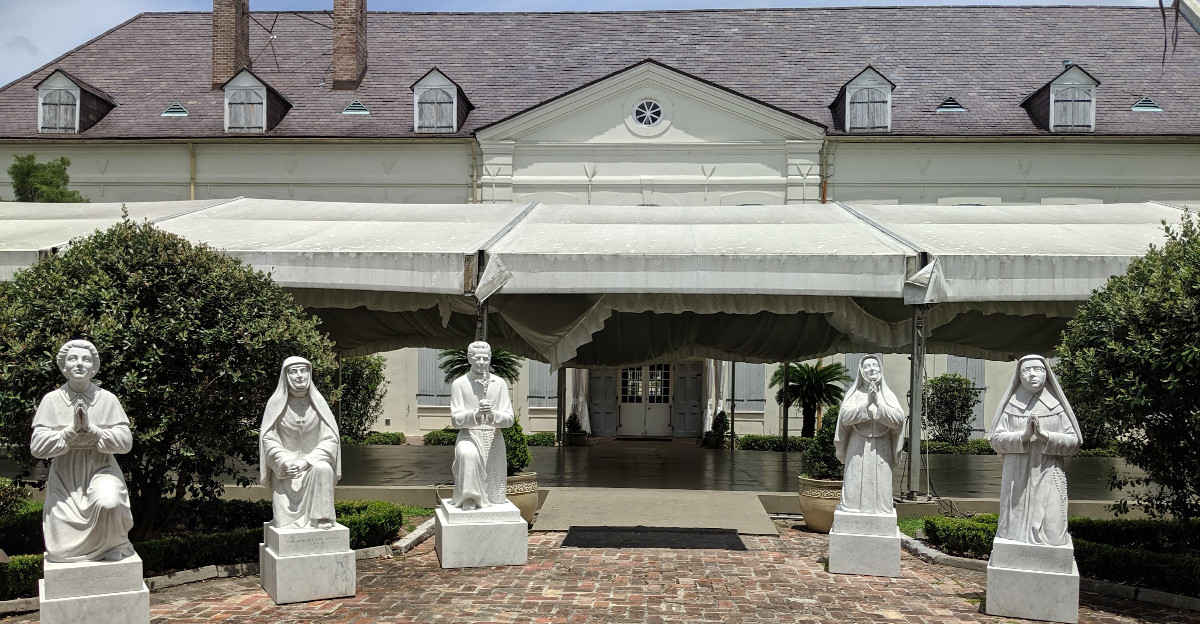
Vampire brides hiding in a convent attic? Louisiana folklore really said: “Let’s make this weird.”
One historic building has picked up a chilling legend involving mysterious young women, locked shutters, and stories that refuse to disappear.
But here is the fun part: the real history is every bit as fascinating as the spooky version.
Nuns, colonial politics, old architecture, and centuries of change all live behind the same walls.
So what is fact and what is folklore? That question follows you through the visit.
The legends pull you in, but the history is what makes the whole place genuinely hard to shake.
Where The Story Begins
Long before jazz drifted down Bourbon Street, a group of French nuns made a bold ocean crossing.
The Ursuline sisters landed in New Orleans in 1727. They came with a clear mission to teach, care for children, and support the colony’s hospital.
Their first New Orleans home was temporary. A convent completed in 1734 soon proved poorly suited to the humid climate, and plans for a stronger replacement were approved in 1745.
Workers finished the building seen today in 1752 or 1753. Education became one of their longest-lasting contributions.
The school they established in 1727 continues today as Ursuline Academy, the oldest continuously operating school for girls and the oldest Catholic school in the United States.
The sisters also cared for children and supported medical work in the colony.
The Ursulines moved to another convent in 1824. Even so, the old building kept their name, and its later uses added several more chapters to the property.
The Old Ursuline Convent Museum sits in the French Quarter at 1112 Chartres St in New Orleans.
French Colonial Design Done Right
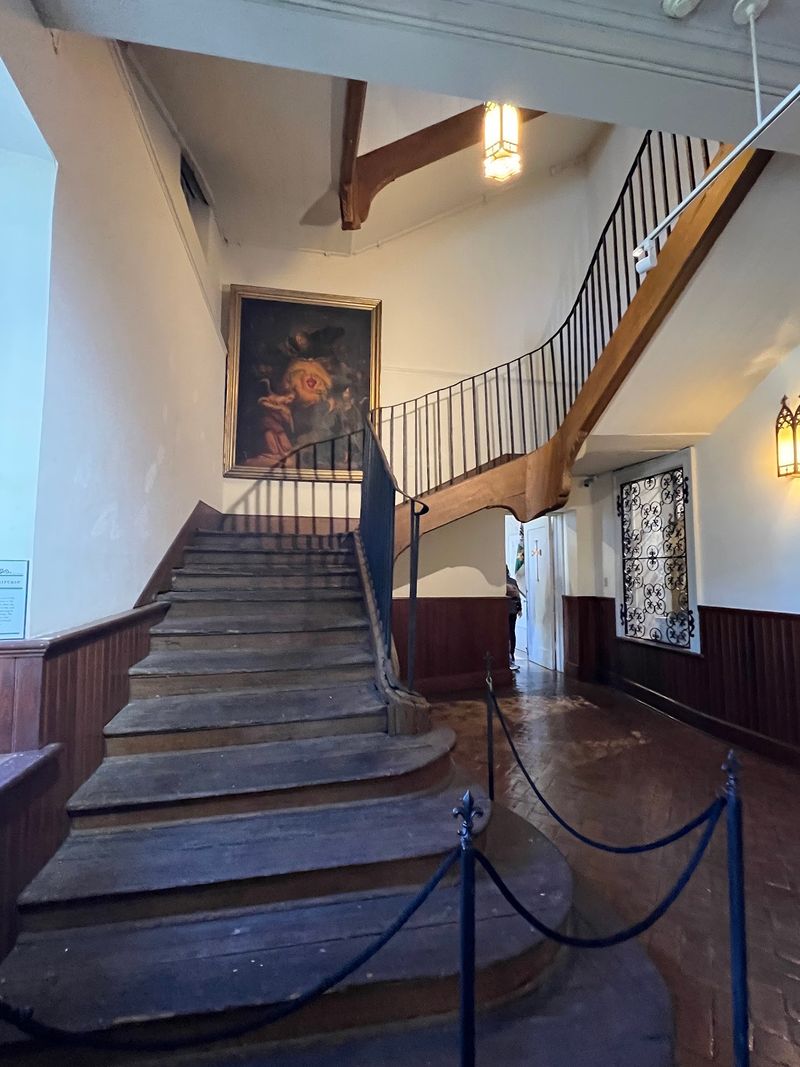
Architecture fans have plenty to study here.
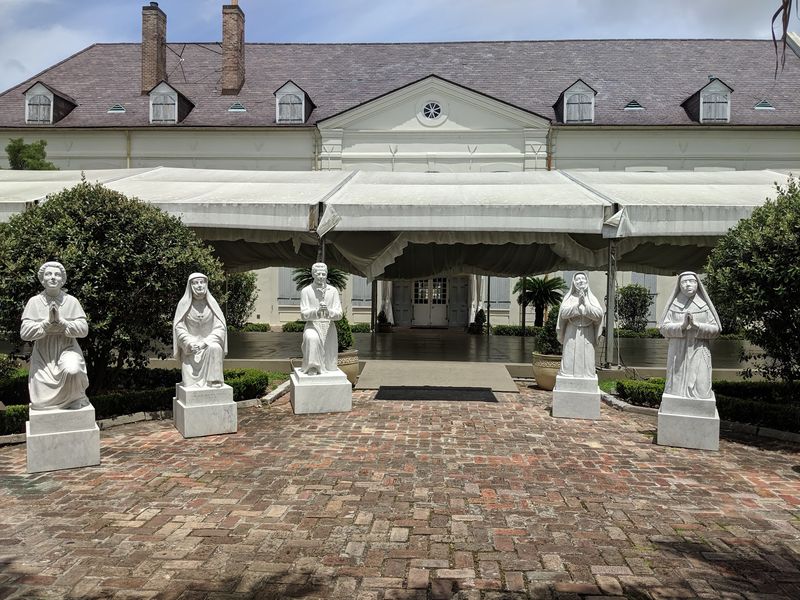
The Old Ursuline Convent is considered the finest surviving example of French Colonial public architecture in the United States and the only public building still standing in New Orleans that is definitively tied to the French regime.
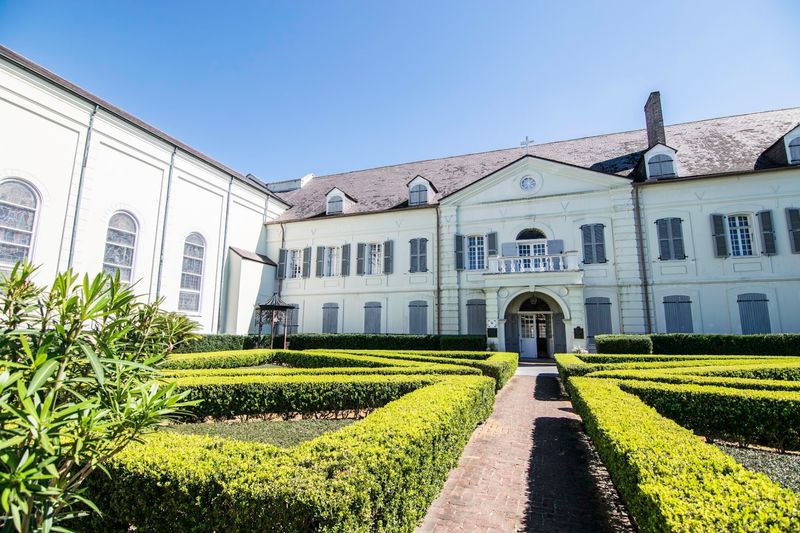
The facade is formal and symmetrical rather than heavily ornamented. Slightly arched windows sit in shallow moldings, while rusticated corner details and a narrow central pediment add definition.
A broad hipped roof stretches across the building. Four small dormers break the roofline without changing its restrained appearance. The exterior was finished in protective stucco, an important consideration in the region’s humid climate.
Practical planning mattered as much as appearance. The historic interior included classrooms, sleeping quarters, an infirmary, storage rooms, and other spaces required for daily community life.
The building also changed orientation after the Ursulines left. A nineteenth-century entrance portico and gatehouse helped turn the main approach toward Chartres Street rather than the river.
That layered design makes the convent more than a preserved facade. Its architecture records both the French colonial period and later changes in how the property functioned.
A Building With Many Jobs
Few buildings have a resume this long. After the nuns left, the convent kept finding new purposes. Each one added another chapter to its story.
The property first served as a Catholic school for boys. It was later leased for public-school use before becoming the meeting place of the Louisiana legislature from 1831 through 1834.
The building then became closely tied to local Catholic leadership. Bishops and later archbishops used it as a residence, while church offices and other administrative functions occupied portions of the complex.
After the archbishop’s residence moved elsewhere, the convent continued serving church-related purposes. It later housed offices, clergy accommodations, and archival collections.
The adjoining St. Mary’s Church became part of that evolving story as well. By the late nineteenth century, it had developed particularly strong ties with Italian Catholic families living in and around the French Quarter.
Today, the convent is part of the Catholic Cultural Center of New Orleans. Museum exhibits and tours allow the building itself to serve as one of the most important pieces of history on display.
The Casket Girls Mystery
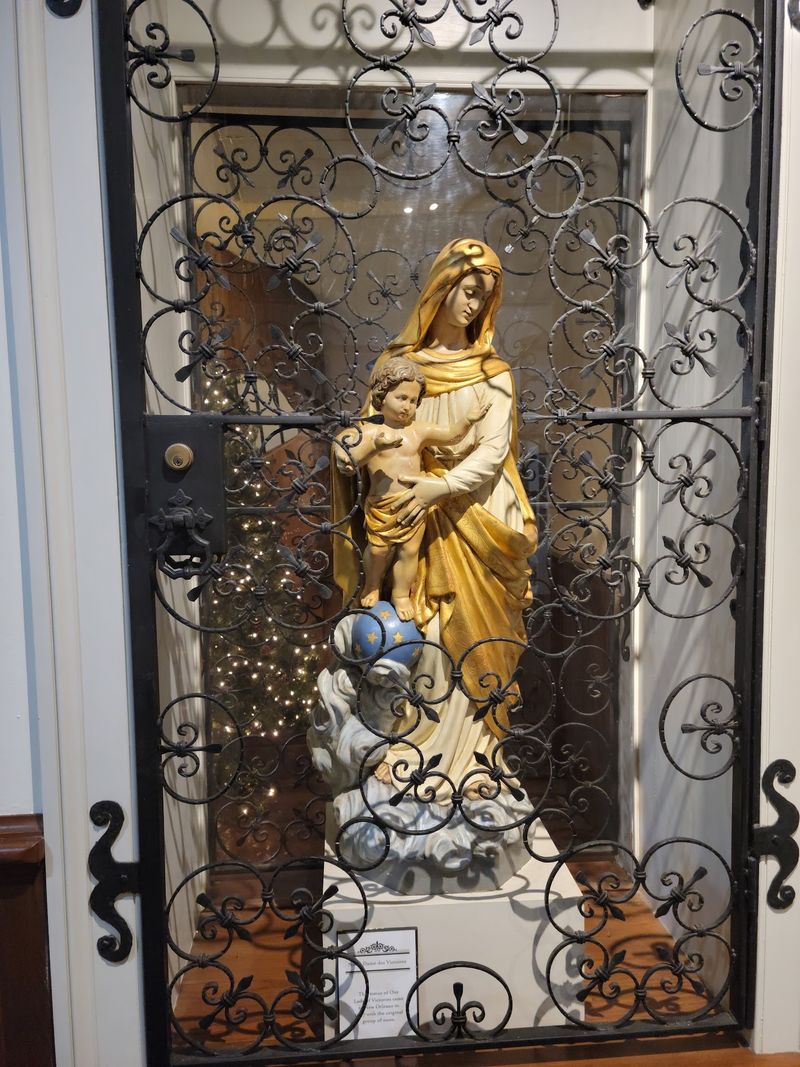
Now comes the legend that made the upper shutters famous. The story begins with young French women sent to colonial Louisiana as prospective wives for settlers.
They became known as the filles à la cassette. The phrase referred to the small cases or trunks they carried with their belongings rather than anything mysterious hidden inside them.
Historical accounts connect the Ursuline sisters with caring for and educating young women arriving in the colony. That genuine relationship eventually provided useful material for later storytellers.
The famous legend goes much further. In its best-known form, the women’s trunks were supposedly placed in an upper part of the convent, where the shutters were later secured and kept closed.
Other versions add unusual details about the windows or suggest that the women themselves were connected to vampires. Those elements belong to folklore rather than documented eighteenth-century history.
The biggest problem is the timeline. The present convent was not completed until 1752 or 1753, decades after the arrivals usually associated with the Casket Girls tradition.
Separating Folklore From Fact
The language behind the nickname helps explain how the story evolved. In French, cassette referred to a small box or travel case used for personal belongings.
Later English usage gave the similar-looking word casket a much different association. That linguistic shift made the old nickname sound far more dramatic to modern audiences.
Reliable historical accounts document young French women coming to Louisiana, small travel cases associated with them, and the Ursulines’ role in educating and assisting women in the colony.
They do not provide credible historical evidence for vampires, mysterious occupants sealed upstairs, or specially blessed hardware securing the upper windows. Those details were added through later storytelling.
The chronology creates another clear boundary. The women tied to the best-known New Orleans accounts arrived before the current Chartres Street convent existed.
The legend therefore works best as an example of how real people, an evocative nickname, and an exceptionally old building can become woven together over generations.
Inside, the museum concentrates on documented history rather than presenting the vampire story as fact.
Inside The Museum Rooms
Quiet galleries give the building’s history room to unfold.
Current exhibits focus on the Ursulines, Catholic life in New Orleans, the site’s long institutional history, and changing traditions within the city.
The Ursuline Room explains how the sisters arrived in 1727 and established their work in New Orleans. It gives useful context for understanding the rooms and their place in the wider colonial story.
One current exhibit traces the Louisiana ancestry of Pope Leo XIV through archival and sacramental records.
The research follows branches of his maternal family into early New Orleans and draws directly from records held by the archdiocese.
Another exhibit, Legacy Endures, looks across four centuries of history at the property. Sunday Best explores the relationship between faith, family, and clothing traditions through historic photographs and religious garments.
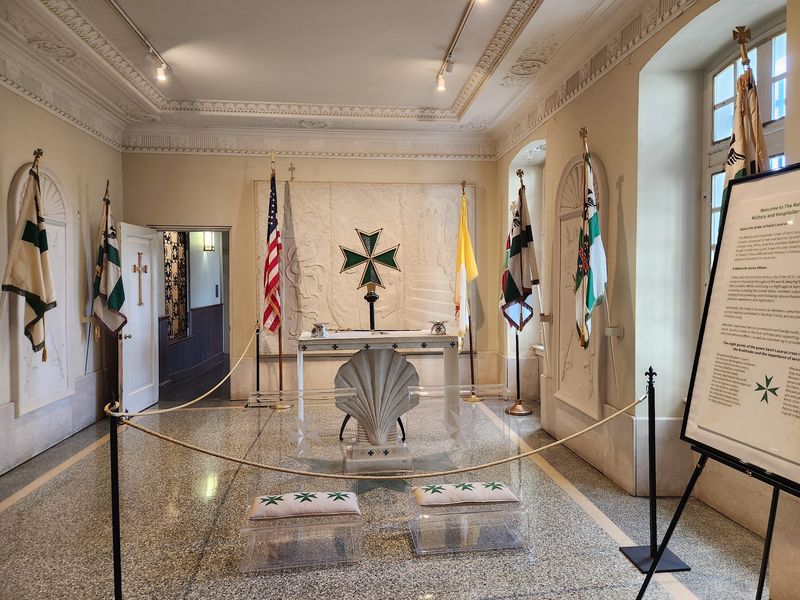
The National Shrine of St. Lazarus is also part of the current museum experience. St. Mary’s Church can be visited through the site as well.
Self-guided visits are available for travelers who prefer to move independently. Guided docent tours are offered based on availability.
Chapel Views And Garden Calm
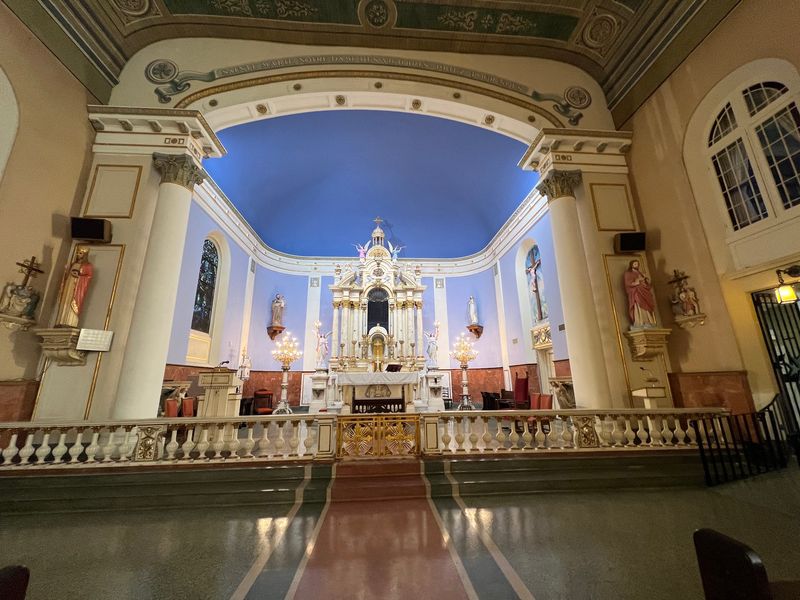
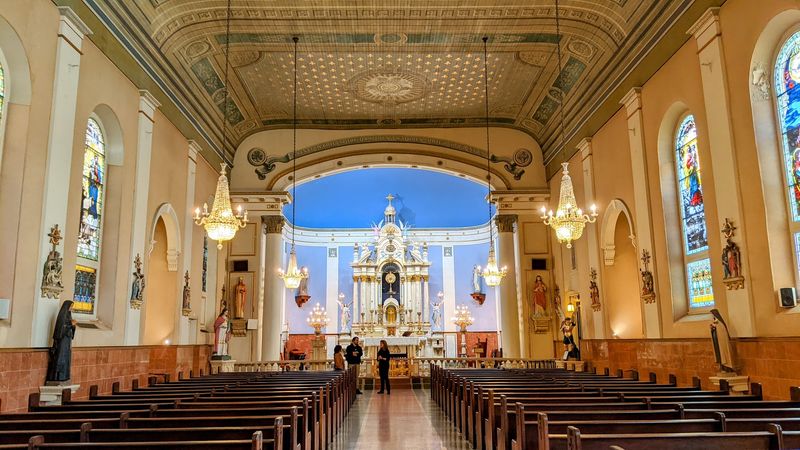
Right next door, St. Mary’s Church adds another layer to the visit.
The church was built in 1845 adjoining the convent and originally served as the chapel for the bishops and archbishops of New Orleans.
Later, it became widely known as St. Mary’s Italian Church because of its connection to Italian immigrants in the French Quarter beginning in the late nineteenth century.
Its relationship to the convent makes the two buildings easy to understand together. One reflects the earlier French colonial institution, while the other shows how the property continued adapting to a changing city.
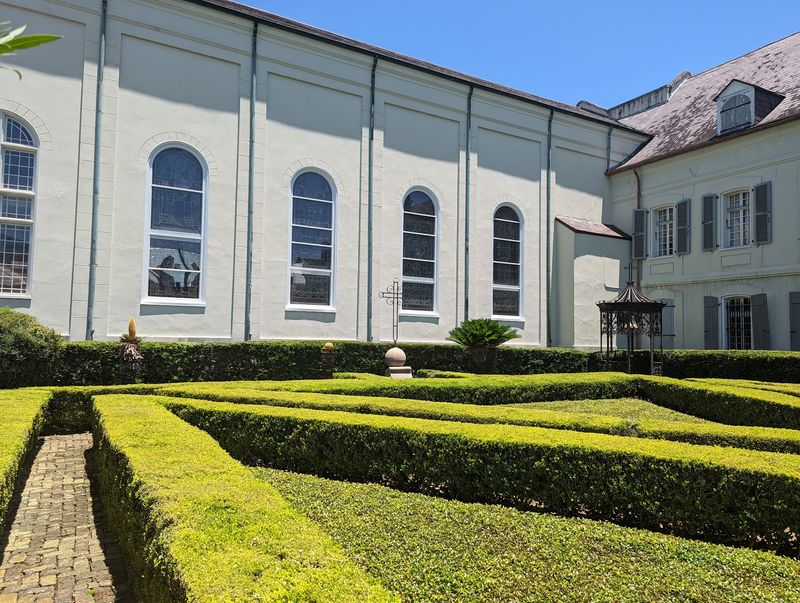
Outside, the formal Bishop’s Garden creates a quiet transition between Chartres Street and the convent entrance.
Its geometric parterre layout was designed in 1955, so it should not be mistaken for the exact garden used by the Ursuline sisters.
Low hedges and brick paths give the space a strong French-inspired pattern. The design intentionally recalls the sisters’ French heritage rather than attempting to pass as an untouched eighteenth-century landscape.
A second garden behind the convent was created later and honors women associated with the Ursuline legacy.
Smart Tips Before You Go
A little planning makes this visit much smoother.
The museum is currently open Tuesday through Saturday from 10 AM to 3 PM and closed on Sundays and Mondays.
Visitors planning an October 2026 trip should pay particular attention to the calendar.
The museum is scheduled to close early on October 10 and October 17, then close from October 18 through October 30 while new exhibits are installed.
Self-guided admission is available during regular operating hours. Guided docent tours are also offered when guides are available, so checking the day’s options at arrival is useful.
A gift shop is available on site. Because the convent sits in the French Quarter, it also pairs easily with other nearby historic attractions on foot.
Much of the experience takes place indoors, while St. Mary’s Church and the gardens add additional areas to explore when access is available.
The Old Ursuline Convent does not need the vampire legend to be fascinating. The surviving 1750s building, its changing roles, and the Ursuline legacy already give this corner of New Orleans an unusually deep story.