The 8 Tiniest Towns In Illinois That Pack Far More Charm Than Their Size Suggests
Can a town with only a handful of streets still fill an afternoon? Absolutely!
Illinois has tiny communities where old river stories, unusual names, historic buildings, and quiet main streets create far more personality than the population count suggests.
Nothing feels oversized, and that is exactly the charm. You notice details here.
A church bell matters. An old storefront catches your eye. A story from generations ago suddenly makes one little corner feel important.
Big cities may have more attractions, but these places have room to breathe.
Sometimes a few blocks are all you need to remember a town for years.
1. Valley City, Pike County
Just imagine for a second a whole town that could fit around one picnic table. That idea is closer to reality than you might think.
The 2020 census counted only 14 residents in Valley City, making this Pike County village Illinois’ smallest incorporated place by population.
Its tiny footprint sits beside the Illinois River, where transportation and commerce once gave the community a much busier role.
Steamboats stopped in the area, and Valley City later developed businesses tied to Pike County’s apple-growing economy.
Cold storage, a cider mill, a vinegar operation, and an apple-peeling plant all supported local work during the town’s busier years.
For such a tiny place today, that commercial past feels surprisingly substantial. It is a reminder that population alone does not tell the whole story of a community.
The best historical detour is nearby Griggsville Landing Lime Kiln inside Ray Norbut State Fish and Wildlife Area. Built around the mid-1850s, it survives as one of Illinois’ best-preserved periodic lime kilns.
The former landing nearby began as a steamboat stop in the 1830s and once included a warehouse, boatyard, hotel, and grist mill.
The surrounding river landscape adds another reason to slow down. Winter visitors may spot bald eagles along the Illinois River, while spring and fall bring comfortable weather for exploring the rural roads and public natural areas nearby.
Valley City is not packed with conventional attractions. Its appeal comes from scale, river history, and the surprising amount of regional history concentrated around such a small community.
2. Kaskaskia, Randolph County
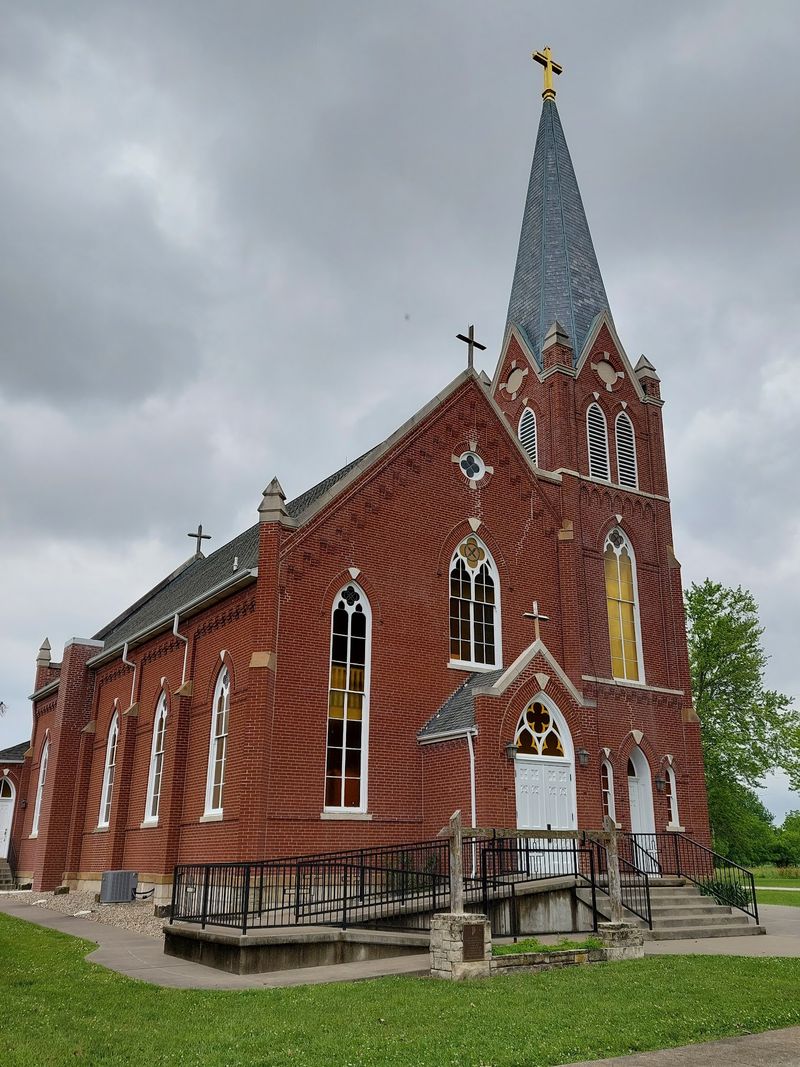
A tiny island town was once the center of Illinois power.
Kaskaskia had just 21 residents when the 2020 census was taken.
Its history reaches back to 1703, when members of the Kaskaskia people and French Jesuits established a settlement near the meeting of the Kaskaskia and Mississippi rivers.
It later became a regional center of trade and government.
After this state became a state in 1818, Kaskaskia briefly served as its first capital before government moved to Vandalia.
That makes its tiny modern population especially striking compared with the influence the community once held.
The modern village occupies Kaskaskia Island, created after the Mississippi shifted into a new channel in the late nineteenth century.
The Kaskaskia Bell Memorial gives visitors a direct link to the town’s early history. Its bell was cast in 1741 as a gift from France and later became known as the Liberty Bell of the West.
The memorial is open daily from sunrise to sunset for self-guided visits.
Nearby Fort Kaskaskia State Historic Site overlooks the river from the bluffs. The area also played a supporting role in the Lewis and Clark Expedition, which gathered supplies and additional expedition members here in 1803.
Together, these sites make the surrounding area feel like an unexpectedly concentrated pocket of early history.
Kaskaskia rewards travelers who enjoy unusual geography as much as old stories. Its present-day quiet makes the scale of its former importance feel even more remarkable.
3. Bentley, Hancock County
Call me crazy, but knowing about this village feels like being in on a secret. Its tiny footprint makes it easy to miss in southeastern Hancock County.
Bentley counted only 30 residents in 2020. The town covers roughly 0.14 square mile, with just seven households recorded that year, so this is a place where the scale becomes obvious immediately.
Even a slow drive through town takes only a few minutes, which puts its unusually compact size into perspective.
Older records identify the community by the former name Sutton. Bentley was incorporated in 1869, giving this quiet settlement a municipal history stretching back more than a century and a half.
Routes 94 and 110 pass just west of town, making Bentley an easy rural detour rather than a complicated destination.
Carthage, the Hancock County seat, sits about six miles north, which makes it a practical place to combine with the drive for meals, supplies, and a broader look at the county.
The landscape around Bentley is the real scenery. Farm fields, open horizons, and lightly traveled roads create the kind of drive where the view changes with planting, harvest, and the angle of the evening light.
That agricultural setting also gives the village a strong sense of separation from the busier communities nearby.
Do not arrive expecting museums, shopping blocks, or a packed itinerary. Bentley works best as a brief stop woven into a larger Hancock County route.
Its charm comes from seeing how small an incorporated town can actually be while still carrying its own name, boundaries, and long local identity.
4. Florence, Pike County
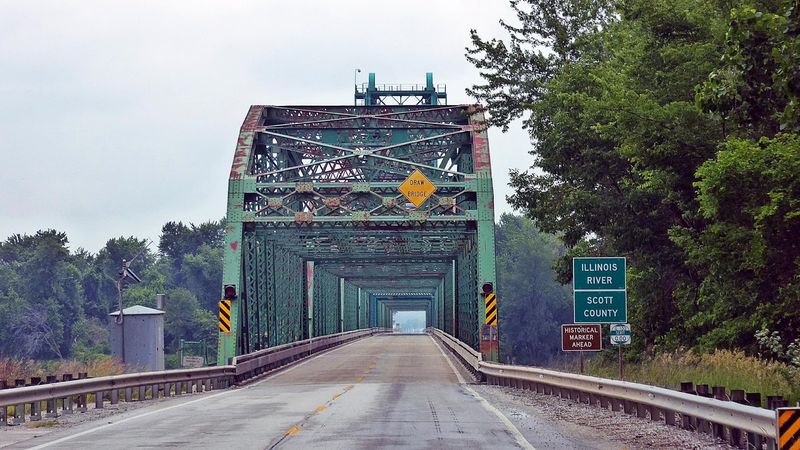
Here is a thought that might surprise you. One of the state’ smallest river villages once served as the gathering place for nearly a thousand Pike County volunteers.
The 2020 census recorded only 17 residents in Florence, placing it among the state’s least-populated incorporated communities.
Its setting beside the River is central to understanding why a settlement developed here in the first place.
The village was founded in 1836 by the Florence Company, a group made up largely of businesspeople from nearby Pittsfield.
Earlier records used the name Augusta. The goal was ambitious: create a river transportation point that could connect Pittsfield with steamboat traffic.
A sawmill appeared during the village’s first year, and it was later converted into a steam-powered flour mill.
Historical accounts also remember Florence as an important landing for Pittsfield during the era when river travel shaped commerce throughout western Illinois.
Another chapter arrived in August 1862, when nearly 1,000 Pike County volunteers gathered at Florence before entering federal service and traveling to St. Louis.
For a brief moment, that gathering gave Florence a significance far beyond what its size might suggest today. The episode is a reminder that even the tiniest river communities can hold surprisingly large chapters of regional history.
Today, the contrast is striking. The commercial river ambitions are gone, leaving a very small community beside the broad waterway that once drove its growth.
Florence is best approached slowly. River views, rural roads, and the scale of the village make its past easier to picture without needing a long list of formal attractions.
5. Mount Erie, Wayne County
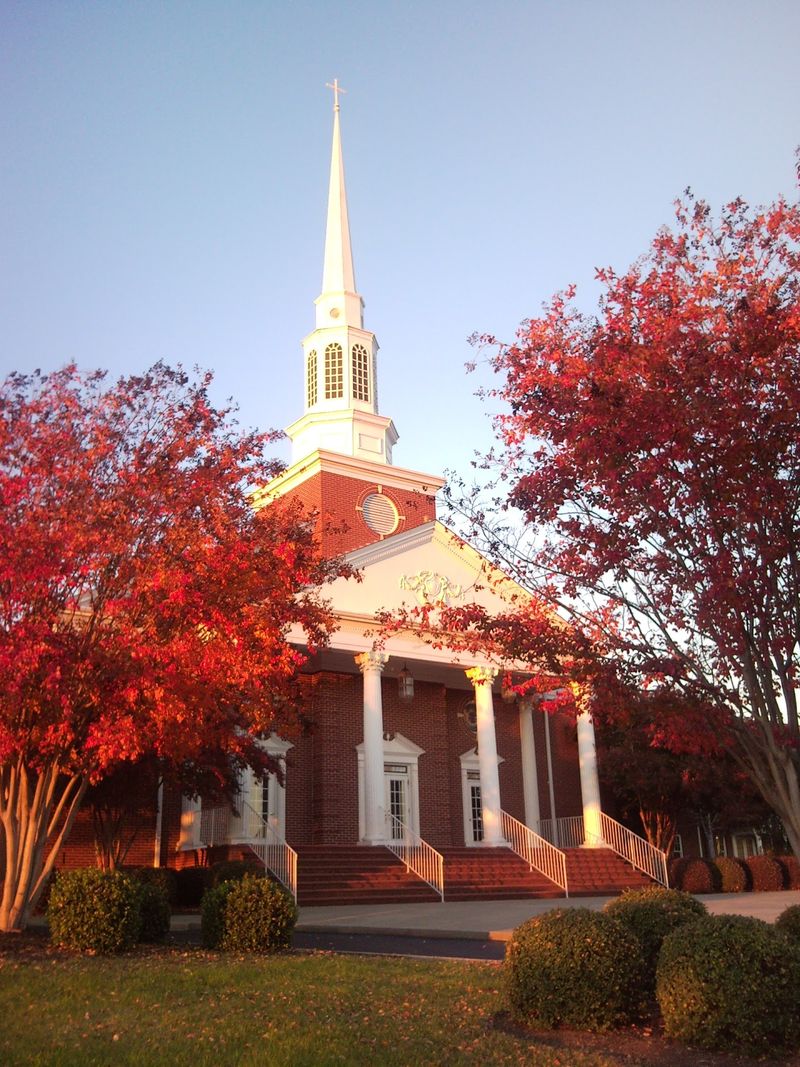
Here is a crazy thought for flatland skeptics. Southern Illinois has hills, and this village sits on a rise that shaped its early identity.
Mount Erie’s 2020 population was 98. It is larger than several stops on this list, but still small enough for its early history and countryside to define the experience.
The community’s roots go back farther than the original draft suggested.
Settlement began here in 1818 on elevated ground shaded by white oaks and supplied by a spring. The village was platted in 1853, and a post office followed in 1856.
By the later nineteenth century, Mount Erie had developed into a trade center serving nearby farms. Historical accounts record stores, mills, tradespeople, and other businesses that supported the surrounding township.
The countryside remains a reason to include Mount Erie on a slow road trip. Farm fields, wooded patches, and gently changing elevation break up the flatland image many travelers associate with this state.
The Little Wabash River also winds through the broader Wayne County landscape, adding a thread to the area’s agricultural history.
The village itself remains compact, so the transition from open countryside to town happens quickly. That small scale keeps the surrounding landscape closely tied to the character of the community.
Travelers interested in deeper county history can continue toward Fairfield, where local archives preserve material from communities across Wayne County.
A checklist is unnecessary here. The strongest contrast is between a tiny present-day village and a settlement story reaching back to the state’ earliest statehood years.
6. Mound Station, Brown County
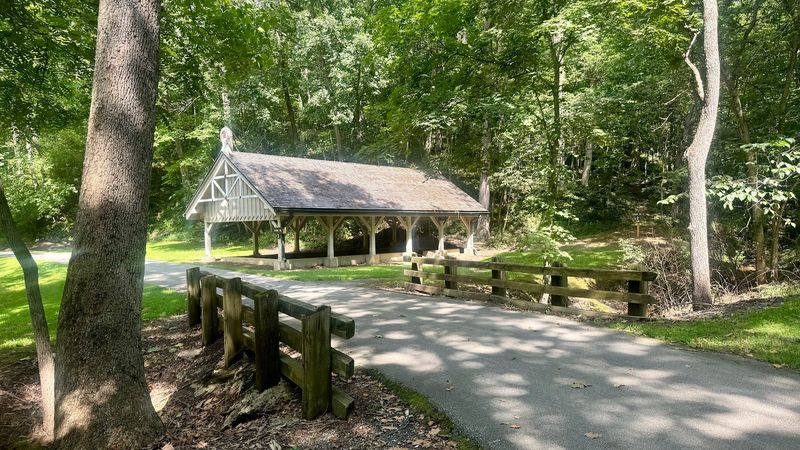
Let’s be real for a second, sometimes the best trips have no busy plans at all.
Mound Station in Brown County fits that mood, but its name carries a twist.
The legal village name remains Mound Station, while locals commonly use Timewell, the name adopted by the post office in 1903 to avoid confusion with another community called Mounds.
The post office itself dates to 1860, and the village incorporated in 1901. In 2020, Mound Station counted 117 residents across roughly half a square mile.
U.S. Route 24 meets County Route 2 here, placing the village amid the farm country of the western part of the state. The setting is more about open roads and agricultural scenery than conventional sightseeing.
There is little pressure to rush through a place this compact. A short stop gives you time to notice the quiet streets and the farmland stretching well beyond them.
A strong nearby add-on is Siloam Springs State Park. The 3,323-acre park combines wooded ridges, ravines, wildflowers, and a 58-acre lake, giving hikers and birdwatchers far more terrain than the village itself can offer.
Fishing and boating are available on the lake, while trails cross the surrounding forested landscape. The park’s springhouse also preserves a piece of the area’s nineteenth-century resort history.
That combination makes Mound Station useful on an unhurried day trip. Spend a few minutes noticing the village’s unusual two-name identity, then continue into the countryside for a longer outdoor stop.
Few tiny communities come with a naming story this easy to remember.
7. Maunie, White County
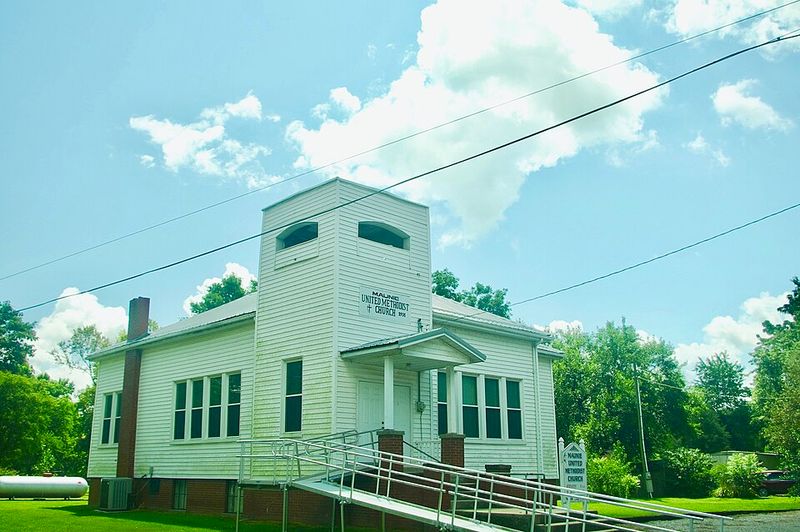
I had to do a double-take when I heard how this village got its name. It is one of the sweetest stories on the map.
Maunie had 91 residents when the 2020 census was taken, but its unusual name reaches back to two women linked to early settlers.
The first three letters of Maude were combined with the final three letters of Jennie to create Maunie.
A post office opened in 1893, and the village incorporated in 1901. Local histories recall busier years when the population reached roughly 450 and the community supported stores, two drug stores, a bank, bakery, flour mill, and four grain elevators.
It takes a little imagination to picture that much activity packed into the village today. That contrast between its busy past and quiet present gives Maunie much of its character.
The Wabash River forms the Illinois-Indiana boundary along White County and gave communities access to a major waterway.
More than 400 miles of the river flow without a main-stem dam below Huntington, creating the longest free-flowing river stretch east of the Mississippi.
Agriculture remains central to the wider county landscape, so the approach to Maunie passes broad fields and low river country rather than dense development.
Here, the story matters more than a list of attractions. The compact streets make it easy to appreciate how much activity once fit into such a small place.
Come for the unusual name, stay for the Wabash setting, and leave with a clearer picture of how river and farm communities shaped this part of the state.
8. Muddy, Saline County
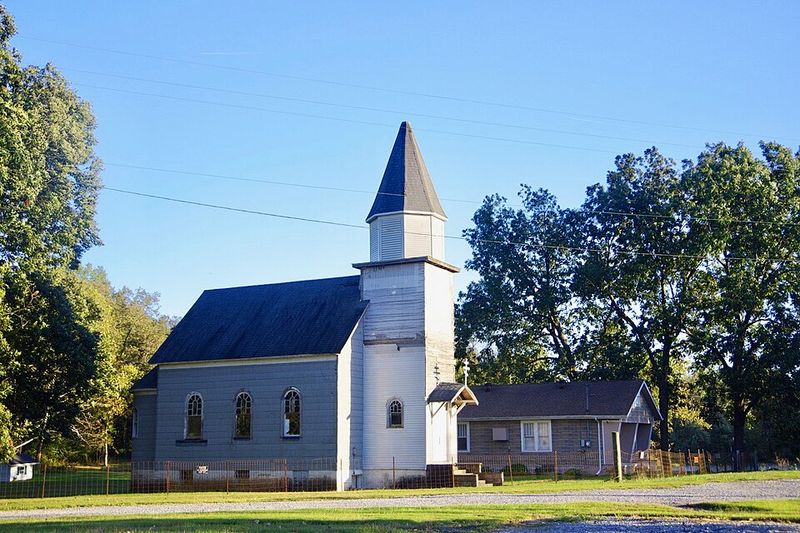
Muddy is the kind of village whose name practically demands a second look.
The 2020 census counted just 61 residents across roughly three-tenths of a square mile, but its history is much larger than that tiny footprint suggests.
The site was once known as Robinson’s Ford and was even considered for the Saline County seat during the nineteenth century.
The modern village grew around coal mining in 1903, when the Harrisburg Big Muddy Coal Company established a mining settlement here. Coal shaped the community for decades and drew immigrants from several parts of Eastern Europe.
Today, U.S. Route 45 passes through the area, with Harrisburg only a short drive away.
That puts Muddy close to the northern end of the 45-mile Tunnel Hill State Trail, where hikers and cyclists can continue through farm country, forest, old railroad landscapes, and former mining areas.
For such a tiny village, Muddy carries an unusually memorable combination of coal-country history, an unforgettable name, and easy access to the outdoor scenery.