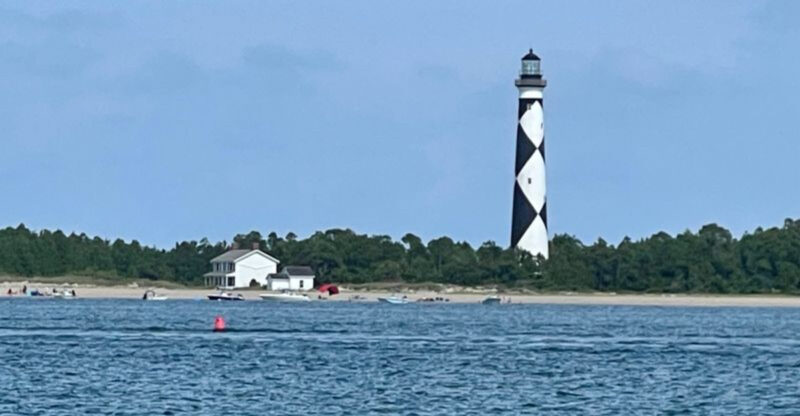
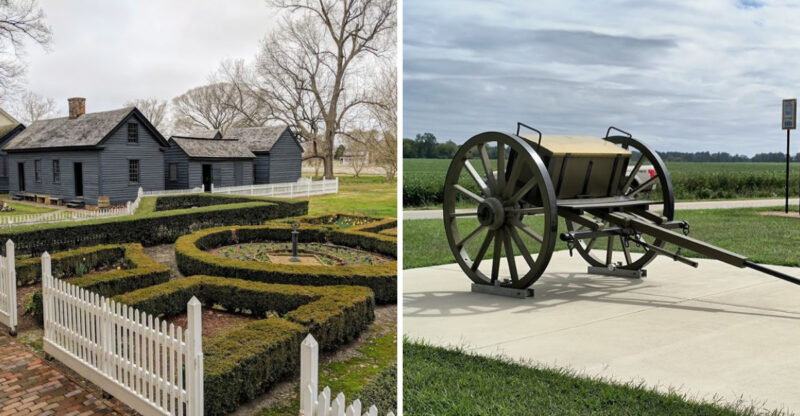
This North Carolina Fort Still Fires 19th-Century Cannons Right In Front Of Visitors
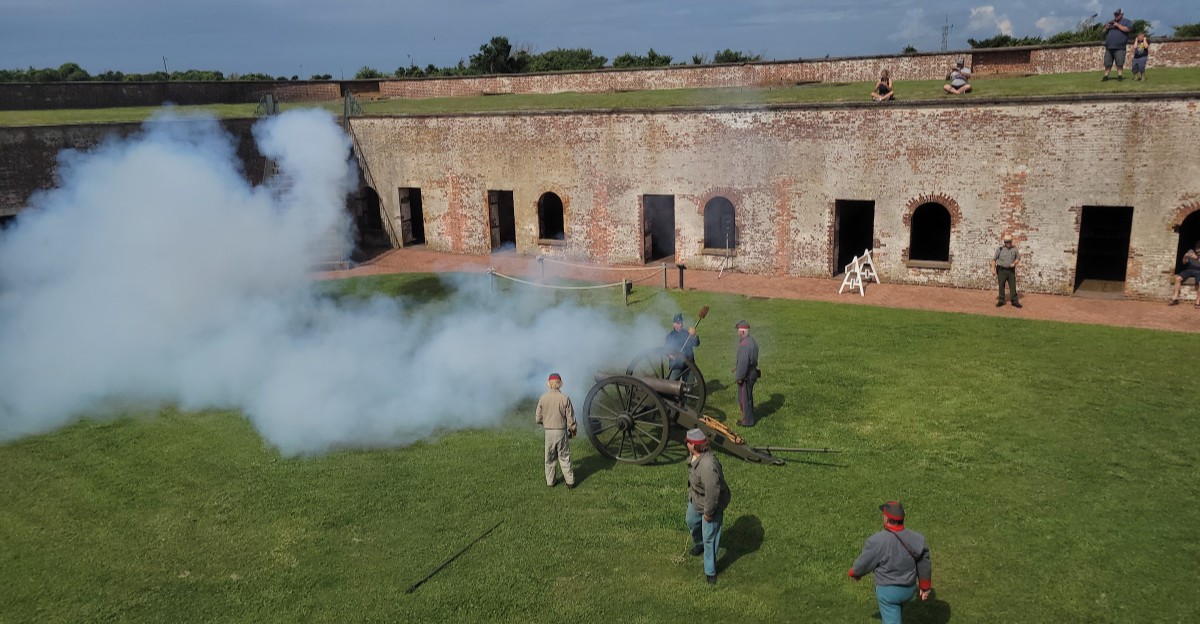
BOOM! Nothing interrupts a peaceful beach day quite like a cannon deciding to join the conversation.
Along the North Carolina coast, one brick fortress can make the 1800s feel much closer than expected.
The walls have faced the water for generations, but occasional historic demonstrations give the old place a much louder personality.
You may arrive expecting ocean views and a quiet walk through history.
Then the blast rolls across the water and every seagull suddenly has somewhere else to be.
The real surprise is how much history is packed behind those thick walls.
Come for the coast and leave wondering whether your ears just time-traveled.
Hear The Boom Of Historic Cannons During Special Living History Days
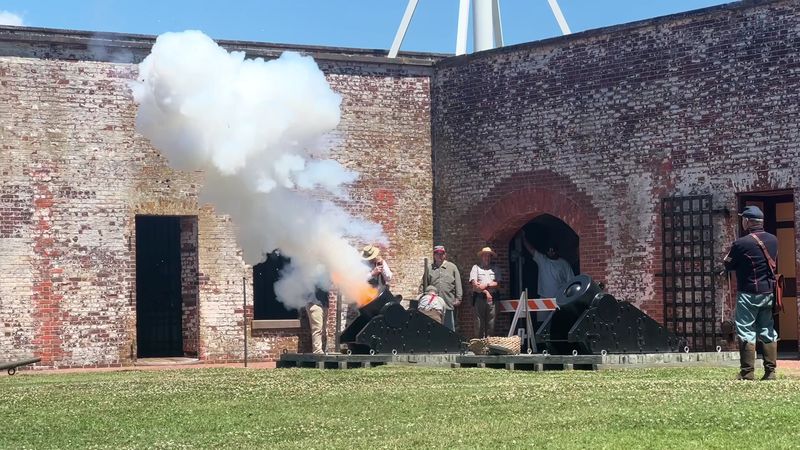
Kids usually cover their ears a second too late.
When a ranger in a wool uniform calls out the final command, the whole courtyard holds its breath, and then a deep roar shakes the air and sends a puff of white smoke drifting toward the sea.
Living history days turn the old fort into a stage where the past plays out step by step.
Rangers explain every part of the drill before the big moment, so you learn how a crew of soldiers worked together long ago.
Special Cannon Day events have offered several demonstrations in a single day, with past schedules including shows at 10:30 a.m., 11:30 a.m., 1:30 p.m., 2:30 p.m., and 3:30 p.m. That spread makes it easy to explore the casemates, grab a snack, and still catch a firing.
Arrive a few minutes early to claim a good spot along the edge of the parade ground.
Bring ear protection for little ones, since the sound echoes off the brick walls in a way that feels bigger than you expect.
Afterward, the faint smell of smoke lingers like a souvenir you can breathe in.
You can find all the action at 2303 E. Fort Macon Road, Atlantic Beach.
The Five-Sided Fort Has Been Guarding The Coast Since 1834
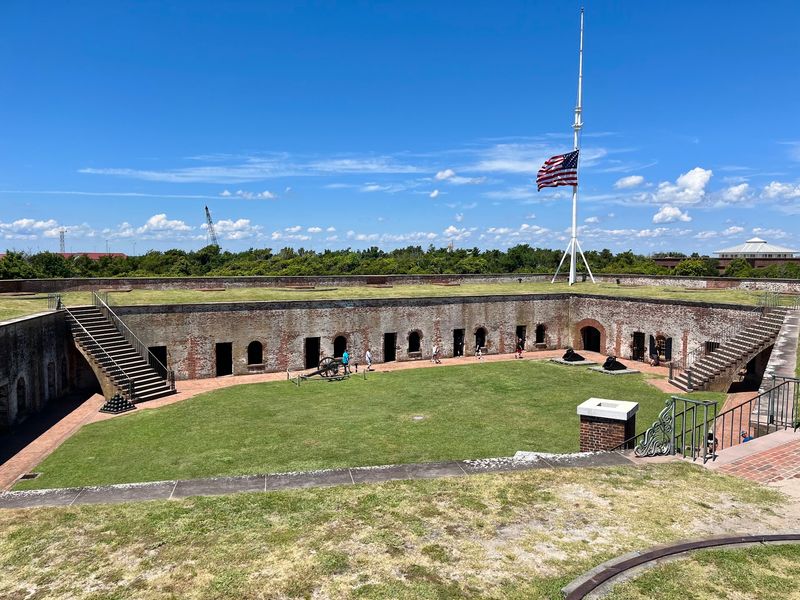
From the air, the shape looks almost like a giant star pressed into the sand.
That pentagon design was no accident, because five sides let defenders watch every direction at once.
Workers spent eight years building it, starting in 1826 and finishing in December 1834.
The fort belonged to the Third System, a big national plan to protect important harbors along the American coast.
Its job was to guard Beaufort Inlet, one of the deep-water doorways into the coast of North Carolina, where ships carried goods and people in and out.
The name honors Nathaniel Macon, a well-known U.S. Senator from the state.
He served for decades and was respected for his simple, honest style.
Walk the outer path today and you will notice how the brick walls rise from a grassy ditch called a moat.
Seabirds glide overhead, and the inlet glitters just beyond the trees.
It is easy to imagine sailors spotting the fort from their decks and knowing they had reached a protected harbor.
Fun fact: the fort went on to serve during the Civil War, the Spanish-American War, and World War II. Few buildings on this coastline have such a long record of duty.
Twenty-Six Vaulted Rooms Hide Behind Walls More Than Four Feet Thick
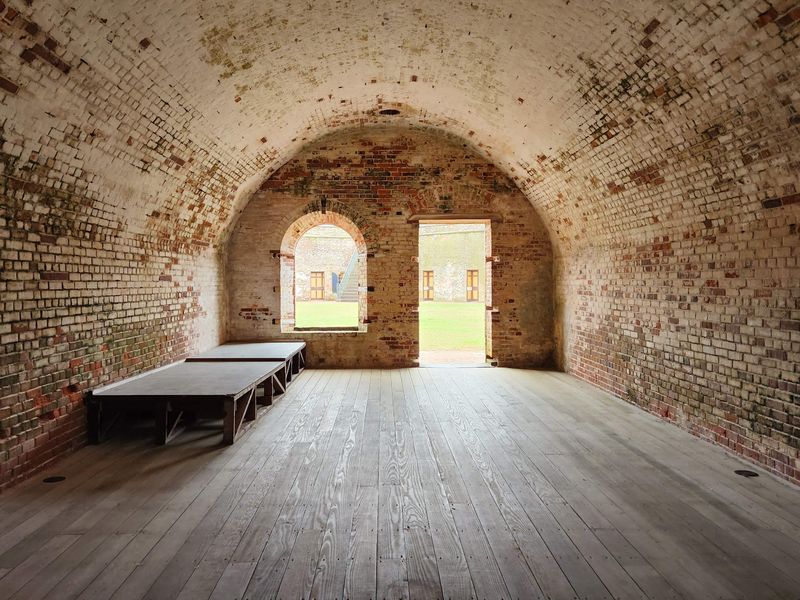
Cool air greets you the moment you step through an arched doorway.
Even on a steamy July afternoon, the thick brick keeps these rooms shady and calm, like a cellar that smells faintly of old stone and sea air.
Inside the fort, 26 vaulted rooms called casemates line the walls.
Their curved ceilings spread out weight, which helped the structure stay strong.
The walls themselves stretch more than four feet thick, wide enough that you can rest your hand on the doorframe and feel how solid they are. Many casemates now hold exhibits showing everyday life over the years.
You might peek into soldiers’ quarters with simple bunks, a commissary stocked with supplies, or a room displaying uniforms on mannequins.
One room even holds a reproduction cannon in a gun room setting.
Plan on at least two hours if you want to read every sign.
Moving slowly pays off, because small details like worn brickwork and the fort’s reconstructed bread oven help bring everyday military life into focus.
Early mornings, right after the park opens at 8 a.m., usually feel quieter.
That calm lets you hear your own footsteps echo under the arches.
An 11-Hour Civil War Bombardment Left Its Mark On These Brick Walls
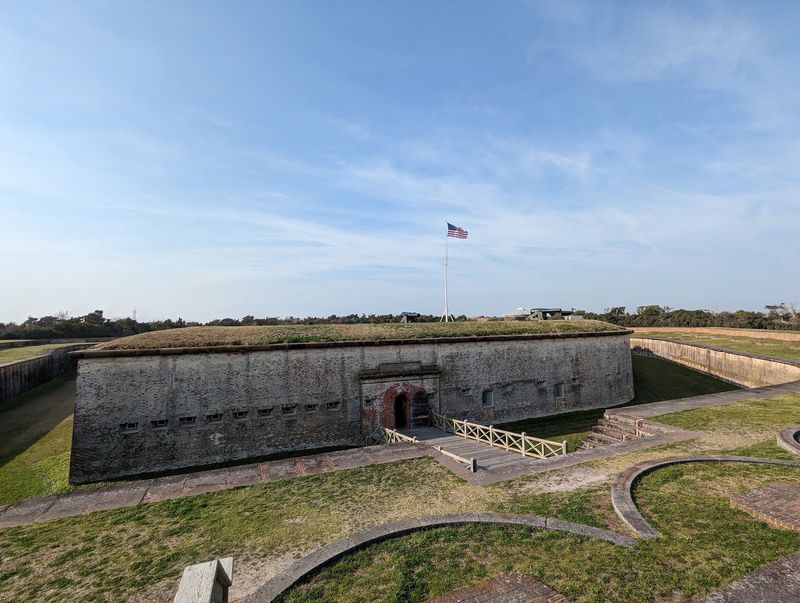
Spring of 1862 brought hard days to this sandy point.
Union forces had already moved through the area, and by late March they began a siege meant to take the fort from its Confederate defenders.
The siege lasted from March 23 to April 26, 1862. Its biggest moment came on April 25, when guns on land and ships at sea pounded the fort for about 11 hours.
The defenders raised a white flag that evening, and the official surrender followed the next day.
Look closely as you walk, and the past still shows.
Chipped bricks and scarred stone steps reveal where heavy shots struck, and photos taken after the surrender captured damage across the walls.
These marks are some of the most powerful details in the whole park.
Historians point to this event as a turning point in North Carolina coastal history and beyond.
Newer, stronger cannons proved that brick forts from the Third System were no longer as safe as builders once believed.
Run your eyes along the walls slowly. Each dent is a quiet reminder of a long, loud day that changed how the country thought about protecting its shores.
Daily Guided Tours Take Visitors Through Nearly Two Centuries Of Military History
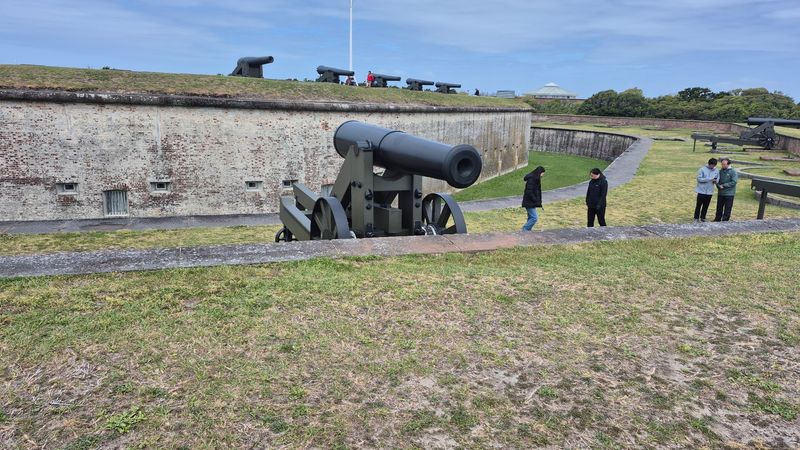
Good stories need a good storyteller.
That is exactly what you get when a park ranger gathers a small group near the entrance and starts unfolding the fort’s long timeline.
Tours last about 45 minutes and cover a lot of ground.
You will hear how the fort was built, what happened during the Civil War, and how soldiers returned for the Spanish-American War and later World War II.
Rangers love questions, so curious kids often end up steering the conversation. Timing depends on the season:
From mid-April to mid-October, tours start at 11 a.m., 1 p.m., and 3 p.m. From mid-October to mid-April, one daily tour begins at 1 p.m. Admission to the park and fort is free.
Before the tour, stop by the visitor center.
A short film offers a helpful overview, and the museum displays posters, artifacts, and models that set the stage nicely.
The gift shop also sells small keepsakes, including challenge coins that support the park.
Wear comfortable shoes, since the route includes stairs and uneven ground. A water bottle helps too, because summer sun bounces off the brick and warms the courtyard quickly.
Musket Demonstrations Bring Another Piece Of The Fort’s Past Back To Life
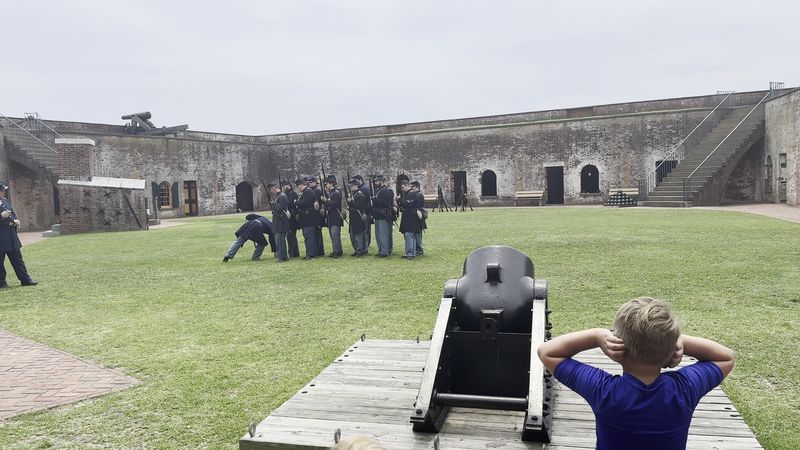
Smaller doesn’t mean less exciting.
While the cannon gets the big crowds, the musket demonstration offers a closer, more personal look at what a soldier’s day really involved. Costumed interpreters walk visitors through each careful step of loading and handling a historic musket.
They explain how soldiers trained, what gear they carried on their belts, and why patience mattered so much.
Depending on the program, you may also learn about flintlocks or rifles from different eras of the fort’s history.
Most demonstrations end with a blank firing.
The crack is sharp and quick, followed by a small cloud of smoke that hangs in the salty air for a moment. Standing only a few yards away makes the past feel surprisingly near.
Keep an eye out for Small Arms Demonstration listings on the park calendar.
These programs have appeared regularly, sometimes weekly on Wednesdays during busier months.
Bring a notebook if you have young history fans along.
Jotting down a fact or two keeps them engaged, and the interpreters are usually happy to answer follow-up questions once the smoke clears and the crowd begins to drift toward the next exhibit.
Ocean Beaches And Maritime Trails Sit Just Beyond The Historic Ramparts
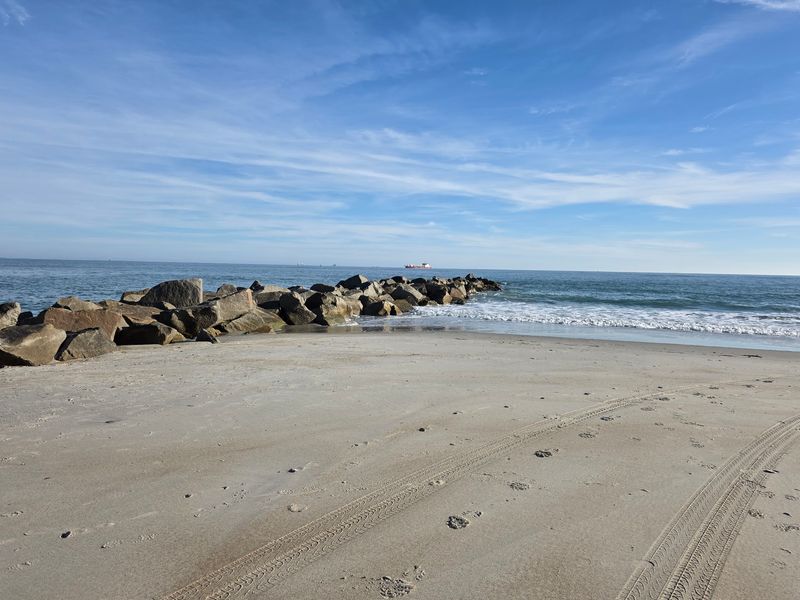
Climb to the top of the ramparts first.
From up there, the view sweeps across Beaufort Inlet, over twisted live oaks, and out to waves rolling onto pale sand. Once you head down, the park opens into more than a mile and a half of ocean shoreline.
Families spread towels on the lifeguarded swim beach in summer, where a bathhouse and snack bar make long afternoons easy.
Others wander the waterline hunting for shells, try surf fishing, or simply listen to gulls squabble over the breakers.
Nearly five miles of trails and beach paths wind through the park.
The Elliott Coues Nature Trail forms a 3.2-mile loop through salt marsh, maritime forest, and sand dunes, linking the fort with the swim beach.
Starting on the sunny end lets you finish beneath cool, shady branches.
Short on time?
Yarrow’s Loop covers just a quarter mile, and its signs introduce local plants and animals.
Free beach wheelchairs are available for visitors with limited mobility, while accessible parking and restrooms serve the beach area.
Few spots in North Carolina pair history and seashore this neatly. Pack sunscreen, bug spray, and a picnic for the full experience.
Check The Event Calendar Before Visiting If Hearing A Cannon Fire Is Your Main Goal
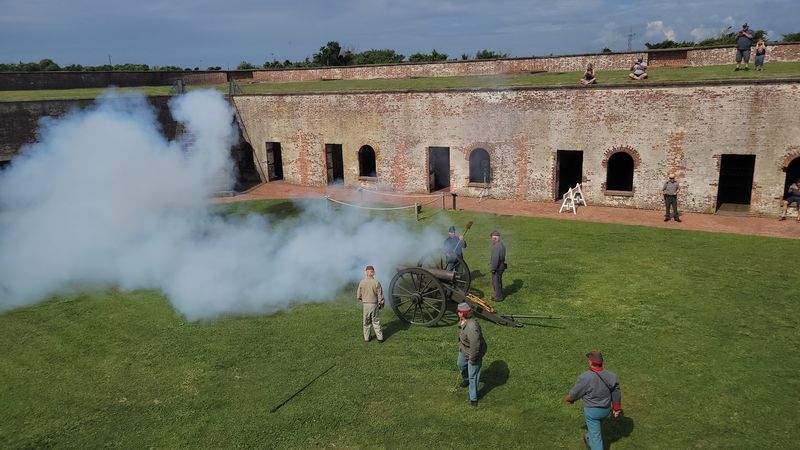
Nothing stings quite like arriving the day after the big boom.
Cannon firings are special events, not hourly shows, so a little planning goes a long way.
The best source is the official North Carolina State Parks website, where the Fort Macon events page lists upcoming programs.
Spring and fall usually bring the busiest schedules, with firings, musket demonstrations, guided walks, and occasional music.
Some visitors also time arrivals for evening ceremonies when the schedule includes them.
Here are a few smart planning tips:
Check the calendar again the morning of your trip, since coastal weather can shift plans. Hours vary by park area and season; in October, the Fort Parking Area runs from 8 a.m. to 6 p.m., while the fort and visitor center are open from 9 a.m. to 5 p.m.
Dogs are welcome on the grounds but not inside the fort itself.
Build your day around the event time.
Explore the casemates beforehand, watch the demonstration, then cool off at the beach afterward while the sun drops lower over the inlet.
Donations help keep these programs running for future guests, and a box at the visitor center makes giving simple.
With the right date circled, you can head home with a story worth repeating.