This Peaceful California Pond Hides A Surprising Gold Rush Past Beneath Its Cliffs
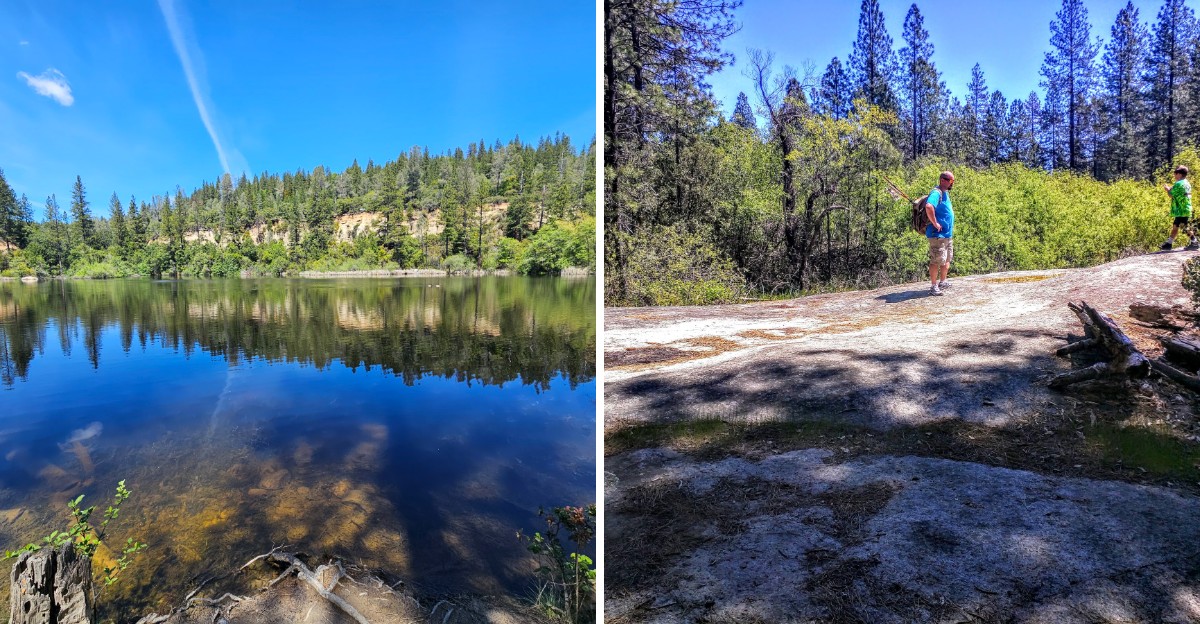
Some places have a way of making you forget what time it is. A quiet stretch of water, towering cliffs, and a peaceful trail can do that, especially when the surroundings seem far removed from everyday life.
But this little pond has a secret, and it goes back much further than the hikers who visit today.
At first glance, it looks like a lovely spot for a short outdoor escape. The scenery is beautiful and there is plenty to appreciate without knowing anything about its past.
One peaceful corner of California has a Gold Rush connection that makes its quiet surroundings even more intriguing.
What makes the place so interesting is the contrast between what you see and what you might never suspect.
There is more to this landscape than its pretty reflections and rocky backdrop.
And once you learn why this particular spot matters, an ordinary walk starts to feel like a little historical discovery.
A Peaceful Pond With A Rough Mining Past
Few visitors guess that the calm water in front of them sits inside a former gold mine.
The pond formed as a direct result of hydraulic mining in the 1800s, when crews tore apart the hillside in search of gold.
Workers back then filled the air with the roar of water cannons and the crash of falling rock and gravel.
Things sound very different now. Birdsong, rustling leaves and the soft crunch of footsteps on a dirt path have replaced the noise of heavy industry.
Nature has slowly taken back much of the land that was once worked so hard.
The City of Nevada City bought the property to protect its history and keep open space around town. All together, California’s Hirschman’s Pond property covers about 85 acres.
That land now supports a wide mix of wildlife and gives people a simple place to walk, sit and look around.
The contrast is the real draw here. A short stroll may feel relaxing on the surface, yet every cliff and boulder hints at a much rougher chapter.
Bringing a little curiosity along can turn an easy outing into a living history lesson.
The Cliffs Were Carved During The Gold Rush Era
Those steep, rugged walls around the water were not shaped by thousands of years of weather. People made them, and they did it with water.
Hydraulic mining used high-pressure jets to wash away whole hillsides and expose gold hidden in the gravel.
The method was fast and powerful, but it was also very destructive. Huge amounts of rock and soil were knocked loose and sent rushing into nearby streams and rivers.
Leb Hirschman ran one of the main hydraulic mines in Nevada City, known as the American Hill Diggins. The pond now sits on the site of that old mine.
When the mining washed away the original mountainside, it left behind the cliffs that stand there today.
Standing near the base, visitors can still see the layered, scraped look of the rock faces.
Some hikers compare the scene to a smaller version of Malakoff Diggins, a much larger mining site in the same county.
Moss and plants have softened some of the edges over time. Even so, the shapes remain clear reminders of how far miners went for a shot at gold.
The Five-Acre Pond Has An Unusual Origin
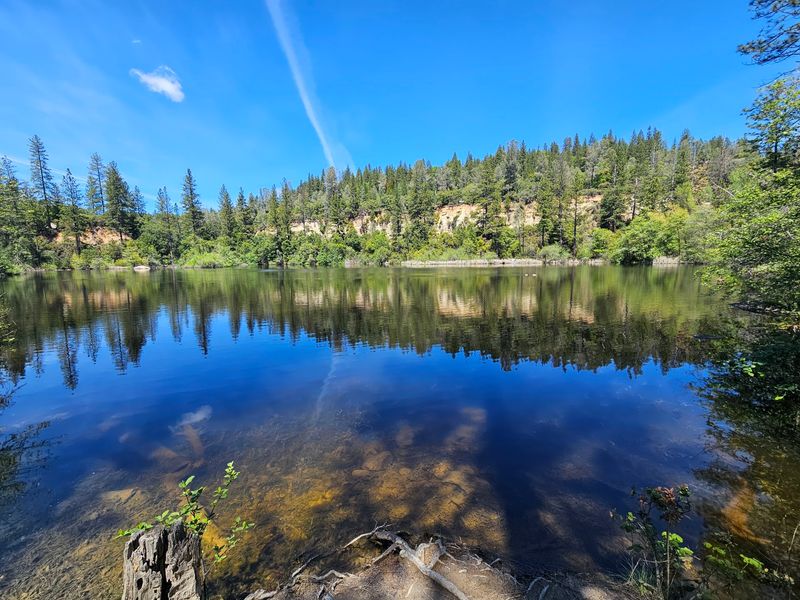
Most ponds in nature take ages to form, but this one appeared in a matter of years. The water covers about five acres and is considered a man-made pond.
Its beginnings trace back to hydraulic mining activity around 1884.
So how exactly did the water get there? There is more than one explanation, and that mystery adds to the fun.
One theory says a mining tunnel collapsed in the mid-1880s, and water slowly gathered in the low spot left behind.
Another account describes the pond as a pit dug out by hydraulic mining. In that version, natural springs at the base of the tall cliffs keep it filled.
Both stories point to the same basic idea. Human digging created a hole, and nature supplied the water.
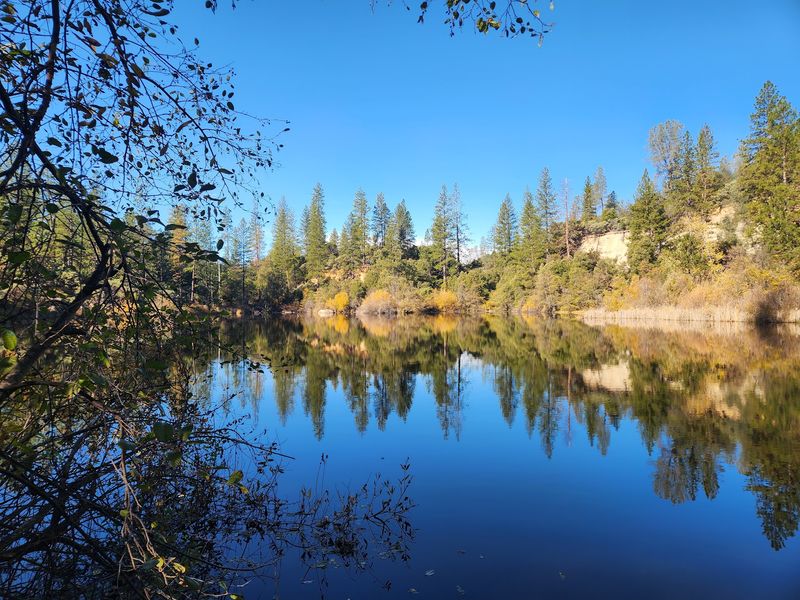
Visitors today see a clear, quiet surface that gives no hint of the chaos that came first.
Fish sometimes jump, turtles may peek out and the reflection of the cliffs can look almost like a painting on still days.
Families might even pick a favorite explanation and look for clues along the shoreline. Either way, the pond proves that even a messy past can lead to something peaceful.
The Trail Begins Just Outside Historic Nevada City
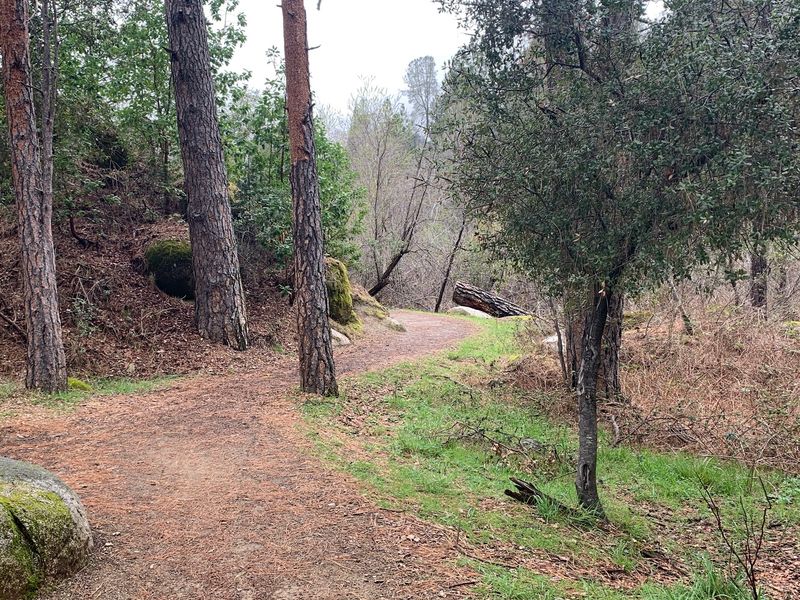
Getting from old storefronts to tall pines takes surprisingly little time here. The Hirschman Trail starts about one mile from downtown Nevada City.
The town is known for its well-kept 19th-century buildings, so a visit can easily combine a stroll through history with a walk in the woods.
The trailhead sits along Cement Hill Road in the Sierra foothills. Some visitors have mentioned that GPS can have a little trouble finding the exact spot.
Once there, the change in mood happens fast. Traffic sounds fade as the path enters shady trees, and the air may smell of pine and damp soil.
The trailhead area is open daily from 7 a.m. to 8 p.m., according to its listing, though hours can change.
It is close enough to town for a quick morning or afternoon outing. Many people use it for a short walk that still feels like a real break from busy streets.
Pairing a walk here with a meal or shopping trip in town can make for a relaxed day. Comfortable shoes and a water bottle are about all most people need.
A Short Walk Leads Right To The Water
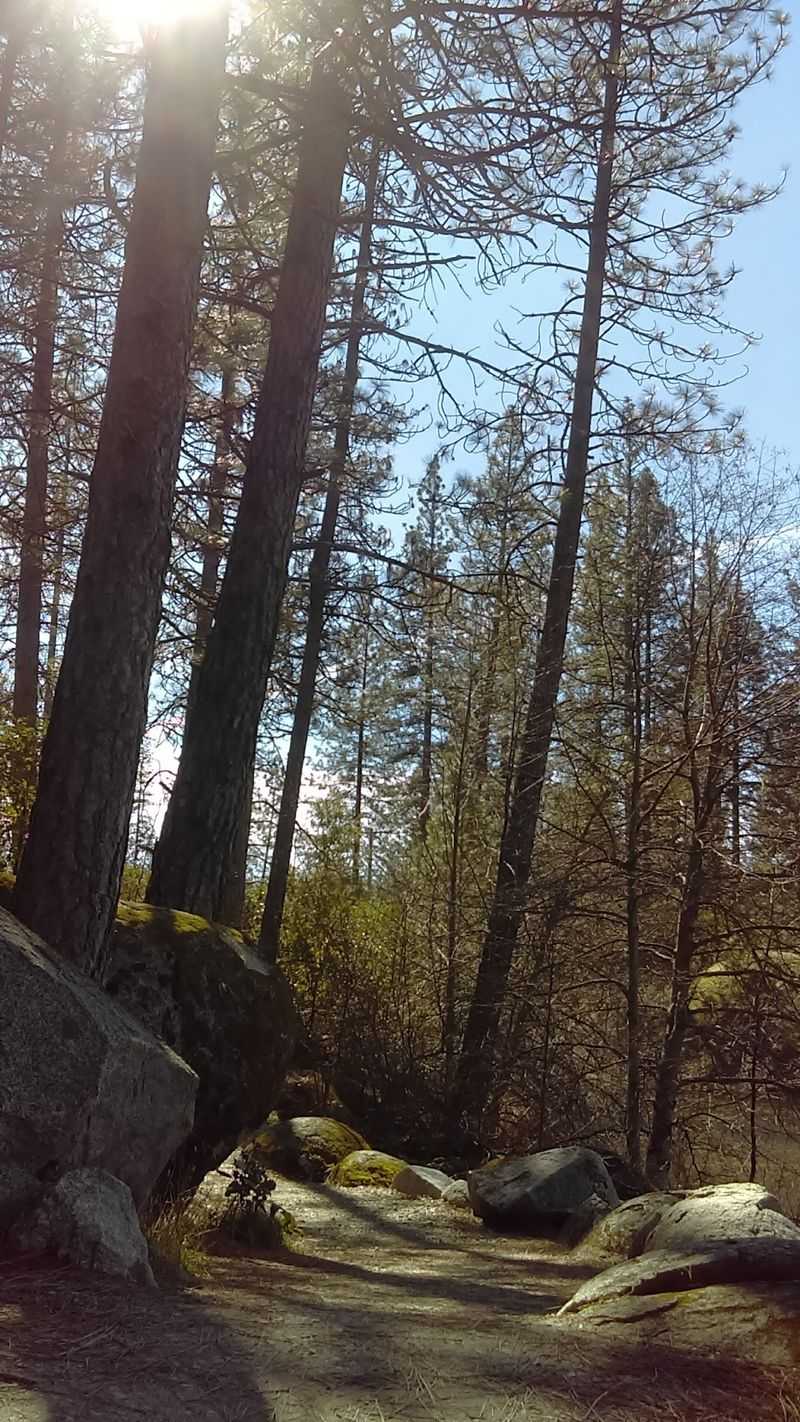
Good news for anyone who wants scenery without sore legs. The first 0.4 miles of this California trail, starting from the east end, were built to ADA standards.
That means this stretch is designed for barrier-free access and is suitable for wheelchairs. The walk to the pond and back adds up to roughly half a mile.
For many families, that is just right. Young children, older relatives and casual walkers can all reach the water without much strain.
The path in this section is wide enough for two people to walk side by side. Plenty of shade from the trees helps keep the walk comfortable on warmer days.
Mile markers and information boards along the way help visitors track distance and learn a bit of history.
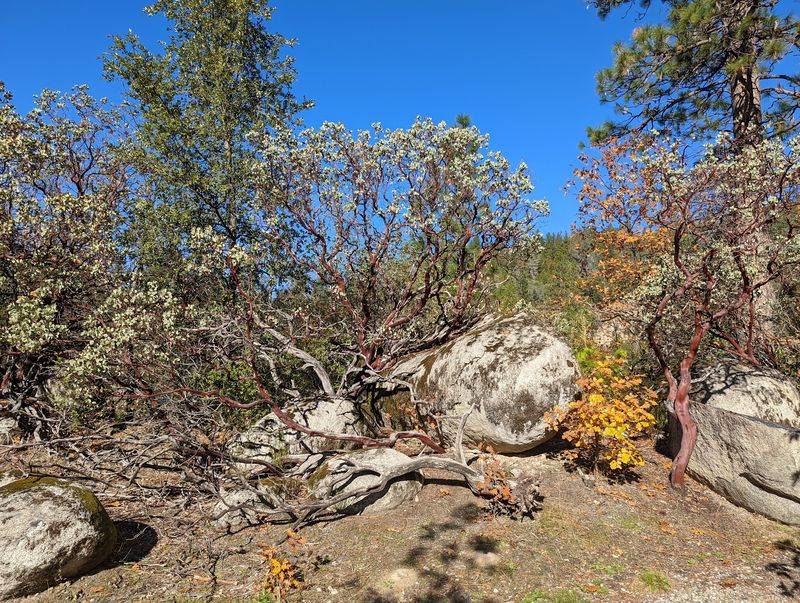
Large boulders, many covered in soft green moss, line parts of the route. Kids may enjoy counting them or spotting the biggest one.
After rain, the trail can turn a little muddy, so sturdy shoes might be a smart choice. Bringing your own water is wise since there are no services along the path.
This short section gives a full taste of the area in very little time.
A 40-Foot Wooden Trestle Adds Historic Character
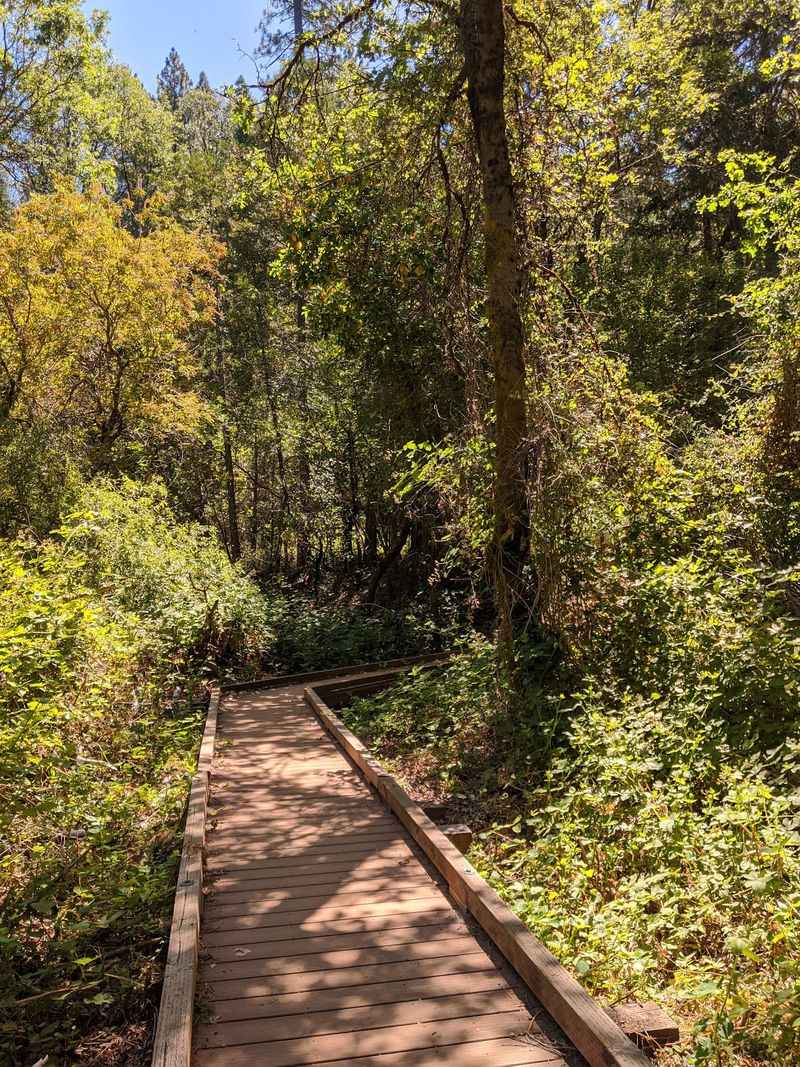
Timber beams and crisscrossed supports give one part of the path an old-time look. A 40-foot wooden trestle stands along the first section of the trail.
Builders designed it to copy the style of railroad and water-flume construction from the late 1800s.
Flumes were wooden channels that carried water across hills and gullies. Miners depended on them to move the huge amounts of water needed for hydraulic mining.
Railroads used similar trestles to cross uneven ground. Walking across this structure can feel like a small step back in time.
Footsteps make a hollow, solid sound on the boards that differs from the soft dirt trail.
Looking down at the supports, visitors can get a sense of how pioneers solved tricky building problems with wood and muscle.
Several other wooden bridges also appear along the trail system. Each one helps hikers cross dips and wet areas with ease.
The trestle is a popular spot for photos, especially with the trees framing it. Kids might enjoy learning what a flume was and imagining water rushing through one.
Pausing here for a moment adds a nice history break to the walk.
Ducks, Geese And Herons Visit The Pond
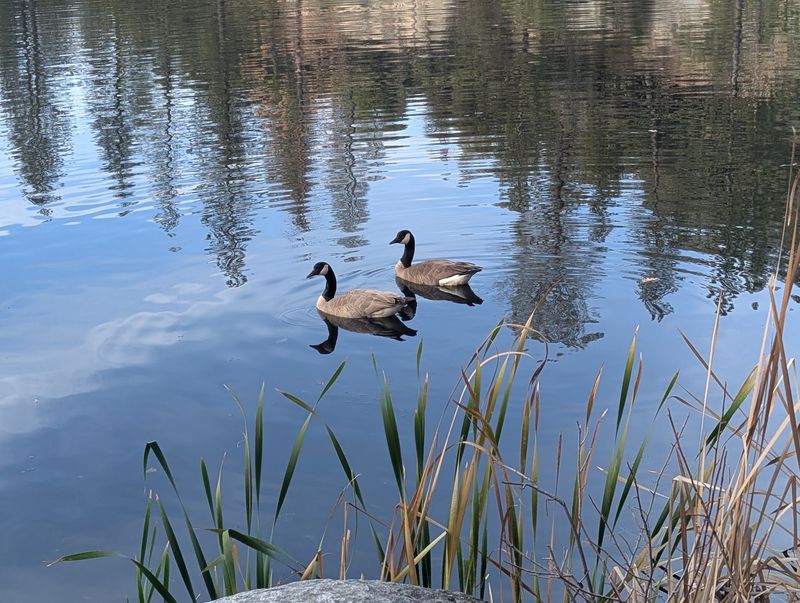
Patience can pay off in a big way at the edge of the water. The pond attracts many kinds of birds, and ducks, geese and herons are common visitors.
Some birds stay year-round while others stop by during migration. Herons are especially fun to watch. They often stand perfectly still in shallow water before striking quickly at fish.
Ducks and geese tend to paddle across the surface in small groups, leaving gentle ripples behind them.
Birds are not the only wildlife here. Western pond turtles and Pacific chorus frogs live in and around the water.
Deer and smaller mammals also roam the area, and dragonflies often zip over the surface in warmer months.
The north side of the pond has no trail access and serves as a wildlife sanctuary. That quiet zone gives animals a safe place to rest and feed.
Visitors who sit quietly may notice turtles peeking out on logs or fish jumping now and then. A small pair of binoculars could make spotting easier.
Keeping voices low and dogs close helps avoid scaring the animals. Early morning or late afternoon may bring more activity, though sightings are never guaranteed.
The Full Trail Stretches 2.4 Miles One Way
Hikers hungry for a longer outing have plenty of trail to explore.
The Hirschman Trail runs 2.4 miles one way, which makes the full out-and-back trip close to five miles. That distance turns a quick stroll into a solid half-day walk for many people.
Elevation changes stay fairly modest, with Bear Yuba Land Trust listing a maximum altitude change of about 150 feet.
Those numbers mean the trail rolls gently rather than climbing hard, though some hikers may feel it more on the return.
The surface is mostly hard-packed dirt. While the eastern part is wide and easy, the path becomes narrower and steeper in some places toward the western end.
Walkers should watch their footing there, especially after rain when it can get slick. Mile markers help with planning.
Visitors can pick a turnaround point that matches their energy and time without needing to finish the whole route.
Some bike riders also use the trail and mention that it connects toward the Deer Creek area.
Packing water, a snack and sun protection is smart for the full distance. Starting earlier in the day may help avoid afternoon heat in summer.
A Small Trailhead Parking Area Keeps Planning Important
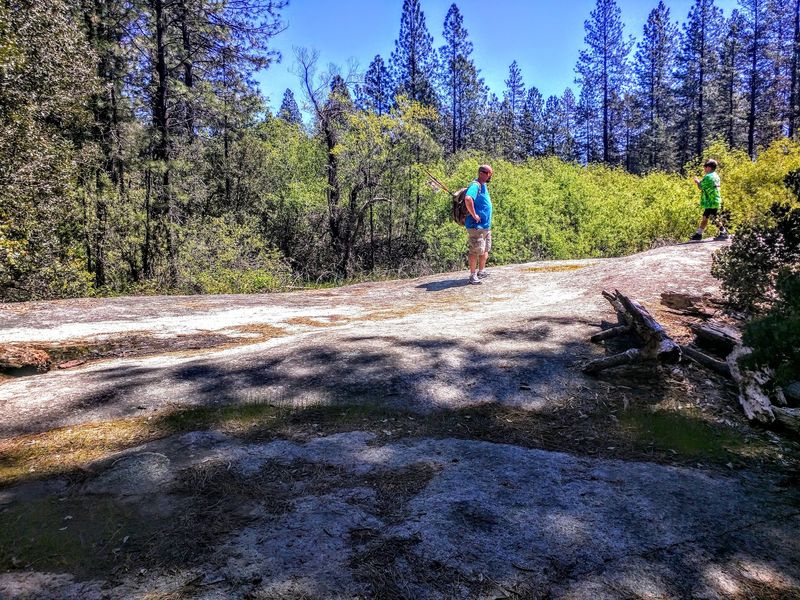
A little preparation can make the whole outing smoother. The trailhead lot along California’s Cement Hill Road is small and fits only around 8 to 10 cars. On busy days, those spots may fill up quickly.
Backup parking is available at the Rood Center, the county government complex nearby. From there, the walk to the trailhead takes about 5 to 10 minutes.
Arriving earlier in the day might improve the chances of finding a spot close by, though that is never certain.
Restrooms are not available at the trailhead. The Rood Center has public bathrooms, so stopping there first is a smart move.
Bringing your own drinking water is also important since none is provided along the trail.
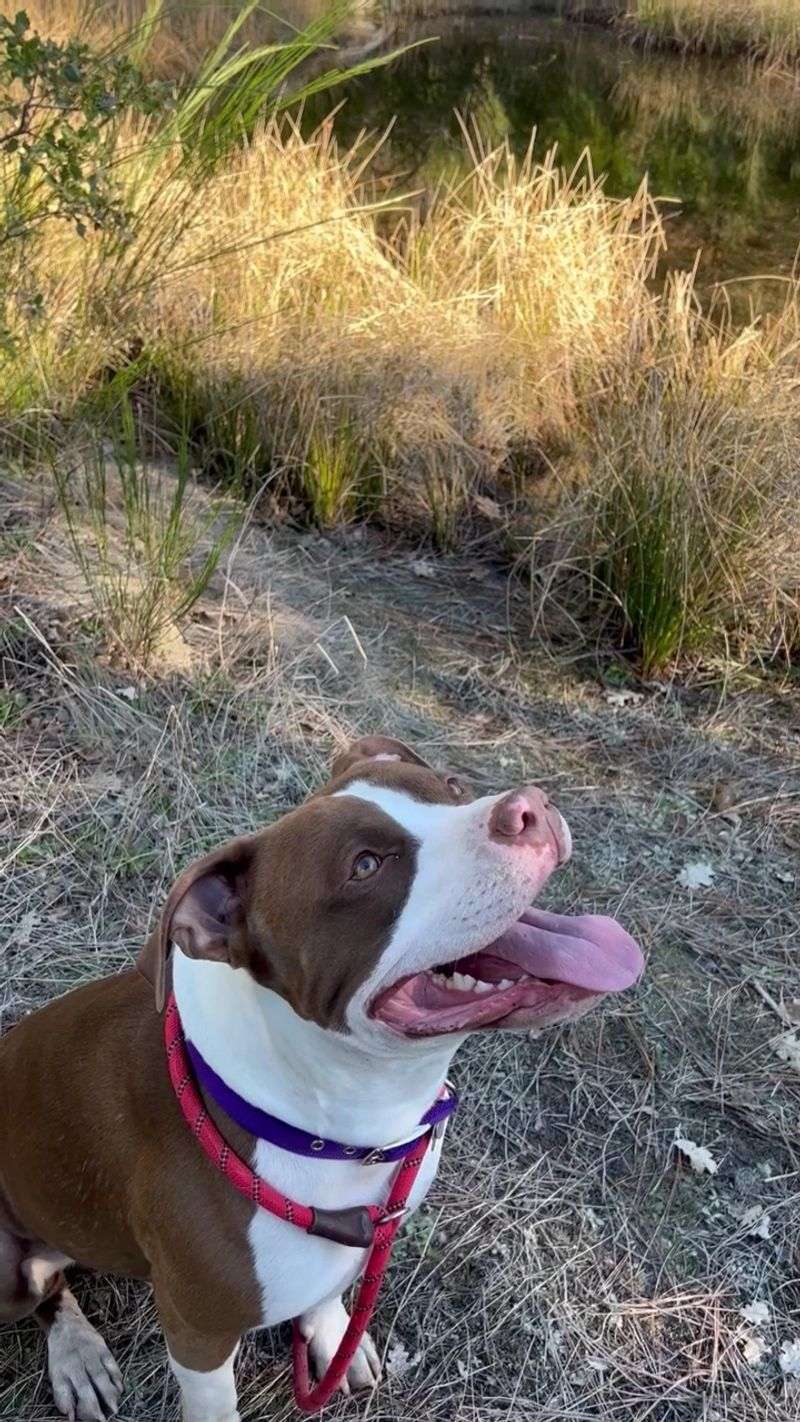
Dogs are welcome, but they must stay on a leash. Waste bags are supplied at the trailhead, which makes cleanup easy.
Some pups may get nervous near sections that run close to the highway, so a firm grip on the leash can help.
Good trail manners keep the experience pleasant for everyone. Stay on the path, share space with bikers and other walkers and respect nearby private homes.
With a bit of planning, the visit can feel relaxed from start to finish.