This Idaho Panhandle Forge Teaches Total Beginners To Hammer Out Their Own Knife
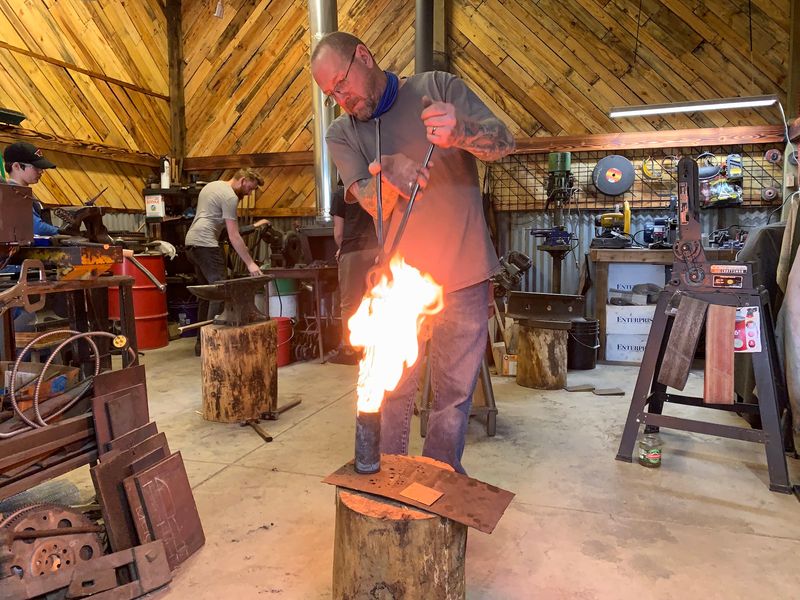
A railroad spike walks in. A steak knife walks out.
That’s the kind of before-and-after story coming out of one small blacksmith shop in North Idaho.
One class even turned old lawnmower blades into machetes, all under a playful zombie apocalypse theme. Other students have hammered out bottle openers, mini swords, and their very first working knives.
Most of them showed up with almost no experience at all.
I like how this place hands you the hammer instead of a pamphlet. You heat the steel, you shape it, and you grind the edge yourself.
The instructor guides, but the work is yours.
I can’t imagine a better answer to the question of what to do on a slow Saturday in Idaho. So how hard could it really be to make a blade from scratch?
A Working Blacksmith Shop Just Outside Rathdrum
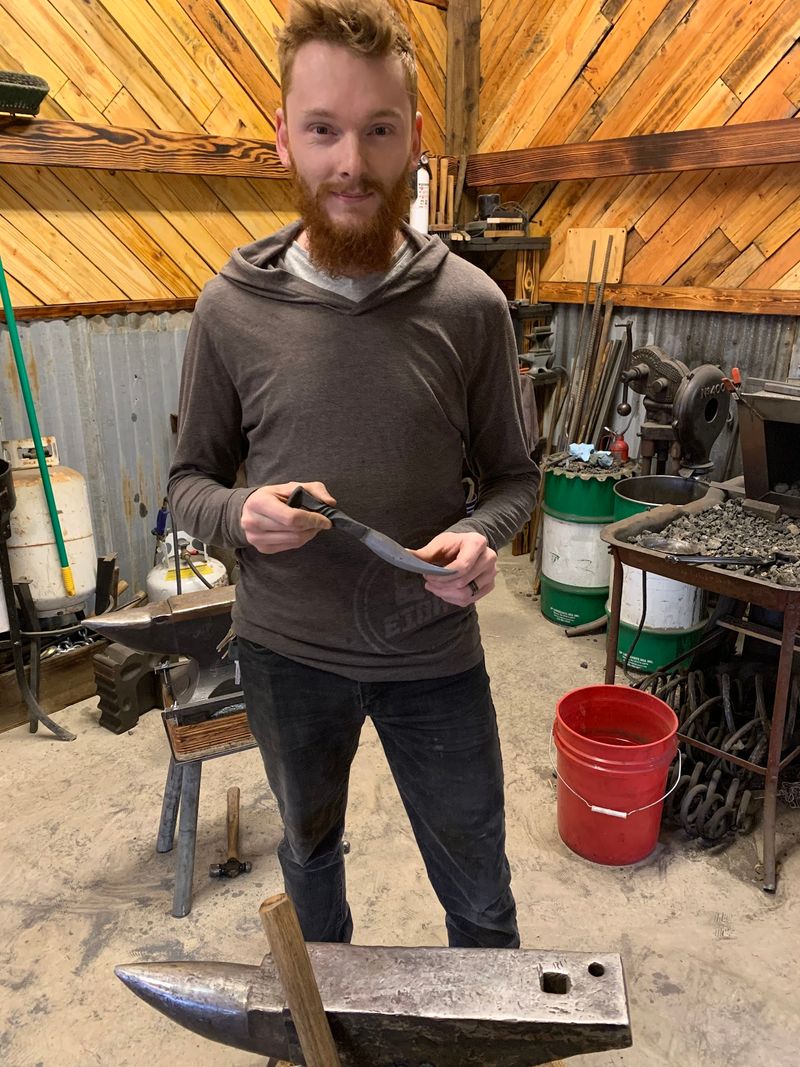
Out on the east side of Rathdrum sits Fire Iron Forge, a working blacksmith shop that doubles as a classroom for curious beginners. The shop teaches people how to turn plain steel into real, usable tools.
Knives are the headliner, and they draw the most attention by far.
Classes here are hands-on from the start. You won’t spend the afternoon watching someone else have all the fun.
Students heat the metal, swing the hammer, and shape their own project with an instructor close by.
Rathdrum sits in the Idaho Panhandle, a short drive from Coeur d’Alene and Post Falls. That makes the forge an easy afternoon trip for most of North Idaho.
Spokane folks aren’t far away either.
The appeal is pretty simple. Plenty of people have always wanted to try blacksmithing but never knew where to start.
One student had wanted to forge since age 15 and found the nearest option was hours away.
Fire Iron Forge fills that gap for the region. It’s a place where total beginners are expected, welcomed, and actually taught.
Nobody needs to show up already knowing which end of the tongs to hold.
One Friend, One Anvil, and a Shop That Kept Growing
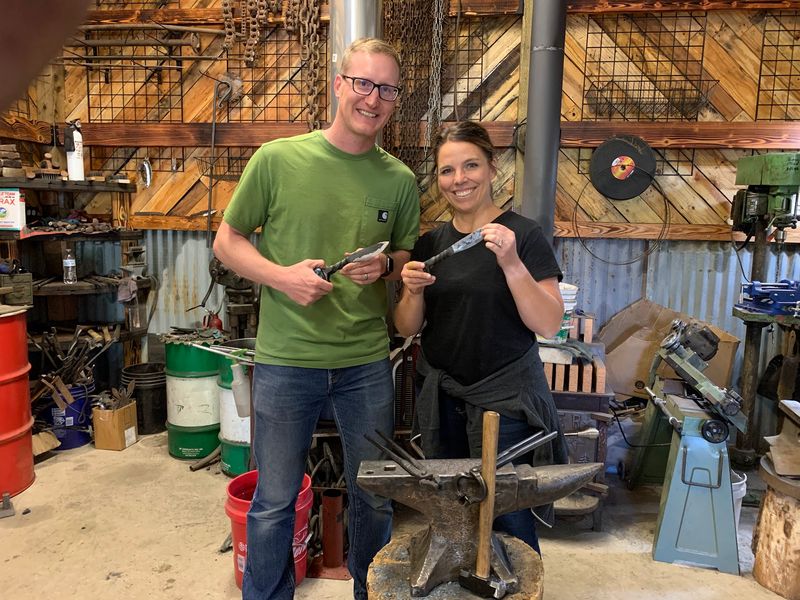
Every forge starts with a first student. For this one, that student was a friend from church back in 2016.
Owner David Walker had worked with metal since he was young, but he got serious about forging in his late twenties.
His love for old-world metalworking came paired with a real drive to teach. That combination shaped everything that followed.
The shop wasn’t built to churn out products for a showroom.
In 2019, the forge moved to North Idaho. It quickly found a place in the local blacksmithing community.
Since then, it has become a go-to spot for Panhandle residents who want to learn the trade.
Fire Iron Forge also does custom ironwork beyond its classes. The shop has forged hardware, tools, furniture, and decorative weapons.
It also helps other local smiths sell their work and brings them in on custom jobs.
That community focus says a lot about the place. Teaching isn’t a side hustle here.
It sits right at the center, and the shop has offered an apprenticeship path for students who want to go much further than a single class.
Your First Knife Starts as a Glowing Bar of Steel
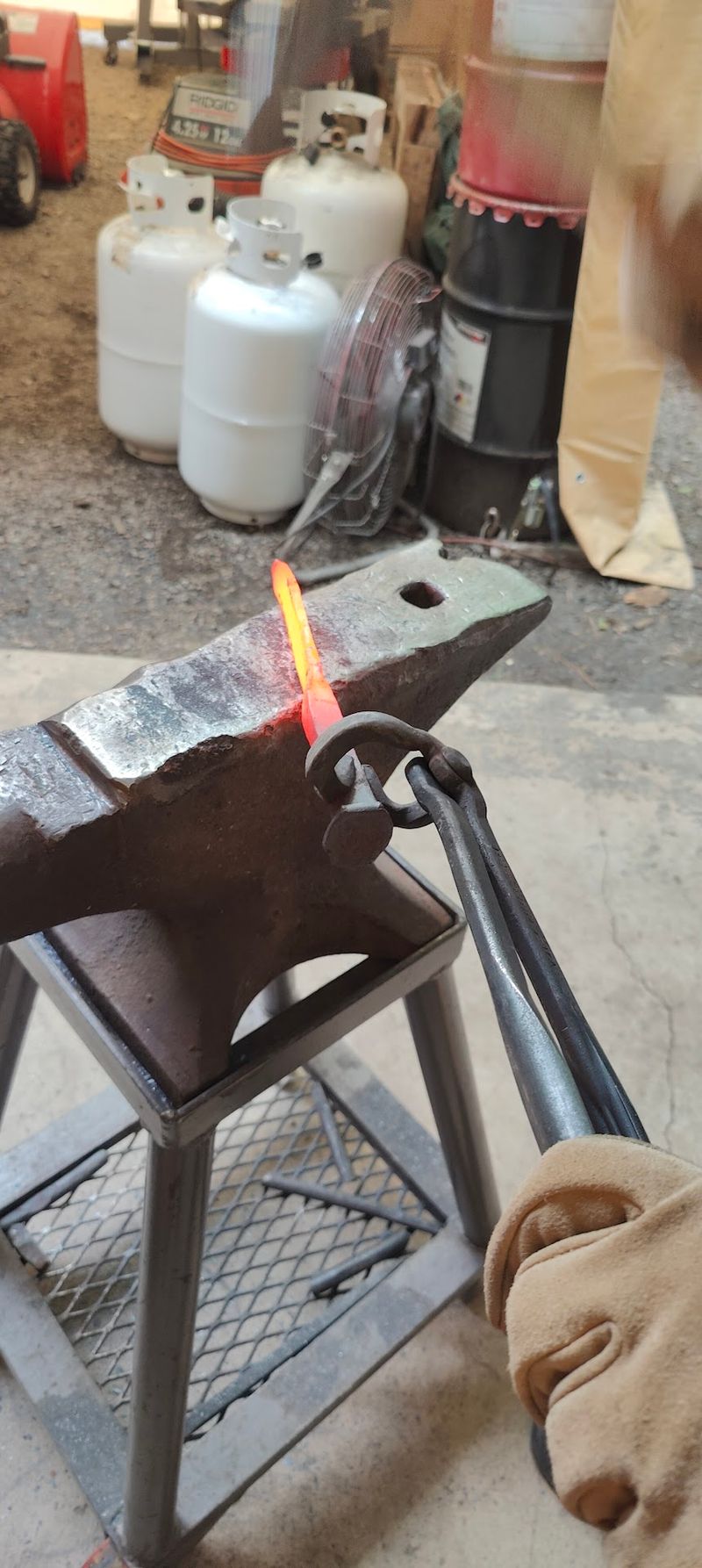
Hot steel bends. Cold steel doesn’t.
That single lesson sits at the heart of the knife making class, the most popular offering at Fire Iron Forge.
Students learn the full journey from bar to blade. The process covers shaping a blade profile, forming bevels, and tapering the metal.
Then comes heat treating, which hardens the steel so it can hold an edge.
After the hammer work, the grinding begins. Students refine the edge and finish the blade.
Handle work rounds things out, so you leave with a complete knife instead of a half-done project.
One intro class student came away talking about steel properties and different hammer forming techniques. He also mentioned hardening and heat treating.
That’s a lot of real knowledge packed into one session.
The goal isn’t perfection on day one. Some students leave with a beautiful blade, and others leave with something that clearly looks like a knife.
Either way, it cuts, and it’s yours.
Advanced classes take things further. Some introduce forge welding and pattern-welded Damascus steel for those who get hooked.
Railroad Spikes, Lawnmower Blades, and Other Surprise Raw Materials
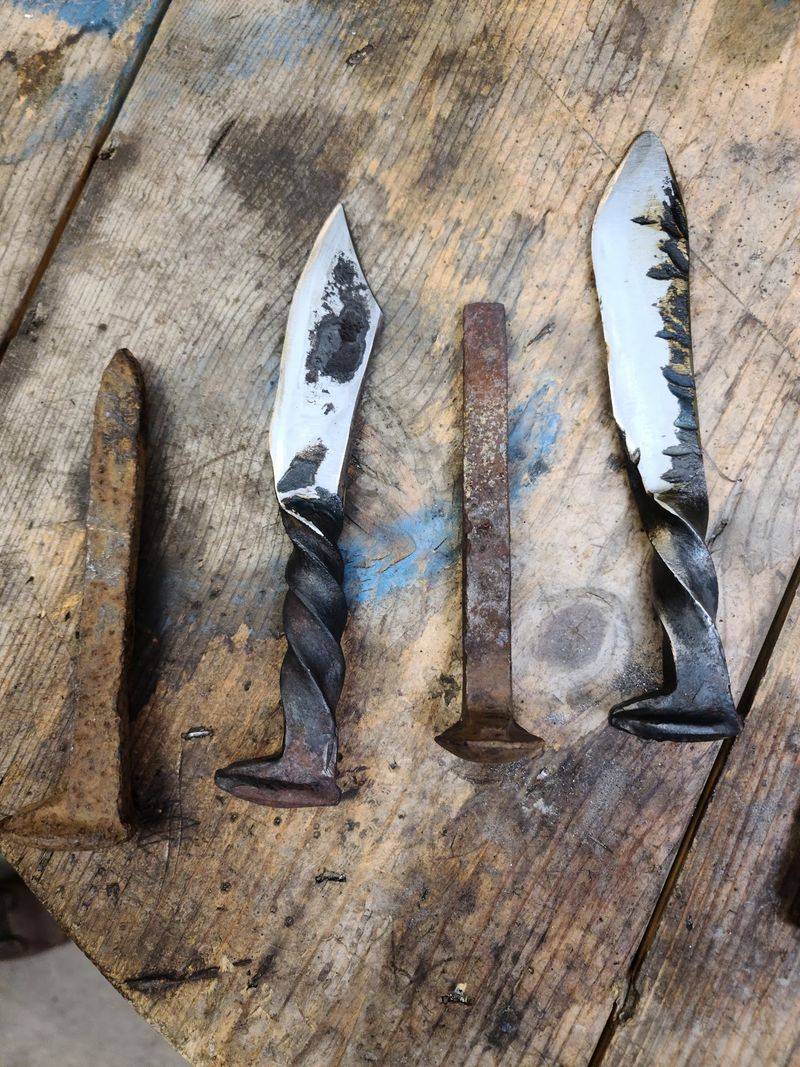
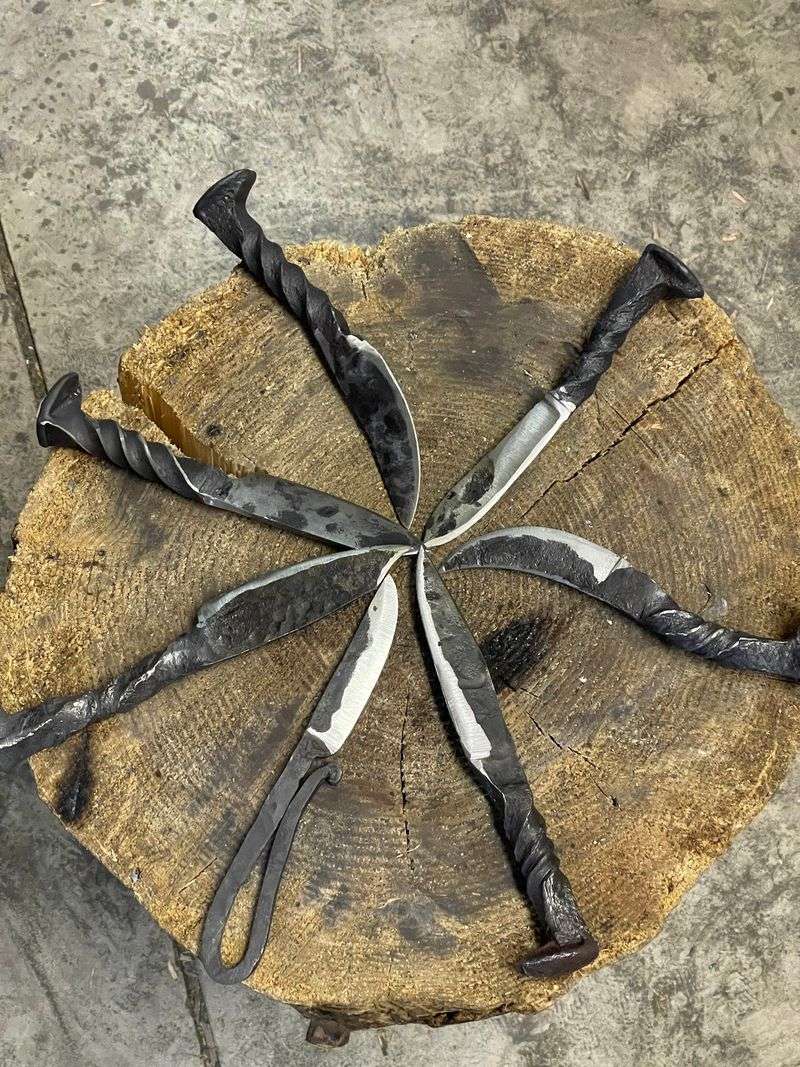
Who knew a lawnmower blade had a second career waiting? At Fire Iron Forge, one themed class turned old mower blades into genuine machetes.
It ran under a zombie apocalypse banner, which is about as fun as class names get.
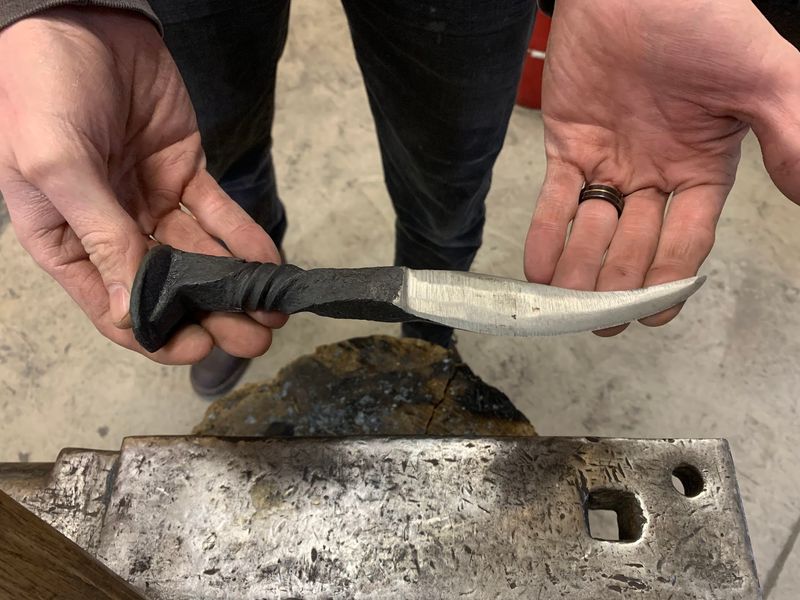
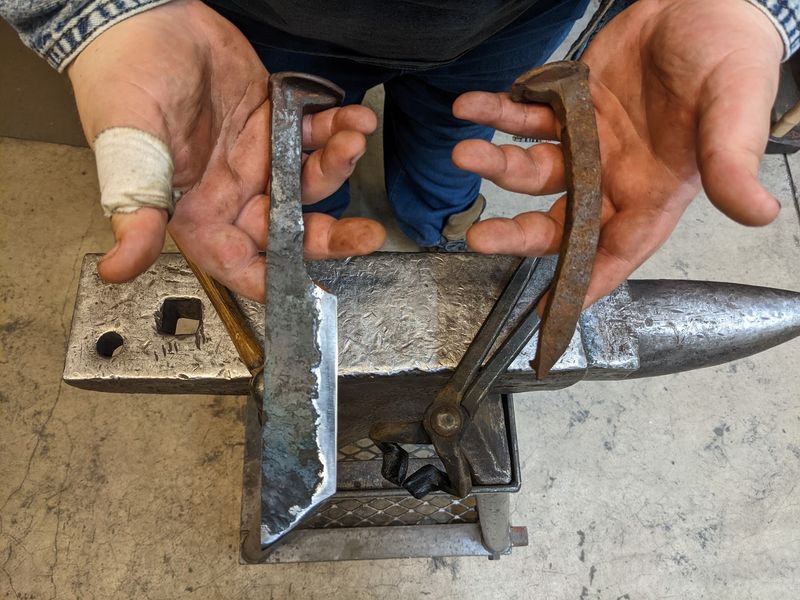
Railroad spikes get new life here too. One student booked a knife class with his father as a birthday gift.
The pair forged knives from spikes, and he walked away with a new steak knife.
That kind of project choice adds personality to the experience. You’re not just making a generic blade.
You’re taking something with history and turning it into a tool you’ll actually use.
Knives aren’t the only option either. Students have forged bottle openers and mini swords.
The shop also offers single project classes, where you focus on making one specific item in a single session.
The variety helps when you’re picking a class for someone else. A gift certificate for a mini sword lands differently than one for a knitting class.
Good luck topping that at the next family birthday in Idaho.
Instructors Who Let You Do the Swinging
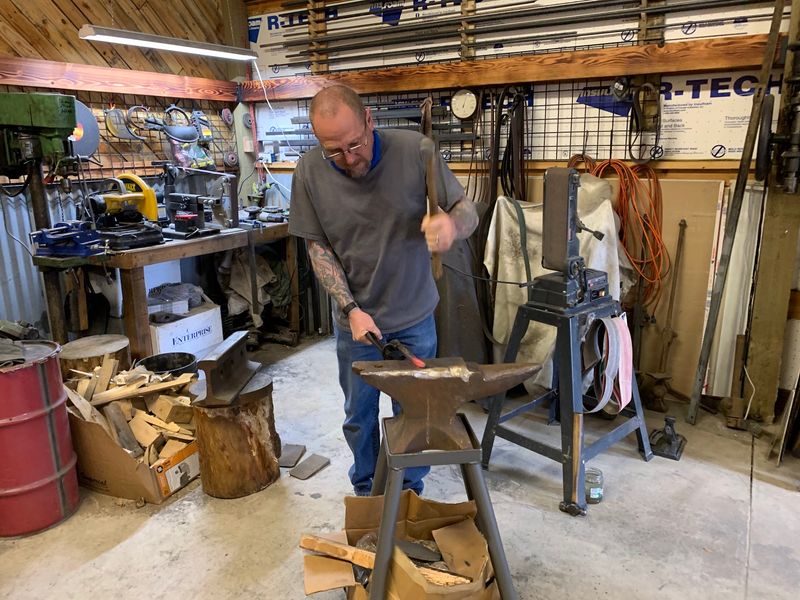
Teachers come up again and again when people talk about this shop. David, Ed, and William have all led classes here.
The common thread is patience, plus a willingness to answer every question.
The teaching style strikes a smart balance. Instructors explain each step, then step back so students can do the work.
When something drifts off track, they offer advice instead of grabbing the hammer.
Safety comes first, before any forging begins. Students learn proper form and safe habits right away.
That foundation matters when you’re standing next to a hot forge for hours.
Instructors also move between students well. In one knife class, the teacher juggled several people working on different projects.
Everyone still got help when they needed it.
A few classes have even run past their scheduled end. Instructors stayed late to help students finish grinding their blades.
That’s the kind of detail that tells you the teaching matters more than the clock.
For nervous beginners, that support changes everything. One student worried she lacked the strength or control for metalwork.
With steady coaching, she made a nearly perfect bottle opener.
A Clean, Organized Shop Built for Learning
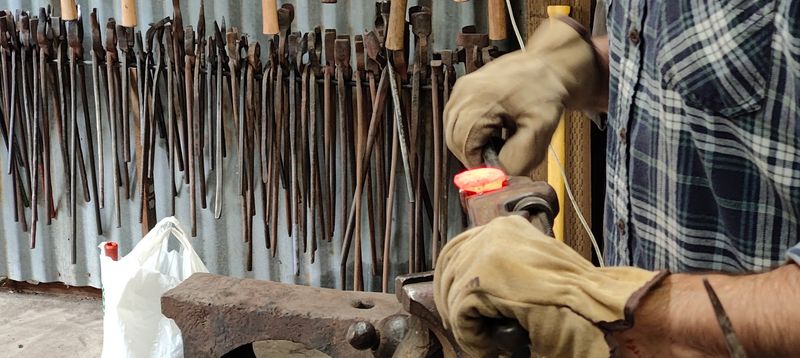
Tidy isn’t the first word most people link to a forge. Yet the shop at Fire Iron Forge is clean, organized, and well equipped.
That makes a real difference when beginners are learning where everything goes.
A well-arranged space keeps classes moving smoothly. Tools sit where you expect them.
Instructors can focus on teaching instead of hunting for the right pair of tongs.
The work space itself has a cool factor. It’s a real blacksmith shop, not a craft room with a toy forge.
You get professional tools and actual hot steel.
Beyond knives, the shop teaches blacksmithing fundamentals. Those classes cover hammer control, heat management, tapering, bending, twisting, punching, and drifting.
Students can even forge their own punches, chisels, hammers, and tongs.
Small classes keep the experience personal. Fewer students means more one-on-one time with the instructor.
It also means you’re not waiting long for your turn at the forge.
That setup suits people who learn by doing. Reading about forging only goes so far.
Standing at an anvil in a proper shop teaches faster than any video.
Date Night With Sparks That Are Totally Literal
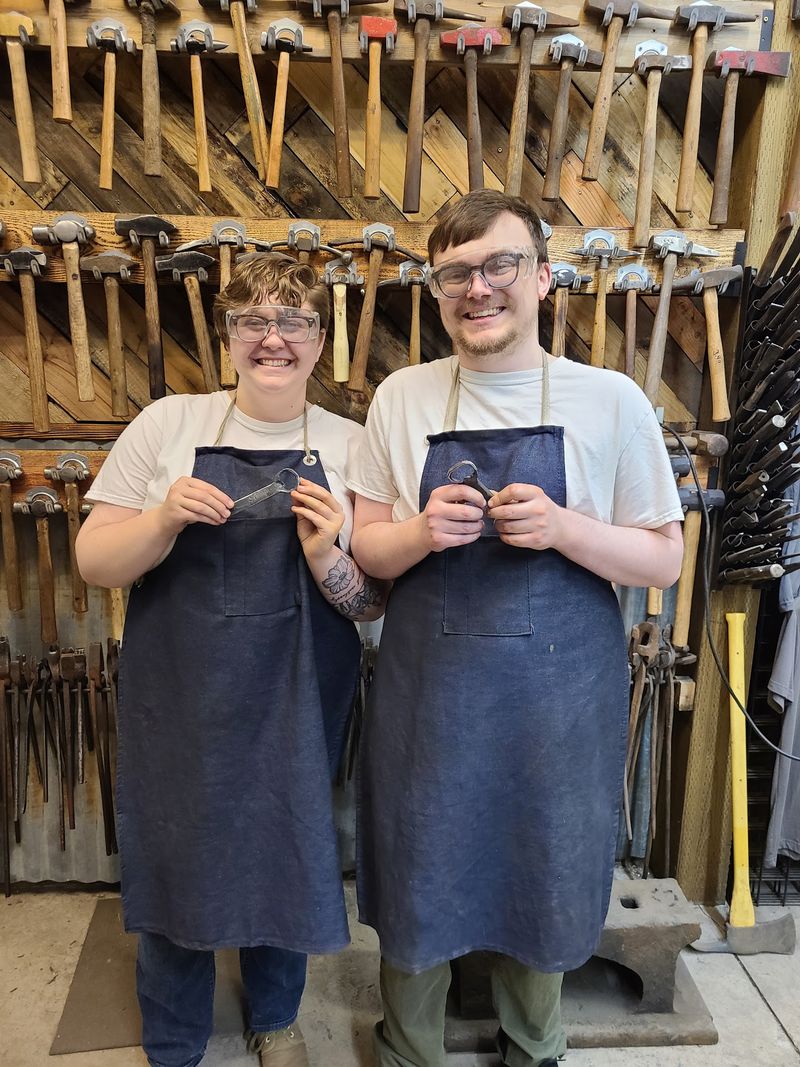
Dinner and a movie is fine. Forging a knife side by side is a much better story.
Fire Iron Forge offers date night classes built for couples with zero blacksmithing experience.
The sessions are designed to be fun and relaxed. Nobody expects either of you to be a natural.
You simply learn together, take turns at the hammer, and see what happens.
Couples have made knives and bottle openers in these classes. One husband and wife team planned to come back right after finishing.
Another couple called their date night knife class a great time.
The best part might be the souvenir. Most date nights leave you with a receipt.
This one leaves you with something you hammered into shape yourselves.
It also works for anniversaries and surprise gifts. One spouse booked a class as a surprise for her husband.
That’s a gift that won’t end up in a drawer.
For North Idaho couples tired of the usual routine, this is a fresh option. It’s memorable and a little loud.
And it’s guaranteed to beat another night of scrolling.
Room at the Anvil for Kids, Parents, and Grandparents
Age doesn’t seem to slow anyone down here. One student spotted a young kid, possibly under 10, hammering away with real skill.
Family-friendly comes up often when people describe this shop.
Fire Iron Forge has a stated passion for teaching both younger and older generations. The shop offers homeschool programs that bring blacksmithing to students learning outside a traditional classroom.
That’s a hands-on science lesson few kids forget.
Group outings work well too. Families, friends, and even church groups have booked classes together.
A men’s group from Jacob’s Well came through and planned a return trip.
Fathers and sons have forged side by side. Spouses have surprised each other with classes.
Groups of friends have turned it into a shared adventure.
The forge also shows up at community events. At the North Idaho Fair, crew members let kids try forging firsthand.
Parents walked away looking into classes afterward.
That broad appeal makes the shop a solid pick for mixed groups. Grandpa can share stories while the grandkids shape steel.
Everyone leaves with their own project and plenty to talk about.
Planning Your Trip to the Forge
Finding the shop is the easy part. Fire Iron Forge sits at 7270 E Crenshaw St, Rathdrum, ID 83858.
It’s an easy drive from Coeur d’Alene, Post Falls, and Hayden.
The shop generally operates Monday through Saturday, with Sundays closed. Class schedules vary, though, so book ahead.
Check before driving, especially if you’re coming from farther away in Idaho.
Plan for a decent chunk of time. One knife class ran about four hours, and the student used every minute.
Some sessions have stretched longer when students were still finishing their blades.
Prices vary by class type. Students describe the knife class as worth the cost and a strong value.
Gift certificates make sense if you’re shopping for a hard-to-please relative.
Dress for a shop, not a dinner party. Sturdy shoes and clothes you don’t mind getting dirty are a smart move.
You’ll be near heat, sparks, and grinding dust.
Bring curiosity and a few questions. The instructors clearly enjoy answering them.
And leave room in the car for one proud new blade on the ride home.
Why Your Next Free Weekend Belongs at the Forge
Most hobbies take months before you have anything to show for them. Blacksmithing at Fire Iron Forge flips that script.
You can show up knowing nothing and leave with a working knife the same day.
That fast payoff is a big part of the draw. So is the teaching, which focuses on patience, safety, and letting students actually do the work.
The shop feels built for beginners without dumbing anything down.
The knife classes make a natural starting point. One former apprentice got into the craft exactly that way.
From there, students can branch into fundamentals and more advanced projects.
For Panhandle families, it’s a memorable outing close to home. For couples, it’s a date night with a real keepsake.
For the curious, it’s a door into a centuries-old trade.
Rathdrum may not top every Idaho road trip list. This shop gives it a pretty strong case.
A railroad spike, a hot forge, and an afternoon is all it takes.
So maybe that kitchen drawer needs one more knife. Wouldn’t it be nicer if you made it yourself?