This 1.8-Mile Idaho Trail Drops You Into Lava Caves, Layered Lava And Tubes Below The Surface
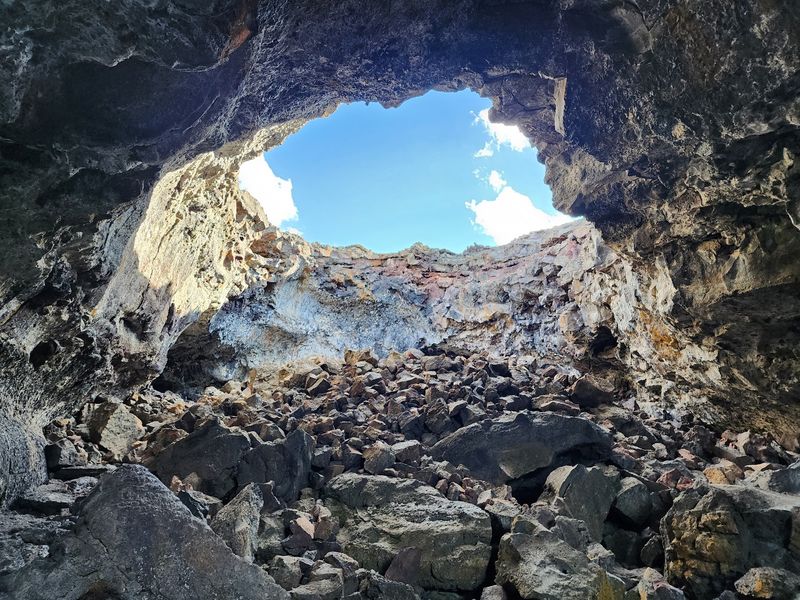
An 800-foot lava tube sits at the end of a flat, paved walk, and sunlight pours through holes in its ceiling. That alone sounds made up.
It isn’t.
The tube is up to 30 feet tall. Three more caves wait along the same short trail, and each one has its own personality.
One is mossy and damp. Another may have you crawling.
I like how fast the surface world disappears here. You start on hot black rock under an open Idaho sky.
A few steps down, the air turns cool and the light goes soft.
The whole walk is under two miles round trip. You’ll need a free permit, good shoes, and a flashlight.
I can’t imagine a better payoff for such a short stroll. So which cave would you tackle first?
A Volcanic Walk On Idaho’s Snake River Plain
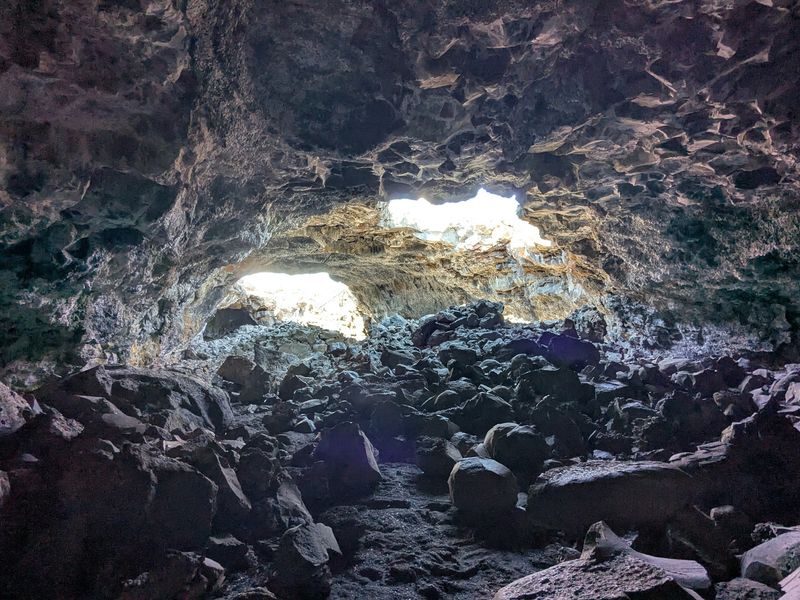
Out on central Idaho’s Snake River Plain, the Caves Trail at Craters of the Moon National Monument & Preserve leads you underground. It’s a 1.8-mile round trip, mostly paved and mostly flat.
The trail starts at its own parking area along the park’s Loop Road. From there, it crosses rippled lava toward four lava tube caves you can actually explore.
Those caves are Dewdrop Cave, Indian Tunnel, Boy Scout Cave, and Beauty Cave. Each one asks a little more or a little less of your knees.
The surface path itself is gentle and easy to follow. The real effort comes when you climb down into the caves over stairs and rocks.
That mix makes the Caves Trail a smart pick for curious hikers. You get big geology without a long, punishing climb.
Short trails often feel like a warm-up. Here, the short walk is basically a front door to a whole hidden world below your shoes.
Plenty of Idaho day-trippers drive past this stretch of lava without stopping. Once you know what sits beneath it, that sounds like a real mistake.
How A 52-Mile Crack Built This Moonscape
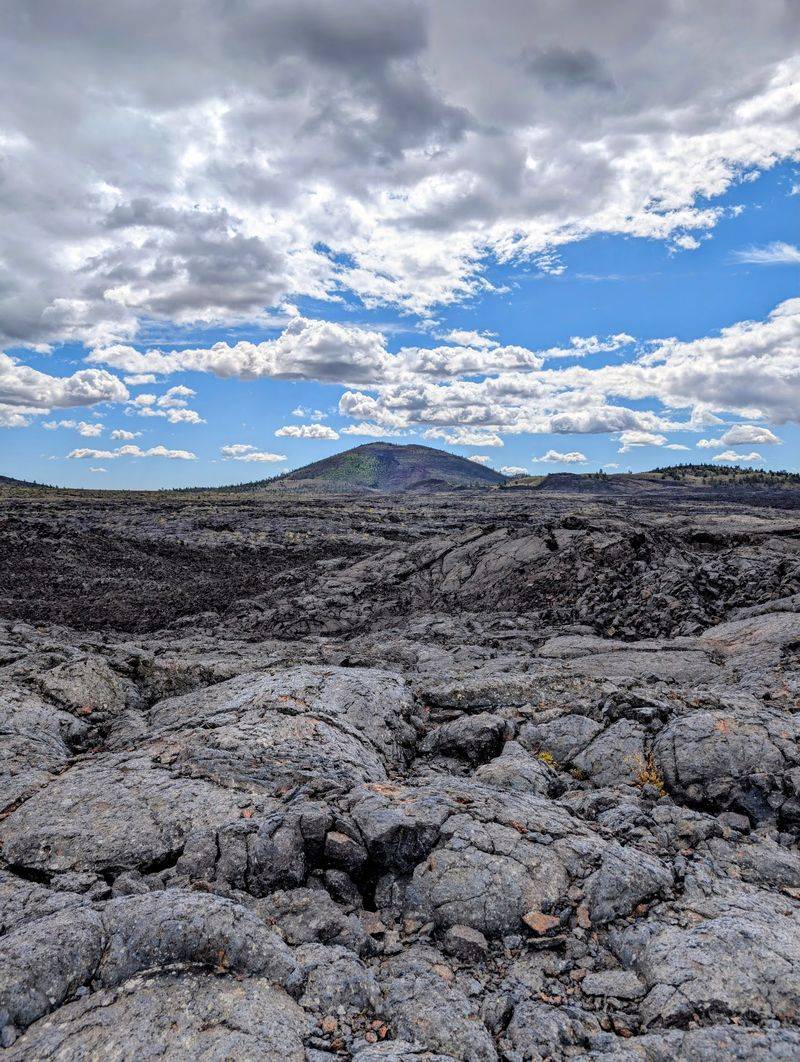
Every cave on this trail exists because the ground split open. Craters of the Moon formed from eruptions along the Great Rift, a 52-mile-long crack in the Earth’s crust.
That volcanic activity happened between roughly 15,000 and 2,000 years ago. In geology terms, that’s practically yesterday afternoon.
Lava tubes form when the outer layer of a lava flow cools and hardens. Hot lava keeps running underneath, then drains away and leaves a hollow tunnel.
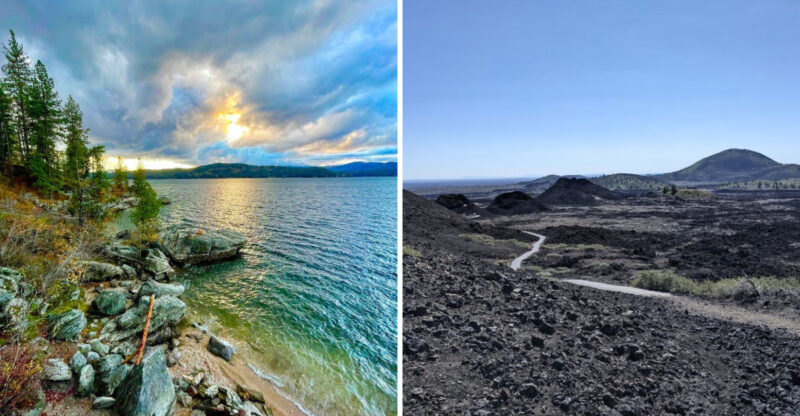
The landscape around the trail shows two famous lava types. Aa is rough and jagged, while pahoehoe looks smooth and ropy.
You’ll also see fissures, craters, and cinder cones across the park. People often call the scenery lunar or otherworldly, and the name sort of gives that away.
Protection came early for this strange ground. President Calvin Coolidge established Craters of the Moon as a national monument on May 2, 1924.
That means this rocky corner of Idaho passed its 100th birthday as a monument recently. Not bad for a place that looks freshly cooled.
Sunlight Spilling Into The Indian Tunnel
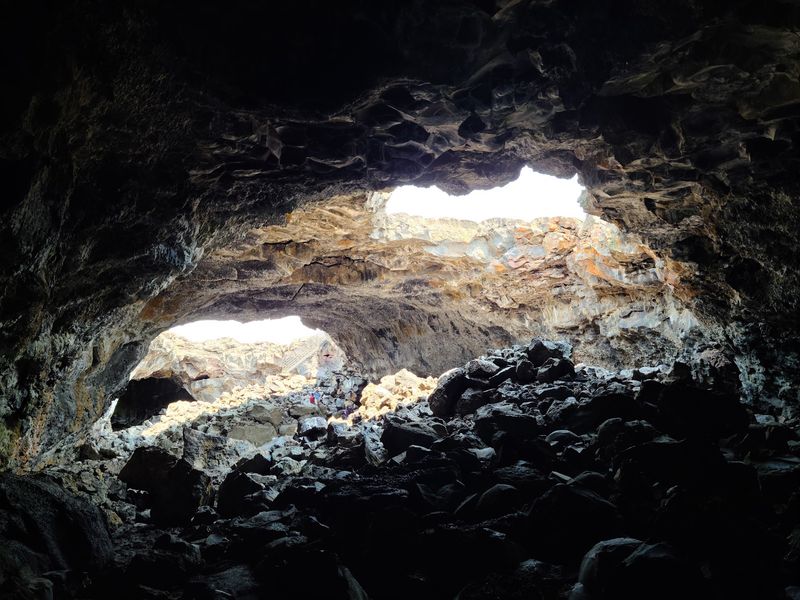
Eight hundred feet long and up to 30 feet tall, Indian Tunnel is the star of the Caves Trail. It’s also the largest and most accessible cave in the group.
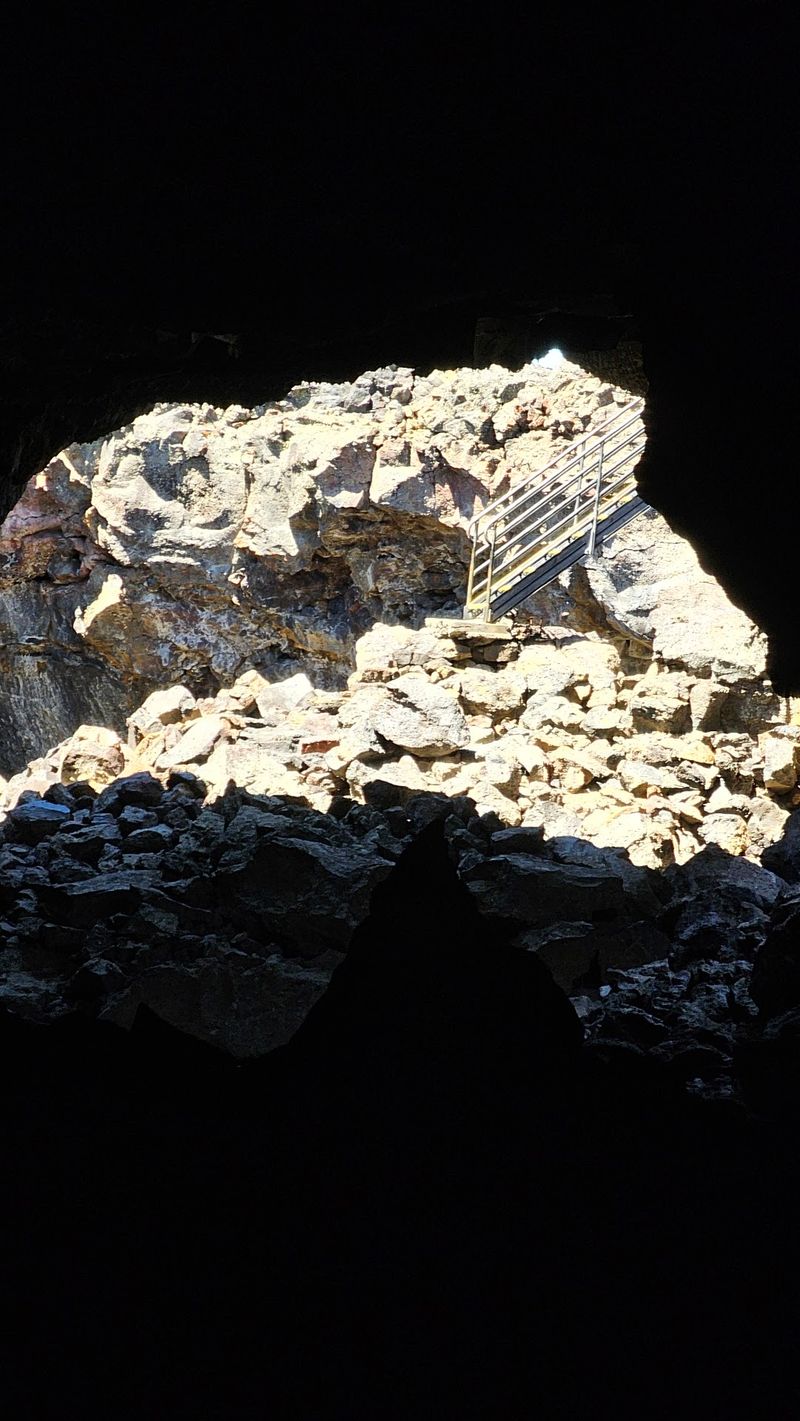
Metal grated stairs lead down to its entrance. That makes the first descent far less awkward than you might expect.
The best surprise sits overhead. Large openings in the ceiling let natural daylight pour in across long stretches of the tube.
Because of that, you can see a lot without switching on a light. A flashlight is still a smart idea for the darker corners.
Don’t expect a smooth sidewalk inside, though. The floor is rocky, so you’ll pick your footing and test what feels stable.
After the tunnel, you can climb out and follow poles marking the return route across the surface. It feels a bit like surfacing from a submarine.
If you only have time for one cave, this one makes the strongest case. Big room, natural skylights, and a real sense of scale all in one stop.
Moss, Ice And A Mossy Little Trainer Cave
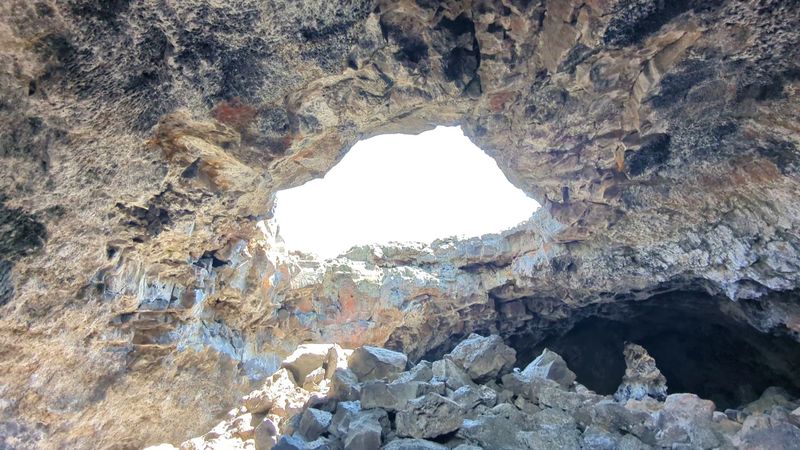
Green moss on black lava sounds like a mismatch. At Dewdrop Cave, it’s the main attraction.
The cave sits about a quarter mile from the parking lot. It has a medium-sized opening and stays damp and cool inside.
Park materials describe it as a trainer cave. Think of it as a friendly first taste before the bigger tubes farther along.
Beauty Cave comes next in spirit, with a wide opening and a rocky but fairly easy entrance. It runs about 300 feet and darkens quickly.
Inside Beauty Cave, the air turns cold. You can find ice formations along with moss and lichen clinging to the rock.
A flashlight is a must once daylight fades behind you. Without one, the cave keeps its secrets very well.
These two smaller caves show a softer side of the Caves Trail. They feel more like quiet side rooms than grand halls, and that contrast works.
Spend a few minutes in each, and the volcanic story gets surprisingly green.
Boy Scout Cave Is Where You Earn Your Badge
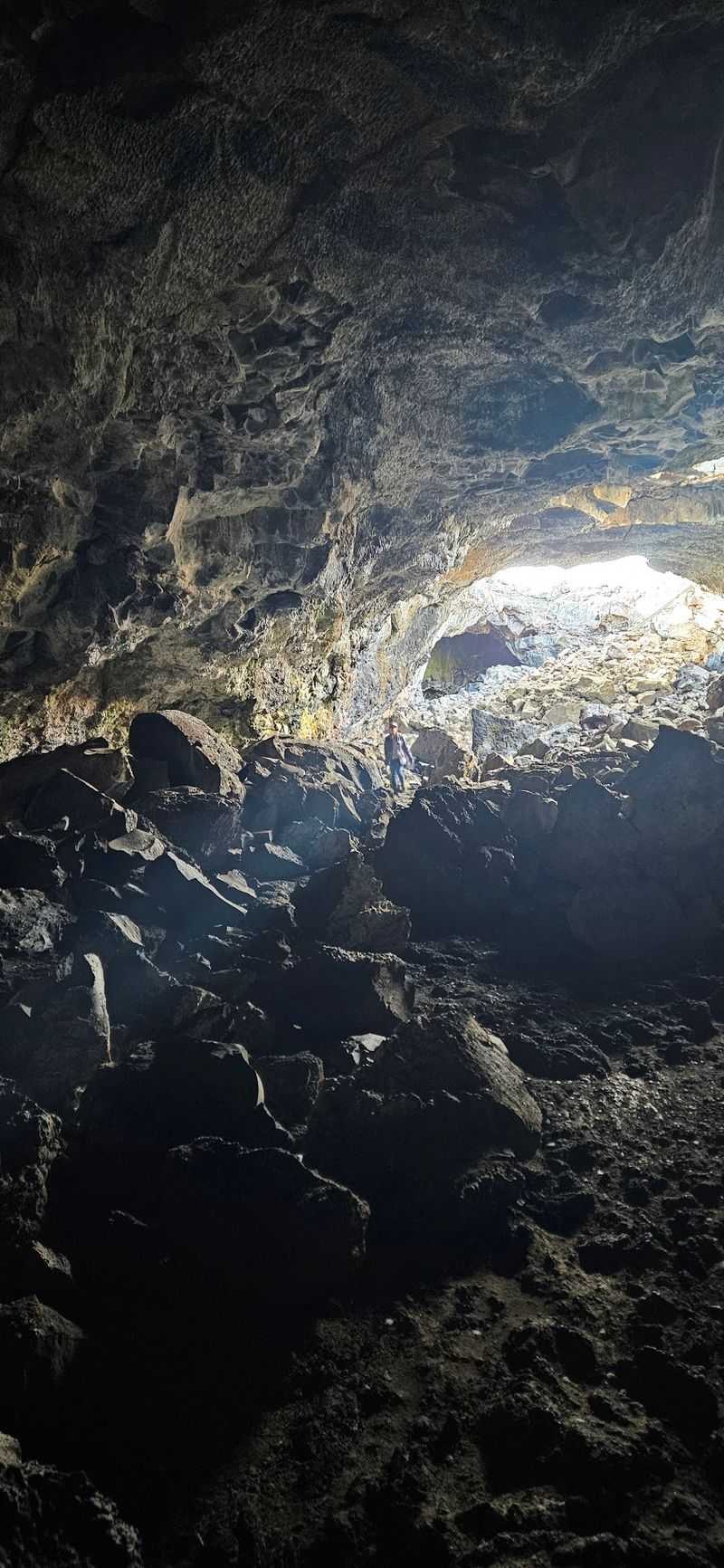
Crawling is part of the deal at Boy Scout Cave, also called Scout Cave. It’s the most adventurous stop on the Caves Trail.
The entrances are small and crowded with boulders. Inside, low ceilings may push you down onto your hands and knees.
The cave stretches about 500 feet. Natural light doesn’t help much, so a flashlight or headlamp is essential.
Park guidance suggests carrying at least one dependable light. For longer explorations, three light sources are recommended, since most caves have no artificial lighting.
That might sound like a lot of gear for a short walk. In a dark lava tube, a spare battery suddenly feels like treasure.
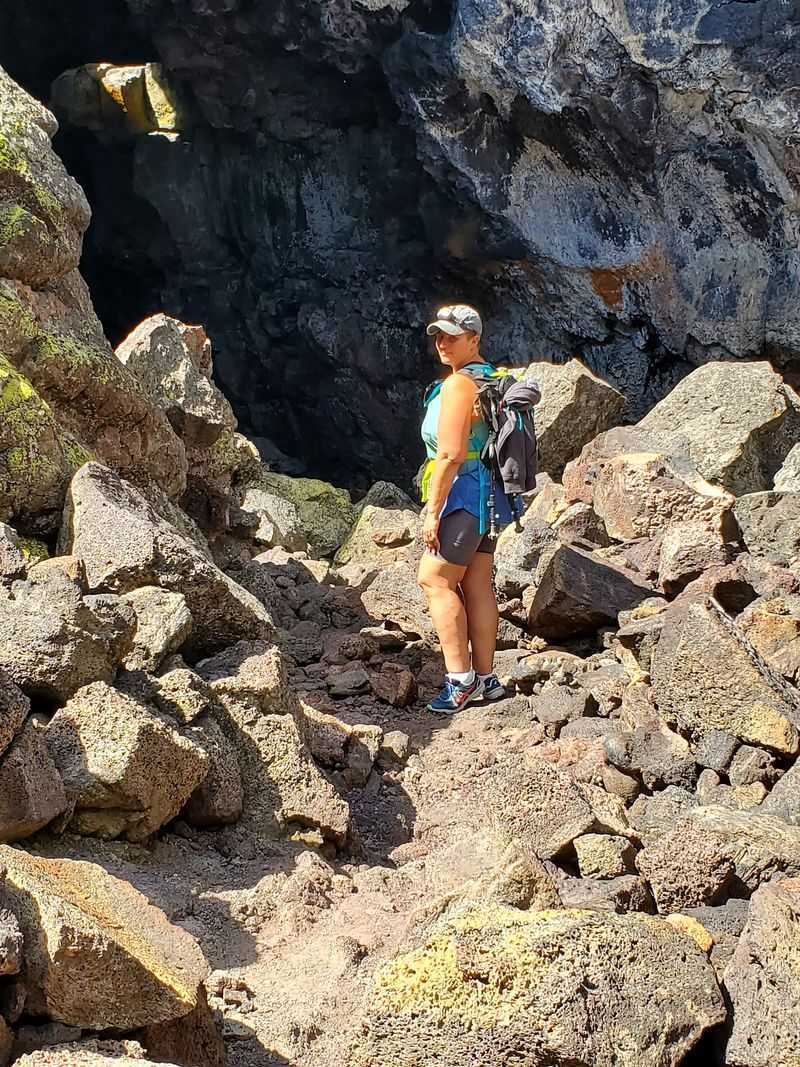
Wear sturdy, closed-toe shoes and clothes you don’t mind scuffing. Lava rock is sharp and not at all sentimental about your favorite jeans.
Scout Cave isn’t for everyone, and that’s fine. Skip it if tight spaces make you uneasy.
For confident scramblers, though, it turns a pleasant hike into a genuine little expedition. Bragging rights are included at no extra charge.
Heat Up Top, Cool Air Below
Shade is basically nonexistent on the surface here. The paved path crosses open black lava, and summer sun has nowhere else to go.
Pack a hat, sunscreen, sunglasses, and plenty of water. The visitor center is the only place in the park to refill bottles, so fill up before you go.
Underground, things change. The caves stay cool, which feels like a natural air conditioner after the walk.
Indian Tunnel isn’t always dramatically colder, though. Beauty Cave and the darker tubes feel chillier, so a light jacket can still earn its spot.
The walk to the caves is easy for most people. Getting into and through them means steep steps, loose rocks, and sharp edges.
That matters for anyone with limited mobility or very small kids. You can still enjoy the surface path and peek at the cave openings.
Families with sure-footed kids tend to fit right in. So do photographers, geology fans, and anyone who likes a short hike with a big reward.
Dogs, sadly, have to sit the caves out entirely.
Permits, Shoes And Seasons Before You Go
A free cave permit is required before you enter any lava tube. You’ll pick it up in person at the visitor center or an entrance booth during business hours.
The Robert Limbert Visitor Center sits at 1266 Craters Loop Road, Arco, ID 83213. It offers maps, museum exhibits, restrooms, and vending machines.
The permit isn’t just paperwork. It helps protect bats from white-nose syndrome, so shoes worn in other caves aren’t allowed.
The park stays open around the clock, all year. The Loop Road to the trailhead usually closes to cars from mid-November to mid-April because of snow.
Visitor center hours shift by season, so check before driving. An entrance fee applies unless you carry a valid park pass.
The entrance sits on U.S. Highway 20/26/93.
It’s about 18 miles southwest of Arco and 24 miles northeast of Carey.
At the trailhead, you’ll find parking and vault toilets. That’s about it for services, so plan snacks and water accordingly.
Late spring through fall makes the easiest window for an Idaho road trip here.
Why This Short Trail Deserves A Spot On Your List
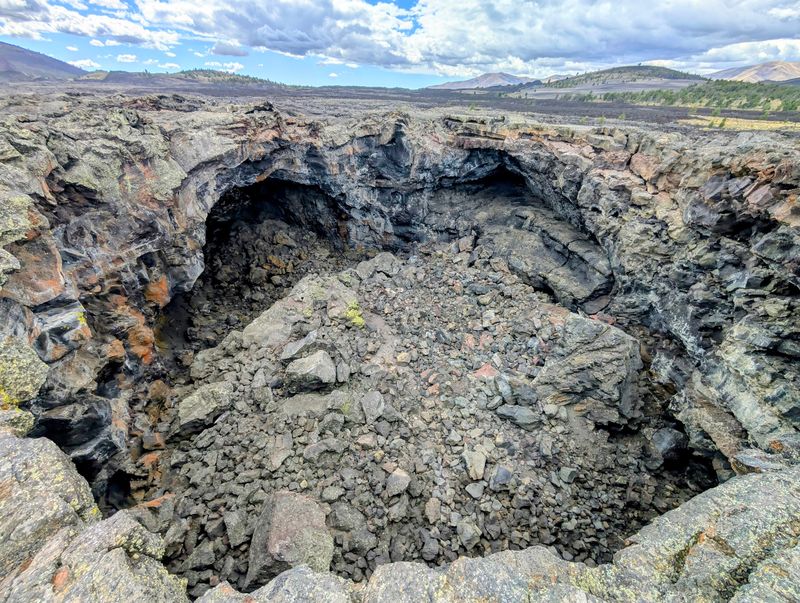
Short hikes rarely pack this much variety. In under two miles, the Caves Trail hands you skylit tunnels, mossy grottoes, icy corners, and a tight crawl.
Above ground, the layered lava tells its own story. Below it, the hollow tubes finish the tale.
I believe this trail works best as the centerpiece of a Craters of the Moon visit. Pair it with Inferno Cone or the Broken Top Loop if you have extra energy.
Broken Top even leads to Buffalo Cave, another permit-only lava tube. Cave fans could easily fill a whole day.
Bring more light than you think you need. Wear real shoes, carry water, and grab that permit before heading down the Loop Road.
Those small steps make the difference between a frustrating stop and a great one. Planning is the price of admission to the underground.
Idaho has plenty of famous scenery, from the Sawtooths to the Palouse. Few places let you walk inside the landscape like this one does.
Once you climb back into the sunlight, the lava field never looks quite the same again.