Dining High Above Brings A Taste Of Luxury To New York City
Twenty-foot olive trees grow inside a dining room with ceilings nearly sixty feet tall. That alone made me stop scrolling.
Then I learned the windows look straight out at one of the most famous train terminals in the country.
Straight away, the mix caught my eye. A forest of greenery sits inside a glass skyscraper, and a world-famous French chef runs the kitchen.
Nice touch, giving a busy commuter crossroads a calm, garden-like dining room of its own.
New York has plenty of fancy tables. Few of them come with trees overhead and a Michelin star on the door.
A Forest Grows Above One Of The Busiest Corners In Town
Le Pavillon sits on the second floor of One Vanderbilt, the soaring skyscraper beside Grand Central Terminal.
Chef Daniel Boulud opened the restaurant in May 2021, bringing contemporary French cooking to a room that feels unexpectedly green for Midtown Manhattan.
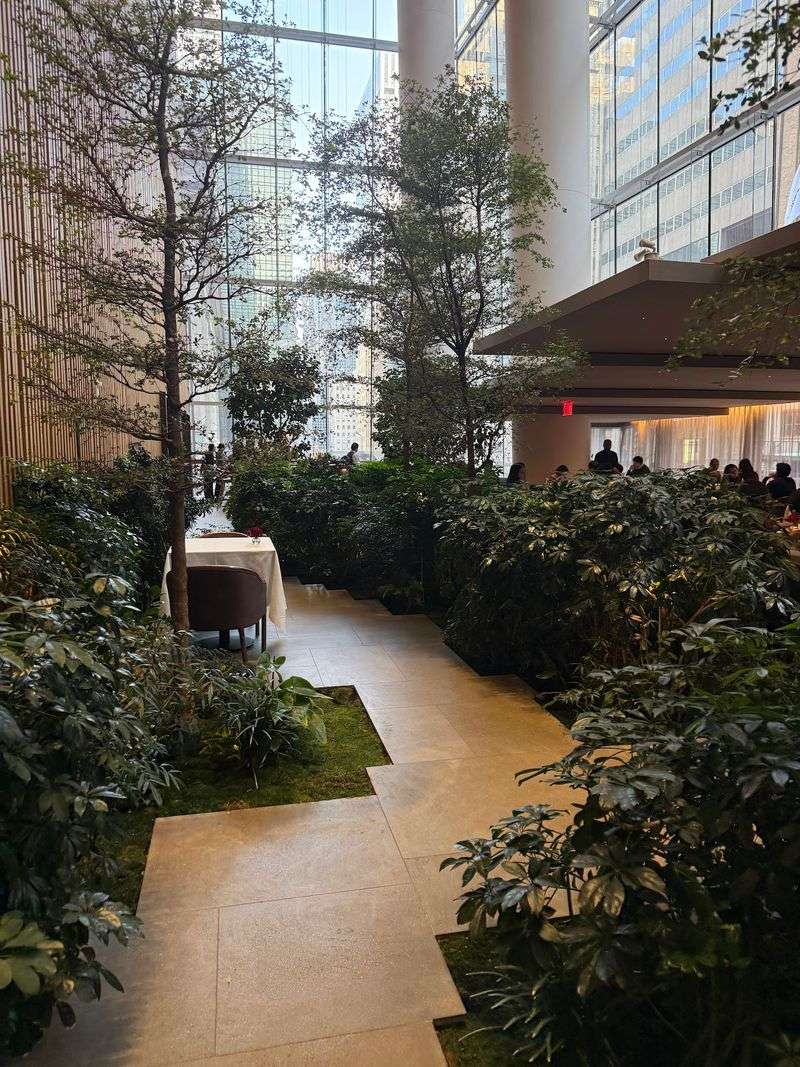
Instead of the usual arrangement of closely packed tables and decorative plants, the space has mature trees growing directly from substantial planting beds.
The dining room accommodates about 120 guests, with garden-like areas woven around the seating. Beyond it, a separate lounge overlooks the streets below.
Boulud, who grew up near Lyon, France, has built much of his culinary career in New York. His aim here was to give French fine dining a bright, contemporary home, with seasonal vegetables and seafood playing major roles.
And the restaurant’s name has a story all its own. It nods to an earlier Manhattan institution, but the design belongs firmly to the present.
The combination is what makes this place unusual. You’re only a floor above one of the city’s busiest transit connections, yet the trees, generous proportions, and daylight give the space a rhythm entirely its own.
Those Ceilings Climb Nearly Sixty Feet, So Look Up
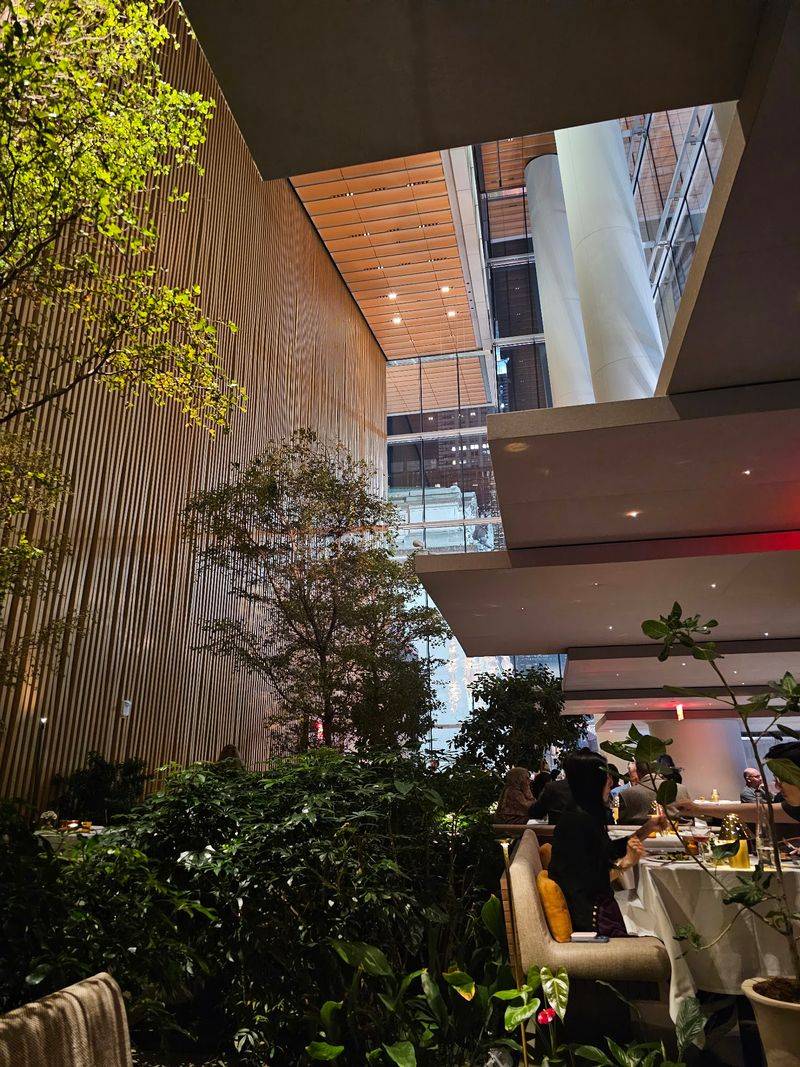
Fifty-seven feet. That’s roughly how high the ceiling rises above parts of the dining room, and your neck will notice.
Brazilian architect Isay Weinfeld designed the interior around a striking contrast: glass and concrete from the surrounding tower, softened by wood, pale furnishings, and a lush planted landscape.
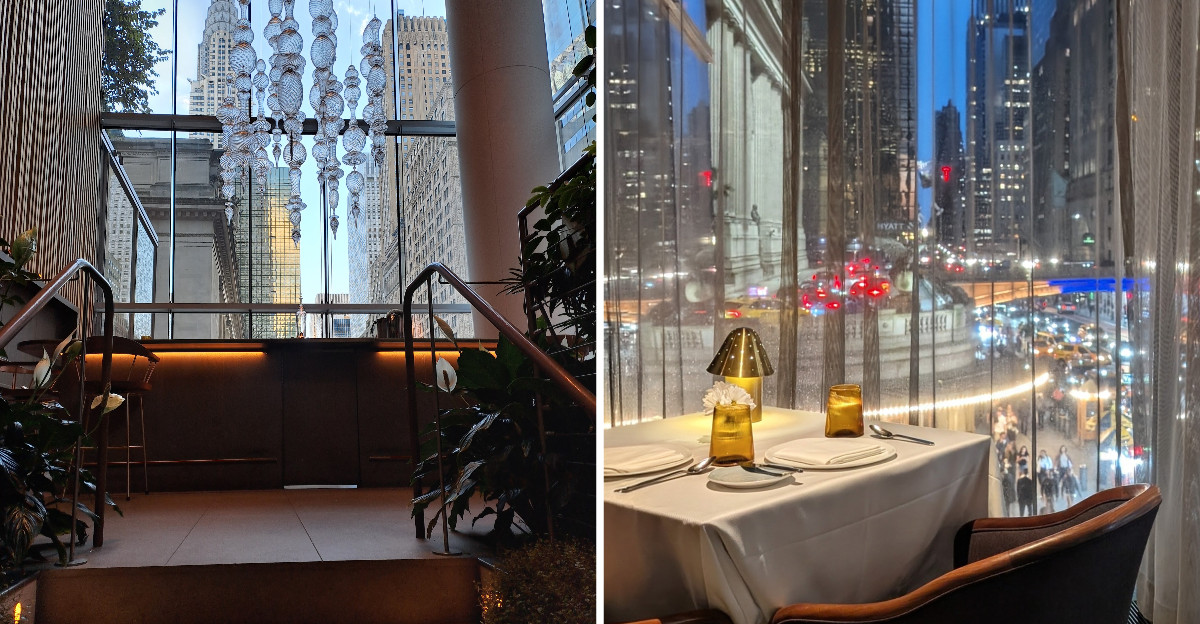
The tall windows keep the Midtown skyline in view while bringing natural light deep into the restaurant.
The venue includes approximately 11,000 square feet of space, with a separate lounge that seats about 46 people.
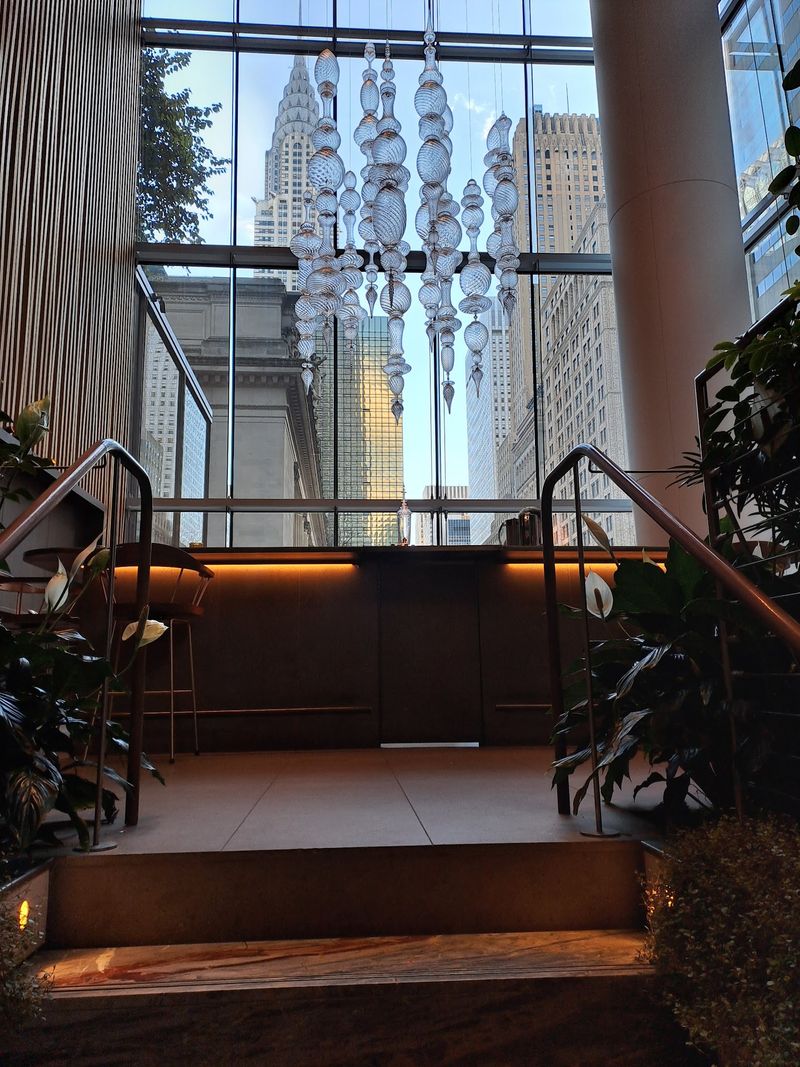
Above the lounge hangs a sculptural chandelier made from handblown glass, giving that corner a focal point distinct from the grove of trees.
The planted beds break up the vast interior, while the lighter finishes allow the foliage and street views to stand out.
In the afternoon, sunlight shows off the textures of the branches and leaves. By evening, the same windows frame a different scene as nearby buildings illuminate. The soaring ceiling is real, the restaurant itself is only on the tower’s second floor.
Yes, Those Are Real Olive Trees Growing Indoors
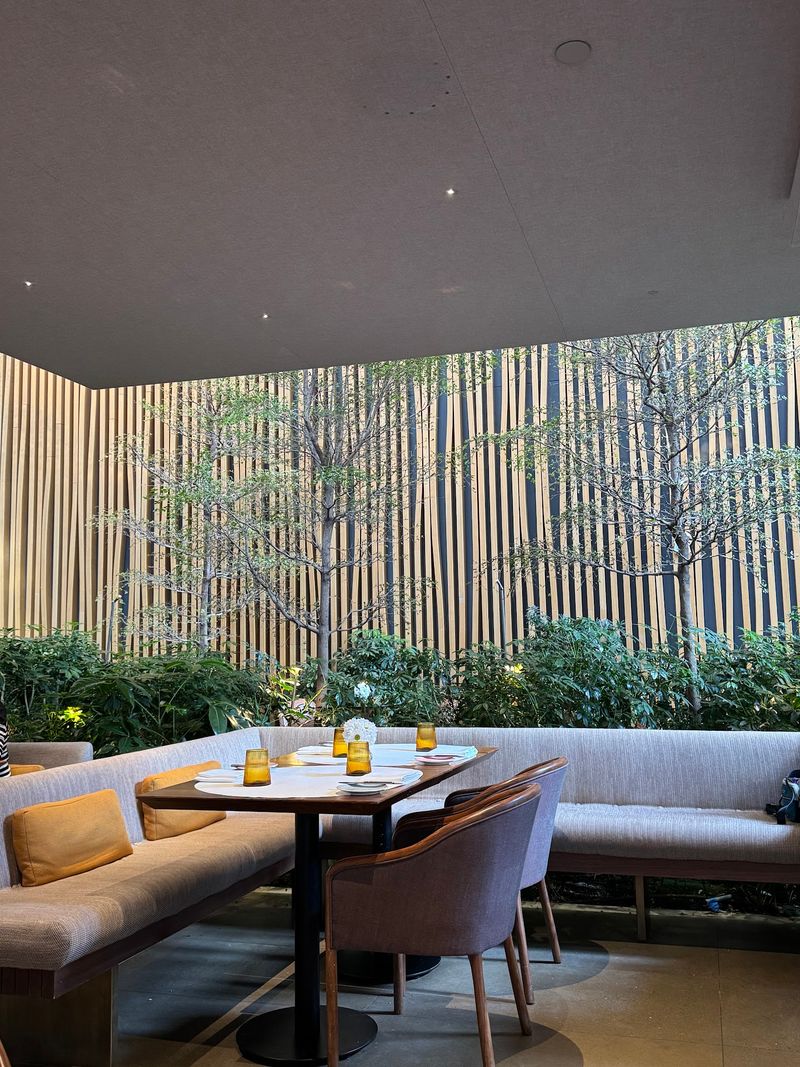
Olive trees around twenty feet tall stand inside the restaurant. They’re real, too, not plastic props pretending to be a garden.
The installation involved twelve large black olive trees, some standing as tall as 22 feet when they arrived.
They came from Florida and were so big that workers temporarily removed sections of the building’s glass facade to lift them into the second-floor space.
Imagine seeing a mature tree rise past an office tower’s windows on its way to a dining room. It’s quite an entrance, even before the first guest sits down.
The greenery needed serious planning. Deep planting pits were built between structural beams, with waterproofing and a dedicated support system beneath the indoor garden.
The planting beds themselves cover hundreds of square feet, rather than merely holding a few decorative pots.
Leaves soften the strong architectural lines and bring a striking variety of greens into a neighborhood dominated by glass and stone.
The result looks effortless from a dining chair. Getting those trees there, however, was an engineering project almost as memorable as the finished restaurant.
Grand Central Sits Right Outside The Window
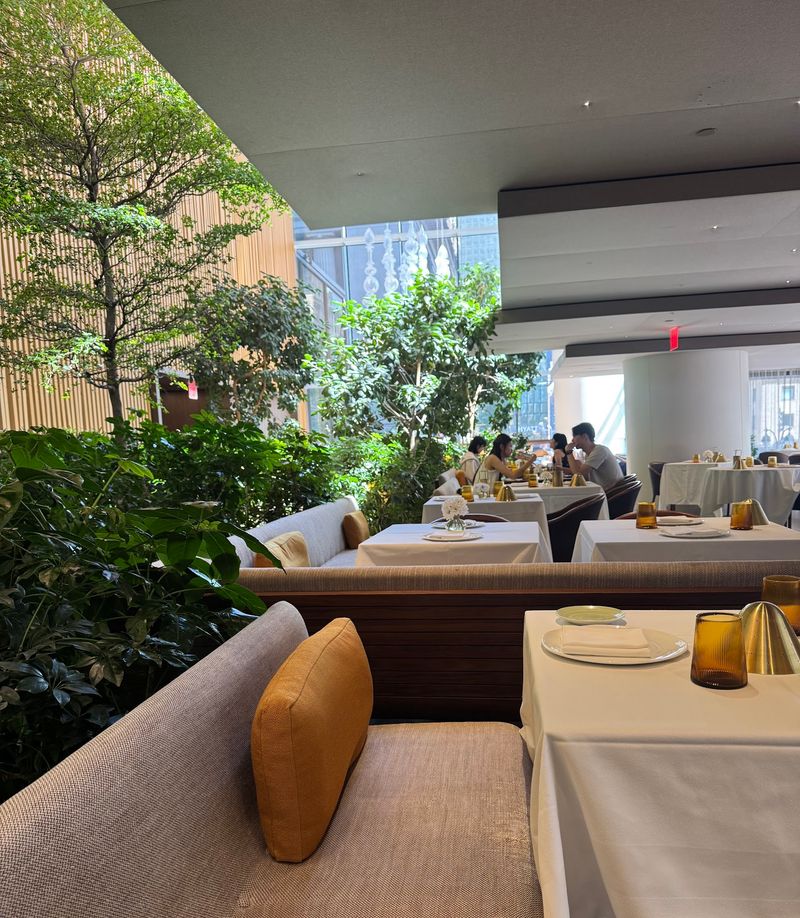
Grand Central Terminal is the neighbor here, and the windows make the most of it.
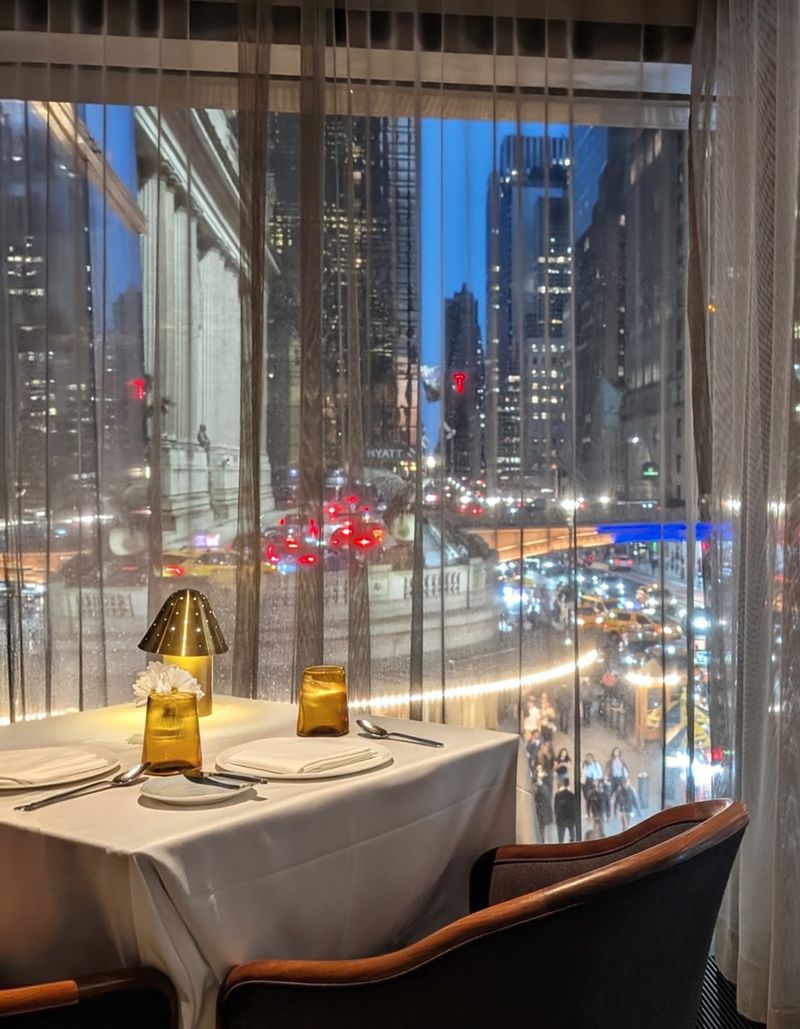
Diners can look toward its grand stone facade, with the Chrysler Building rising beyond the surrounding Midtown streets.
It’s a remarkable pairing of old and new architecture. Grand Central opened in 1913, while One Vanderbilt welcomed its first occupants in 2020.
The restaurant’s elevated second-floor setting places the contrast almost at eye level, especially from tables near the glass.
The tower itself rises about 1,400 feet, but the restaurant’s appeal comes from looking across the city rather than down from the summit.
The view includes details easy to miss when hurrying through the station below: rooftops, facades, and the constant motion around East 42nd Street. In the evening, the city lights add another layer beyond the trees.
Window-side tables are worth requesting, although a particular seat cannot be guaranteed. For anyone interested in Manhattan architecture, a meal here offers a rare chance to compare two very different eras from the comfort of one dining room.
The Name Comes With A World’s Fair Backstory
Back in 1939, the World’s Fair in Queens featured a celebrated restaurant in the French Pavilion.
Henri Soulé was in charge, introducing visitors to an ambitious style of French restaurant dining.
The story continued beyond the fairgrounds. In 1941, Soulé opened Le Pavillon in Manhattan, where it became an influential destination for classical French cooking and hospitality.
The restaurant helped train people who later shaped the city’s dining culture, extending its influence well beyond its own tables.
Daniel Boulud revived the name in 2021 as a tribute rather than an attempt to recreate the earlier dining room.
His restaurant draws on French culinary traditions while emphasizing contemporary dishes, seasonal ingredients, and a completely different physical setting.
Even the word pavillon fits the architecture. In France, it can refer to a gathering place or a structure connected to a larger building, much like this distinctive dining space attached to a skyscraper.
The name reaches back to a famous chapter of New York dining history, while the trees and glass walls tell a much newer story.
Seafood And Vegetables Get The Star Treatment
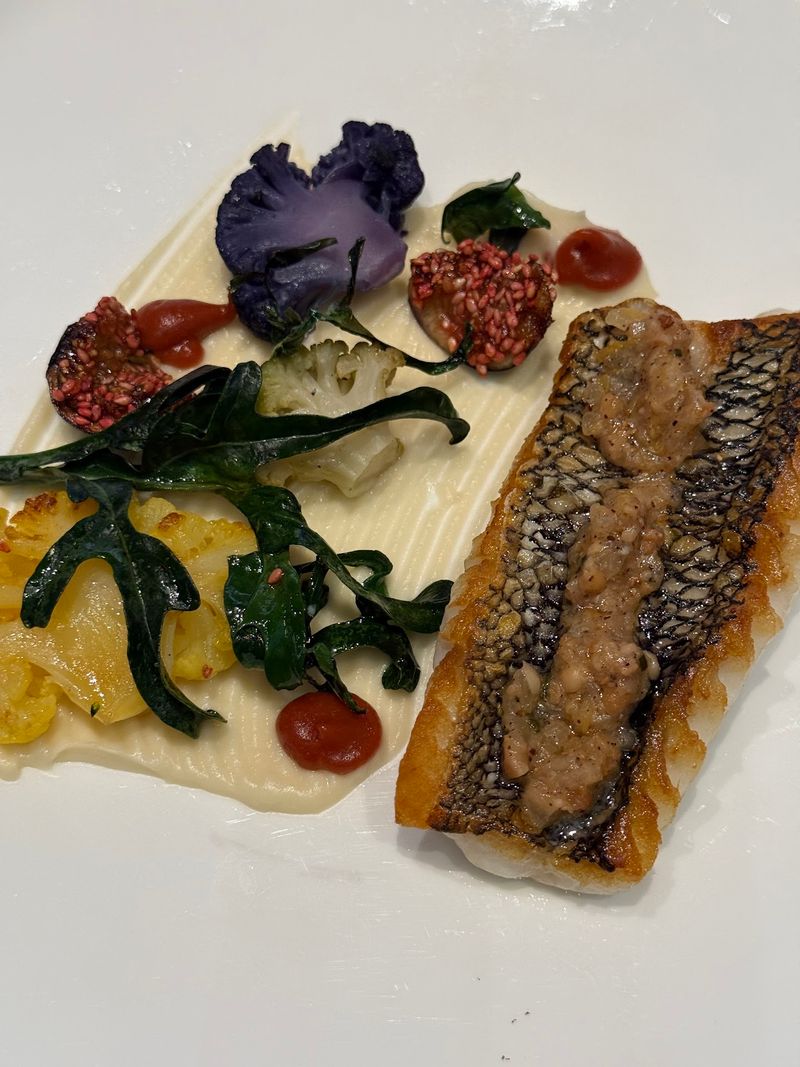
French cooking anchors everything on the plate. The kitchen places seasonal vegetables and seafood at the center, with meat dishes available for diners who prefer something heartier.
The menu’s Oyster Vanderbilt is particularly appropriate for this address. Oysters are served with a hazelnut and parsley-seaweed crust, a small culinary nod to the building and its famous neighbor.
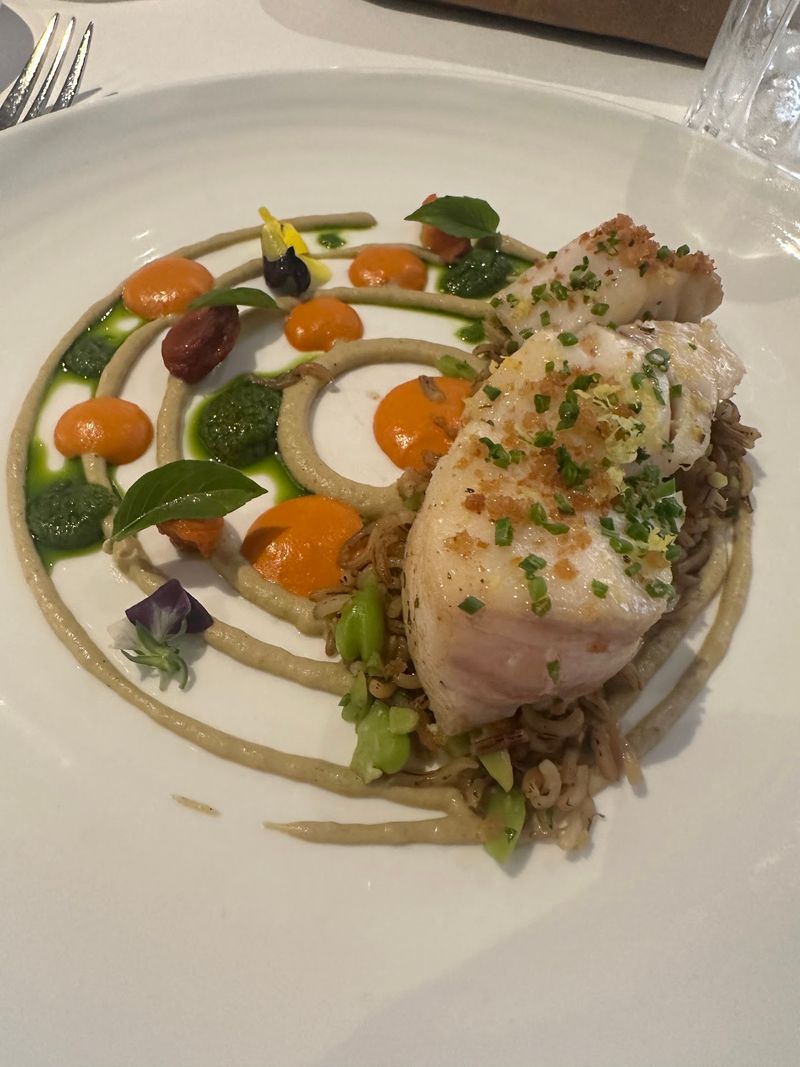
Other choices include scallops with seasonal accompaniments, fish preparations such as Dover sole or monkfish, and a lobster main course.
On the vegetable side, dishes have included a Vidalia onion tart with thyme, grilled avocado with grains and greens, and pasta with mushrooms and truffle. The selection changes with the seasons.
A three-course dinner is one way to explore the kitchen; longer tasting menus offer a sequence of smaller dishes. The restaurant earned its first Michelin star in 2022 and retained the distinction in the 2025 guide.
For dessert, the pastry choices may include a lemon tart, hazelnut chocolate, or a fruit-centered creation. Each provides a final course with the same attention to seasonal flavor as the savory dishes.
Weekday Lunch Might Be The Smartest Way In
Weekday lunch is a clever entry point. The restaurant offers two- and three-course set menus from Monday through Friday, plus a longer tasting option for anyone planning a more leisurely afternoon.
Lunch begins at 11:30 a.m. and runs until 2 p.m. It’s a good opportunity to see the indoor grove in daylight, when the foliage and the tall windows are at their brightest.
Dinner follows a different pace. Service begins at 5 p.m. Monday through Saturday, and the menu includes a three-course format and six-course tasting experiences.
One longer menu centers on vegetables, while another moves across the kitchen’s broader selection.
A reservation is sensible for either meal, particularly if a specific time or occasion matters. The lounge may accommodate walk-ins when seats are available, but it operates separately from a full dining-room reservation.
New York dining can move quickly. Here, allowing enough time for each course is part of enjoying the room as much as the food.
Getting There Couldn’t Be Much Easier
Trains, subways, and sidewalks all lead here. Le Pavillon is at One Vanderbilt Avenue in Manhattan, immediately beside Grand Central Terminal.
The restaurant entrance is at One Vanderbilt Plaza on the north side of East 42nd Street.
Follow the entrance signs rather than heading toward the skyscraper’s office lobby. Elevators and accessible routes are available for reaching the dining room.
Lunch is served Monday through Friday from 11:30 a.m. to 2 p.m. Dinner runs Monday through Saturday from 5 to 9:30 p.m., and the restaurant is closed on Sunday.
Business casual clothing fits the setting, and reservations can be arranged in advance. For families, keep in mind that the dining room cannot accommodate baby strollers.
There’s plenty to explore nearby. Grand Central’s Main Concourse is only a short walk away, and Bryant Park and the New York Public Library are farther west along 42nd Street.
I would leave time to look at the terminal before dinner. The contrast is half the fun: one moment you’re beneath its famous ceiling, and the next you’re sitting beside full-size trees inside a glass skyscraper.