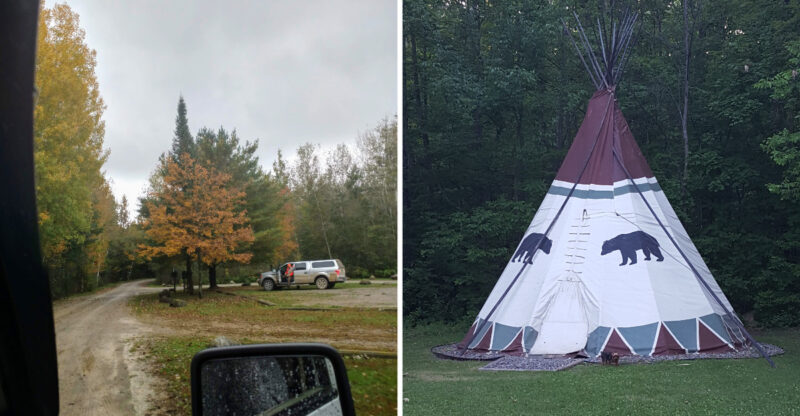
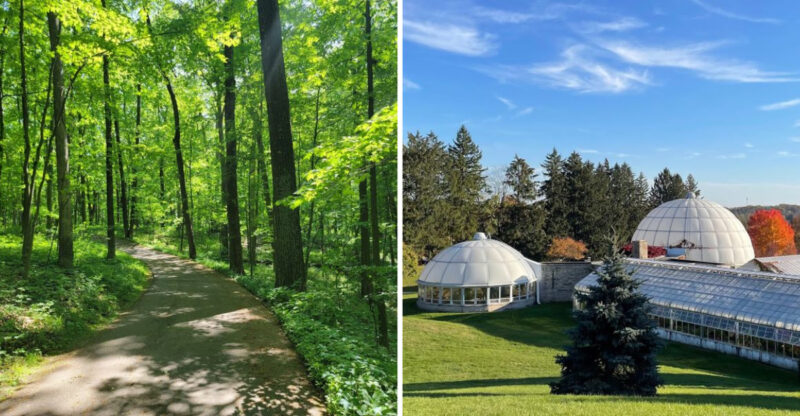
This Michigan Bird Sanctuary Has A Boardwalk Most Drivers Pass Without Ever Noticing
A tiny bird called the Cerulean Warbler picks a quiet patch of Barry County woods as its breeding ground.
It’s sky blue, it’s rare, and it shows up on Havens Road while traffic hums right past.
So what else is hiding out there? Try 128 acres of rolling fields, mature forest, marshes, springs, and a creek winding through the middle.
The land also borders a state game area recognized as a Globally Important Bird Area.
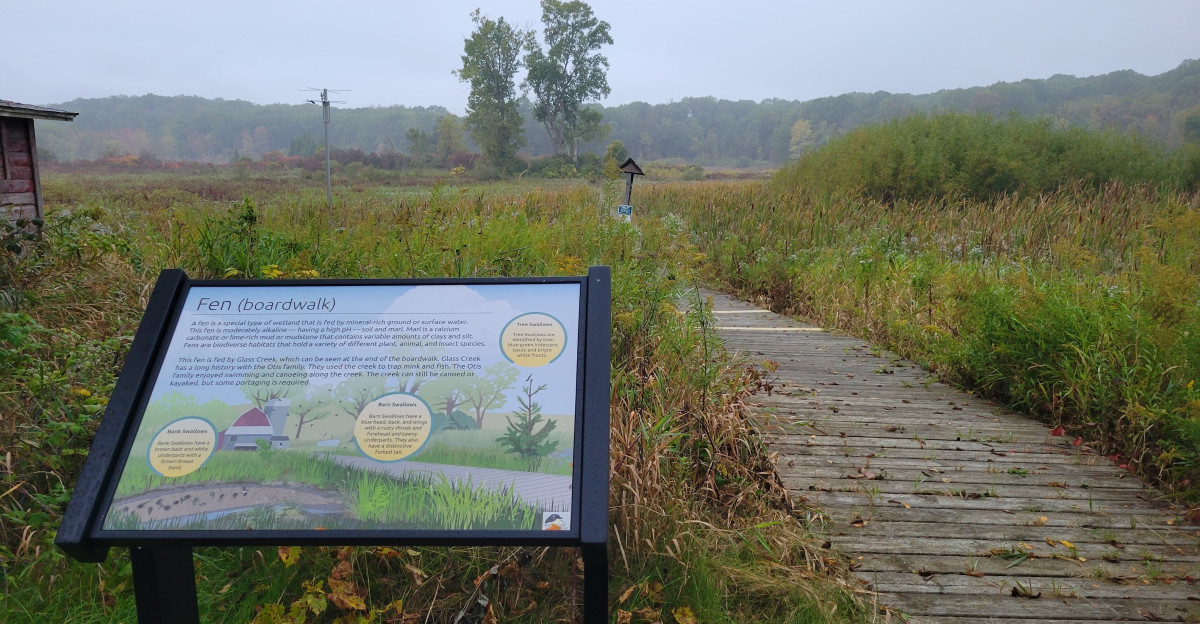
Okay, but where does the boardwalk come in? It crosses a fen and leads toward a sheltered spring, far from any road view.
Want to know why birders get giddy here? Grab your boots and find out.
The Sky-Blue Bird That Puts This Place On The Map
Plenty of nature spots claim a star attraction, but few get one this small and this blue. At Michigan Audubon’s Otis Farm Bird Sanctuary, the headliner is the Cerulean Warbler.
The sanctuary borders Barry State Game Area, an important breeding area for this little songbird. Cerulean Warblers depend on expansive mature hardwood forests with tall trees for nesting.
Here’s the funny part about spotting one. These birds prefer the upper canopy, so your neck may get a workout. Binoculars and a little patience help, especially when the leaves are thick.
Spring and early summer are the classic times to look and listen. Learning the warbler’s buzzy song beforehand can make the search easier, since you may hear one long before seeing its blue feathers.
Guided Cerulean Warbler tours begin at Otis Farm before continuing into nearby nesting territories within the state game area. That connection makes the sanctuary an important gathering point for birders.
That Boardwalk Is Waiting Where The Road Can’t See
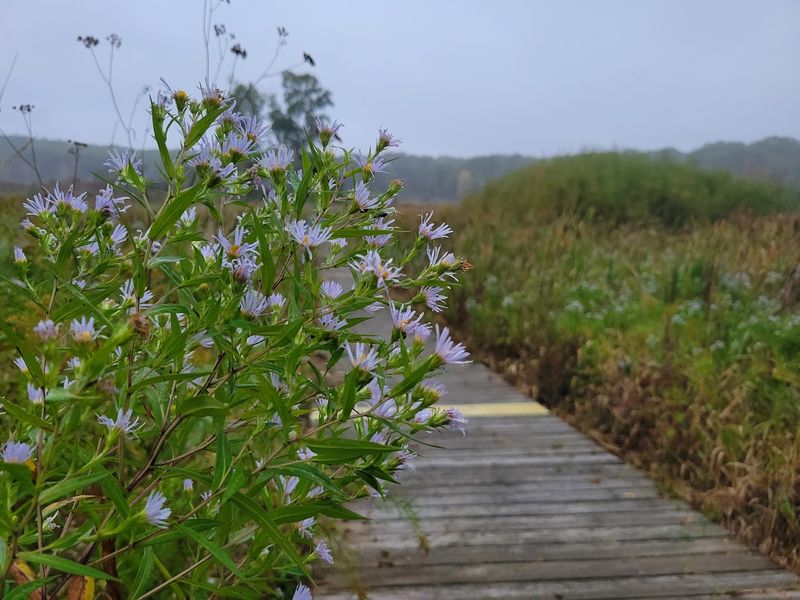
Drive along Havens Road and you’d never guess a boardwalk sits back in the wetlands. It’s well away from the main road, which explains why passing drivers might overlook it.
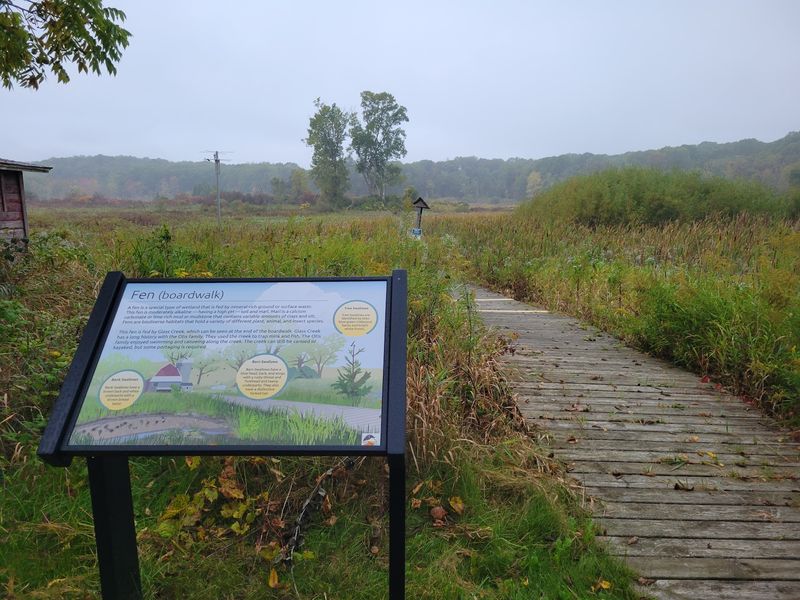
The short wooden walkway extends into a fen, a special type of wetland sustained by groundwater. It provides views of Glass Creek and the surrounding marsh vegetation.
Fens are naturally wet, with delicate plants growing in saturated soil. The raised walkway allows you to enjoy the scenery without disturbing the vegetation beneath your feet.
Finding it is straightforward once you reach the sanctuary. The boardwalk entrance is just west of the barn and picnic tables, separate from the longer woodland walking route.
The walkway extends approximately one-tenth of a mile, making it a manageable addition to a longer visit.
Springs are another important feature of this property. Groundwater helps support the wetlands and creates conditions for plants and wildlife that depend on consistently moist habitats.
Treat the boardwalk as a slow zone. Pause to look across the marsh, listen for birds, and watch for movement among the grasses.
You Get Four Landscapes For The Price Of One Walk
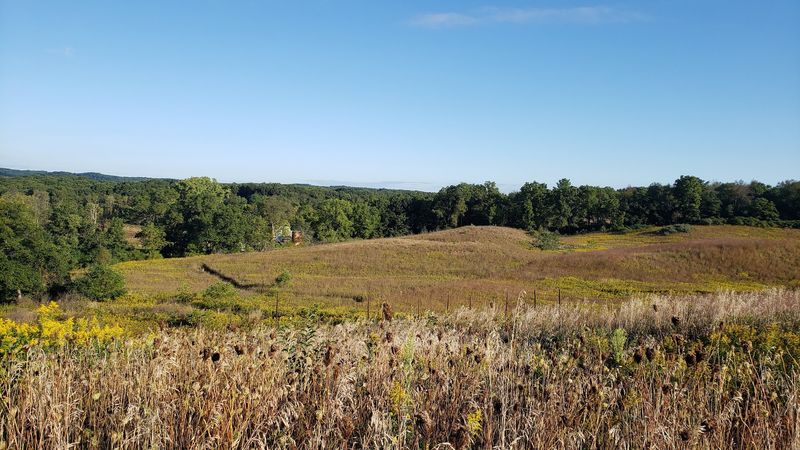
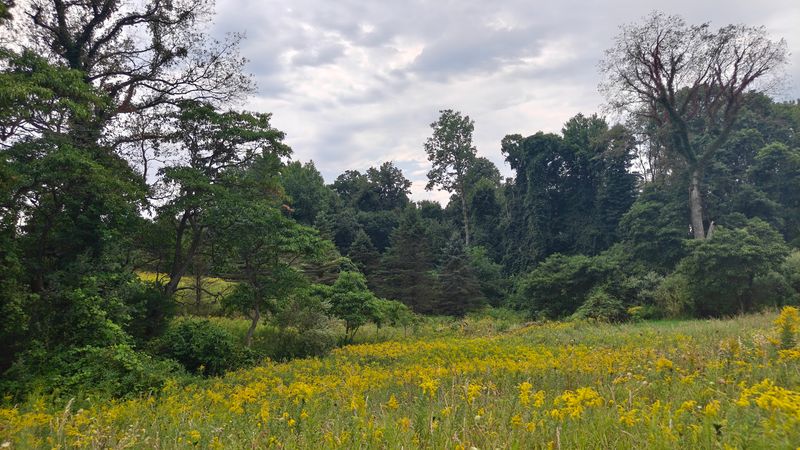
Variety is the secret sauce at Otis Farm Bird Sanctuary. In 128 acres, you get rolling fields, mature forests, wide marshland, and kettle hole marshes.
That mix is especially valuable for birds. Different habitats attract different species, so one walk can feel like visiting several nature preserves at once.
The fields and restored prairie areas open up big skies. Grasshopper Sparrows and Henslow’s Sparrows favor open grasslands, making the taller vegetation worth watching closely.
Step into the woods and everything changes. The light softens, the air cools, and woodland birds take over the show. Then come the wetlands, where groundwater, marsh plants, and Glass Creek create an entirely different landscape.
Kettle hole marshes are another fascinating feature. They formed in depressions left by blocks of glacial ice, creating natural basins that gradually developed into wetland habitats.
Spring adds a special touch. Mayapples, spring beauties, marsh marigolds, and other wildflowers emerge in different parts of the sanctuary.
The mix of habitats also makes Otis an important conservation property in southern Michigan, with restoration projects supporting native grasses and woodland plants.
A Woodland Trail That’s Easier Than It Sounds
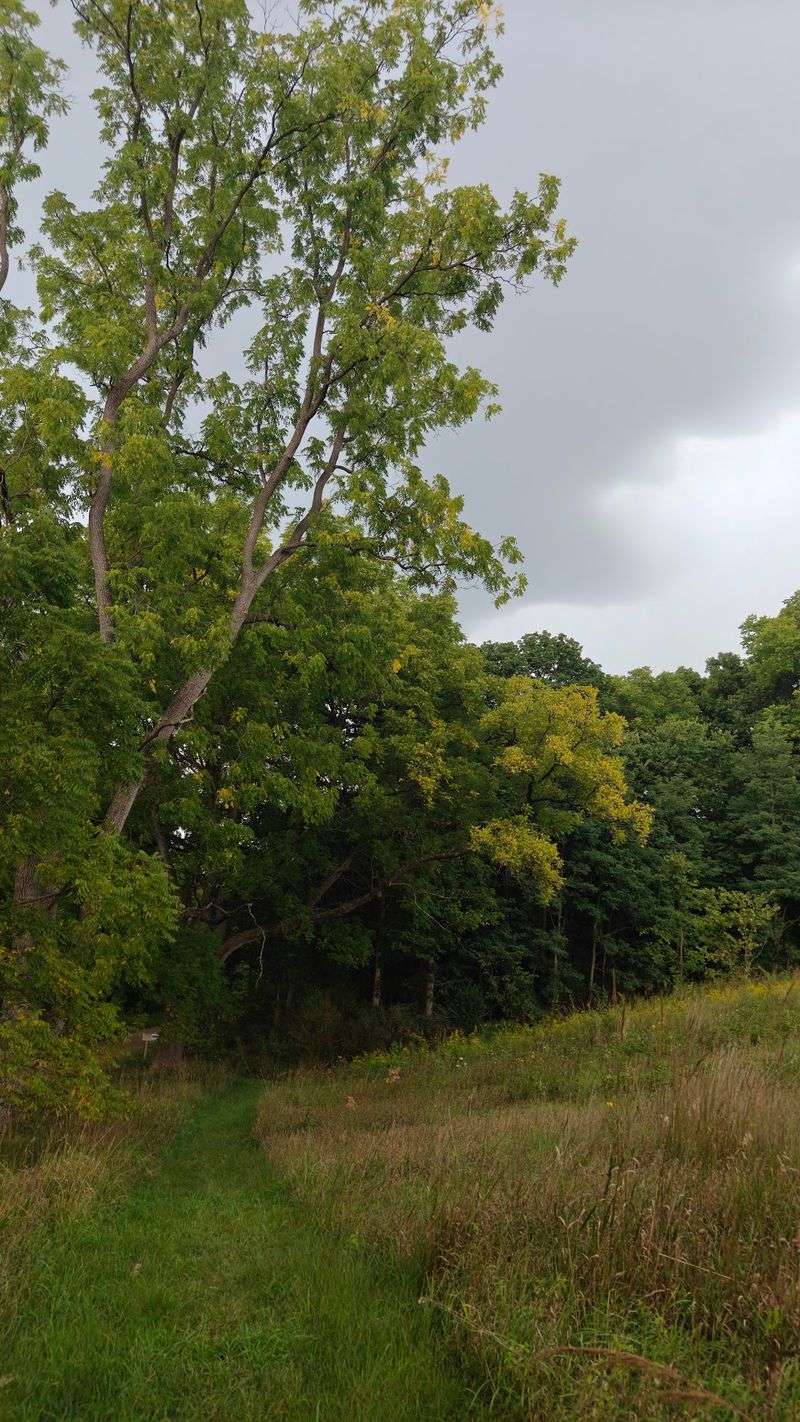
Good news for casual hikers: the maintained main trail covers approximately 1.5 miles, making it suitable for an unhurried nature walk.
The route follows mowed grass paths across rolling terrain, passing through open fields and woodland. The boardwalk near the barn offers a separate, shorter way to explore the wetlands.
An easy trail doesn’t mean you should rush it. The best birding happens when you stop often, listen, and look around.
One detail makes planning especially useful. The main trailhead sits roughly 500 feet north of the parking area along Havens Road. A small pullout on Hull Road provides another access point.
Grass paths can stay damp in the morning, especially near the wetlands. Sturdy footwear makes the experience more comfortable after rainfall or heavy dew.
Because much of the route crosses natural ground, conditions can change with the seasons. Rolling sections and uneven surfaces deserve attention even on a relatively short hike.
The sanctuary has a trail map showing the maintained routes and boardwalk, making it easier to choose which area to explore first.
Woodpeckers, Eagles, And Cranes Share The Neighborhood
Bird lists here read like a greatest hits album. Pileated Woodpeckers, Red-headed Woodpeckers, Bald Eagles, Ospreys, and Sandhill Cranes all appear among the sanctuary’s notable species.
Pileated Woodpeckers are about the size of a crow. Their large bills and bright red crests make them distinctive woodland birds.
Red-headed Woodpeckers bring another splash of color. Adults have brilliant red heads, white undersides, and bold black-and-white wings.
Look up over open areas, too. Bald Eagles and Ospreys may appear overhead, while Sandhill Cranes can be recognized by their loud, rolling calls. Smaller birds bring plenty of charm.
Tree Swallows, Eastern Kingbirds, Field Sparrows, Sedge Wrens, and Blue-winged Warblers are among the species associated with the sanctuary’s grasslands and wooded edges.
Acadian Flycatchers add another reason to spend time listening in the forest.
New to birding? A bird identification app can help match songs and physical features to different species.
Spring offers particularly lively bird activity, while summer provides opportunities to watch resident and breeding birds.
Keep a small list of what you encounter during each visit. Over time, you’ll begin to notice how different species use the sanctuary’s changing habitats.
Glass Creek Brings A Paddle Option For Members
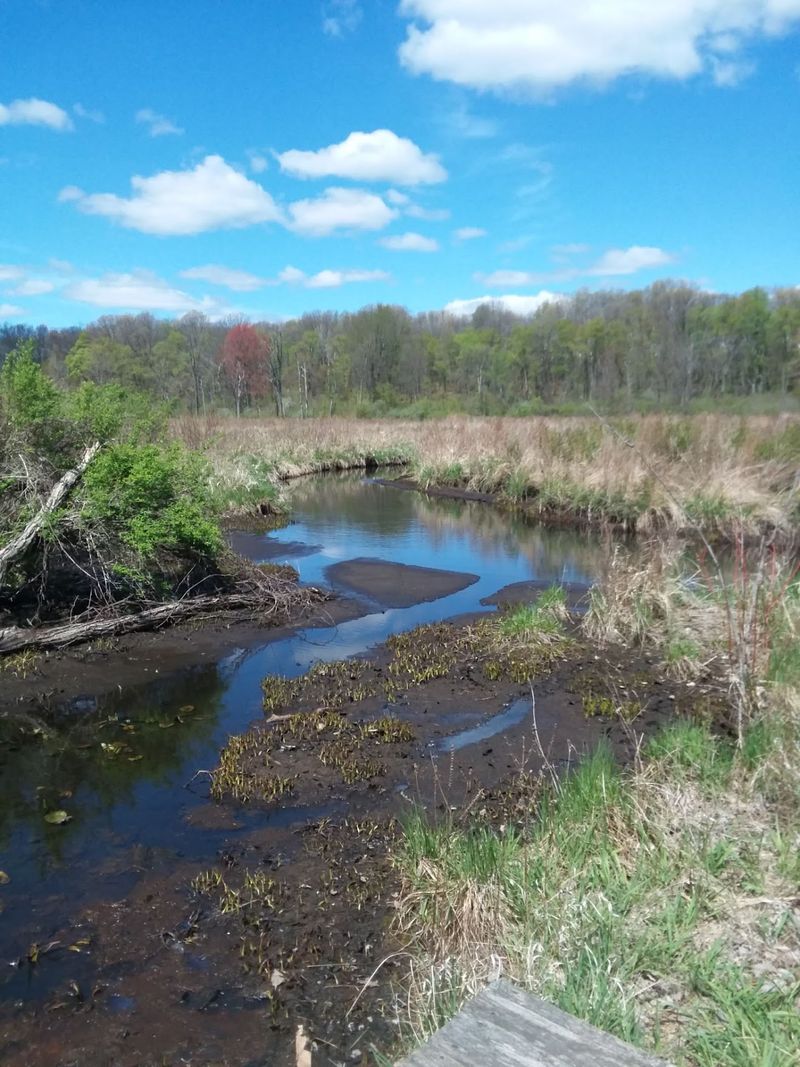
Water lovers, listen up. Glass Creek runs through the property, adding a peaceful ribbon of water to the landscape.
The sanctuary includes a small launch for kayaks and canoes, available to members of the organization that manages the property.
That gives members another way to experience the creek and surrounding wetland habitat beyond the walking trails.
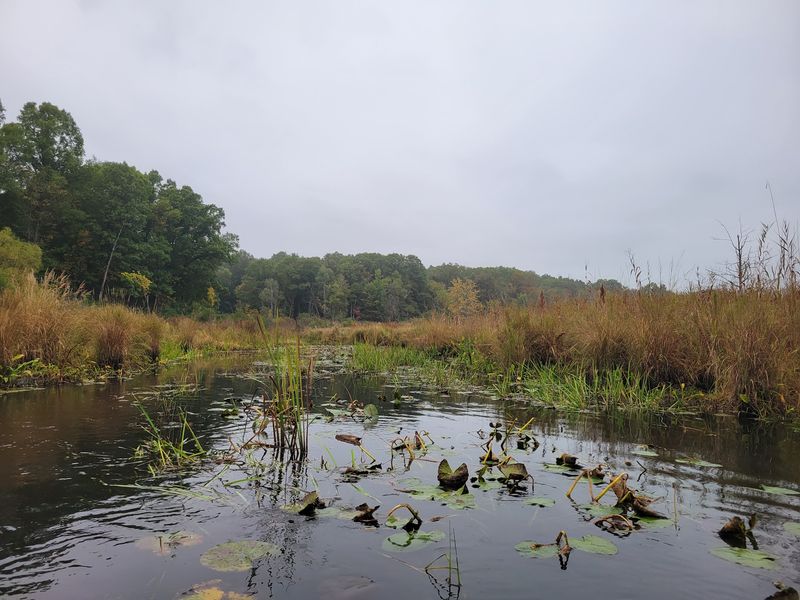
From the water, the landscape takes on a different character. Marsh grasses rise along the banks, with forest and open fields beyond them.
Quiet paddling can also provide opportunities to observe birds using the creek corridor. Water levels and seasonal vegetation can affect conditions, so checking access before arranging a trip makes sense.
The launch is a small facility rather than a full-service boating destination. Paddlers should bring their own equipment and plan accordingly.
Glass Creek remains part of the sanctuary experience even if you stay on land.
The boardwalk offers views across its wetland surroundings, while the creek helps connect the property’s springs, marshes, and other habitats.
Moving water and moist soils support plants and insects that form an important part of the local ecosystem.
Old Farm Buildings Hint At The Land’s Earlier Life
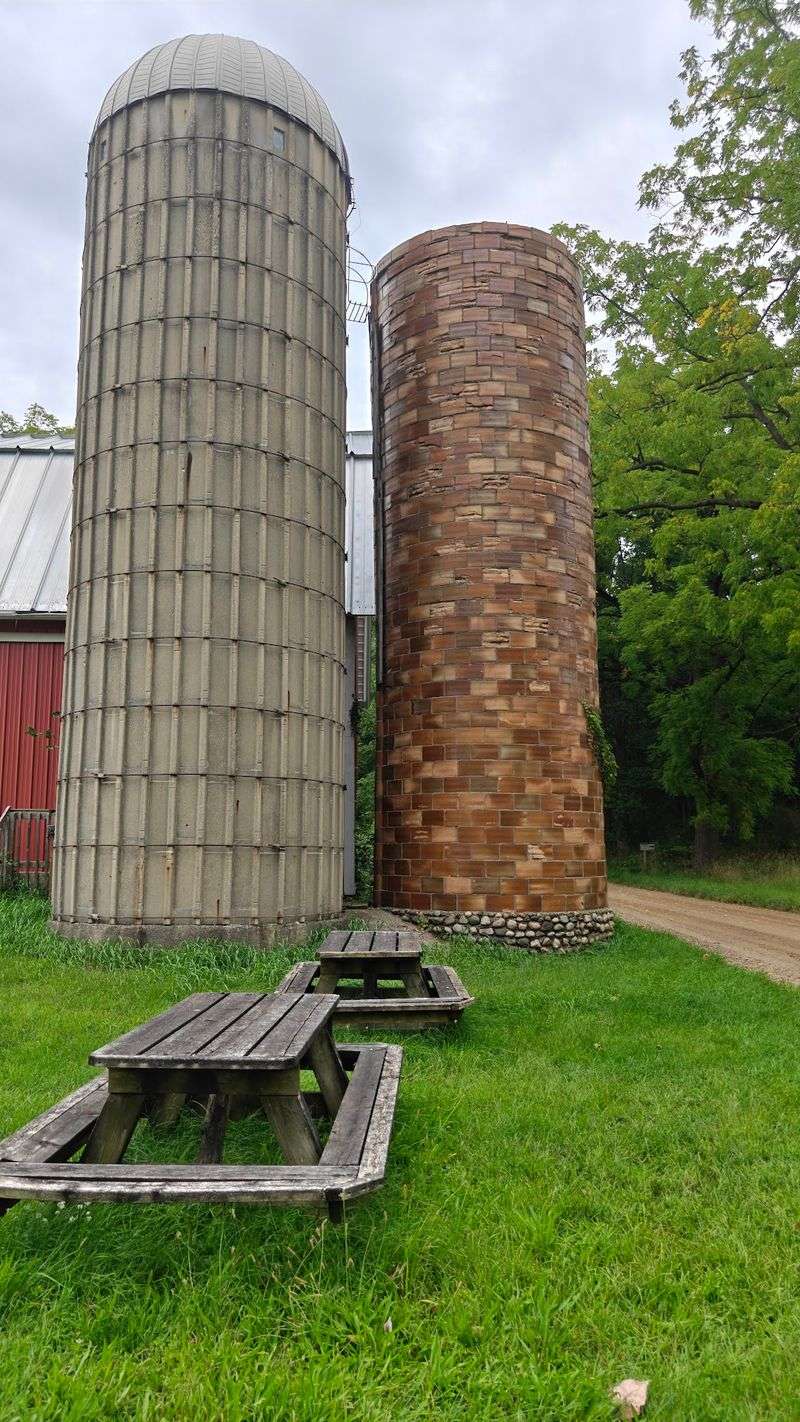
The word farm in Otis Farm Bird Sanctuary isn’t just decoration. A historic barn and tile silo still stand on the property, recalling its agricultural past.
The farm was established in the 1880s and operated for generations, with livestock and cultivated fields occupying parts of the landscape.
During the 1920s, drainage ditches and underground tiles were installed in sections of the fen to support onion farming. Cattle also grazed the wetland area.
Over time, the landscape began returning to a more natural condition. Restoration efforts helped improve the fen and surrounding habitats.
The sanctuary’s conservation work now includes restoring grasslands with native plants, managing unwanted vegetation, and planting young oak trees.
Those projects help create better conditions for grassland birds, pollinators, and other wildlife.
The former fields are particularly interesting because they demonstrate how land can gradually change from agricultural use to a protected natural area.
The barn and silo make recognizable landmarks near the entrance, providing a visual connection to the property’s earlier purpose.
They also give the sanctuary a character quite different from a traditional forest preserve.
Smart Timing Makes Every Visit Better
Timing can make or break your trip. The sanctuary welcomes visitors throughout the year from dawn to dusk for hiking, nature observation, birdwatching, and other low-impact activities.
You’ll find it at 3560 Havens Rd, Hastings, MI 49058.
The parking area is generally accessible from spring through fall, depending on ground conditions. Wet weather can make the grassy parking surface difficult to use, so follow posted notices.
Spring is particularly rewarding for woodland birds and wildflowers. Summer brings tall grasses and active wetland habitats, while autumn colors transform the surrounding forest.
Winter offers quieter scenery, with cross-country skiing permitted when conditions allow. There are no public restrooms at the sanctuary, so plan accordingly before setting out.
Finding the entrance also deserves a little preparation. From M-43, follow Goodwill Road west, then turn south onto Havens Road. The sanctuary is approximately half a mile from that turn.
Navigation apps can be imprecise on rural roads, and roadside signage is limited.
Remember, this is a sanctuary first. Stay on maintained trails, keep noise low, and leave plants and wildlife undisturbed.