These 5,000 Pound Rhinos Can Run 30 MPH, And You Can See Them In North Carolina
Two and a half tons should not be able to sprint.
Yet a southern white rhino can hit about 30 miles per hour in short bursts, and my brain still refuses to picture it gracefully.
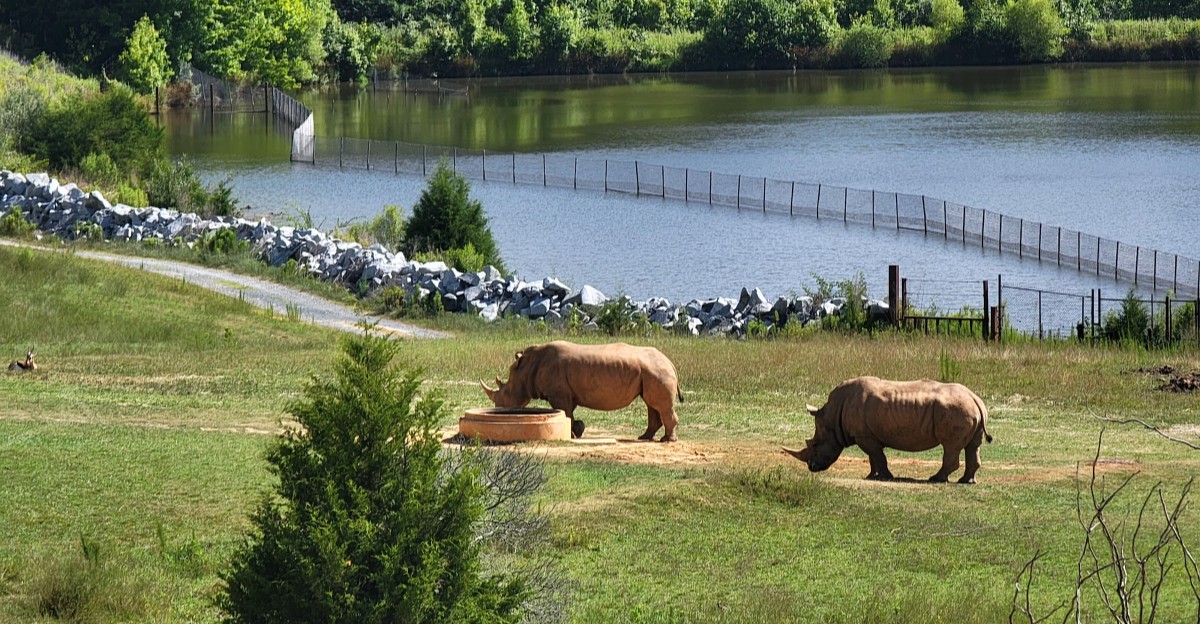
These massive animals have lived at a North Carolina zoo since 1976, grazing across a 40-acre grassland built to give them room to move naturally.
What fascinates me most is the scale.
You are looking at an animal roughly as heavy as a pickup truck, standing in an open habitat with enough space to make even something that enormous feel small.
The breeding program gives the exhibit a bigger purpose too, especially with white rhinos facing serious pressure in the wild.
I came for the size. The speed is what made me stare.
Seeing one up close makes “gentle giant” sound a lot more complicated.
Meet The Heavyweights Who Run Like Linebackers
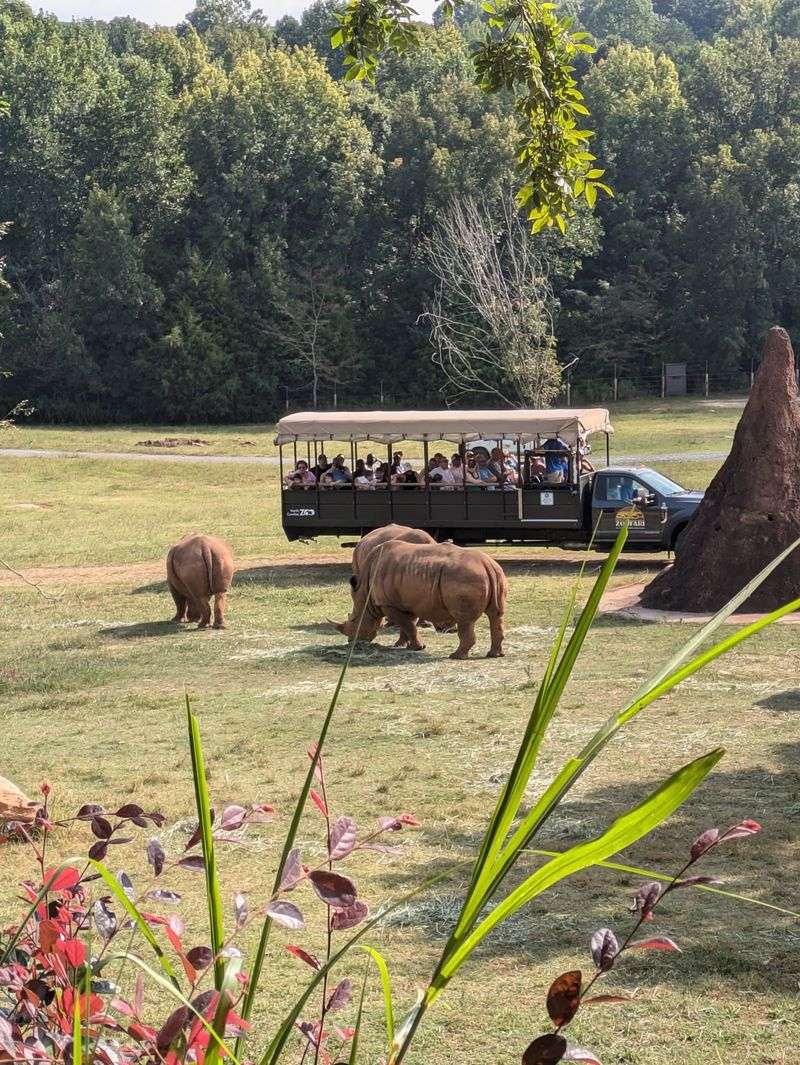
Four to five thousand pounds of rhino can still leave a car in its dust on a city street. The southern white rhinos at the North Carolina Zoo reach up to 30 miles per hour in short bursts.
That’s faster than most people can pedal a bike. It’s also a good reminder to respect the fences and enjoy the view.
These rhinos live in the Africa region, inside the Watani Grasslands Reserve. Their scientific name is Ceratotherium simum, which sounds like a spell from a wizard movie.
Despite the name, white rhinos aren’t actually white. They’re usually a gray color, and they spend much of their day grazing on grass.
Their wide, square lips work like lawnmowers for the ground. That shape helps them crop grass low and steady, bite after bite.
Watching an animal this big move calmly is oddly relaxing. It feels like seeing a boulder decide to go for a stroll.
Bring binoculars if you have them, because the habitat is big. The extra space gives the rhinos room to act like rhinos, and that’s the whole point.
Forty Acres Of Room To Roam Changes Everything
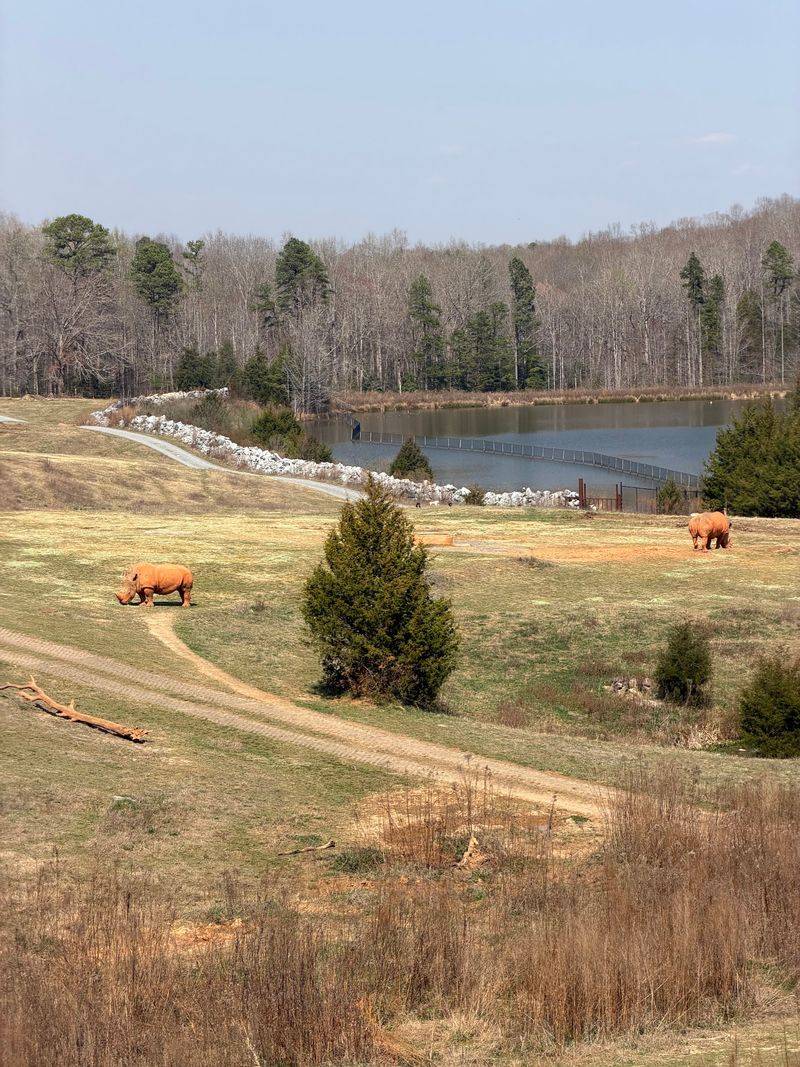
Forty acres is a lot of grass. That’s the size of the Watani Grasslands Reserve, where the rhinos share space with other African species.
Mixed-species habitats feel more like a slice of real savanna. Instead of one animal per pen, you get a scene that shifts as different animals wander by.
The reserve sits in the zoo’s Africa region, which also features giraffes and elephants. Spotting several species at once can turn a quick look into a long stare.
Here’s a practical tip for your visit. Big habitats mean animals sometimes rest far from the path, so patience pays off.
Give each overlook a few minutes before moving on. A rhino that looks like a gray rock might suddenly stand up and stroll over.
The reserve was also designed to encourage breeding. That goal ties directly to protecting a species that needs all the help it can get.
So every acre has a job. It keeps the animals comfortable, gives you a better view, and supports the future of white rhinos.
Not bad for a big field of grass.
Hop On The Zoofari For A Closer Rhino Look
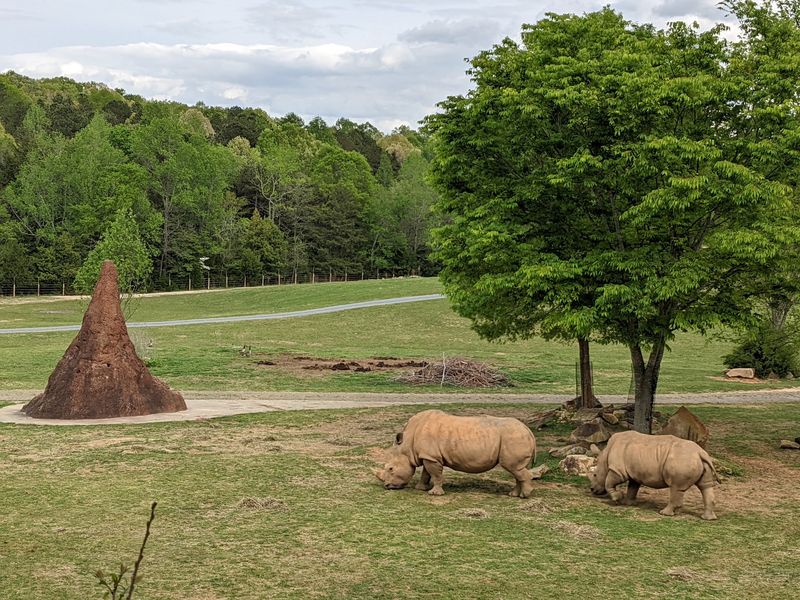
Riding past rhinos in an open-air vehicle sounds like a scene from a nature show. The Zoofari makes it real, right inside the North Carolina Zoo.
This guided tour rolls through the Watani Grasslands for a more immersive view. Instead of watching from the edge, you travel through the habitat itself.
That changes the whole feeling of the visit. The rhinos stop being distant gray shapes and start looking like the massive animals they truly are.
Antelope and other grassland species share the same space. So one ride can feel like a mini safari with several stars in the cast.
The Zoofari is a separate experience from general admission. Public Zoofari rides operate on Thursdays through Sundays and select holidays from March 21 through November 15, with tickets sold first come, first served at Junction Plaza.
Bring a camera with a decent zoom if you can. Phones work too, but steady hands help when the vehicle pauses near the animals.
Kids who love trucks and animals get both at once. Adults who secretly love trucks and animals get that bonus too.
Either way, it’s one of the most memorable ways to meet a 5,000-pound neighbor.
Your Ticket Helps Protect Rhinos Thousands Of Miles Away
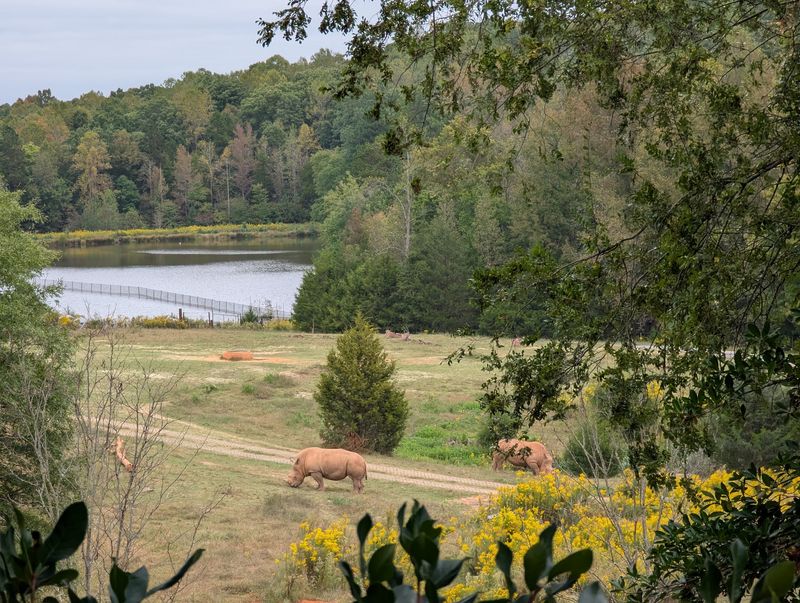
Zoo visits can reach far beyond the parking lot. The North Carolina Zoo supports rhino conservation projects in Namibia, in southern Africa.
The zoo provides technology and support to local staff there. That help lets teams monitor threats and protect wild rhinos where they naturally live.
Back home, the zoo takes part in the Species Survival Plan for southern white rhinos. This program comes from the Association of Zoos and Aquariums.
The plan helps zoos manage healthy rhino populations together. Think of it as careful teamwork, with many zoos working toward the same goal.
Rhinos face serious problems like poaching and habitat loss. Efforts like these give the species a stronger chance in the years ahead.
I like knowing that a fun family day connects to something bigger. Watching a rhino graze feels different once you understand that.
Keeper Chats are a great place to learn more about this work. Animal care experts share details you won’t find on a sign.
Ask a question if you get the chance. Curious kids especially tend to get the best answers.
Plan For Miles Of Wild Ground, Not A Quick Loop
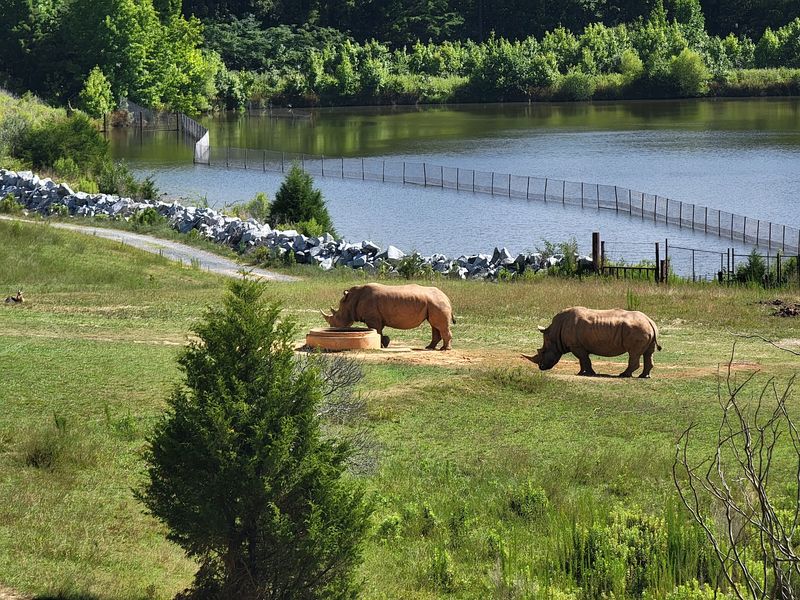
Big is an understatement here.
The North Carolina Zoo is known as the world’s largest natural habitat zoo, covering more than 2,800 acres. Approximately 512 acres are developed for animal habitats and visitor facilities.
That’s still enough ground to make comfortable shoes the most important thing you pack.
The zoo sits at 4401 Zoo Parkway in Asheboro, North Carolina. It has entrances near Africa and North America, although the Africa entrance generally closes during the winter season, when visitors should plan to enter through North America.
A trolley service connects different areas of the park. That’s a lifesaver when little legs, or grown-up legs, start running low on energy.
Hours change with the seasons.
From March 15 through November 15, the zoo is open from 9 a.m. to 5 p.m. From November 16 through March 14, it closes at 4 p.m.
Ticket sales end one hour before closing, so don’t cut it too close.
Some animals may leave their exhibits an hour before closing, too. Visiting the rhinos earlier in the day is a smart move.
The zoo is open daily except Thanksgiving and Christmas. That leaves plenty of chances to fit in a visit.
Polar Bears And Red Wolves Steal The Other Half Of The Show
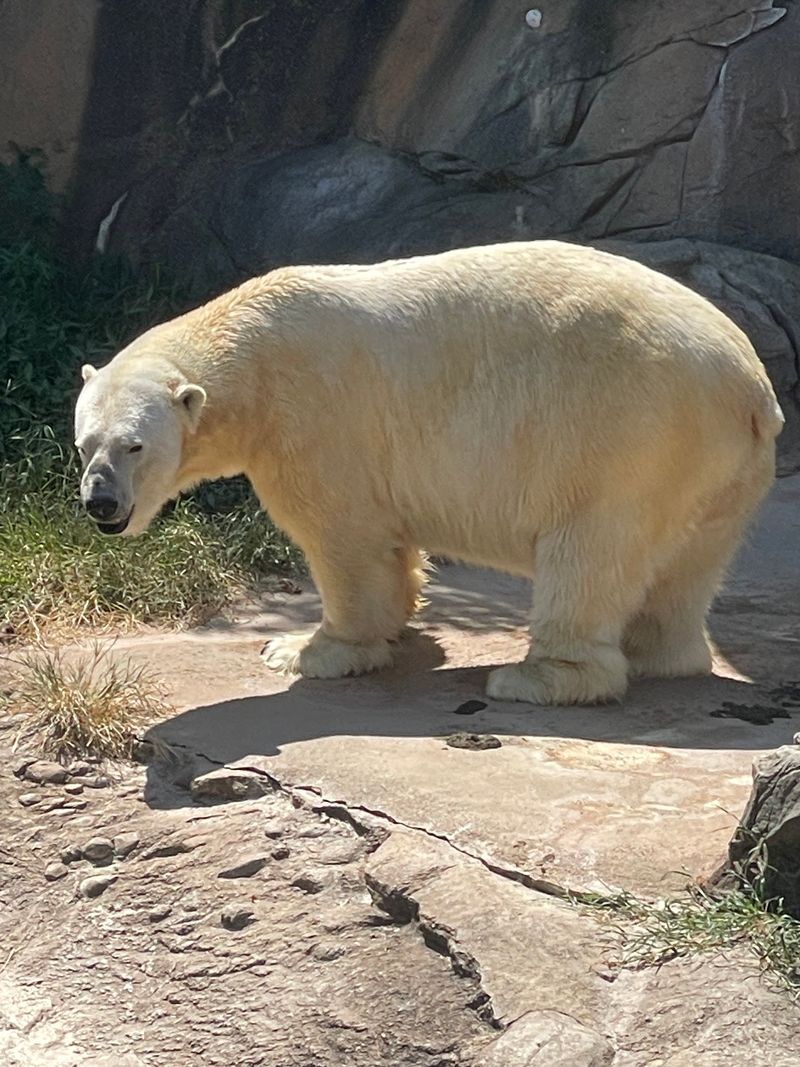
Rhinos might headline the trip, but North America holds its own. This region of the zoo showcases cypress swamps and rocky deserts.
Grizzly bears and red wolves live here too. Red wolves are especially meaningful, since they’re a rare species tied closely to the Southeast.
The region took years to build. The first North America habitats finished in 1993, and the final section opened in 1996.
That long timeline shows in the layout. Habitats blend into the wooded landscape instead of feeling squeezed into concrete boxes.
Many paths are shaded by trees, which helps on hot days. Still, a refillable water bottle is a wise companion.
Water bottle refill stations are available around the zoo. Staying hydrated makes a long day much easier to enjoy.
Going from Africa to North America is a real trek. The trolley can carry you between regions if your feet start filing complaints.
Visiting both regions in one day makes for a full adventure. Pace yourself, and save some energy for the trip back.
Those wolves and bears are worth it.
Fried Chicken Near The Savanna Is A Strong Strategy
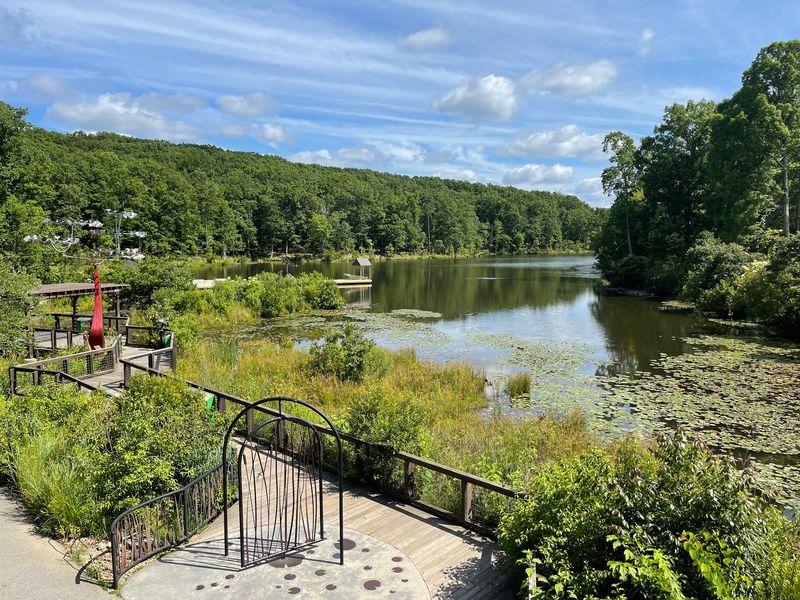
Rhino watching builds an appetite. Luckily, Billy D’s Fried Chicken sits right in the Africa region of the zoo.
Over in North America, the Farm-to-Table Cafe focuses on local ingredients. Both spots are part of the zoo’s sustainably sourced dining approach.
Burgers, fries, popcorn, and snacks round out the options. Sweet tooths can find soft-serve ice cream and Dippin’ Dots too.
The zoo uses compostable plates, boxes, and containers. It’s a small detail that fits the bigger green mission.
Prefer packing your own lunch? Picnic sites sit next to the parking lots and overlook lakes.
That setup gives you a relaxed break between regions. You can refuel, reset, and head back toward the animals feeling human again.
Planning meals ahead matters at a park this large. Hungry kids and long walks rarely mix well.
Pick a lunch spot before you arrive. Then you can spend less time wandering and more time watching rhinos snack on grass.
Honestly, they make eating look easy.
Butterflies, A Carousel, And Giraffe Snacks Keep Kids Grinning
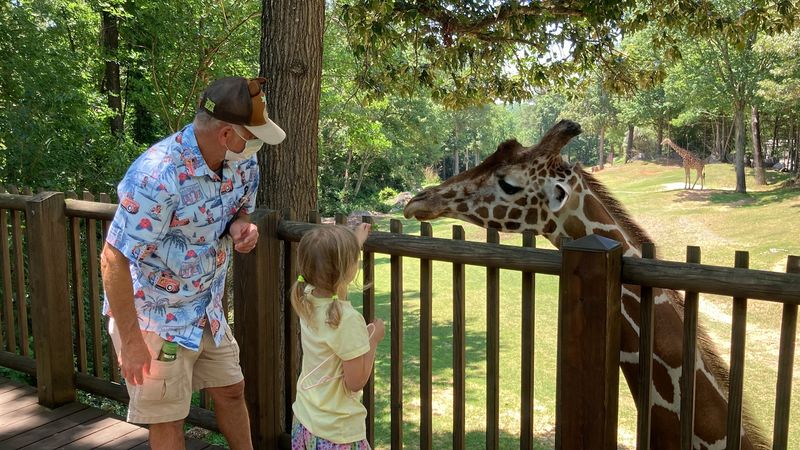
Kids may love the rhinos, but the extras seal the deal. The Endangered Species Carousel lets riders hop aboard animal figures instead of plain horses.
From May through September, the Kaleidoscope Butterfly Garden offers a peaceful walk among colorful butterflies and tropical plants. Outside those months, families can explore the zoo’s year-round gardens and nature play areas.
A giraffe-feeding deck brings you eye level with very tall neighbors. Few things beat the look on a child’s face during that moment.
Some of these experiences cost extra beyond admission. Budgeting ahead keeps the day smooth and fun.
The Garden Friends Playground and Kidzone nature play area help burn energy. That’s handy when young visitors need a break from looking and want to climb.
Treehouse Trek offers another outdoor adventure, while hiking trails wind through the zoo’s wooded property.
The Zoo Trekker program encourages kids to engage through activities. It turns a walk into a mission, which works wonders on tired legs.
For families, the zoo is wheelchair accessible. Wheelchairs, strollers, and electric scooters are available to rent.
Everyone gets to join the adventure.
Tigers And Red Pandas Are On The Way
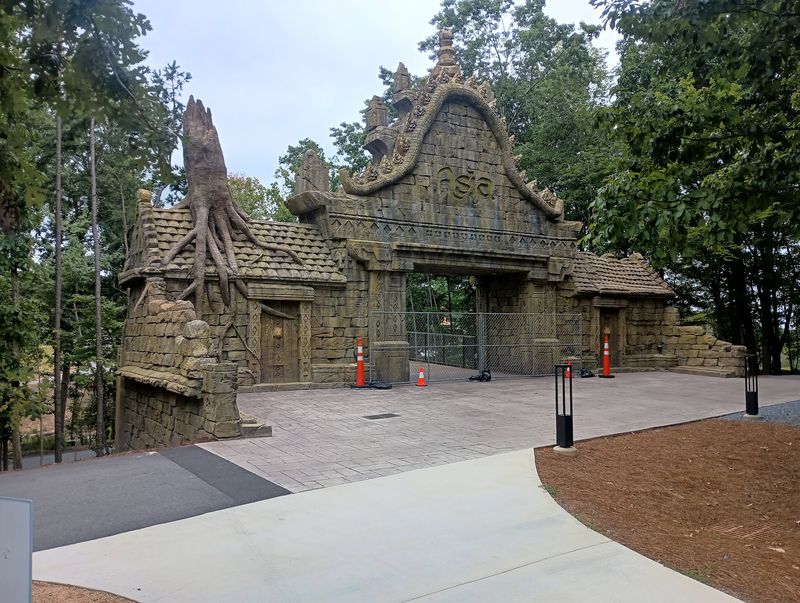
Fifty years in, this zoo is still growing. A brand-new 12.5-acre Asia region is preparing to welcome visitors on March 1, 2027, bringing the zoo’s first major expansion in more than three decades.
Malayan tigers, Komodo dragons, white-cheeked gibbons, and Asian small-clawed otters are among the animals planned for the new region.
Groundbreaking for the new region happened in August 2022. Building habitats on this scale takes serious time and care.
The zoo’s history shows patience pays off. The idea began in 1967, when the state legislature set up a study commission.
Construction started in 1974, and the Association of Zoos and Aquariums accredited the zoo in 1984. In May 2024, it welcomed its 30 millionth guest.
That’s a lot of people walking those wooded paths. It also proves North Carolina really embraced its state zoo.
Visiting now gives you a fun before-and-after story. Come see the rhinos today, then return when Asia opens.
Your kids might be taller by then. The rhinos will still be heavier, and probably just as fast.