In Wendell, Idaho, Box Canyon State Park Hides A Spring-Fed Waterfall In A Basalt Canyon
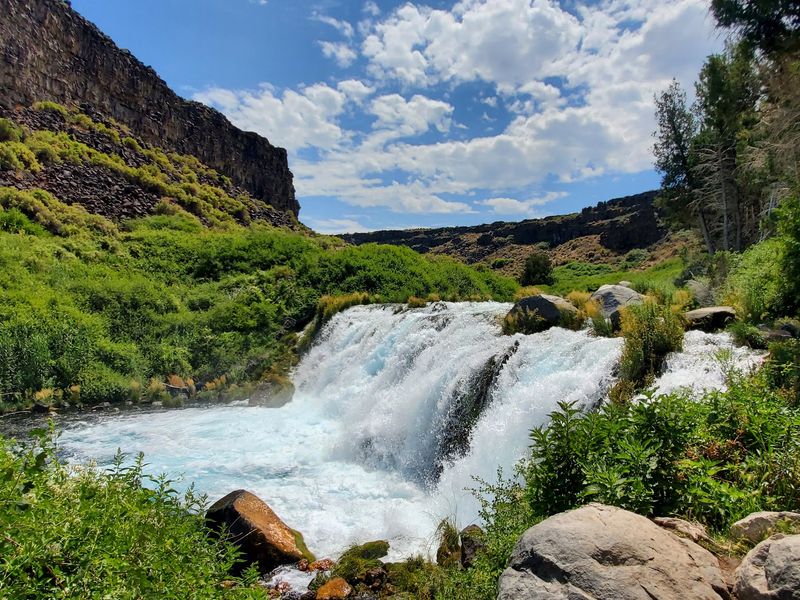
About 180,000 gallons of spring water pour out of one Idaho canyon every single minute. That makes these springs the 11th largest in North America.
And most people driving past on the highway have no clue.
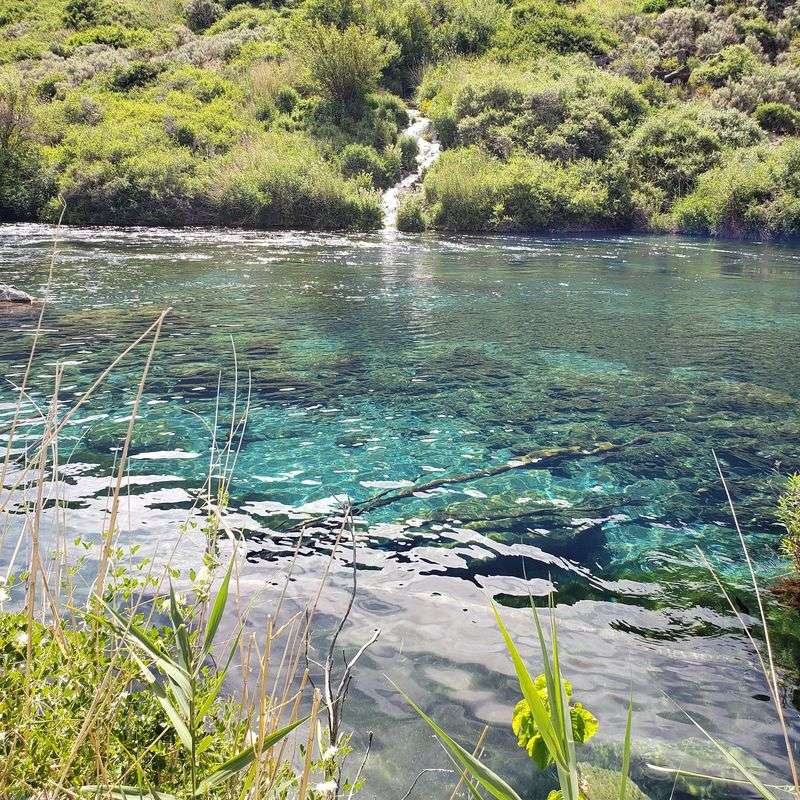
The water is a glowing aqua blue. It started as mountain snowmelt and spent roughly 200 years drifting through an underground aquifer.
Then it pops out of a rock wall like it has somewhere to be.
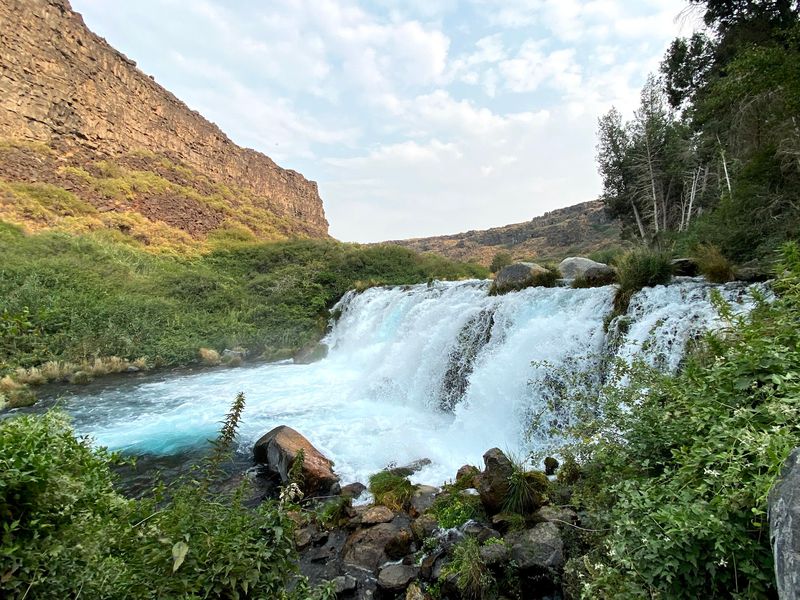
A 20-foot waterfall tumbles through the middle of it all, and it runs all year. The canyon walls are dark basalt, shaped by megafloods tens of thousands of years ago.
I like how the whole scene feels secret, even though it sits close to farm fields.
So how does a place this big stay this quiet? I believe the answer starts at the canyon rim.
A Spring-Fed Secret Sitting Just Outside Wendell
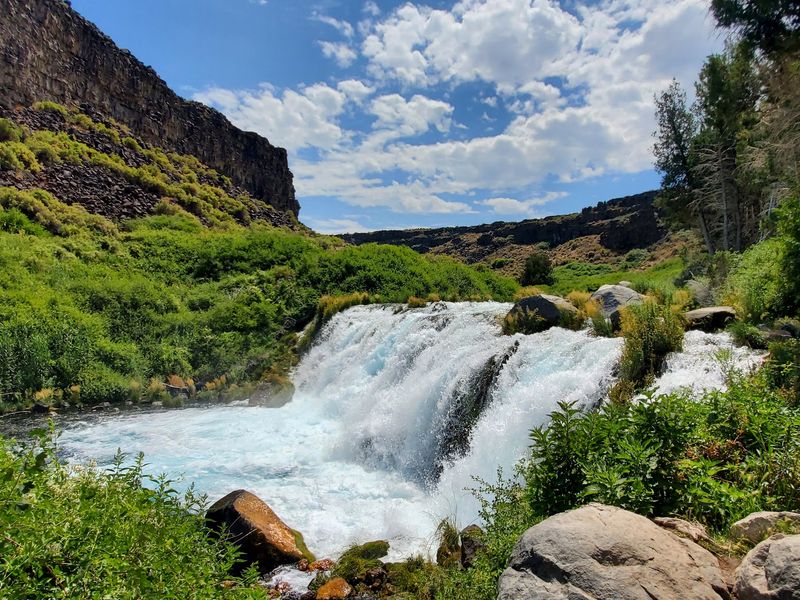
Farm country surrounds it on every side. Yet Box Canyon State Park drops into one of the most surprising canyons in the Magic Valley.
The official name is a mouthful: Earl M. Hardy Box Canyon Springs Preserve.
It’s a unit of Thousand Springs State Park, which strings together several spring-fed spots along the Snake River.
The preserve sits near Wendell, Idaho, a small town in south-central Idaho. From the rim, the land looks flat and dry, full of sagebrush and rocks.
Then the ground simply opens up.
Below, a deep, narrow canyon cuts through dark basalt. Clear, cold water fills the bottom with a color that looks almost tropical.
It’s a strange sight in high desert country, and that contrast is half the fun.
The park is a day-use spot, so there’s no camping here. You come to hike, look, and soak in the scenery.
Trails lead down into the canyon toward the waterfall and the aquamarine pools.
Think of it as a short trip with a big payoff. Few places in Idaho pack this much water into such a tight space.
It’s the kind of spot you’ll want to tell a friend about.
How Floods And A Former Owner Shaped The Preserve
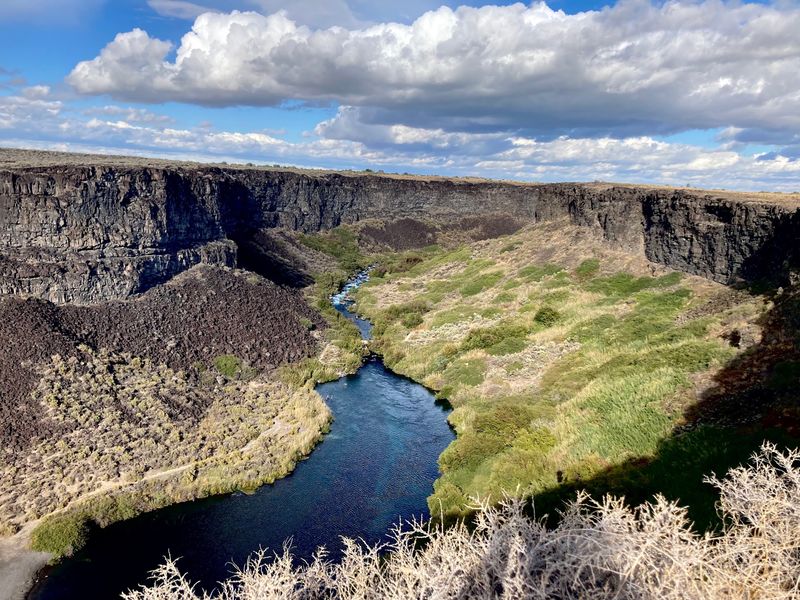
Roughly 45,000 years ago, megafloods roared across this part of Idaho. That raw water power helped carve the basalt canyon you see today.
Basalt is volcanic rock, and the Snake River Plain is full of it. Over time, water chewed through the layers and left steep walls behind.
The result is a canyon that feels sudden and dramatic.
The human story is much newer. The preserve carries the name of Earl M.
Hardy, a former owner of the land. His name stays on the property today.
In 1999, The Nature Conservancy purchased Box Canyon to protect it. That move kept the springs and canyon safe for wildlife and future visitors.
Conservation groups don’t buy land casually, so that alone says something.
Then, in December 2016, the land moved to the Idaho Department of Parks and Recreation. That’s when it officially joined Thousand Springs State Park.
Since then, the public has enjoyed easier access to this unusual corner of Idaho.
So the canyon has two creators. Ancient floods built the walls, and modern conservation kept them open.
Not a bad partnership for a place this quiet.
Water That Took Two Centuries To Arrive
Here’s a number to chew on: 180,000 gallons per minute. That’s how much water these springs release, ranking them 11th largest in North America.
The source is far away. Snow and rain fall in the mountains of south-central Idaho.
Then that moisture soaks into a vast underground aquifer.
It doesn’t rush, either. The water travels underground for roughly 200 years before emerging in the canyon.
Some of what flows past today fell as snow before Idaho was even a state.
All that slow filtering gives the water its famous look. It’s crystal clear with an aqua blue glow.
On a sunny day, you can see straight down to the rocks on the bottom.
It’s also cold, all year long. That steady chill is part of why the spring-fed stream looks so fresh.
Dip a hand in, and you’ll understand fast.
Swimming in the springs is currently prohibited, so admire it from the bank. Older articles mention swimming, but rules change.
Check posted signs when you arrive, and enjoy the view instead.
The 20-Foot Waterfall That Never Takes A Break
Most waterfalls in Idaho shrink when summer heats up. Not this one.
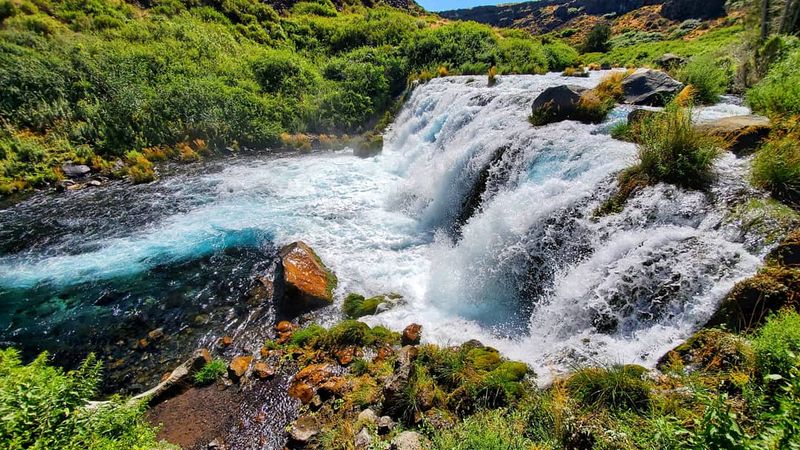
The falls drop about 20 feet and run all year. Because they’re spring-fed, they don’t depend on spring runoff.
The flow stays strong in January and in August.
That reliability is a big deal. You can plan a visit in almost any season and still see moving water.
Few trails can promise that.
The waterfall sits along the trail into the canyon, so it comes early on the hike. You won’t need to trek all day to reach the main attraction.
A shorter 1.6-mile round trip leads right to it.
Picture white water spilling over dark rock into bright blue below. The colors pop against each other.
Photographers tend to slow way down here, and who could blame them?
Bring a little patience for footing near the water. Rocks can be wet and uneven around the falls.
Good shoes make the view much more relaxing.
For many folks, this is the turnaround point. Others keep going for the full canyon.
Either way, the waterfall alone justifies the trip.
Trails That Start Steep And Then Settle Down
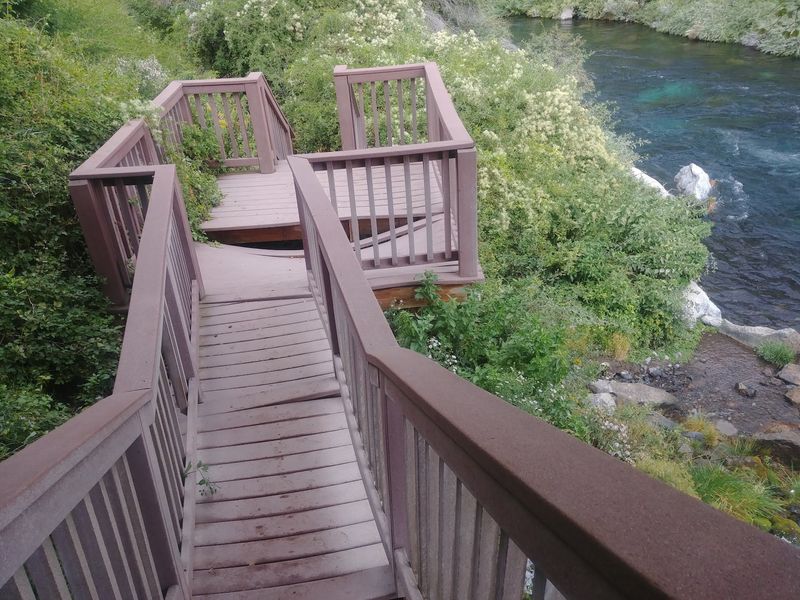
Getting down is the tricky part. The descent into the canyon is steep and uneven, but rails and rope help on the toughest stretch.
Once you reach the bottom, the hiking eases up. The trail follows the water past rocks and shade.
You’ll hop over some stones, so balance helps.
You’ve got options. The quick out-and-back to the waterfall is about 1.6 miles round trip.
Longer loop routes run around 4.3 to 5 miles, depending on the source.
The loop climbs back out and returns along the rim and access road. That route has more open dirt and scrub.
Going back the way you came keeps you near shade and water views.
Overall, the trails rate as moderate. If stairs leave you winded, the climb out may feel long.
Most active hikers handle it fine.
Footwear matters here. Leave the flip-flops in the car and wear sturdy shoes with grip.
Winter brings mud and ice in spots, so boots make sense then.
Pack plenty of water, too. The climb back up has a way of reminding you why.
Rock Chucks, Eagles, And A Fish Found Nowhere Else
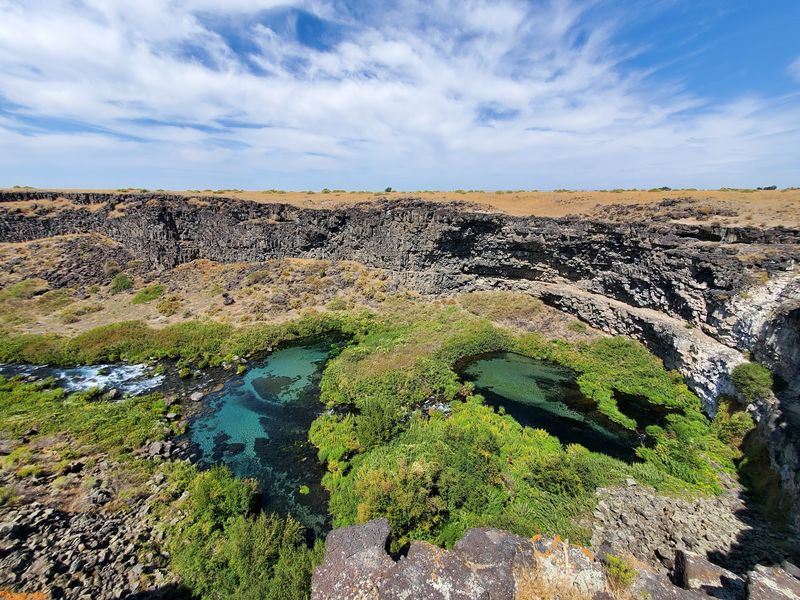
Keep an eye on the rocks. Rock chucks, also called marmots, like to sun themselves on the basalt.
The preserve hosts several bird species, plus lizards and snakes. Rattlesnakes live here, so watch where you step and where you put your hands.
Staying on the trail helps a lot.
Winter has its own bonus. Bald and golden eagles can be spotted during the colder months.
That’s a strong reason to visit when most people stay home.
The real celebrity lives underwater. The springs provide habitat for the Shoshone sculpin, a small fish unique to this area.
You won’t find it swimming in a random pond somewhere else.
That’s part of why The Nature Conservancy protected this canyon. Clean, steady spring water supports creatures that depend on it.
The whole place works like a living lab.
Plants deserve a heads-up too. Poison ivy and stinging nettle grow along the trails.
Long pants can save you some itchy regret.
Bug spray is smart in warmer months. With a little prep, you can focus on the critters instead of the scratching.
What To Know Before You Pull Into The Lot
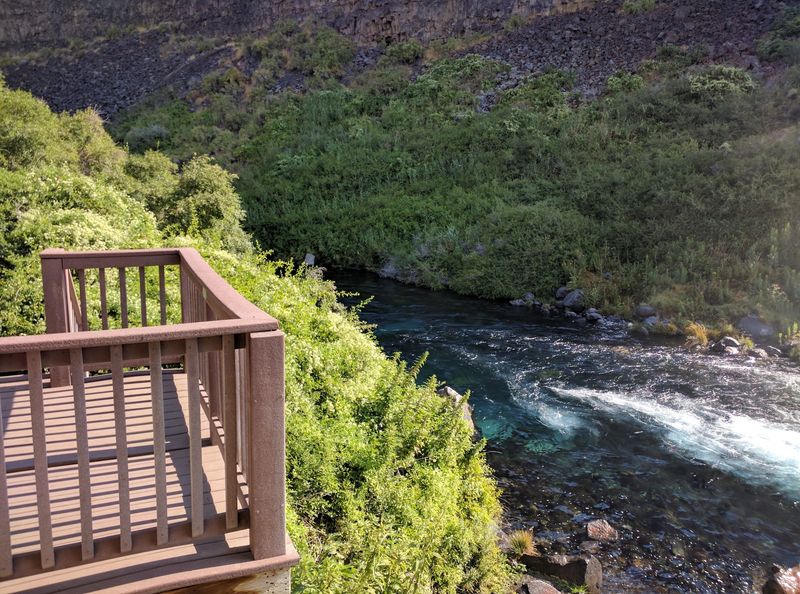
Plug W Point Rd, Wendell, ID 83355 into your map. Directions point you to the parking lot off S 1500 E road.
Box Canyon State Park opens year-round for day use. It runs from early morning into the evening, but check before driving.
Hours and conditions can shift.
There’s a modest vehicle entry fee of a few dollars. It’s waived if you carry an Idaho State Parks Pass.
A self-serve pay box handles the fee.
Amenities stay simple. Porta-potties sit near the main parking lot.
Don’t expect a visitor center, snack bar, or gift shop.
Dogs are welcome on the trails, as long as they stay leashed. With rattlesnakes and steep edges around, that rule makes good sense.
Your pup will thank you later, probably.
Cell service can be spotty in and around the preserve. Download your map ahead of time.
Let someone know your plans if you’re hiking solo.
Spring and fall are the best times to go. In summer, start early to beat the heat on the climb out.
The sun out here doesn’t play around.
Why This Canyon Earns A Spot On Your Idaho List
Short drive, big reward. That’s the simplest way to sum up Box Canyon State Park.
You get a 20-foot waterfall that never quits. You get spring water that spent two centuries underground.
And you get a basalt canyon carved by ancient floods.
It suits a lot of people. Families with steady-footed kids can manage the waterfall route.
Seasoned hikers can tackle the full loop and enjoy the rim views.
Bird watchers have eagles to look for in winter. Photographers have that wild aqua color to chase.
Anyone curious about Idaho geology gets a front-row seat.
A few rules keep it special. Pack out your trash, stay on the trail, and skip the swim.
The canyon stays beautiful when everyone pitches in.
The Magic Valley has plenty of springs and waterfalls. Still, this one feels different because it hides so well.
One minute you’re in farmland, and the next you’re staring into blue water.
Is it worth a morning off? I believe so.
Grab sturdy shoes and a full water bottle, and let Idaho surprise you.