This Connecticut Butcher Shop Offers Dry-Aged Steaks And Locally Sourced Meats Worth A Detour
Buying a steak shouldn’t require a research project. But once you start hearing about dry aging, different cuts, and where the meat comes from, things get surprisingly interesting.
And suddenly, the supermarket meat counter seems a little less exciting.
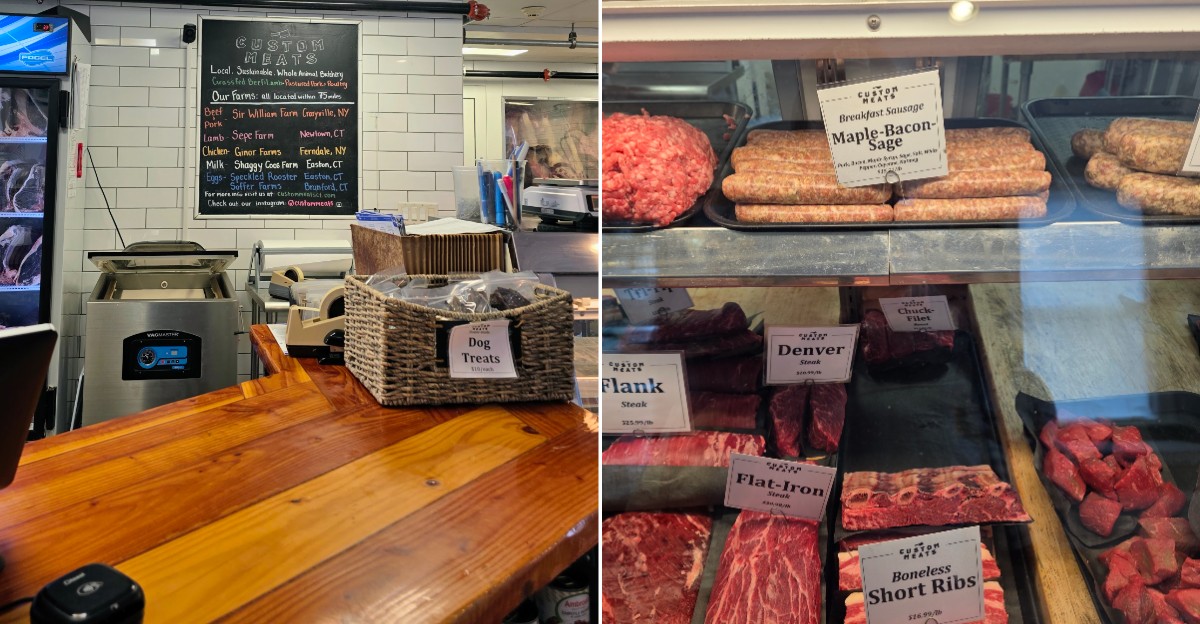
One Connecticut butcher shop offers dry-aged steaks and locally sourced meats for shoppers who appreciate a more specialized selection.
I love the idea of visiting somewhere that takes the craft of butchery seriously.
Dry aging alone raises a few questions. How does it change the flavor?
Why do certain cuts benefit from it?
That’s where knowledgeable butchers can make shopping more enjoyable.
And there’s something satisfying about choosing a cut with a particular meal in mind rather than grabbing whatever package happens to be available.
For anyone who enjoys cooking a proper steak dinner, the shopping experience can become part of the excitement.
1. An Old-School Butcher Counter With A Very Modern Conscience
Good meat deserves more than a plastic package and a price sticker. Sometimes, you want an actual butcher who knows exactly what they’re selling.
That’s the idea behind Custom Meats, a Fairfield shop that mixes traditional butchery with a more thoughtful approach to sourcing.
Instead of relying entirely on prepackaged cuts, the shop puts hands-on skill front and center. Meat is cut by people who know their way around a butcher’s block, and customers can have real conversations about what they’re buying.
Need help choosing a cut for dinner? That’s part of the appeal.
Getting useful advice from someone who works with meat every day makes the experience feel more personal.
What makes this place different is its commitment to whole-animal butchery. The team works with smaller farms that share its interest in responsible animal raising and careful sourcing.
Opened in 2017, the shop has made that approach central to its business. It also prepares sausages and dry-aged steaks in-house, giving customers more options beyond familiar everyday cuts.
It’s an old-fashioned way of doing things, with a modern reason behind it. And that combination makes an ordinary meat-shopping trip feel a little more interesting.
2. Every Cut Starts With A Whole Animal Arriving At The Door
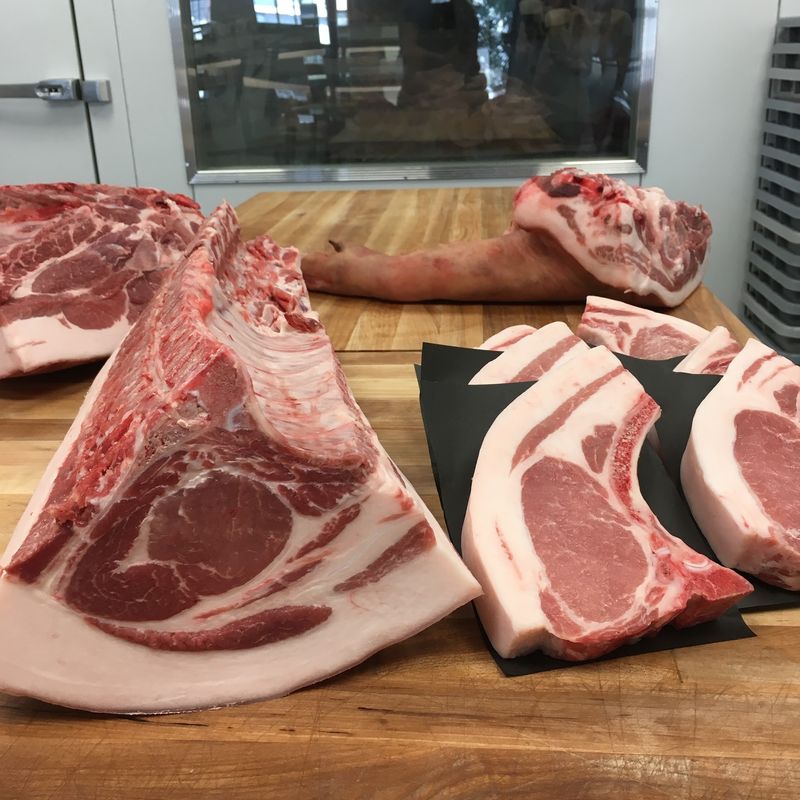
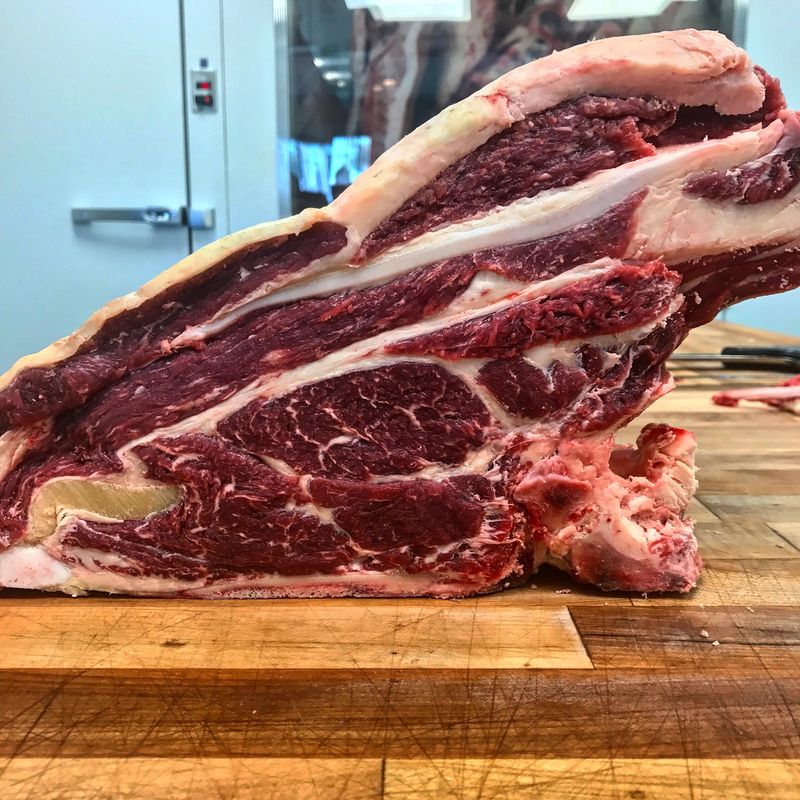
Most grocery stores get their meat already sliced and sealed. At this Fairfield shop, whole animals come in every week, and the butchers break them down completely in-house.
That changes what you see in the case. Instead of the same five steaks you find everywhere, you get a much wider range of cuts.
Some of them might be new to you, and that’s half the fun.
Whole-animal butchery also means less waste. When a shop buys the entire animal, it has good reasons to use every part well.
Bones can become stocks, trim can become sausage, and lesser-known cuts finally get their moment.
There is one catch worth knowing. Custom orders depend on what came in that week.
If a specific cut matters for your dinner plans, a quick call ahead is the smart move.
Honestly, this is the heart of Custom Meats. The whole system runs on respect for the animal and skill with a knife.
It’s slower than the factory route, but it gives you choices a supermarket simply can’t match. Think of it as a menu that changes with the farm calendar.
3. Patience Is The Secret Ingredient In Those Dry-Aged Steaks
Good things take time, and dry-aged beef proves it. The steak rests for weeks in a carefully controlled space, slowly building a deeper, richer flavor.
During aging, moisture leaves the meat. What remains tastes more concentrated and beefy.
Natural changes inside the meat can also help make it more tender, which is why steak fans get so excited about it.
Dry-aged steaks are one of the signature offerings at Custom Meats. The shop also sells dry-aged burgers, which brings that same bold flavor into a weeknight-friendly form.
Burgers night just got an upgrade.
Here’s a practical tip. Dry-aged steak doesn’t need much fuss at home.
A hot pan or grill, some salt, and a good rest after cooking usually let the flavor shine on its own.
Since the staff cuts everything by hand, you can ask which steak suits your plans. A thick one for a special dinner?
Something smaller for two? Talking it through at the counter beats guessing in a grocery aisle.
Dry-aging rewards patience, and a little planning on your end helps too.
4. Your Dinner Probably Traveled Fewer Miles Than Your Commute
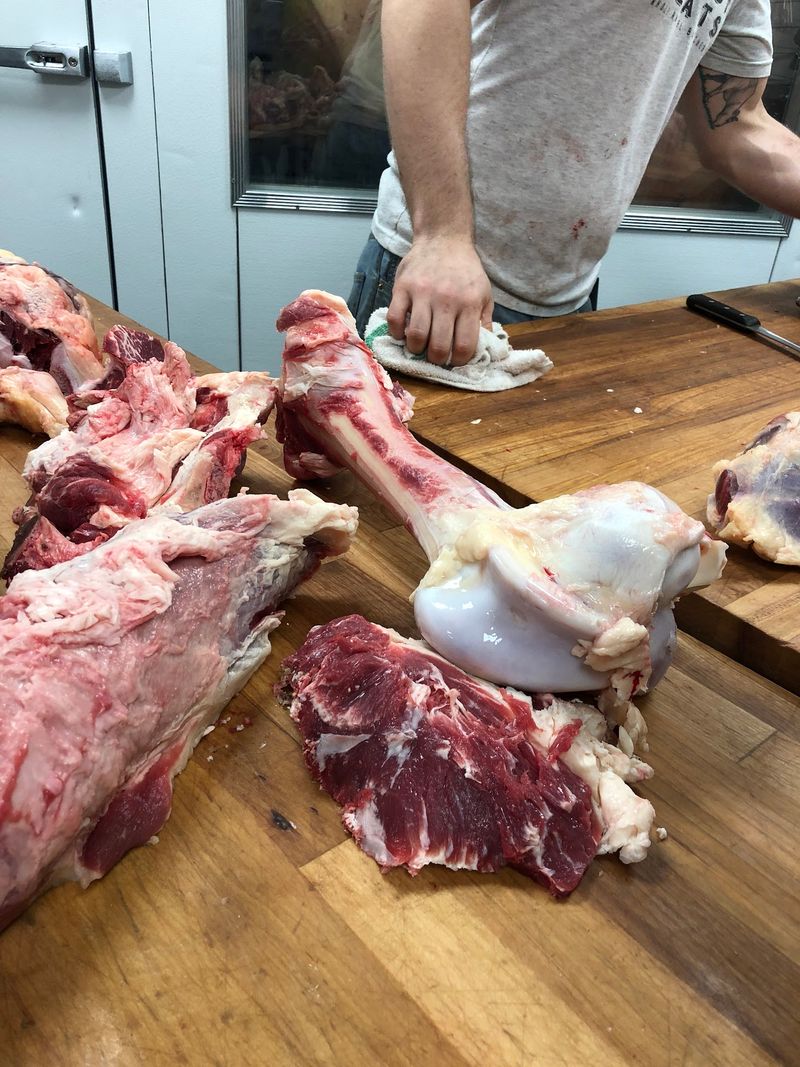
Seventy-five miles. That’s about how far many of the partner farms sit from the shop’s front door.
Custom Meats takes pride in being 100% locally sourced. It works with small local farms.
Those farms raise pastured animals on organic principles, with a strong focus on animal welfare and sustainability.
Why does local matter so much? Shorter distances mean the shop can know its farmers and how they work.
It also keeps money flowing to nearby family operations instead of huge distant companies.
Pasture-raised animals spend time outdoors, moving and grazing. Many shoppers believe that lifestyle shows up in flavor.
Either way, it lines up with the shop’s bigger goal of doing things the right way from the start.
I like how this turns a simple purchase into a short story. Your pork chop came from a real farm in the region, raised by real people who care.
That’s a pretty good thing to think about while it sizzles. It also makes the Connecticut food scene feel more connected, one farm and one counter at a time.
5. Beef Gets Top Billing, But The Supporting Cast Is Strong
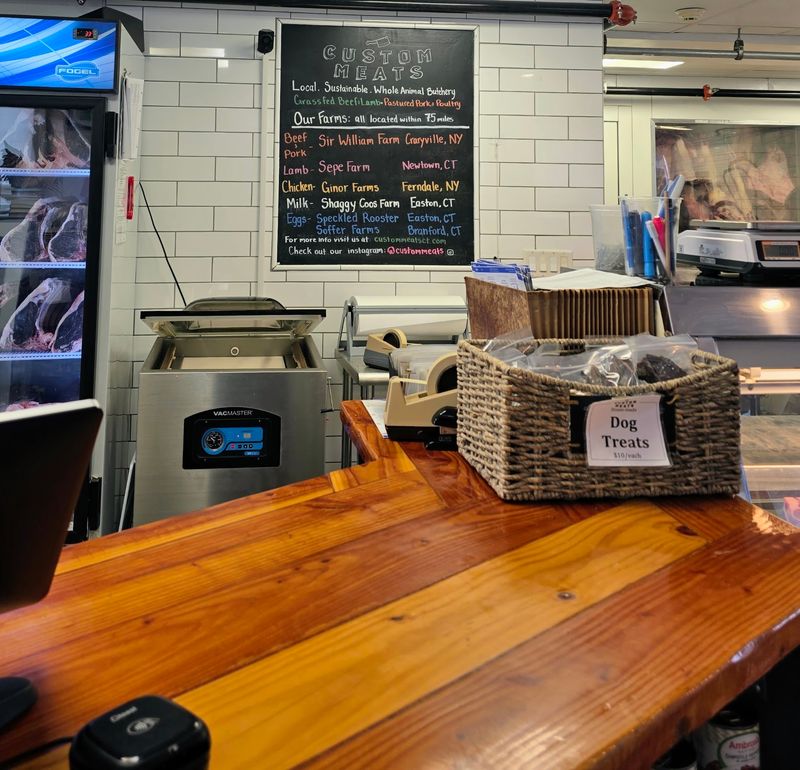
Steak may grab the spotlight, but the lineup here runs much deeper. Custom Meats carries beef, pork, lamb, and poultry, all from local sources.
The beef includes grass-fed and fully pastured options from different breeds. That variety lets you compare and find a favorite.
Pork comes from pastured Berkshire pigs, a breed many cooks love for its rich flavor.
Lamb is local and grass-fed. That’s great news for anyone who’s had trouble finding good lamb outside of holidays.
It’s a nice reminder that lamb deserves a spot in regular dinner rotation.
Poultry gets interesting, too. The shop offers Cornish White and Italian Red chickens, plus organic turkeys.
Planning a holiday bird from a local butcher feels a lot more special than grabbing one from a freezer bin.
There’s even pasture-raised rabbit. If you’ve never cooked it, ask the staff for ideas before you buy.
A good butcher can help you feel confident with something new. With this many choices, it’s easy to break out of a cooking rut.
Try one unfamiliar meat a month and see what happens.
6. Sausages, Smoke, And Snacks Made Right Behind The Counter
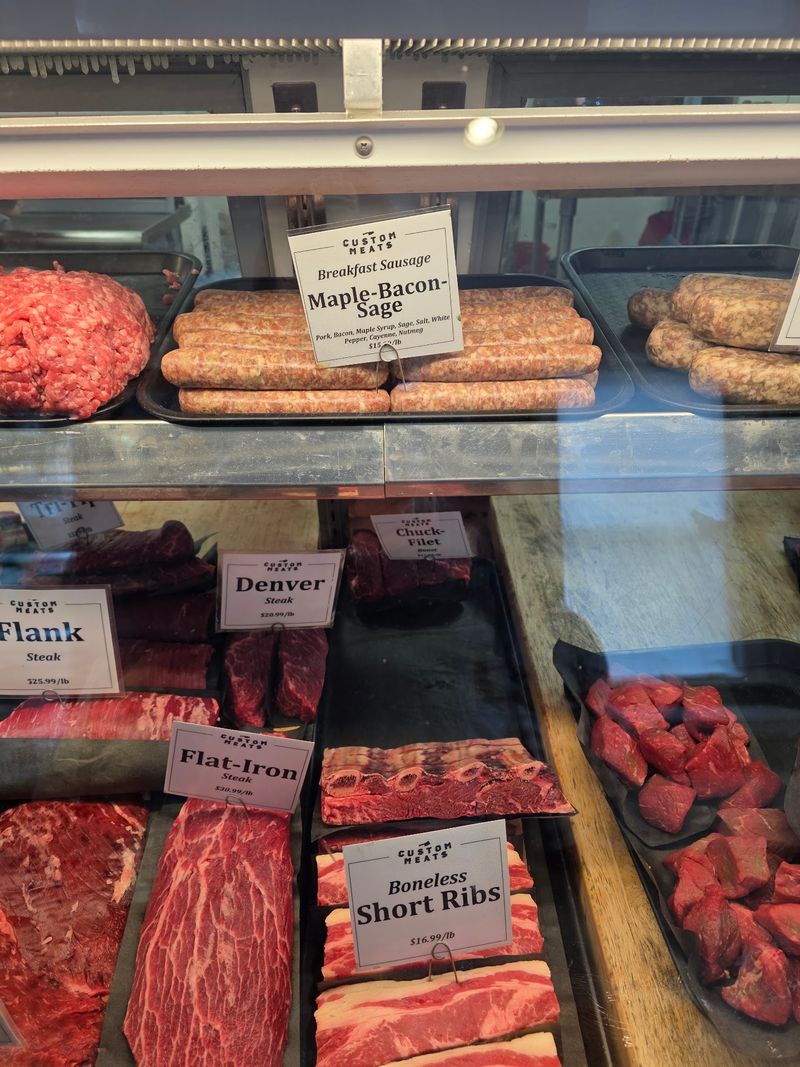
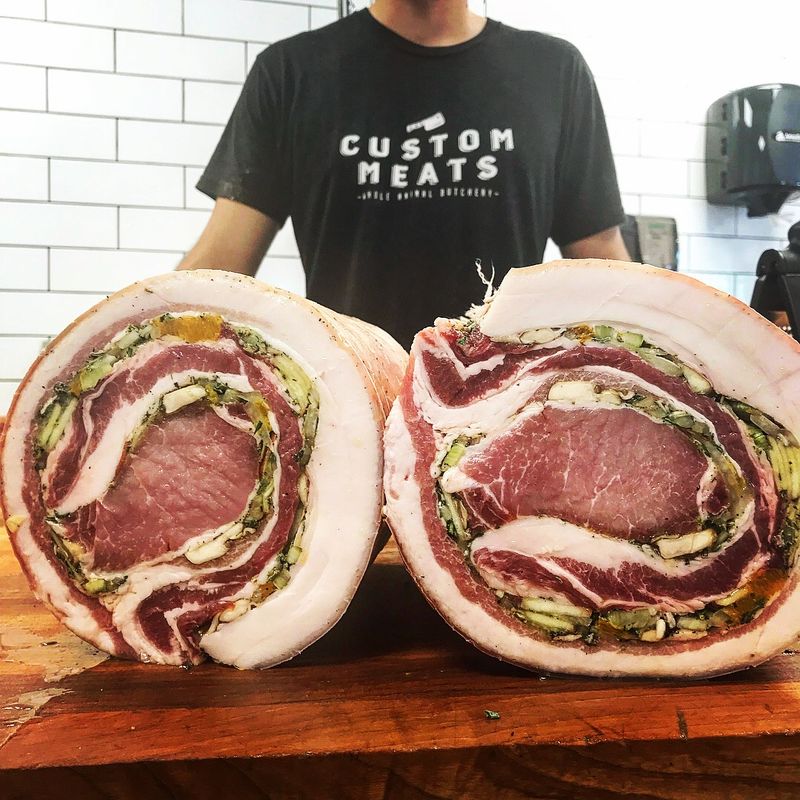
Not everything leaves the shop as a raw cut. Custom Meats makes a lineup of house-made goods that could easily steal the show.
Sausages lead the way, and the shop likes to get creative with flavors. Maple sage sausage is one name you’ll see around the shop.
Sweet Italian sausage is another handy option for pasta sauce or a quick skillet dinner.
The smokehouse side brings even more. Think house-made bacon, pastrami, brisket, roast beef, and smoked-chicken salad.
There’s also jerky, which makes a pretty great car snack for the ride home.
These products make smart use of the whole animal. Trim and smaller pieces turn into something delicious instead of going to waste.
It’s thrifty and tasty at the same time, which is a rare combo.
My tip? Grab a pack of sausages even if you came for steak.
They’re an easy way to taste the shop’s style without planning a big meal. Toss them on the grill midweek and you’ll feel like you planned ahead.
Your future self will be grateful, especially on a busy Tuesday.
7. Fill The Rest Of Your Bag Without Making Another Stop
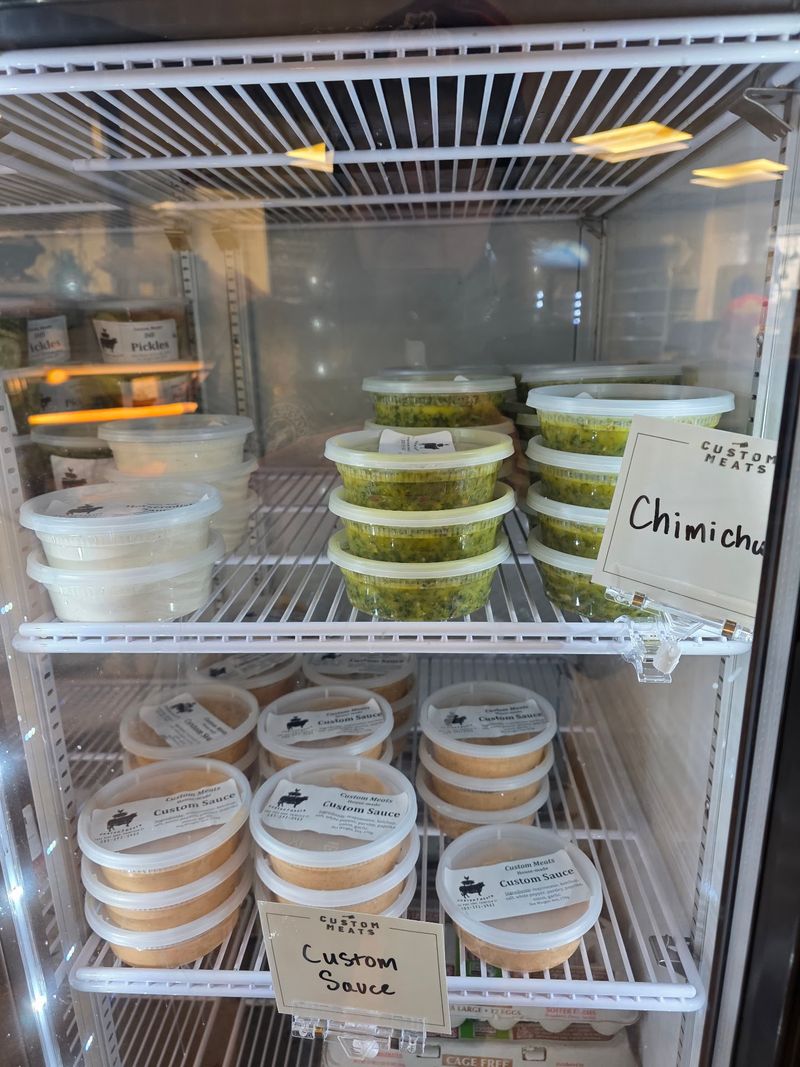
Meat is the main event, but the shelves hold some nice surprises. The shop also stocks farm-fresh local eggs, raw milk, honey, and jams.
Seasonal vegetables show up too. That means your steak can come home with something fresh and local to sit beside it.
One stop, one complete dinner plan.
Ready-made stocks are another handy find. Since the shop breaks down whole animals, stocks fit right into its no-waste approach.
They can turn a simple soup or risotto into something with real depth.
These extras follow the same local thinking as the meat counter. They help you build a meal that mostly came from the region.
That’s satisfying in a quiet, practical way.
Stocking up is easy if you bring a cooler bag. It keeps everything cold if you have other errands nearby.
And since Fairfield sits right along the busy Post Road corridor, you’ll probably have a few. Think of this corner of the shop as a tiny farm stand inside a butcher shop.
Small, focused, and full of things that make home cooking better.
8. Class Is In Session, And The Teacher Holds A Cleaver
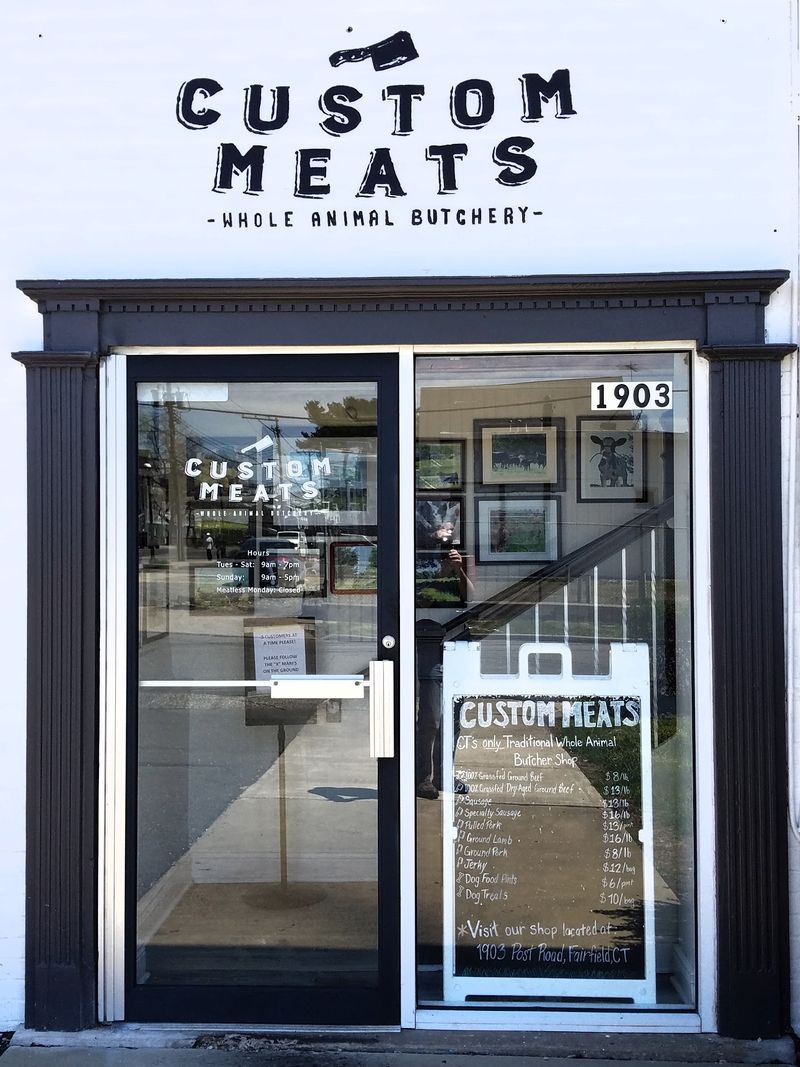
Ever wondered where a flank steak actually comes from? This shop wants you to find out.
Custom Meats aims to introduce customers to every part of an animal. Over the years, it has hosted demonstrations on breaking down cows and pigs.
Its website also has a class sign-up section for butchery learning.
Classes are a fun, hands-on way to understand your food. Watching a skilled butcher explain anatomy and cuts makes the meat case suddenly make sense.
You’ll never look at a roast the same way again.
The team behind this has real training. Co-owner and Head Butcher Tim Frosina is a UConn alumnus who studied butchery in the United States and in Corsica, France.
While there, he and his fiancee ran a food truck called L’Americanu BBQ.
His business partner, Jeff Cutshall, brings a finance background. He also cares a lot about feeding his kids healthy food.
That mix of craft and practical thinking shows in how the shop runs. A class here makes a great gift for the cook who already owns every kitchen gadget.
9. Plan Your Detour Around These Hours And A Very Good Neighbor
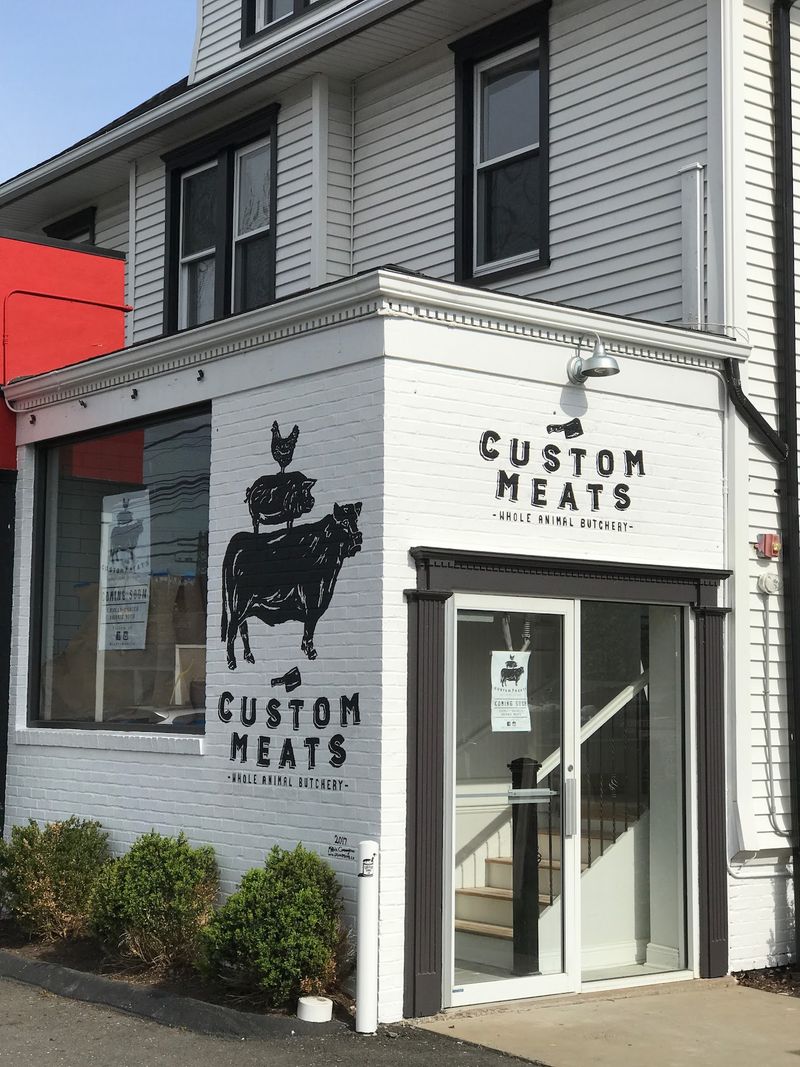
Steak and French pastries in one stop? That’s a pretty convincing reason to make a little detour.
The fun part about visiting Custom Meats is that Isabelle et Vincent French Bakery is right next door. You can pick up something special for dinner and grab a fresh pastry before heading home.
It’s a convenient combination, especially when you’re already driving through Fairfield and want to make the most of a quick stop.
The butcher shop traditionally operates Tuesday through Saturday from 10 a.m. to 6 p.m., with shorter Sunday hours ending at 5 p.m. Mondays are usually reserved for closing, so it’s worth checking the current schedule before making the drive.
For special cuts, contacting the shop ahead of time is a smart move. Orders are handled by phone, and availability can change depending on what the butchers are preparing that week.
The shop operates at 1903 Post Road, Fairfield, CT 06824, making it a convenient addition to a drive through town.
Bring a cooler if you’re traveling farther, especially during warmer weather. That way, your carefully chosen steak gets home in good condition, and your bakery treats can keep you company on the ride.