This Virginia Aviation Museum Is Packed With Vintage Aircraft And Remarkable Stories
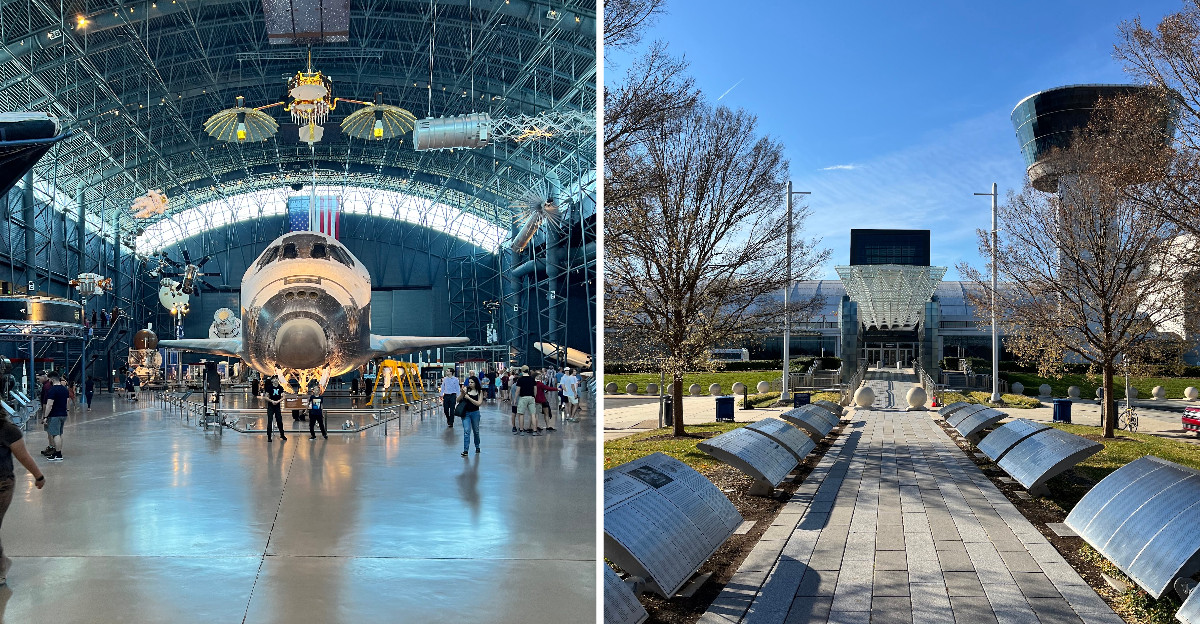
A space shuttle that flew real missions now sits in a hangar near a busy airport.
You can walk right up to it, and the museum doesn’t even charge admission. Virginia has a deep link to flight.
Here, that story fills two enormous hangars with vintage airplanes, record-setting jets, and a spacecraft that traveled nearly 150 million miles around Earth.
The twist is the sheer size of everything.
You can stand beneath suspended aircraft, look across a hangar at a supersonic passenger jet, and watch airplanes arrive at Dulles from an observation tower.
Pack snacks, charge your camera, and maybe stretch your neck first. You’ll be looking up a lot.
A Space Shuttle With 39 Missions Behind It
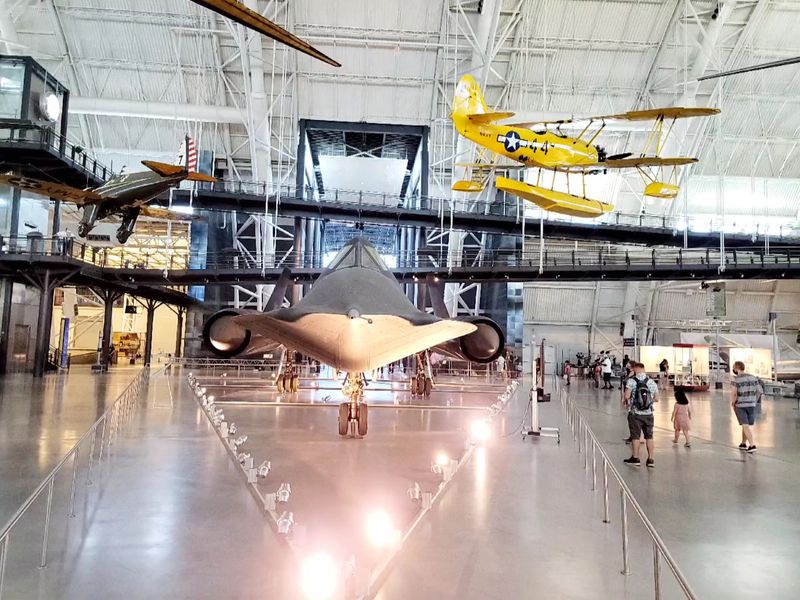
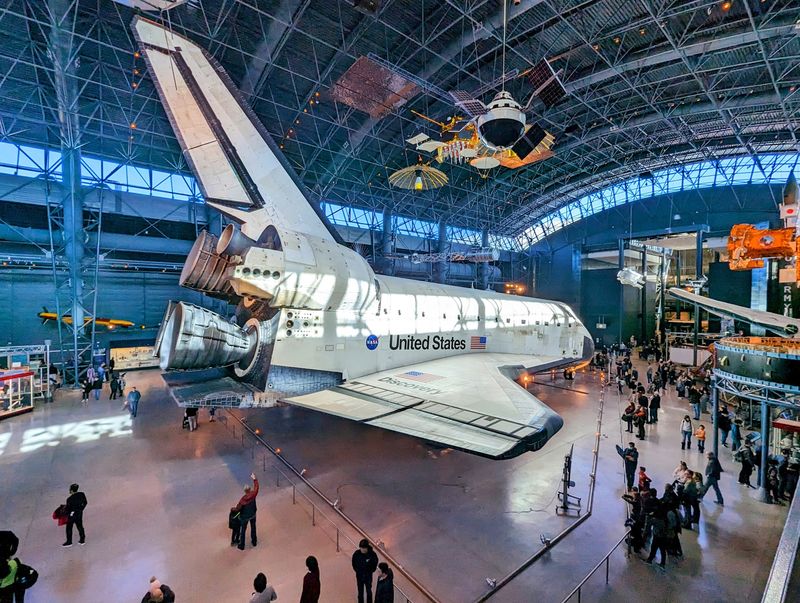
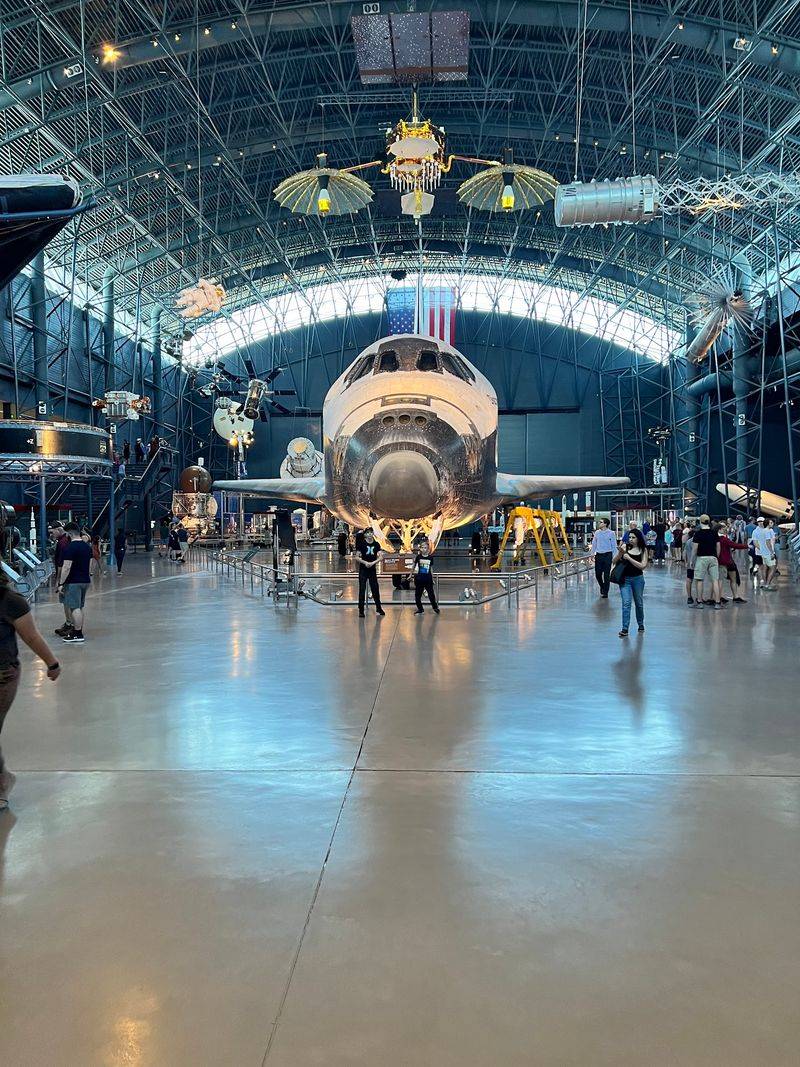
Space Shuttle Discovery can stop a conversation mid-sentence.
The enormous orbiter rests inside the James S. McDonnell Space Hangar, with its pointed nose, broad wings, and patchwork of protective tiles right in front of you.
This spacecraft really flew. The Steven F. Udvar-Hazy Center received Discovery in 2012, after its remarkable NASA career ended.
Between 1984 and 2011, it completed 39 missions, spent a combined 365 days in space, and circled Earth 5,830 times. It also helped deploy the Hubble Space Telescope and made repeated trips to the International Space Station.
Take a moment to study the contrast between the white upper body and dark tiles designed to protect it during atmospheric reentry. In the same hangar, satellites and other space hardware fill the space above and around the shuttle.
The Apollo Mobile Quarantine Facility and Mars Pathfinder equipment add another chapter to the display. Honestly, the most surprising part is how close you can stand to an actual vehicle that spent an entire year in orbit, one mission at a time.
Two Enormous Hangars With Aircraft In Every Direction
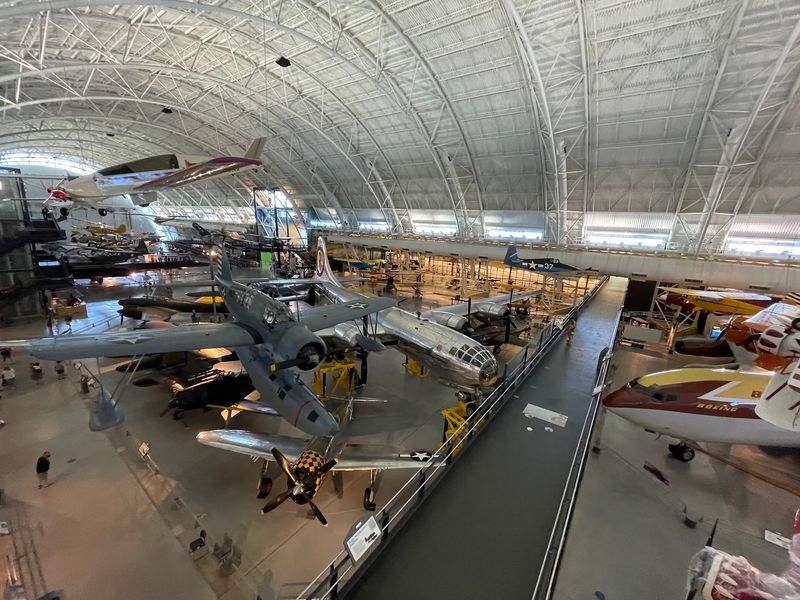
Forget neat rows of small exhibits.
The Steven F. Udvar-Hazy Center opened in December 2003 because the Smithsonian needed much more space for aircraft and spacecraft than its Washington, D.C., building could provide.
Today, more than 3,000 objects occupy the facility, including over 200 aircraft and spacecraft.
The Boeing Aviation Hangar is particularly impressive: airplanes stand on the floor, hang from the arched ceiling, and come into view again from elevated walkways.
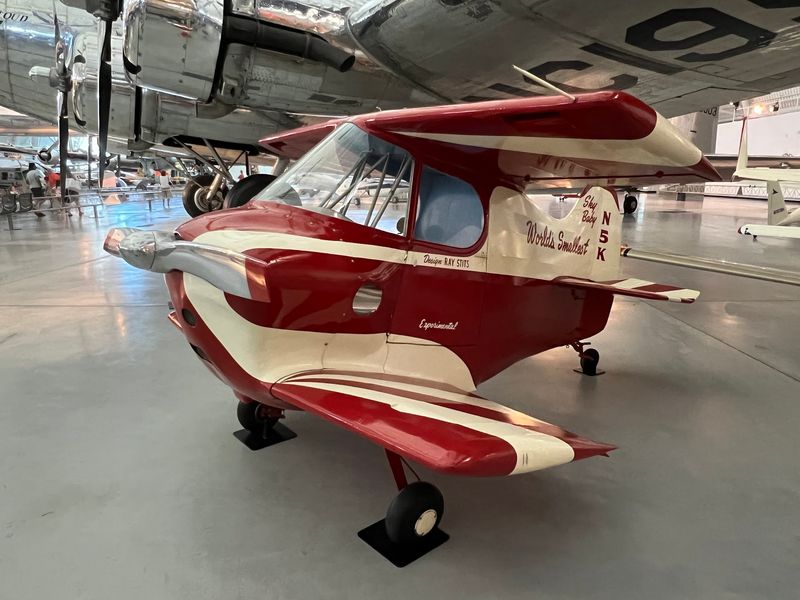
You might find a delicate early biplane above your head, then turn around to face an enormous passenger aircraft. The adjoining space hangar shifts the story from wings to rockets, satellites, and exploration beyond Earth.
Each exhibit area covers a different kind of flying, from early aviation and aerobatics to business travel and experimental designs. Spend time comparing wings, propellers, landing gear, and cockpits.
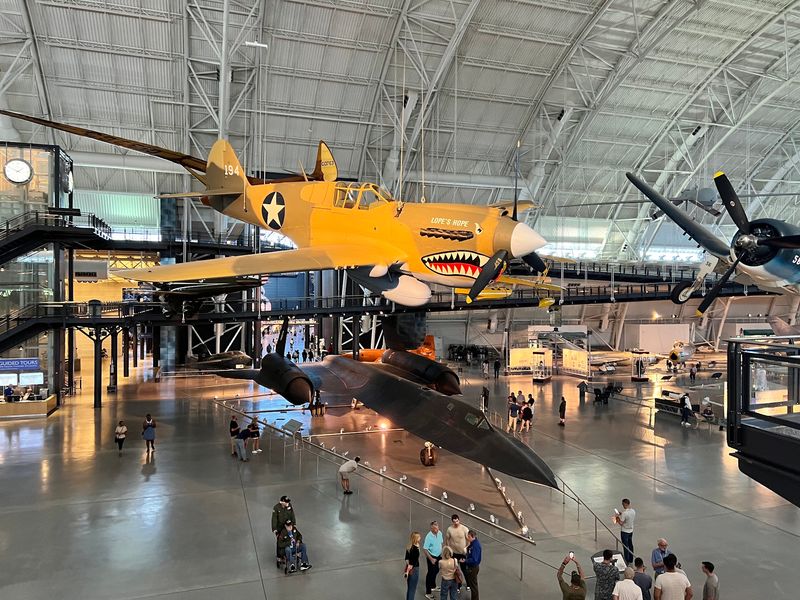
Keep looking upward. Some of the most intriguing machines are suspended above the crowds, where you almost feel as though they’ve been frozen in midflight.
The Black Jet That Crossed The Country In Just Over An Hour
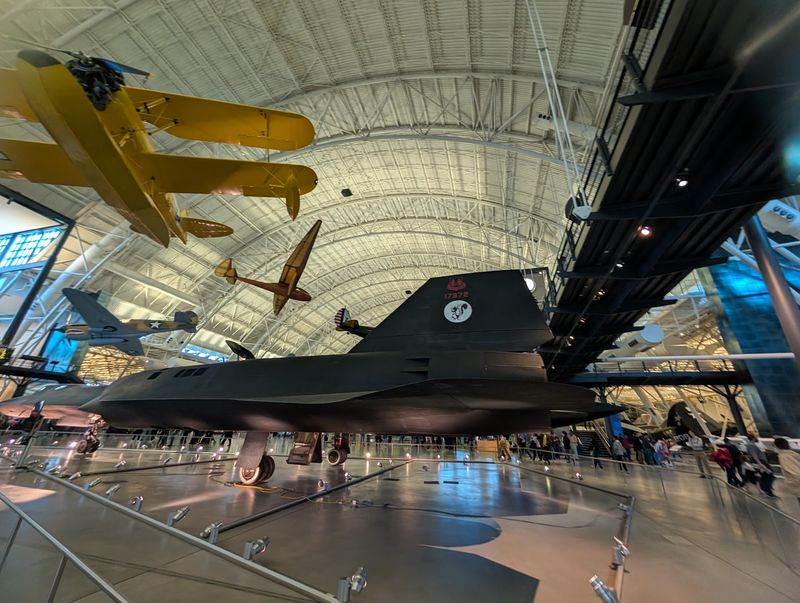
The sleek black aircraft looks fast even while standing still. It’s the Lockheed SR-71 Blackbird, a reconnaissance jet capable of traveling more than three times the speed of sound.
The particular aircraft displayed here made an unforgettable final journey in 1990. It flew from Los Angeles to the Washington area in just one hour, four minutes, and twenty seconds, setting a transcontinental speed record.
Its average speed on that flight exceeded 2,100 miles per hour. Think about that on your next flight. The pointed nose, long fuselage, and sharply angled twin tails give the Blackbird a shape unlike an ordinary airliner.
Its design allowed operation at extraordinary altitudes and speeds, with materials engineered for enormous heat. Virginia’s aviation exhibits rarely make the passage of time feel quite so strange.
A plane that once crossed the country faster than most of us finish lunch now sits quietly where you can examine its silhouette from several angles. Take the photograph. That shape is difficult to forget.
A Concorde That Could Outrun An Ordinary Passenger Jet
The Air France Concorde looks impossibly slender. Its pointed, drooping nose and sweeping delta wings belong to an era when commercial flight briefly became supersonic.
The Concorde in the Steven F. Udvar-Hazy Center is known as Fox Alpha. It entered service in the 1970s and carried passengers across the Atlantic at roughly twice the speed of sound, reducing some ocean crossings to fewer than four hours.
This particular airplane helped introduce Air France’s Concorde service to Washington, New York, and Rio de Janeiro. By the time it made its final flight to Dulles in June 2003, it had accumulated more than 17,800 hours in the air.
Its narrow cabin contrasts with today’s wide-body jets. The museum also has much earlier commercial aircraft nearby, so comparing their shapes turns a simple stroll into a miniature history of passenger travel.
You can’t climb aboard the Concorde, but seeing it at close range is plenty impressive. It’s also a reminder that even retired airplanes can make the future look remarkably stylish.
A Yellow Jet That Helped Change Air Travel
Not every historic airplane has a dramatic black finish. One of the most important examples here wears cheerful yellow and brown paint.
The Boeing 367-80, nicknamed the Dash 80, first flew in July 1954 and helped launch the age of commercial jet travel. It became the prototype for the Boeing 707, an airliner that transformed long-distance passenger flights.
Nearby, the Boeing 307 Stratoliner offers an earlier milestone. First flown in 1938, it became the first commercial airliner with a pressurized fuselage, allowing passengers to travel higher above rough weather.
The surviving aircraft, called Clipper Flying Cloud, once carried travelers for Pan American Airways. Together, they’re an illustrated history book brought to life. Both aircraft belong to the Smithsonian’s collection of commercial aviation milestones.
They also show why this Virginia museum is about more than pilots and speed records. Cabin comfort, airline design, and the practical challenge of moving people around the globe changed just as dramatically as the engines themselves.
Look closely at the different fuselages. Each reflects a new answer to what flying could become.
Watch Specialists Care For Aircraft Behind Glass
The exhibits aren’t everything. Behind a broad viewing window, the Mary Baker Engen Restoration Hangar shows what happens when a historic aircraft needs careful attention.
From an elevated overlook, you may see specialists working with aircraft components, surface finishes, or objects awaiting conservation.
Projects change between visits. That’s part of what makes the space intriguing. Instead of imagining how old flying machines are preserved, you can see the workspace where that delicate process happens.
The Steven F. Udvar-Hazy Center also offers free highlights tours led by volunteers, along with occasional hands-on discovery activities around the hangars.
A guided tour can help connect the huge objects with the inventions and decisions behind them, especially if you’re visiting with children who have a hundred questions. Don’t treat this as just another display to pass on the way to lunch.
The glass overlooks the kind of patient, detailed work that helps keep a century of aviation history available to the public. Some days, the smallest tools are almost as interesting as the biggest aircraft.
Watch Real Planes Take Off From The Tower
After exploring historic aircraft, watch today’s planes in motion.
The Donald D. Engen Observation Tower rises above the facility and offers panoramic views toward Washington Dulles International Airport.
Elevators take you to the observation level, where you can follow jets moving along the runways and taxiways.
In the distance, the surrounding Northern Virginia landscape stretches beyond the airport grounds. It’s an entertaining contrast: inside are machines from a century of flight, while outside, aviation carries on every day.
Back downstairs, flight simulators offer another kind of adventure. Some let you control a virtual aircraft through turns and rolls, while motion rides and virtual-reality experiences explore space and flight.
These activities have separate admission arrangements and minimum-height requirements, so check which ones suit your group. The Airbus IMAX Theater provides an alternative when you’d rather sit down and enjoy a film on a huge screen.
Families can also find a cafe and museum store on site. A little planning goes a long way, especially when one child wants the tower and another wants the simulators first. Both sound like excellent choices.
Plan Your Visit Around The Big Hangars
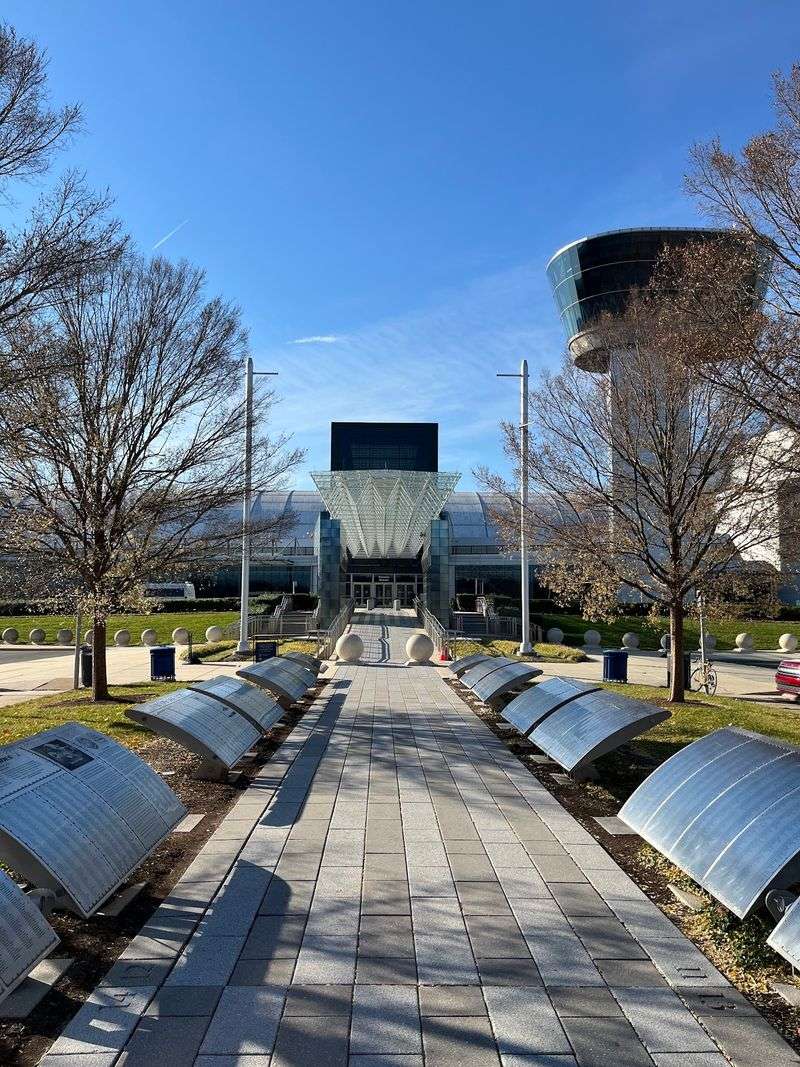
You don’t need a timed admission pass to explore the Steven F. Udvar-Hazy Center, which is open daily from 10 AM to 5:30 PM except December 25.
Admission is free, although the parking lot has a separate charge during much of the day. The museum stands at 14390 Air and Space Museum Parkway, Chantilly, VA 20151, beside Washington Dulles International Airport.
Drivers reach the property from Route 28, while public-transit travelers can take the Silver Line to Innovation Center and continue on Fairfax Connector Route 983. Allow several hours for the shuttle, aircraft, tower, and restoration area.
The building is enormous, with elevators and accessible routes helping visitors move between levels. A welcome desk near the entrance provides maps, and lockers are available for smaller belongings.
After lunch, revisit the hangar that impressed you most. That’s the beauty of visiting this part of Virginia: you can stand beside a vehicle that circled Earth and finish the day watching an ordinary passenger plane rise into the sky outside.
Suddenly, ordinary flight seems impressive all over again.