Everyone Remembers Idaho’s Eight-Day Snowbound Train From 1949, But The Real Story Is Stranger
The most famous stranded train story from the winter of 1949 might not have happened in Idaho at all.
I went looking for the eight-day train you keep asking about, and the trail took a strange turn.
Here is what the record does show. Snow fell across southern Idaho for roughly 13 weeks, starting in November 1948.
By February, temperatures sank to 20 or 30 below zero, and winds gusted near 40 miles per hour.
Trains really did stall. Rail lines really did close.
One stretch of track stayed shut for more than a month, and a stalled locomotive was hit head-on by another train.
I love a good legend, but I love a true story even more.
So let’s sort out what Idaho actually lived through that winter, and why the eight-day tale refuses to melt away.
1. Where The Eight-Day Story Falls Apart
Plot twist: the stranded train everyone remembers was parked in Nebraska. On January 3, 1949, the City of San Francisco stopped in a small Nebraska town as a blizzard buried the tracks.
About 270 passengers were aboard. The steam lines froze, the heat failed, and travelers moved into local hotels.
That stranding lasted roughly three and a half days, not eight. A later City of San Francisco stranding, in January 1952, happened in the Sierra Nevada of California.
So where does an eight-day Idaho version come from? Nobody can point to a documented passenger train stuck in Idaho for exactly eight days that winter.
Memory loves to blend things together. Two famous train stories, plus a brutal Idaho winter, can easily braid into one tale told at the dinner table.
That doesn’t mean your grandparents made anything up. Idaho trains really did stall, lines really did close, and towns really did go quiet under snow.
The best place to start untangling it is a museum that tells the whole Idaho story under one roof. You’ll find exhibits on how people lived, worked, and traveled across the state.
Bring the family legend with you. It’s more fun when you can compare it to the real thing.
Address: Idaho State Museum, 610 N Julia Davis Dr, Boise, ID 83702
2. Thirteen Weeks of Snow
Snow that starts in November usually takes a break eventually. In southern Idaho during the winter of 1948 to 1949, it kept falling for roughly 13 weeks.
That’s about three months with little chance to dig out between storms. One snowfall piled onto the next, and the drifts just kept growing.
Roads vanished under the white. Trains stopped running on schedule, then sometimes stopped running at all.
Why did it hit so hard? Idaho simply wasn’t built for that kind of winter back then.
Snow removal gear was basic in many places and missing entirely in others. Small towns couldn’t plow their way out of a storm that never seemed to end.
You can thank modern forecasting for the fact that winters like this rarely sneak up on anyone today. The weather office serving Boise tracks storms across a big slice of southwest Idaho.
Its records and climate data help explain how unusual that stretch of snow really was. It’s a handy reference if you want to compare 1949 to the winters you remember.
Fair warning, though. Once you start reading old snowfall numbers, your own driveway complaints may start to feel a little small.
Address: National Weather Service Boise, 3833 S Development Ave, Boise, ID 83705
3. The February 1949 Storm
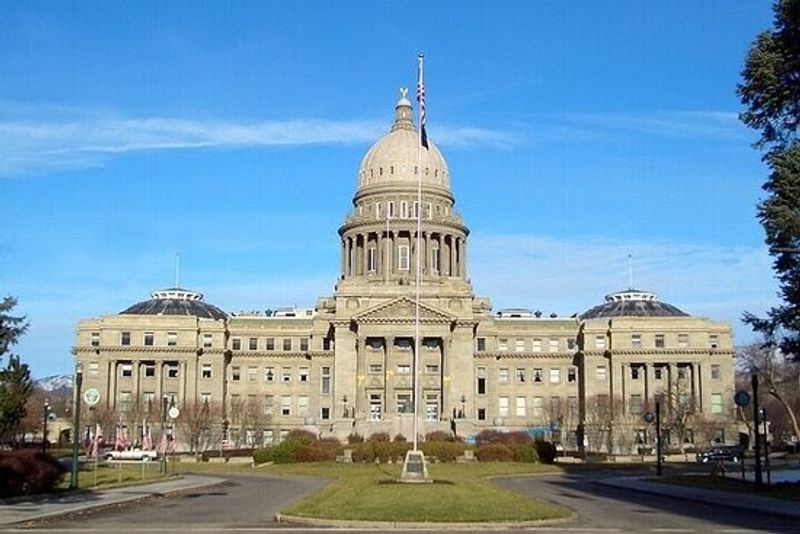
Forty-mile-per-hour winds and thirty below zero sounds like a polar expedition. For Idaho in February 1949, it was simply the forecast.
The worst storm of that long winter arrived in February. Snow piled up in feet, not inches, and the wind shoved it into drifts that buried tracks.
Temperatures dropped to between 20 and 30 degrees below zero. Cold like that freezes equipment, stiffens switches, and makes outdoor work brutal.
Rail crews had the toughest job of anyone. They had to keep lines open while the storm kept closing them again.
If you want to see how railroads lived in Idaho mountain country, head to the Silver Valley. A restored Northern Pacific depot in Wallace now serves as a railroad museum.
Its exhibits focus on the rail history of the region. It’s a good way to picture the work behind keeping trains moving through tough terrain.
The Panhandle had its own winter battles over the years. Standing in an old depot, you can almost hear the dispatcher worrying about the next drift.
Check the season before you go, since museum schedules can shift. A quick look ahead saves a long drive.
Address: Northern Pacific Depot Railroad Museum, 219 Sixth St, Wallace, ID 83873
4. Cascade to Horseshoe Bend Line
Forget eight days. The railroad between Cascade and Horseshoe Bend stayed closed for more than a month that winter.
Snow slides were the problem. Steep canyon slopes along that route dumped snow right onto the tracks.
Clearing one slide didn’t guarantee the next one would wait. Crews faced a line that kept getting buried again.
Honestly, a month-long closure is a bigger story than the eight-day legend. It just doesn’t come with a trainload of stranded passengers to make it dramatic.
For towns along that line, the rails mattered a lot. Freight, supplies, and travel all leaned on trains that suddenly couldn’t get through.
To soak up the bigger rail picture in the Treasure Valley, visit the Boise Depot. The Spanish-style Union Pacific station opened in 1925 and sits on a bench overlooking the city.
It no longer serves passenger trains. Still, it’s a striking reminder of the years when trains tied Idaho towns together.
The view down Capitol Boulevard toward the Statehouse is worth the stop alone. You might find yourself wondering how many travelers paced that platform during the winter of 1949.
Address: Boise Depot, 2603 W Eastover Terrace, Boise, ID 83706
5. The American Falls Collision
A stalled train sounds safe enough, right up until another one shows up. Near American Falls on January 30, 1949, that’s exactly what happened.
A westbound steam locomotive sat stalled on the line. An eastbound diesel train ran into it head-on.
The crash derailed 24 freight cars. The line closed for a day while crews cleaned up the mess.
Notice how snow turned a simple delay into a bigger problem. Stalled trains, poor visibility, and frozen conditions made the rails riskier than usual.
That collision shows up in records far more clearly than any eight-day stranding. If you want a checkable Idaho train story from that winter, here it is.
Pocatello grew up as a railroad town on the Snake River Plain. The Bannock County Historical Museum shares local history, including the rail roots of the area.
It makes a fitting stop for anyone curious about how trains shaped southeast Idaho. You could pair it with a drive west toward American Falls and the reservoir.
Look out at that flat country and imagine it under drifting snow. Suddenly a stalled train seems a lot less surprising.
Address: Bannock County Historical Museum, 3000 Avenue of the Chiefs, Pocatello, ID 83204
6. Eastern Idaho Towns Cut Off
For one week in February 1949, eastern Idaho basically hit pause. Between February 4 and 11, many towns were nearly cut off from the outside world.
Surface traffic came to a standstill. Cars couldn’t move, and trains struggled too.
That isolation hit everyday life hard. Coal supplies ran short, and food deliveries had trouble getting through.
Think about heating your house with coal that can’t reach you. That’s a far scarier problem than a late train.
Neighbors leaned on each other to get through it. Plenty of family stories from that winter likely trace back to weeks like this one.
The Museum of Idaho in Idaho Falls is a great place to explore the history of the region. It covers the people and events that shaped eastern Idaho over the years.
Bring the kids and turn it into a little history lesson. Ask what they would do with no school, no deliveries, and snow over the fences.
Their answers might be funnier than you expect. They might also gain new respect for anyone who lived through that February.
Address: Museum of Idaho, 200 N Eastern Ave, Idaho Falls, ID 83402
7. Explosives Against Packed Snow
Most of us fight snow with a shovel and some grumbling. In parts of Idaho in 1949, crews reached for explosives.
The snow packed down so hard in places that plows couldn’t break it. Blasting became the only practical way through.
That detail says plenty about the equipment of the time. Snow removal gear was basic in many areas, and some places had none at all.
You can find traces of stories like this in old Idaho records. Newspapers, photographs, and government papers captured how communities coped.
The Idaho State Archives holds collections that help researchers dig into Idaho history. It’s part of the Idaho State Historical Society.
If you’re chasing your family’s version of the winter of 1949, the archives make a smart stop. Old photos and records can confirm details that memory may have blurred.
Who knows what you might turn up? Maybe a picture of a drift taller than a truck, or a note about a train that just couldn’t move.
Plan ahead before you visit, since research rooms often have their own schedules. A little prep goes a long way when the hunt gets exciting.
Address: Idaho State Archives, 2205 Old Penitentiary Rd, Boise, ID 83712
8. Tracking Down Your Own 1949 Story
Here’s the fun part: you get to play detective. The legend of the eight-day train might have roots in your own family tree.
Start by asking where your relatives lived that winter. Southern Idaho, eastern Idaho, and the mountain towns each faced different troubles.
Then look for old local newspapers. Papers from early 1949 reported closed roads, stalled trains, and towns waiting on supplies.
The Boise Public Library is a handy place to begin that search. Library staff can point you toward local history resources and research tools.
Compare what you find with the stories you’ve heard. Maybe the eight days were really a long wait at a snowed-in depot.
Maybe a relative rode the Nebraska train and later moved to Idaho. Stories travel, just like people do.
Whatever you uncover, the real winter of 1949 stands on its own. Thirteen weeks of snow, a month-long rail closure, and a head-on crash make a pretty wild tale already.
So the next time someone brings up that stranded train, you’ll have the facts ready. And honestly, the true Idaho story is the better one to tell.
Address: Boise Public Library, 715 S Capitol Blvd, Boise, ID 83702