Giant Sequoias Planted Over A Century Ago Still Tower Over This Idaho Arboretum Campus
A giant sequoia, a tree native to California’s Sierra Nevada, has been growing on an Idaho college campus for more than a century.
It went into the ground in 1916, and it still hasn’t stopped reaching for the clouds.
The grove around it got started even earlier, in 1910.
A forestry professor planted it as a living classroom, long before anyone called it a destination. American beech, English maple, and California incense-cedar now share the shade.
I like how the whole thing feels like a science experiment that turned into a forest. The best part is that strolling through it costs nothing at all.
How does a California giant end up thriving on a hilly corner of north Idaho?
What else has been quietly growing beside it all these years?
A Century-Old Forest Classroom On The Edge Of A Palouse Campus
The Charles Houston Shattuck Arboretum sits on the University of Idaho campus in Moscow, right in the rolling heart of the Palouse. It covers about 14 acres, which is roughly the size of ten football fields stuffed with trees.
Think of it as the oldest chapter of a much bigger story. The grove forms the historic core of the University of Idaho Arboretum and Botanical Garden, a 63-acre living museum.
That bigger garden stretches south from the old grove into newer plantings and display beds. The Shattuck section, though, is where the towering veterans live.
Here’s what makes it unusual for north Idaho. Instead of a single native forest type, you get trees gathered from several continents and climates.
Some of them have been growing in Moscow for well over a hundred years. That kind of patience is rare on a busy college campus, where buildings come and go.
Students rush to class just a short walk away. Meanwhile, the trees keep doing what they’ve done since before the Model T was old news.
For a free stroll, that’s a pretty wild amount of history packed into one hillside.
The Professor Who Planted A Living Textbook In 1910
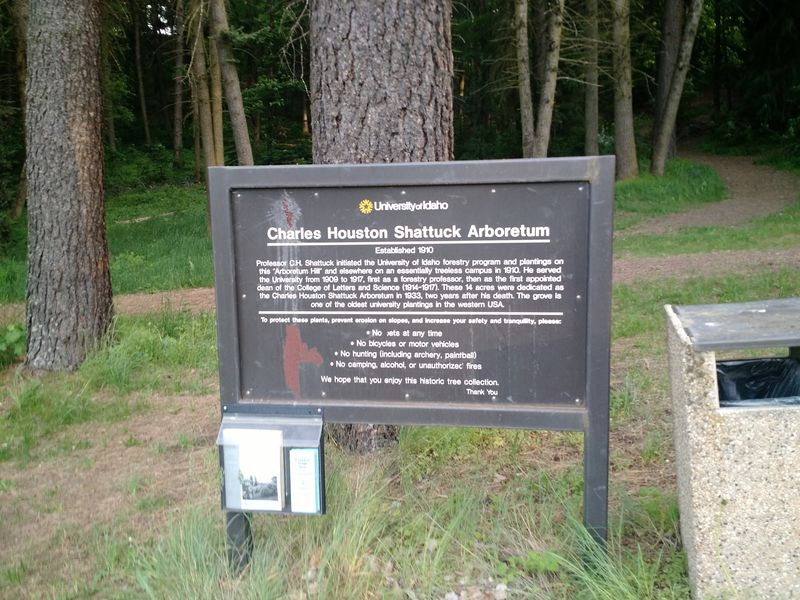
Charles Houston Shattuck had a big idea in 1910. He founded the forestry program at the University of Idaho, and he wanted his students learning from real trees.
So he planted them. The result was an outdoor laboratory where future foresters could study species up close instead of squinting at drawings.
It’s hard not to admire the long game here. Shattuck planted saplings knowing he’d never see most of them reach full size.
The university honored that vision in 1933. That year, the grove officially took his name and became the Shattuck Arboretum.
More than a century later, the classroom is still open. The difference now is that anyone can wander in, not just forestry majors with notebooks.
I believe that’s the quiet magic of this place. A teaching tool from the early 1900s turned into one of the most peaceful corners in Idaho.
Few campus projects age this gracefully. Most lecture halls get remodeled, but these trees only got taller and more impressive with every passing decade.
Not a bad legacy for one forestry professor with a shovel and a plan.
A California Giant That Decided Idaho Suited It Just Fine
Giant sequoias are famous for one thing: being enormous. In the wild, they grow naturally only on the western slopes of California’s Sierra Nevada.
Yet one has been growing in Moscow since 1916. It’s the headliner of the Shattuck Arboretum, and it’s hard to miss.
Look for the thick, reddish, almost spongy bark. That fibrous coat is a classic sequoia trait, and it makes the trunk look like it belongs in a storybook.
Standing at the base, you’ll probably tilt your head back further than planned. Your neck may file a polite complaint.
Sequoias are also famously long-lived. By their standards, a tree planted in 1916 is barely out of its teenage years.
That’s a fun thought for anyone who grew up on the Palouse. This tree has watched generations of Vandals pass by, and it’s just getting warmed up.
It’s also a nice reminder that Idaho holds more surprises than people expect. A California giant thriving in north Idaho is the kind of fact worth bringing up at the next family dinner.
Beech, Maple, And Incense-Cedar Holding Their Own
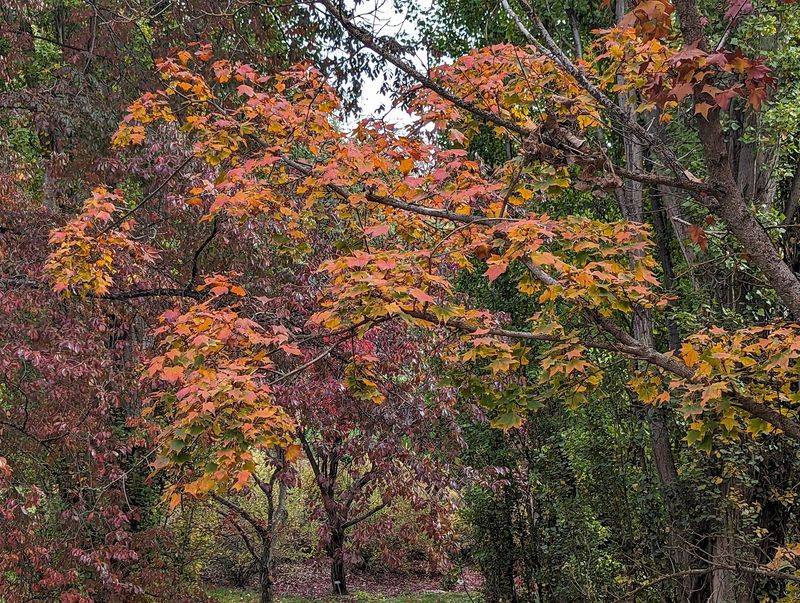
Smooth gray bark is the giveaway for the American beech. It’s a tree from the eastern United States, and it looks almost polished compared to its rugged neighbors.
Then there’s the English maple. It brings a little old-world flair to a hillside in north Idaho.
California incense-cedar adds yet another personality. Its tall, narrow shape and reddish bark make it a strong supporting actor next to the sequoia.
Together, these mature trees make the Shattuck Arboretum feel layered and deep. You get tall trunks, broad canopies, and plenty of shade on a warm Palouse afternoon.
Part of the fun is spotting how different each tree looks up close. Bark textures, leaf shapes, and branching patterns all change from one trunk to the next.
No forestry degree required, either. Curiosity and a willingness to slow down are plenty.
It’s a little like a family reunion where everyone came from somewhere else. Somehow they all get along beautifully, and they’ve had more than a century to work out their differences.
Four Continents Worth Of Plants Just Down The Hill
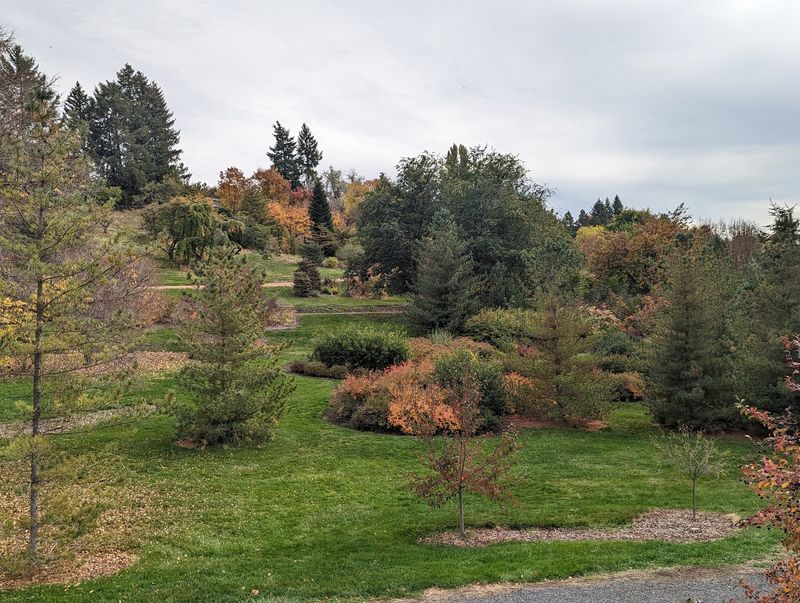
Over 17,000 plants. That’s the headcount across the full University of Idaho Arboretum and Botanical Garden, which grows from the Shattuck grove outward.
Those plants represent more than 2,400 species and cultivars. It ranks among the most diverse outdoor plant collections in the Inland Northwest.
The layout makes it easy to explore. Collections are grouped into four regional areas: Asia, Europe, Eastern North America, and Western North America.
That means you can wander from one part of the globe to another without leaving Moscow. No passport, no jet lag, no airline snacks.
Notable specimens include dawn redwood and ginkgo. Both are ancient tree lineages with fascinating histories of their own.
There’s also a Camperdownii weeping elm. Its drooping branches give it a shape that feels a bit like a living umbrella.
Plant labels help visitors identify each species and where it originally came from. It’s a smart setup for anyone who likes learning while walking.
Start with the old giants, then keep going. The variety rewards anyone willing to explore beyond that first famous grove.
Hostas, Daylilies, And Other Garden Show-Offs
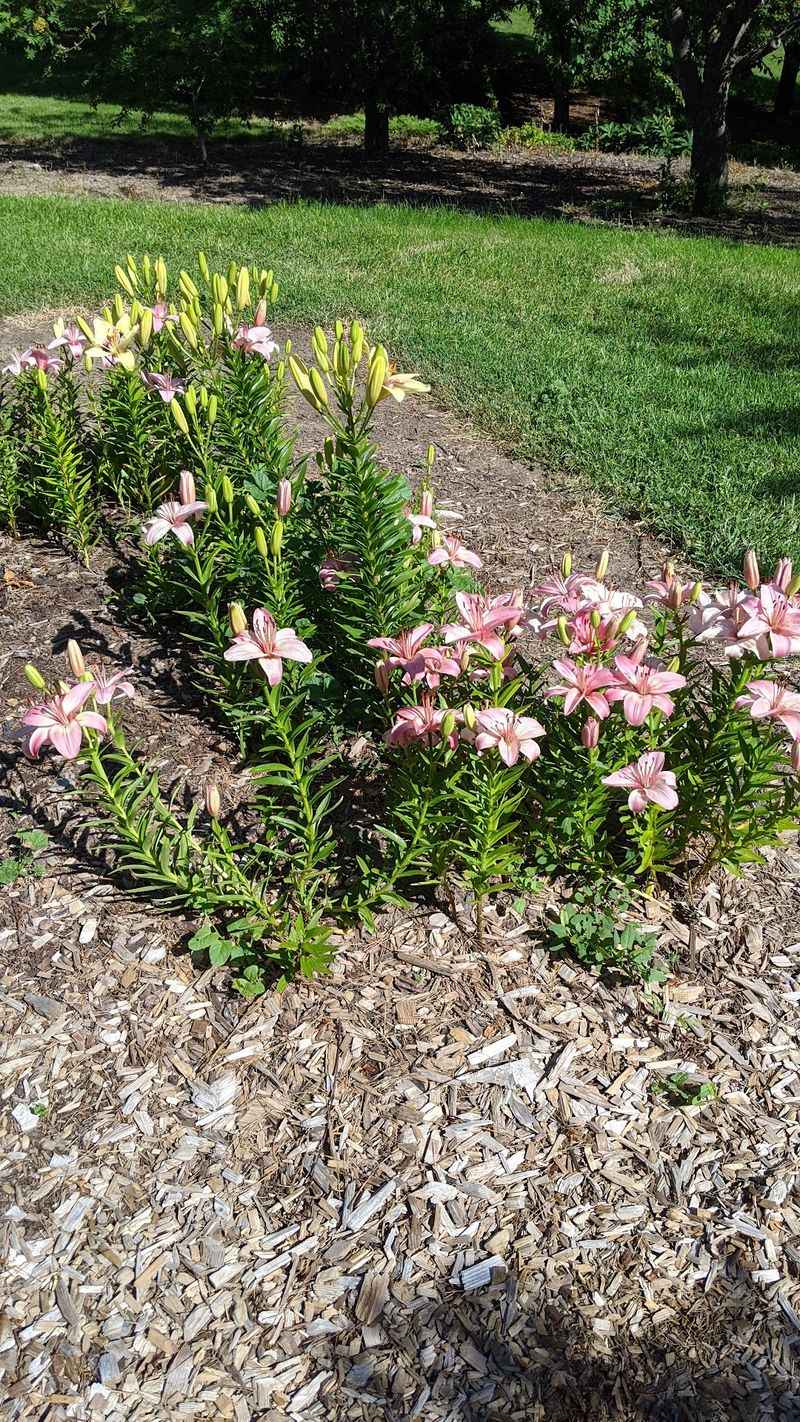
Trees may get top billing, but the display gardens deserve a spotlight too. They sit at the south end of the arboretum and focus on how plants work in real landscapes.
The hosta garden is nationally recognized. Fans of big, leafy shade plants will want to spend some time here.
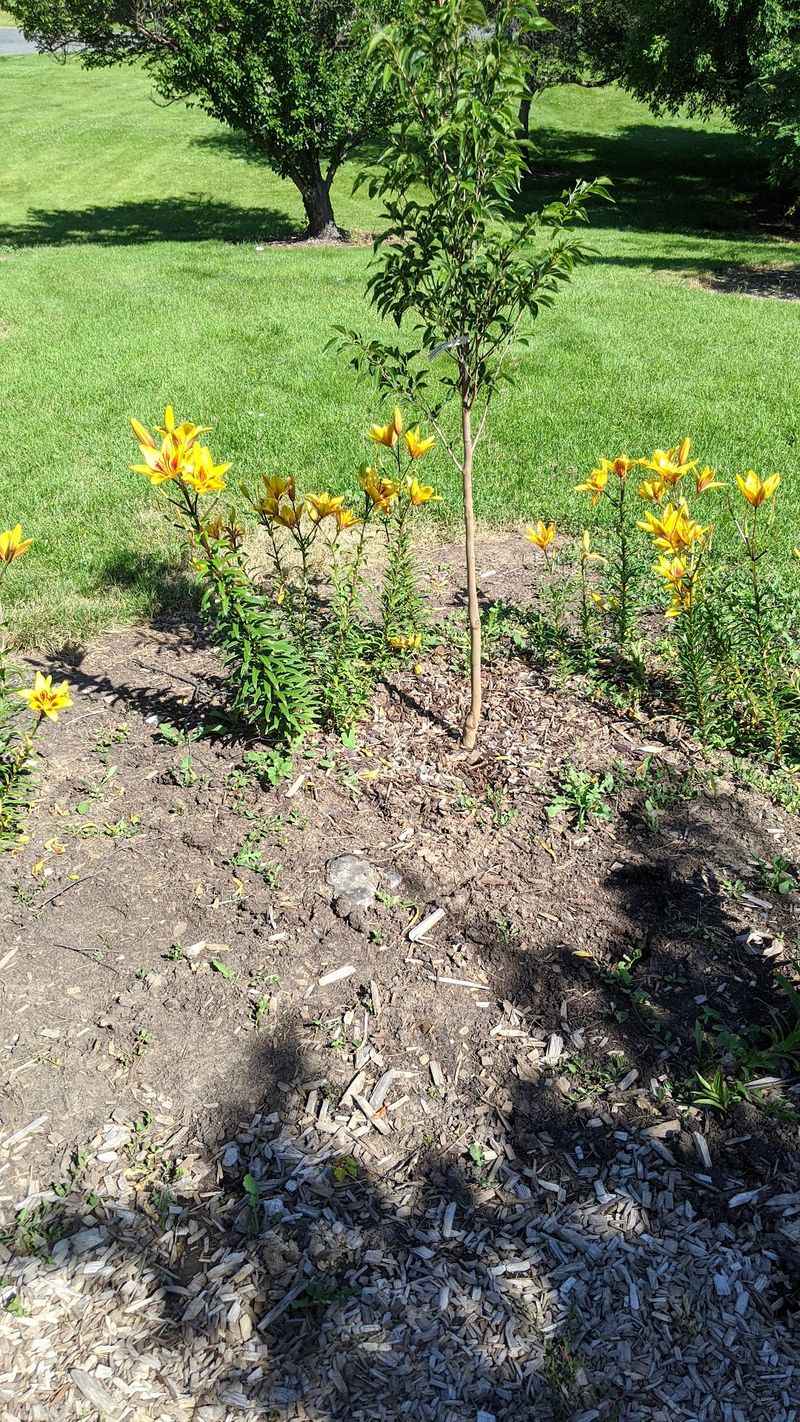
Nearby, a national daylily garden adds bursts of color. An iris garden and a heather garden round out the flowering lineup.
Butterflies get their own space as well. The butterfly garden is designed with plants that support them, so keep an eye out for flutters.
Gardeners from the Palouse to the Treasure Valley can pick up ideas here. The xeriscape garden shows how to plan a yard that uses less water.
Ornamental willows also have their own collection. They prove that willows can be more than the big, shaggy tree by the creek.
It’s a nice contrast to the towering grove up north. One area makes you look up, and the other makes you kneel down to study every petal.
Memorial Groves And Benches That Tell Quiet Stories
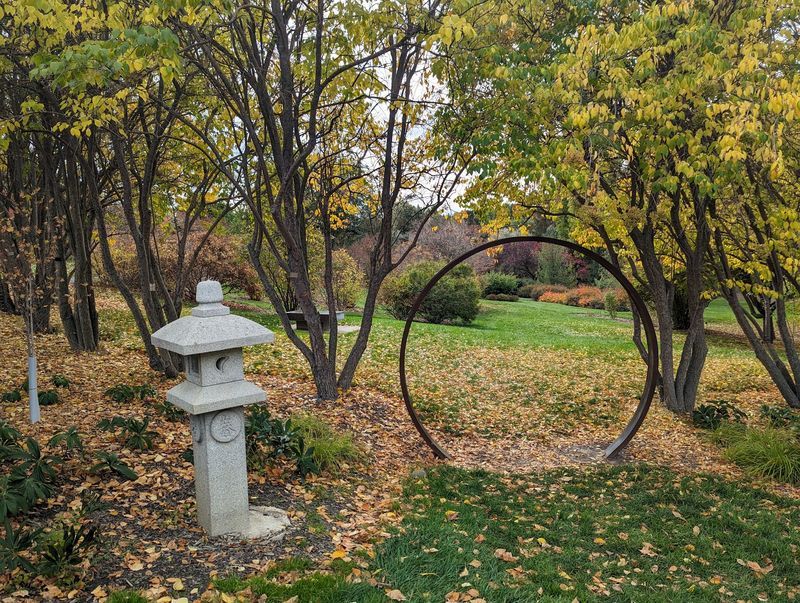
Scattered throughout the grounds are 165 memorial trees, groves, and benches. Each one honors someone, and together they give the arboretum a deeply personal feel.
It’s a lovely way to remember a person. A tree keeps growing long after the dedication day.
The benches serve a practical purpose too. Plenty of spots invite you to sit down and take in the views.
Every bench seems to frame a slightly different scene. One looks into shady canopy, while another opens toward the gardens and hillside.
An adjacent amphitheater adds another kind of gathering space. It provides an outdoor setting for events against a backdrop of trees.
I can’t imagine a more fitting place for a community to celebrate. The setting does half the decorating before anyone arrives.
Walking past these memorials, you start to notice how many lives this place has touched. Graduates, families, and longtime Moscow residents all seem woven into the landscape.
That gives the arboretum a warmth that goes beyond botany. It’s a garden with plenty of stories growing alongside it.
Peace, Quiet, And A Different Look Every Season
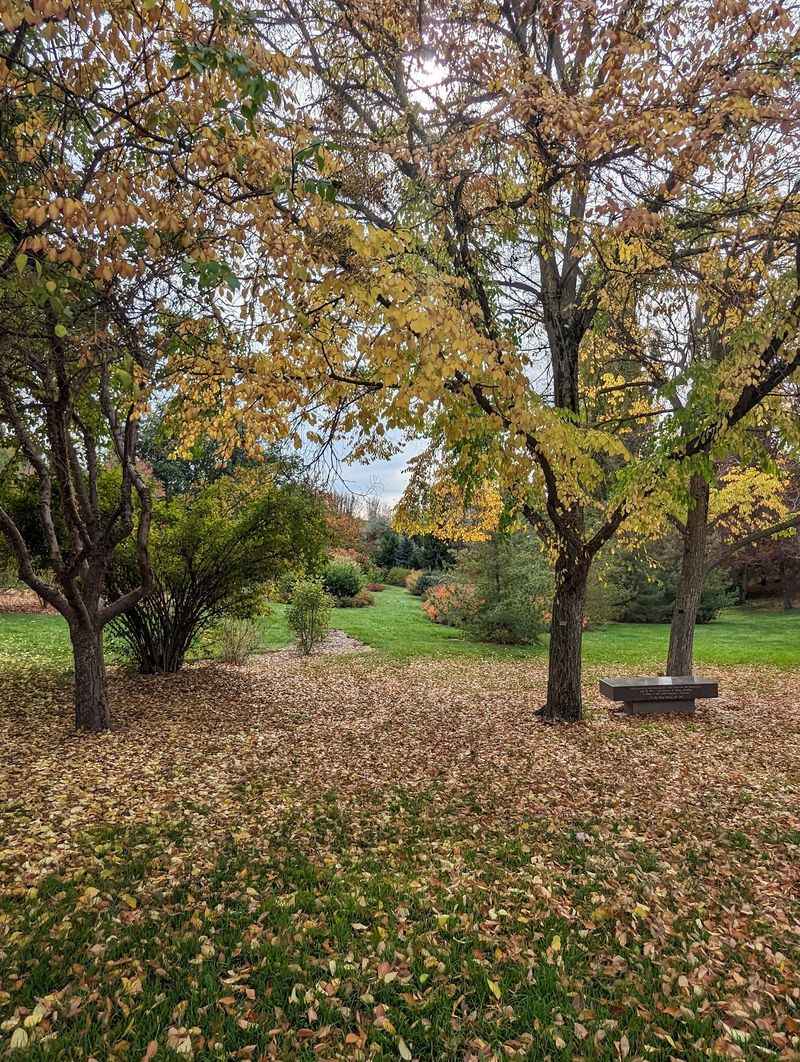
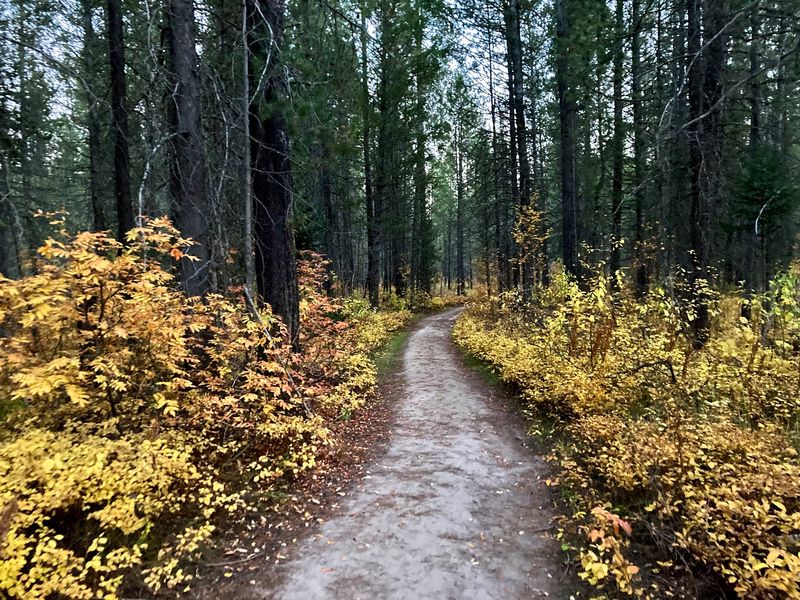
Quiet is a big part of the appeal. The arboretum offers a calm escape from campus traffic and daily errands, just minutes from town.
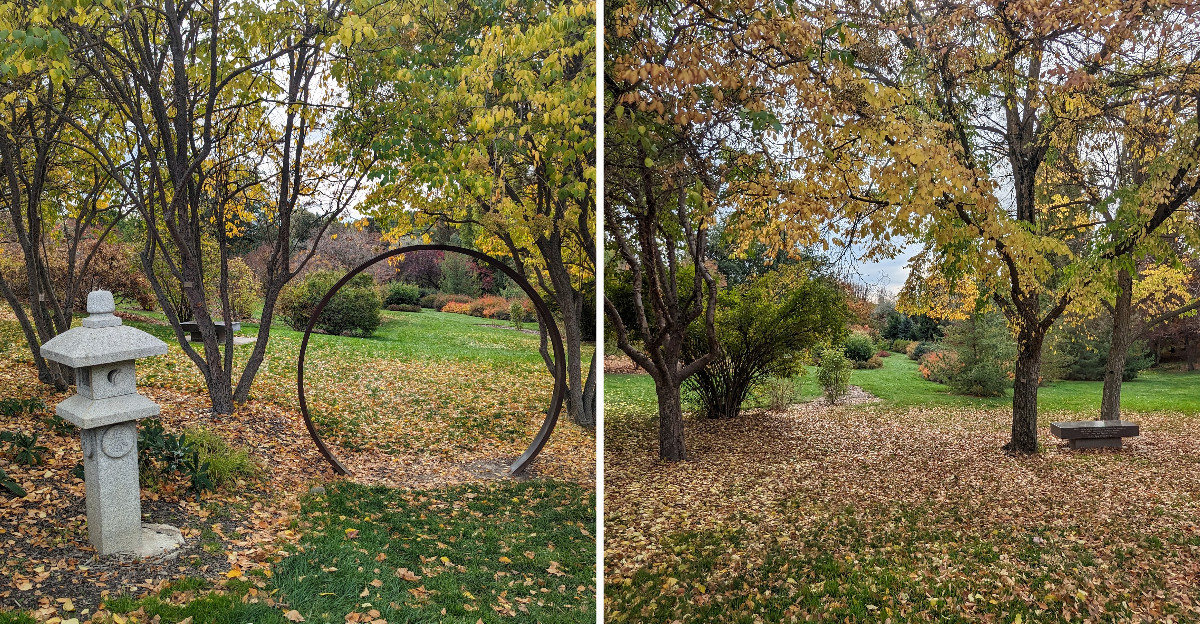
Fall is an especially colorful time to visit. Maples and other broadleaf trees put on a show against the dark green of the conifers.
Each season brings its own changes, though. Spring blooms, summer shade, and bare winter branches all reveal different sides of the same trees.
That makes repeat visits feel fresh. You can walk the same path in April and October and swear it’s a different place.
Families looking for a low-cost outing will appreciate the open space. Retirees who enjoy an easy stroll will find plenty to like as well.
Photographers have endless material here. So do students who need a breather between exams.
One thing worth knowing: the setting is built for calm enjoyment. It’s more about slow walks and good conversation than anything high-energy.
Bring a curious mind and comfortable shoes. The trees will handle the entertainment from there.
Free Admission, Easy Parking, And A Few House Rules
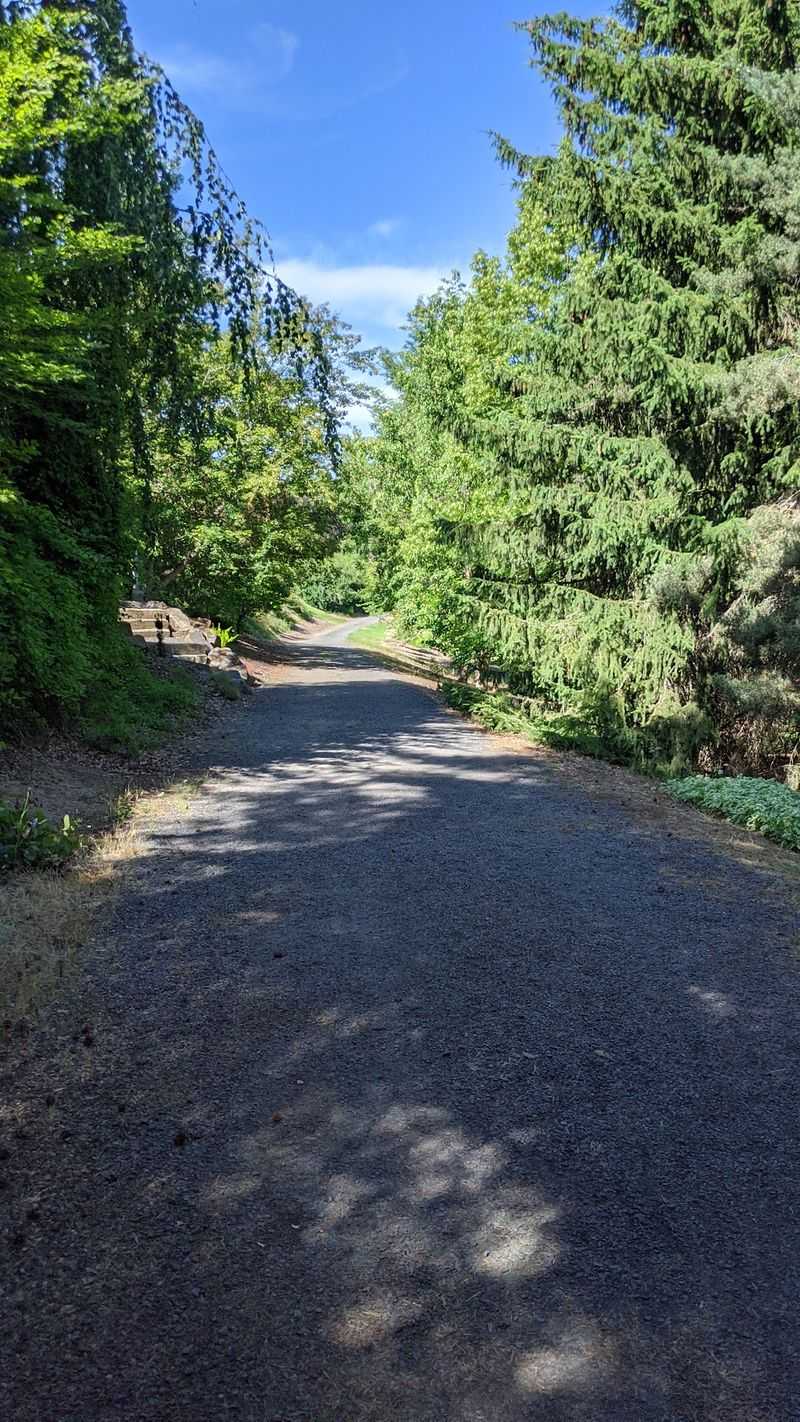
Good news for budget-minded day-trippers: admission is free. The arboretum stays open daily from dawn to dusk, so daylight hours are your window.
The Charles Houston Shattuck Arboretum is listed at Moscow, ID 83844. The main arboretum entrance and free parking are at 1200 West Palouse River Drive.
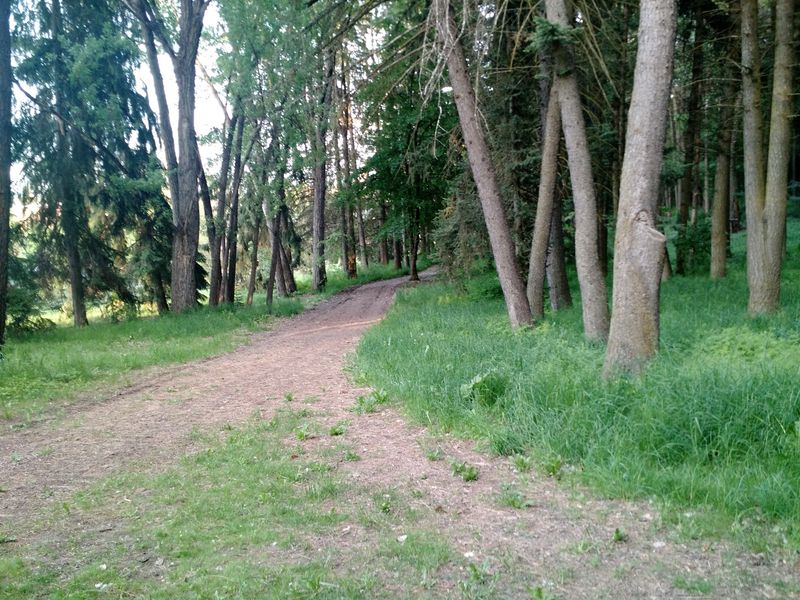
Getting around is simple. A 1.4-mile gravel road loops through the grounds, and over a mile of bark-covered walking trails branch off from it.
Restrooms are limited, so plan accordingly. Portable restrooms sit at the south end barn, and public restrooms are available at the golf course clubhouse.
Now for the house rules. Pets aren’t allowed, so the dog will have to wait for another adventure.
Athletic games, Frisbee, fishing, swimming, and wading are also off the list. Skating, skiing, and sledding are restricted too, even when the hills look tempting.
Those rules help protect plants that have taken decades to mature. Conditions can change, so check before driving, especially in winter on the Palouse.