Two Gold Dredges Still Sit In The Ponds Of This Idaho Ghost Town Off A Backcountry Road
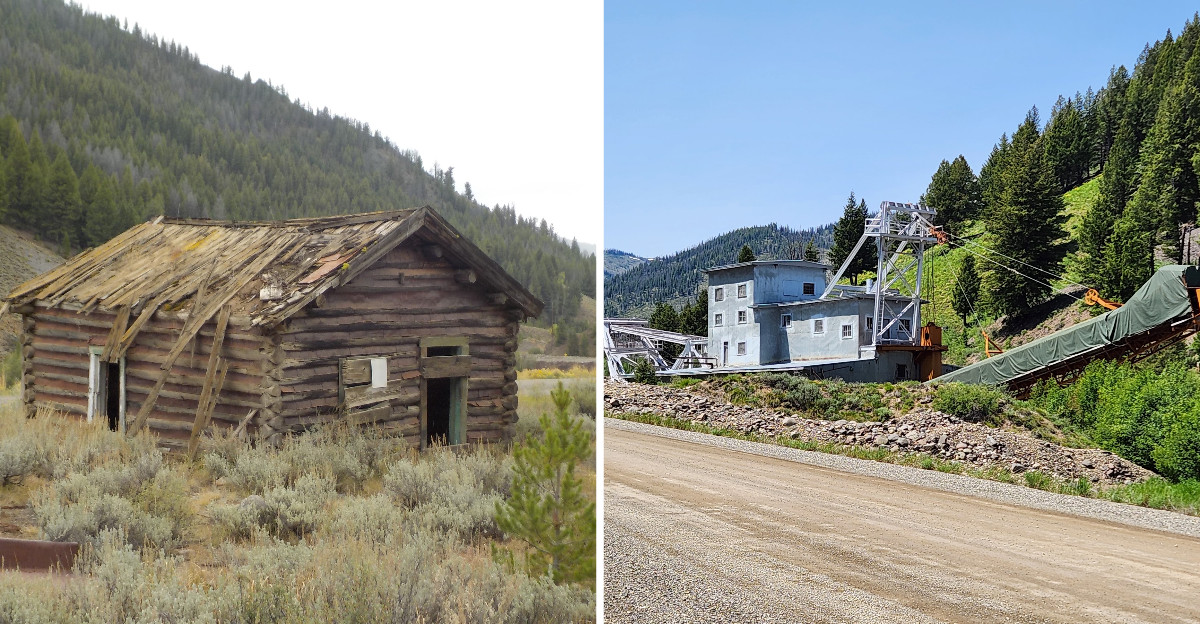
A 988-ton gold dredge still floats in a pond it dug for itself, miles up a gravel road. It hasn’t scooped a single bucket of gravel in decades.
Yet there it sits, patiently waiting for visitors. The machine stands 64 feet tall and stretches 112 feet long.
Seventy-one heavy buckets once chewed through the valley floor, one after another, hunting for tiny flecks of gold.
The rock piles it left behind still line the road in.
I love that you can walk its decks today. Friendly volunteers fill in the stories, and the whole thing feels like a factory frozen mid-shift.
Then there’s the ghost town just up the road, with old buildings you can actually step inside.
I can’t imagine a better excuse for an Idaho summer drive. Who knew the mountains were hiding a floating gold factory out there?
A Floating Gold Factory Waits Up A Quiet Mountain Road
Gold mining usually means a guy with a pan, right? The Yankee Fork Gold Dredge throws that idea straight into the pond.
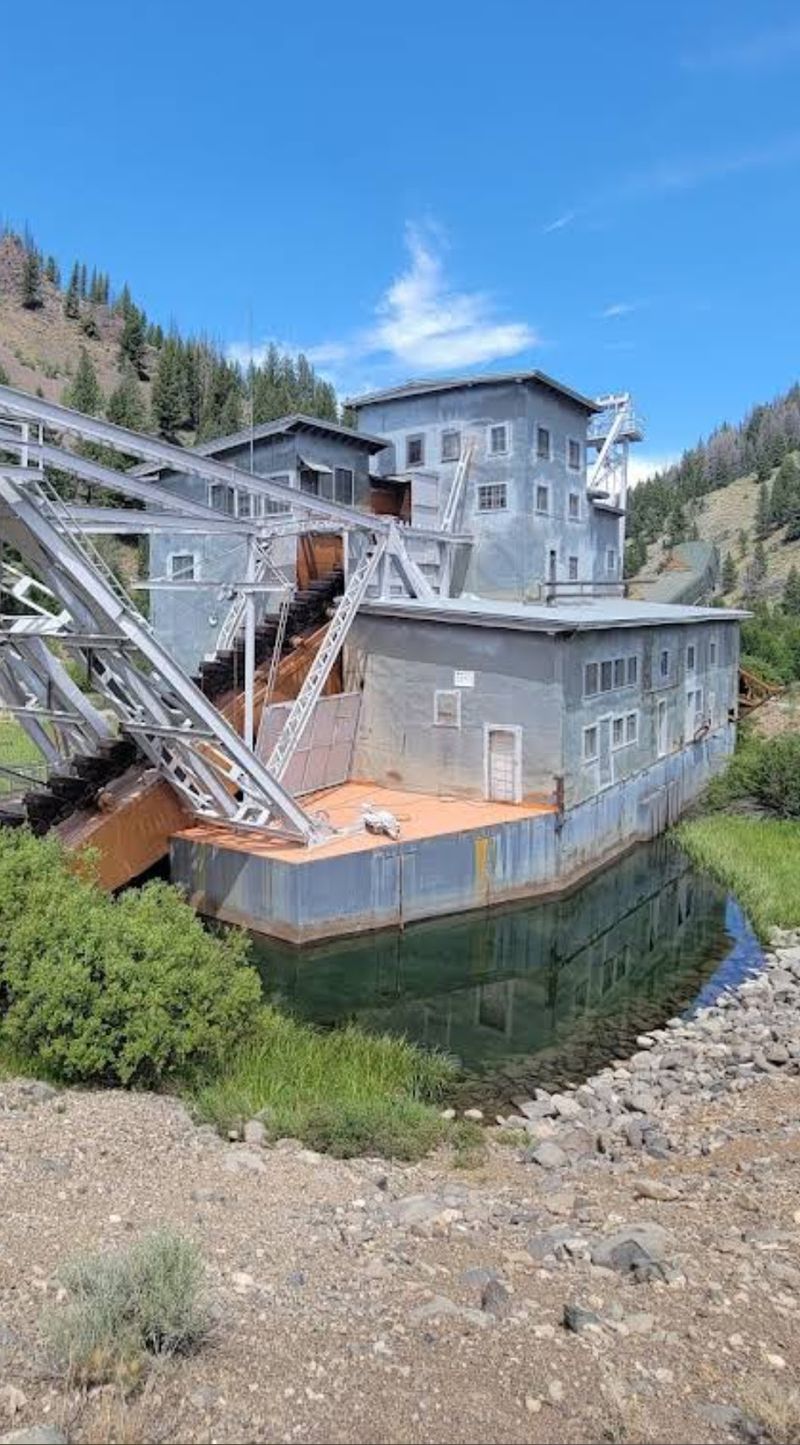
This giant machine sits in central Idaho, along the Yankee Fork of the Salmon River. It rests in a pond it carved out itself while it worked.
Think of it as a floating factory. It dug gravel from the front, washed out the gold inside, and spat the leftover rock out the back.
The dredge is part of the Land of the Yankee Fork State Park area. That puts it near old mining camps, mountain views, and a whole lot of Idaho history.
Volunteers keep the place open for visitors during the warm season. They also handle restoration work, which matters on a wooden giant that faces heavy mountain snow.
The dredge isn’t a replica or a model. It’s the real working machine, left right where its last job ended.
That alone makes it worth the gravel road. Few places let you climb aboard the actual tool that reshaped an entire valley.
The Numbers On This Machine Sound Made Up
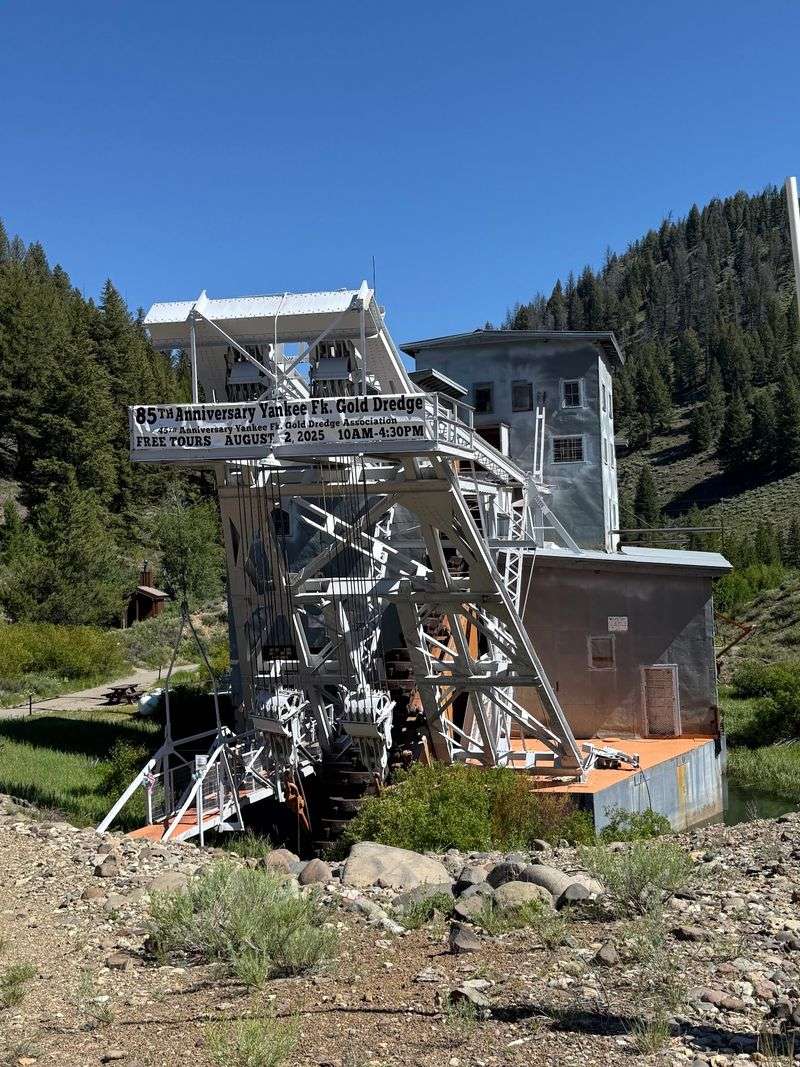
Nine hundred eighty-eight tons. That’s the weight of this dredge, and it still floats.
The size gets sillier from there. It measures 112 feet long, 54 feet wide, and 64 feet high.
For comparison, that’s taller than many six-story buildings. And it all sits on water in a remote Idaho valley.
The front end carries the bucket line. Seventy-one buckets, each weighing about a ton, once circled nonstop to scoop up river gravel.
Every bucket dumped its load into the dredge for sorting. Then it swung back around for more, again and again, day and night.
Power came from two Ingersoll-Rand diesel engines. Each one produced 350 horsepower to keep the whole operation grinding along.
Standing beside it, the scale really lands. Photos shrink it, so the in-person view is the main event.
Bring a wide-angle lens if you have one. Otherwise, back up a lot and accept that the buckets may still get cropped.
A Few Owners And One Famous Potato Name
Here’s a fun twist for Idaho history buffs. The dredge has ties to J.R.
Simplot, the name many Idahoans link with potatoes.
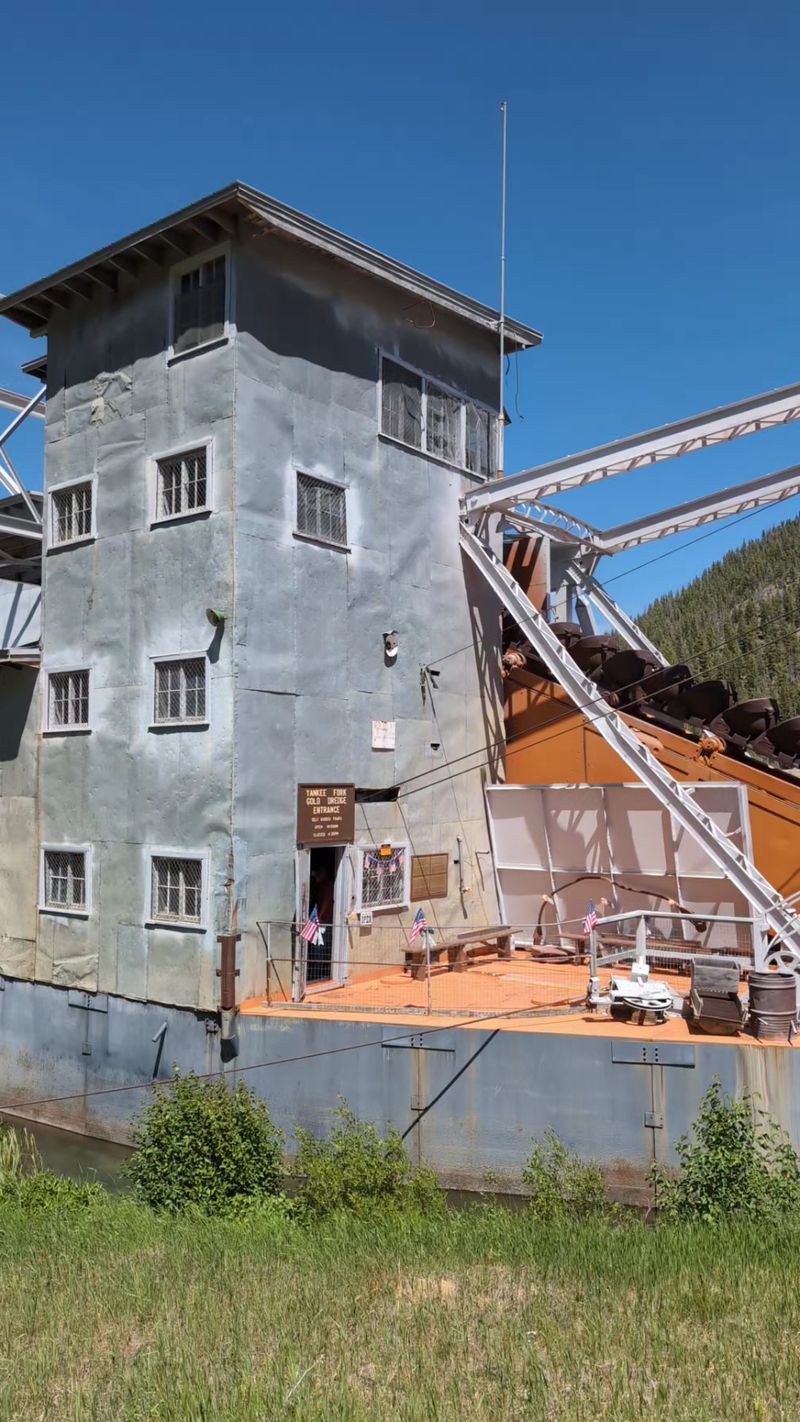
The machine worked the Yankee Fork during the 1940s and early 1950s. Its run reshaped miles of the valley floor.
Ownership changed hands a few times over the years. The Warren Dredging Corporation, partly owned by Simplot, bought it in 1949.
That new owner pushed past earlier setbacks and kept the gold coming. Over its working life, the dredge recovered more than a million dollars in gold.
That was big money for the time. It also took a staggering amount of rock moving to get there.
When the work ended, the dredge simply stayed put in its pond. Nobody hauled it away or broke it up for scrap.
Years later, preservation efforts turned it into a museum you can walk through. Volunteers have kept it going ever since.
It’s a neat reminder that Idaho fortunes came from more than farm fields. Sometimes they came from river gravel too.
Climb Every Deck Of This Wooden Giant
Most museums keep you behind a rope. On this tour, the dredge itself is the exhibit, and you get to roam it.
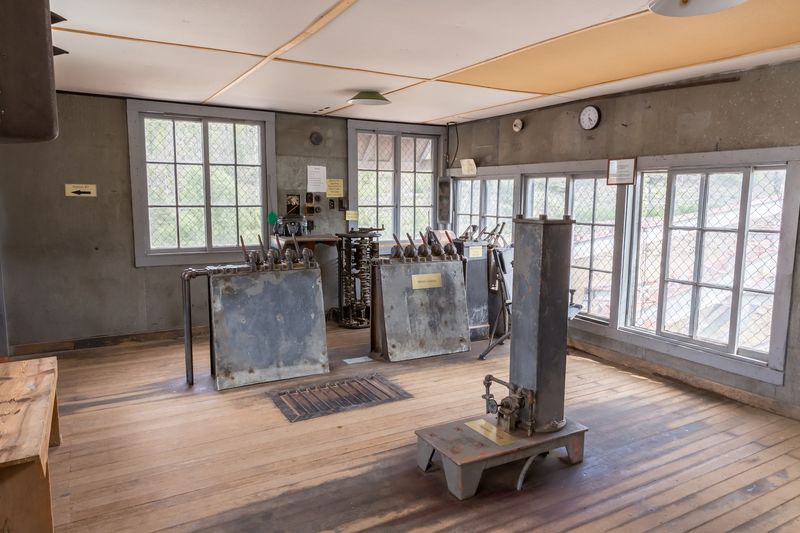
The self-guided route moves through several sections of the machine. Stops include the front deck, the winch room, and the control room.
The control room is where operators once steered the whole beast. It’s fun to stand there and picture running 988 tons from a lever.
The engine room houses those two big diesel engines. Seeing them up close helps explain how the buckets kept turning.
Stairs connect the levels, so wear sturdy shoes. This is an old working machine, not a polished mall.
Part of the tour once closed after winter snow damaged some rafters. The team made repairs and reopened the engine room, which shows how much upkeep this place needs.
Everything feels hands-on and real. Bolts, belts, and timbers all sit right where workers left them.
Take your time on each deck. The details pile up fast, a bit like the gravel once did.
Where The Gold Finally Showed Itself
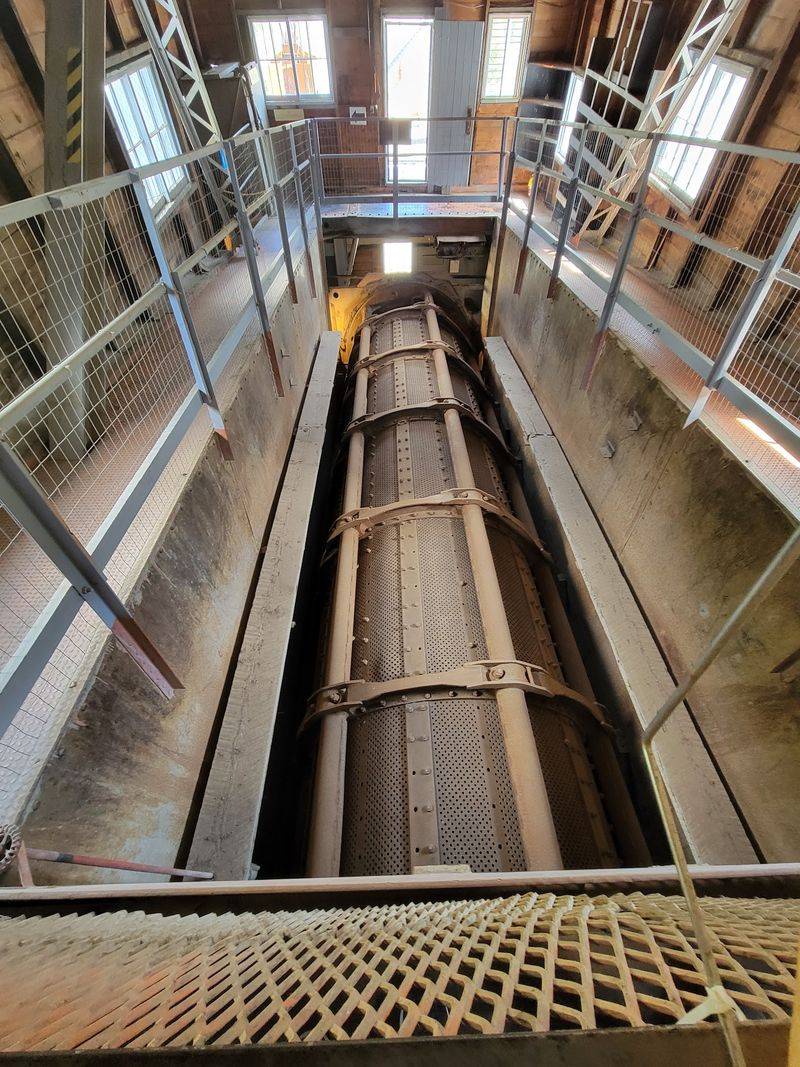
So how do you pull gold out of a river bottom? Inside the Yankee Fork Gold Dredge, the answer involves a giant spinning drum.
That drum is called a trommel. Gravel tumbled through it while water washed the finer material free.
From there, the material flowed over sluice boxes. Heavy gold settled out while lighter sand and rock kept moving.
The leftover gravel didn’t vanish. Conveyors and chutes dumped it behind the dredge as the machine crept forward.
The gold collection area makes the whole process click. You can trace the path from bucket to trommel to sluice in one walk.
Docents help explain the support system around the dredge too. That includes how crews kept the operation running in such a remote spot.
It’s hard to believe how much rock moved for every bit of gold. The math feels almost backward.
Still, the setup is clever and kind of beautiful in a greasy, mechanical way. Kids who love machines will probably have a hundred questions.
Those Rock Ridges Along The Road Tell The Story First
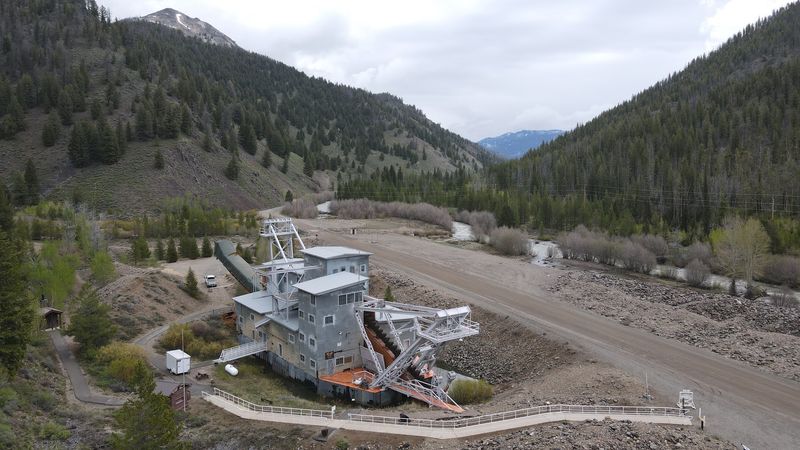
Long before you reach the dredge, the land starts talking. Big ridges of piled rock line the drive up Yankee Fork Road.
Those piles are dredge tailings. They’re the leftover gravel the machine dumped out behind itself as it moved upstream.
Roadside signs along the way explain what you’re seeing. They’re worth a stop, since they add a lot of context before the tour.
The tailings stretch on for miles. They show the dredge’s full path through the valley, almost like footprints from a giant.
The creek channel shifted too. The whole valley floor looks different from what it once was.
That impact is part of the lesson here. This style of dredging reshaped the land in ways that last a very long time.
Seeing it firsthand makes history feel less abstract. You’re literally driving through the results of a gold rush.
Plenty of folks find the tailings as memorable as the dredge itself. Keep an eye out the window and let them build the anticipation.
Volunteers Who Bring The Old Iron To Life
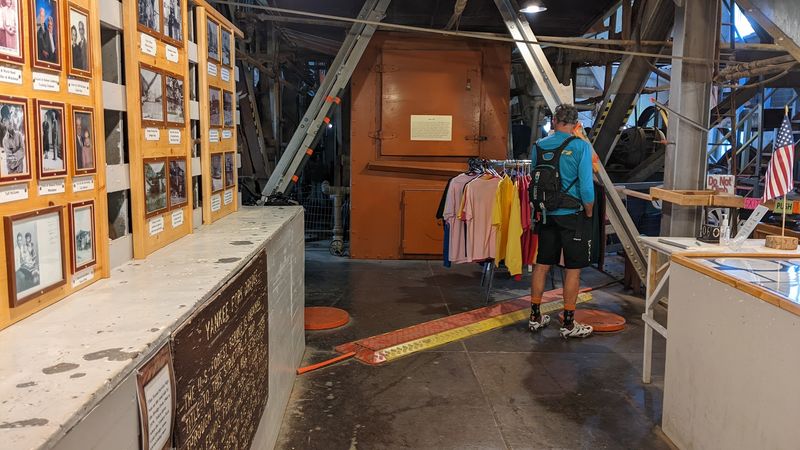
A big machine is impressive. A big machine with a good storyteller beside it is even better.
The Yankee Fork Gold Dredge runs on volunteer power these days. Docents station themselves around the dredge to explain how it all worked.
Some share family stories tied to the valley. That personal history adds a layer you won’t get from a sign.
They cover the engineering, the gold recovery, and life for the workers. Questions are clearly welcome, so don’t be shy.
Restoration is another big part of their work. Keeping a wooden dredge standing through mountain winters takes steady effort.
The visit suits all ages. History fans, machine lovers, and curious kids can all find something to latch onto.
A small gift shop waits at the end of the tour. It’s a nice spot to grab a souvenir before heading back out.
The friendly crew is a big reason this stop feels so welcoming. Thank them on the way out, since they keep the doors open.
A Real Ghost Town Waits Just Up The Gravel
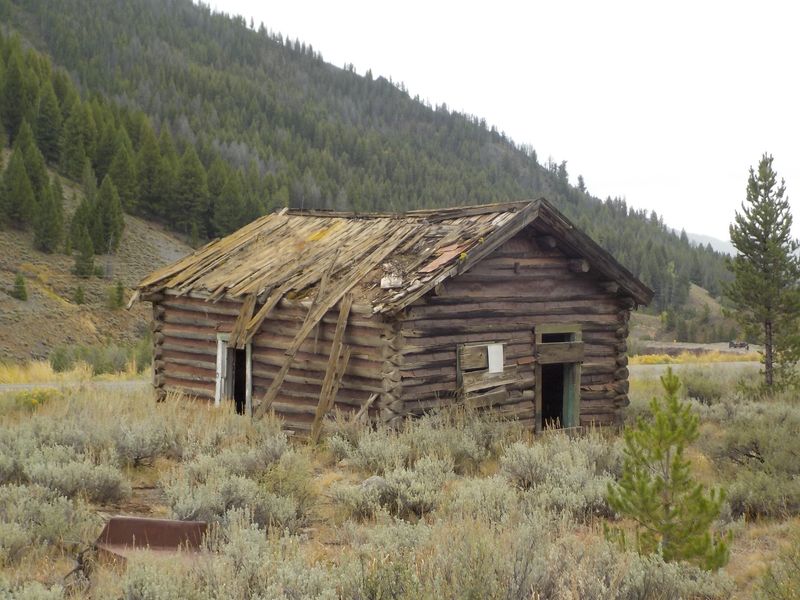
Finished with the dredge? Good, because the fun keeps rolling a little farther up the road.
Custer ghost town sits close by and makes an easy add-on. It rose around 1877 after gold and silver strikes in the surrounding hills.
At its peak, the town held close to a thousand people. Today, its preserved buildings let you peek at frontier life in Idaho.
Several historic structures are open for self-guided exploring. Wandering the main street feels like flipping through an old photo album.
Bonanza, a sister town, sits nearby as well. It’s less preserved but still has old buildings and a quiet cemetery.
Both towns grew and faded with the fortunes of mining. Seeing them right after the dredge connects the whole story.
The dredge came later, though it worked the same rich valley. Pairing them shows how mining here changed over the decades.
Plan extra time for this side trip. Rushing a ghost town feels a little wrong anyway.
Getting There Is Half The Adventure
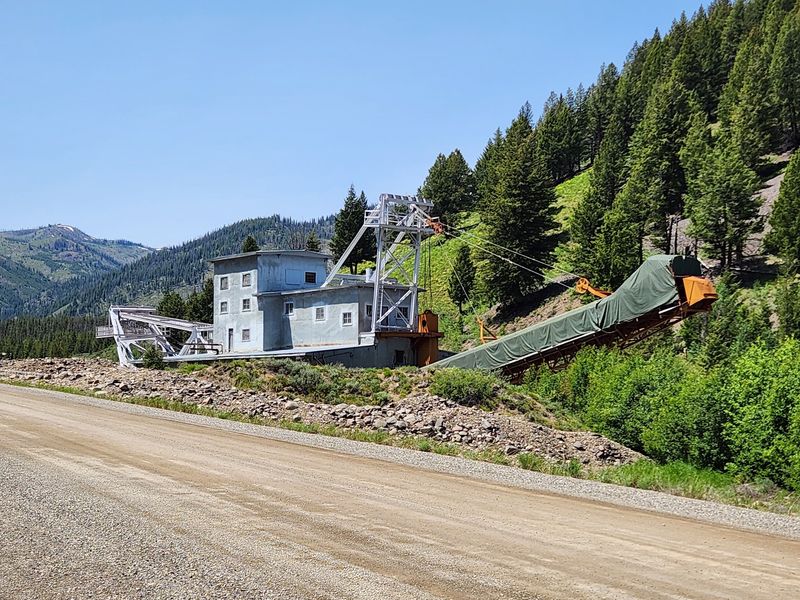
Pavement eventually gives up out here. That’s part of the charm.
The Yankee Fork Gold Dredge sits at 300 Yankee Fork Rd, Stanley, ID 83278. Despite the Stanley address, it’s well beyond town limits.
Most drivers take Highway 75 to Sunbeam. From there, they turn north onto Yankee Fork Road and follow it up the valley.
The road is gravel and dirt. It’s generally well maintained, and regular vehicles can usually handle the trip in good weather.
Stanley is the closest town for supplies. Challis is another option for services on the way in or out.
Fill your gas tank before you leave the highway. Services are scarce up the Yankee Fork.
Snacks and water are smart to pack too. You’ll likely want to linger, and there’s no corner store nearby.
The scenery along the way pays off on its own. Mountain views, river bends, and those tailings keep the drive interesting.