Visitors Swear This Idaho State Park’s 250-Foot Gorge And Waterfall Are Worth The Stop Off I-84
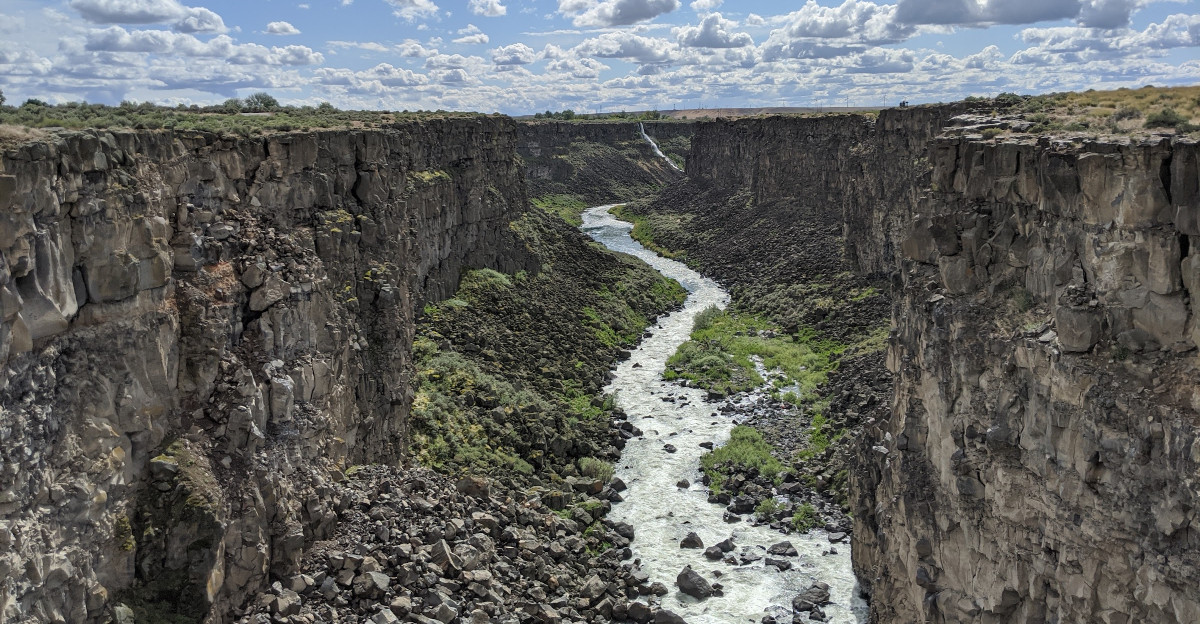
Thousands of drivers cross a 250-foot-deep canyon every day on I-84, and most never notice it.
The freeway simply hops over it on a bridge. Down below, a river crashes through a stairstep waterfall into a churning bowl of black rock.
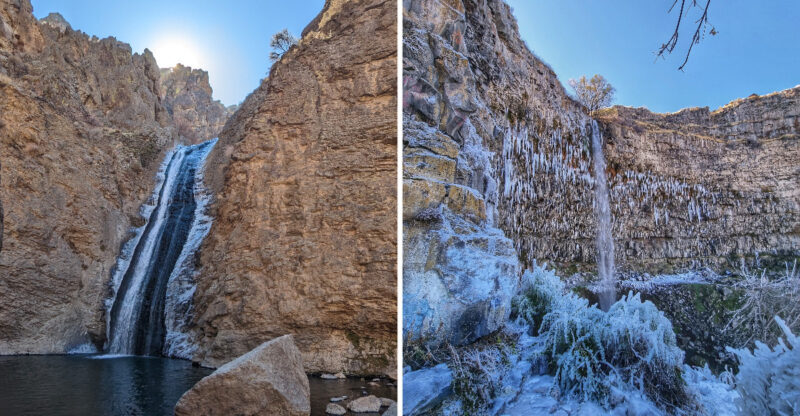
That waterfall drops about 60 feet. A slim pedestrian bridge hangs right above it, so you can stare straight down into the spray.
I like how close it all sits to the interstate, with almost no detour required.
This corner of southern Idaho looks flat and quiet from the car window.
Then the ground opens up, and the whole mood changes. A short paved path, a self-guided loop drive, and a few shaded picnic tables fill out the stop.
I can’t imagine zooming past once you know it’s there. So what exactly is hiding under that freeway?
The Canyon Hiding Right Under Your Tires
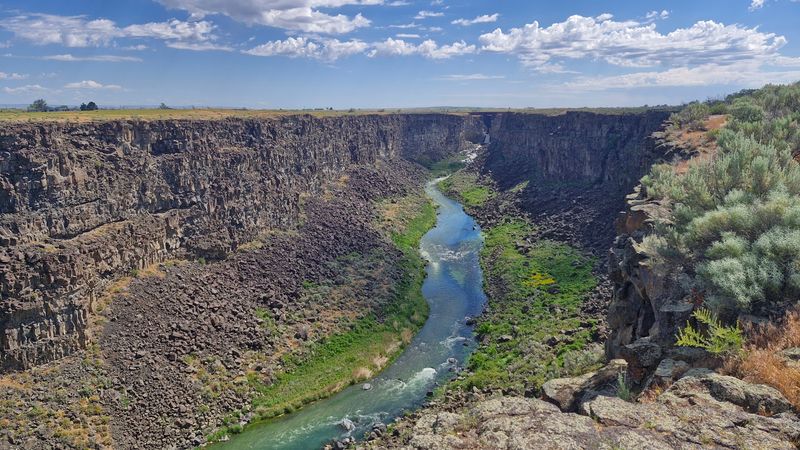
Malad Gorge – Thousand Springs State Park sits just off Interstate 84 in southern Idaho. It belongs to the larger Thousand Springs State Park, which spreads its units across the Magic Valley.
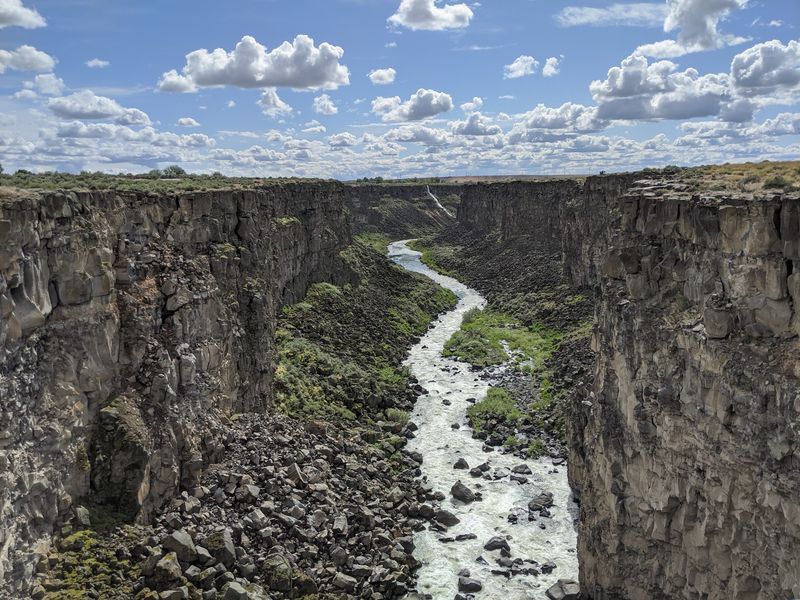
The star here is a canyon about 250 feet deep. It stretches roughly two and a half miles through rugged basalt country.
Here’s the funny part. The interstate crosses directly over the gorge, yet the view from a speeding car barely hints at it.
Most drivers glance at sagebrush and keep going. Meanwhile, a river is roaring through a slot of black rock beneath them.
The park is a day-use spot built for exactly this kind of reveal. You get panoramic canyon views, a waterfall, a pedestrian bridge, short hikes, and picnic space.
Guided tours are part of the offerings too. That’s a lot packed into a stop that starts minutes from the freeway.
Think of it as Idaho’s best-kept roadside secret, except it was never really kept. It was just sitting under everyone’s tires the whole time.
Once you’ve seen it, every future drive over that bridge feels a little different. You’ll know exactly what’s down there.
Lava, Water, And A Whole Lot Of Patience
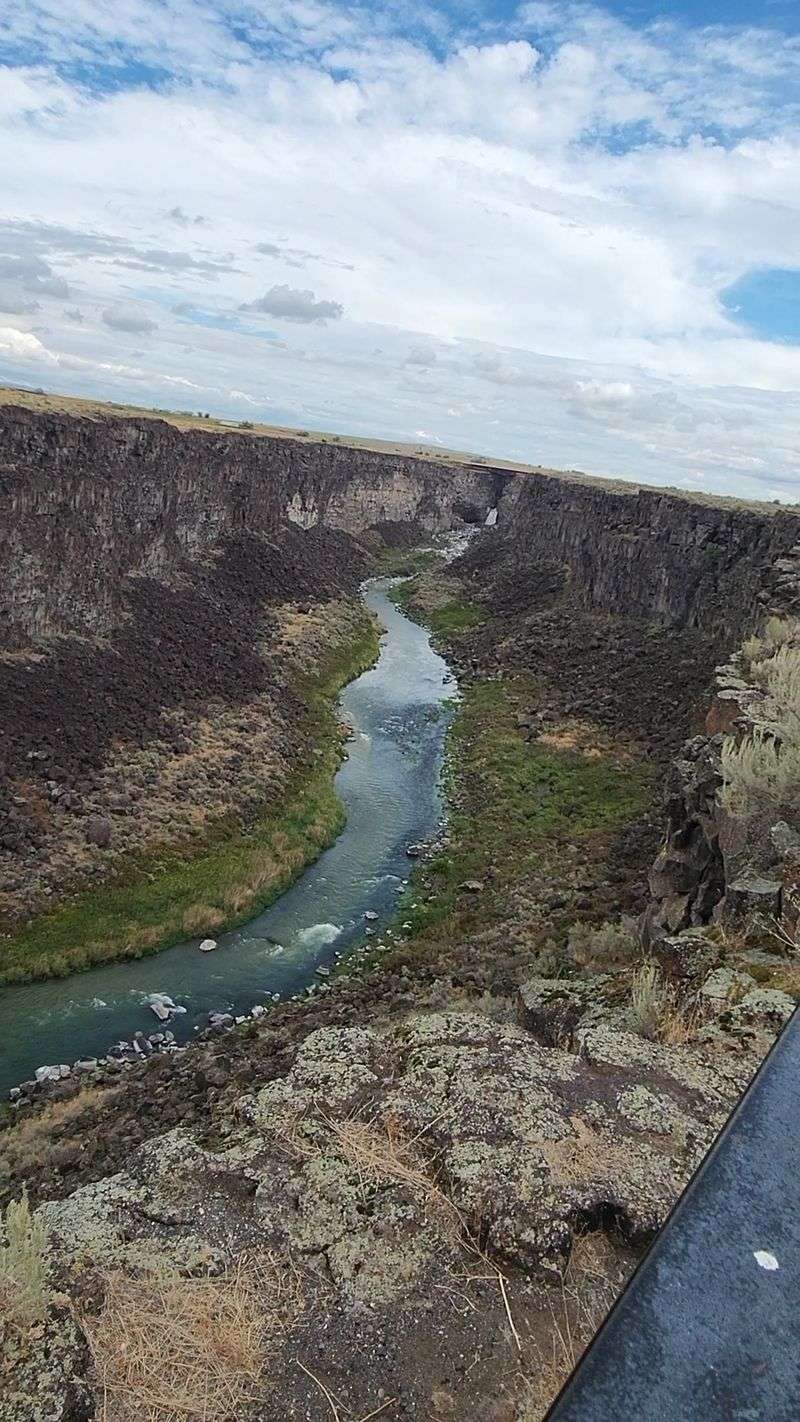
Dark stripes line the canyon walls like pages in a giant stone book. Each layer marks an old lava flow that spread across this part of Idaho long ago.
Volcanic activity built up those basalt sheets one flow at a time. Then water went to work, cutting down through the rock to shape the gorge.
The result is a canyon with a distinct stepped look. Big blocks of basalt break away in tidy chunks, leaving ledges and stair-like walls.
One of the park’s numbered stops points out this blocky structure directly. It’s a handy chance to see the geology up close without a textbook.
Interpretive signs along the way explain how the landscape formed. They turn a pretty view into something you actually understand.
The same region shows up in conversations about canyons on Mars. Scientists have studied southern Idaho’s flood-carved terrain for clues about similar shapes on the red planet.
That’s a pretty big resume for a canyon most people drive over. Earth and space science, all visible from a rim near a highway exit.
Kids who love rocks will have plenty to point at. Grown-ups might end up just as curious.
Devil’s Washbowl Puts On The Loudest Show
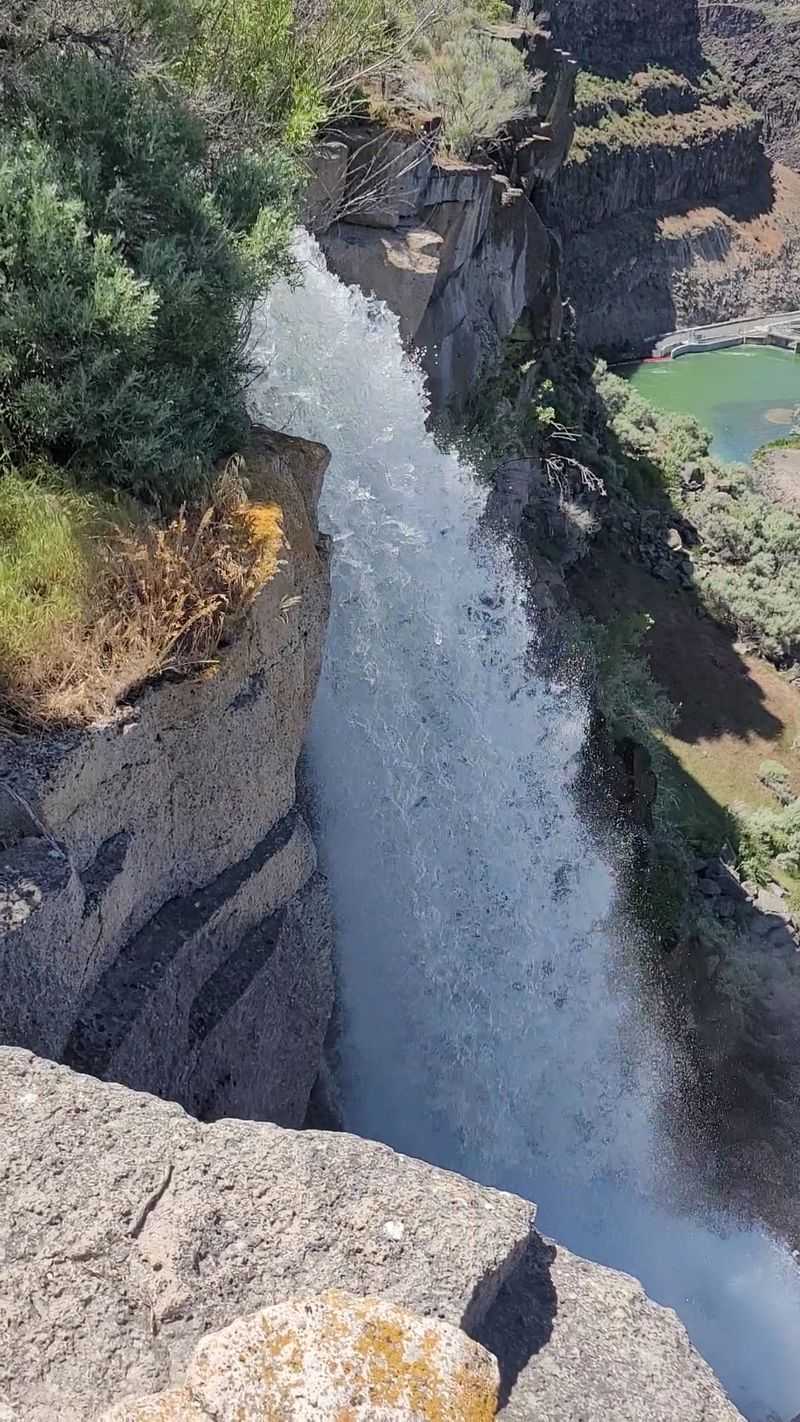
Sixty feet of falling water, crashing into a round pool of black rock. That’s Devil’s Washbowl, the headline act at Malad Gorge – Thousand Springs State Park.
The Malad River drops down a series of stairstep falls here. Then it swirls into a circular basin carved into the basalt.
The name fits the scene almost too well. The pool churns and foams like something left in a giant washing machine.
Devil’s Washbowl is the first stop on the park’s self-guided route. So you get the big payoff right away, with no long buildup.
Here the river squeezes through a narrow section of the gorge. That tight space gives the water extra force and plenty of noise.
Timing matters if you want the full show. Spring tends to bring stronger flows, and the falls look their most energetic then.
Lighting matters too, since bright sun can wash out the view at certain hours. Late afternoon or evening often makes the canyon colors easier to see.
Either way, the Washbowl rarely sits quiet. Even on a calm day, it sounds like the river has somewhere very important to be.
Your Knees Might Wobble On This Footbridge
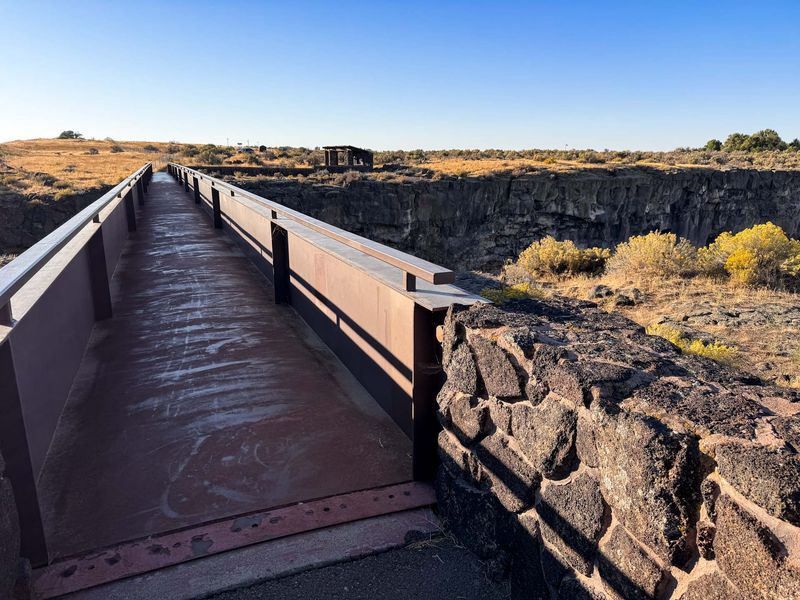
A slim pedestrian bridge stretches across the gorge, and the waterfall sits almost directly beneath it. Look down, and Devil’s Washbowl is churning right under your shoes.
The walk from the parking lot to the bridge is short. That means even a quick stop delivers a serious view.
Heights fans will love it. Folks who prefer solid ground may want to take the first few steps slowly.
Once you’re out there, the payoff is huge. You can see the river cutting through the narrow slot and the walls rising on both sides.
The bridge also gives you a fresh angle on the interstate crossing nearby. It’s a little surreal to watch traffic overhead while standing above a roaring falls.
Photographers get shifting light and shadow on the craggy cliffs throughout the day. Each hour paints the rock a slightly different shade.
Across the bridge, a trail continues along the canyon. A short walk leads toward springs and other viewpoints.
Hold onto hats, phones, and small hands. Gravity in a 250-foot canyon doesn’t give anything back.
Five Numbered Stops Make Exploring Easy
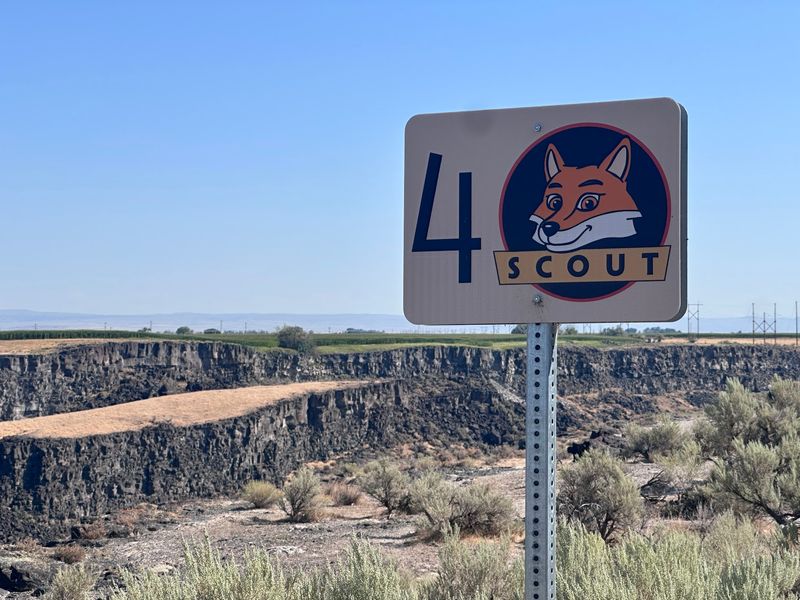
Here’s a park that hands you a map and says go have fun. At the entrance, visitors can pick up a pamphlet covering five numbered stops.
Each stop has a roadside marker, so the route is easy to follow. The short loop road keeps driving relaxed, even for bigger rigs.
Stop one is Devil’s Washbowl and its 60-foot falls. Stop two is the Malad Gorge overlook, with a wide view of the canyon and waterfall.
The third stop looks out over the Malad River Dam. Number four highlights a rare native plant and the canyon’s step-like rock blocks.
The fifth stop features Woody’s Cove, which once held a large waterfall. A smaller falls still runs there today.
Interpretive signs fill in the details at each pullout. You’ll come away knowing far more than you expected from a highway break.
The whole loop works for a quick tour or a slower afternoon. Hit every marker, or just pick your favorites.
It feels a bit like a scavenger hunt for grown-ups. The prizes just happen to be canyon views.
Stagecoach Ghosts Along The Old Kelton Road
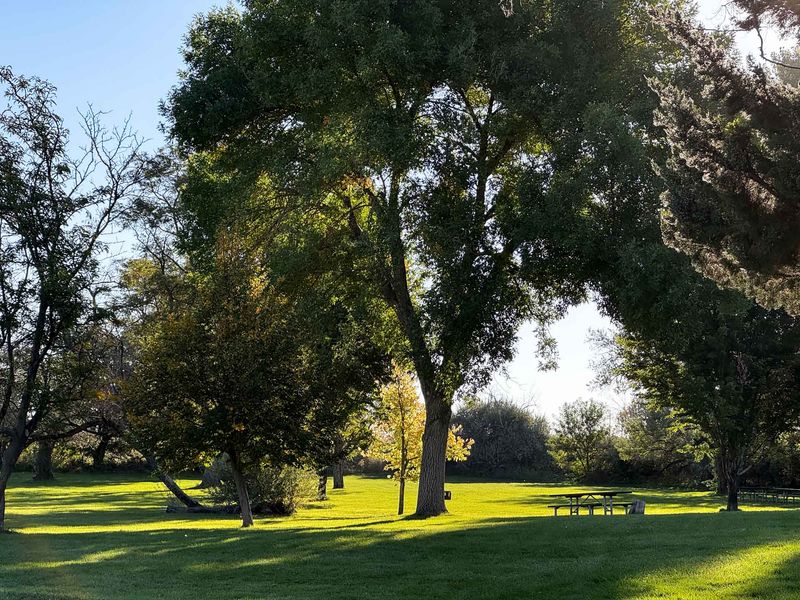
Long before I-84 rolled over the gorge, wagons had to cross it too. Their route was the Kelton Road, a busy stage and freight line.
Between 1864 and 1883, it carried mail, freight, and passengers between Boise and Kelton, Utah. That made it a lifeline for early Idaho.
Remnants of the road sit on the east side of the interstate. Look closely, and you can still spot old bridge abutments.
Those supports once held a bridge across a narrower, shallower stretch of the gorge. Picture moving heavy wagons over that drop without modern engineering tools.
The canyon also picked up wilder legends over the years. Stories say outlaws once used it as a hideout.
Either way, the history adds a fun layer to the scenery. You’re standing where travelers worried about the same crossing you just zipped over in seconds.
It’s a neat contrast with today’s highway. One road took hours of effort, and the other takes a few heartbeats.
History buffs should give this part of the park real time. The clues are subtle, but they’re definitely there.
Easy Enough For Grandpa, Exciting Enough For Teens
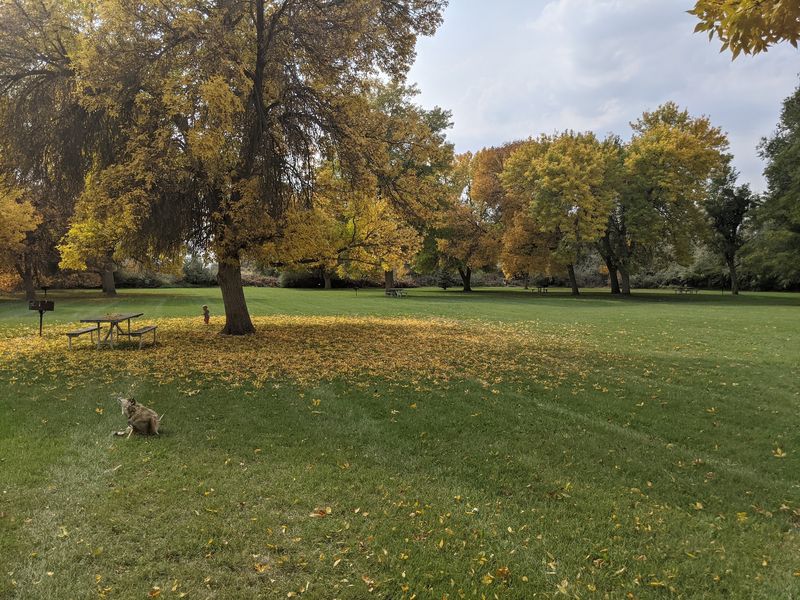
Few dramatic canyons are this easy to reach. A short paved trail leads to the bridge, and it works for older walkers too.
That accessibility makes the park a great multi-generation stop. Grandparents, parents, and kids can all see the main falls together.
Teens get the thrill of hanging over a gorge on a footbridge. Younger kids get a playground and plenty of rocks to point at.
Families with little ones should stay extra careful, though. Many viewpoints sit right along the canyon rim.
Hold hands, keep pets close, and skip the edge selfies. The drop is real, and the basalt doesn’t forgive missteps.
People with a fear of heights can still enjoy plenty here. Overlooks and the loop drive offer views without stepping onto the bridge.
You also don’t need hiking gear or a full day. A short visit works, and a longer one rewards the curious.
RVs and trailers can manage the loop road too. That’s handy for travelers hauling their homes across Idaho.
Hours, Fees, And The Quickest Way In
Getting there takes almost no effort. Take the Tuttle exit off I-84, and signs guide you to the entrance.
The park’s address is 2314 S Ritchie Rd, Hagerman, ID 83332. It sits about ten minutes from the Thousand Springs visitor center.
Gates open daily from 7 a.m. to 10 p.m. That leaves plenty of daylight for a morning break or an evening stroll.
A modest day-use vehicle fee applies, unless you already have an Idaho state parks pass. That entry fee is good at other Idaho state parks the same day.
A self-pay station handles payment when no attendant is on duty. Bring cash, since the drop box runs on the honor system.
When staff are at the gate, they can hand over the five-stop map. Expect friendly help and good tips for your loop.
Spring usually brings the strongest water flow. Late afternoon light can make the canyon walls easier to photograph.
Summer heat can get serious here. Early or late visits keep things comfortable and the views crisp.