This Pennsylvania Historic Village Sends You Home With Candy You Poured Into Antique Molds
Somewhere in Pennsylvania, people pour hot, glossy candy into molds shaped like animals and Father Christmas, some dating back to the late 1800s.
Those molds belong to a museum that holds the nation’s largest collection of Pennsylvania German artifacts.
That collection started with two brothers who simply refused to let old things disappear.
Today it fills a village of more than two dozen historic buildings, with a blacksmith shop, a tin shop, and a schoolhouse in the mix.
I like how this place treats history as something your hands should touch.
Poured candy, redware clay, needle felting, and basket weaving all show up in its lineup of hands-on classes.
I can’t imagine a better cure for screen-tired kids.
So how does a family end up shaping something warm and old-fashioned on an ordinary weekend afternoon?
A 100-Acre Village Where Pennsylvania German Life Still Clocks In
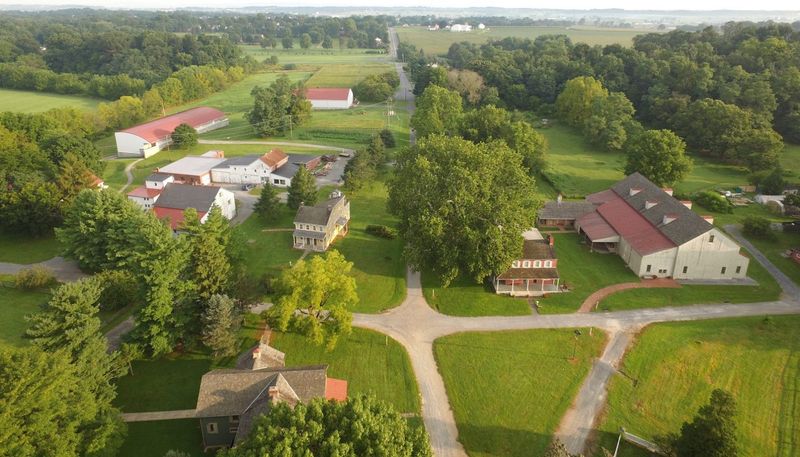
Landis Valley Village & Farm Museum sits just outside Lancaster, and it covers roughly 100 acres of rural Pennsylvania history. Think of it as a whole village built to explain how Pennsylvania Germans lived, worked, and farmed.
The museum focuses on the years from about 1740 through 1940. That’s two full centuries of daily life packed into one walkable property.
More than two dozen historic structures dot the grounds. Some stand where they always stood, while others were moved here and given a second career as teaching spaces.
Costumed interpreters bring the place to life on many days. They demonstrate trades, answer questions, and explain why a farmhouse kitchen looked the way it did.
Hands-on learning is the big draw for families. Classes and workshops let visitors try traditional crafts instead of just reading about them on a placard.
The collection behind it all is enormous, too. The museum holds a huge assembly of Pennsylvania German artifacts, from farm tools to household goods.
Put simply, this is history you can walk through, smell, and sometimes shape with your own hands. That’s a pretty good pitch for a family day out in Pennsylvania.
Two Brothers Who Couldn’t Stop Collecting
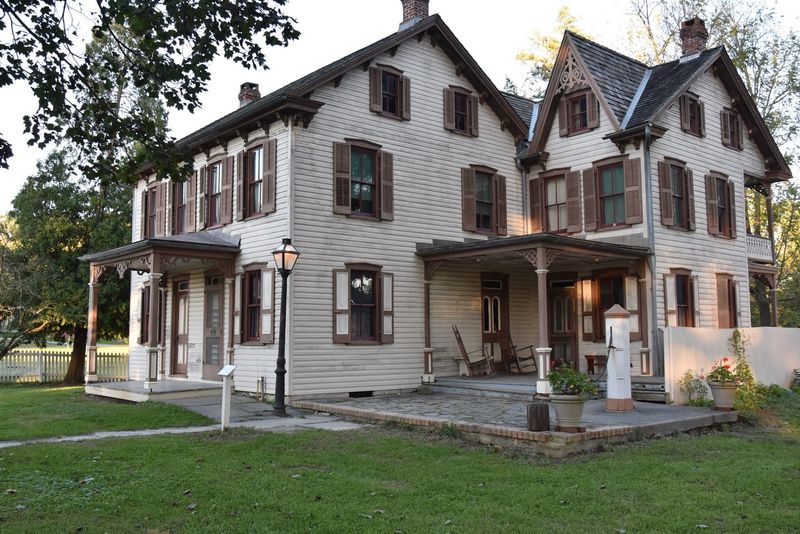
Every great museum needs a pair of people who saved way too much stuff. At Landis Valley, those people were brothers Henry K.
Landis and George Landis.
The brothers started the museum in 1925. Their goal was to collect and protect the objects and traditions of their Pennsylvania German heritage.
Their personal collection eventually grew to tens of thousands of objects. Picture an attic that kept expanding until it needed its own village.
That founding story still matters on the grounds today. Visitors can learn about the Landis men and how their passion shaped what fills the buildings.
Now the Pennsylvania Historical and Museum Commission runs the site. The mission stays focused on interpreting the lifeways, farming practices, and heritage of Pennsylvania Germans.
The collection now counts well over 100,000 artifacts. Decorative arts, cooking tools, farm equipment, and everyday household goods all have a place in the story.
I believe that origin makes the whole visit feel more personal. These aren’t random antiques, they’re things two brothers decided were too important to lose.
Hot Pours, Antique Molds, And Sticky Fingers
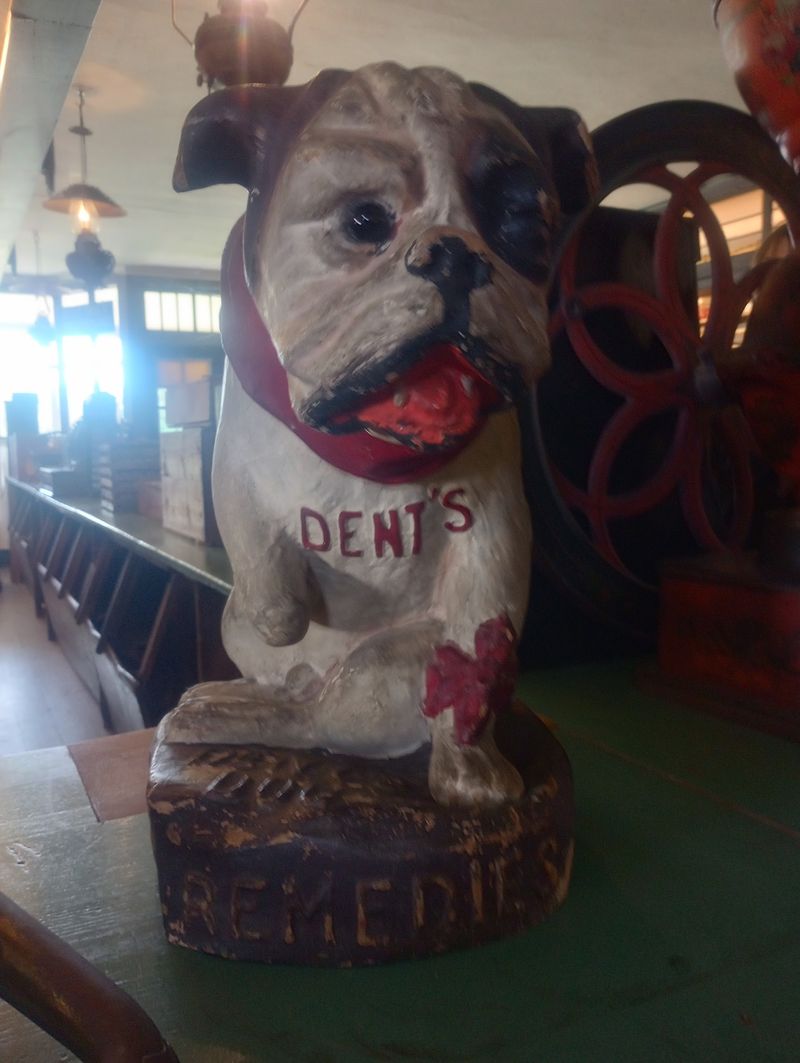
Warm, liquid, and ready to take a shape. That’s the magic behind the museum’s most famous hot-pour tradition, the Pennsylvania German Christmas Candy Workshop.
Participants work in teams to heat, prepare, and pour candy into antique molds. Those molds date from the late 19th century through the 1940s and include animals and Father Christmas figures.
The results are classic old-time treats. Clear toy candy, frosted church glass candy, molasses candy, and potato candy have all been part of the lesson.
The class runs about three hours. It’s geared toward adults, though teens around 16 may join when a parent comes along.
Pouring hot, moldable material into a form is the same basic skill behind old-fashioned candlemaking. If your crew is hoping for wax specifically, check the current class calendar before you go.
Workshop offerings change throughout the year, and popular sessions can fill up. Signing up early is the smart move.
Either way, the idea is the same. You leave holding something you made using methods Pennsylvania German families relied on generations ago.
Clay, Reeds, And Felt For Restless Hands
Candy molds are just one corner of the craft menu here. Landis Valley offers a wide spread of hands-on workshops through the year.
Redware pottery is one of the headliners. It’s a traditional Pennsylvania German craft, and working the clay yourself beats staring at a finished plate behind glass.
Basket weaving shows up on the schedule, too. So do tatting, needle felting, and grain painting, a decorative technique that turns plain wood into something fancy.
Classes tend to be smaller and more personal. That setup gives beginners room to ask questions and actually get the hang of a skill.
Kids have their own options. School programs and summer camps help younger visitors learn by doing rather than just listening.
Adults can go deeper with lectures and field trips. It’s a nice way to turn a casual interest into real know-how.
Craft sessions rotate, so the lineup you see this month may look different next season. Checking ahead keeps you from showing up with a basket-weaving heart and a pottery-only schedule.
Blacksmith Sparks, Tin Shop Tools, And A Barn Full Of Wagons
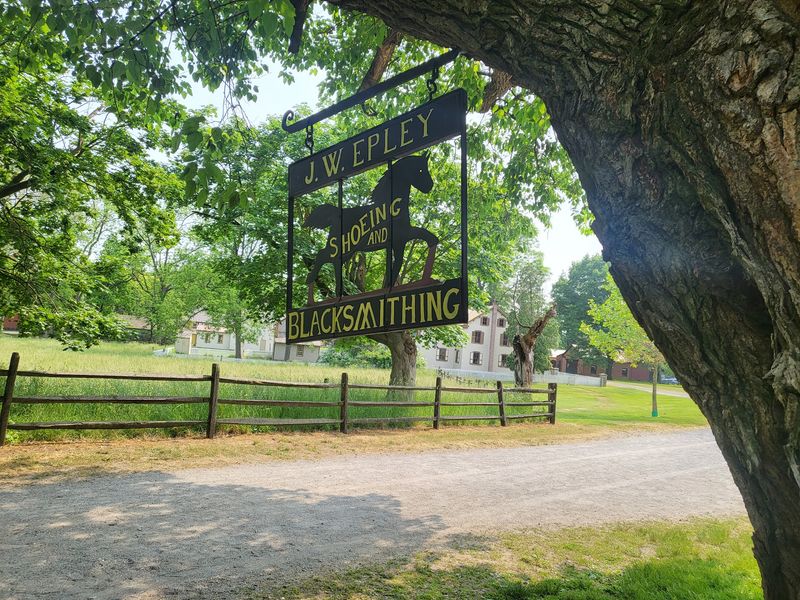
Got a kid who asks how anything gets made? The buildings at Landis Valley Village & Farm Museum answer that question one doorway at a time.
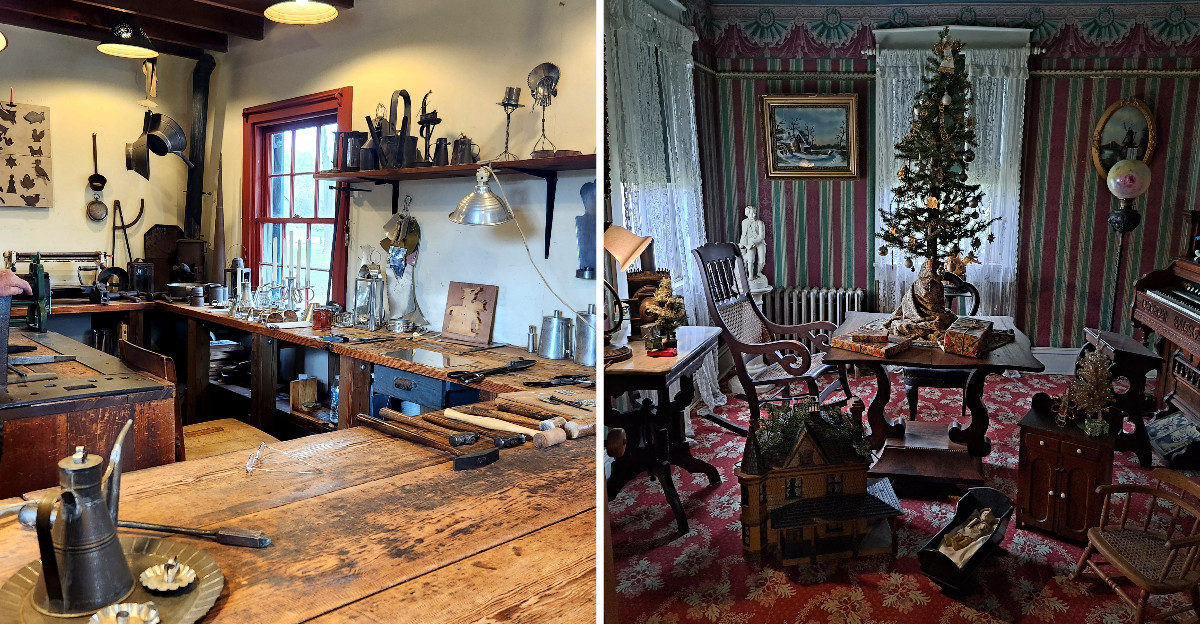
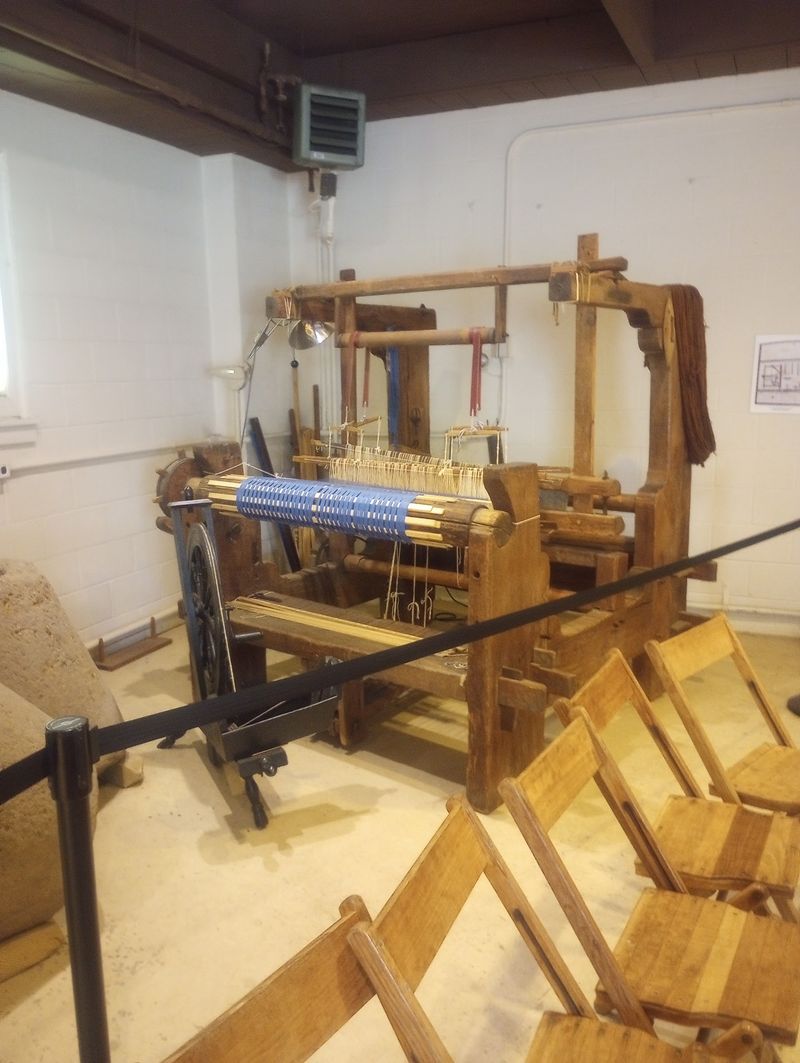
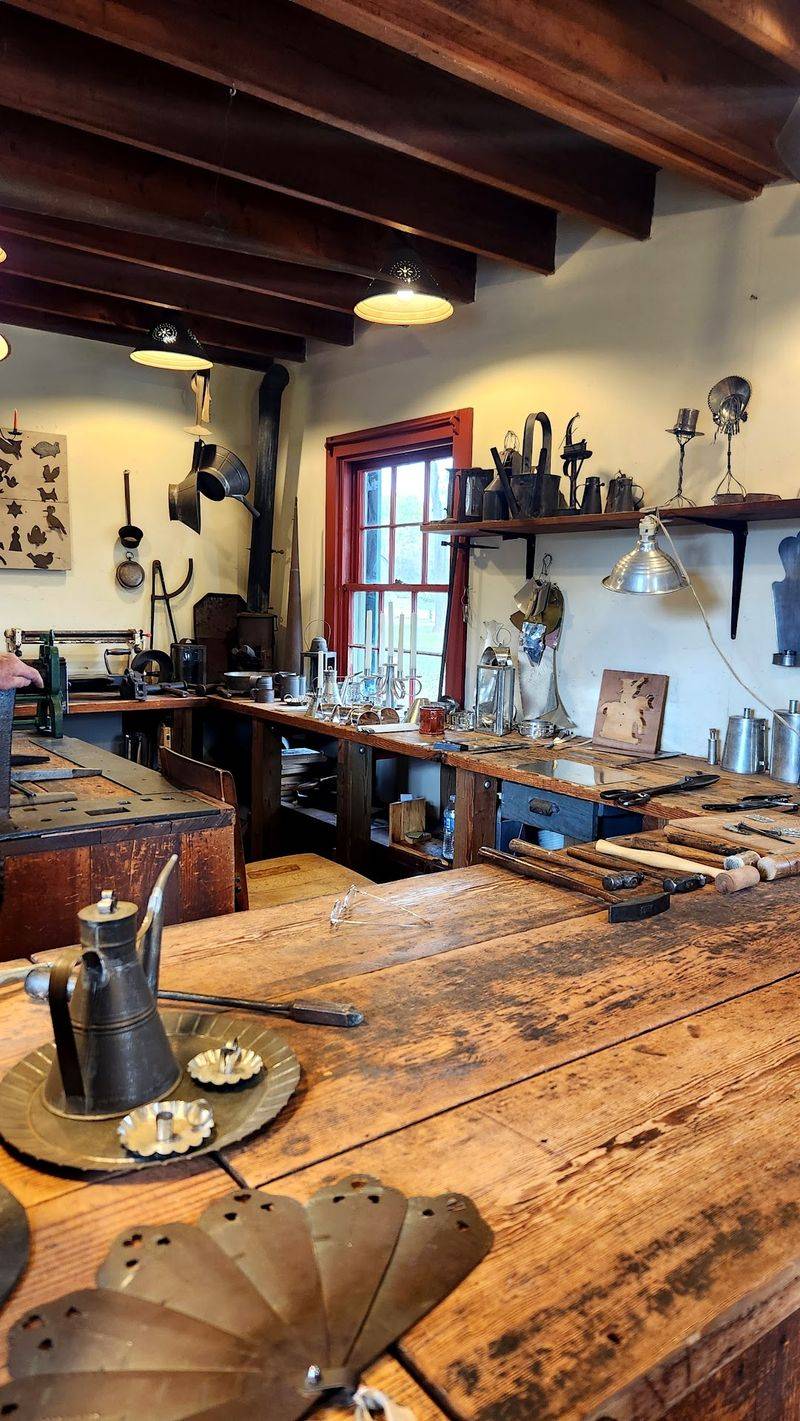
The blacksmith shop is a crowd favorite. Nearby, a tin shop, weaving shop, tavern, and schoolhouse fill out the village street.
A general store shows off period merchandise. It’s a fun reminder that shopping once meant shelves of crocks and bolts of cloth instead of a screen.
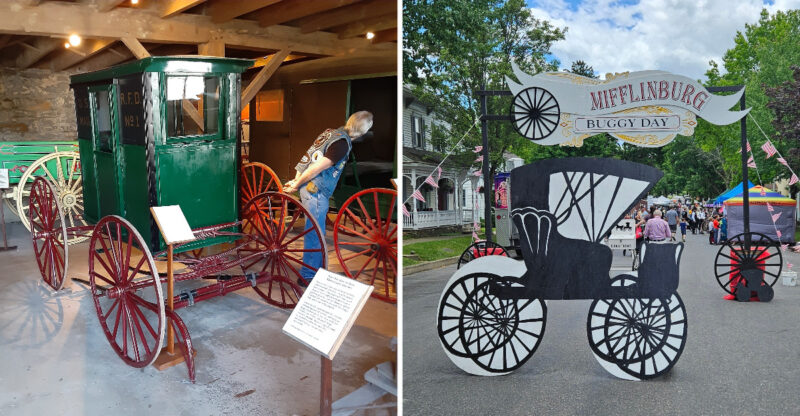
Then there’s the big barn. It holds farm implements, pitchforks, steam engines, and Conestoga wagons, plus buggies and tractors elsewhere on site.
The architecture mixes log cabins, brick and stone houses, a firehouse, and several barns. Each building covers a different slice of the 18th and 19th centuries.
Here’s a practical tip. Some buildings are only open with a guide, so joining the guided tour helps you see inside more spaces.
Guided tours are included with admission. After the tour, you’re free to wander the rest of the grounds at your own pace.
Heirloom Seeds, Spring Plant Sales, And Harvest Weekends
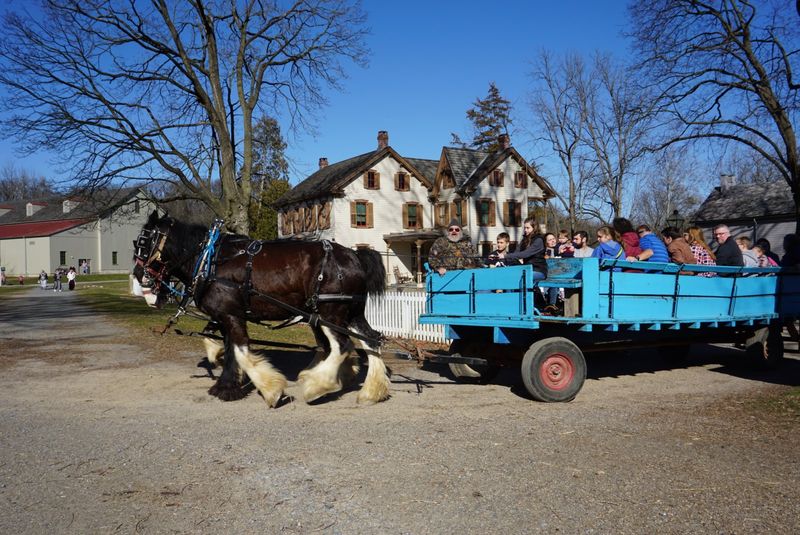
Some of the oldest things at this museum are still growing. The Heirloom Seed Project keeps historic plant varieties alive in working gardens around the village.
Those gardens show traditional farming practices in action. Flowers, herbs, and vegetables add color between the old buildings.
Gardeners get a bonus at the Herb & Garden Faire. The spring event usually lands around Mother’s Day weekend and brings vendors, native plants, and heirloom seedlings.
Fall brings Harvest Days in October. Demonstrations, live music, food, and wagon rides have all been part of the celebration.
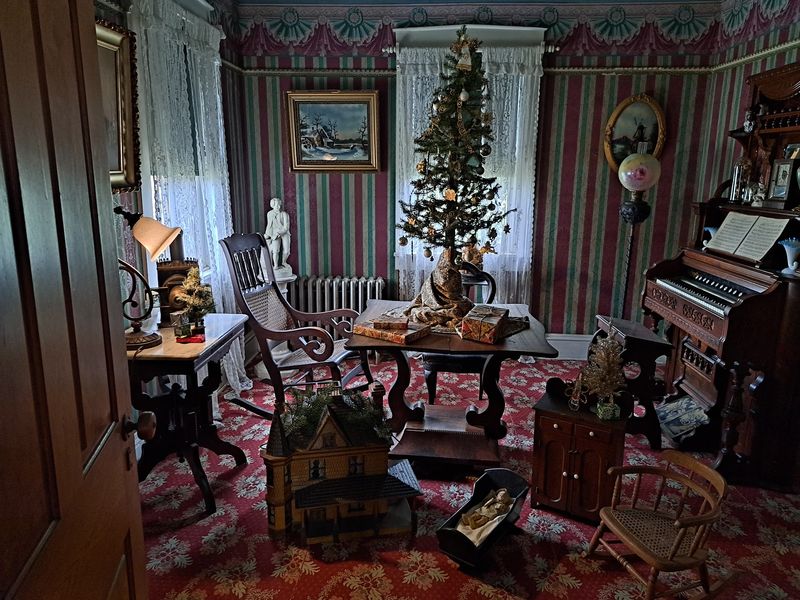
December ushers in Christmas in the Village. The Belsnickel, a costumed Pennsylvania German holiday figure, has been known to make an appearance.
Summer adds Civil War Days in late July. Each festival changes the mood, so return visits feel fresh.
Festival dates and details shift from year to year. Advance tickets are a good idea for the bigger events, and checking ahead saves a lot of guesswork.
Know Before You Load Up The Car
Plug 2451 Kissel Hill Road, Lancaster, PA 17601 into your map. The museum sits close to major roads in Lancaster County, and the parking lot is large and free.
The museum is generally open Wednesday through Sunday. It closes Mondays, Tuesdays, and several major holidays, and Sunday hours start later in the day.
Plan on at least two to three hours. Many families could easily stretch that into most of a day.
A short video near the start explains the site. It’s a handy primer before you head out among the buildings.
Wear comfortable shoes, because the walkways between buildings are outdoors and unpaved. Most buildings have ramps, and a couple of wheelchairs are available at the admission desk.
Snacks and drinks are sold on site, though there’s no full restaurant. A small picnic area works well if you pack lunch.
Don’t skip the Weathervane Museum Store, which carries local handcrafts, books, and heirloom seeds. Prices and hours shift with the seasons, so check ahead before making the drive.
A Family Outing That Leaves Something Warm In Your Hands
Plenty of museums ask you to look. Landis Valley Village & Farm Museum keeps inviting you to make, pour, weave, and plant.
That’s what makes it such a strong pick for families. Kids can see a blacksmith shop, then try a craft that turns the history into something real.
History fans get serious depth here. The collection, the buildings, and the knowledgeable interpreters cover two centuries of Pennsylvania German life.
Gardeners have their own reasons to return. Heirloom seeds and the spring plant sale turn a museum trip into a yard project.
Budget-minded families will appreciate the setup, too. Free parking and picnic space make it easy to plan an affordable day.
The workshops are the real wildcard. Candy pours, pottery, and other hot or hands-on crafts rotate, so the calendar decides your adventure.
For a day trip anywhere in Pennsylvania, this one delivers a clear payoff. You show up curious and leave with stories, maybe a souvenir, and possibly sticky fingers.