A Remote Central California Lake With Cathedral-Like Stone Columns Along The Shore
A lake can be beautiful without trying to look mysterious. Then there are places like this.
The water is striking on its own, but the real surprise waits along the shore. Tall stone columns rise from the edge like nature got weirdly good at architecture.
Central California knows how to hide strange scenery in plain sight.
One turn toward the water, and the whole landscape starts feeling a little unreal.
Not too polished. Not too crowded. Just dramatic enough to make you stop talking for a second and reach for your phone.
That is the fun of a remote lake with a view like this. You do not need a long list of activities. The shoreline does most of the work.
Walk slowly. Look closer. Let the shapes mess with your sense of scale a bit.
Between the quiet water and the cathedral-like columns, this is the kind of place that makes a simple day feel like you stumbled into something much stranger.
A Shoreline That Looks Almost Too Strange To Be Natural
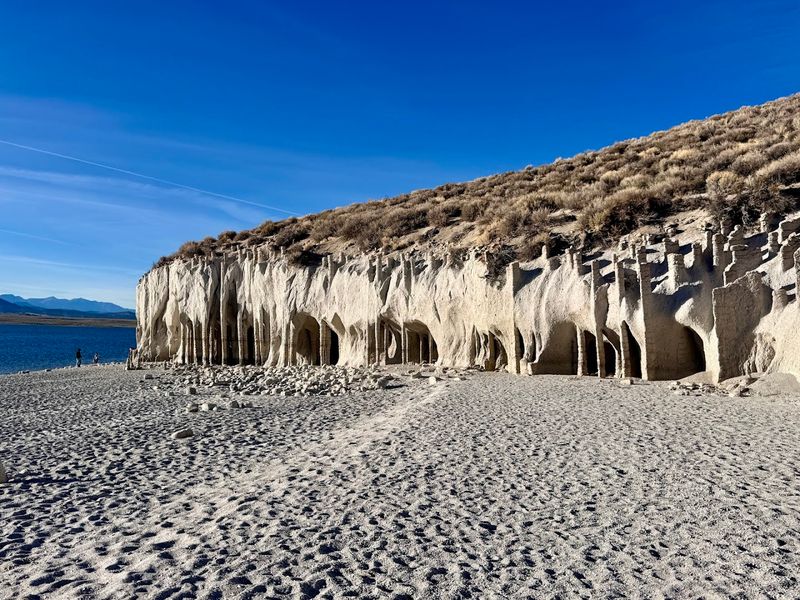
Standing at the edge of Crowley Lake’s eastern shoreline for the first time can genuinely stop a person mid-step.
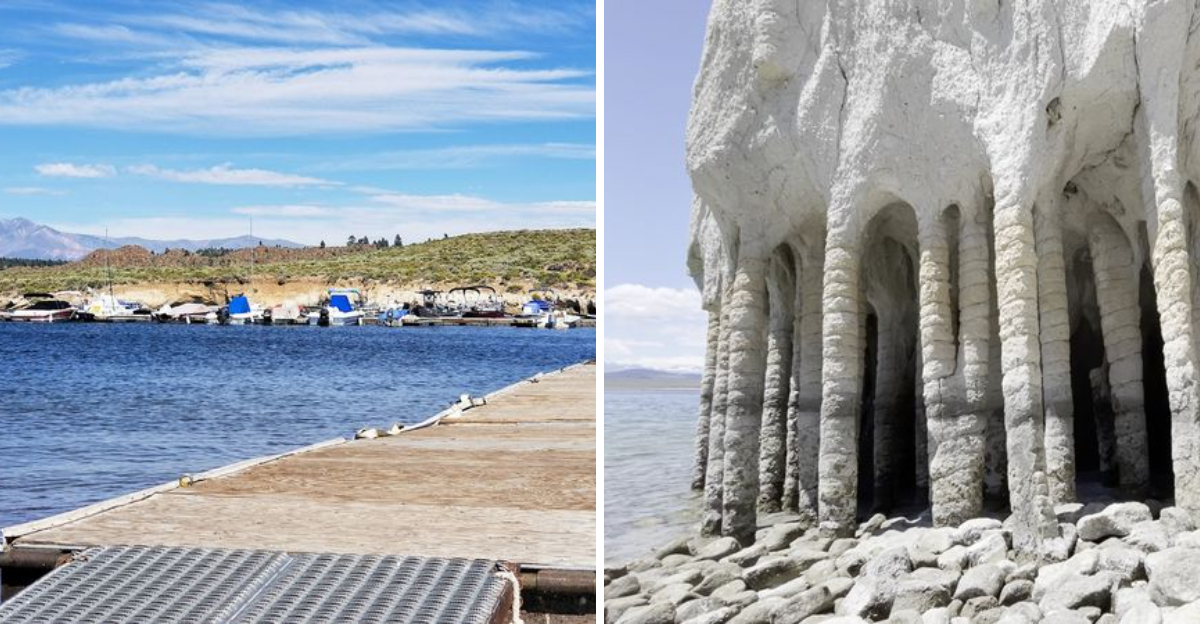
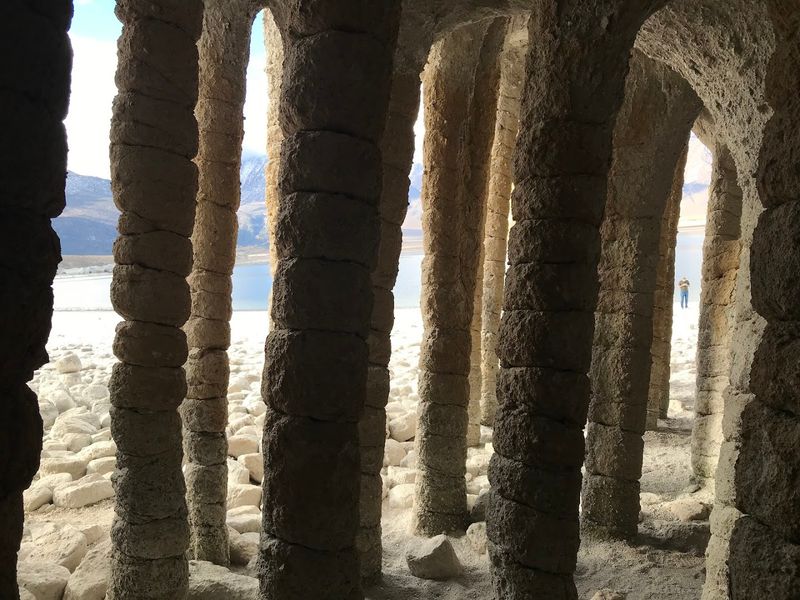
The columns rise in pale, tightly packed rows, some leaning slightly, some forming arch-like openings, and some clustered so closely together they look like the ruins of a structure nobody finished building.
No ropes, no signs, no gift shop nearby, just raw volcanic geology doing its thing under a massive Eastern Sierra sky.
These formations were not carved by human hands. After the Long Valley Caldera erupted approximately 760,000 years ago, snowmelt and groundwater seeped into the still-hot volcanic ash.
That water boiled, created vertical convection cells, and gradually cemented minerals like silica and zeolites into hardened pillars.
Over thousands of years, softer surrounding material eroded away and revealed the columns standing tall.
Researchers estimate nearly 5,000 columns spread across the area, and many smaller ones are still emerging as erosion continues.
Colors range from gray to reddish-orange depending on mineral content.
Some columns even feature distinct ringed openings near their tops. Honestly, no filter needed out here, California delivers the drama all on its own.
The Lake Feels Remote Without Being Impossible To Reach
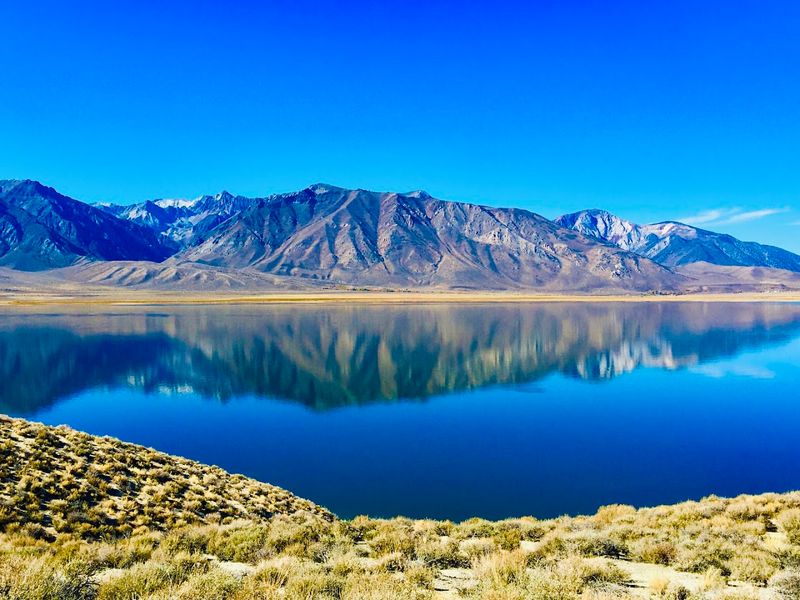
Located roughly 10 to 15 miles south of Mammoth Lakes in Mono County, Crowley Lake sits close enough to Highway 395 to be a realistic day trip but far enough from polished tourist infrastructure to feel genuinely removed.
The surrounding terrain is open, wind-shaped high desert with broad volcanic slopes and mountain silhouettes stretching in every direction.
There is no manicured lakeside promenade here, no row of rental shops lining a cute main street. What visitors find instead is wide water, exposed earth, and a sky that feels unusually large.
That combination of accessibility and rawness is part of what makes the lake worth the effort, because the scenery around the columns helps build the mood just as much as the formations themselves.
Roads near the column access area can be rough and unpaved, so checking current conditions before heading out is genuinely smart advice rather than just a legal disclaimer.
Seasonal changes, snowmelt, and storms can all affect what your vehicle can handle.
For travelers who like their destinations with a little grit mixed in, that roughness is not a downside. It is actually kind of the whole vibe.
The Columns Make The Lake Feel Like A Lost Stone Temple
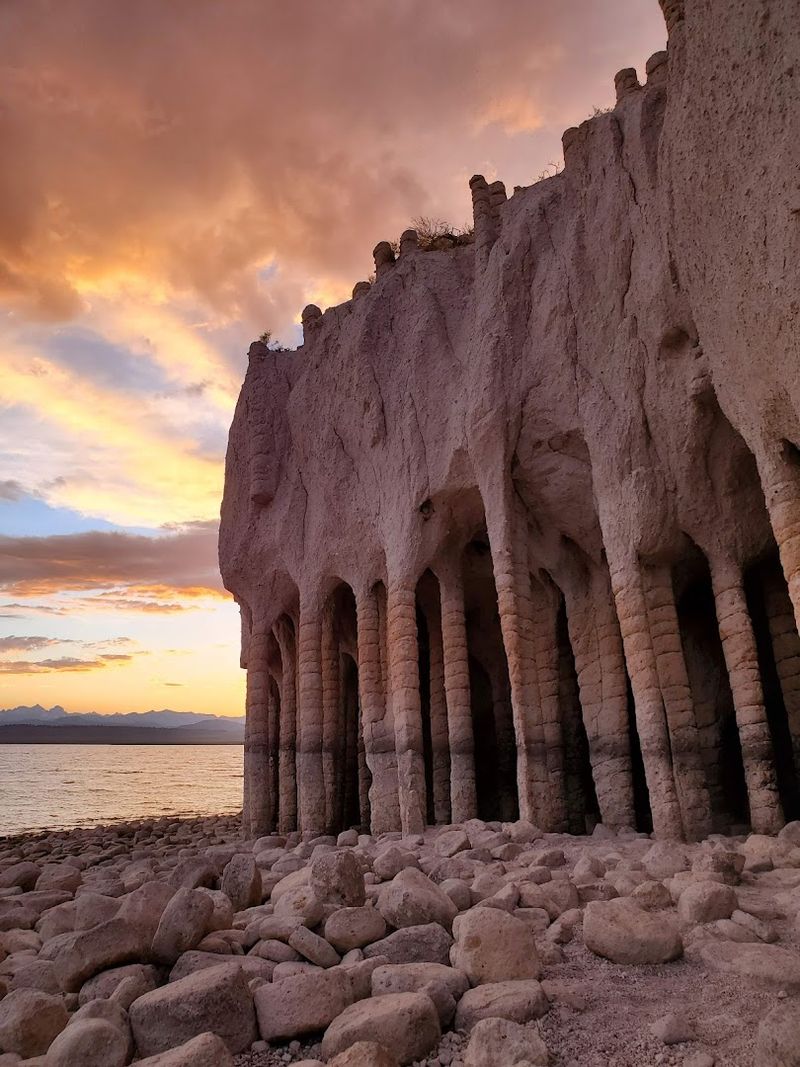
Many lakes have shorelines worth photographing, but very few have shorelines that make visitors question whether they have wandered onto a movie set.
The columns at Crowley Lake stand in formations that create natural rows and archways, giving the shore a strongly architectural quality that feels almost deliberate.
Some groupings look like narrow doorways. Others look like the outer walls of a structure that time forgot to finish collapsing.
That cathedral-like quality comes from the way vertical columns cluster and frame space around them.
Unlike the smoother, more geometric columns at Devil’s Postpile National Monument nearby, these formations vary widely in shape and angle, which makes the overall effect feel more chaotic and ancient rather than orderly.
Reddish-orange tones mixed with pale gray give the rock faces a warmth that shifts noticeably depending on the time of day and the angle of the light.
Visiting in the late afternoon, when sunlight hits the columns at a low angle, tends to bring out the richest color contrast.
The formations cast long shadows across each other and the sandy ground, which adds depth and drama to any photo.
For geology lovers and casual explorers alike, the sheer visual strangeness of the place delivers exactly what the name promises.
Volcanic History Is Hiding In Plain Sight
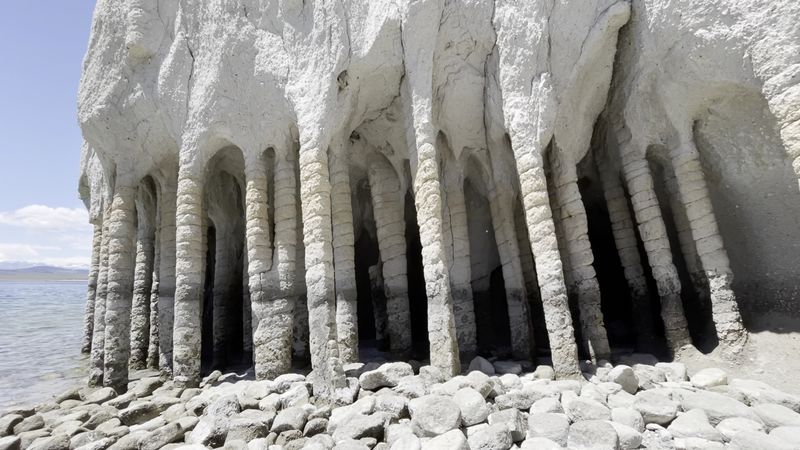
The story behind the columns is genuinely one of the more fascinating pieces of geology in California, and it starts with one of the largest volcanic events in North American history.
The Long Valley Caldera erupted approximately 760,000 years ago, depositing thick layers of volcanic ash across the region.
That ash, known as tuff, was the starting material for everything visitors see along the eastern shoreline today.
After the eruption, groundwater and snowmelt began seeping into the still-hot tuff.
The water boiled and created vertical convection cells within the ash layer. Inside those cells, erosion-resistant minerals including amorphous silica, zeolites, and iron-rich compounds slowly cemented the tuff into hardened pillars.
Over an enormous stretch of time, softer surrounding material eroded away and left the durable columns exposed.
What makes this formation process especially interesting is that it differs from the classic columnar jointing seen at places like Devil’s Postpile.
These columns formed through hydrothermal activity rather than simple cooling contraction.
That distinction matters because it explains why the Crowley Lake columns vary so much in shape, lean, and texture compared to the more uniform hexagonal columns found elsewhere in the region.
Crowley Lake Is Also A Serious Fishing Destination
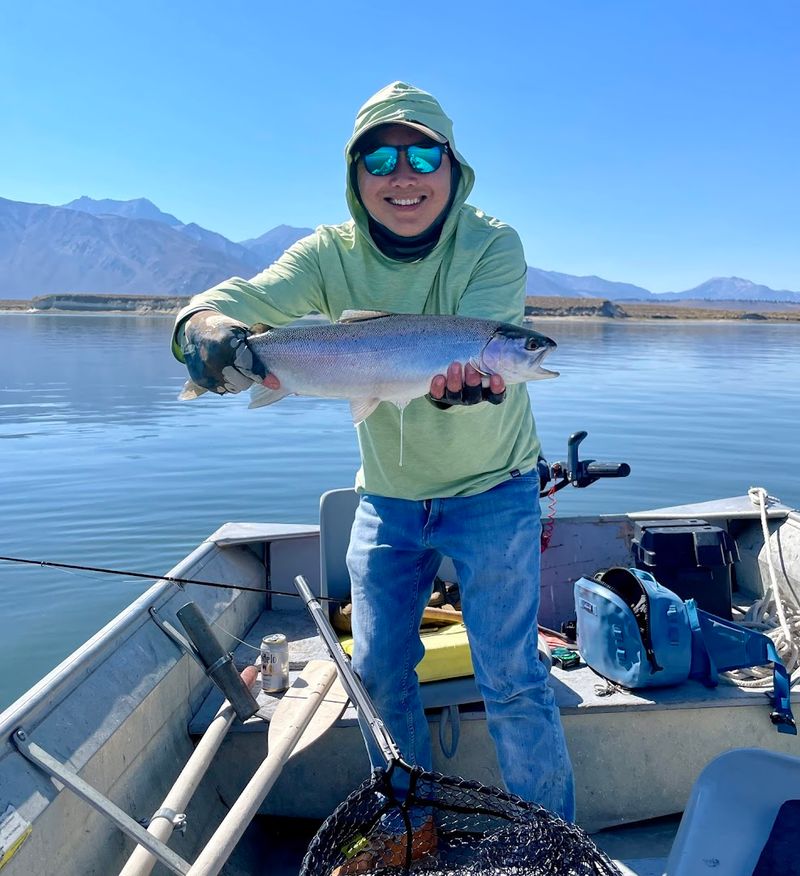
Beyond the geological spectacle along the eastern shore, Crowley Lake carries a strong second identity that draws a completely different kind of visitor.
The lake is widely regarded as one of the top stillwater trout fisheries in the entire country, and the fishing culture around it runs deep.
Anglers arrive early, stay patient, and treat a day on the water like a full commitment rather than a quick activity to check off a list.
The fishing season generally runs from the last Saturday in April through November 15th, which gives visitors a solid window across spring, summer, and fall.
Rainbow and brown trout are the primary targets, and the lake’s size, at roughly 45 miles of shoreline, means there is plenty of water to explore.
Both shore fishing and boat fishing are popular depending on the season and water levels.
Crowley Lake Fish Camp serves as the main hub for anglers, offering boat rentals, a tackle shop, cabins, and RV sites.
Having a full-service base camp nearby makes planning a multi-day fishing trip much more straightforward than it would be at a more remote location.
Boating Adds Another Way To See The Landscape
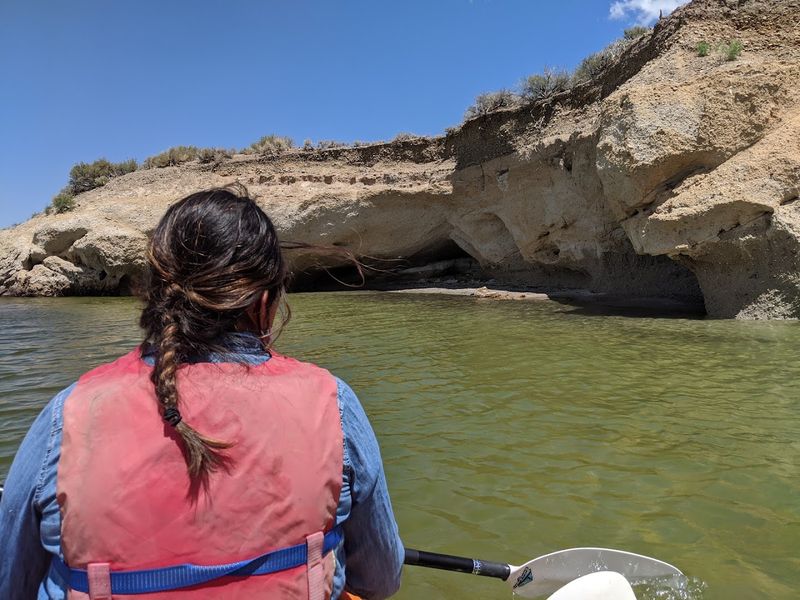
Getting out onto the water at Crowley Lake changes the entire scale of the experience. From the shore, the lake feels wide and open.
From a boat, the surrounding volcanic terrain and distant mountain ridgelines spread out in every direction in a way that feels almost cinematic.
The high-desert setting has a particular kind of spaciousness that does not come across fully until the shore is behind you.
California’s Division of Boating and Waterways lists public boating facilities at Crowley Lake, and Crowley Lake Fish Camp provides marina access along with boat rentals for visitors who prefer not to haul their own equipment.
Waterskiing, wakeboarding, kitesurfing, kayaking, and stand-up paddleboarding are all popular activities on the water depending on conditions and season.
Private boats are permitted but must pass inspections for invasive mussels before launching, so arriving with a clean and dry boat is not just courteous but required.
Planning ahead and confirming current launch conditions with Crowley Lake Fish Camp before arrival is strongly recommended, especially during early and late season when water levels and access can shift.
The Best Views Reward Visitors Who Like A Little Adventure
Reaching the most dramatic column views at Crowley Lake is not a simple pull-into-the-parking-lot situation.
The access road to the eastern shoreline where the columns stand is unpaved, rough, and peppered with potholes, sandy sections, and uneven rocky stretches that can challenge lower-clearance vehicles.
A four-wheel-drive vehicle is strongly recommended for getting close to the formations without risking a very inconvenient situation in a very remote area.
For those without 4WD, a moderate two-mile hike across sandy terrain offers an alternative route to the columns.
That hike is not technically difficult but does require some physical readiness and appropriate footwear since the ground can be loose and uneven.
There are no public restrooms or facilities at the column site, so packing water and planning accordingly matters more here than at a typical tourist attraction.
Water levels also affect access. The columns are most visible and most dramatic when lake levels are lower, which tends to happen in fall and spring rather than peak summer.
Checking current conditions before making the drive out is practical advice that can save a lot of frustration.
The reward for getting there, though, genuinely feels earned in a way that a paved overlook never quite delivers.
The Lake Has A Man-Made Origin With A Wild Natural Personality
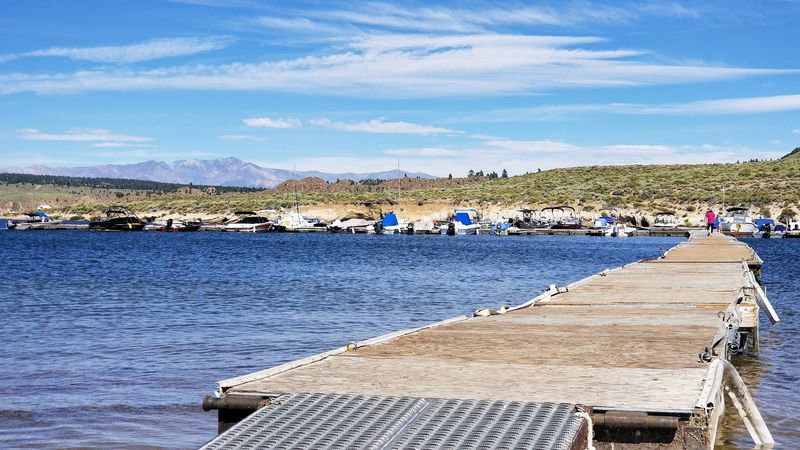
Crowley Lake may look like it has existed since the beginning of geological time, but the lake itself is a reservoir created in 1941 by the construction of the Long Valley Dam.
The project was carried out by the Los Angeles Department of Water and Power, and the lake’s primary purpose is water storage for the Los Angeles Aqueduct along with flood control for the region.
The lake was named after Father John J. Crowley, a historical figure celebrated for his role in Owens Valley history.
That man-made origin creates an interesting contrast with the ancient forces visible all around the shoreline.
The reservoir is relatively modern in the grand scheme of the landscape, yet the volcanic columns it sits beside are connected to events from hundreds of thousands of years ago.
Engineering and geology exist side by side here in a way that is genuinely unusual for a California lake destination.
The reservoir sits at an elevation of 6,939 feet in Mono County and has a shoreline stretching approximately 45 miles.
That elevation keeps temperatures noticeably cooler than lower-desert California destinations, which makes summer visits especially pleasant for outdoor activities.
The combination of practical water infrastructure and genuinely surreal natural scenery gives Crowley Lake a layered character that rewards visitors who take time to understand both sides of its story.