Ancient Petroglyphs Cover The Basalt Boulders At This Free Idaho Park Along The River
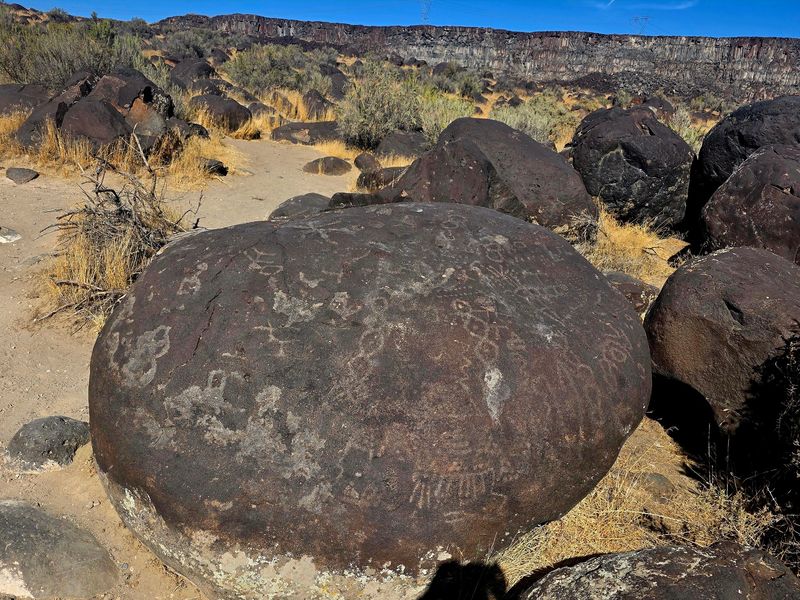
Thousands of years before anyone drew a map of Idaho, people pecked symbols into black boulders beside the Snake River. Those carvings are still there, and you can walk right up to them on a gravel path.
The boulders themselves arrived in a hurry. A colossal ice age flood rolled them downstream and dropped them like spilled marbles.
Some of the rock art on their surfaces is believed to be up to 12,000 years old.
I like how casual the whole setup feels. There is no velvet rope and no glass case, just stone, sky and a slow-moving river.
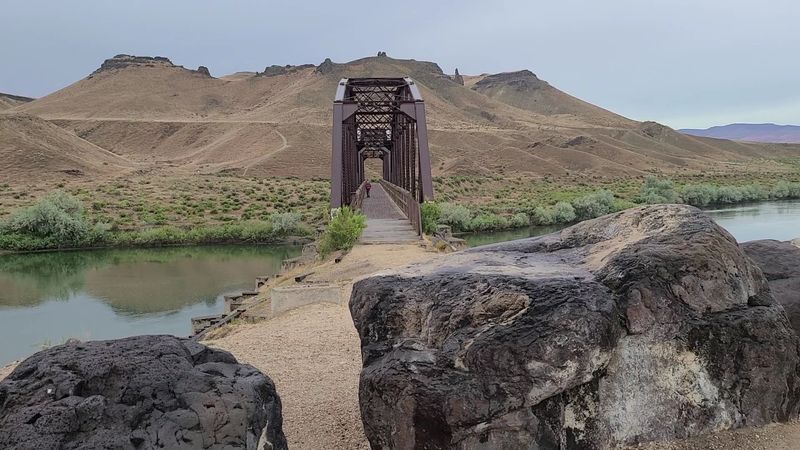
A historic railroad bridge sits nearby, waiting to carry you across the water on foot.
I can’t imagine a better way to spend an afternoon in southwest Idaho. So who carved these symbols, and what were they trying to say?
Idaho’s Only Archaeological Park Sits Quietly On The Snake River
Celebration Park holds a title no other spot in the state can claim. It is Idaho’s only archaeological park, run by Canyon County and set right along the Snake River.
The park opened in 1989, so it has been welcoming curious visitors for more than three decades. It sits near the small farm town of Melba, in the rugged canyon country south of Nampa.
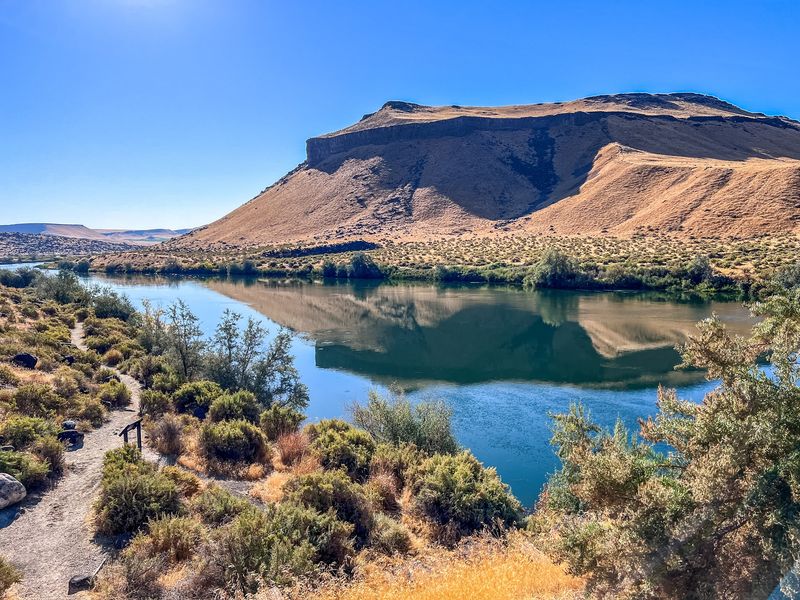
Getting here feels like a slow fade from fields to desert. Farmland gives way to sagebrush, and then the river suddenly appears below dark, rounded rocks.
What makes this place special is the mix packed into one stop. You get ancient rock art, a historic railroad bridge, river trails, birdwatching and riverside camping.
That is a lot of payoff for a single afternoon.
The park stays open around the clock for day use and camping. A small visitor center handles maps, questions and guided tours during its daytime window.
Families, history fans and folks who just want river air all find something to love. Celebration Park rewards anyone willing to slow down, look closely and let the stones do the talking.
Boulders That Rode In On A Prehistoric Flood
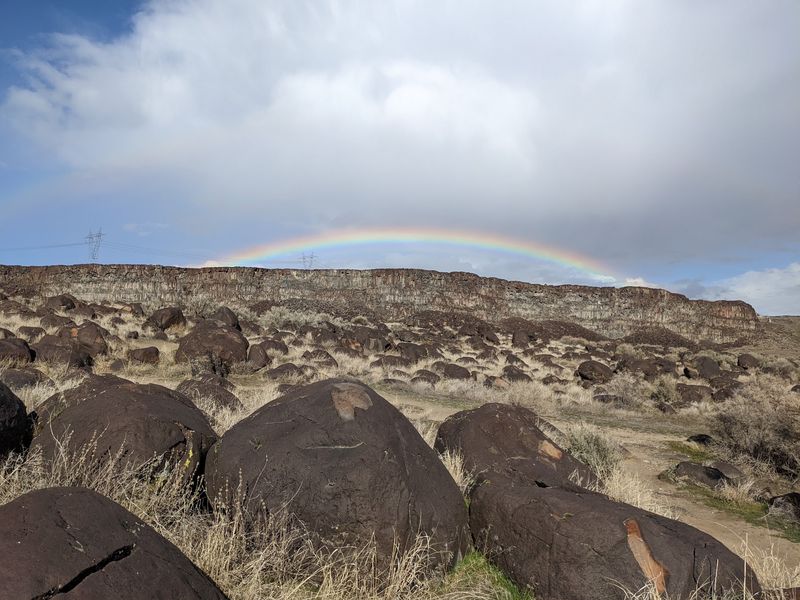
Those giant rocks didn’t start out here. Roughly 14,500 years ago, ancient Lake Bonneville burst through a natural dam in what is now southeast Idaho.
The Bonneville Flood that followed ranks among the largest floods in Earth’s history. Water roared down the Snake River Plain with enough force to tumble huge chunks of basalt for miles.
As the rocks rolled, their sharp edges wore away. They came to rest smooth and rounded, which earned them a delightfully snack-sounding nickname: melon gravels.
Celebration Park is scattered with them. Some sit alone like abandoned bowling balls, while others pile together in jumbled clusters across the slopes.
Here’s the fun part for geology lovers. You aren’t reading about the flood in a textbook, because you’re standing in the middle of what it left behind.
The topography alone makes the trip worthwhile. Every boulder is a clue to a single wild event that reshaped this whole stretch of southern Idaho.
Later, people discovered these smooth stones made excellent canvases. Nature built the gallery walls first, and human artists arrived to fill them.
Rock Art Pecked Into Stone Over Thousands Of Years
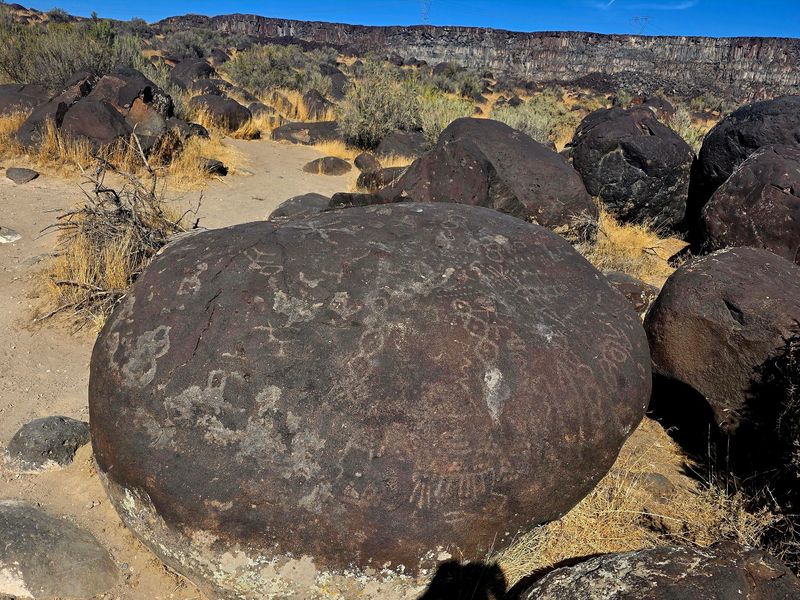
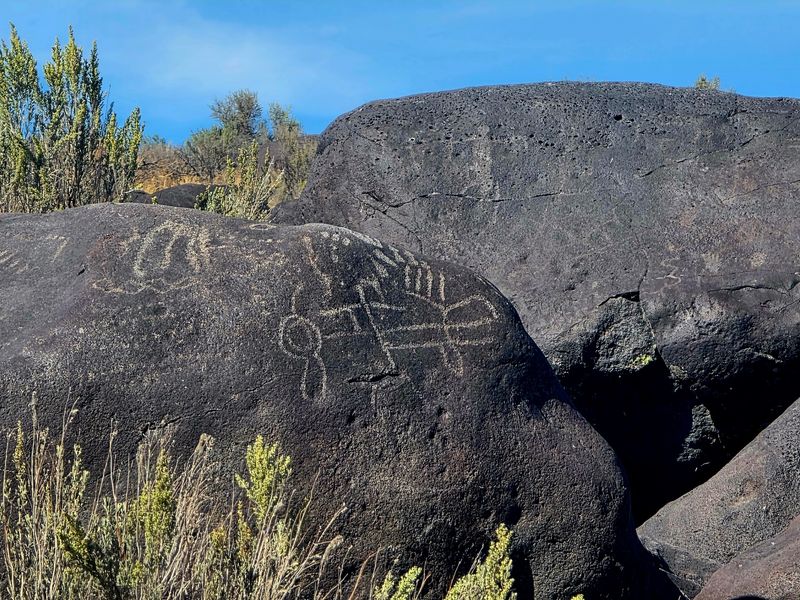
Look for the lighter lines first. Each petroglyph here was made by pecking through a dark surface coating to expose paler rock underneath.
That dark coating is called desert varnish. It builds up slowly on exposed basalt, which gives the carvings their sharp, high-contrast look.
The ages vary widely across the park. Some designs may be only about 100 years old, while others are believed to reach back 12,000 years or more.
Native peoples, including the Shoshone, Paiute and Bannock, have deep ties to this region. Their ancestors left images that still spark questions and quiet wonder today.
Nobody hands you an answer key. You’ll spot circles, lines and shapes, and part of the joy is simply pondering what they meant.
Please admire with your eyes only. Touching or tracing the carvings can wear them down, and these marks have already survived thousands of winters.
Hunting for each petroglyph feels a bit like a treasure search. Some sit in plain view, while others hide on the far side of a boulder, waiting for a sharp-eyed visitor to notice.
A Visitor Center Small In Size But Big On Help
Start at the visitor center, especially if it’s your first trip. The staff can point you toward the Petroglyph Trail and hand you a map for exploring on your own.
Timing matters here. The center keeps limited daytime hours, so an early arrival gives you the best shot at catching it open.
Free guided tours run during those visitor center hours. A guide can explain the cultural and natural history behind the carvings, which adds real depth to the walk.
Prefer to wander solo? The self-guided map works well, and the trail weaves among boulders that hold the rock art.
The building also offers flush restrooms and a bottle filling station. Potable water for containers is available there too, which campers will appreciate.
Here’s a handy perk for bird lovers. Visitors can rent a bag with binoculars, so forgetting yours doesn’t have to spoil the fun.
One note on the Crossroads Museum inside the park. It has been under renovation for a new exhibit, so check before driving if seeing it is a priority for your visit.
Walk Across A Railroad Bridge Built For Gold And Silver
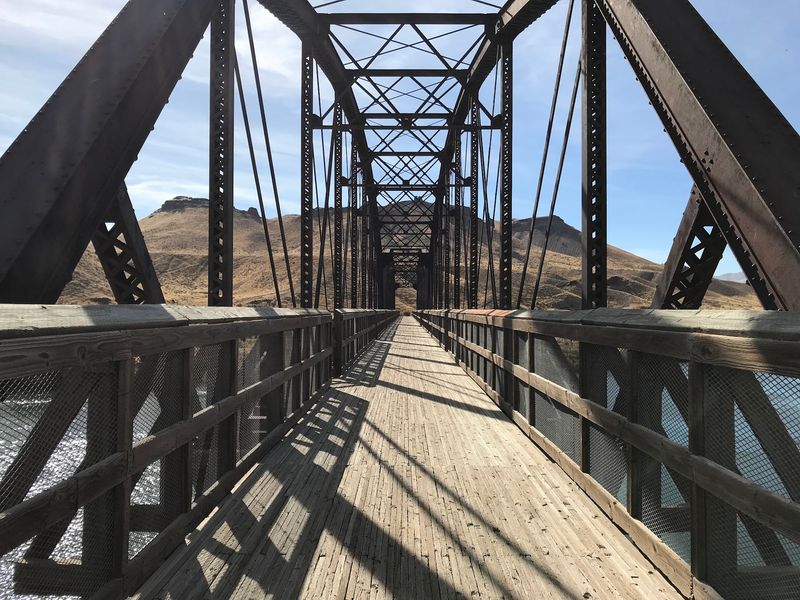
Back in 1897, trains rumbled over the Snake River here carrying ore from the Owyhee mining country. Today the only traffic is footsteps, bikes and the occasional horse.
The Guffey Railroad Bridge is a steel Parker through-truss design. It stretches about 500 feet across the water and stands roughly 70 feet high.
It nearly didn’t make it. The bridge was saved from demolition in the 1970s and landed on the National Register of Historic Places in 1978.
It’s often called Idaho’s largest historic artifact. That’s a fun claim to repeat while you’re literally standing on it.
The view from the middle is the real reward. The river slides beneath you, and the canyon opens up in both directions.
Crossing also unlocks more adventure. Additional trails wait on the far side, so the bridge works as both a landmark and a doorway.
Groups of students have been known to jog across it noisily. With enough feet pounding the deck, it’s easy to picture a locomotive chugging through again more than a century later.
The Ancient Hunting Tool You Can Actually Try
Bows and arrows are newcomers in the long story of hunting. Long before them, people relied on a clever lever called the atlatl.
An atlatl is a spear-throwing tool that adds speed and distance to a long dart. Celebration Park has an atlatl range where visitors can give it a try.
It looks simple until you attempt it. The motion takes practice, and your first throw may wobble more than soar.
That’s part of the charm. Trying it yourself turns a dusty history lesson into something you feel in your arm and shoulder.
The range connects nicely to the petroglyphs nearby. Early people living along this river relied on skills like this, and the rock art reminds you they were here.
Kids especially tend to love a hands-on challenge. It beats reading a placard, and it makes great bragging material on the drive home.
Do keep your distance from the range when others are throwing. Darts fly faster than you’d expect, so stay behind the line and wait your turn like a patient hunter.
Trails That Follow The River Toward Halverson Lake
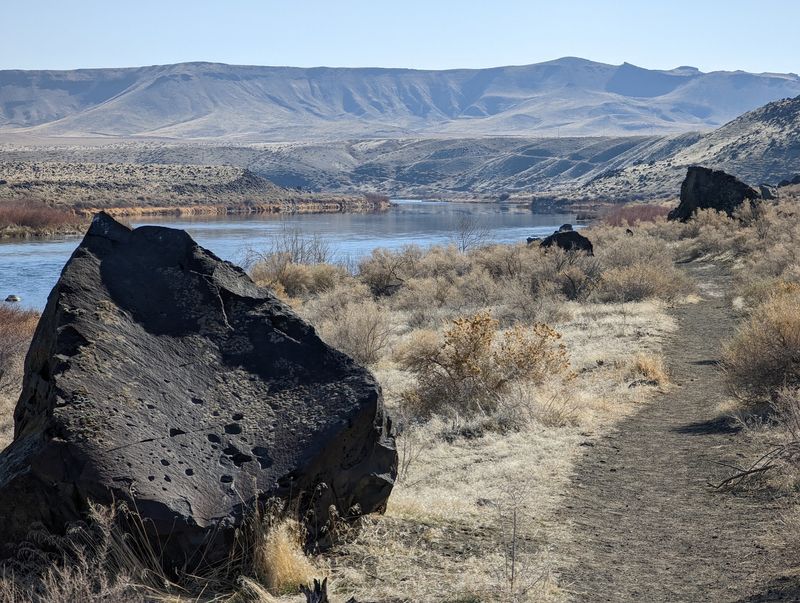
Lace up sturdy shoes, because the ground here is rocky and gravelly. The trails reward that effort with river views around nearly every bend.
Paths wind among the flood boulders, so rock art and hiking blend into the same outing. You never quite know which stone will hold a surprise.
A non-motorized trail follows the north bank of the Snake River upstream. It leads to Halverson Lake, a quieter pocket of water tucked among the rocks.
Longer routes stretch for miles in the direction of Swan Falls Dam. Pack water, since shade is scarce and the sun in this canyon means business.
Crossing the Guffey Bridge opens another network of trails. Many day-trippers run out of time before exploring both sides, which is a decent excuse to come back.
Dogs on leash can join the fun, and smaller pups seem to handle it just fine. Bring water for them too.
Wheelchair access is limited on these rough surfaces. Anyone with mobility concerns may want to stick closer to the visitor center area and the bridge approach.
Raptors Overhead And Pheasants Underfoot
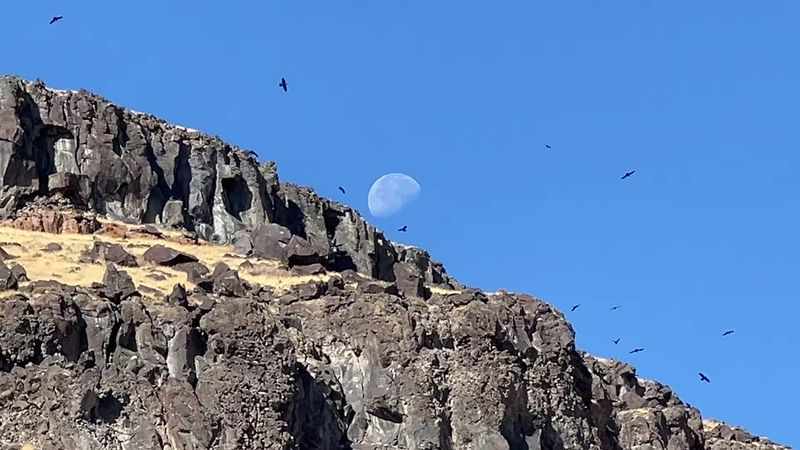
Keep an eye on the sky. Celebration Park sits on the western edge of the Morley Nelson Snake River Birds of Prey National Conservation Area.
That neighborhood is famous among bird watchers. The canyon cliffs and open desert support a remarkable concentration of nesting raptors.
Closer to the ground, the variety keeps going. Pheasants and plenty of other species show up along the river and in the brush.
Quiet mornings are prime time. The breeze carries birdsong across the water, and the river noise stays low and steady.
Binoculars make a huge difference here. If you forget yours, remember that the visitor center offers a rental bag that includes a pair.
Nearby, the Snake River Islands form part of the Deer Flat National Wildlife Refuge. That adds even more habitat for waterfowl and shorebirds to the area.
For photographers, the combination is tempting. Ancient rock art in the foreground and a hawk circling above might be the most Idaho picture possible.
Just be patient, because wildlife rarely follows anyone’s schedule, even on a perfect blue-sky afternoon.
Riverside Campsites With A Rustic Streak
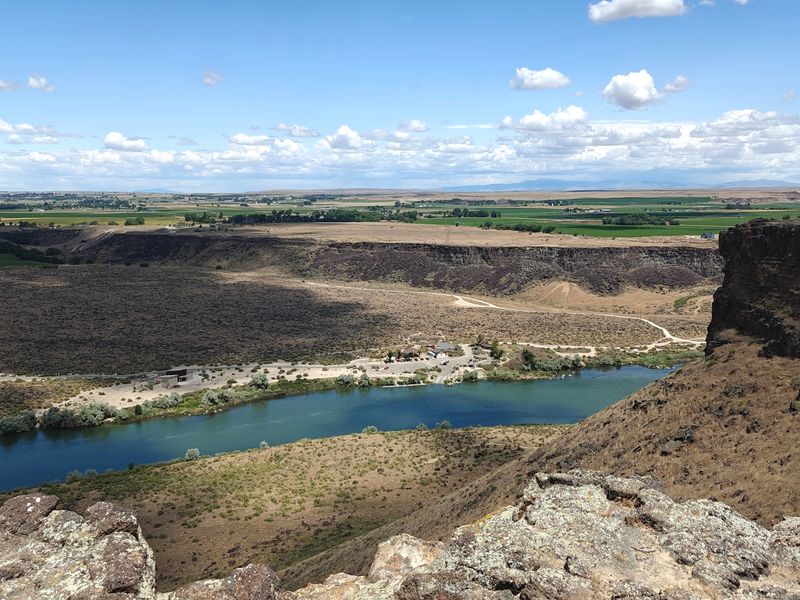
Want to stay overnight? Camping is available on a first-come, first-served basis, with a small nightly fee paid on the honor system.
Stays are limited to three days within a 30-day period. That keeps sites rotating for everyone hoping to grab a riverside spot.
Expect a primitive setup. There are no hookups, water lines or dump station for RVs, though the road is paved up to the start of the campsites.
Picnic tables and fire pits are part of the layout. Campfire rules can change with the season, so always read the posted signs.
Shade is hard to find, and the sites sit fairly close together. East side spots spread out more, while the west end runs tighter.
Nights can get windy along the river. Weekends may also bring livelier neighbors, so pick a site away from the boat launch if quiet matters.
Still, the payoff is real. Bright stars, the sound of the Snake River and clean desert air make a simple tent feel like a front-row seat to the canyon.
Know Before You Go, Including Cash For The Fee Box
Plug 5000 Victory Ln, Melba, ID 83641 into your map app and enjoy the drive. The route crosses farm country before dropping toward the river.
The park is open around the clock, every day of the year. Day use costs just a couple of dollars per vehicle, paid at fee boxes in the park.
Bring cash, since the system runs on paper and honesty. Guided tours, on the other hand, are free during visitor center hours.
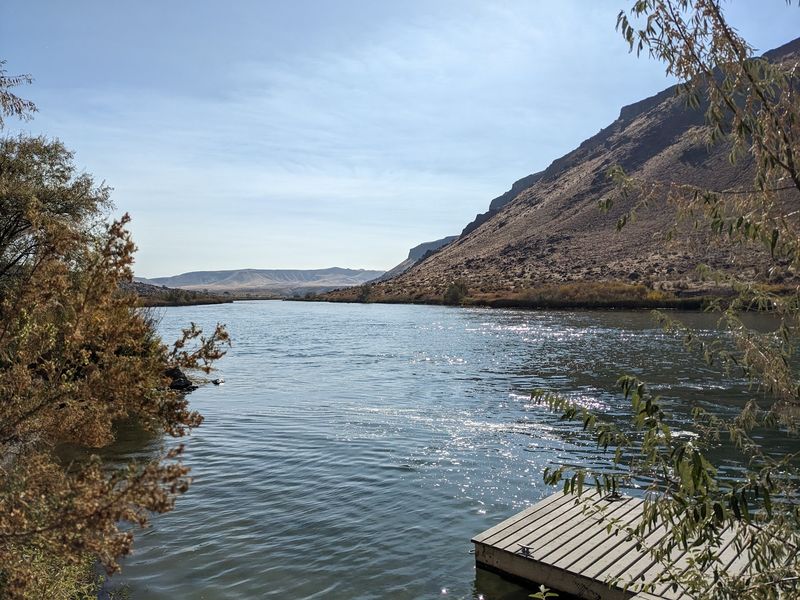
Fishing is popular along the banks and docks. Anglers will need a valid Idaho fishing license, of course.
The boat ramp has faced closures, and a maintenance shutdown is scheduled from late August into November 2026. Boaters should check before driving out.
Summer heat in this canyon is no joke. Carry plenty of water, wear sun protection and plan hikes for cooler morning hours.
Parking is generous, and restrooms are clean and easy to find. Spring and fall tend to be the friendliest seasons, though some school groups visit then too, so a weekday arrival can help.
Why This Riverside Gallery Deserves A Spot On Your Calendar
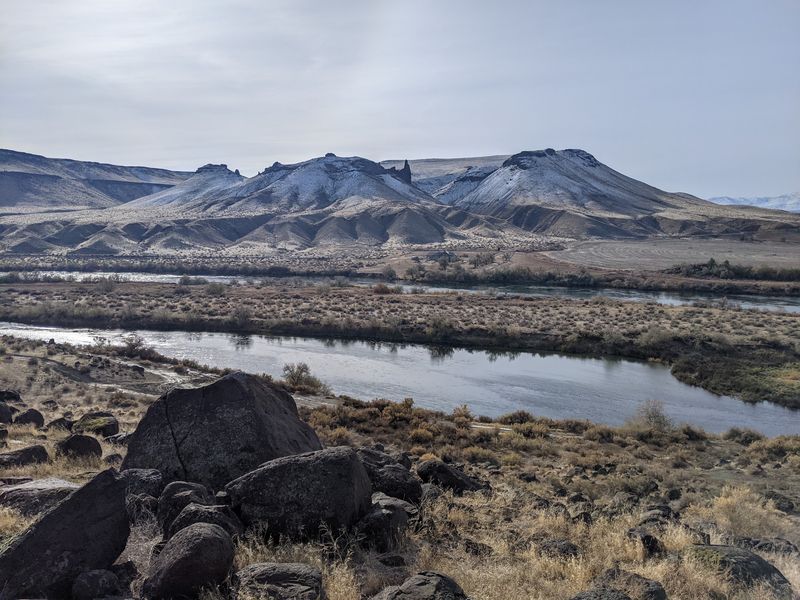
Few places pack this much story into a few square miles. In one visit, you can trace an ice age flood, ancient artists and a gold-rush railroad.
Celebration Park doesn’t try to dazzle with gift shops or flashy exhibits. It lets the boulders, the bridge and the river carry the experience.
That simplicity is the appeal. You set your own pace, wander where you like and linger wherever a carving grabs your attention.
History buffs will be happy. So will hikers, anglers, bird watchers and kids eager to fling an atlatl dart.
Still craving rock art afterward? Map Rock sits nearby, and Wees Bar holds more carvings for those willing to make a longer trek.
Treat the place kindly while you’re there. Pack out your trash, stay on trails and leave every petroglyph exactly as you found it.
Southwest Idaho has plenty of scenic spots, but few let you stand where people stood thousands of years ago. That feeling sticks with you, long after the dust washes off your boots and the river sounds fade behind you.