9 Arizona Fossil Sites Where You Can Still Find Ancient Seashells
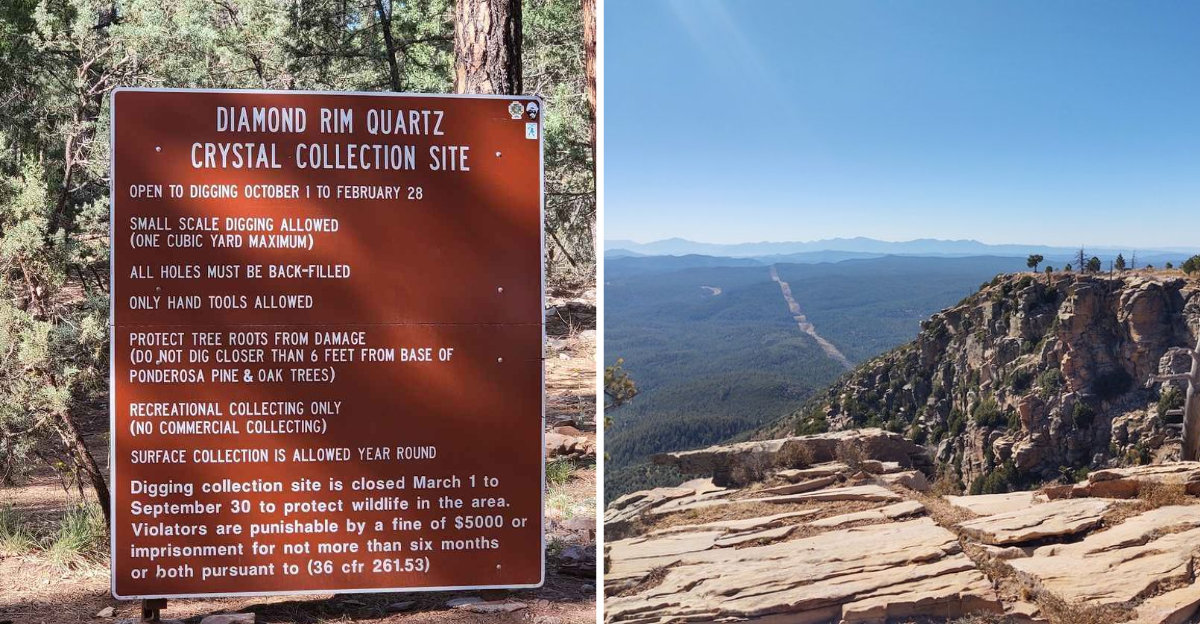
The desert wasn’t always a desert. Millions of years ago, waves rolled across the very ground where giant cacti now stand.
That incredible history still hides in plain sight throughout Arizona, where ancient seashells, coral, and marine fossils remain locked inside rocky hillsides and canyon walls.
Once you know what you’re looking for, the landscape starts telling a completely different story. Every stop feels like opening a page from Earth’s distant past.
It’s strange. It’s fascinating.
And it’s surprisingly easy to imagine tropical waters stretching across places that now seem impossibly dry.
1. Paleo Site Monument, Payson
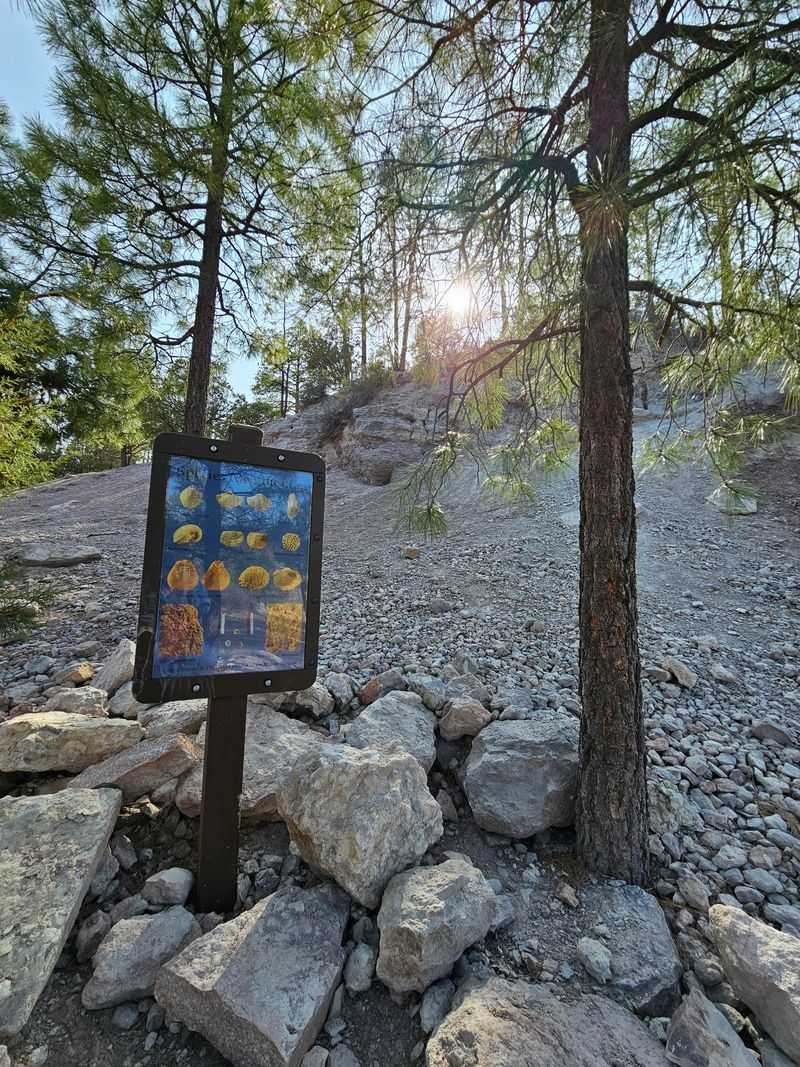
This might be the easiest ancient ocean you will ever stand on.
The Paleo Site Monument sits right along AZ-260, about 12 to 15 miles east of Payson making it one of the most accessible fossil stops in the entire state.
Around 300 million years ago, this exact stretch of highway was submerged beneath a shallow Pennsylvanian sea.
Layers of shale and limestone here hold a remarkable lineup of ancient marine life. You can spot bivalves that look surprisingly like modern clams, delicate worm tubes pressed flat into gray rock, and tiny mollusk impressions etched by time.
Brachiopods, ancient corals, and segmented crinoid stems are also scattered through the lighter-colored rock layers near the bluff.
Some sharp-eyed explorers have even traced faint trilobite ridges in the stone. The flat sections near the informational sign are worth checking, not just the dramatic cliff faces.
Casual collecting of invertebrate and plant fossils is generally allowed here for personal use, with no permit required.
Bring a small brush or a gentle hand tool to carefully sweep away loose debris before you dig deeper. This roadside gem is genuinely family-friendly, welcoming both total beginners and seasoned fossil hunters.
Few places let you connect so directly with a 300-million-year-old seafloor without breaking a sweat. The Paleo Site Monument, located off AZ-260 near Payson, is the kind of stop that turns an ordinary road trip into something genuinely unforgettable.
2. Petrified Forest National Park
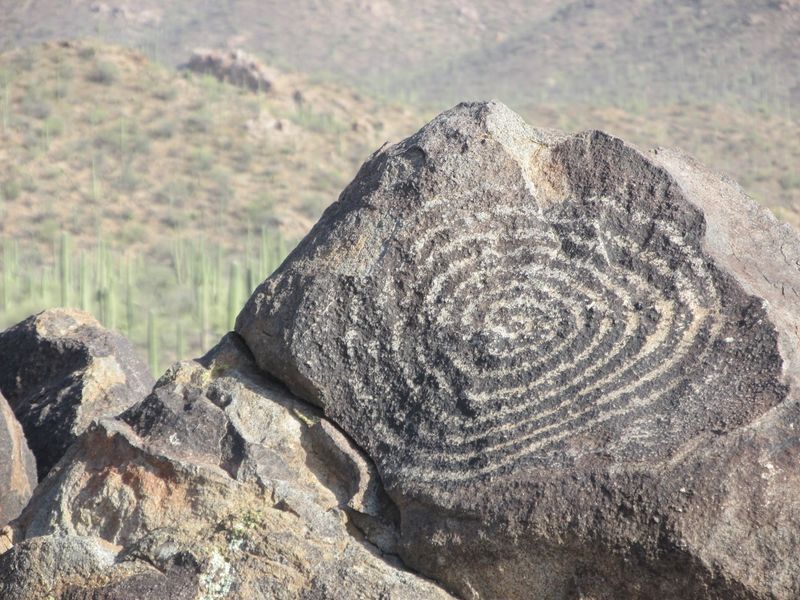
Are you seeing what I am seeing? A national park famous for stone logs actually holds ancient marine fossils hiding inside those painted badlands.
Petrified Forest National Park is one of the most visually stunning geological sites in the American Southwest. The park preserves the Late Triassic Period, roughly 228 to 208 million years ago, when this region was a lush, low-lying basin near the ancient equator.
Within the park’s Chinle Formation, paleontologists have uncovered fossilized clams, snails, fish, and even ancient crayfish that once thrived in rivers and ponds crisscrossing the landscape.
These aquatic creatures paint a portrait of an ecosystem wildly different from the arid scenery you see today. The famous petrified logs themselves formed when massive trees were buried in sediment and slowly replaced by silica-rich minerals over millions of years.
Alongside the wood, fossils of early dinosaurs, amphibians, and armored reptiles round out the picture of a surprisingly busy ancient world.
The Painted Desert portion of the park displays breathtaking bands of orange, gold, white, and purple, adding a visual layer to every fossil hunt. Every rock face here is essentially a page in a very old book.
Keep in mind that all fossils inside Petrified Forest National Park are federally protected. Removing even a pebble is illegal, so bring a camera and a sketchbook instead.
The park entrance is along US-40 in northeastern Arizona, easily reachable from both Flagstaff and Albuquerque.
3. Grand Canyon National Park, Bright Angel Trail / Kaibab Limestone
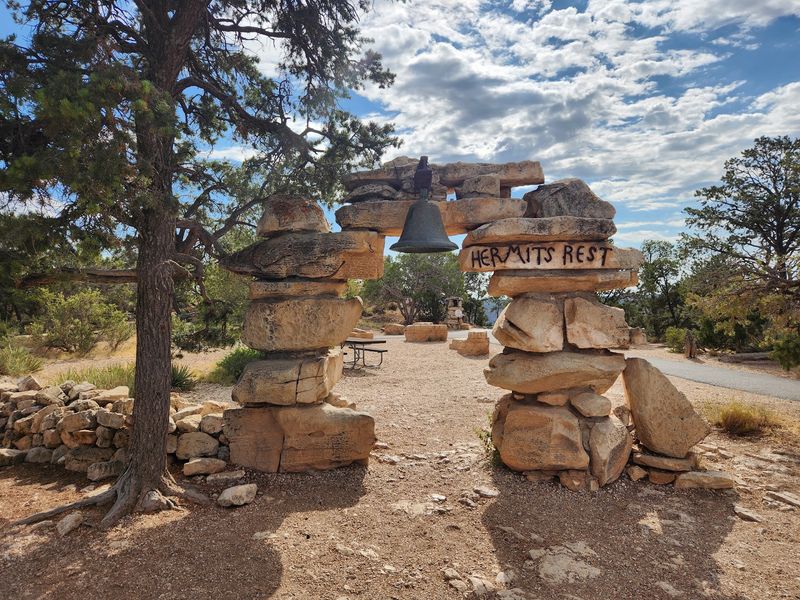
I had to do a double-take the first time I realized the very rim I was standing on was once the bottom of a Permian sea.
Grand Canyon National Park, near Grand Canyon Village is far more than a jaw-dropping scenic overlook.
The Kaibab Limestone forming both the South and North Rims dates back roughly 270 to 275 million years, preserving an extraordinary record of shallow marine life.
Walking the Bright Angel Trail gives you a front-row seat to this geological timeline. Embedded in the pale gray Kaibab Limestone are brachiopods, coiled nautiloid cephalopods, and various ancient sponges.
Look for crinoids, which appear as small, round, cheerio-shaped discs pressed into the rock surface along the trail edges.
Descend a little further and the Bright Angel Shale layer reveals trilobites from 525 to 505 million years ago, some of the oldest animal fossils accessible by foot in the canyon.
The Redwall Limestone further down adds lacy bryozoans and more nautiloid impressions to the collection. Each rock layer represents an entirely different ocean chapter.
Collecting fossils inside Grand Canyon National Park is strictly prohibited by federal law, so photograph everything and leave it exactly where you found it.
The experience of reading 270 million years of ocean history written into canyon walls is genuinely priceless. Grand Canyon Village serves as the main hub for South Rim access, with the Bright Angel Trailhead just steps from the historic lodge.
4. Winkleman Roadcuts (Naco Group), Along AZ-77, Winkleman
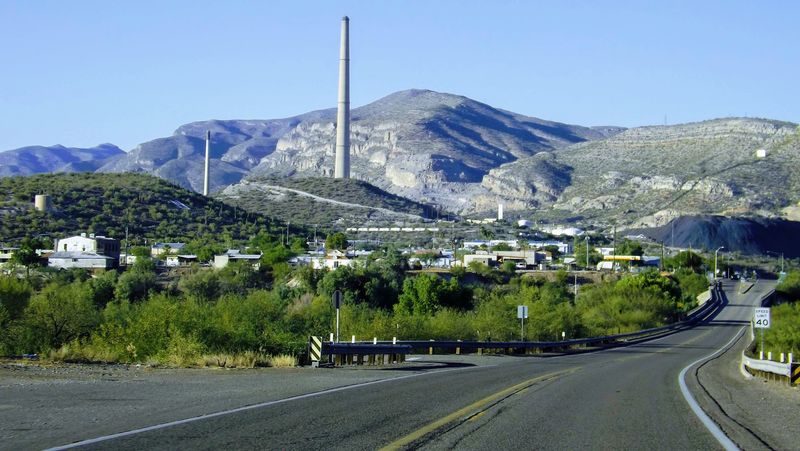
The Winkelman Roadcuts stretch along AZ-77 near the small town of Winkelman in Pinal County, and they are an absolute treasure chest for anyone who knows where to look.
The exposed Naco Group limestone here represents Pennsylvanian-period marine deposits, dating back roughly 300 million years.
These multicolored cliffs rise dramatically from the roadside, revealing hundreds of feet of layered geological history.
Crinoid stems are among the most common finds, some impressively large, their circular cross-sections clearly visible in the cut rock faces.
Numerous brachiopods also appear throughout the layers, including small Spirifer varieties and larger, heart-shaped specimens that practically glow in the desert light.
Red chertized fossils are a distinctive feature of this site, giving the specimens a striking color contrast against the surrounding gray limestone.
Occasional trilobites add a rare thrill to the search, and violet-hued limestone matrices sometimes reveal ancient worm burrow trace fossils.
The old quarry located about one mile north of the Winkelman turnoff on the north side of the road is considered the richest collecting zone.
Boulders that have tumbled from the cliff faces below are also worth examining carefully.
The sheer variety of marine invertebrates here, combined with the dramatic roadcut scenery, makes this stretch of AZ-77 near Winkelman one of the most underrated fossil sites in all of Arizona.
5. Bingham Ranch / Redington Site, Redington Rd, Near Tucson
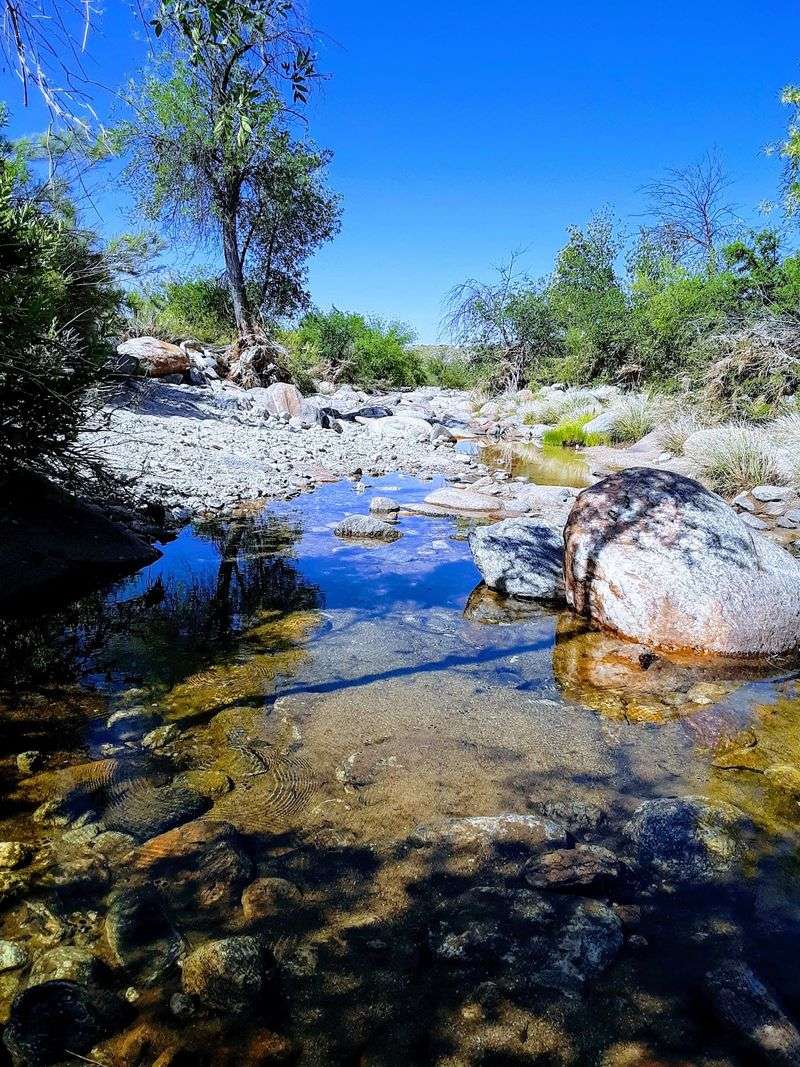
It makes you wonder, doesn’t it, how a ranch road east of Tucson could quietly sit on top of millions of years of ocean history?
The Bingham Ranch and Redington Site, located along Redington Road east of Tucson is recognized among geologists as a documented marine fossil locality.
The broader Paleozoic formations threading through this part of Southern Arizona are extraordinarily rich in ancient marine invertebrates.
Diverse brachiopods, spiraling gastropods, and bivalves once thrived in expansive shallow seas that covered this region hundreds of millions of years ago.
Picture vast underwater landscapes where cephalopods glided through warm currents, intricate corals built towering reef structures, and trilobites scuttled busily across the muddy seafloor.
These organisms left behind the rock layers that now form the mountains and valleys you drive through today.
The geology along Redington Road speaks to a staggering timeline of deposition and tectonic change. The Santa Catalina Mountains nearby contain metamorphic and sedimentary rocks that carry evidence of multiple ancient marine environments.
Exploring this general area offers a deeply satisfying way to connect with this state’s geological past on a personal level.
Public access details and collecting regulations for this specific locality are limited, so contacting the Bureau of Land Management Tucson Field Office before your trip is always a smart move.
The surrounding Sonoran Desert scenery makes the drive worthwhile on its own. The Bingham Ranch and Redington Site area is accessible via Redington Road, heading northeast from Tucson toward the Rincon Mountains.
6. Empire Mountains And Santa Rita Mountains, Near Sonoita/Vail
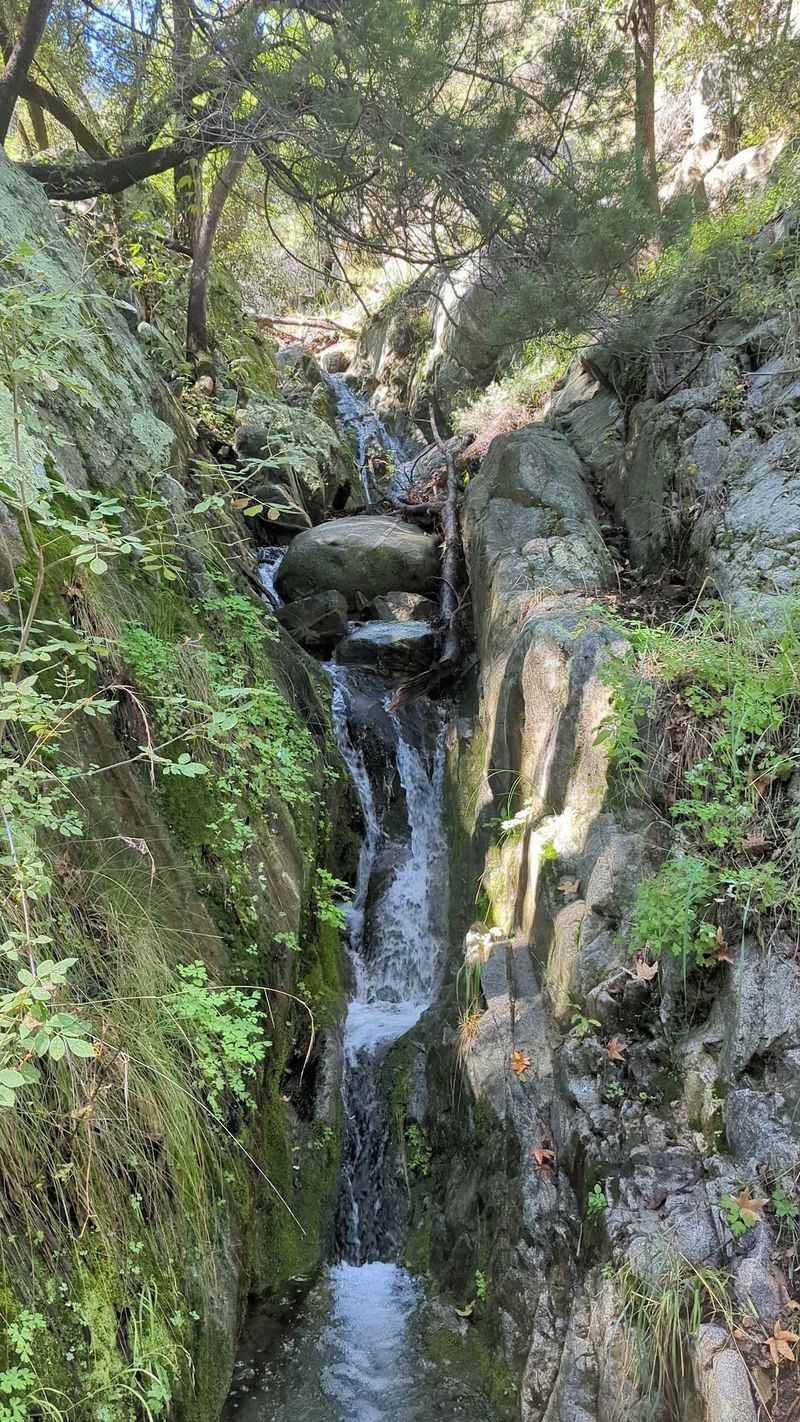
Let’s look at it from this angle: two mountain ranges rising above the grasslands of southern Arizona hold more prehistoric ocean secrets than most people ever realize.
The Empire Mountains and Santa Rita Mountains, located near the communities of Sonoita and Vail in Pima County, are geological libraries stacked with Paleozoic marine fossils.
These ranges contain extensive rock formations spanning multiple prehistoric periods, each layer telling a different ocean story.
Trilobites, those armored segmented arthropods that ruled the seafloor for nearly 270 million years, have been found within these formations.
Brachiopods appear in impressive numbers across multiple rock units, reflecting how abundant they were in the ancient seas.
Beautifully preserved corals, including tabulate and rugose varieties from Devonian-age strata, hint at once-thriving underwater reef communities.
Mississippian-age rocks in the area add spiriferid and productid brachiopod species to the roster, giving the fossil record here a remarkable depth and diversity.
Stromatoporoids, which are sponge-like reef builders, also appear within certain Devonian layers, rounding out the picture of a complex ancient marine ecosystem.
The variety of fossils across different geological periods makes this region feel like a multi-chapter story carved in stone.
The dramatic mountain scenery, with sweeping grassland valleys below and rocky ridges above, only sharpens the sense of discovery at every turn.
Always check with the relevant land management agency before collecting, as regulations vary by specific parcel.
7. Happy Jack, Kaibab Limestone, Coconino County, Along The Mogollon Rim
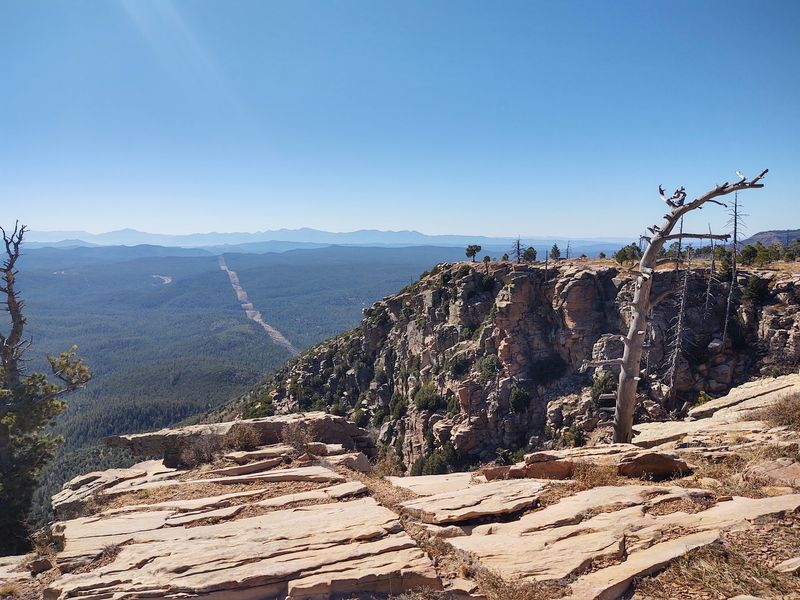
Correct me if I am wrong, but finding ancient seashells tucked inside a ponderosa pine forest at 7,000 feet sounds like one of Arizona’s best kept secrets.
Near the small community of Happy Jack in Coconino County, along the dramatic Mogollon Rim, the Kaibab Limestone surfaces in a cool, forested setting that feels completely unlike the classic desert fossil hunt.
This Permian-age limestone, approximately 270 million years old, preserves the remains of a warm shallow sea that once blanketed central Arizona.
Brachiopods are the stars of the show here, appearing as ribbed, clamshell-like impressions pressed into pale gray stone.
Some of the specimens recovered from this area are significant enough to be held in institutional collections, which speaks to their quality and preservation.
Ancient corals also turn up with some regularity, suggesting that reef communities once flourished in these Permian waters.
The tectonic uplift that created the Mogollon Rim essentially cracked open the geological record and pushed these seafloor layers up to eye level. That dramatic geological event is the reason modern hikers can now walk across what was once an ancient ocean bottom.
The high-elevation setting adds a refreshing twist to the fossil hunting experience, especially during the state’s scorching summer months.
The forest roads and trails near Happy Jack offer a peaceful, uncrowded atmosphere that is a genuine contrast to busier fossil sites in the state.
8. Kaibab National Forest
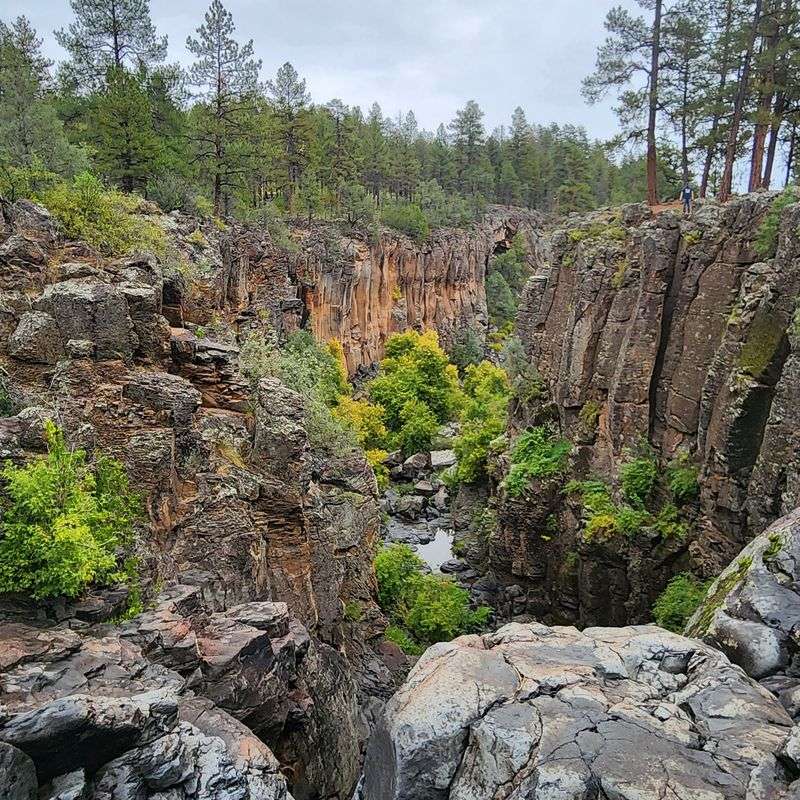
Just imagine stumbling across an ancient seafloor in the middle of a sprawling national forest, miles from the nearest tourist crowd.
Near Fredonia in northern Arizona, the Kaibab National Forest contains some of the most extensive Kaibab Limestone exposures in the entire state, particularly on the North Rim side of the Colorado Plateau.
This Permian-age formation, dating from roughly 250 to 270 million years ago, is a remarkably well-preserved record of a once-bustling shallow marine environment.
Brachiopods appear here in impressive variety, often distinctively shaped and well-preserved within the pale limestone matrix.
Intricate bryozoans, those lacy colonial filter feeders, are another common find, their delicate fan-like structures surprisingly intact after hundreds of millions of years.
Crinoids and various gastropods round out the mix, offering a broad snapshot of the diverse creatures that called this ancient sea home.
Silicified sponges and even ancient shark teeth have been identified within these limestone layers, adding an element of genuine surprise to every outing.
The relatively undisturbed nature of this area means the fossil density can be surprisingly high in the right outcrops.
Casual collecting of common invertebrate fossils for personal, non-commercial use is generally permitted on Kaibab National Forest lands, but regulations should always be confirmed with the local forest office before you head out.
The forest itself is beautiful and peaceful, with open meadows and ponderosa pines creating a serene backdrop for a day of geological exploration.
9. Diamond Point Fossil Collecting Area
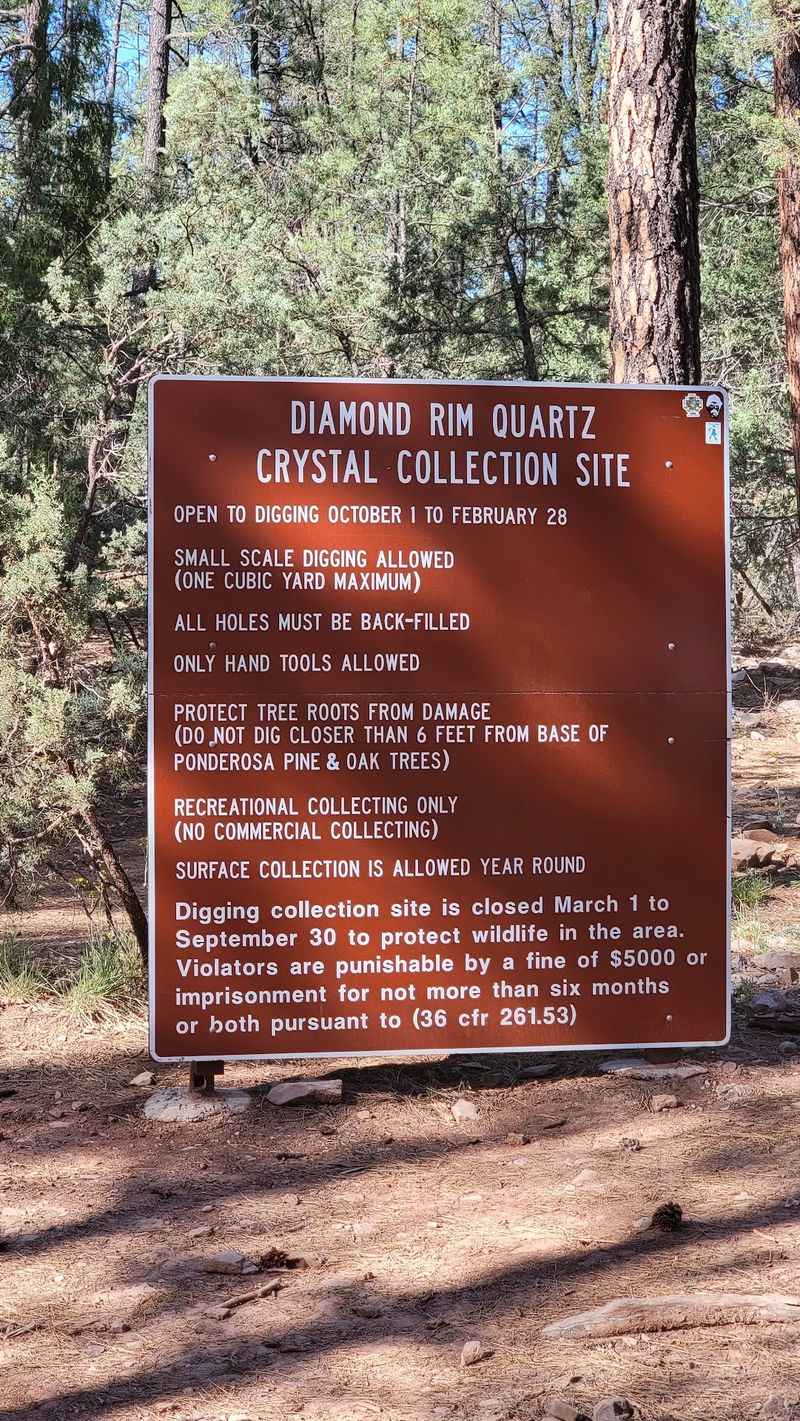
Sounds too good to be true, but there really is a place near Payson where you can hunt for sparkling quartz crystals and ancient marine fossils on the very same afternoon.
Diamond Point Fossil Collecting Area, tucked inside the Tonto National Forest near Payson is a beloved destination for rockhounds who want more than just pretty rocks.
The Devonian Martin Limestone exposed here formed roughly 375 million years ago, when this high-desert terrain was a warm, shallow seabed.
Fossilized coral is among the most frequently discovered finds, often appearing in chunky, cylindrical sections that are unmistakable once you know what to look for.
Brachiopods, bivalves, fenestrate bryozoans, spiriferoides, and crinoid stems all appear with satisfying regularity across the limestone outcrops. The variety keeps every visit feeling fresh, because no two rocks ever look quite the same.
The namesake treasures of this area are the clear quartz crystals, nicknamed Payson Diamonds, which formed inside pockets within the limestone as groundwater deposited silica over millions of years.
Erosion has gradually exposed these crystals and fossils near the surface, making them accessible without heavy digging equipment. That combination of glittering crystals and prehistoric ocean life in one location is genuinely hard to beat.
Always fill in any holes you dig before leaving, as good trail stewardship keeps this site open and enjoyable for everyone who follows.
To reach Diamond Point, take Fire Control Road NF-64 and connect to NF-65 through Tonto National Forest, northeast of Payson. The pine forest setting makes this one of the state’s most rewarding and scenic collecting experiences.