14 Breathtaking Waterfalls In California That Will Leave You Speechless This Spring
The sound reaches you before the view does. A steady rush builds in the distance, growing louder with every step until the landscape suddenly opens and the water takes over. Spring has a way of turning ordinary trails into something far more dramatic.
This is when waterfalls hit their peak across California. Snowmelt pushes through rivers and over cliffs, filling canyons with movement and mist that lingers in the air.
The difference is noticeable almost immediately, with trails that feel more alive and views that carry a kind of energy you don’t get later in the year.
There’s a moment when the hike stops being about the distance and becomes about the payoff. Some falls appear after a short walk, others require a bit more effort, but the result tends to feel worth it either way.
California in spring makes this kind of experience easy to chase, with waterfalls that range from well-known landmarks to quieter spots that feel like a discovery.
1. Vernal Fall, Yosemite National Park
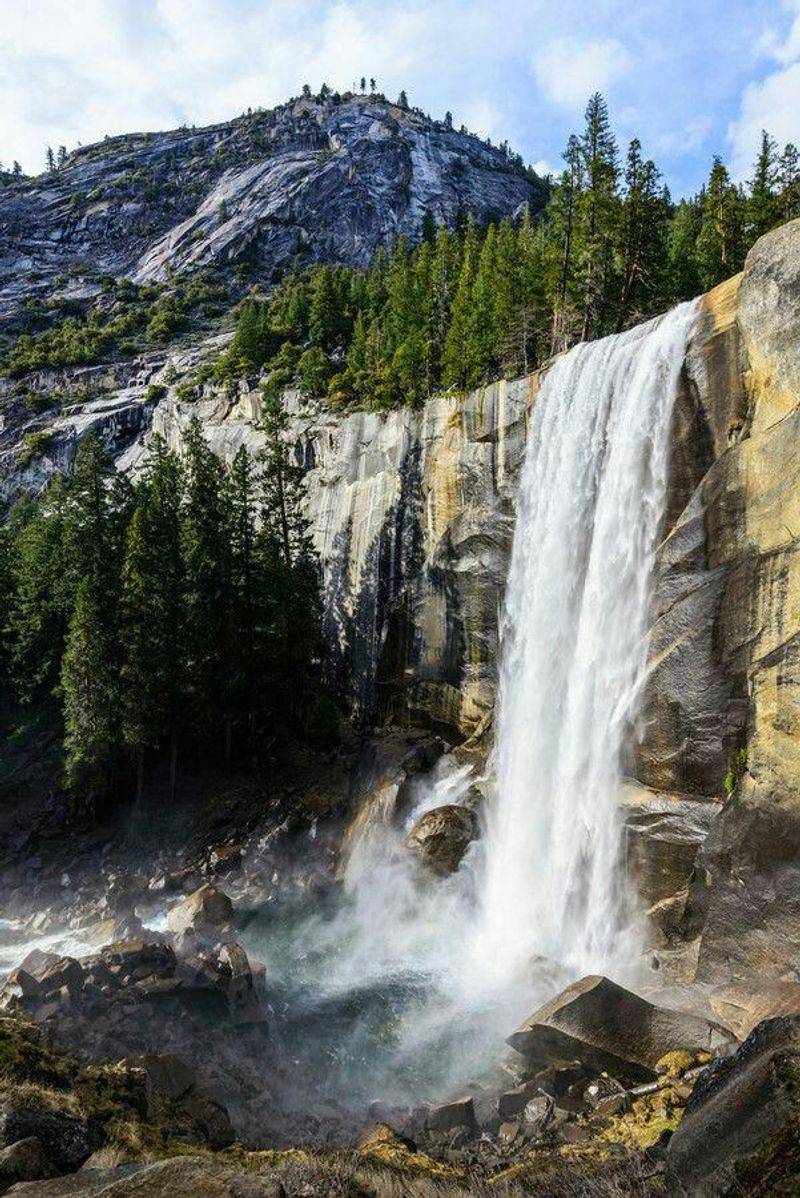
Standing at 317 feet tall, Vernal Fall is one of the most dramatic and accessible waterfalls in all of Yosemite National Park.
The Mist Trail leads hikers up a steep series of granite steps that hug the cliff face, and by the time the falls come into full view, the roar of the water is impossible to ignore.
Spring runoff from the high Sierra snowpack sends water surging over the lip of the fall in full force, creating a mist so thick that rain gear is genuinely useful here.
The trail to the top of Vernal Fall is roughly 3 miles round trip from the Happy Isles trailhead.
Elevation gain is significant, so pacing is important, especially for younger hikers or those not used to steep terrain.
The granite steps can be slippery when wet, so trail shoes with solid grip are a smart choice. Reaching the top rewards hikers with a view of the Merced River rushing toward the edge of the cliff.
The surrounding valley opens up beautifully from this vantage point. Arriving early in the morning helps avoid the heaviest crowds, particularly on weekends during peak spring season.
2. Rainbow Falls, Mammoth Lakes
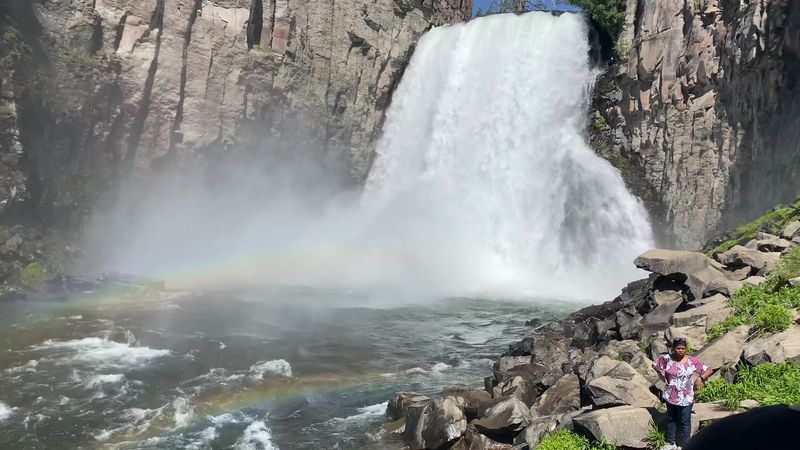
Few waterfalls in California offer the kind of visual magic that Rainbow Falls delivers on a clear sunny day.
Located within Devils Postpile National Monument near Mammoth Lakes, the falls drop 101 feet over a dark volcanic cliff into a wide, churning pool below.
When sunlight hits the mist at just the right angle around midday, a vivid rainbow forms in the spray, which is exactly how the falls earned their name.
Access to the monument during summer typically requires a shuttle from the Mammoth Mountain Adventure Center, as private vehicles are restricted during peak season.
The hike from Rainbow Falls trailhead to the base of the falls is roughly 1 mile each way and is considered moderate in difficulty.
Spring visits may require checking road and shuttle availability, as access can be limited depending on snowpack conditions.
The volcanic rock columns of Devils Postpile are visible from the trail, adding an unusual geological backdrop to the journey.
The pool at the base of the falls tends to feel cool and refreshing even on warm days. Bringing a light jacket is a good idea since the mist can make the air feel noticeably colder near the falls.
3. Burney Falls, Burney
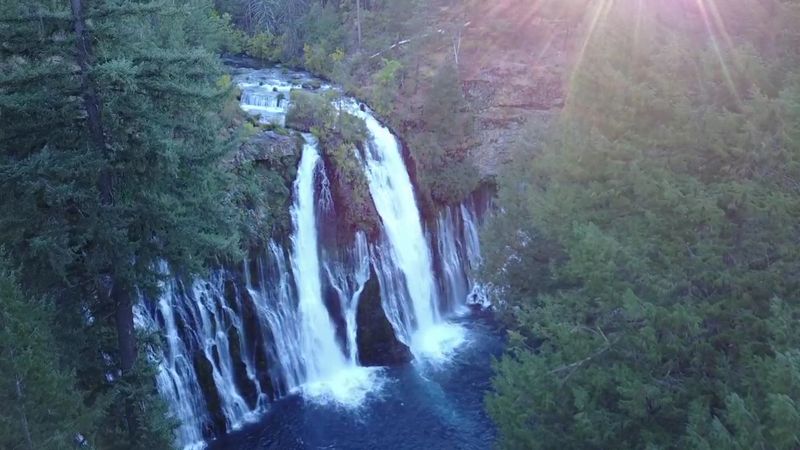
Called the Eighth Wonder of the World by President Theodore Roosevelt, Burney Falls has a reputation that holds up the moment it comes into view.
Located inside McArthur-Burney Falls Memorial State Park near the town of Burney, the falls drop 129 feet in a wide, billowing curtain of white water.
What makes Burney Falls unusual is that much of the water seeps directly through the porous volcanic rock surrounding the main drop, creating a layered, multi-stream effect that looks almost otherworldly.
The park sits at McArthur-Burney Falls Memorial State Park, 24898 CA-89, Burney, CA 96013, and is open year-round, which makes it one of the more reliable waterfall destinations in northern California regardless of season.
The flow here stays relatively consistent because it is fed largely by underground springs rather than relying solely on snowmelt or rainfall.
A short loop trail descends to the base of the falls and continues along Burney Creek, offering multiple viewing angles and a chance to feel the cool spray up close.
The turquoise pool at the base is visually stunning and tends to photograph beautifully in morning light. Picnic areas within the park make it easy to turn the visit into a full afternoon outing.
4. Berry Creek Falls, Boulder Creek
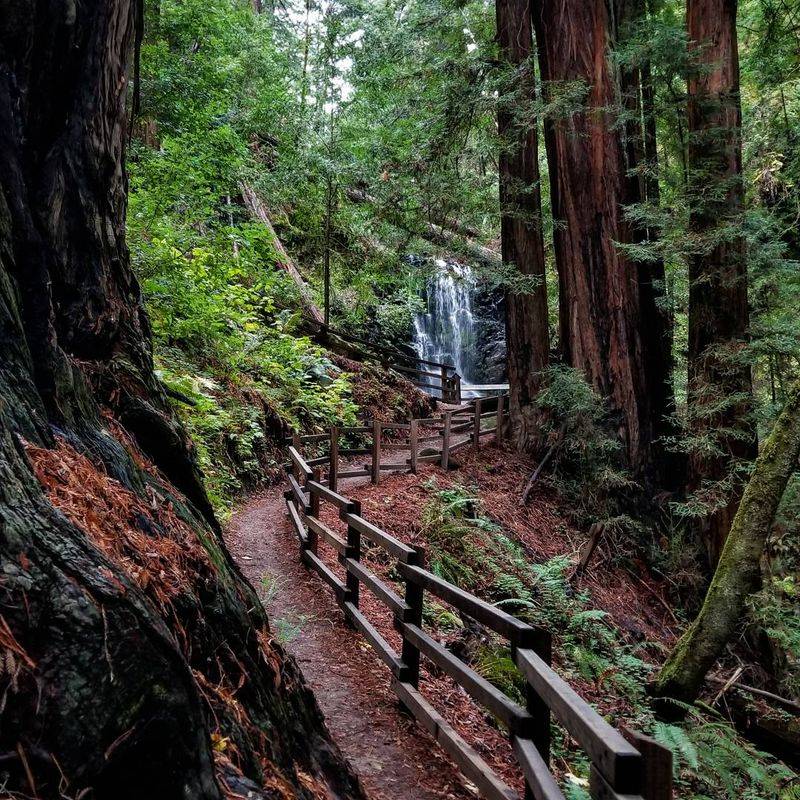
Tucked deep inside Big Basin Redwoods State Park, Berry Creek Falls rewards hikers with one of the most serene waterfall settings in the Santa Cruz Mountains.
The falls drop roughly 70 feet through a narrow redwood canyon, and the sound of the water echoes off towering trees that have stood for centuries.
Getting there requires a commitment, as the round trip from park headquarters covers about 10 to 12 miles depending on the route chosen.
Big Basin has been undergoing restoration following significant wildfire damage in 2020, and trail access has been gradually reopening in phases.
Checking current conditions with California State Parks before visiting is strongly recommended to confirm which trails are accessible.
Some routes that previously led to Berry Creek Falls may still be restricted or rerouted.
For those able to reach the falls, the experience feels genuinely remote despite being within a few hours of the Bay Area.
The canyon walls are draped in ferns and moss, and the light filters through the redwood canopy in soft, dappled patterns.
A secondary tier called Golden Falls sits just above Berry Creek Falls and is worth the extra few minutes of walking for the contrast in color and texture between the two drops.
5. Feather Falls, Oroville
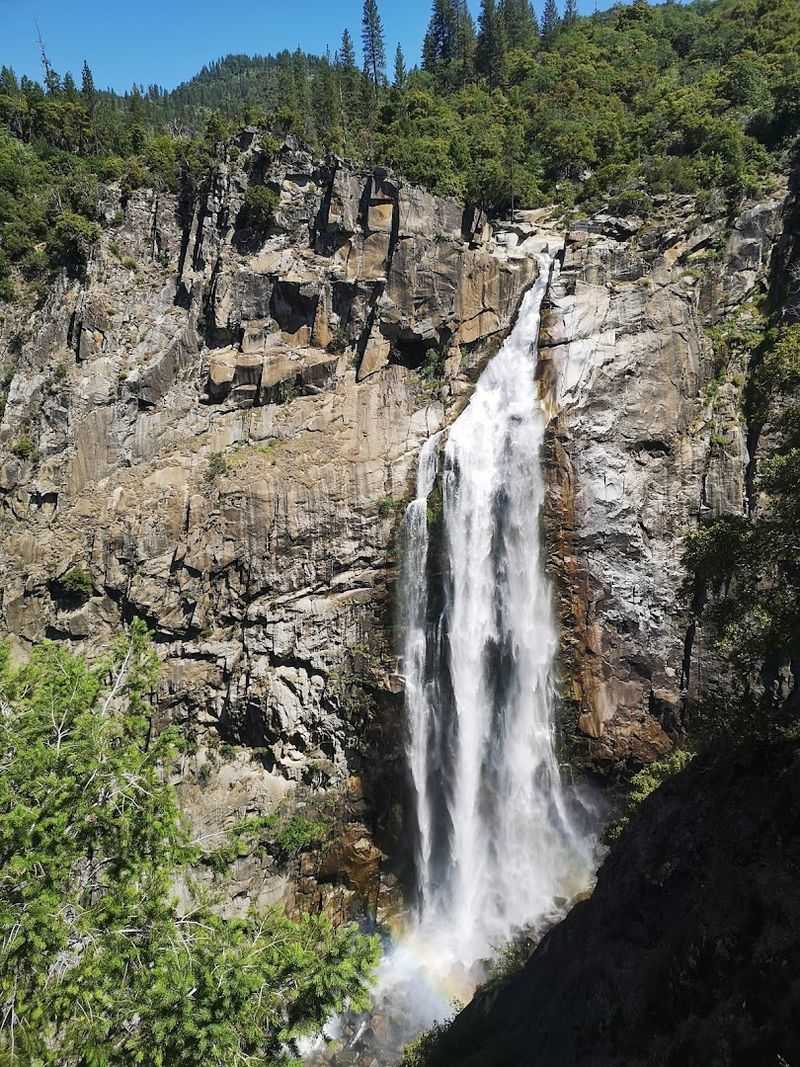
At 640 feet, Feather Falls ranks among the tallest free-leaping waterfalls in the entire United States, yet it remains far less crowded than many of California’s more famous falls.
The hike to reach it covers roughly 8 to 9 miles round trip through a mix of oak woodland and canyon terrain within the Plumas National Forest near Oroville.
The trail is well-marked and manageable for most hikers in reasonable physical condition, though the total distance means an early start is a good idea.
Spring is arguably the best time to visit because snowmelt from the surrounding mountains pushes the Fall River to its highest volume, sending the most dramatic flow over the edge.
A viewing platform near the base of the falls puts visitors at a close and slightly elevated vantage point that frames the full height of the drop impressively.
The platform can get slippery from mist, so careful footing matters. Wildlife is commonly spotted along the trail, including deer and a variety of bird species.
Carrying plenty of water is essential since there are no services along the trail.
The parking area off Lumpkin Road is where most hikers begin, and arriving before 9 a.m. on weekends tends to secure a spot without much difficulty.
6. Phantom Falls, Oroville
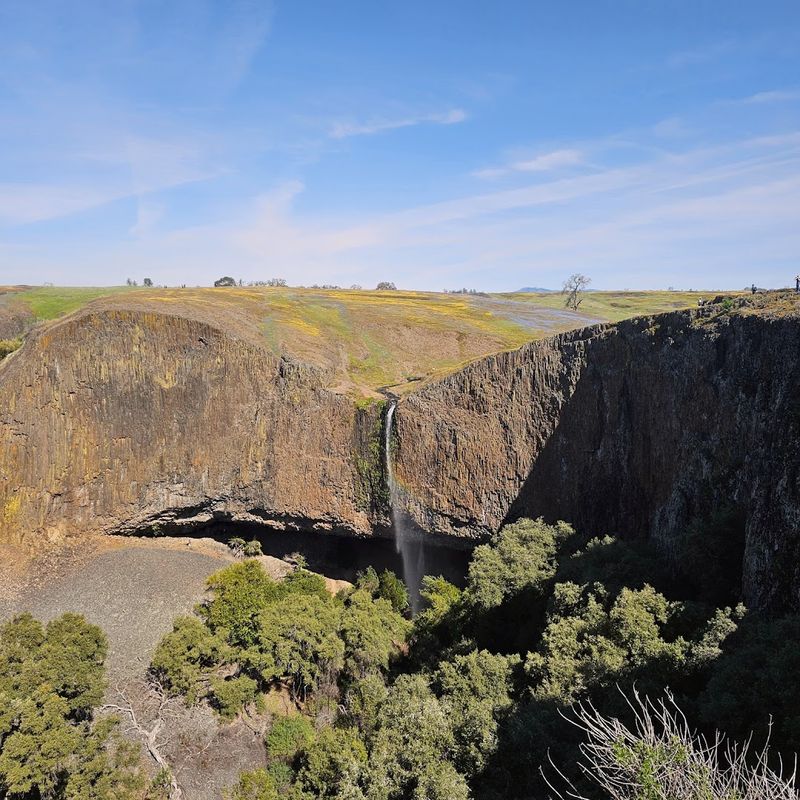
Phantom Falls lives up to its mysterious name in more ways than one.
Located on the Table Mountain plateau near Oroville, the falls only exist during the wet season, typically from late winter through early spring, and can disappear entirely by late April or May depending on rainfall.
When active, the water drops roughly 150 feet into a deep canyon carved through ancient basalt, and the surrounding plateau blooms with wildflowers that make the landscape feel almost surreal.
The hike to reach Phantom Falls covers about 5 miles round trip and is rated moderate, with some exposed sections along the canyon rim that require attention near the edge.
Trail conditions can vary significantly based on recent rainfall, and the path can become muddy and slick after storms.
Wearing waterproof boots and checking recent trail reports before heading out is a practical move.
Spring weekends draw a noticeable number of visitors to this area, partly because the wildflower bloom on Table Mountain is itself a draw beyond just the waterfall.
Arriving on a weekday or early on weekend mornings generally means a quieter experience.
The combination of basalt columns, open plateau views, and the ephemeral falls creates a setting unlike most other waterfall hikes in northern California.
7. Table Mountain Waterfalls, Oroville
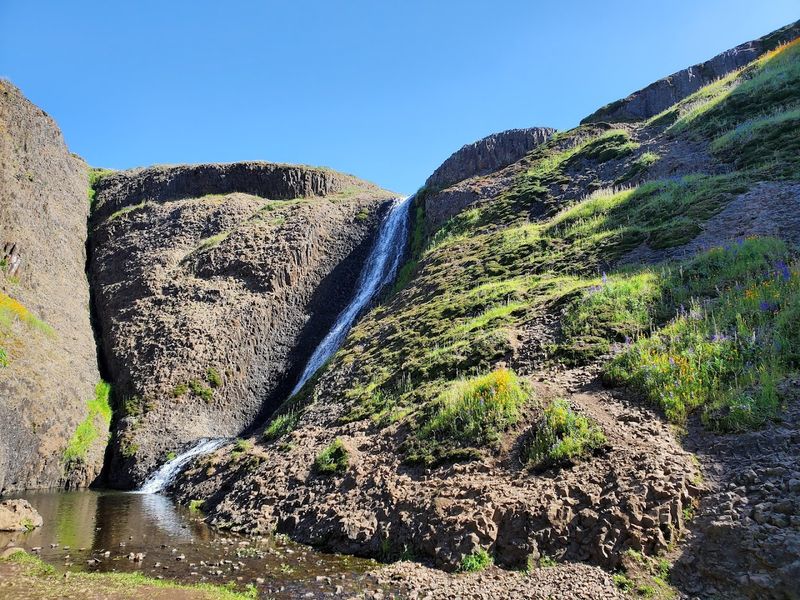
Table Mountain near Oroville is a geological oddity that becomes a visual spectacle every spring.
The flat basalt plateau, formed by ancient lava flows, collects seasonal rainfall and snowmelt that eventually spills over its edges in multiple places, creating a series of temporary waterfalls that frame the mesa dramatically.
The combination of dark volcanic rock, green grass, and blooming wildflowers in shades of orange and yellow makes the plateau one of the most photogenic landscapes in northern California during March and April.
Several of the waterfalls along Table Mountain’s rim are viewable from trails that run along the plateau and canyon edges.
The Cherokee Road area provides one of the more accessible entry points for exploring the plateau on foot.
Trail distances vary depending on how far along the rim a visitor chooses to walk, but even a short walk from the parking area reveals impressive canyon views and active seasonal falls.
The wildflower season on Table Mountain can peak quickly, so timing a visit between late February and early April tends to offer the best combination of flowing water and blooming color.
Crowds are noticeably smaller here compared to Yosemite or Big Sur, making it a solid choice for those who prefer a quieter outdoor experience.
Bringing a camera with a wide-angle lens helps capture both the falls and the surrounding landscape together.
8. Hidden Falls, Auburn
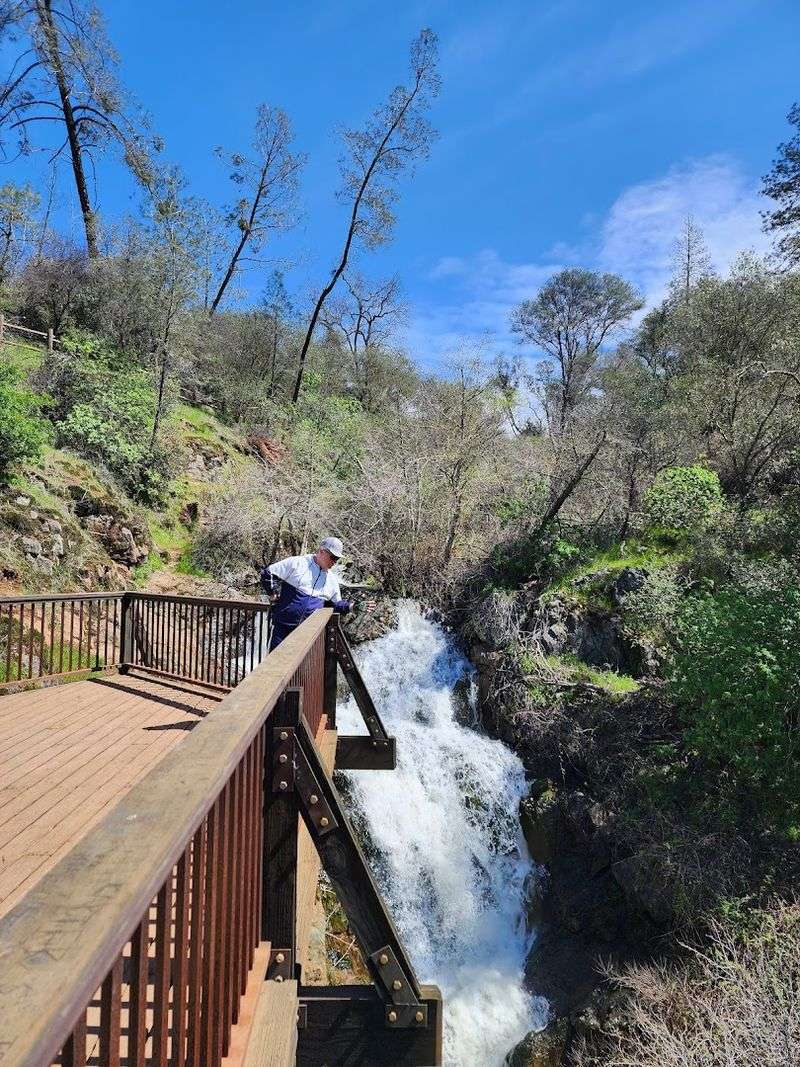
Hidden Falls Regional Park near Auburn earns its name by tucking its waterfalls deep within a canyon that most drivers pass without ever knowing exists.
The park contains a network of trails that wind through oak woodland and chaparral before dropping into the canyon where multiple tiers of falls cascade over granite boulders.
The main falls area is accessible via several trail combinations ranging from about 3 to 7 miles round trip depending on the chosen route.
Spring is when the falls run at their strongest, fed by winter rainfall and the gradual warming that pushes snowmelt down from higher elevations.
The sound of the water builds gradually as the trail descends into the canyon, and the first glimpse of the falls through the trees tends to catch visitors off guard in the best way.
Footing on the canyon descent can be uneven, so trekking poles are useful for those who prefer extra stability.
Auburn is located in the Sierra Nevada foothills, roughly an hour northeast of Sacramento, making Hidden Falls a reasonable day trip from much of the Central Valley and Bay Area.
A parking reservation is required during peak season, and the reservation system is managed through Placer County Parks.
Booking a spot a few days ahead on weekends is strongly advisable to avoid being turned away at the gate.
9. McWay Falls, Big Sur
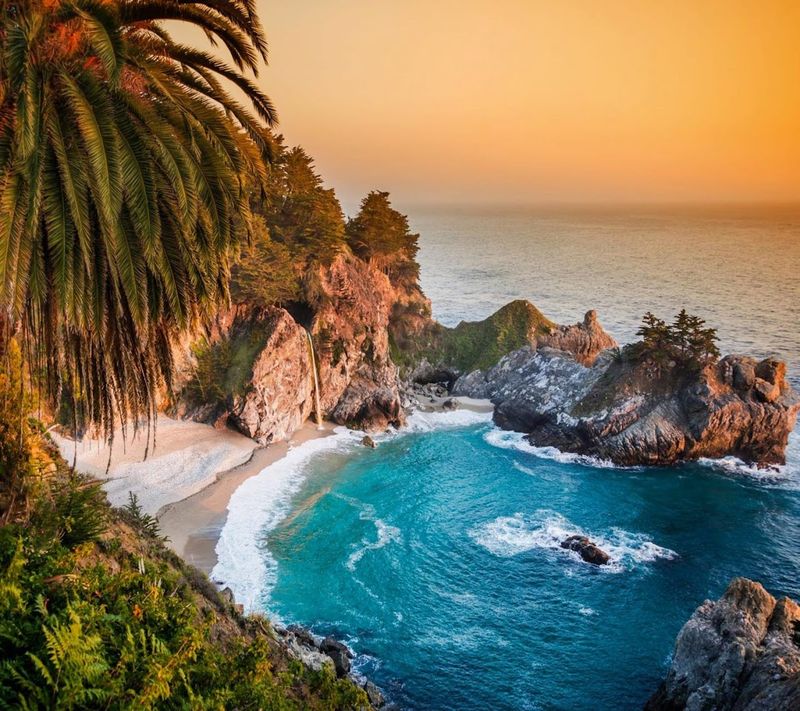
McWay Falls holds a distinction that very few waterfalls in North America can claim: it falls directly onto a beach.
Located inside Julia Pfeiffer Burns State Park along the Big Sur coast, the falls drop about 80 feet from a rocky ledge onto a small sandy cove where the water meets the Pacific Ocean.
The cove below is not accessible to visitors, which actually preserves its untouched appearance and makes the view from the trail above feel like looking at a painting.
The Overlook Trail that leads to the viewing platform is short, covering less than a mile round trip from the parking area.
Julia Pfeiffer Burns State Park sits along Highway 1 in Big Sur and is one of the most photographed locations on the entire California coast.
The short walk and dramatic scenery make it accessible for visitors of nearly all fitness levels.
Timing a visit for morning hours tends to offer softer light on the cove and fewer people on the trail.
Parking along Highway 1 in Big Sur can be competitive during spring and summer weekends, so arriving before 9 a.m. is a reliable strategy.
The combination of ocean, cliff, waterfall, and sand in a single frame makes McWay Falls one of the most visually distinctive natural landmarks in California.
10. Salmon Creek Falls, Big Sur
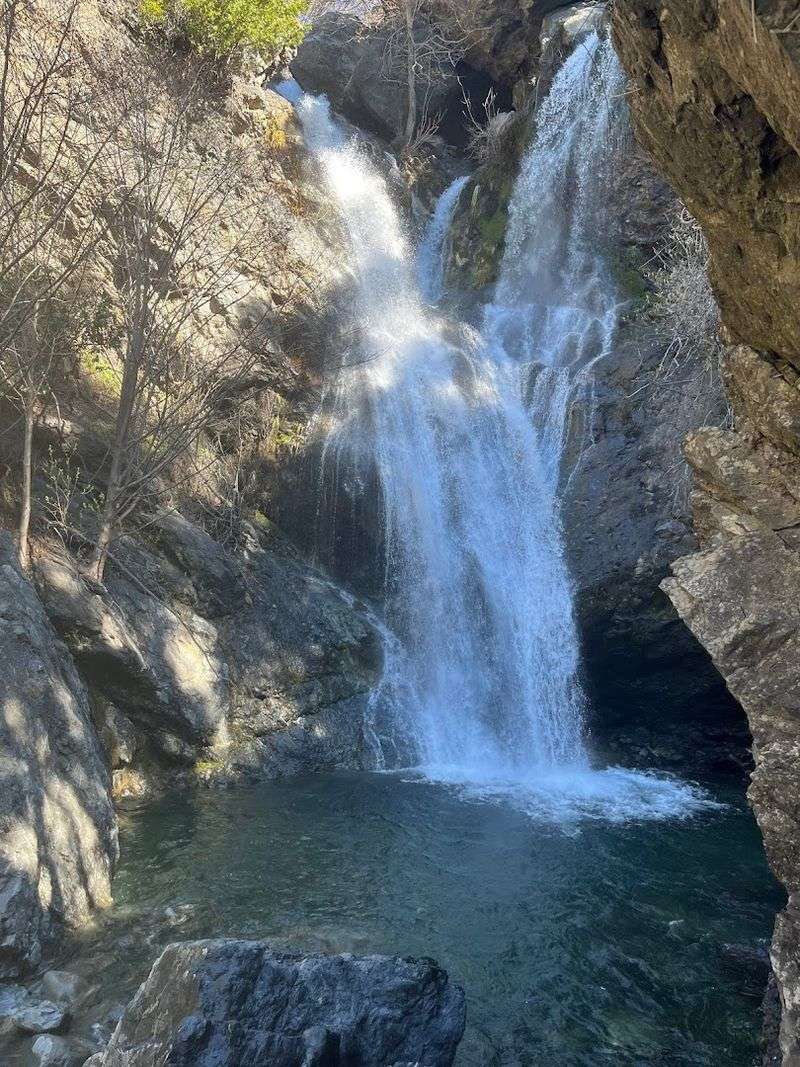
Salmon Creek Falls offers one of the most dramatic roadside waterfall views anywhere along the California coast.
Located in Los Padres National Forest in the southern Big Sur region, the falls drop in two distinct streams over a wide granite face, and during peak spring flow the combined volume creates a thundering curtain of white water visible from Highway 1.
Pulling off safely to take in the view requires attention since the highway shoulder is narrow in this stretch.
A short and informal trail leads from the pullout area toward the base of the falls, though the terrain becomes rocky and uneven quickly.
The spray from the falls can reach a surprising distance, so waterproof layers are worth having.
Unlike some of Big Sur’s more manicured parks, this area has a rougher and more wild feel that appeals to visitors looking for something less developed.
Spring is the ideal season to visit because winter rainfall and snowmelt from the Santa Lucia Range push the flow to its highest levels. By late summer, the falls can slow to a trickle or stop entirely.
Checking current conditions before making the drive is a good habit since Highway 1 in Big Sur is occasionally closed due to landslides or storm damage, particularly in the weeks following heavy rain events.
11. Limekiln Falls, Big Sur
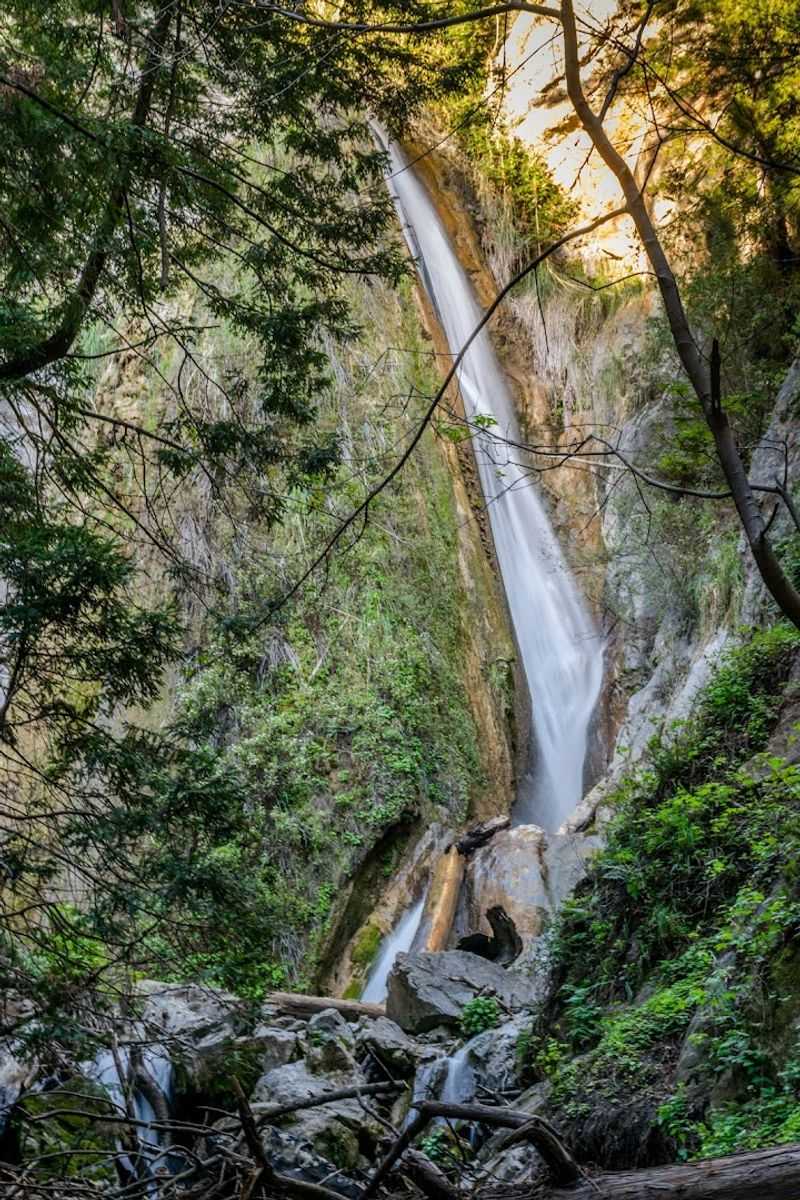
Limekiln State Park packs an unusual combination of history and natural beauty into a compact coastal canyon south of Big Sur village.
The park takes its name from the 19th-century lime kilns still standing near the trailhead, and the hike to Limekiln Falls passes directly by these stone structures before heading deeper into a redwood-filled gorge.
The falls themselves drop roughly 100 feet over a wall of limestone and moss, and the narrow canyon amplifies the sound of the water impressively.
The park is located at 63025 CA-1, Big Sur, CA 93920, and the trail to the falls is about 1.5 miles round trip, making it one of the shorter hikes on this list.
The path crosses Limekiln Creek several times on the way in, and stepping stones or logs are typically available, but water levels in spring can make crossings slightly challenging after heavy rain.
The redwood canopy overhead filters the light into a cool, dim green that feels especially peaceful during spring when ferns are at their most lush.
Limekiln is a lesser-known park compared to Julia Pfeiffer Burns just to the north, which means the crowds tend to be more manageable.
Reserving a day-use parking spot through the California State Parks reservation system ahead of time is the safest approach on busy spring weekends.
12. Escondido Falls, Malibu
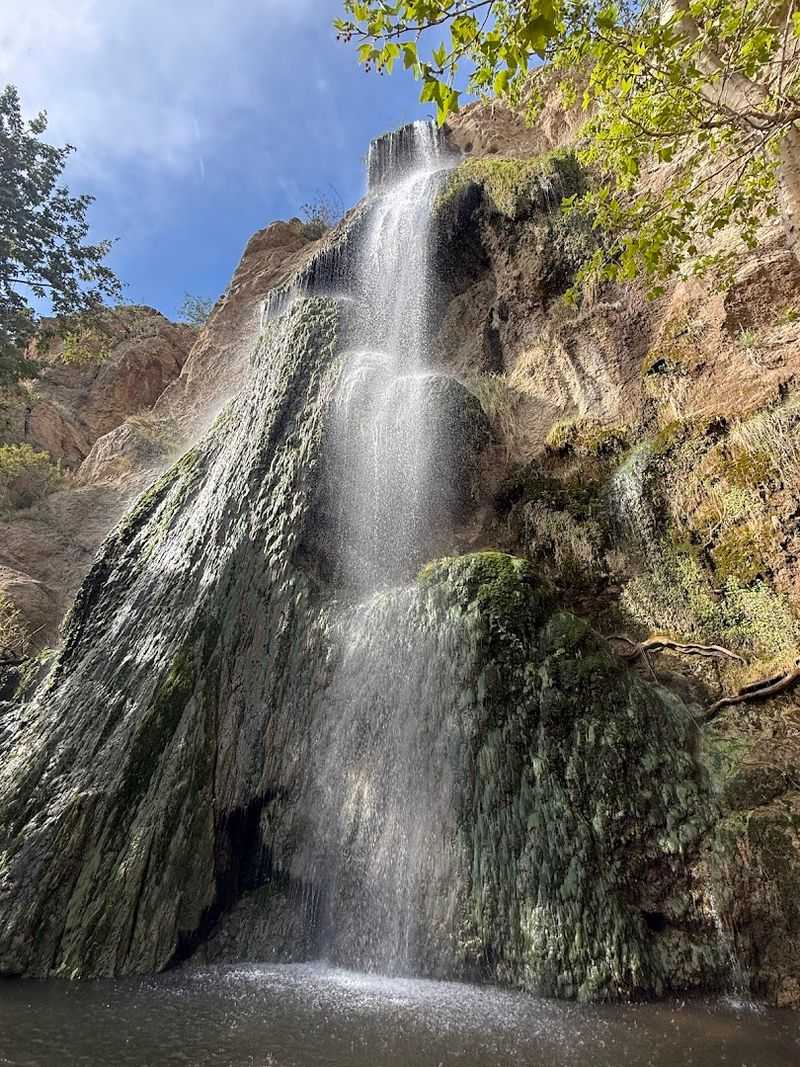
Escondido Falls is the tallest coastal waterfall in Southern California, yet it manages to stay relatively under the radar compared to more publicized hiking destinations in the region.
Located in the Santa Monica Mountains above Malibu, the falls feature two tiers, with the upper tier dropping roughly 150 feet over a travertine cliff streaked with white mineral deposits and draped in maidenhair ferns.
The lower falls are easier to reach, while the upper tier requires a bit more scrambling and route-finding.
The trailhead is accessed from Winding Way Road off Pacific Coast Highway in Malibu, and the hike to the lower falls covers about 4 miles round trip.
Reaching the upper tier adds roughly a mile and involves crossing the creek and navigating rocky terrain, so sturdy footwear is important.
Spring is the best season to visit because the falls flow most reliably between February and April.
The trail passes through private land at the start via a public easement, so staying on the marked path is both a courtesy and a requirement.
Canyon wrens and other coastal chaparral birds are commonly heard along the route.
Parking is limited along Pacific Coast Highway, and arriving early on weekend mornings is the most reliable way to find a spot without circling the area multiple times.
13. Eaton Canyon Falls, Pasadena
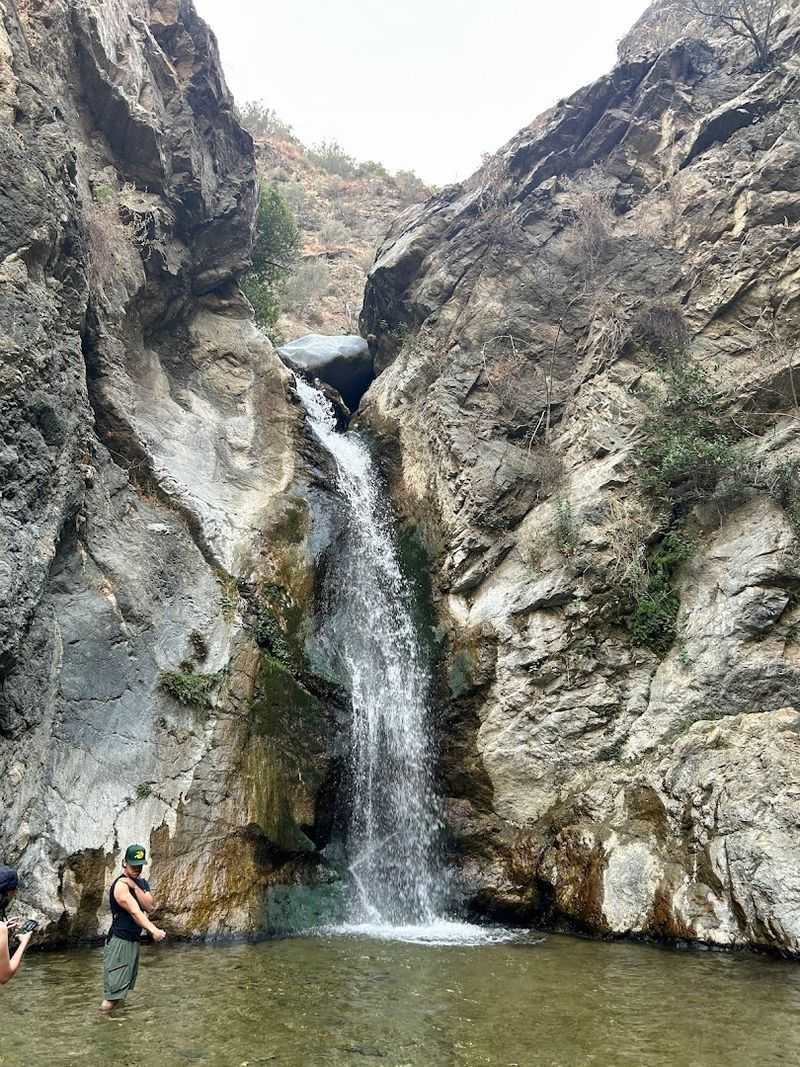
Eaton Canyon Natural Area is one of the most visited hiking destinations in the San Gabriel Valley, and the 40-foot waterfall at the end of the canyon trail is the clear reason why.
The hike covers roughly 3.5 to 4 miles round trip from the nature center and involves multiple stream crossings that can range from easy rock hops to ankle-deep wading depending on recent rainfall.
Spring runoff from the San Gabriel Mountains tends to push water levels higher, making the falls more impressive but also the crossings more involved.
The natural area is managed by Los Angeles County and is open year-round with free parking available at the trailhead near the nature center.
Trail erosion and storm damage occasionally require temporary rerouting, so checking current conditions through the county parks website before visiting is a practical step.
The canyon walls narrow noticeably as hikers approach the falls, and the sound of the water carries well before the falls come into view.
Weekends draw very large crowds to Eaton Canyon, particularly on spring days when the weather is mild and the falls are running strong.
A Tuesday or Wednesday visit offers a noticeably quieter experience on the same trail.
Wearing shoes that can handle getting wet is strongly recommended since avoiding all the stream crossings with dry feet is rarely possible during peak spring flow.
14. Bonita Falls, Lytle Creek
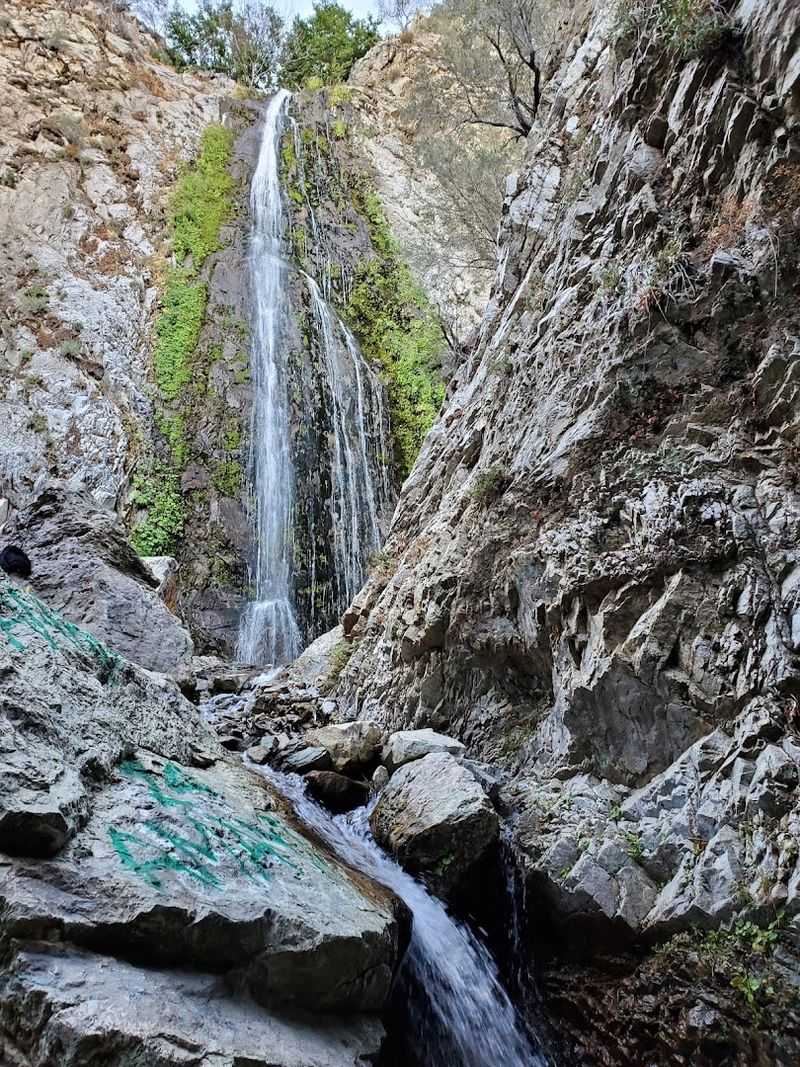
Bonita Falls near Lytle Creek is one of Southern California’s more rewarding short hikes, delivering a multi-tiered waterfall at the end of a relatively compact trail in the San Bernardino Mountains foothills.
The falls drop in several stages through a narrow rocky canyon, and the lower tiers are accessible with only about a mile of walking from the trailhead.
The upper portions require more scrambling over boulders, and the difficulty increases noticeably the higher a visitor climbs.
Spring tends to be the most productive season for visiting because winter precipitation in the San Gabriel and San Bernardino ranges feeds the creek through March and April.
By early summer the flow often drops significantly, and the upper falls can become quite thin.
Arriving in late February or March after a solid rain year offers the best chance of seeing the falls at full volume.
The trailhead is located off Lytle Creek Road in San Bernardino County, and parking is available in a pullout area near the start of the trail.
The area attracts a mix of local hikers, families, and photographers, and weekends can feel busy given the short distance involved.
Bringing water is essential since there are no facilities along the trail, and the rocky terrain in the canyon requires careful foot placement throughout the scrambling sections near the upper falls.