13 Bucket List Hikes In North Carolina, Ranked From Breezy To Bold
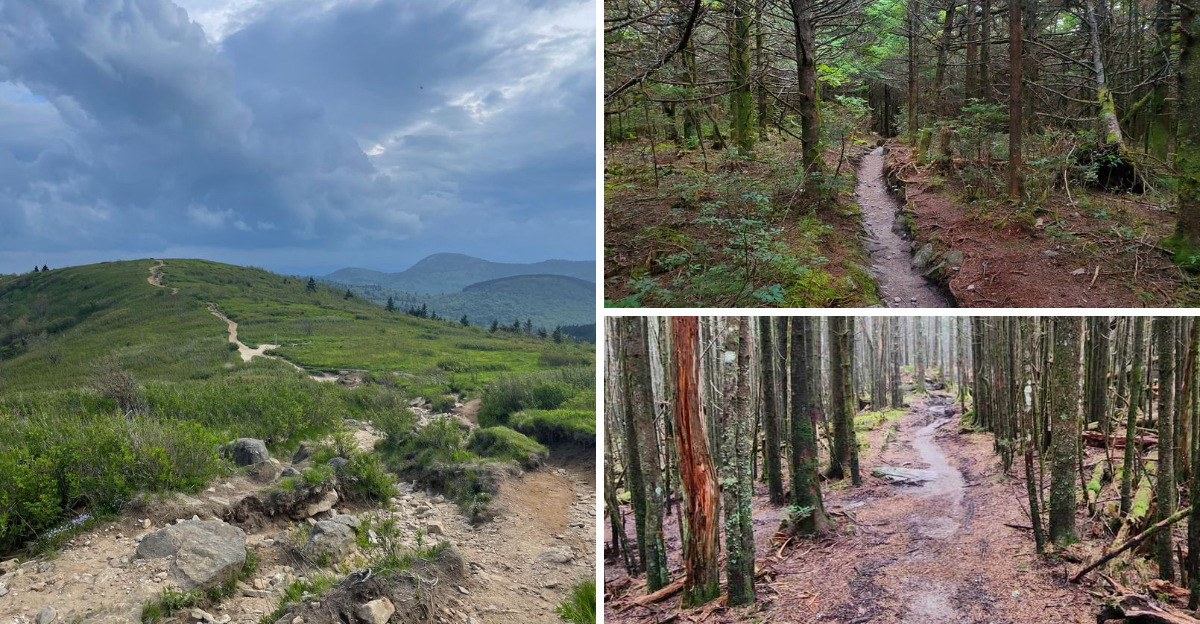
North Carolina’s mountains are calling, and the trails are waiting for your boots to answer. From gentle lakeside loops to heart-pounding scrambles up rocky peaks, this state delivers hiking adventures that suit every skill level and every mood.
Whether you’re chasing waterfalls, seeking summit views, or simply craving fresh mountain air, these trails offer unforgettable experiences. Get ready to explore paths that wind through ancient forests, climb granite domes, and reveal vistas that’ll make your camera work overtime.
These bucket list hikes range from breezy strolls perfect for sunrise coffee to bold challenges that’ll test your grit and reward your effort with views worth every step.
1. Price Lake Trail
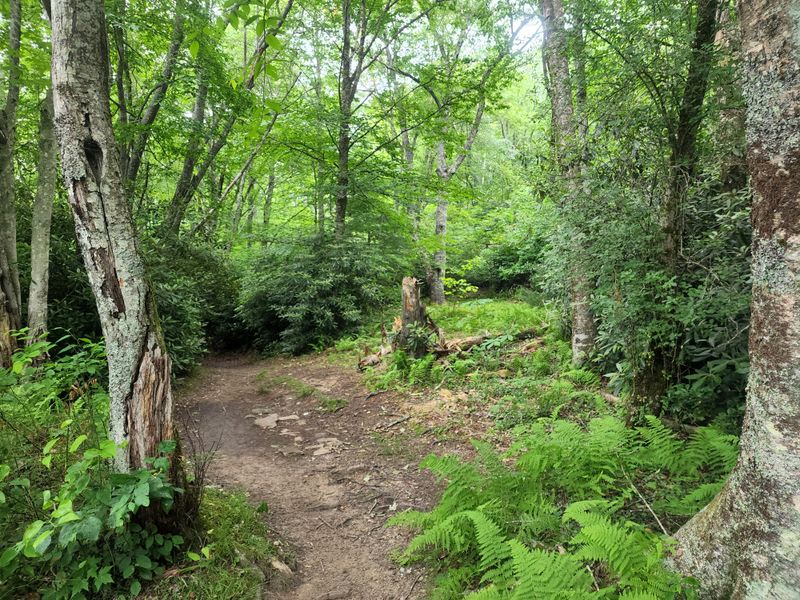
Imagine starting your day with a peaceful walk around a glassy lake that mirrors the sky like nature’s own photograph. Price Lake Trail loops around a stunning 47-acre body of water tucked inside Julian Price Memorial Park near Blowing Rock, offering one of the easiest and most rewarding hikes in the state.
This 2.5-mile gentle path takes you through a world where morning mist dances across the water and ducks paddle lazily past wooden docks.
Families absolutely adore this trail because it’s stroller-friendly and perfect for little legs that tire quickly. The boardwalk sections keep your feet dry while providing front-row seats to reflections so clear you’ll question which way is up.
Sunrise and sunset transform this place into something magical, painting the water in shades of pink, orange, and gold that photographers dream about capturing.
Wildflowers bloom along the shoreline during warmer months, adding splashes of color to your leisurely stroll. Benches dot the route, inviting you to pause, breathe deeply, and soak in the tranquility that feels miles away from everyday stress.
This trail proves that adventure doesn’t always require sweat and strain—sometimes the best experiences come wrapped in simplicity and natural beauty that speaks to your soul.
2. Bearwallow Mountain Trail
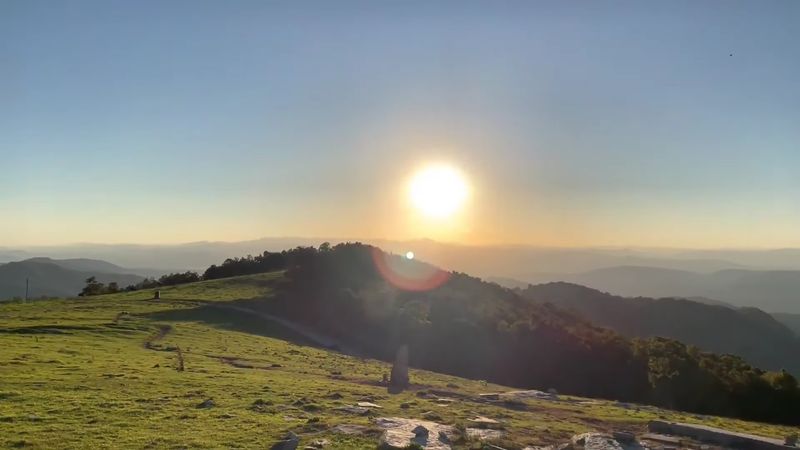
Short on time but hungry for sweeping mountain views? Bearwallow Mountain Trail, at 4854 Bearwallow Mountain Rd, Hendersonville, delivers maximum reward for minimal effort, making it a favorite among locals who know where to find hidden gems.
The 2.5-mile round-trip journey climbs steadily but never punishingly, winding through hardwood forests that provide shade on warmer days.
What makes this moderate hike special is the grassy summit that opens like a curtain, revealing a theater of peaks stretching endlessly before you. On clear days, you can spot landmarks dozens of miles away while the wind whispers through the tall grass surrounding the exposed mountaintop.
It’s the kind of place where strangers become friends, bonding over shared awe at nature’s grandeur.
The trail itself stays well-maintained, though roots and rocks keep things interesting enough to watch your footing without obsessing over every step. Spring brings wildflowers that carpet the hillsides, while autumn transforms the forest into a blazing tapestry of reds, oranges, and golds.
Pack a picnic and claim a spot on the summit where you can munch sandwiches while hawks circle overhead, riding thermal currents with effortless grace that makes flying look easy and wonderful.
3. Glen Burney Trail
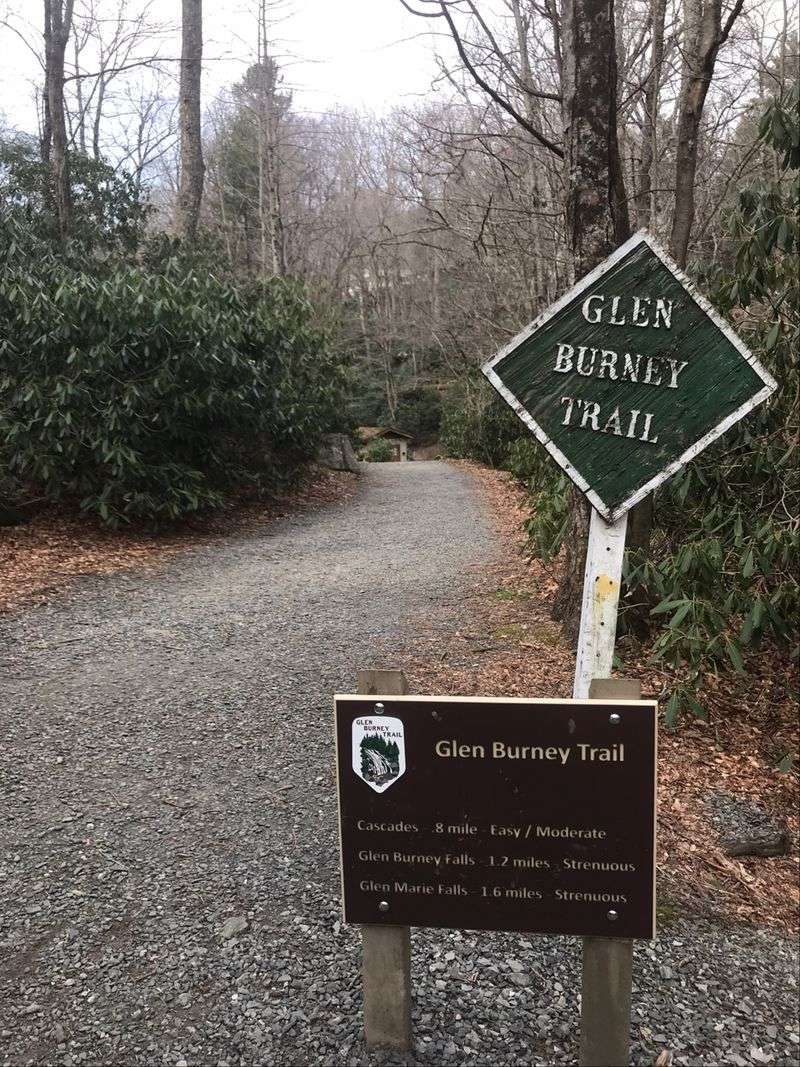
Waterfalls have a way of making you forget about sore legs and tired lungs, and Glen Burney Trail near Blowing Rock, at 243 Laurel Lane, delivers not one, not two, but three spectacular cascades along its 2.2-mile journey. Starting from the charming town center, the path plunges steeply through a lush forest that feels like stepping into a fairytale where moss-covered rocks and ferns create an enchanted atmosphere.
Glen Burney Falls appears first, tumbling dramatically over rocky ledges with enough force to create a cool mist that kisses your face on hot days. Continue downward, and you’ll encounter Cascades, a series of smaller but equally photogenic drops that cascade like liquid stairways carved by centuries of patient water.
The final reward, Glen Marie Falls, awaits at the trail’s lowest point, offering a peaceful spot to rest before the inevitable climb back up.
Fair warning: what goes down must come up, and the return journey tests your cardiovascular fitness with a steep ascent that’ll have you breathing hard and grateful for switchbacks. Wear sturdy shoes with good grip because the trail gets slippery near the waterfalls, where spray keeps rocks perpetually damp and treacherous for careless feet.
4. Linville Falls Trail
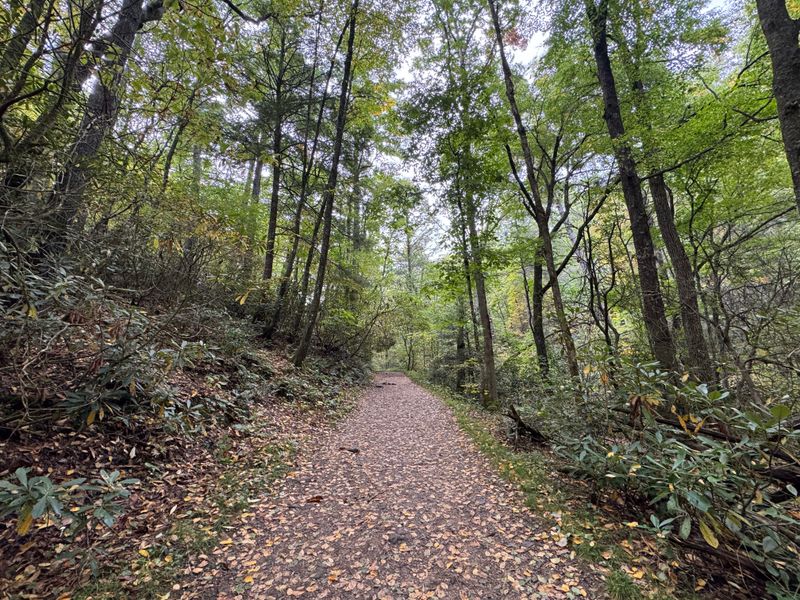
Power and beauty collide where water plummets into one of the deepest gorges in the eastern United States, creating a spectacle that draws visitors from around the world. Linville Falls Trail winds through the Linville Gorge Wilderness near Newland, offering multiple overlooks that showcase different perspectives of this magnificent natural wonder.
The 1.6-mile round-trip journey splits into several spur trails, each leading to unique vantage points that reveal new angles of the thundering cascade.
Upper overlooks provide bird’s-eye views where you can appreciate the full scale of the falls and the rugged gorge stretching beyond like nature’s own cathedral. Lower viewpoints bring you closer to the action, where the roar of falling water fills your ears, and the sheer force of nature becomes impossible to ignore.
Some storm damage remains visible along the trail, but maintenance crews work diligently to keep paths accessible and safe for adventurers of all ages.
Bring your camera because every angle offers Instagram-worthy shots that’ll make friends jealous and inspire future visits. The trail gets crowded during peak seasons, so arriving early means avoiding traffic jams at the overlooks and enjoying moments of relative solitude with this powerful waterfall that never fails to impress even seasoned hikers.
5. Looking Glass Rock Trail

Rising like a massive natural monument from the forest floor, Looking Glass Rock dominates the skyline of Pisgah National Forest with its distinctive granite face that shines like a mirror when wet. The 5.6-mile round-trip trail climbs steadily through rhododendron thickets and hardwood forests, gaining elevation at a pace that keeps your heart pumping without crushing your spirit.
Switchbacks ease the ascent, though your legs will definitely know they’ve been working by the time you reach the summit.
What sets this moderate hike apart is the dramatic finale: emerging from the trees onto an exposed granite dome that drops away sharply on one side, revealing panoramic views of the Blue Ridge Mountains stretching endlessly in every direction. The sensation of standing atop this massive rock creates an exhilarating mix of accomplishment and awe that makes every uphill step worthwhile.
Climbers often scale the sheer face visible from the trail, providing entertainment for hikers who pause to watch tiny figures inching up vertical rock.
Spring brings blooming mountain laurel and rhododendrons that transform the forest into a floral wonderland, while autumn paints the landscape in fiery hues that contrast beautifully against the gray granite. Pack plenty of water and snacks because this trail demands energy and rewards preparation with unforgettable memories.
6. Grandfather Trail To Calloway Peak
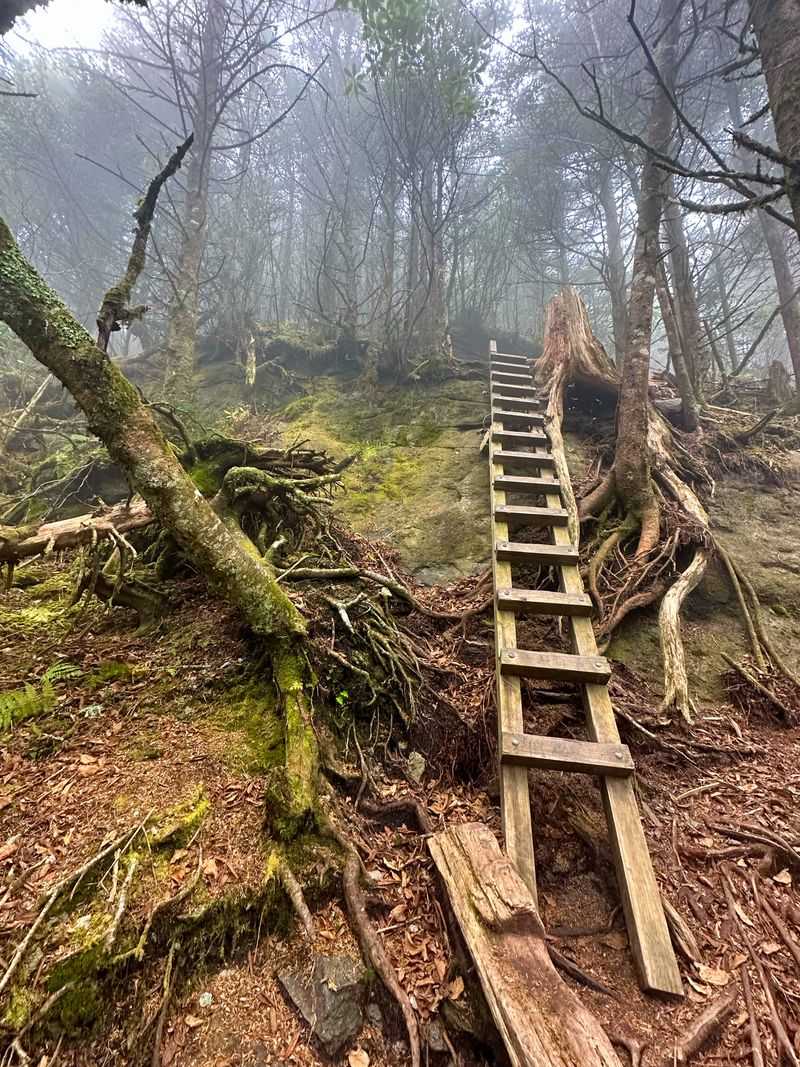
Adventure seekers who crave a little adrenaline with their mountain views should point their boots toward Grandfather Mountain State Park, where the trail to Calloway Peak delivers thrills alongside stunning scenery. This 6.31-mile round-trip journey ranks among the most challenging and exciting hikes in North Carolina, featuring steep ascents, wooden ladders bolted to rock faces, and cable handholds that help you navigate exposed sections where one wrong step could mean serious trouble.
The trail wastes no time getting interesting, immediately plunging you into a world of rocky scrambles and root-tangled paths that demand your full attention and respect. Ladders appear at intervals, requiring you to climb hand-over-hand while your backpack scrapes against stone and your arms burn from the effort.
These challenging sections filter out casual hikers, meaning those who persevere often find relative solitude at the summit of Calloway Peak, the highest point on Grandfather Mountain at 5,946 feet.
Views from the top span across multiple states on clear days, rewarding your hard work with vistas that make you feel on top of the world literally and figuratively. This trail isn’t suitable for anyone with fear of heights or those seeking a relaxing nature walk, it’s designed for bold hikers ready to test their limits and emerge victorious with stories worth telling.
7. Mount Mitchell Trail
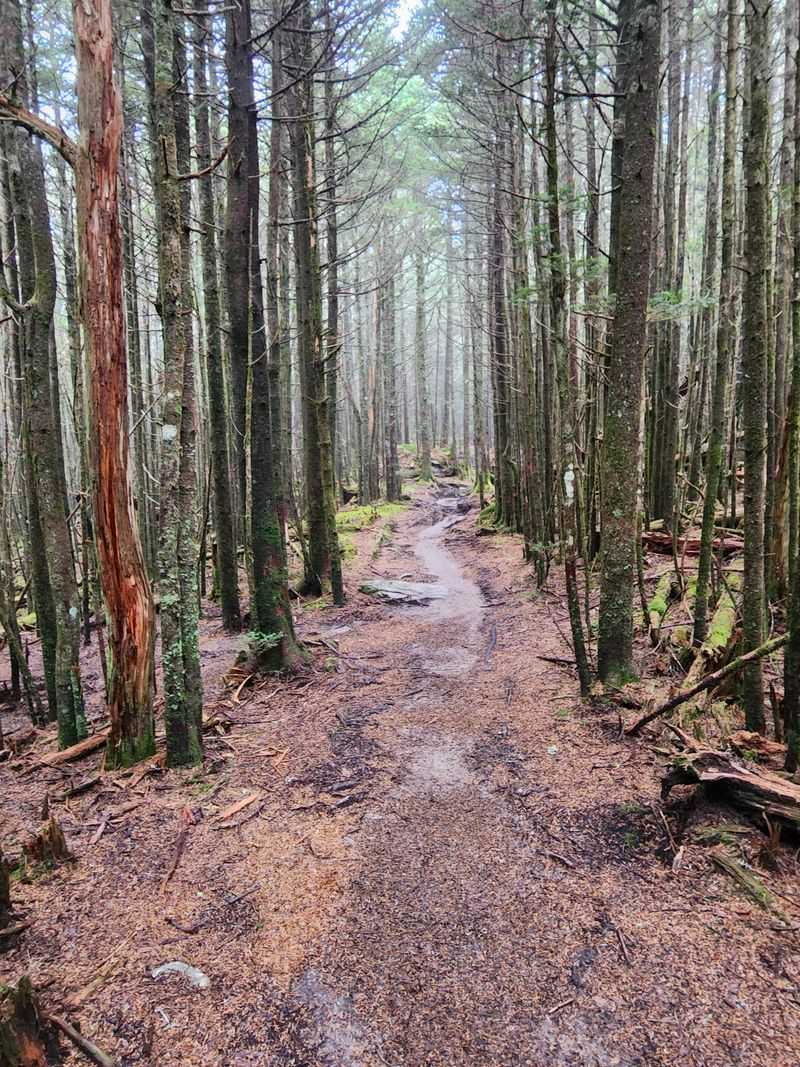
Standing atop the highest peak east of the Mississippi River carries a certain bragging right that appeals to hikers who collect summits like baseball cards. Mount Mitchell Trail in Mount Mitchell State Park offers a strenuous 12-mile round-trip journey that climbs to 6,684 feet, traversing through distinct forest ecosystems that change as elevation increases.
Starting in hardwood forests where oaks and hickories dominate, the trail gradually transitions into spruce-fir forests more reminiscent of Canada than Carolina.
The elevation gain tests your endurance and cardiovascular fitness, requiring steady pacing and frequent breaks to catch your breath in the thinning air. Temperature drops noticeably as you climb, meaning layers become essential even on warm valley days when the summit might be wrapped in clouds and chilly winds.
The unique high-elevation ecosystem supports plants and wildlife found nowhere else in the region, creating a biological island that fascinates botanists and nature lovers alike.
Reaching the observation tower at the summit delivers a profound sense of accomplishment along with views that extend across multiple mountain ranges when weather cooperates. Some days, clouds obscure everything, creating an otherworldly atmosphere where you walk through mist and mystery.
Either way, conquering the highest point east of the Rockies earns serious hiking credentials and memories that last forever in your adventure collection.
8. Roan Mountain Section Of The Appalachian Trail
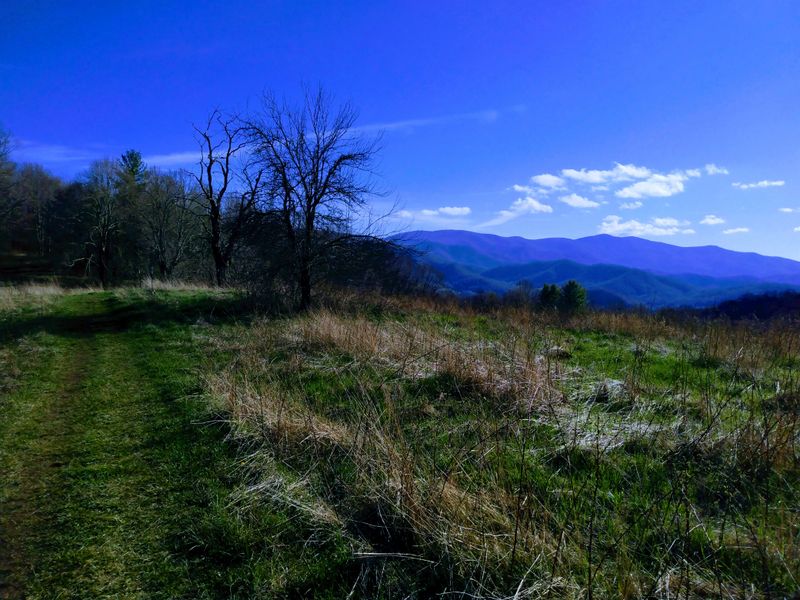
Few hiking experiences in the South compare to walking through high-elevation grassy balds where 360-degree views surround you like nature’s own amphitheater. The Roan Mountain section of the Appalachian Trail delivers this magical experience, traversing open meadows at elevations exceeding 6,000 feet where the world spreads out beneath your feet in every direction.
The distance varies depending on your chosen route, but the difficulty remains consistently strenuous due to elevation and exposure to weather that changes rapidly at these heights.
June transforms these balds into a wonderland of blooming Catawba rhododendrons that carpet the hillsides in purple splendor, attracting visitors who time their visits specifically for this floral spectacle. Walking through tunnels of blooming rhododendrons while views extend for miles creates an almost surreal experience that photographs never quite capture fully.
The trail follows the ridgeline, undulating over multiple peaks and gaps that keep your legs working throughout the journey.
Weather up here demands respect and preparation because conditions can deteriorate quickly, bringing cold rain, fog, or even snow during shoulder seasons when valleys enjoy pleasant temperatures. Pack appropriate gear, check forecasts carefully, and be prepared to turn back if conditions become dangerous because these exposed balds offer no shelter from storms that roll in with surprising speed and ferocity.
9. Shining Rock Wilderness Via Art Loeb Trail
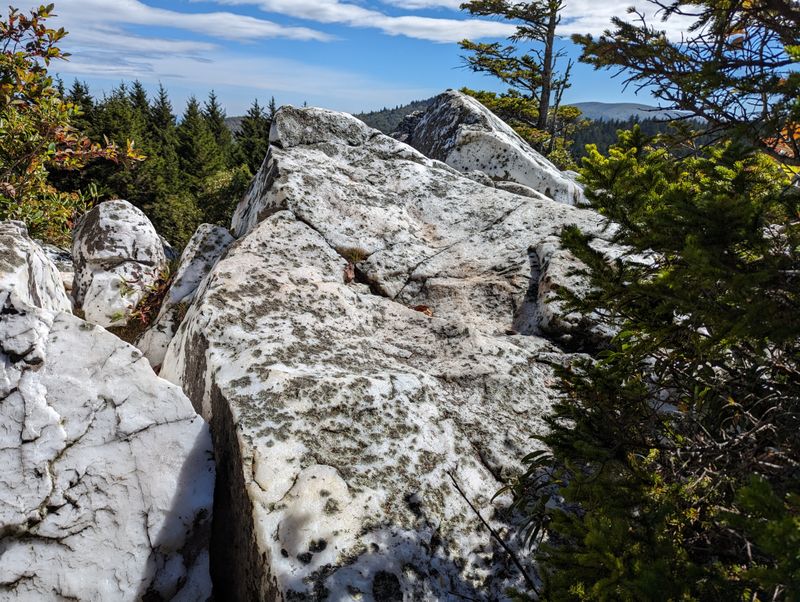
Wilderness areas offer something increasingly rare in our connected world: genuine remoteness where cell signals disappear and nature reclaims its rightful dominance. Shining Rock Wilderness accessed via the Art Loeb Trail in Pisgah National Forest provides this authentic backcountry experience along a challenging 10-mile one-way route that traverses high-elevation terrain through some of North Carolina’s most pristine landscapes.
The trail’s name comes from massive white quartz outcroppings that shine brilliantly when sunlight hits them just right, creating landmarks visible from miles away.
Elevation here brings cooler temperatures even during summer months, making this a popular destination when lower trails become uncomfortably hot and humid. The terrain varies from gentle ridgeline walking to steep climbs that test your determination and fitness, with rocky sections requiring careful foot placement to avoid twisted ankles.
Water sources exist but should always be filtered because even pristine-looking mountain streams can harbor microscopic nasties that’ll ruin your trip faster than a bear encounter.
Panoramic views reward your efforts at multiple points along the route, revealing layer upon layer of mountains fading into blue-hazed distance that explains why this range earned its name. This trail demands proper preparation, navigation skills, and respect for wilderness principles because getting lost or injured here means serious consequences in areas where help might be hours away even in emergencies.
10. Slickrock Creek Trail
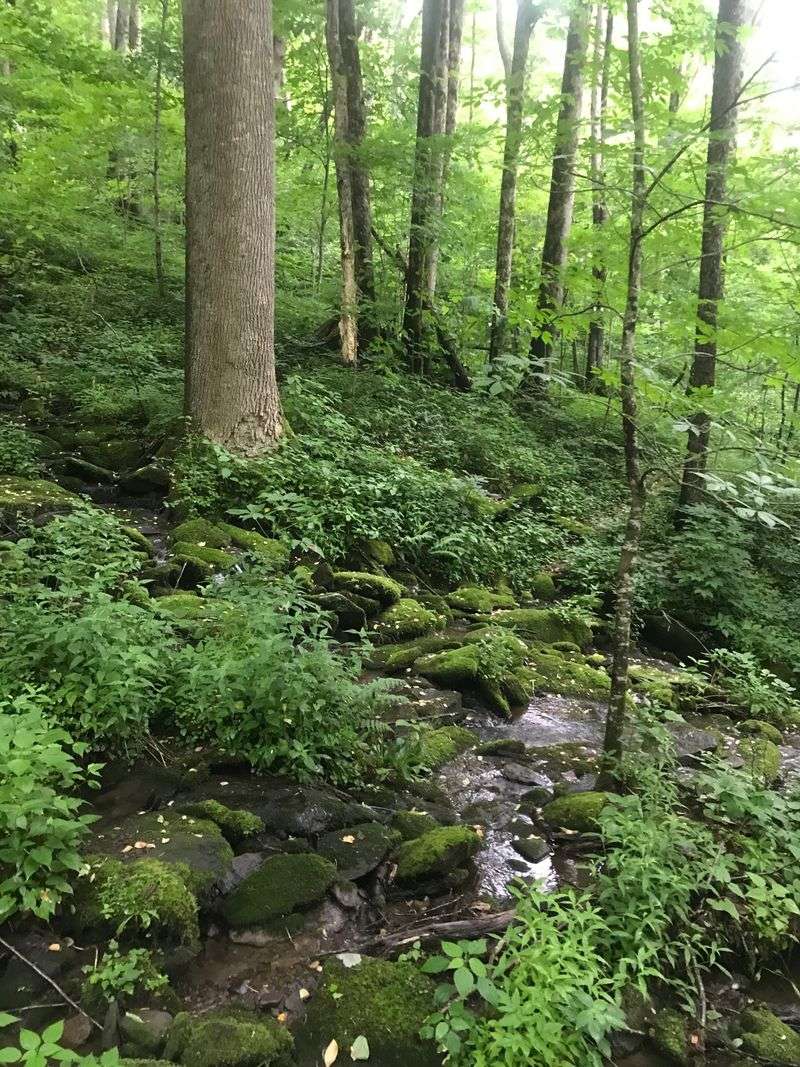
Nicknamed “The Ballbuster” by hikers who’ve experienced its relentless challenges, Slickrock Creek Trail in Joyce Kilmer-Slickrock Wilderness earns its reputation through 13 brutal miles featuring over a dozen stream crossings and elevation changes that never seem to end. This very strenuous route separates serious backpackers from casual day hikers, demanding physical fitness, mental toughness, and proper gear to navigate successfully.
The trail follows a remote creek through pristine wilderness where old-growth forests tower overhead and civilization feels like a distant memory.
Stream crossings present the trail’s signature challenge, requiring you to rock-hop across rushing water or wade through when flows run high after rainfall. Keeping feet dry becomes a losing battle, so smart hikers embrace wet boots and focus on maintaining balance on slippery rocks that seem designed to test coordination.
Between crossings, the trail climbs steeply up ridges only to plunge back down toward the creek, creating a roller-coaster elevation profile that exhausts legs and lungs equally.
Why subject yourself to this punishment? Because reaching the remote campsites along Slickrock Creek delivers a profound wilderness experience increasingly rare in the crowded Southeast, where solitude and pristine nature reward those willing to work hard for their adventure.
This trail isn’t for everyone, but those who conquer it earn serious bragging rights and memories of accomplishment that outshine easier paths.
11. Art Loeb Trail
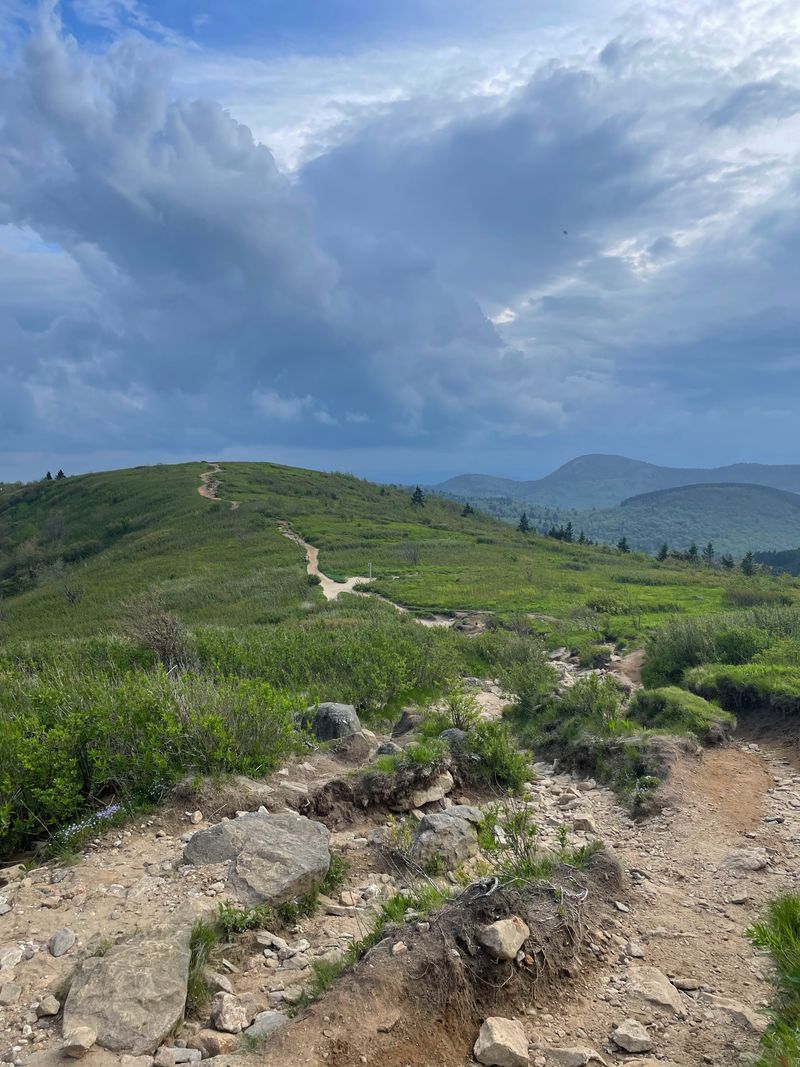
Spanning 30.1 miles point-to-point through Pisgah National Forest, the complete Art Loeb Trail represents a serious undertaking that typically requires multiple days and careful planning to complete successfully. This strenuous route traverses several significant peaks including Black Balsam Knob and Tennent Mountain, offering constantly changing landscapes that showcase the incredible diversity packed into North Carolina’s mountains.
The trail alternates between dense forest tunnels and exposed balds where views extend for miles in every direction.
Most hikers tackle this trail as a backpacking trip, camping at designated sites or finding flat spots along the route to pitch tents under star-filled skies far from light pollution. Water sources require planning because high ridges sometimes run dry during summer months, meaning you’ll need to carry extra weight or descend to reliable streams.
The physical demands accumulate over distance, with elevation gains and losses totaling thousands of feet that turn legs into jelly by the final miles.
Black Balsam Knob stands out as a highlight, offering 360-degree views from a grassy summit that feels like standing on top of the world. Weather can change rapidly along this exposed route, so preparation includes packing gear for all conditions regardless of the forecast when you start.
Completing the entire Art Loeb Trail earns you membership in an exclusive club of hikers who’ve experienced one of North Carolina’s premier long-distance adventures.
12. Mountains-to-Sea Trail
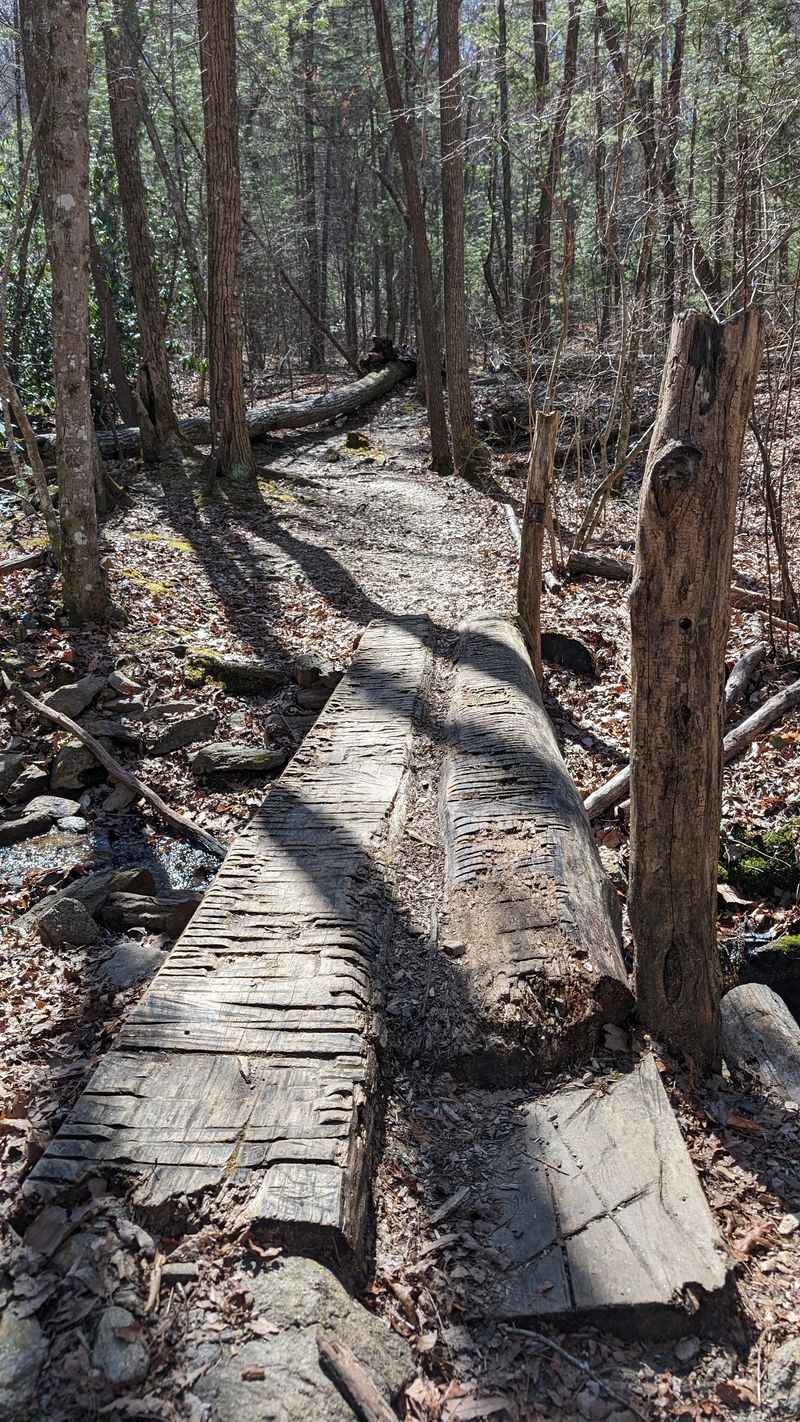
Imagine a single trail stretching approximately 1,000 miles from the Great Smoky Mountains to the Outer Banks, connecting North Carolina’s most diverse landscapes into one epic journey. The Mountains-to-Sea Trail accomplishes exactly this ambitious vision, though calling it “very strenuous” barely captures the commitment required to thru-hike the entire distance.
Most hikers experience this trail in sections, cherry-picking favorite segments that range from challenging mountain passes to gentle coastal walks through maritime forests.
The western mountain sections deliver the most dramatic scenery and toughest terrain, climbing through the same ranges traversed by other trails on this list before descending toward the piedmont. As you progress eastward, the landscape gradually flattens, trading mountain vistas for rolling hills, piedmont forests, and eventually the unique ecosystems of North Carolina’s coastal plain.
This diversity makes the MST unlike any other long-distance trail, offering something completely different around every bend.
Completing the entire trail takes weeks or even months depending on your pace and available time, requiring logistical planning that rivals expedition preparation. Section hikers can enjoy bite-sized portions that fit into weekends or vacation days, experiencing the trail’s variety without committing to a thru-hike.
Either way, this statewide treasure offers endless opportunities for exploration and adventure across landscapes that showcase everything special about North Carolina’s natural beauty from mountains to sea.
13. Grandfather Trail To Calloway Peak
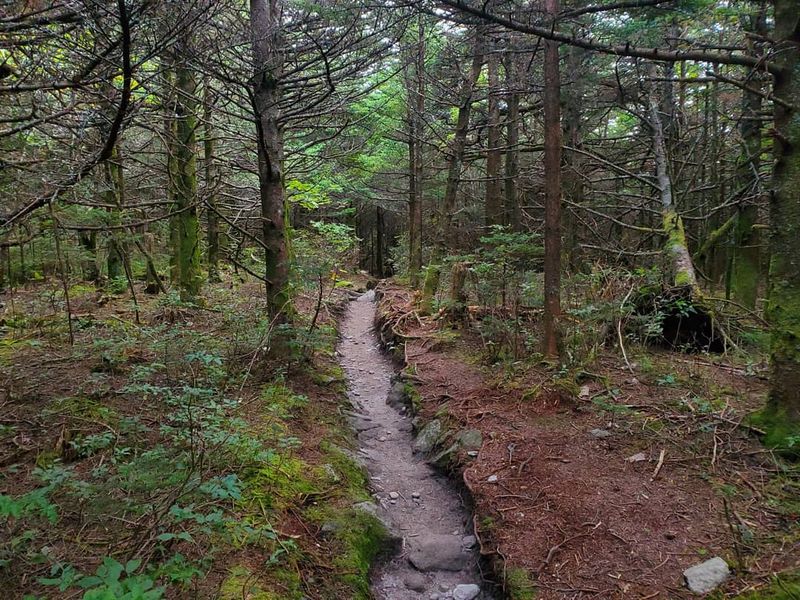
Adventure seekers who crave a little adrenaline with their mountain views should point their boots toward Grandfather Mountain State Park, where the trail to Calloway Peak delivers thrills alongside stunning scenery. This 6.31-mile round-trip journey ranks among the most challenging and exciting hikes in North Carolina, featuring steep ascents, wooden ladders bolted to rock faces, and cable handholds that help you navigate exposed sections where one wrong step could mean serious consequences.
The trail wastes no time getting interesting, immediately plunging you into a world of rocky scrambles and root-tangled paths that demand your full attention and respect. Ladders appear at intervals, requiring you to climb hand-over-hand while your backpack scrapes against stone and your arms burn from the effort.
These challenging sections filter out casual hikers, meaning those who persevere often find relative solitude at the summit of Calloway Peak, the highest point on Grandfather Mountain at 5,946 feet.
Views from the top span across multiple states on clear days, rewarding your hard work with vistas that make you feel on top of the world literally and figuratively. This trail isn’t suitable for anyone with fear of heights or those seeking a relaxing nature walk, it’s designed for bold hikers ready to test their limits and emerge victorious with stories worth telling and photos that prove you conquered one of North Carolina’s most thrilling trails.