California Has A Hidden State Park That Most Travelers Don’t Know Exists
State parks are not supposed to feel like you stumbled onto classified information.
Yet every so often, one slips past the guidebooks and quietly waits for curious travelers to notice.
California is still hiding a few places that feel like they accidentally escaped the tourism department.
The discovery feels earned and that’s what makes a hidden park so satisfying.
No giant attraction is demanding attention. Just open space and the pleasant realization that not every beautiful place ended up on everyone’s weekend list.
A park like this reminds people that some of the best outdoor experiences happen after the famous names run out.
The hardest part is deciding whether to tell anyone else about it.
A Forest That Feels Like S Well-Kept Secret
Getting to Portola Redwoods State Park already feels like part of the experience.
The approach via Highway 35 and Alpine Road is long, narrow, and winding, with steep drop-offs on one side and towering trees closing in on the other.
Cell phone service disappears well before the entrance, which means downloading maps and directions ahead of time is genuinely necessary rather than just a suggestion.
There are no gas stations or grocery stores near the park, so arriving with a full tank and packed food is the practical move.
The park sits at 9000 Portola State Park Rd, La Honda, CA 94020, and day-use hours run from 6 AM to sunset with a $10 vehicle fee.
Once inside the forest basin, the sound of the road fades and the air turns noticeably cooler and damper, often running 10 to 15 degrees colder than nearby Palo Alto.
That shift in temperature and atmosphere is the first sign that this place operates by its own quiet rules.
The Old Tree Trail And A 1,200-Year-Old Redwood
Near park headquarters, a relatively short and easy trail leads to one of the most quietly impressive things in the entire Santa Cruz Mountains.
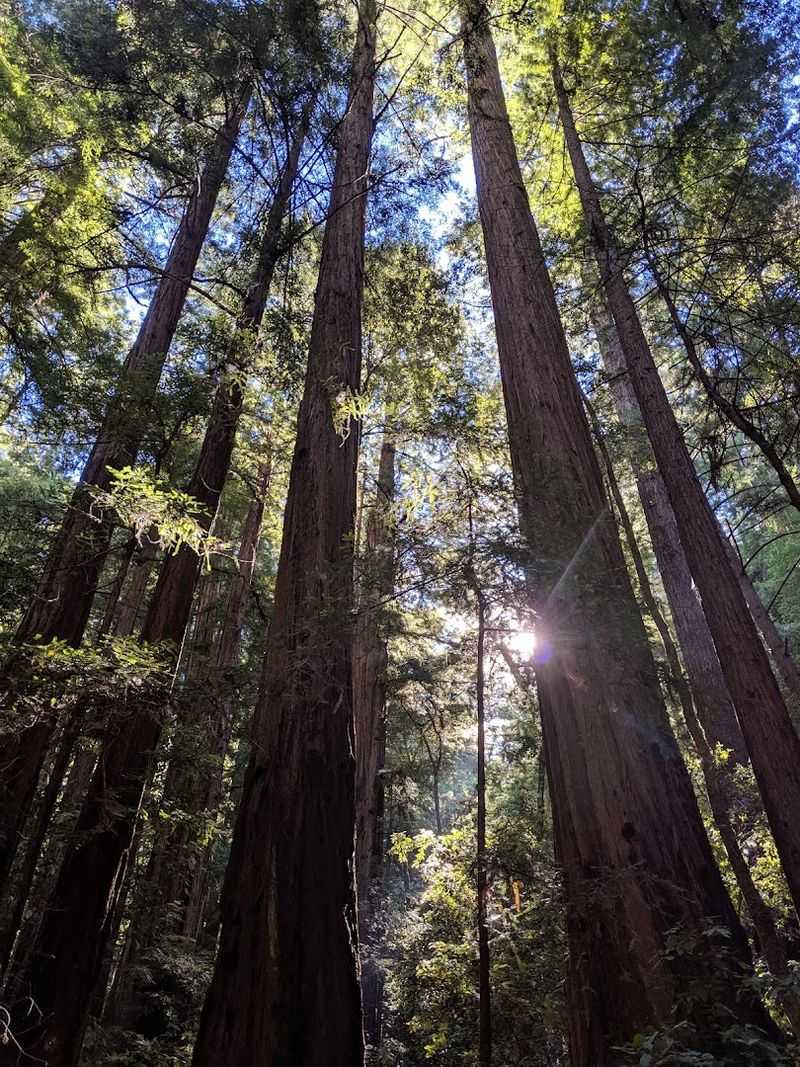
Known simply as Old Tree, this coast redwood is estimated to be around 1,200 years old, stands approximately 305 feet tall, and measures about 12 feet in diameter at its base.
The Old Tree Trail runs about 1.2 miles and stays accessible even for visitors who are not experienced hikers.
The path winds through second-growth and old-growth redwoods, with ferns and huckleberry shrubs lining the forest floor on both sides.
Standing next to Old Tree puts the scale of redwood forests into a perspective that photographs rarely capture accurately.
The bark is thick and deeply furrowed, the color shifting between rust and charcoal depending on how the light filters through the canopy above.
Because the trail stays close to the visitor center, it tends to be the most visited route in the park, though even at its busiest it rarely feels crowded.
Peters Creek Grove And The Reward Of Going Deeper
Not every highlight at this park is easy to reach, and Peters Creek Grove is the best example of that.
Deep inside the backcountry, the grove contains some of the most remote old-growth redwoods in the entire Santa Cruz Mountains region.
Reaching it typically requires completing a longer loop route, with the Peters Creek Loop Trail running approximately 11 to 12 miles with around 2,000 feet of elevation change.
The effort filters out the casual day visitors, leaving the grove in a state of near-silence that is hard to find anywhere this close to Silicon Valley.
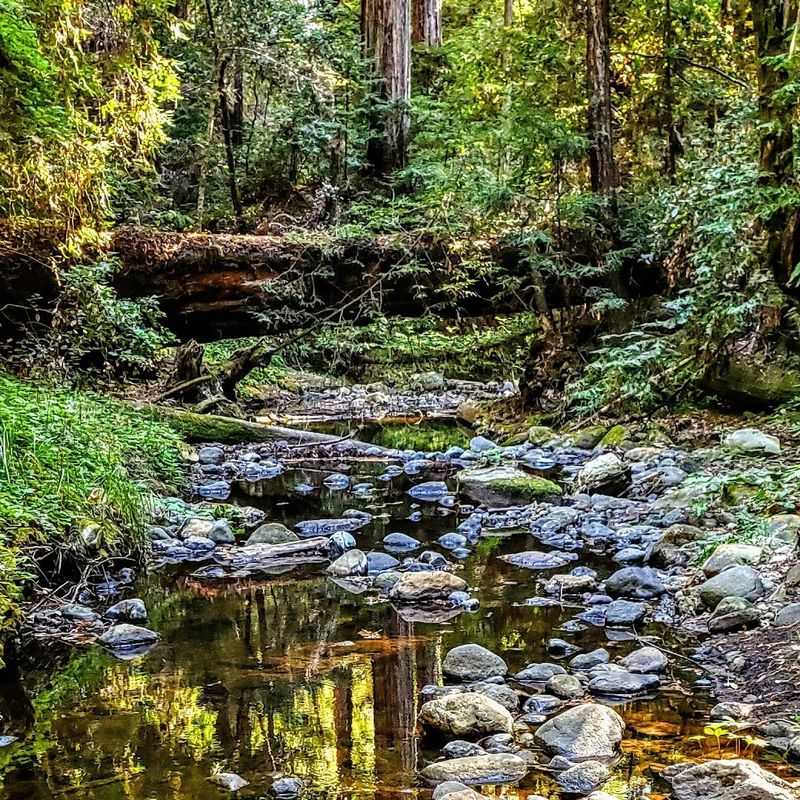
Peters Creek itself runs through the area, adding the sound of moving water to the already layered forest atmosphere.
The combination of towering old-growth trees, mossy understory, and a creek that moves at its own unhurried pace gives this section of the park a texture that feels genuinely untouched.
Since the 2020 CZU Lightning Complex Fire heavily damaged Big Basin Redwoods State Park, Portola Redwoods has become one of the most intact old-growth redwood destinations remaining in this part of California.
18 Miles Of Hiker-Only Trails For Every Fitness Level
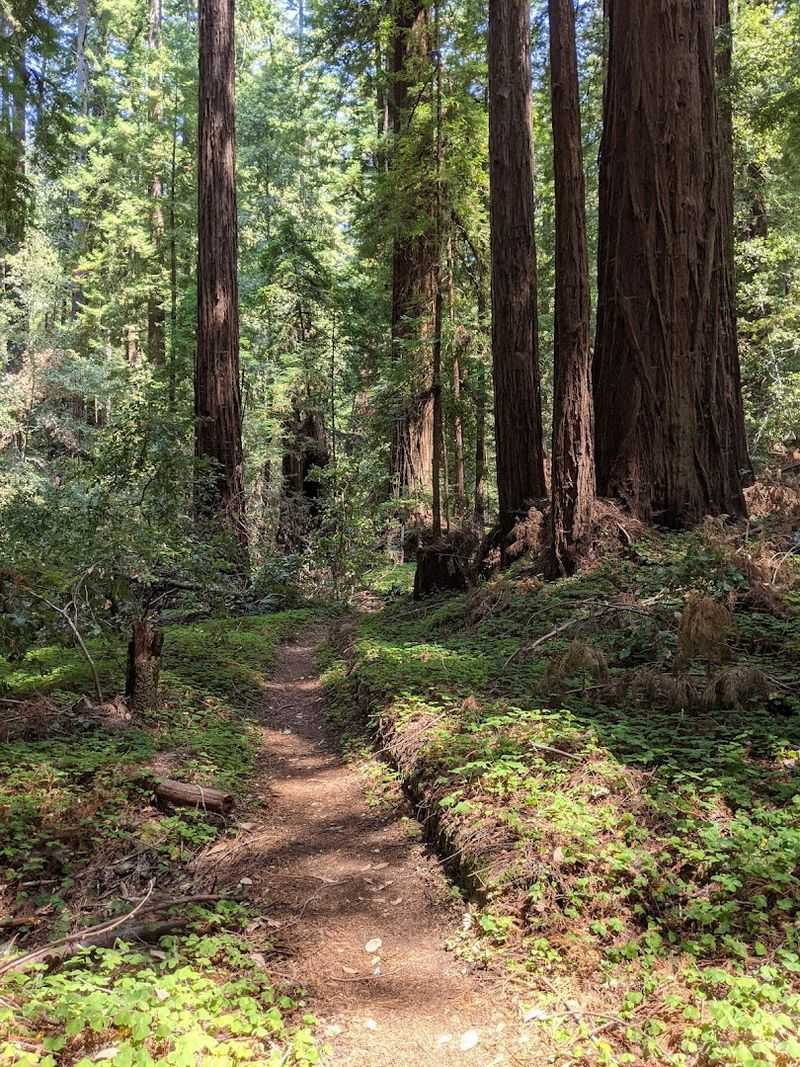
With 18 miles of trails spread across more than 2,800 acres, the park offers a real range of options depending on how much time and energy a visitor brings.
All trails are designated for hikers only, which keeps the paths quieter and the pace slower than parks that mix in cyclists or equestrians.
Shorter options like the 1.2-mile Old Tree Trail and the Sequoia Nature Trail work well for families or anyone looking for a relaxed walk through the forest.
The moderate 4.8-mile Slate Creek Trail offers more elevation and deeper forest coverage without demanding the full commitment of the longer loops.
For those wanting a full day out, the Peters Creek Loop stretches to about 11 or 12 miles and delivers some of the most dramatic redwood scenery in the park.
Trails are generally well-marked and maintained, though conditions can shift after heavy rain, particularly near creek crossings where bridges may be removed during high-water periods in winter.
Checking current trail conditions before visiting is a practical habit that saves frustration, especially for anyone planning a longer route.
Camping Under The Redwoods At The 55-Site Campground
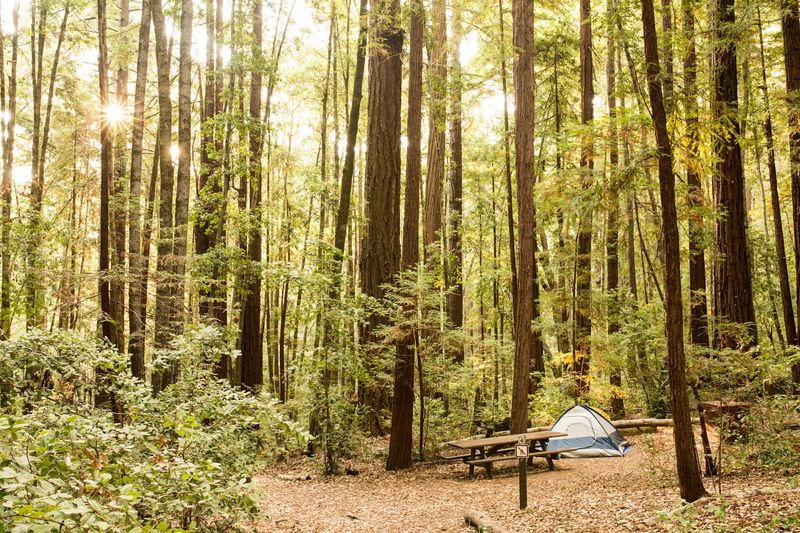
Spending a night at Portola Redwoods changes the experience entirely.
The campground includes 55 family campsites, four group campsites, and hike-in backcountry sites for backpackers who want to go even further into the forest.
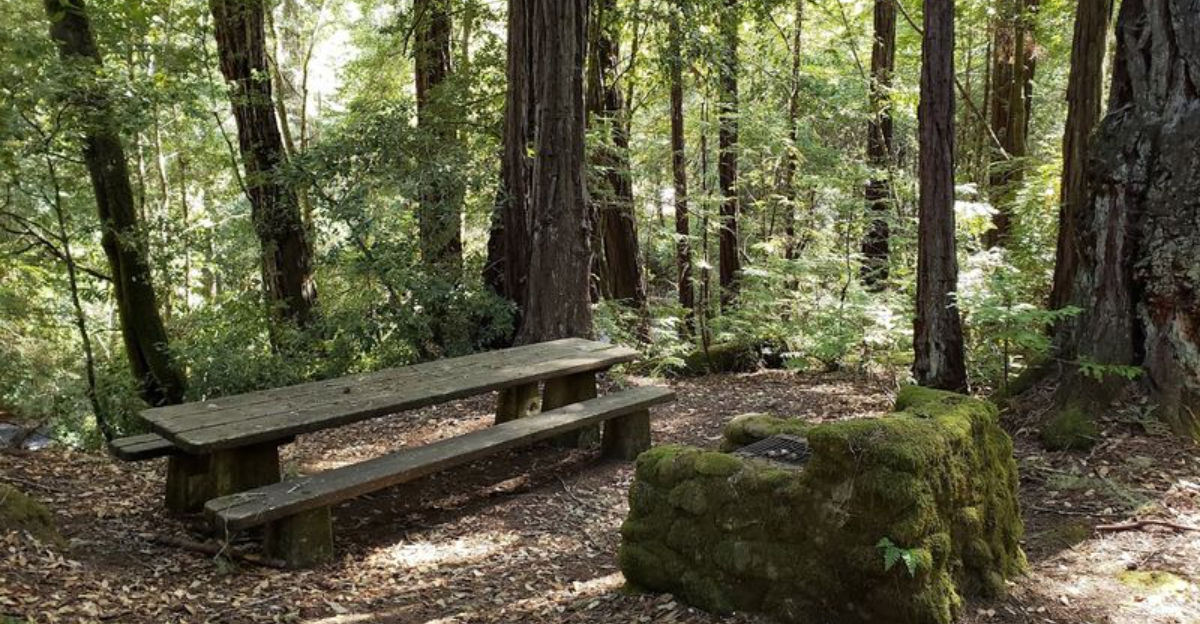
Campsites come equipped with fire rings and bear boxes, and the campground facilities include restrooms, showers, and potable water.
A communal dish-washing station near the facilities area is a practical touch that regular campers tend to appreciate. Firewood is available for purchase at the visitor center and ranger station.
Temperatures inside the redwood forest drop noticeably at night, often falling into the low 50s even during summer months, so packing layers is genuinely useful rather than just cautionary advice.
Campsites sit close together but the surrounding trees create enough visual separation to maintain a sense of privacy.
Reservations are strongly recommended during peak seasons since the campground fills up, particularly on summer weekends.
Dogs are permitted in campsites and picnic areas but are not allowed on hiking trails except for service animals, which is worth knowing before planning a trip with a pet.
Tiptoe Falls And The Creekside Scenery Along Pescadero Creek
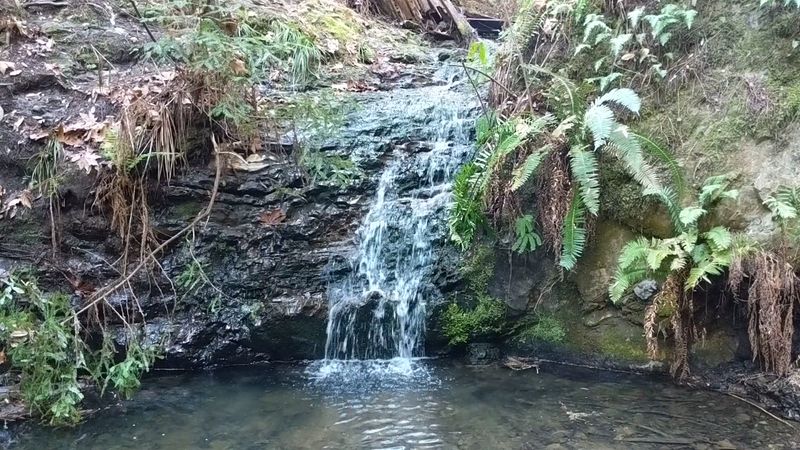
Water plays a big role in the mood and landscape of this park.
Two main creeks run through the property, Peters Creek and Pescadero Creek, and both contribute to the cool, damp atmosphere that defines the forest floor throughout most of the year.
Tiptoe Falls, a 6-foot waterfall on Peters Creek, is one of the park’s more charming landmarks.
Reaching it requires some trail time, and during winter months the floating bridge on the Sequoia Nature Trail route may be removed due to high water, which could affect access depending on creek levels at the time of the visit.
The creekside sections of the trail system tend to be the most visually layered, with leopard lilies and live oak filling in around the redwoods to create a forest that feels more complex than a single-species grove.
The sound of moving water carries through the trees even when the creek itself is not visible, giving the hiking experience a sensory quality that stays with visitors long after they leave.
Bringing a paper map or downloading an offline trail map is essential since there is no cell service in the park.
Wildlife That Makes The Forest Feel Alive
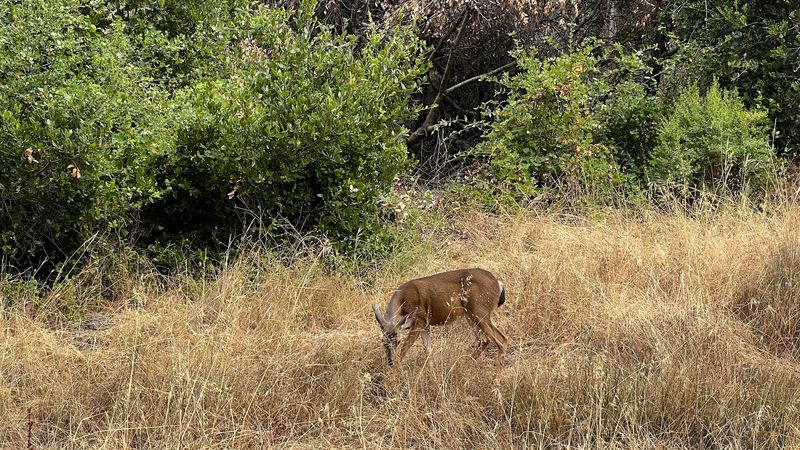
The park’s ecosystem supports a wider range of wildlife than most visitors expect from a redwood forest.
Black-tailed deer move through the understory at dusk and dawn, and coyotes are occasionally spotted along the quieter trail sections away from the campground.
More notably, the park provides habitat for several species that are considered rare or endangered.
The marbled murrelet, a seabird that nests in old-growth redwood canopies rather than coastal cliffs, depends on forests like this one for breeding habitat.
Coho salmon and steelhead trout use the park’s creek systems as part of their life cycles, making the health of Peters Creek and Pescadero Creek directly connected to the survival of these fish populations.
Bird activity in the forest is consistent and varied throughout the year, with acorn woodpeckers, Pacific wrens, and brown creepers all documented in the park.
The combination of old-growth canopy, running water, and minimal human foot traffic creates conditions where wildlife behaves more naturally than in heavily visited parks.
Staying quiet on the trail and moving at a slower pace tends to increase the chances of spotting something worth stopping for.
The Visitor Center With Interpretive Displays And Ranger Support
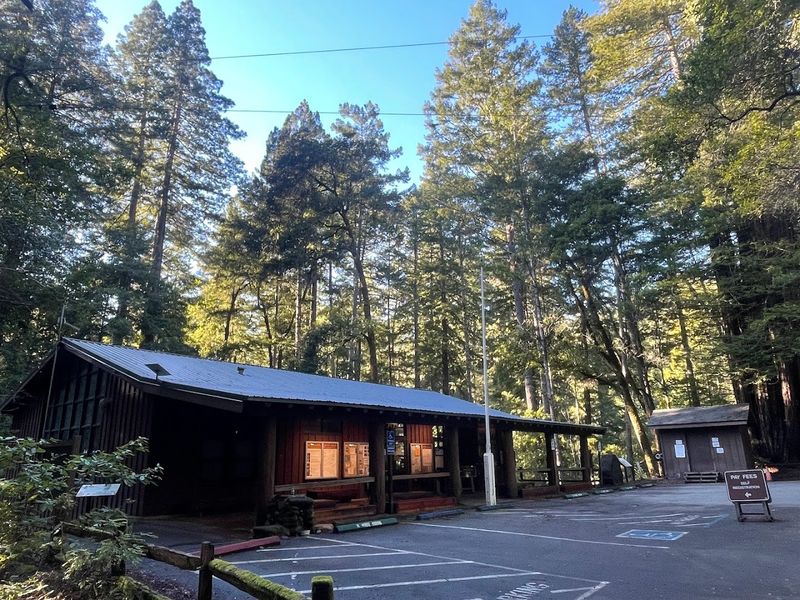
Near the park entrance, the visitor center serves as the practical starting point for any visit.
Rangers are stationed there during operating hours, which run from 9 AM to 5 PM daily, and they can help with trail recommendations, current conditions, and campsite check-ins.
The building itself has an interesting backstory.
Before becoming part of the state park infrastructure, the structure originally served as a Masonic Lodge summer retreat hall, giving it a slightly unexpected architectural character compared to standard park facilities.
Inside, interpretive displays cover the park’s ecology, history, and the role of the Sempervirens Fund in helping establish and expand the protected land.
Firewood for sale, parking permits, and basic visitor information are all handled at this location.
The visitor center also sits near the trailhead for the Old Tree Trail, making it a natural gathering point before heading out into the forest.
Clean flush restrooms are available nearby, which is a detail that regular campers and day hikers tend to notice and appreciate.
Cash is needed for the $10 day-use parking fee since the park does not have digital payment infrastructure at the entry point.
Why The Location Off Alpine Road Keeps It Quiet
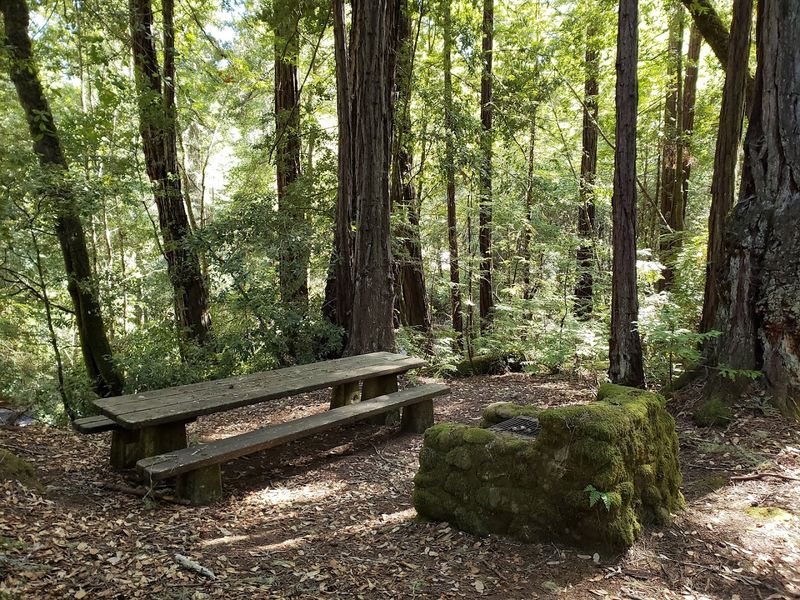
The road to this park is genuinely part of what makes it feel remote.
Alpine Road winds steeply through the Santa Cruz Mountains with tight curves, narrow lanes, and sections where two cars passing each other require careful coordination.
That kind of approach naturally filters the visitor population.
People who are not committed to the destination tend to turn around before reaching the park, which means the trails and campsites hold on to a quieter character that more accessible parks lose quickly on busy weekends.
The park sits approximately 50 miles south of San Francisco and about 25 miles northwest of San Jose, which places it within reach of millions of Bay Area residents while still feeling genuinely removed from suburban life.
No gas stations, convenience stores, or restaurants exist near the park, so arriving prepared is not optional.
The combination of distance, road difficulty, and lack of nearby amenities means that most visitors are intentional about being there, and that intentionality tends to shape the overall atmosphere in a positive way.
For anyone looking for a redwood experience that still feels earned rather than packaged, this park delivers that quality consistently.