12 California Lakes With Stunning Late-Summer Sunsets
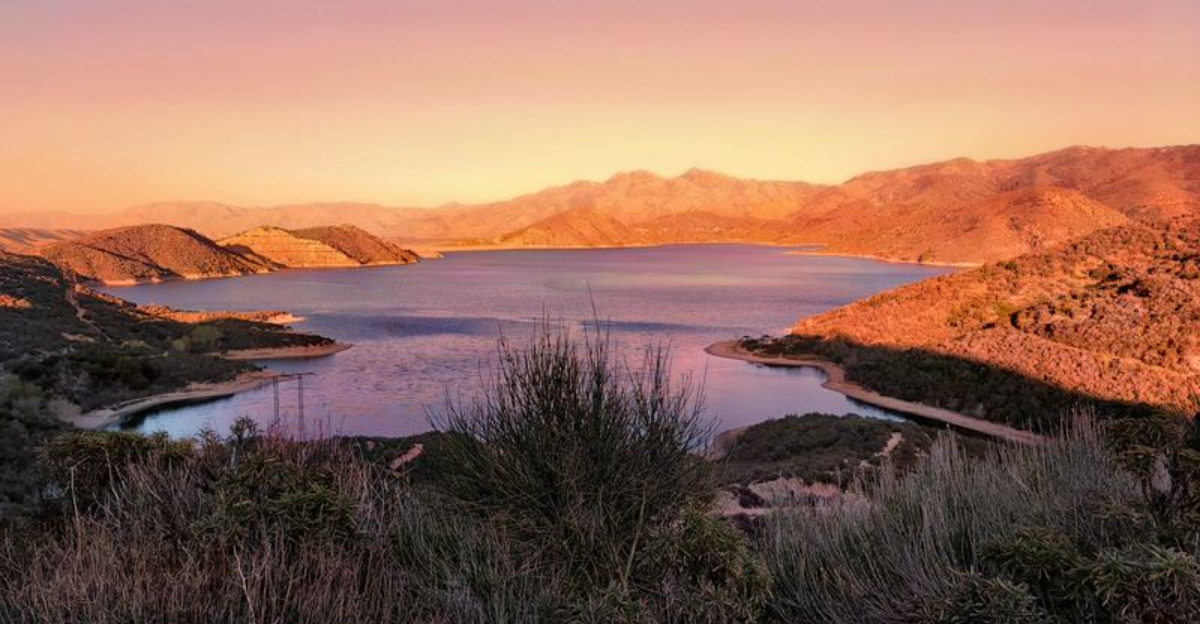
Late summer knows how to put on a dramatic goodbye.
The heat softens, the sky starts glowing, and a quiet lake can suddenly look like it belongs in a completely different season.
Gold spreads across the water. Pink catches in the clouds. Then the whole scene changes again before you have finished taking the first photo.
California lakes become especially memorable when sunset turns the shoreline into the best seat in the house.
So time your visit well. Bring a chair, stay past dinner, and resist packing up the second the sun touches the horizon. The colors often get better afterward.
You may come for swimming or a slow afternoon near the water, but the final hour can end up stealing the entire day.
1. Mono Lake, Lee Vining
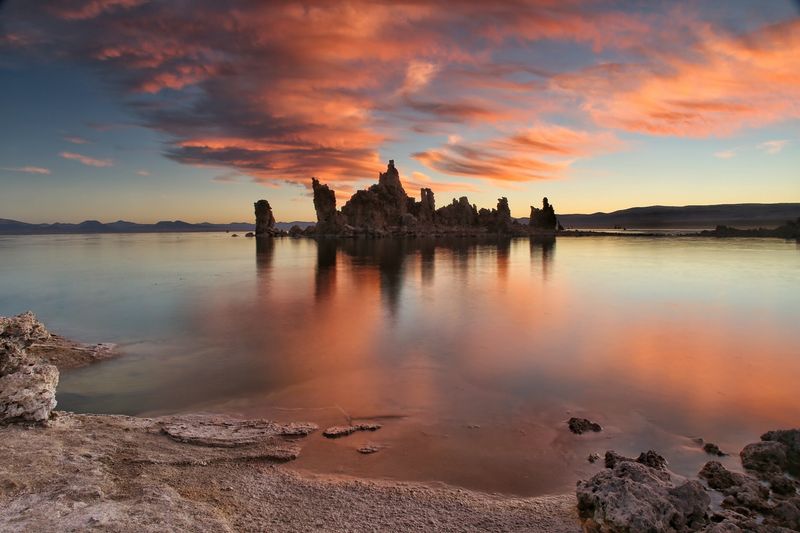
Few places on Earth look quite like Mono Lake at dusk.
The ancient alkaline lake sits on the eastern edge of the Sierra Nevada, and its tufa towers, tall calcium-carbonate formations that rise directly from the water, create one of the most otherworldly sunset foregrounds.
The wide-open basin allows the sky’s colors to spread fully across the horizon without obstruction.
Visiting the South Tufa area, located off Highway 395 near Lee Vining, puts visitors right among the formations as the light shifts from gold to deep orange.
A one-mile self-guided nature trail winds through the tufa grove, offering multiple vantage points to find a comfortable spot before the show begins.
Arriving at least an hour before sunset allows time to explore without feeling rushed.
The lake’s highly reflective surface tends to double the intensity of the colors overhead, making the visual effect especially strong on evenings with little wind.
Summer evenings here can draw crowds, so weekdays tend to feel more relaxed than weekends.
The quiet that settles in once the light fades is genuinely striking, and the transition from golden hour to deep blue twilight happens gradually enough to savor every stage.
2. Lake Tahoe, Sierra Nevada
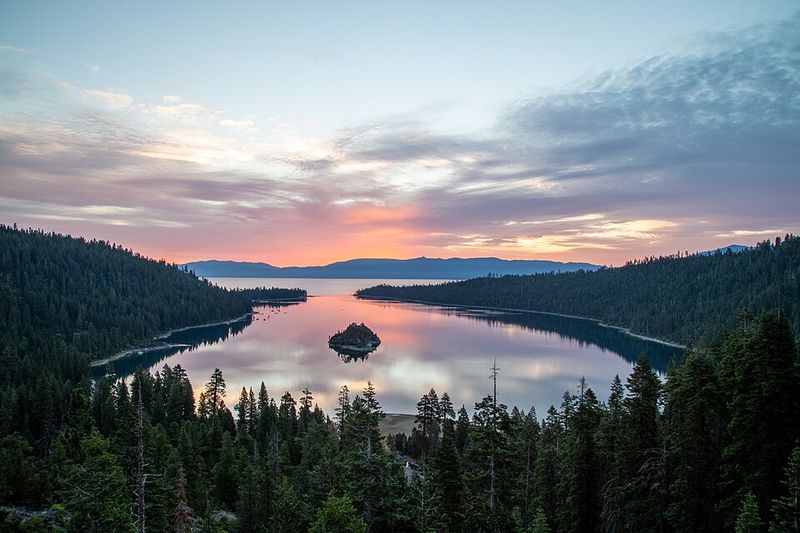
The sheer scale of Lake Tahoe makes a late-summer sunset feel like an event rather than just a moment.
Mountain silhouettes wrap around the water on nearly every side, and the lake’s famous clarity means reflections stay sharp and vivid even as the light dims.
Each section of the shoreline offers a noticeably different perspective, which makes exploring multiple spots across different visits worthwhile.
Sand Harbor on the North Shore is a popular choice, with large granite boulders providing a natural foreground against the open water.
The West Shore, near communities like Homewood and Tahoma, faces the setting sun directly, which tends to produce stronger and more saturated colors across the lake’s surface.
Eagle Rock, reachable by a short but steep trail, offers elevated panoramic views that stretch across a wide section of the water.
Cave Rock on the East Shore combines accessible parking with elevated lakeside views that frame the western mountains beautifully as the sun descends.
The size of the lake means that even on busy summer evenings, finding a quieter stretch of shoreline is usually possible with a little extra walking.
Temperatures drop noticeably after sunset, so bringing a light layer makes lingering through twilight much more comfortable.
3. June Lake, June Lake
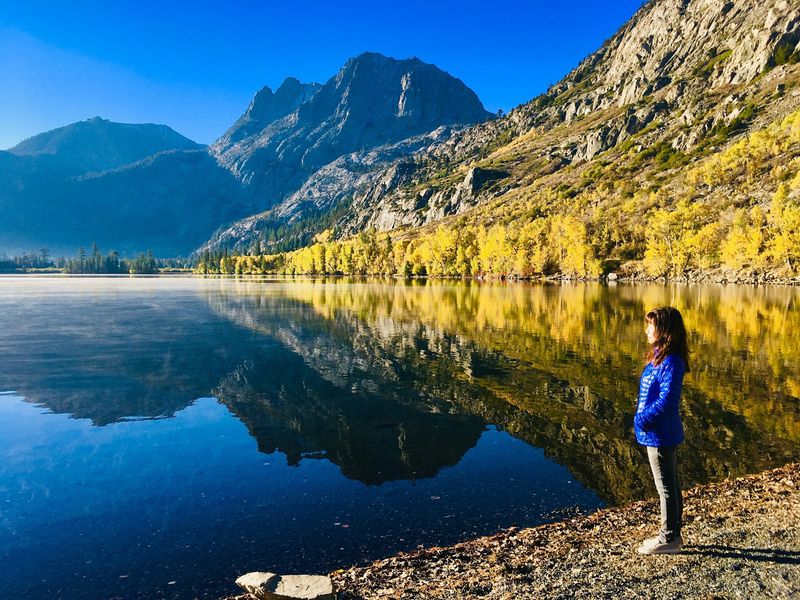
In a glacially carved valley in the Eastern Sierra, June Lake sits surrounded by some of the most dramatic high-altitude scenery in California.
The peaks that rise directly around the water are close enough to feel personal rather than distant, and the way late-summer light catches the upper ridgelines as the sun drops creates a warm glow that reflects clearly on the lake below.
The 16-mile June Lake Loop scenic drive, accessible via Highway 395, passes multiple pullouts and overlooks where visitors can stop and take in the views at a relaxed pace.
June Lake Beach on the northern shore offers a sandy and open spot to sit and watch the sky change, while a short drive up a nearby hill leads to a higher vantage point with broader panoramic views of the lake.
Pockets of aspen trees scattered around the shoreline catch the golden late-afternoon light in a way that adds warmth and depth to the scene.
The water tends to stay calm on summer evenings, which keeps reflections clear and consistent.
The overall atmosphere here feels unhurried, and the combination of accessible shoreline access and striking mountain surroundings makes it a reliable destination for a memorable late-summer evening.
4. Convict Lake, Mammoth Lakes Area
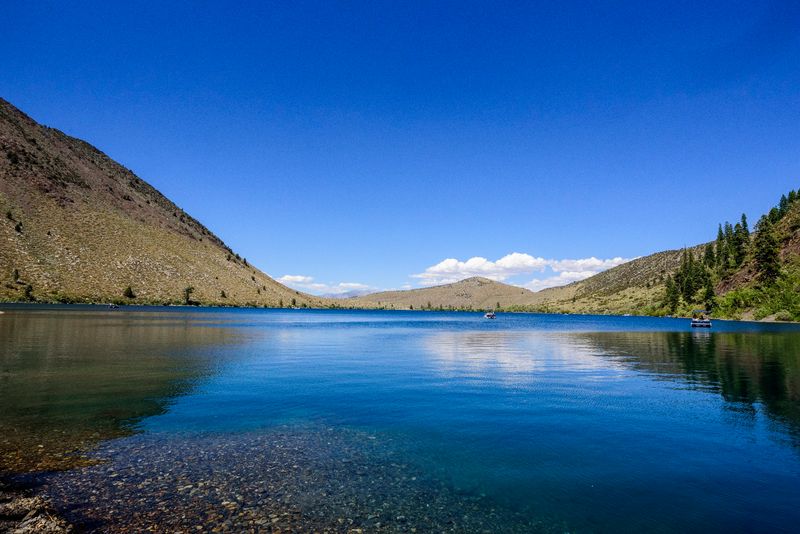
Convict Lake earns its reputation quickly. Steep peaks, including Mount Morrison, rise nearly 5,000 feet above the water’s edge, creating one of the most dramatic vertical landscapes.
The abrupt transition from shoreline to towering rock face gives the setting an intensity that is hard to replicate elsewhere, and the alpenglow that ignites the upper ridges during the final minutes of sunlight is genuinely striking.
Located about 10 miles south of Mammoth Lakes off Highway 395, the lake is straightforward to reach and offers a paved parking area near the shoreline.
A mostly flat trail circles the lake and provides access to multiple beach areas and viewpoints, making it easy to find a good spot without committing to a serious hike.
The east-facing aspects of the surrounding peaks tend to hold color longer as the sun moves west.
The calm water surface frequently mirrors the warm tones washing across the rock faces above, creating a layered visual effect that rewards patience.
Late summer tends to bring clear skies to the Eastern Sierra, which keeps the color range broad and the reflections sharp.
The atmosphere at the lake feels genuinely peaceful in the evening hours, with fewer visitors than midday and a noticeable drop in ambient noise as the day winds down.
5. Manzanita Lake, Lassen Volcanic National Park
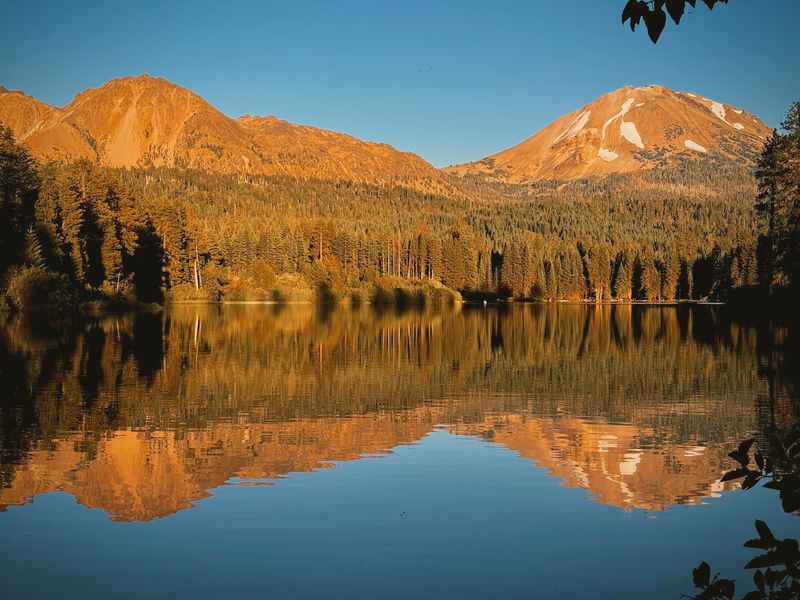
Calm water and a clear sightline toward Lassen Peak make Manzanita Lake one of the most photogenic evening spots in Northern California.
The lake sits near the northwest entrance of Lassen Volcanic National Park, making it one of the first and most accessible features visitors encounter.
On evenings with little wind, the water surface acts almost like a mirror, producing clean reflections of the volcanic peak and the surrounding conifer forest.
A gentle loop trail encircles the lake and takes roughly an hour to complete at a relaxed pace, offering changing perspectives of both the peak and the surrounding Chaos Crags as the light shifts.
The western shoreline provides particularly strong views across the water toward Lassen Peak, which tends to catch the last warm light of the day before the sky transitions to cooler tones.
The mountain air at this elevation, around 5,890 feet, stays crisp even during late summer, so the evenings feel noticeably refreshing compared to lower elevations.
Wildlife activity tends to increase near the water at dusk, adding to the sense of being in an active and living landscape.
The combination of volcanic geology, still water, and a reliable western horizon makes this lake a genuinely rewarding stop for anyone spending time in the northern Sierra.
6. Clear Lake, Lake County
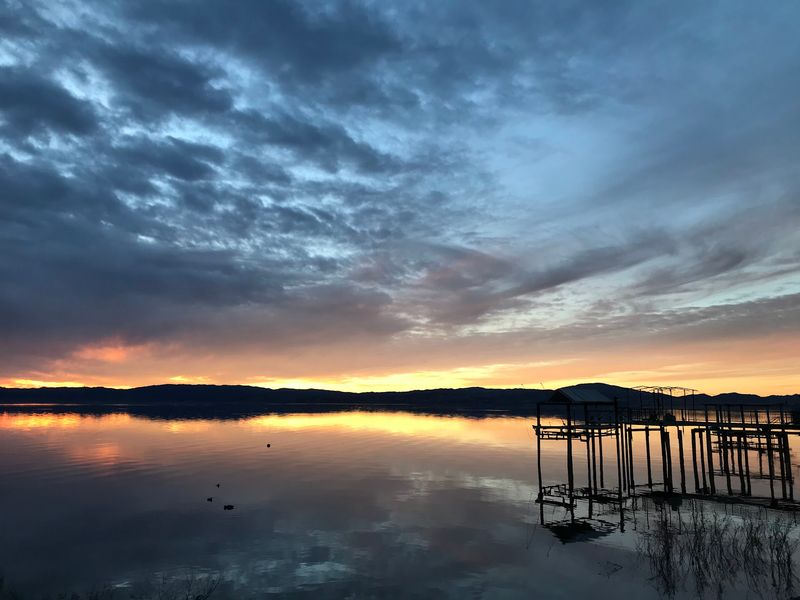
As the largest natural freshwater lake entirely within California, Clear Lake offers something that smaller mountain lakes simply cannot match: an enormous open water surface that lets the evening sky fully develop without any visual interruption.
The broad western horizon means the sun sets cleanly over the water, and the surrounding hills frame the scene without blocking the light.
Viewing spots along the north shore, including areas near Clearlake Oaks and Lucerne, offer open shoreline access with Mount Konocti visible in the distance as a natural focal point.
Library Park in Lakeport provides a flat grassy waterfront area that tends to attract a relaxed mix of locals and visitors during summer evenings.
The wide lawns and unobstructed water views make it a comfortable place to settle in well before sunset without needing to hike or scout a specific spot.
Gentle breezes across the water are common in the late afternoon, which can create subtle ripple patterns that catch and scatter the warm light in interesting ways.
The surrounding hills take on deeper, moodier tones as the sky shifts from orange to purple after the sun drops.
The scale of the lake makes it feel genuinely expansive, and that openness gives late-summer sunsets here a spacious, unhurried quality that is easy to appreciate.
7. Big Bear Lake, Big Bear Lake
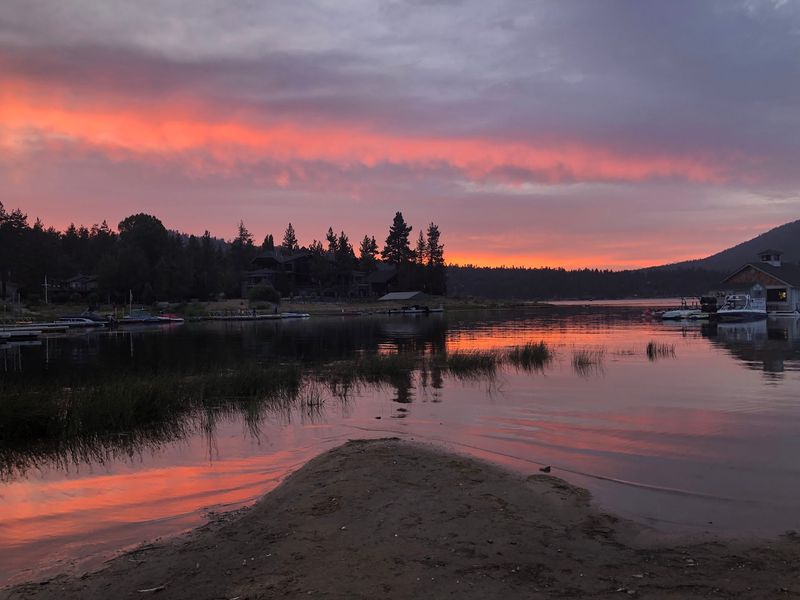
Southern California does not always come to mind when thinking about alpine lake sunsets, but Big Bear Lake delivers that experience reliably.
Pine-covered ridges of the San Bernardino Mountains wrap around the water on multiple sides, and the elevation, around 6,752 feet, keeps the air noticeably cooler than the valleys below.
The North Shore offers several accessible viewpoints along the shoreline, including the Stanfield Marsh Boardwalk and sections of the Alpine Pedal Path, where visitors can watch the evening light move across the water.
Juniper Point Picnic Area provides a quieter alternative for those looking to avoid the more popular gathering spots, with open views toward the water and the surrounding ridgelines.
Boulder Bay Park adds a slightly different perspective, with small rocky islands visible within the bay that catch the fading light well.
Renting a small boat and watching the sunset from the middle of the lake is an option that puts the mountain scenery on all sides at once, which can feel especially immersive.
The water surface tends to reflect the warmer colors of the sky effectively during calm evenings.
As the light fades, the mountain air cools quickly, making it worth keeping a layer nearby if planning to stay through the full transition to twilight.
8. Shasta Lake, Shasta County
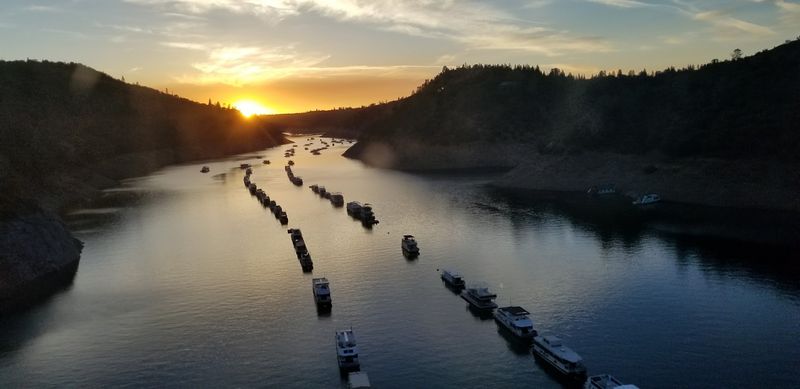
Shasta Lake operates on a different scale than most California reservoirs.
As the state’s largest reservoir, its sprawling arms reach deep into the surrounding forested hills, creating dozens of coves and inlets that each offer their own sheltered view of the evening sky.
The sheer variety of shoreline access points means finding a quiet spot for a late-summer sunset rarely requires much effort.
Walking across Shasta Dam provides one of the more unexpected sunset vantage points in Northern California, with the water stretching northward and the distant profile of Mount Shasta sometimes visible on clear evenings.
The contrast between the red clay banks along the water’s edge and the dense green forest above creates a naturally layered visual that shifts dramatically as the light changes color.
Forested hillsides reflect warmly in the calmer coves, especially during the final hour before dark.
The lake’s surface becomes particularly reflective during still evenings, turning the warm glow of the setting sun and the mountain silhouette into a doubled image on the water.
Late summer skies in Shasta County tend to stay clear, which keeps the color range broad and the transition from golden hour to deep blue sky gradual and visually satisfying.
9. Folsom Lake, Folsom
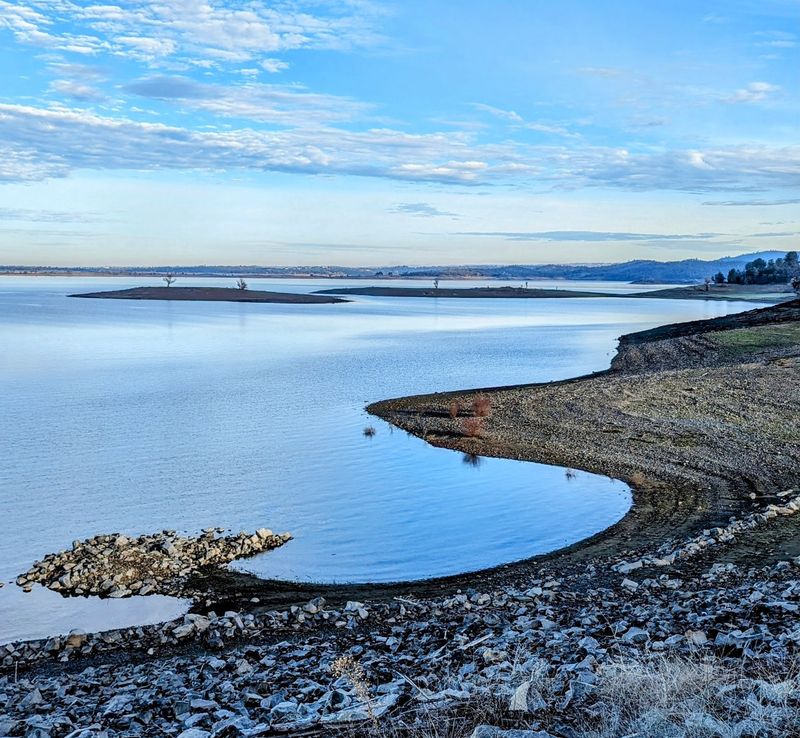
For residents of the Sacramento area, Folsom Lake offers a convenient and genuinely scenic option for catching a late-summer sunset without a long drive into the mountains.
The reservoir’s broad water surface and open shoreline provide plenty of room for the evening sky to spread and reflect, and the surrounding Sierra Nevada foothills give the horizon a natural and varied edge.
Folsom Point and the areas around Brown’s Ravine are known for offering solid sunset views, with open water stretching westward and the foothill terrain visible in multiple directions.
Granite Bay, on the northwestern shore, adds a sandy beach and picnic areas to the mix, making it a natural gathering spot for families and groups looking to extend an afternoon outing into the evening.
Some sections near Mormon Island Dam can also provide elevated views that frame the water and the descending sun effectively.
Late afternoon temperatures at Folsom Lake tend to be more forgiving than midday summer heat, which makes arriving an hour or two before sunset a comfortable and practical approach.
The open water reflects the sky’s changing colors clearly on calm evenings, and the transition through golden hour tends to be gradual enough to enjoy without feeling rushed.
Weekday visits generally feel quieter than summer weekends at this well-used recreation area.
10. Silverwood Lake, San Bernardino County
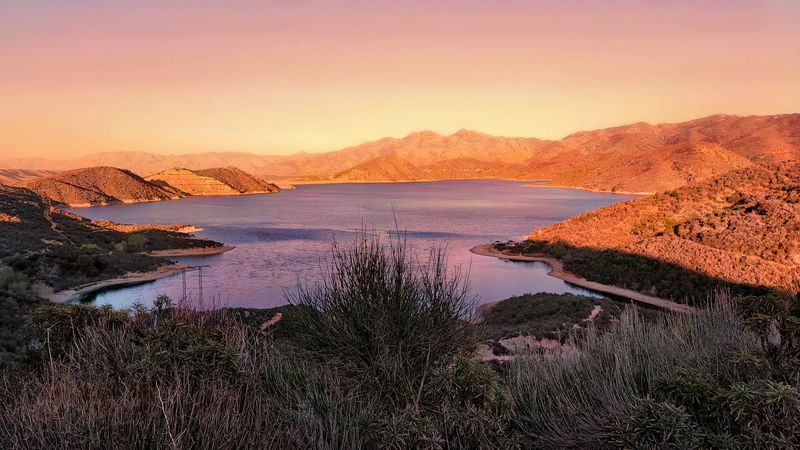
Sitting at roughly 3,350 feet in the San Bernardino Mountains, Silverwood Lake occupies a unique position between high desert and alpine environments that gives its sunsets a visual character unlike anything found at lower elevations.
The mountain ridges that wrap around the reservoir create strong, clean silhouettes as the sun drops, and the contrast between the dark ridgelines and the warm colors of the sky tends to be especially sharp during late summer.
Accessible via Highway 138, the lake sits within Silverwood Lake State Recreation Area, and the west shore in particular is noted for offering panoramic views that take in both the water and the surrounding peaks.
Sections of the Pacific Crest Trail pass through the area and provide opportunities for evening walks with elevated viewpoints that reveal the lake from above the shoreline.
The combination of trail access and open water views makes it possible to experience the sunset from multiple angles within a single visit.
The atmosphere at Silverwood tends to feel quieter and more remote than some of the more heavily visited Southern California lakes, which adds to the overall sense of calm during evening hours.
Wind often settles down as the sun gets lower, leaving the water surface smooth enough to catch clear reflections of the ridgeline silhouettes.
The cooling air after sunset carries a noticeable freshness that makes staying through twilight genuinely enjoyable.
11. Tenaya Lake, Yosemite National Park
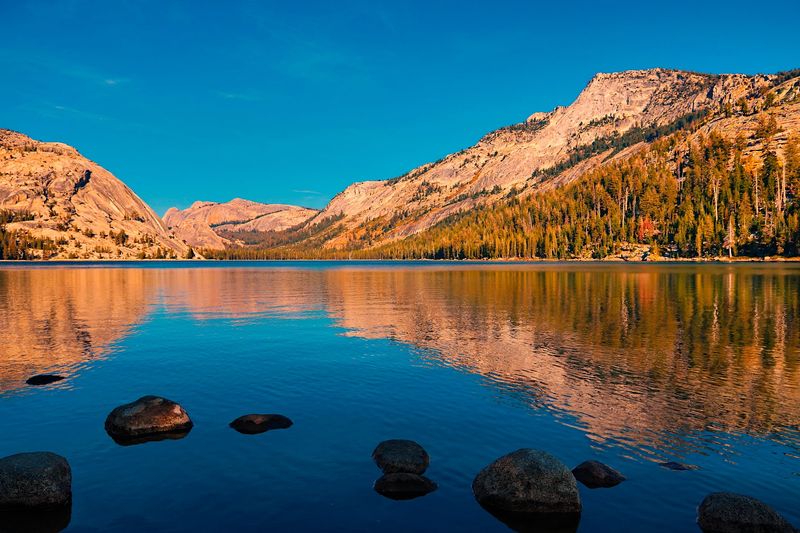
Granite defines everything at Tenaya Lake. Smooth, pale domes and steep rock faces rise directly from the shoreline on multiple sides.
The way late-summer light moves across those surfaces during the final hour of daylight gives the scene a texture and warmth that is hard to find elsewhere in Yosemite.
The lake itself is one of the larger bodies of water in the park’s high country, and its open surface reflects the surrounding geology clearly on calm evenings.
Olmsted Point, located a short distance west of the lake along Tioga Road, offers an elevated aerial perspective of both the lake and the surrounding High Sierra landscape that is worth stopping for before heading down to the shoreline.
Stately Pleasure Dome, the rounded granite formation that rises above the lake’s south side, catches the warm late-day light in a way that makes it a natural focal point for evening photography.
Picnic areas near the water provide a comfortable place to settle in and watch the light shift.
Tioga Road, which provides access to this part of Yosemite, is typically open from late spring through late fall, making late-summer visits feasible for most years.
The high elevation, around 8,150 feet, keeps temperatures cool even on warm summer days, so evenings here feel noticeably crisp.
The surrounding wilderness amplifies the quiet, turning the transition from golden light to deep blue sky into a genuinely immersive experience.
12. Bass Lake, Madera County
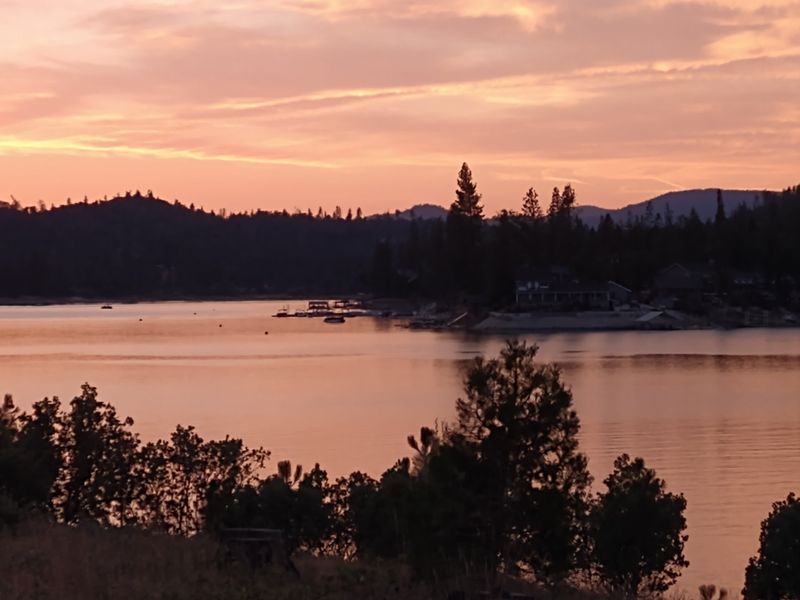
Bass Lake sits at around 3,400 feet in the Sierra Nevada foothills near Oakhurst, and the way the surrounding forested hills soften the late-summer light gives the evenings here a warm and relaxed quality.
The lake’s relatively sheltered position means the water tends to stay calm in the early evening hours, which keeps reflections of the sky and the tree-covered ridges clear and well-defined as the sun descends.
Falls Beach on the north shore offers a sandy and open shoreline where visitors can spend the afternoon and stay through sunset without needing to relocate.
The Pines Resort, situated along the lakefront, provides an option for lakeside dining with a direct view of the water and the hills beyond as the light changes.
The shoreline road that circles the lake passes multiple pullouts and access points, making it easy to find a comfortable spot based on the direction of the light on any given evening.
Boats drifting gently across the water in the early evening add a peaceful, unhurried quality to the scene that feels distinctly different from higher alpine lakes.
The foothills here are covered in pines and oaks, and the combination of those tree types creates a layered texture on the hillsides that catches warm light in varied and interesting ways.
Late summer tends to bring some of the clearest skies of the year to this part of the Sierra, which keeps the color range vibrant through the full transition to dusk.