Dworshak Visitor Center In Ahsahka, Idaho, Overlooks The Dam Where The North Fork Meets The Clearwater River
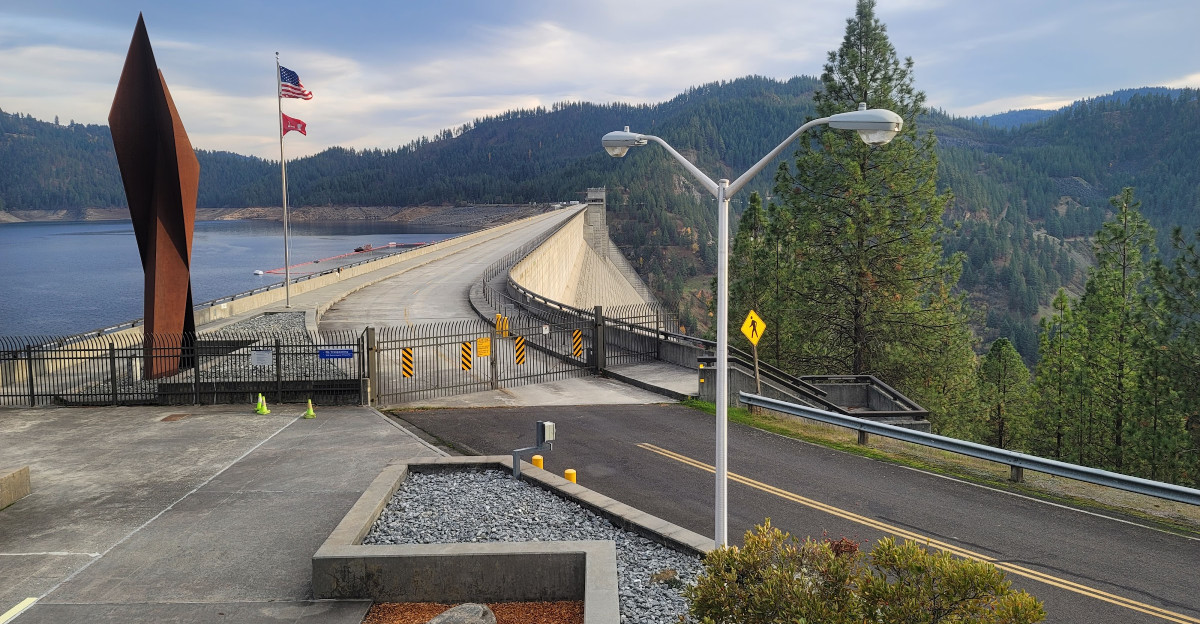
A concrete wall 717 feet tall holds back a reservoir that stretches more than 50 miles into the Idaho backcountry. It ranks as the third tallest dam in the United States.
Nobody poured that much concrete just to sit quietly.
It’s also the tallest straight-axis concrete dam in the Western Hemisphere.
In summer, guided tours lead small groups through a gallery deep inside it. Then you ride up a tower and stroll along the very top.
I like how the whole story gets told from one perch.
A small building sits right above the river, looking straight across at the giant. Inside, three floors cover log drives, wildlife, and the people who built the thing.
I can’t imagine a better excuse for a weekday drive. So how does a place this massive stay so easy to visit?
A Front-Row Seat Above A 717-Foot Wall Of Concrete
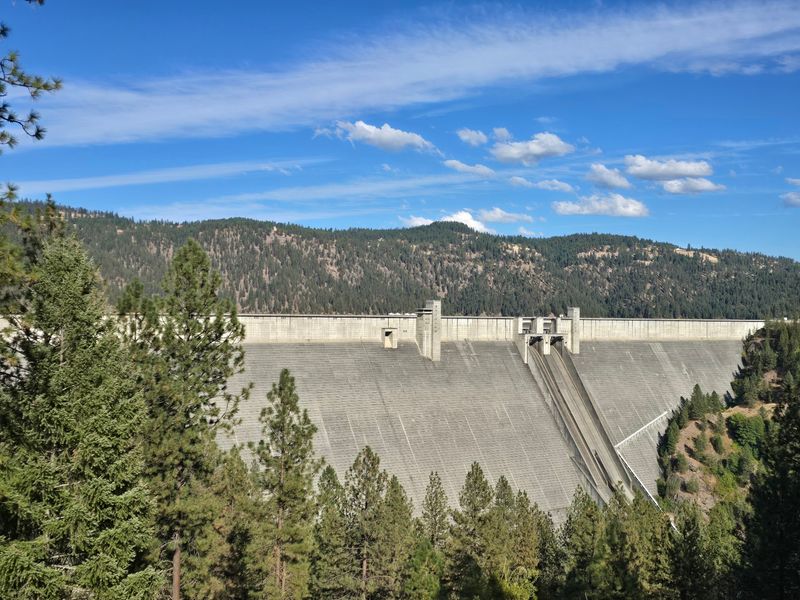
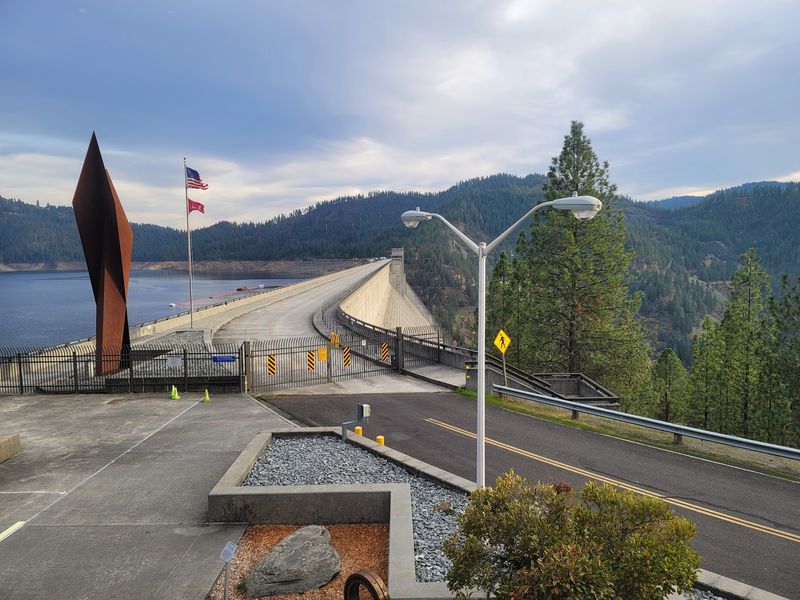
Few buildings get a view this dramatic. The Dworshak Visitor Center sits on a bluff facing one of the biggest dams in America.
The dam blocks the North Fork of the Clearwater River in north central Idaho. Just downstream, that fork joins the main Clearwater River near the tiny community of Ahsahka.
The U.S. Army Corps of Engineers runs the whole complex.
That means the center works as both a museum and a welcome desk for the dam and reservoir.
Out the windows, the concrete stretches 3,287 feet from canyon wall to canyon wall. It’s the kind of number that sounds made up until you see it in person.
The dam rises 717 feet, which earns it third place among the tallest dams in the country. It also holds the title of tallest straight-axis concrete dam in the Western Hemisphere.
Inside, the center answers the obvious question of how anyone built this. Outside, the view keeps asking it again.
That back-and-forth makes the Dworshak Visitor Center a great first stop. Everything else in the area seems to start right here.
The Senator, The Old Name, And A Very Long Pour
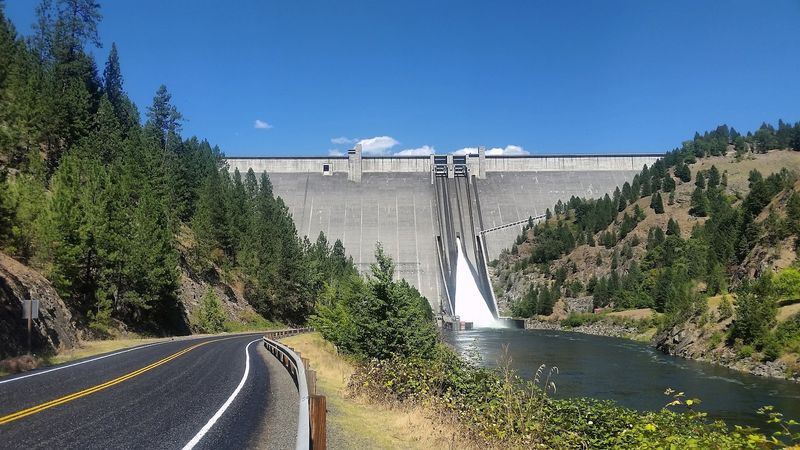
Bruces Eddy Dam. That was the original name when Congress authorized the project in 1962.
A year later, it was renamed for Senator Henry Dworshak of Idaho. He had played a key role in getting the project approved in Washington.
Construction kicked off in 1966. Crews spent the next several years turning a river canyon into a concrete gravity dam.
By 1972, the dam began operating for flood control. Its turbines started generating electricity in 1973.
The dam serves more than one job. Power, flood control, and support for fish and wildlife all fall under its mission.
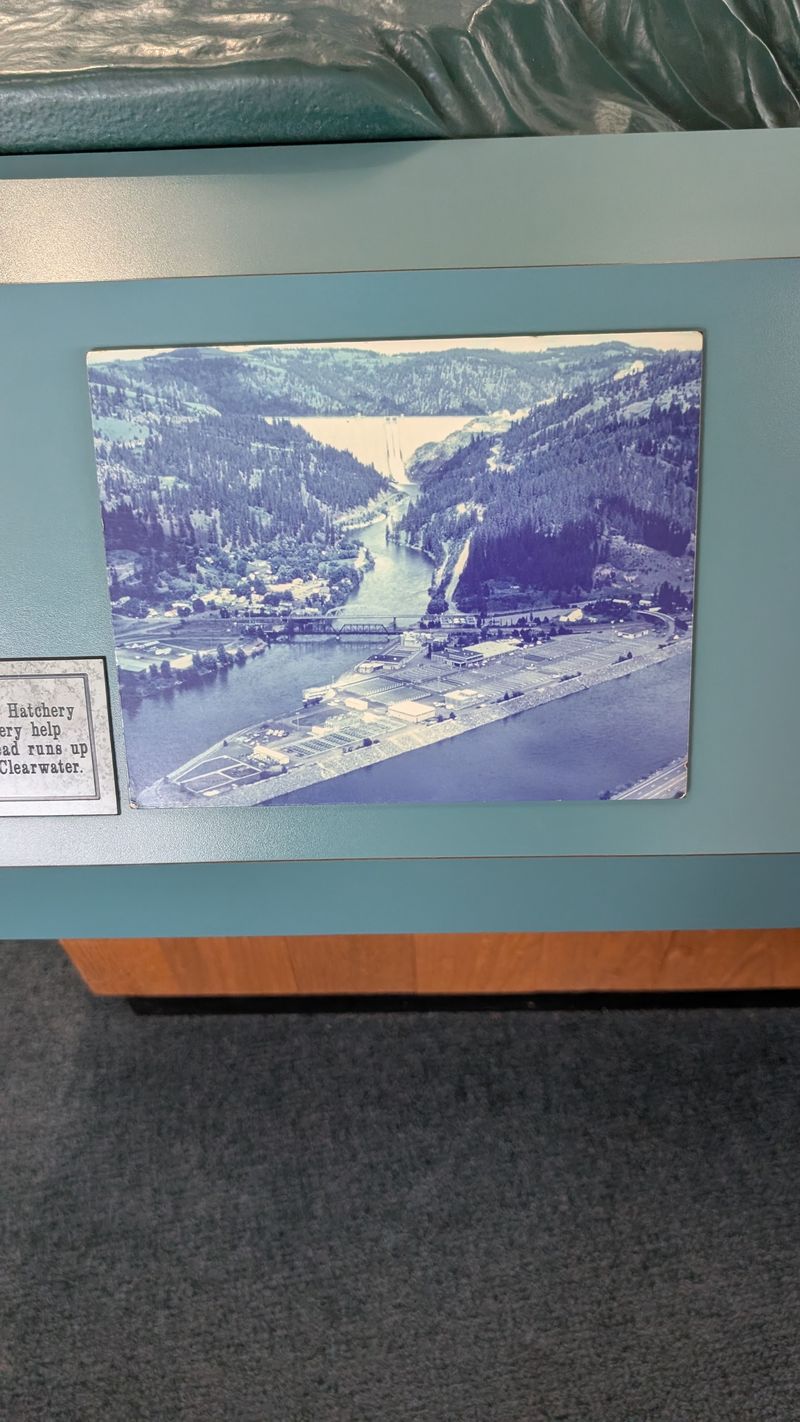
One detail shaped the area for good. The dam stood too tall for fish ladders to work, so a hatchery was built downstream in 1969.
That bit of history explains a lot about what you’ll see nearby. The dam and the fish story are tied together from the start.
Historical photos inside the visitor center show the construction years. Seeing bare canyon walls before the concrete arrived makes the finished dam feel even bigger.
Three Floors Of Exhibits Worth Climbing For
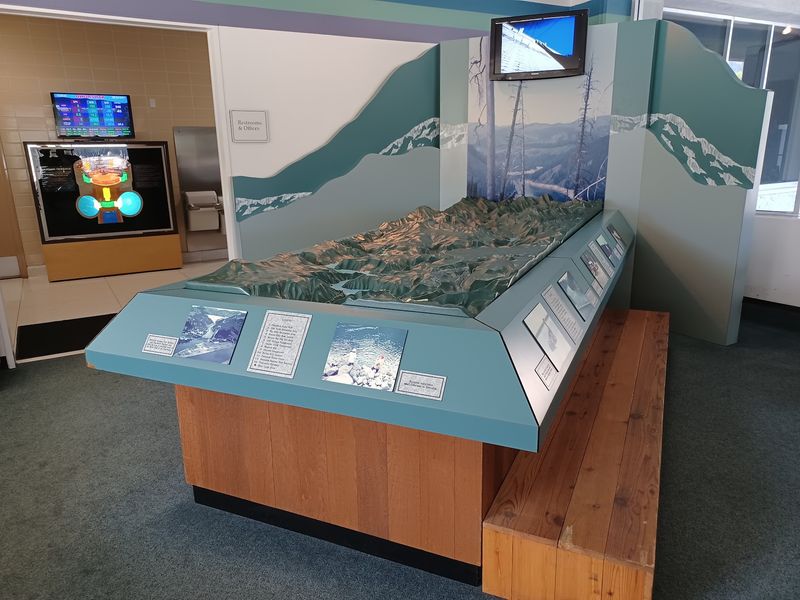
Stairs are part of the fun here. The Dworshak Visitor Center spreads its exhibits across three floors.
The displays cover a wide range. You’ll find sections on power operations alongside the history and culture of the surrounding area.
Large interactive maps help make sense of the landscape. They connect the dam, the river, and the reservoir in a way a road map never could.
A scale model of the dam and reservoir is a highlight. It shows the canyons and water inlets in miniature, which helps explain just how far the water reaches.
Historical photos from the construction era line the exhibits too. So do images tied to the old log floats that once moved timber down the river.
None of the floors are huge, so the visit stays manageable. That’s good news for anyone traveling with short attention spans in the back seat.
Engineering fans will find plenty of technical detail to chew on. Casual visitors can wander, read a few panels, and still leave knowing far more than when they arrived.
Grab A Seat For The Last Of The Log Drives
Logs once rode the river by the thousands. A film in the center’s theater tells that story.
It’s called “The Last of the Log Drives.” The title alone tells you this was the end of an era on the Clearwater.
Timber crews used to float logs downstream to the mills. The film captures that work before the practice wrapped up for good.
A second feature, “Dworshak Construction,” covers the building of the dam. Watching both back to back gives a neat before-and-after look at the river.
The theater makes a welcome break between exhibit floors. It’s a chance to rest your legs and still learn something.
The log drive film runs short, so it fits into almost any schedule. Even restless kids can usually make it to the credits.
I believe the films are the most underrated part of the visit. They turn photos on the wall into people, machines, and moving water.
Plan a few extra minutes for at least one screening. The dam looks a little different once you know what came before it.
Osprey, Eagles, And Paw Prints For Little Explorers
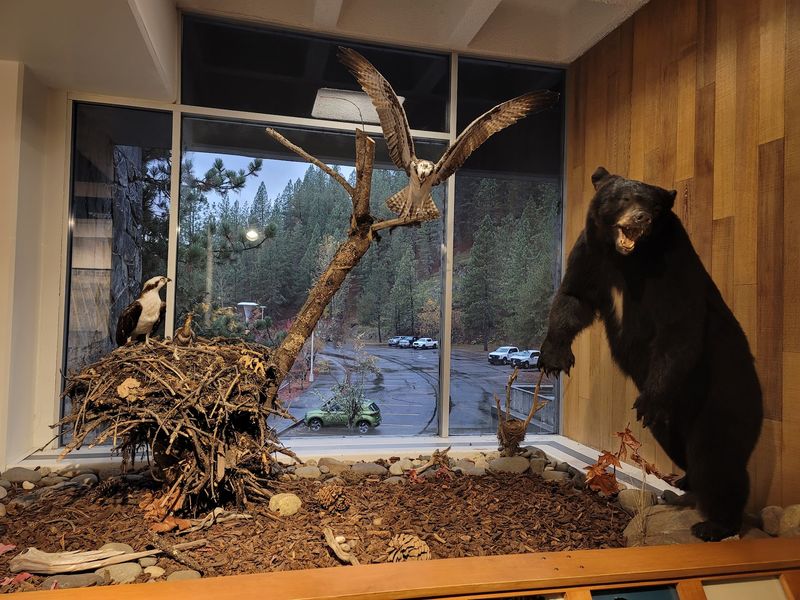
Kids get their own corner of discovery here. The children’s learning area focuses on the wild animals that live around the dam.
Taxidermy wildlife displays fill parts of the exhibits. An osprey and a bald eagle are among the birds on view.
One activity teaches young visitors to identify animals by their tracks. It’s a clever skill that might come in handy on the next hike.
The hands-on approach keeps things moving for younger guests. Reading panels is fine, but matching a paw print feels like a game.
Families will find plenty to do without rushing. The exhibits are built with curious minds in mind, and the space never feels overwhelming.
Wildlife in this part of Idaho goes far beyond birds. The displays give a glimpse of the critters that call the Clearwater country home.
For parents, it’s an easy win on a road trip. Education sneaks in while everyone thinks they’re just having fun.
Bring along any budding naturalists in the family. They might leave with a new favorite bird and a few track patterns memorized.
Souvenirs, Brochures, And A Shelf Full Of Stuffed Animals
Every good outing deserves a souvenir. The center has a small gift shop operated by Discover Your Northwest.
The shelves carry t-shirts and hats for the practical shopper. Stuffed animals are there for the youngest members of the crew.
Collectors have options too. Postcards, lapel pins, and patches make easy keepsakes that pack flat.
Patches and pins are especially handy for travelers who track their stops. A Dworshak Dam patch on a backpack is a nice conversation starter.
The front desk is another useful resource. A variety of brochures and handouts cover the dam and the surrounding region.
Those handouts help plan the rest of the day. They’re a good way to learn about recreation spots before heading up to the reservoir.
The staff and volunteer hosts at the desk know the area well. Questions about the dam’s history or nearby stops are welcome.
Leaving with a hat and a brochure feels about right here. One reminds you where you went, and the other tells you where to go next.
Fifty-Plus Miles Of Reservoir Waiting Upstream
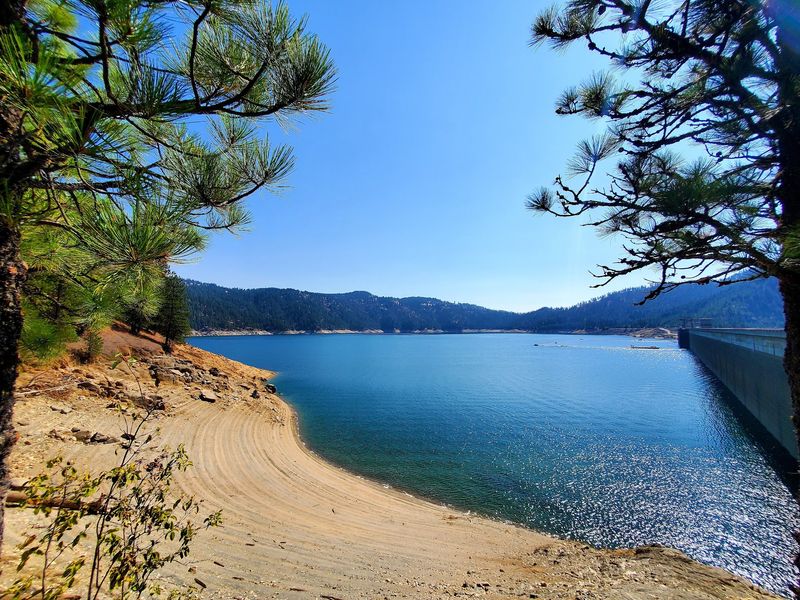
Behind that wall sits a lot of water. The dam created Dworshak Reservoir, which stretches roughly 53 to 54 miles upstream.
That much shoreline opens up plenty of recreation. Boating and water-skiing are popular ways to spend a warm day.
Camping is available along the reservoir as well. Campgrounds and a marina are part of the broader area.
Anglers have good reason to visit too. Fishing ranks among the main draws on the water.
The surrounding lands add more options. Hiking and hunting both take place in the country around the reservoir.
With so many miles of water, crowding is rarely the big concern. There’s room for quiet coves and busy boat launches alike.
The scale model inside the visitor center helps with planning. Seeing all those inlets in miniature makes the real thing easier to picture.
Think of the center as a trailhead for the whole reservoir. Learn the story first, then go enjoy what the dam made possible across this corner of Idaho.
Weekday Hours, Summer Bonus Days, And Finding Viewpoint Road
Timing matters more than usual here. The schedule shifts with the seasons, so a little planning goes a long way.
From Memorial Day weekend through Labor Day weekend, the center opens seven days a week. That’s the peak window, and it lines up with public dam tours.
The rest of the year, it’s typically open Monday through Friday. Weekends are usually closed outside of summer.
Federal holidays also affect the schedule. Check before driving, especially if your trip lands on a holiday.
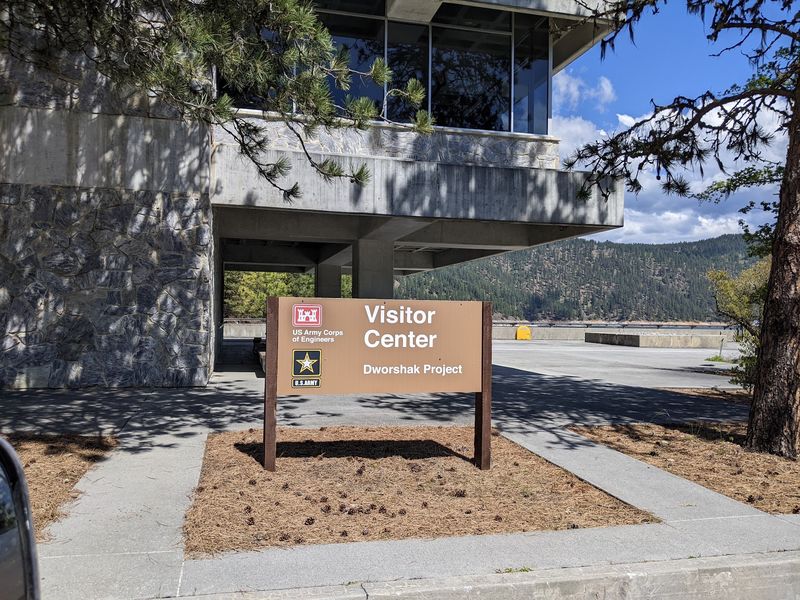
The Dworshak Visitor Center sits at 1842 Viewpoint Rd, Ahsahka, ID 83520. The road name is a pretty good hint about what’s waiting at the end.
Ahsahka sits along the Clearwater River in north central Idaho, close to Orofino. Highway 12 travelers can make it a scenic detour.
Winter visits still have their perks. Staff remain on site and ready with information during the quieter months.
Remember that summer is the only reliable time for public tours. Everything else on this list works almost any weekday of the year.