From Lava Fields To Fossil Beds, 9 Idaho National Landmarks Spread Across One State
Apollo astronauts once studied volcanic rock in southern Idaho before heading to the moon. NASA sent them to learn geology on ground that looks like it belongs in space.
That is only one stop on this list. Another site holds the Hagerman Horse, the official state fossil.
Another is a church raised in the 1850s without nails.
I love how wildly different these places are from one another. Idaho packs ancient lava, granite towers, tribal history, and hard World War II lessons into a single road trip map.
Some sit right off the interstate, while others ask for a longer drive and good boots.
The common thread is that each one earned national recognition for a real reason. I can’t think of a better excuse to fill the gas tank.
So which one is closest to your house, and which one have you somehow never seen?
1. Craters of the Moon National Monument & Preserve
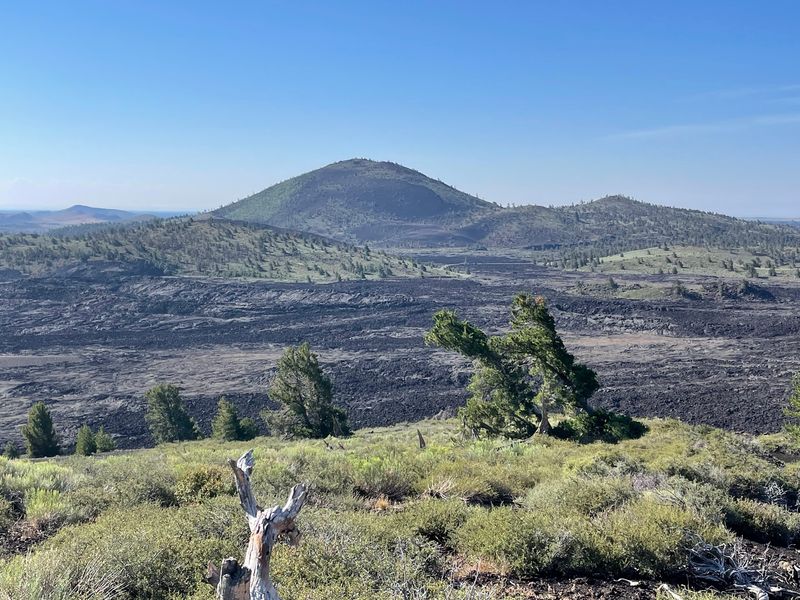
Astronauts headed for the moon came here first, which tells you plenty about the scenery. In 1969, NASA brought Apollo crews to this stretch of the Snake River Plain to study volcanic geology.
You’ll find sprawling dormant lava fields, cinder cones, and splatter cones scattered across the landscape. Paved paths and cinder trails make the strange terrain easy to explore, even with kids in tow.
Much of the drama traces back to the Great Rift, a long crack in the earth that fed eruptions over thousands of years. The most recent flows happened roughly 2,000 years ago, which is yesterday in geology terms.
Lava tube caves add an underground bonus. You’ll need a free cave permit from the visitor center before heading in, and it’s worth checking which caves are open.
After sunset, the show moves upward. The monument is an International Dark Sky Park, so the stars here get serious room to shine.
Camping, picnic tables, and a visitor center round out the practical side. Bring water, sun protection, and sturdy shoes, because lava rock is not gentle on soles.
For an Idaho day trip that feels like leaving the planet, few drives compare.
Address: 1266 Craters Loop Rd, Arco, ID 83213
2. Hagerman Fossil Beds National Monument, Hagerman, ID
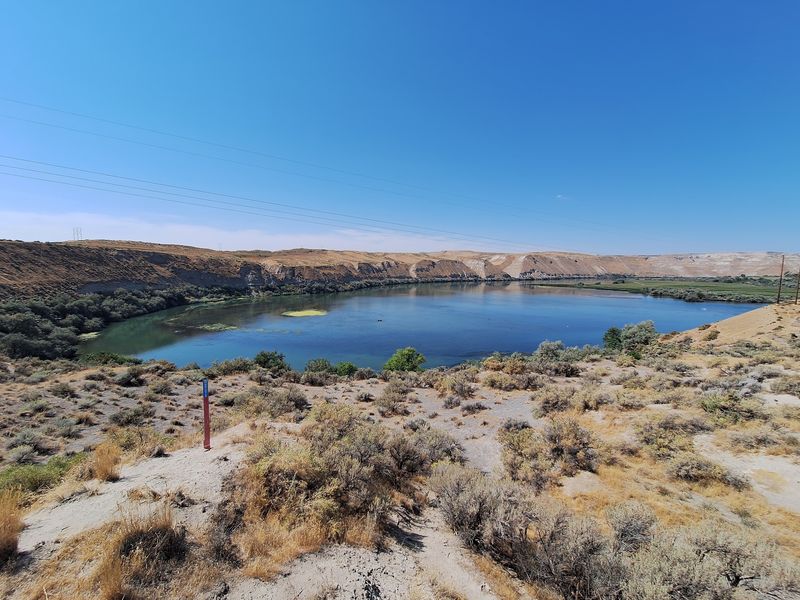
Long before potatoes, Idaho had zebra-like horses grazing along an ancient river. The Hagerman Horse, now the official state fossil, turned up here in remarkable numbers.
Scientists date the fossils to the Pliocene epoch, roughly three to four million years ago. The bluffs along the Snake River in the Magic Valley preserved a snapshot of that lost world.
Researchers have recorded more than 200 species from these beds. The list includes saber-toothed cats, mastodons, and a hefty beaver that would make modern ones look tiny.
You can’t wander onto the dig sites, since the fossils are fragile and protected. Instead, the visitor center in town shows cast replicas and exhibits that explain what came out of the ground.
Out on the monument, an overlook gives you a look at Oregon Trail wagon ruts still pressed into the land. Pioneers rolled past these bluffs with no idea what was buried beneath them.
Families tend to like the mix of picnic spots and quick stops. Pair it with a drive through the Hagerman Valley for a relaxed Magic Valley outing.
Check visitor center days before you go, since schedules shift by season.
Address: 17970 US-30, Hagerman, ID 83332
3. City of Rocks National Reserve
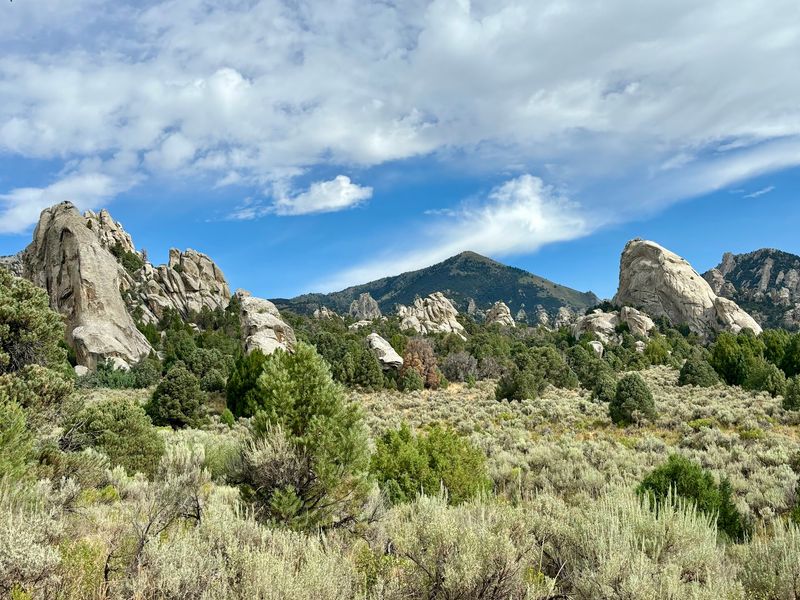
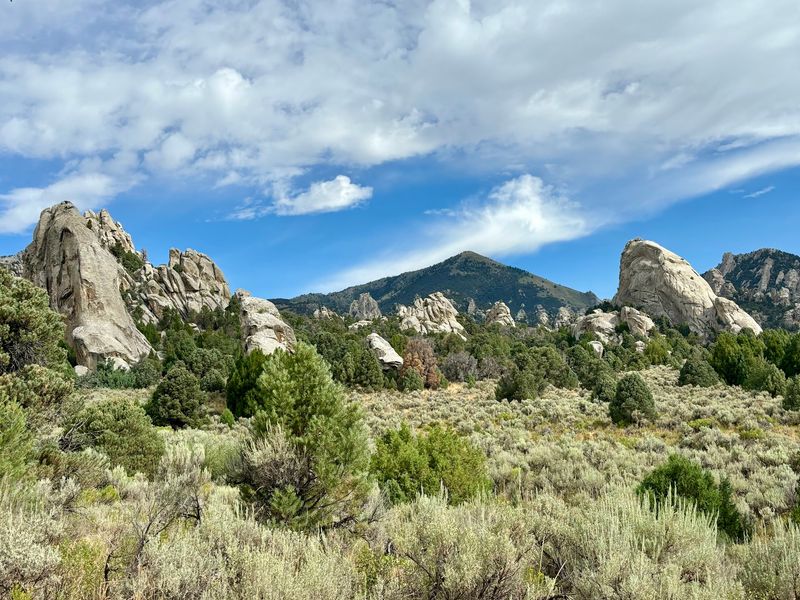
Wagon trains on the California Trail used these granite towers as a road sign. Some emigrants even painted their names in axle grease on the rocks, and a few signatures remain.
The reserve covers about 14,407 acres of pinnacles, fins, and domes south of Burley. Part of the granite is around 2.5 billion years old, among the oldest rock in the region.
Climbers know this place well. Hundreds of routes run from beginner friendly to seriously tough, drawing people from far beyond Idaho.
You don’t need a harness to enjoy it, though. Short hikes, mountain biking, and horseback riding open up the landscape for everyone else.
The campground has 63 sites, and Finger Rock is a favorite place to catch the sunset. Once the light fades, the reserve’s International Dark Sky Park status shows off.
It also shelters Idaho’s largest pinyon-juniper forest, including the state champion pinyon pine. Shoshone, Paiute, and Bannock people hunted and gathered here long before wagons arrived.
Stop by the visitor center in Almo for maps and guide booklets. Some roads can get rough from November through April, so check conditions first.
Address: 3035 S Elba-Almo Rd, Almo, ID 83312
4. Minidoka National Historic Site Visitor Center, Jerome, ID
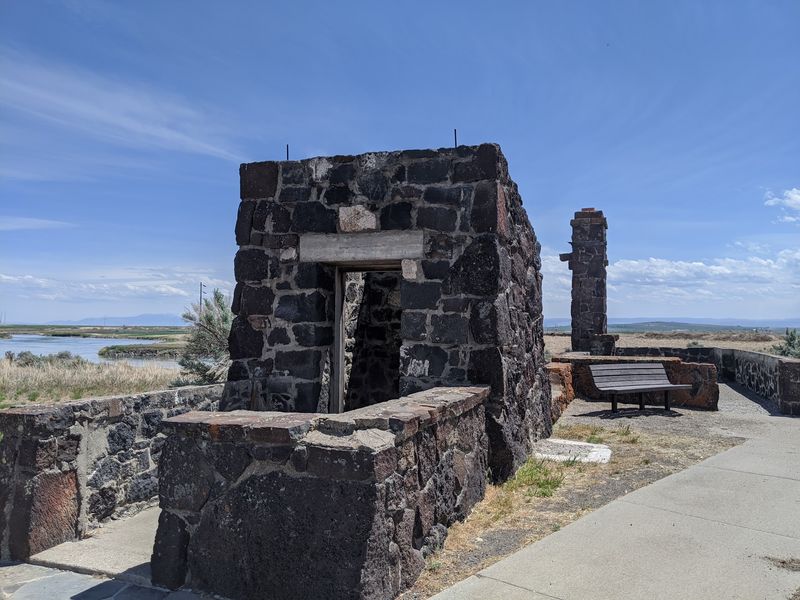
More than 13,000 people lived behind barbed wire on this patch of Magic Valley farmland during World War II. They were Japanese Americans removed from their West Coast homes because of their ancestry.
The camp was called Hunt, and it once ranked among the larger communities in Idaho. Today the National Park Service keeps its story in front of new generations.
Start at the visitor center, where exhibits and photographs explain how the camp came to be. A park film adds voices and context that signs alone can’t provide.
From there, a 1.6-mile walking path loops past interpretive signs and historic buildings. A reproduction guard tower and fence show exactly what families faced each day.
Some details hit especially hard. A replica Honor Roll lists people from Minidoka who served in the U.S. military while relatives stayed confined here.
A restored ballfield and an original barrack bring daily life into focus. It’s a quiet, thoughtful stop, best taken slowly.
The visitor center keeps a limited weekly schedule, so check before you drive out. Bring water and a hat, because the trail crosses open ground with little shade.
Address: 1428 Hunt Rd, Jerome, ID 83338
5. Nez Perce National Historical Park Visitor Center, Lapwai, ID
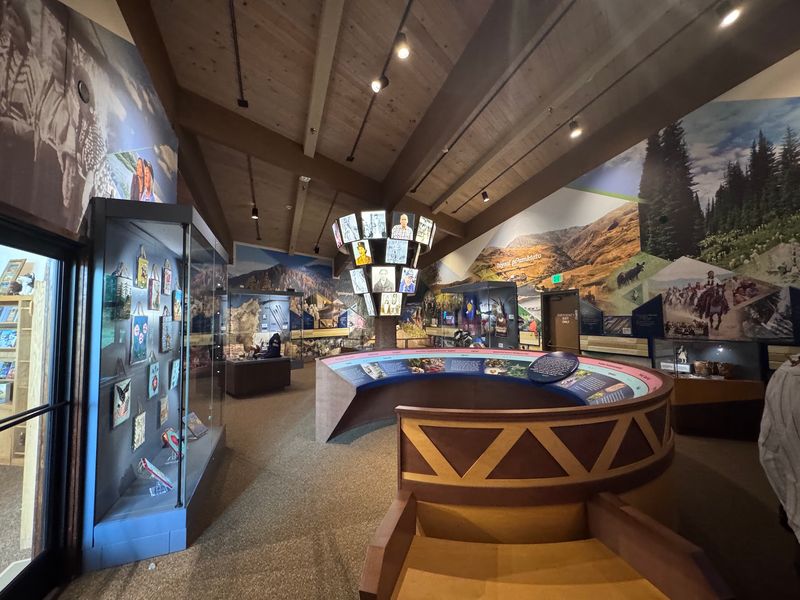
Most national parks guard one spot, but this one stretches across dozens of sites in several states. The visitor center near Lapwai serves as the home base for the whole story.
That story belongs to the Nez Perce people, known in their own language as the Nimiipuu. The park shares their history and culture in places tied to their homeland.
Inside, cultural exhibits introduce traditions, artwork, and daily life across many generations. Historical films fill in the bigger picture, so plan time to sit and watch.
You’ll find the center in the Spalding area along the Clearwater River in north central Idaho. Getting there is simple, since it sits right off US-95 with plenty of parking.
Spalding works as a natural jumping-off point for exploring the region. Other park sites are scattered through the canyons and prairies nearby.
Kids usually connect with the exhibits, which makes it a solid family stop. It also pairs well with a drive along the river on a clear day.
The center keeps weekday hours and closes some days, so confirm before heading out. Rangers can help you decide which other sites fit your route.
Address: 39063 US-95, Lapwai, ID 83540
6. Old Mission State Park, Cataldo, ID
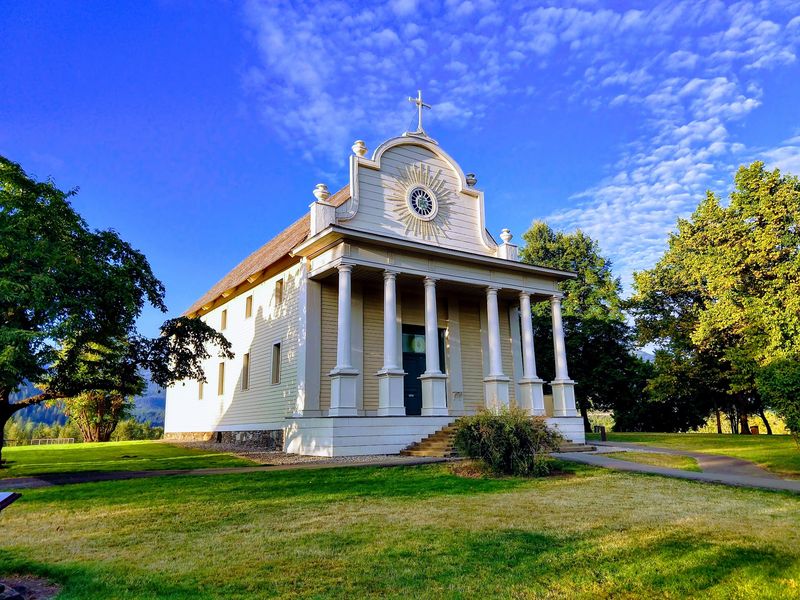
No nails held this church together, yet it has outlasted nearly every other building in Idaho. The Mission of the Sacred Heart stands as the oldest building in the state.
Members of the Coeur d’Alene Tribe built it alongside Jesuit missionaries, finishing work in the early 1850s. They used wooden pegs, woven grass, and mud instead of hardware.
Look at the front and you’ll spot tall columns and a style that feels surprising for the Silver Valley. Inside, painted details show how much creativity went into limited supplies.
The grounds offer more than the church. A historic parish house, a cemetery, and several short trails let you stretch your legs between exhibits.
A museum and an informative film explain how Native, Jesuit, and pioneer histories crossed paths here. It’s an easy way to understand the Coeur d’Alene River country before driving on.
Picnic tables make it a handy break off I-90. Dogs are welcome on the grounds, which helps on road trips with the whole crew.
Parking requires a fee, so bring a few dollars. For Panhandle travelers, this stop turns a quick detour into a real history lesson.
Address: 31732 S Mission Rd, Cataldo, ID 83810
7. Hell’s Half Acre Lava Field
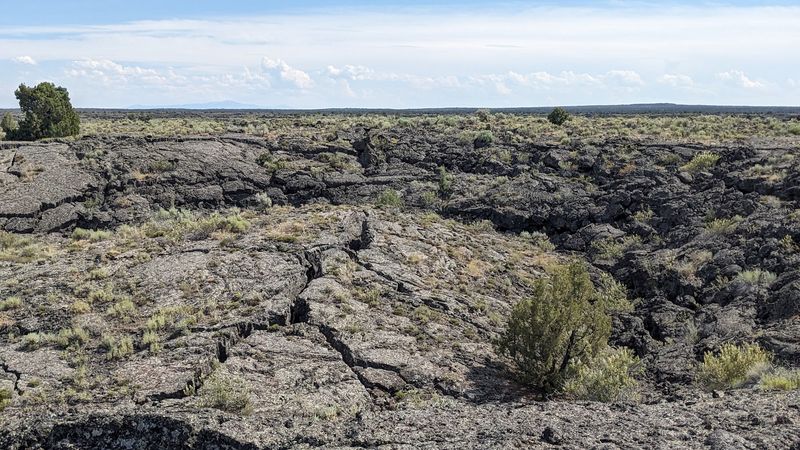
Plenty of rest stops offer a bathroom and a vending machine. This one on I-15 adds a walk across a lava field that covers well over a hundred square miles.
You’ll find it at the rest area near mile marker 101, roughly 20 miles south of Idaho Falls. That makes it one of the easiest landmark stops in eastern Idaho.
Despite the name, the field is far bigger than half an acre. The lava flowed roughly 5,000 years ago, spreading across this part of the Snake River Plain.
Look closely and you’ll see two kinds of lava. Smooth, ropy pahoehoe sits near rough, jagged a’a, and the difference is easy to spot.
Walkways loop around the flows, with signs explaining the geology along the way. The paths keep you off the sharp rock while still putting you right in the middle of it.
The field supports more life than you’d expect, including junipers and wildflowers. Keep an eye out for hawks and other wildlife working the open ground.
Stick to the trail and wear real shoes, since lava edges bite. Then grab a snack and get back on the road with a much better story.
Address: I-15 Rest Area near Mile Marker 101, south of Idaho Falls, ID 83221
8. North Menan Butte Trail
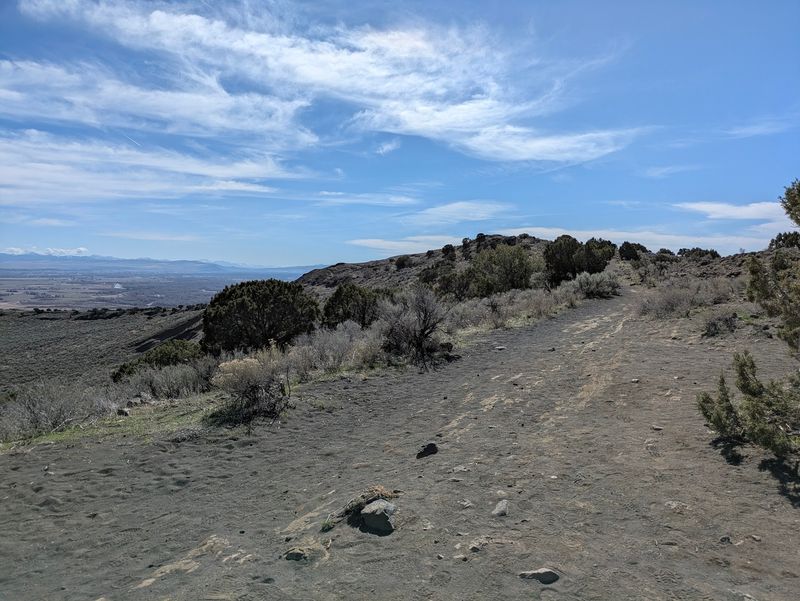
Your calves will notice the first stretch long before your eyes catch the view. The trail climbs hard right out of the parking area, then rewards you with a crater rim.
North Menan Butte is a tuff cone, formed when rising magma met water and exploded. It ranks among the largest of its kind, and the buttes are a National Natural Landmark.
Once you’re past the steep part, the route levels out into a lollipop loop. From the rim, you can look straight down into the crater bowl.
The views stretch across farmland of the upper Snake River valley. On clear days, mountains line the horizon in several directions.
The Bureau of Land Management looks after the area, and the trail stays well groomed. It works as a family hike for kids who don’t mind a climb.
Dogs are allowed on the trail, so your four-legged hiking buddy can tag along. Bring water, because the slope gets toasty on summer afternoons.
Morning or evening hikes are a smart call in July and August. It’s a short drive from Rigby and Idaho Falls, perfect for an after-work outing.
Address: North Menan Butte Trailhead, Menan, ID 83434
9. Big Southern Butte
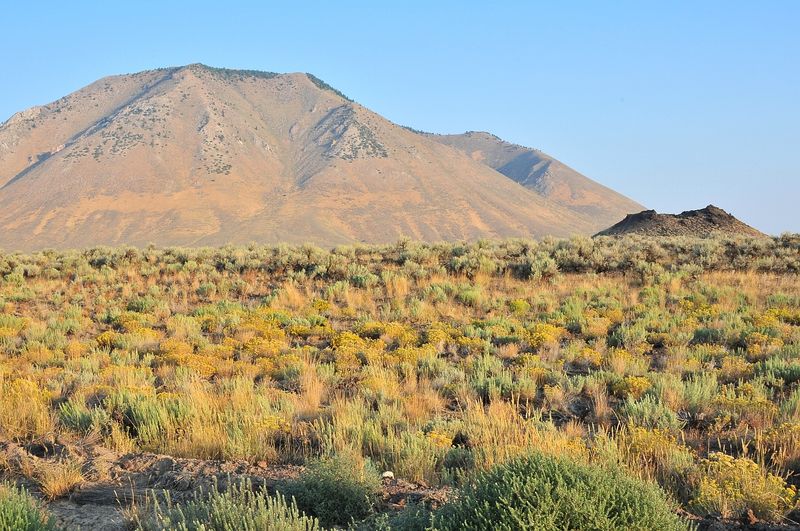
On the flat Snake River Plain, one bump steals the whole skyline. Big Southern Butte rises about 2,500 feet above the surrounding desert.
Geologists describe it as a volcanic dome formed roughly 300,000 years ago. It’s one of the largest of its kind, and it earned National Natural Landmark status.
You’ll spot it from miles away while driving between Arco and Idaho Falls. That visibility once made it a handy guide for travelers crossing the plain.
Native peoples came here for obsidian, the glassy stone used for tools. Later, pioneers used the butte as a landmark on their routes west.
Today the Bureau of Land Management oversees the area. Rough roads draw hikers, mountain bikers, horseback riders, and off-road clubs.
Up top, the views across the plain are wide and impressive. Forest patches on the upper slopes surprise many first-time visitors.
Road access to the summit can close for repairs or weather, so check current conditions first. A high-clearance vehicle and extra water make sense out here.
It’s a fitting final stop, since this Idaho giant ties the lava story together. You’ll understand why travelers have watched for it on the horizon for centuries.
Address: Big Southern Butte, Butte County, near Atomic City, ID 83215