Inside Ohio’s Only Official Cat Museum, Where Cat Art And Ancient Relics Meet
A Frank Lloyd Wright-designed cottage for cats sounds like the punchline. At this wonderfully unusual Ohio museum, it is merely one reason to keep exploring.
The collection takes feline fascination much further than you might expect, with antique show trophies, vintage photographs, books, artwork, dolls, and even a silver collar associated with an 1895 cat show.
Former bank vaults get involved, too, because apparently ordinary display cases were not quirky enough.
Cat lover or not, it is difficult to resist finding out what waits around the next corner.
Come because the premise makes you laugh. Stay because somebody somehow assembled enough feline history to make an entire museum genuinely fascinating.
A Bank Vault Full Of Cats
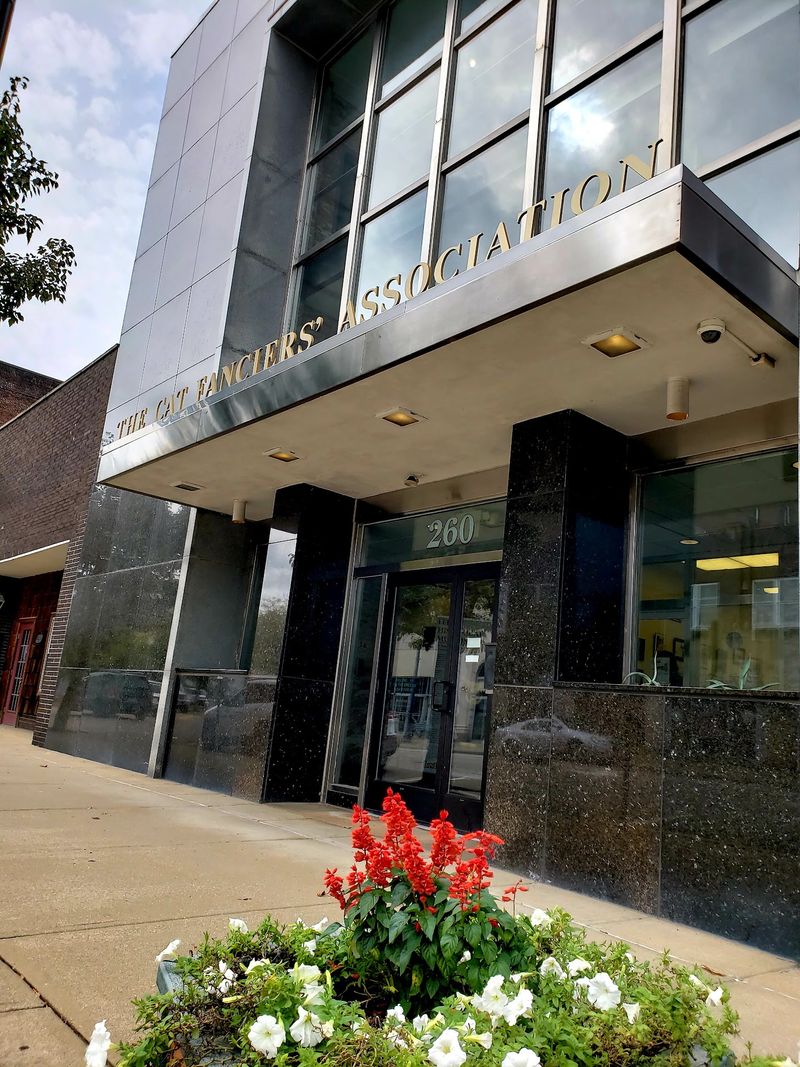
The first thing that surprised me was the building itself. Tall ceilings, stone details, and the calm hush of a place that once counted money.
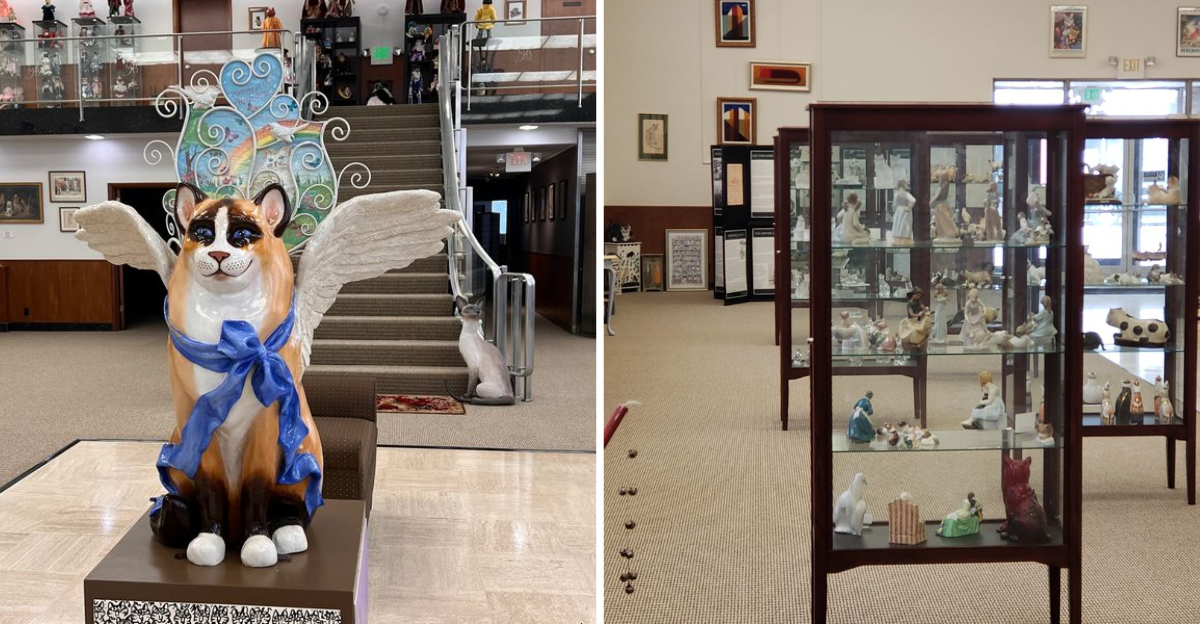
The Feline Historical Museum occupies the ground floor of the former Midland-Buckeye Bank. That means marble, big windows, and a lobby wide enough to hold a large chunk of the permanent collection.
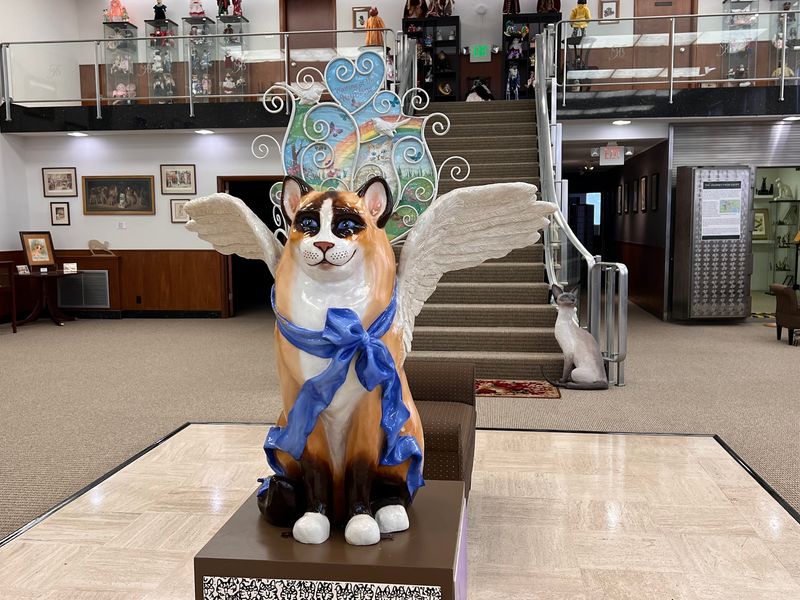
Outside, oversized cat sculptures greet you before you reach the door. They set the tone immediately, and they make a great photo.
Inside, the old bank bones still show. There is even a former vault, and it now holds cat dolls rather than deposits.
The layout works for both quick visitors and slow browsers. Additional rooms sit on the first and second floors, and those hold rotating exhibits.
Because displays change, no two visits feel identical. Regulars in this part of Ohio return just to see what has been swapped out.
Give yourself time to look up as well as down. The ceiling and woodwork deserve attention. You will find it all at 260 E Main St in Alliance.
How A Foundation Became A Museum
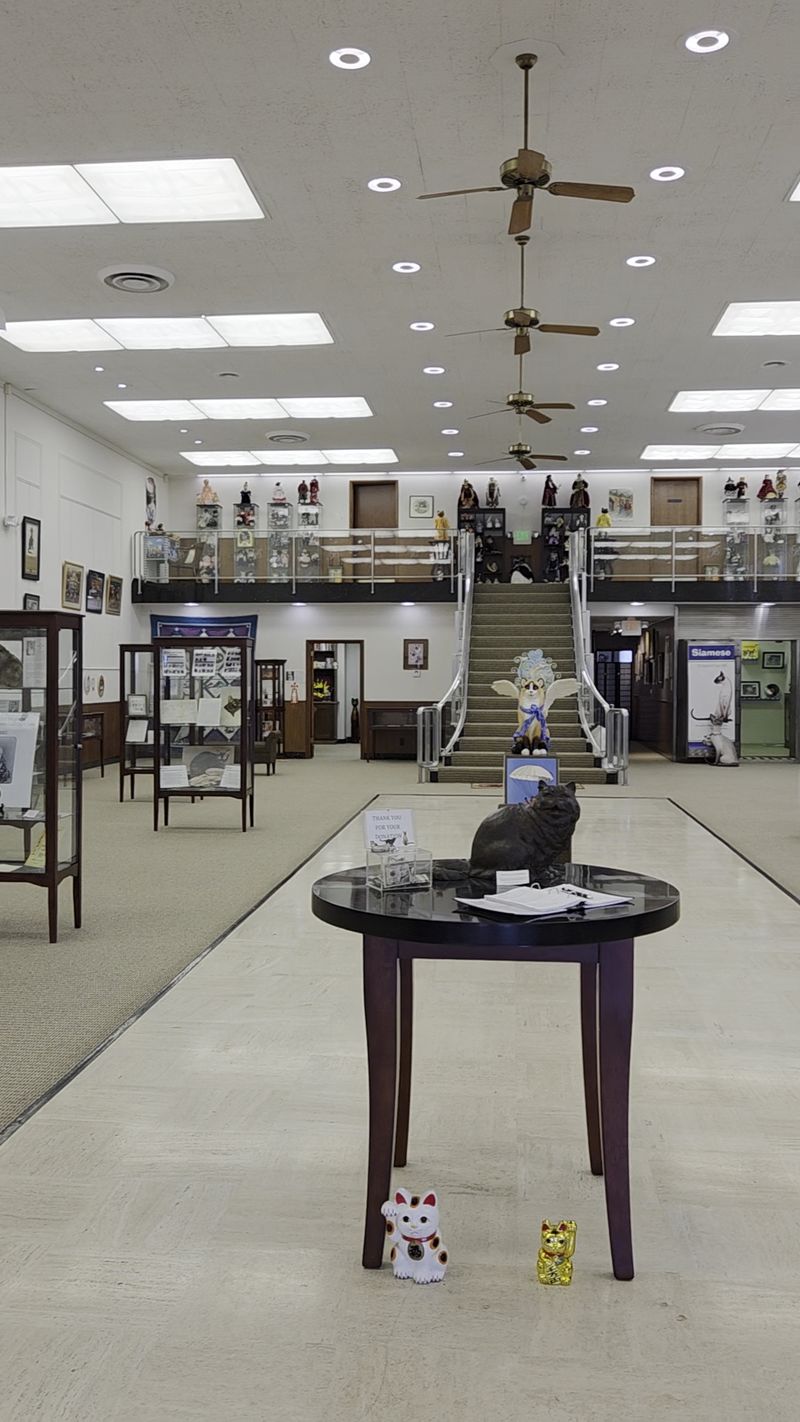
Long before the doors opened, the collection lived in storage. That part of the story stuck with me.
In 1990, the Cat Fanciers’ Association Board of Directors created the CFA Foundation. The goal was straightforward, to educate the public about cats and the world of the cat fancy.
For years, valuable artifacts sat boxed away with nowhere to be shown. Founders wanted a permanent home where people could actually see them.
The chance arrived when the Cat Fanciers’ Association moved its world headquarters to Alliance. Suddenly the artifacts had a city, a building, and a purpose.
The Feline Historical Museum opened in June 2011. It became a first of its kind space for feline historians and hobbyists.
Worth knowing before you plan a trip: the museum closed for a stretch and only recently reopened, welcoming visitors again as of July 2026.
Staffing is still catching up, currently handled by CFA office staff a few days a week until a dedicated curator comes on board, so hours may expand as things settle back in.
Ohio ended up with the beneficiary of that decision. A museum devoted to one animal, built with real archival intent.
Paintings, Teapots And Tiny Sculptures
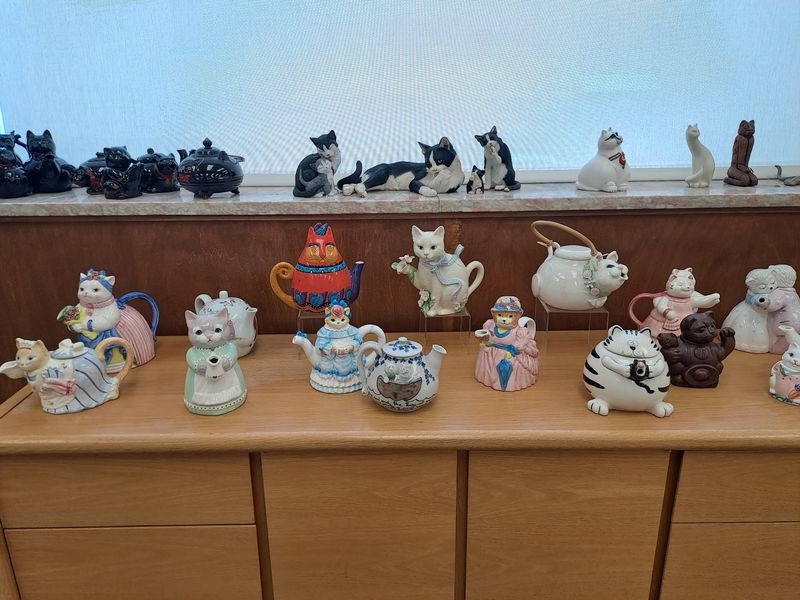
Some collections whisper. This one purrs from every shelf.
The art holdings stretch across styles and centuries, and they cover a lot of ground. Classical paintings hang near cheerful modern pieces.
I counted delicate figurines, ceramics, miniatures, teapots, cookie jars, and expressive sculptures. Jewelry and vases turn up too.
Certain works date to the early 1800s, which builds a visual timeline of people and their cats. You can trace changing tastes just by moving down a row.
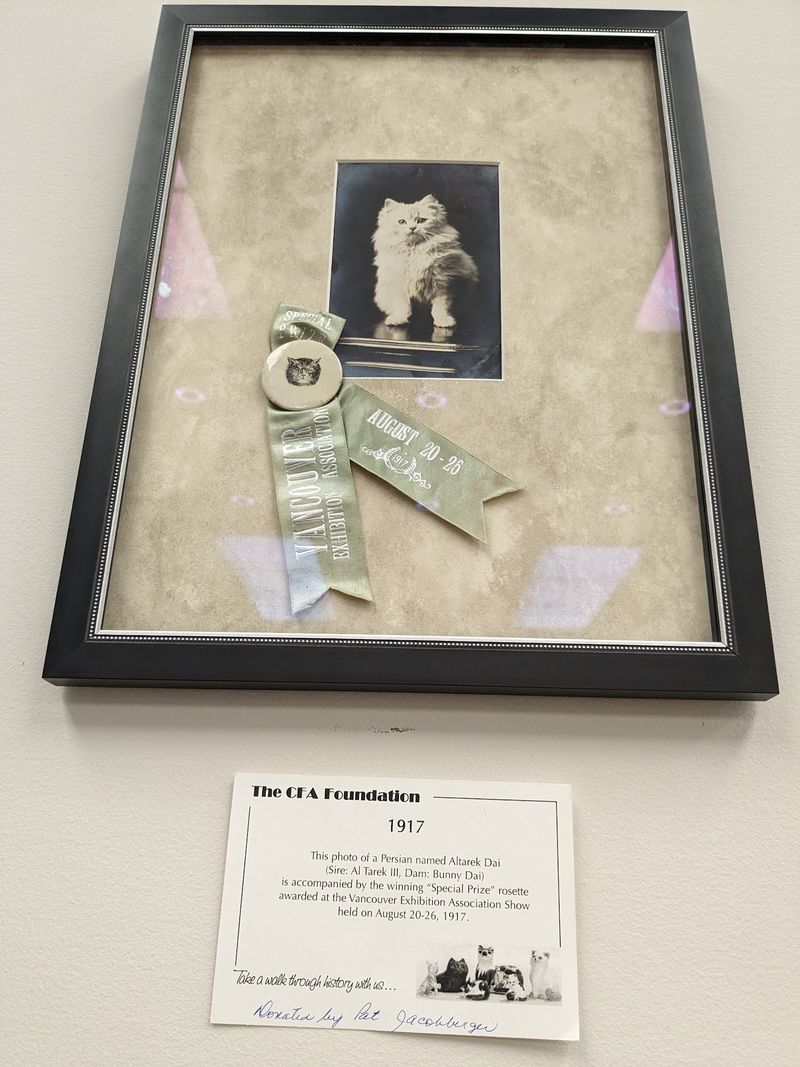
Historical photographs add something quieter. A few go back to 1885, and seeing a cat portrait from that long ago is oddly moving.
Staff treat these originals with real care. Cases are clean, labels are clear, and nothing feels tossed together. My advice is to slow down at the older paintings. Details in the fur and eyes reward a second look.
Cat lovers will linger, but art fans get plenty here as well. The range shows how often felines inspired working artists.
The Feline Historical Museum makes that influence obvious rather than academic. You simply see it, case after case.
Cosey’s Silver Collar Still Shines
One small case stopped me cold. Inside sat the original silver collar and medal awarded to a cat named Cosey.
Cosey won Best in Show at America’s first major national cat show. That event took place at Madison Square Garden on May 8, 1895.
Holding that date in your head changes how you see the object. It is proof that organized cat shows are far older than most people assume.
Nearby exhibits keep the competitive theme going. An engraved pewter nut bowl came from the 1883 Boston Cat Show.
Boston Cat Club trophies from 1883 sit in the same neighborhood. So do medals from the British Crufts cat shows of 1894 and 1895.
Seeing British and American awards side by side surprised me. The hobby crossed the ocean early and enthusiastically. Engraving on the older pieces is remarkably fine. Someone cared enough to make a cat prize beautiful.
If competition history interests you, budget extra minutes here. The labels give useful context without overwhelming you.
Frank Lloyd Wright Designed This
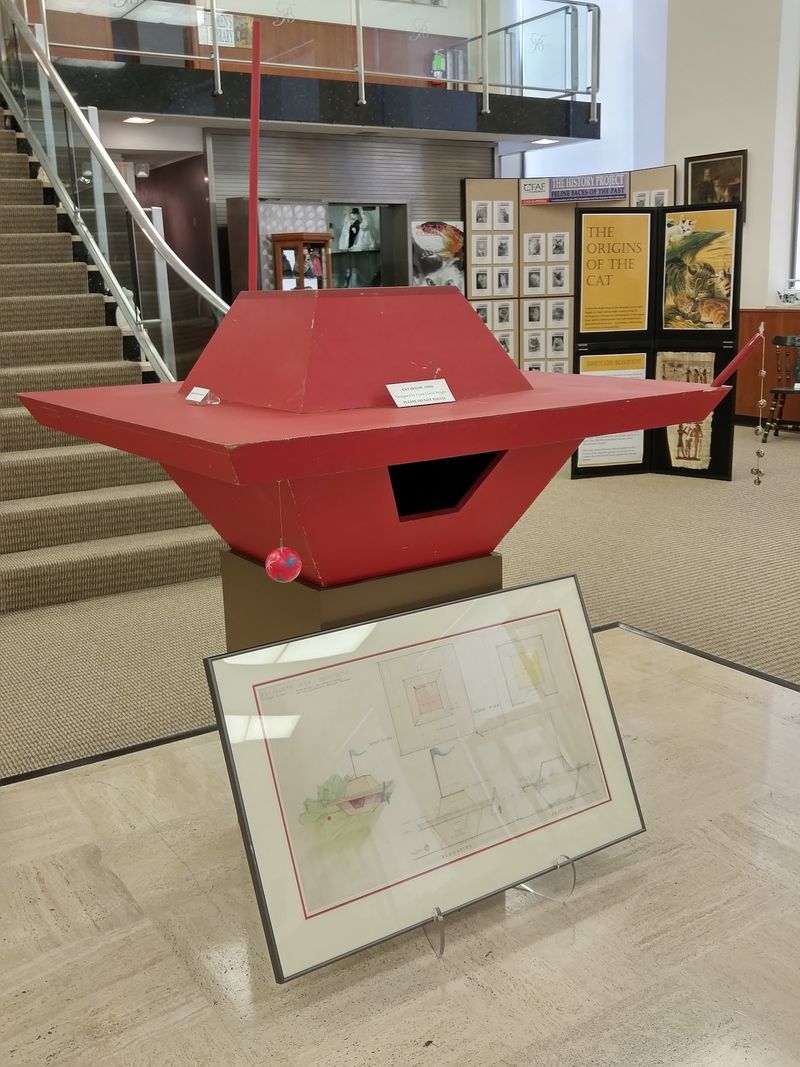
Nothing prepared me for an architectural masterwork sized for a cat. Yet there it was, at the bottom of a wide staircase.
Frank Lloyd Wright designed this vintage cat house. It was commissioned in the early 1950s for a cat named Felinus, owned by Nancy Tonkens.
The piece connected to the Gerald Tonkens house project in Cincinnati. So the design has real Ohio roots.
Wright’s organic style shows clearly. A flat roof gives a sunbathing platform, and a small flagpole adds cheerful nonsense.
Toys dangle from the eaves, which I found charming. The structure measures four feet square and is built from solid wood. Paint follows Wright’s beloved Cherokee Red. That color alone makes it recognizable to design fans.
It once belonged to the Frank Lloyd Wright collection owned by Domino’s Pizza founder Thomas Monaghan. The museum acquired it later.
Original drawings by Wright’s apprentice, Thomas Olson, hang alongside it. Comparing plan to object is the fun part.
Eighty-Five Hundred Books Await
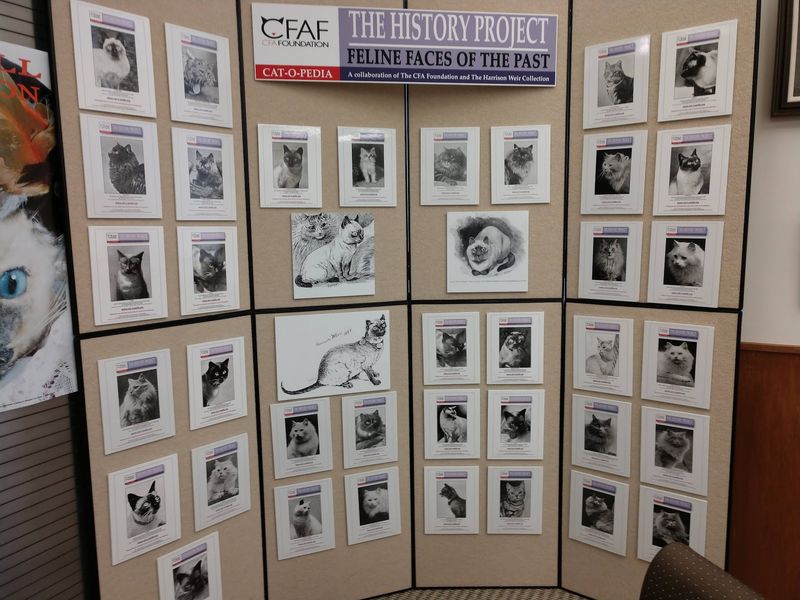
Book people, brace yourselves. The research library holds over 8,500 titles about cats.
I expected a modest shelf. Instead I found room after room of feline literature, and I nearly lost an afternoon.
A dedicated room houses historical cat magazines and detailed breed histories. Some publications are genuinely hard to find elsewhere.
Subjects run wide. Health, nutrition, training, ownership guides, pedigree records, and even recipes appear on the shelves.
Children’s literature has its own space upstairs. Parents love it, and curious kids settle right in.
Books do not circulate, so nothing leaves the building. On-site reference is welcome though, for researchers and casual readers alike.
Chairs and tables make sitting comfortable. I pulled three books and stayed longer than planned. Some visitors say the library alone justifies the trip. After browsing, I understand that opinion completely.
The Feline Historical Museum functions as a working archive, not just a display space. If you have a specific breed interest, mention it at the desk. Staff know where things live.
Few libraries in Ohio focus this narrowly and this deeply on one animal.
Lucky Cats From Japan
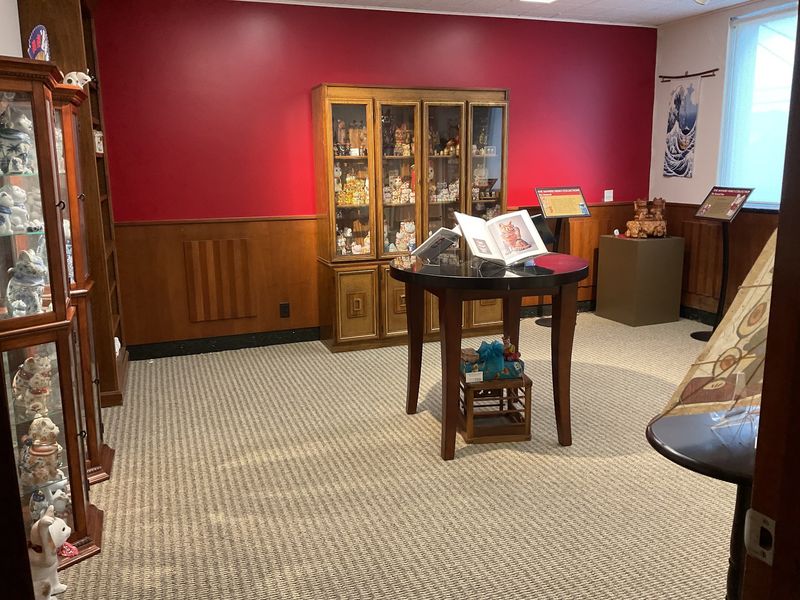
Turn a corner and hundreds of little paws wave back at you. An entire room belongs to the Maneki-neko.
Japan’s lucky cat appears here in every size and color imaginable. The effect is bright, cheerful, and slightly overwhelming.
Beyond the ceramics, exhibits widen the cultural lens considerably. Ancient Egyptians and their sacred cat deities get attention.
Victorian artists appear too, alongside traditional Japanese painters. Each culture found its own way to honor feline grace. Other displays trace how cats changed roles over time. Wild hunters gradually became household companions.
Artifacts and images carry that story rather than long text panels. I liked how visual the whole sequence felt. The foundation collects material from many countries, which explains the range. Feline history is not a single nation’s story.
Standing in the lucky cat room, I thought about superstition and affection. Both drive people to make cat objects.
Everyday Relics And Odd Tools
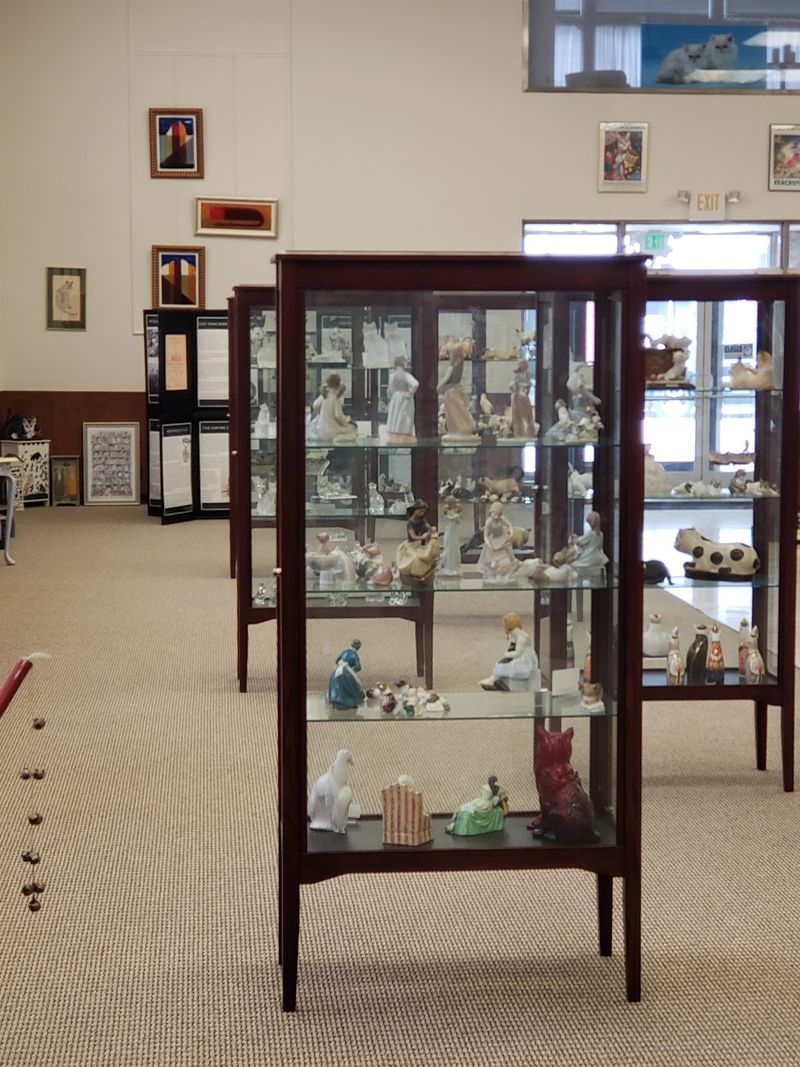
Trophies impress, but the ordinary objects taught me more. Early 1900s wooden cat carriers look nothing like today’s plastic crates.
Handles, slats, and small air holes tell you how travel once worked. I would not want to lug one far.
A nineteenth-century scrapbook filled with cat memorabilia sits nearby. Pasted clippings and cards feel wonderfully personal. Vintage collars come with tiny bells attached. You can picture a Victorian house cat jingling down a hallway.
Early veterinary tools appear as well, and they are fascinating. Care practices have improved dramatically since then.
Cat-themed advertising rounds out this section. Decades of packaging and posters show how brands borrowed feline appeal. These pieces connect to daily life rather than competition. That makes them easy to relate to.
I found myself comparing each item to my own cat’s gear. The differences are funny and sometimes startling.
The Feline Historical Museum gives these humble things real display space. Nothing is dismissed as too plain. Read the small labels here. They carry the best details!
Hours, Parking And Smart Tips
Practical planning saves disappointment, so take notes. Hours run 11 a.m. to 3 p.m. on Wednesday, Thursday, and Friday.
Saturday visits are possible by appointment with seven days’ advance notice. Sunday through Tuesday the doors stay closed.
Admission is modest and paid in cash, so bring bills. Donations are welcomed and help fund the collection. Free parking sits in nearby lots, which makes arrival painless. Downtown streets here are easy to navigate.
The building is handicap accessible. Ground floor exhibits are reachable without stairs. Allow at least an hour, more if the library tempts you. Two hours is realistic for thorough readers.
Look for the large cat sculptures outside as your landmark. They confirm you are in the right spot. Ask about the old vault filled with cat dolls. It is an easy thing to miss.