Most People Have Never Seen The 12,600-Square-Foot Glass Museum Right Here In Kentucky
You probably think you know what a Kentucky museum looks like. There are horses involved, or bourbon, or a very serious portrait of somebody’s great-grandfather.
This one breaks the pattern completely. It lives inside a former bank building, which is a delightful detail once you know it.
The vault used to hold money. Now the building holds something far more breakable.
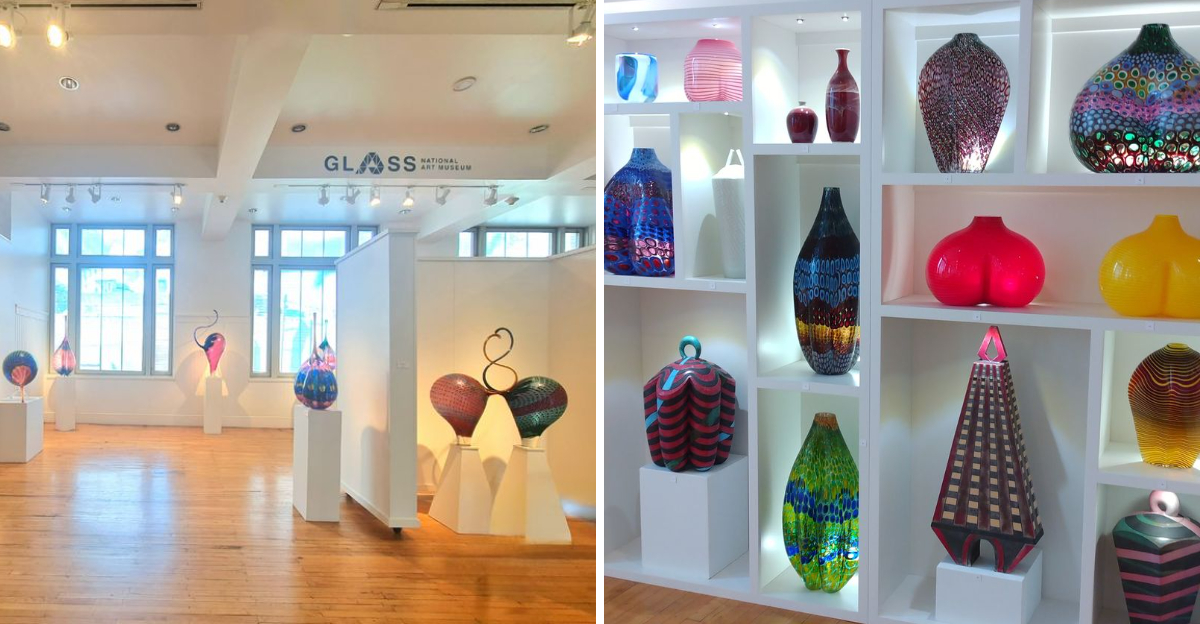
Glass does strange things to a room. It bends light, throws color across the walls, and makes you lower your voice without deciding to.
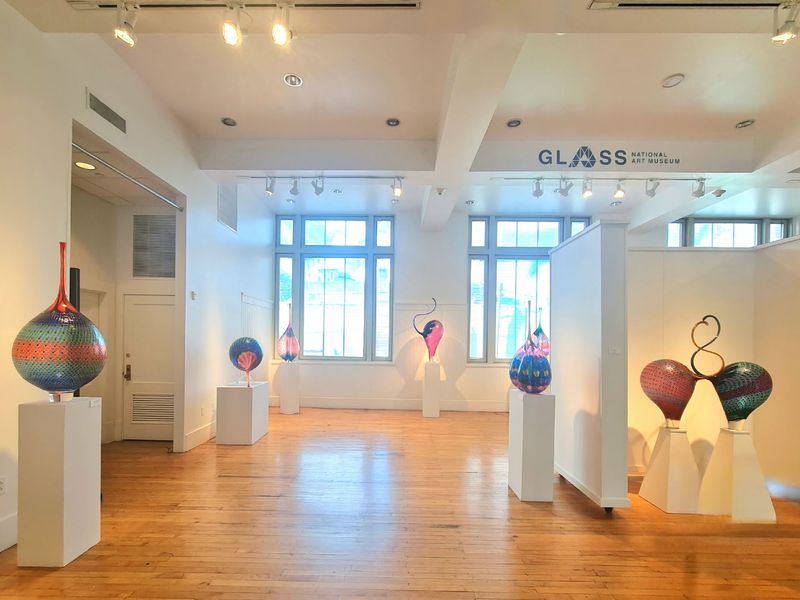
You get 12,600 square feet of it. Some pieces are the size of a beach ball and covered in thousands of tiny bright dots.
Here is the part that gets me. Plenty of Kentuckians have driven past this town for years without stopping.
You have probably been one of them. That can end this weekend, and your camera roll will thank you.
A Former Bank Building With A Glowing Secret
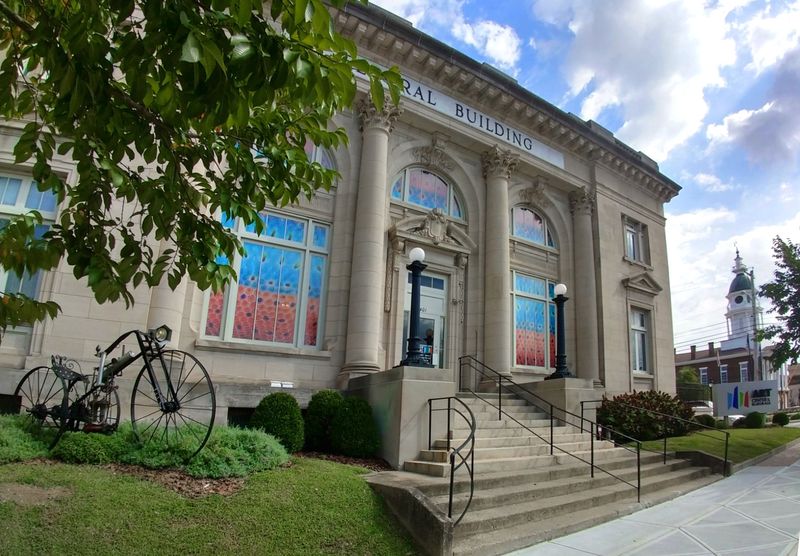
Banks are built to hold valuables, so this one is simply doing its job differently now. The Art Center of the Bluegrass turned a 12,600-square-foot former bank building into the GLASS National Art Museum.
Doors opened to the public on November 3, 2023.
The City of Danville purchased the neighboring building at 415 W. Main Street.
It then leased the property to the Art Center for 100 years.
That kind of deal tells you something. A town does not sign a century-long lease for a passing idea.
The original Art Center building has its own backstory. Constructed in 1909, it started life as a U.S.
Post Office.
So you get two pieces of local history stitched together. One handled mail, the other handled money, and both now handle art.
Square footage matters more than it sounds. Glass needs room, light, and distance for people to step back and stare.
Twelve thousand square feet gives the collection breathing space. Nothing feels crammed onto a shelf.
Park downtown and look for the stone facade. The building looks serious from outside and playful the second you step in.
The space sits next door to the center’s original home at 401 W Main St, Danville, Kentucky.
The Largest Collection Of Stephen Rolfe Powell Anywhere
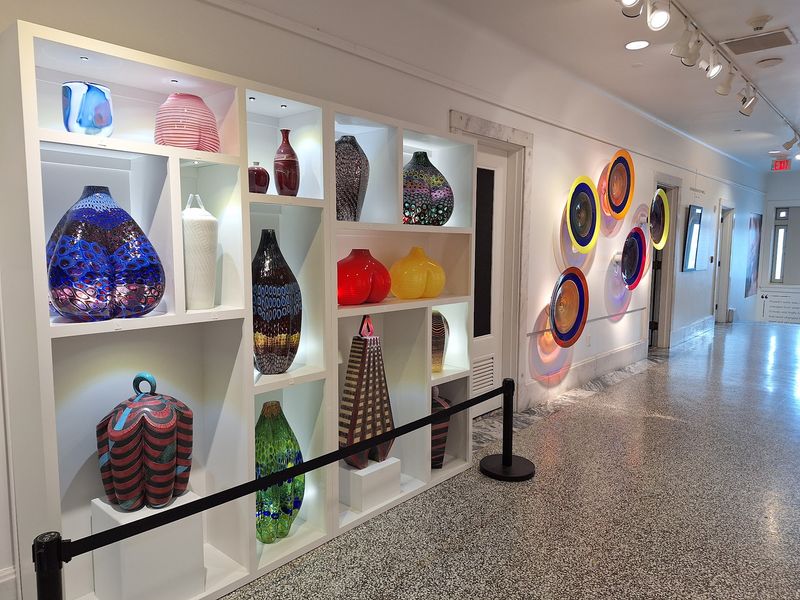
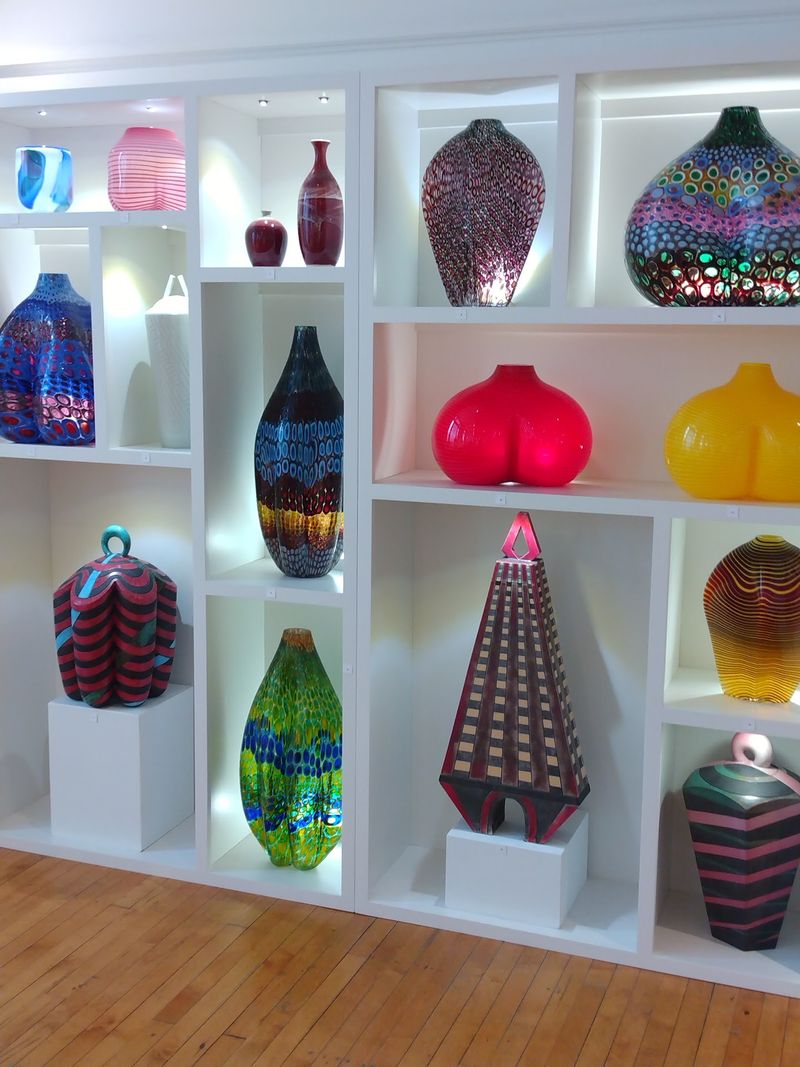
Stephen Rolfe Powell made glass that looks like it swallowed a fireworks show. The museum holds the largest collection of his work found anywhere.
Powell earned international recognition, and Kentucky claims him proudly. His vessels lean tall, bulge in odd places, and shimmer with thousands of tiny colored dots.
Those dots are murrini, small slices of patterned glass fused into the surface. Get close and the surface breaks into a mosaic.
Step back and the whole piece changes again. That shifting effect is why people circle the pedestals more than once.
Upstairs, a timeline traces how his style developed over the years. You can follow the growth from early forms to the wild later pieces.
Visitors often single out a darkened room where bowls sit under focused lighting. Patterns reflect and scatter across the surfaces around them.
The Art Center has also worked to acquire more of his work over time. The collection is permanent, not a passing exhibit.
Bring your phone, but give your eyes the first pass. Photos flatten the depth that makes these pieces worth the drive.
Kids tend to love the color overload. Adults tend to stand there doing quiet math about how it was even made.
Chihuly And Tagliapietra Show Up Too
Two of the biggest names in glass art have work sitting in central Kentucky. Dale Chihuly and Lino Tagliapietra both appear in the permanent collection.
Chihuly is the artist behind those swirling, oversized glass installations you have probably seen photos of. His shapes twist like sea creatures caught mid-motion.
Tagliapietra comes from the Venetian tradition on the island of Murano. His technical control is treated as legendary among glassblowers.
Seeing those names on labels in a small Kentucky town is genuinely startling. Most people expect that lineup in a coastal city museum.
Having them here gives context to Powell’s work. You can compare approaches, colors, and forms in a single afternoon.
The Art Center has stated its goal openly. It wants to become a national leader in the glass-art field.
Judging by the roster, the plan is not just talk. Collections like this get built with intention and patience.
Take your time reading the wall text. The technical notes explain why certain shapes are close to impossible.
If you have never thought much about glass as fine art, start here. Ninety minutes in these rooms will change your opinion for good.
World-Class Art Without A Ticket Price
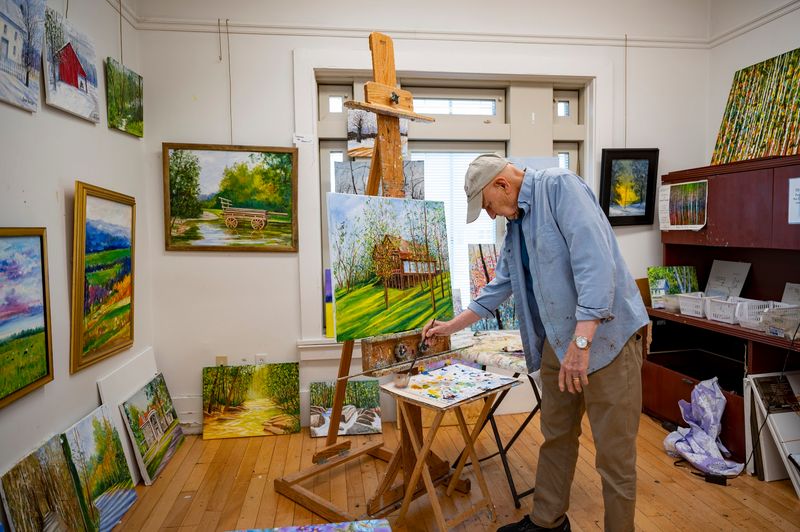
Free is a word museums rarely use anymore. Admission to the galleries at the Art Center of the Bluegrass costs nothing.
No timed tickets, no membership pitch at the door, no surprise fee. You walk in and look at the art.
That policy changes how you visit. There is no pressure to squeeze value out of every minute.
Stop in for twenty minutes on a Tuesday. Come back Saturday with a friend and see it fresh.
Families notice the difference immediately. A trip for four costs the same as a trip for one.
The center stays closed Sunday and Monday, so plan accordingly.
Reviews for the place sit unusually high, and the free access gets mentioned often. Friendly staff comes up just as much.
Donations and memberships keep the doors open, so the gift shop purchase counts. Supporting the place feels less like a fee and more like a thank-you.
Few towns hand out access like this. Take advantage of it.
Rotating Exhibits Keep The Walls Changing
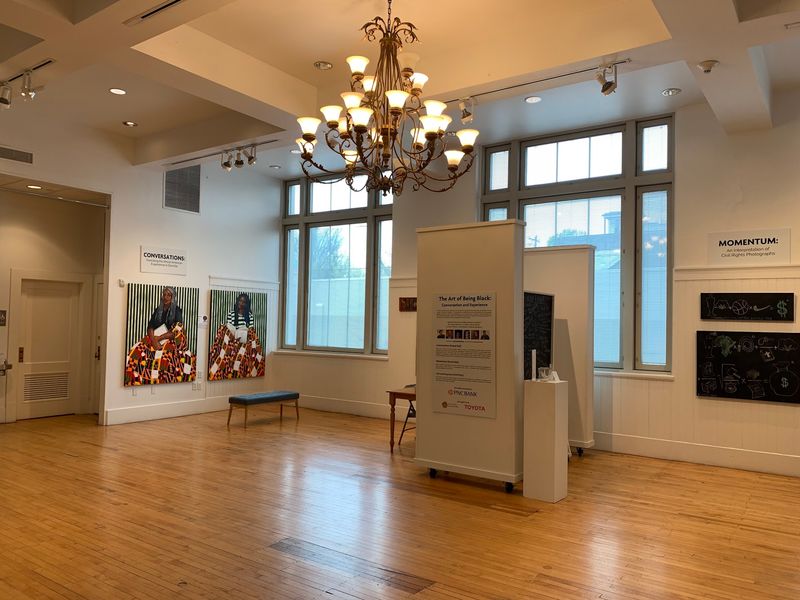
Permanent collections are the anchor, but the rotating exhibits are why people return. Local, regional, national, and international artists all cycle through the galleries.
One season might bring photography. The next could deliver painting, sculpture, or something harder to categorize.
A recent exhibit featured layered artwork built from up to twenty stacked layers. The result reads as three-dimensional from a few steps back.
Shows like that reward a slow walk. Details hide until you shift your angle.
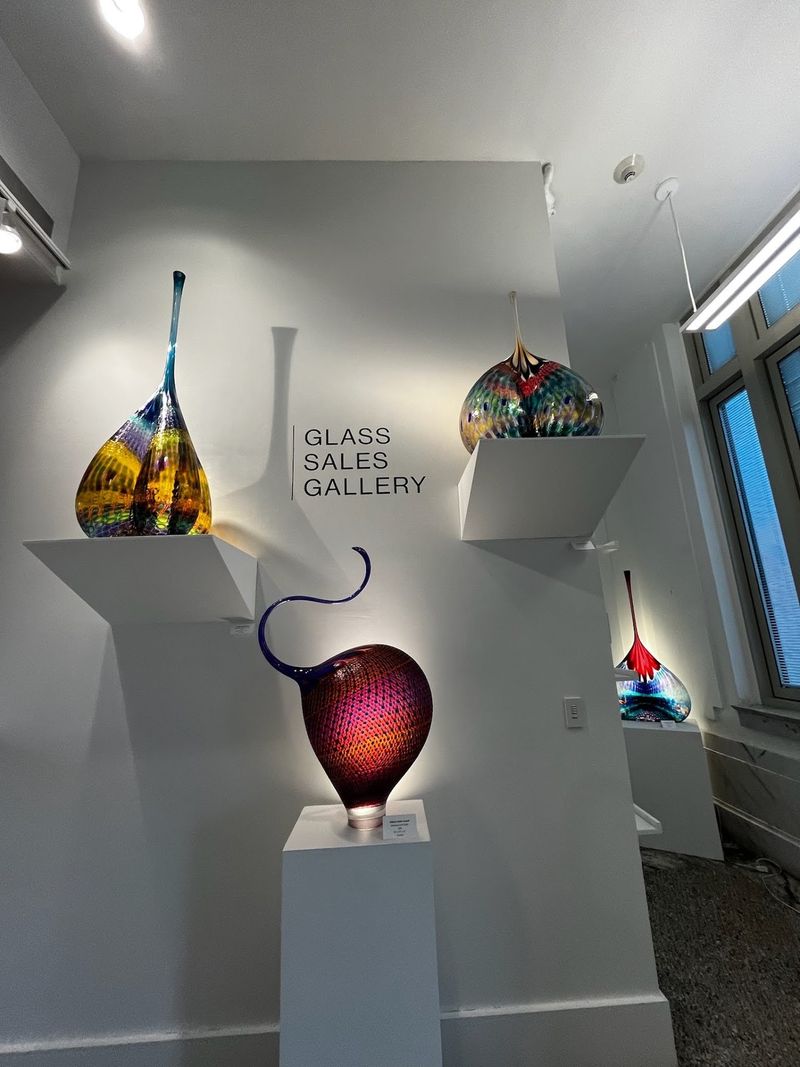
Work from many exhibiting artists is available for purchase. That means you can leave with something original rather than a poster.
Buying local art here supports someone who probably lives within a couple hours. The connection feels direct.
Because the schedule keeps moving, no two visits match. Checking the website before you go is a smart habit.
The center posts current shows and upcoming openings at artcenterky.org. Opening receptions are a lively way to meet the artists.
Regulars will tell you the variety is the appeal. Glass draws you in, and the changing exhibits keep you coming back.
Give yourself extra time on the upper floor. Plenty of visitors run out of afternoon before they run out of art.
Classes Where You Get Your Hands Dirty
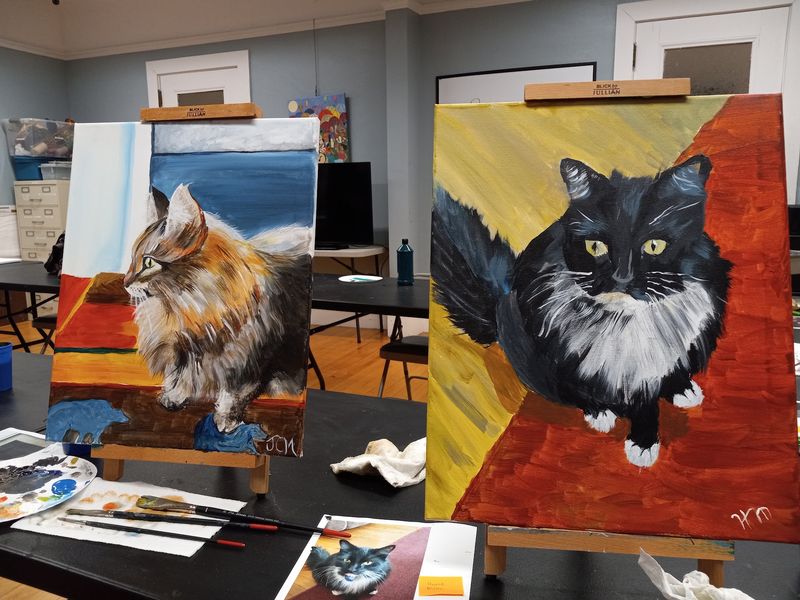
Looking at art is fine. Making it is better, and the Art Center runs classes for both kids and adults.
Options include pottery, painting, mosaics, printmaking, and drawing. Materials are usually provided, so you show up empty-handed.
The ceramics studio stays busy. Wheels, clay, and glazes are all part of the setup.
Open studio hours give experienced makers space to work independently. Beginners get guided sessions instead.
Family classes have earned real affection locally. A paint-your-pet session runs a couple hours with an instructor walking you through it.
Younger children have their own programming. Story time paired with a simple art project has long been a favorite format.
Summer camps fill up with kids who would otherwise be bored by July. Parents describe those weeks as a small miracle.
Sometimes you can watch local artists working in their studio spaces. Seeing a piece mid-progress beats seeing it finished.
Registration happens through the website, and popular classes go quickly. Check early if a specific date matters to you.
You do not need talent to sign up. You need two free hours and a willingness to make something slightly lopsided.
Murrini Cafe And The Gallery Shop Called Fern
Art viewing burns more energy than people admit. Murrini Cafe sits inside the building, ready with coffee and a place to sit.
The name is a nod to those tiny glass slices in Powell’s work. Clever, and easy to remember.
Grab a seat, rest your feet, and talk about what you just saw. That conversation is half the fun of any museum.
Fern is the curated gallery shop, and it does not sell tourist junk. Handmade goods and work from local artists fill the shelves.
Gift shopping here solves problems. Birthdays, thank-yous, and holidays all get easier.
Shoppers frequently mention the shop as a highlight of the visit. Small ceramics and jewelry tend to disappear fast.
Having a cafe and shop under the same roof changes the trip. What could be a quick stop becomes a full afternoon.
Purchases support the center’s free-admission model. Buying a mug is basically civic duty with caffeine attached.
Downtown Danville sits right outside the door. Plenty of people pair the visit with a stroll through nearby shops.
Come hungry and curious. Leave with a bag and a new favorite artist.
Bigger Plans Are Already In Motion
The story here is not finished. Future plans for the Art Center campus include a glassblowing studio, a ballroom, and a rooftop space.
A working glassblowing studio would be the headline. Watching molten glass get shaped is genuinely hypnotic.
Picture the collection upstairs and live demonstrations downstairs. That combination would make the trip twice as good.
A ballroom opens the door to concerts, receptions, and community events. The building already handles crowds well.
Rooftop access would give downtown Danville a view it does not currently have. Small towns rarely get that perspective on themselves.
The organization started in 2003 as the Community Arts Center. Growth has been steady rather than sudden.
Twenty years later it added a national glass museum. That is a serious jump for a community nonprofit.
Keeping tabs on progress is easy through the website and social channels. Announcements land there first.
Visiting now means seeing the place mid-transformation. Come back in a few years and compare notes.
Kentucky has plenty of famous attractions competing for your weekend. Few of them are quietly building something this ambitious with the doors wide open and no admission charge.