8 Peaceful Beaches In Idaho That Are Perfect For Getting Away From It All
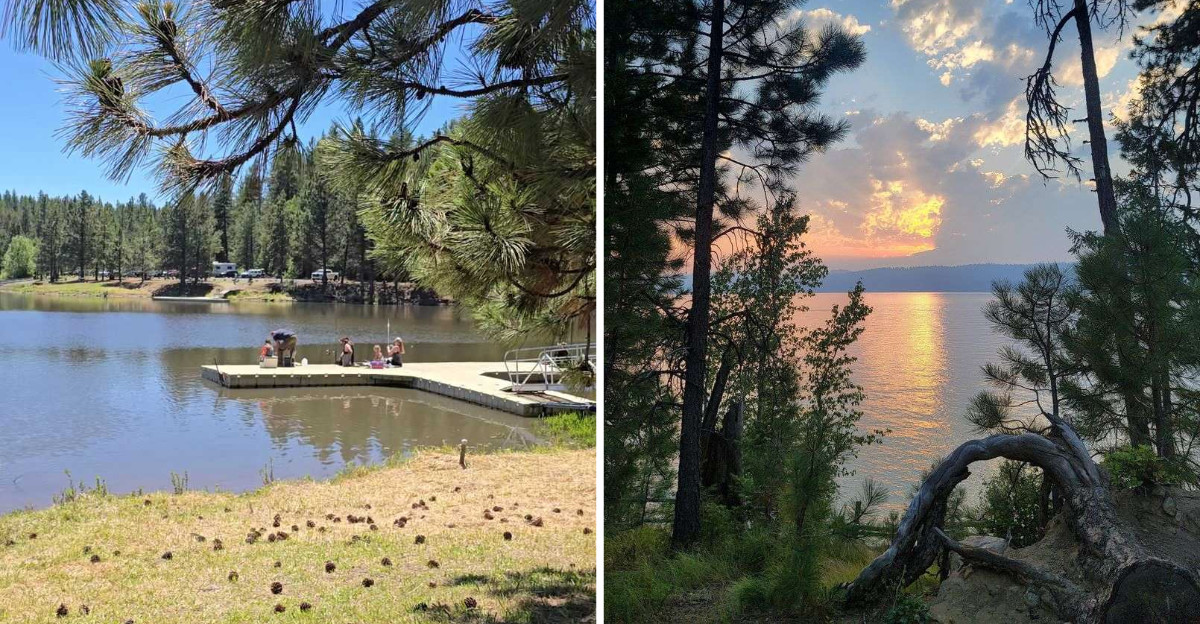
A beach day can feel surprisingly peaceful when there is no ocean crowd to compete with.
Across Idaho, clear mountain lakes create sandy shorelines framed by pine trees, open water, and enough space to settle in without turning the afternoon into a search for room.
Some beaches are best for swimming and picnics, while others add paddling, trails, camping, or quiet coves that feel made for lingering.
Landlocked never looked so relaxing!
The scenery changes with every lake, but the appeal stays simple: cool water, mountain air, and fewer distractions.
Bring a towel, stay longer than planned, and let the shoreline set the pace.
1. Beaver Bay Beach At Farragut State Park, Athol
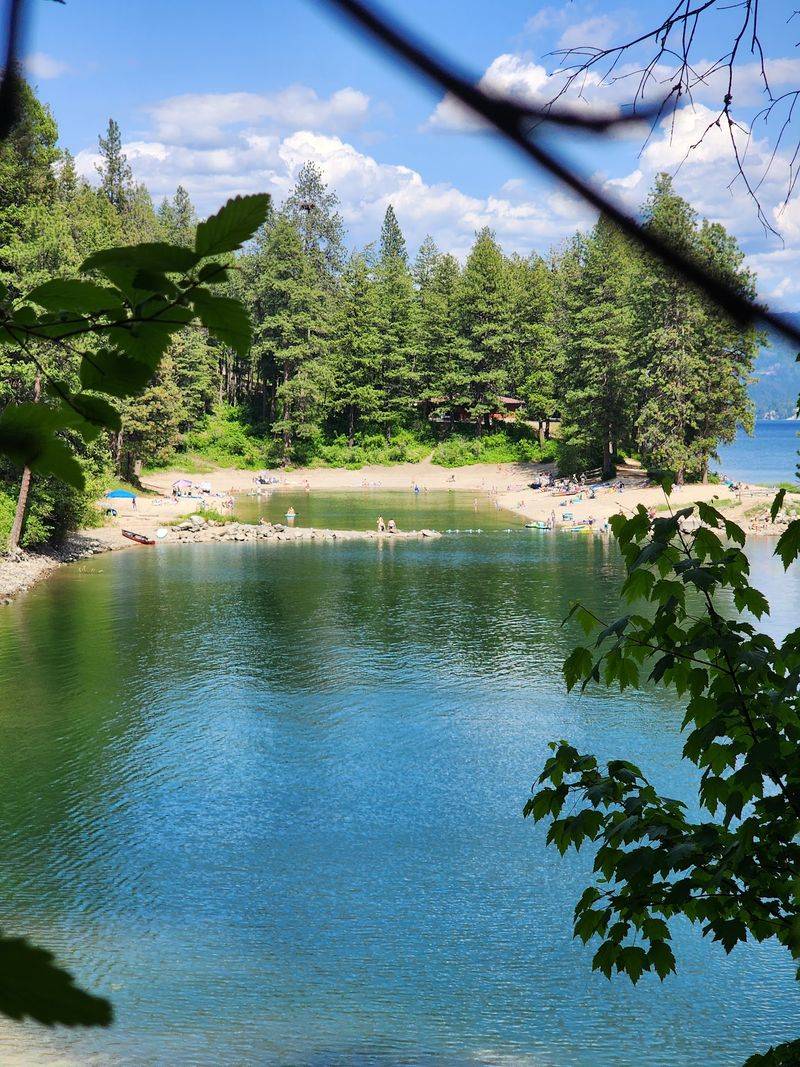
Beaver Bay’s horseshoe-shaped sandy shoreline creates one of Farragut State Park’s designated swimming areas along Lake Pend Oreille.
Beaver Bay Beach sits on the southern tip of Lake Pend Oreille, inside Farragut State Park near Athol. The curved sandy beach is one of the few places on Lake Pend Oreille where the water warms enough for comfortable summer swimming.
The sandy swimming area works well for families, though children should still be supervised closely around the water.
Picnic tables sit close to the water, which makes lunch easy. Pack a cooler and claim a shaded table early on hot weekends.
The surrounding park covers roughly 4,000 acres of forest. More than 40 miles of trails wind through it for hikers and cyclists.
The Beaver Bay Shoreline Trail follows this part of Farragut’s lakefront and connects with the park’s broader trail network.
History buffs get a bonus stop too. During World War II, this land served as a naval training center.
The Museum at the Brig interprets Farragut’s naval history, but its 2026 season ended on September 6 and it remains closed until its seasonal reopening.
Disc golf courses give restless teenagers something to do. A park naturalist also runs summer programs and guided trail hikes.
Boating, paddling, and swimming all happen within sight of the sand. Rent gear in advance during July, since demand climbs fast.
Visiting earlier in the day can provide cooler conditions, though crowd levels vary considerably with weather, weekends, and the season.
You will find this peaceful stretch of sand in Athol. Bring water shoes, because a few rocky patches hide near the edges.
2. Priest Lake State Park Swimming Beach, Coolin
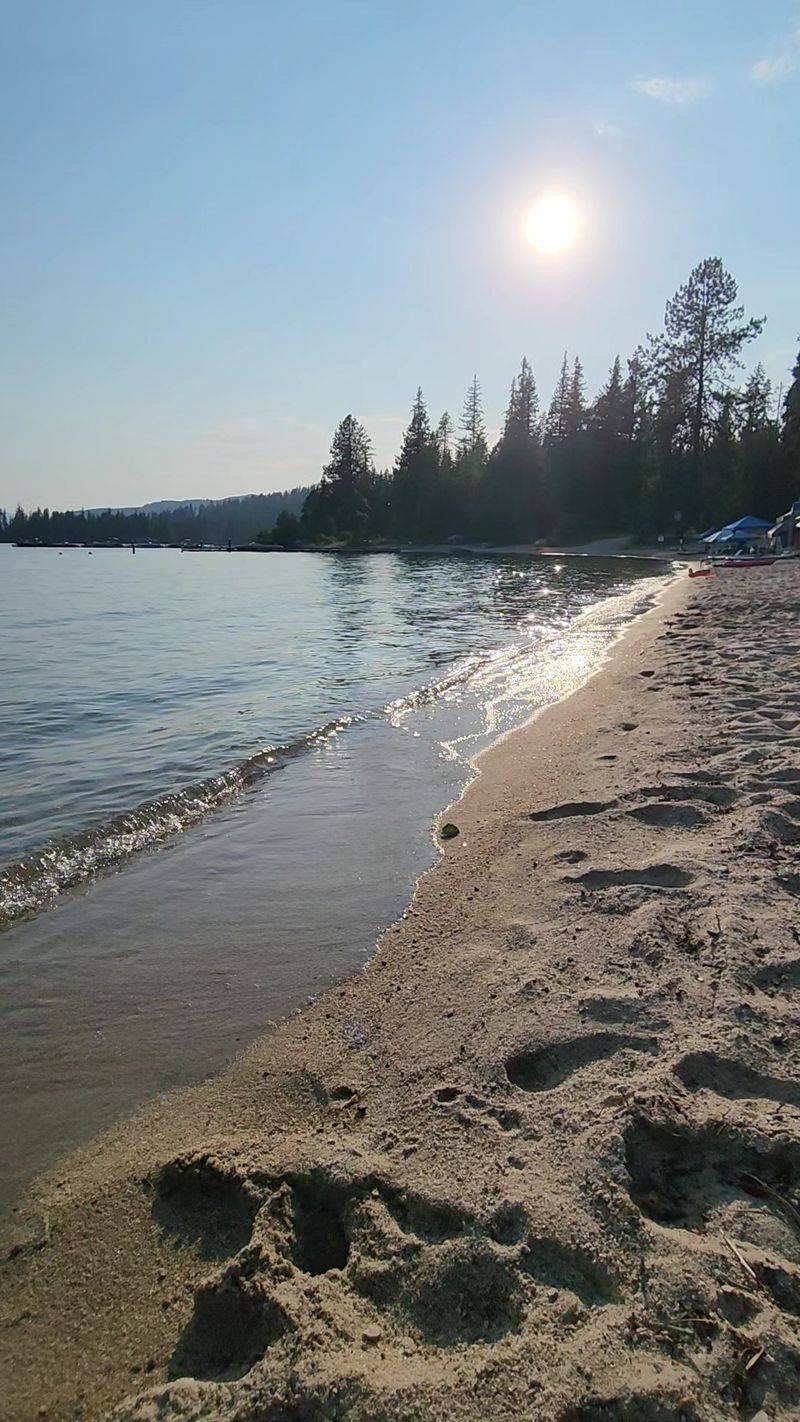
Just imagine for a second water so clear you count pebbles ten feet down. Cedar forest crowds right up to the sand.
Priest Lake State Park, reached through the small town of Coolin, protects a long scenic slice of eastern shoreline. The Selkirk Mountains rise sharply behind the trees.
Swimming here feels crisp even in August. Mountain runoff keeps the lake refreshingly cool all summer long.
Three separate units make up the park. Each one has its own personality and its own stretch of shore.
Lionhead sits at the northern end of the park and offers lake access, camping, a boat launch, and a more remote setting than Indian Creek.
Indian Creek has broad sand and easy access to the water. Families tend to settle in here for whole afternoons.
Boating and fishing rank high on the activity list. Kokanee and lake trout keep anglers busy from dawn onward.
Hiking trails thread through thick forest behind the campgrounds. Whitetail deer wander across them regularly at dusk.
Bald eagles and other birds may be seen around Priest Lake, making binoculars useful for wildlife watching along the shoreline.
Upper Priest Lake sits farther north, reachable only by boat, bike, or foot. That effort buys real solitude.
Campgrounds sit under tall pines with filtered light. Reserve early, because summer sites vanish months ahead.
Huckleberries grow throughout the Priest Lake region, though ripening times and productive patches vary with elevation and conditions.
Point your car toward Coolin, and let the pavement narrow. The drive itself sets the mood. Cool water, clean sand, and mountain silence make a hard combination to beat up north.
3. Round Lake State Park Swimming Beach, Sagle
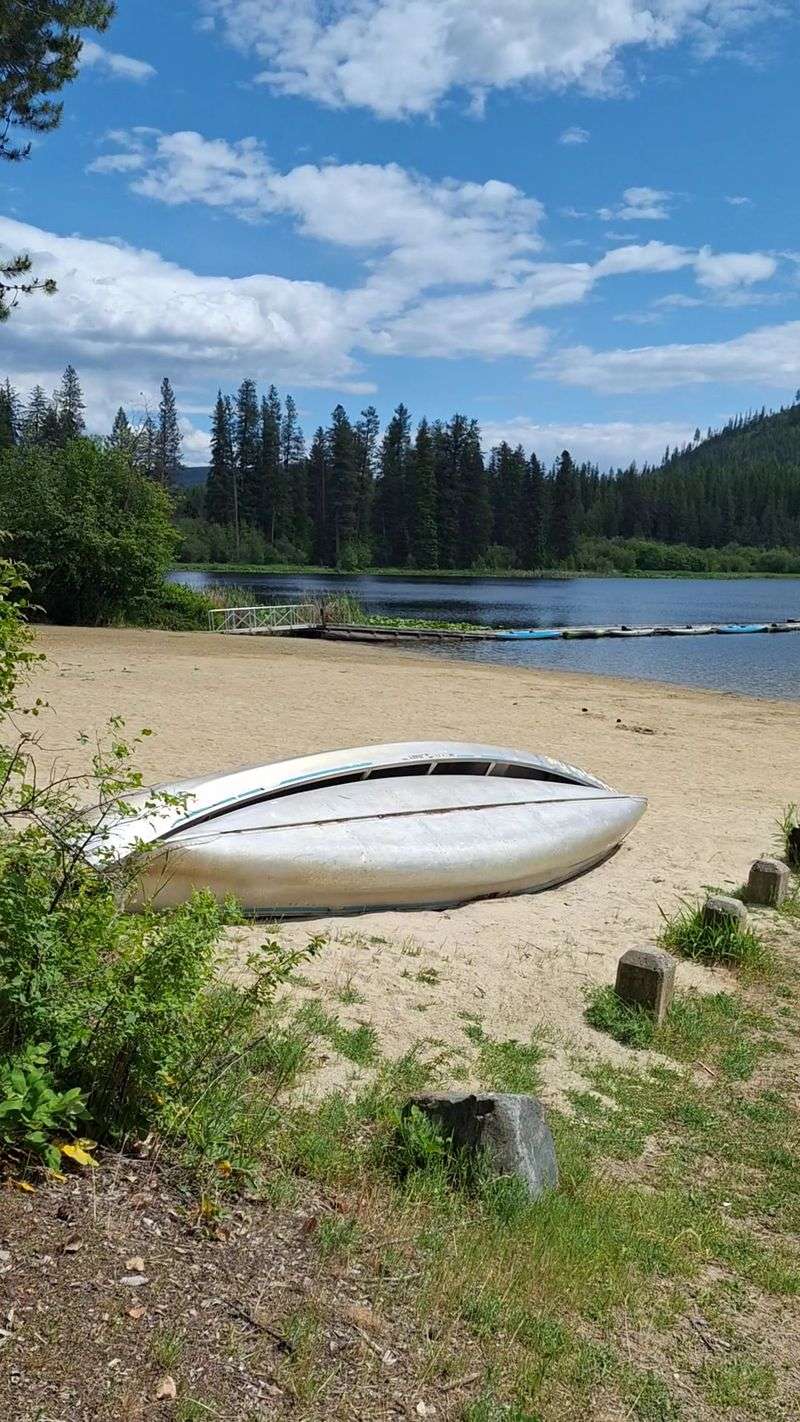
A lake carved by ancient glaciers is now barely 58 acres? Wow! But small does not mean boring!
Round Lake State Park sits just south of Sandpoint in Sagle, wrapped in dense evergreen woods. The little lake anchors the entire park.
Gasoline motors are prohibited at Round Lake, while electric-motor boats and nonmotorized craft are allowed. Canoes, kayaks, and stand-up paddleboards are currently available to rent at the park.
The park maintains a designated swimming area on its small 58-acre lake, with forest surrounding much of the shoreline.
Fishing draws steady regulars year after year. Rainbow trout and bass both live in these waters.
Winter turns the lake into an ice skating surface. Snowshoers loop the shoreline when snow piles deep.
Wildlife watching might be the real attraction. Canada geese honk overhead almost daily.
Ospreys drop straight into the water after fish. Watching one hit the surface never gets old.
Beaver lodges sit along quiet edges of the shore. Look for chewed stumps as your clue. Moose sometimes wade through the shallows at dawn. Keep a respectful distance and stay quiet.
Hiking trails wind around Round Lake and through the surrounding forest, giving visitors another way to explore beyond the swimming area.
Interpretive signs explain how glaciers shaped this pocket of land. Kids actually stop to read them.
Find this calm retreat near Sagle, off Highway 95. Parking demand can increase on warm summer weekends, so checking current conditions before a longer drive is useful.
4. Sandy Point Beach At Lucky Peak State Park, Boise
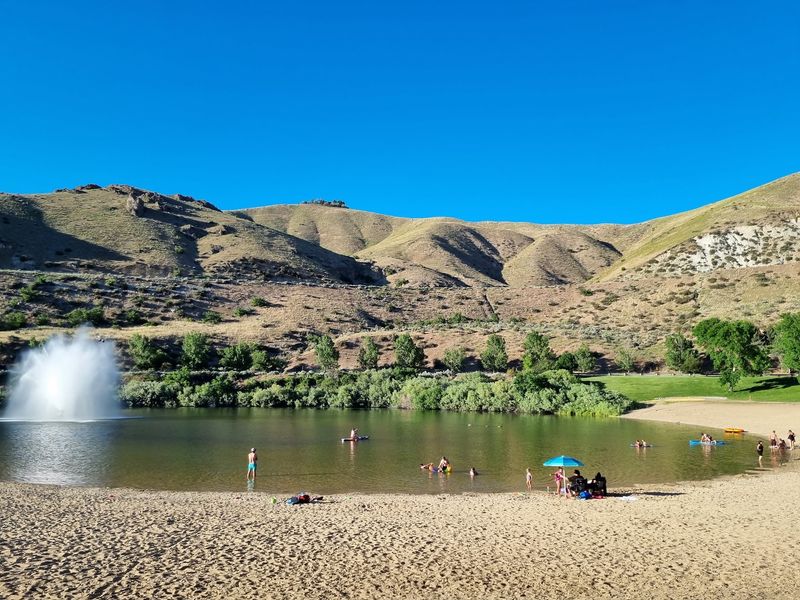
Call me crazy, but a real beach fifteen minutes from downtown sounds unlikely. Southwest Idaho pulls it off anyway.
Sandy Point Beach rests at the base of Lucky Peak Dam, roughly eight miles southeast of Boise. Cold dam water feeds a shallow horseshoe-shaped pond.
Sandy Point’s broad swimming area is popular with families, but children still need close supervision around the water.
Grass and sand share the shoreline. Spread a blanket wherever shade looks best.
Shaded picnic areas come with charcoal grills. Bring burgers and make an evening of it.
Two sand volleyball courts host friendly games most afternoons. Teams form quickly once a ball appears.
A seasonal disc golf course operates at Sandy Point from October 1 through May 1, outside the main summer beach season.
The Boise River Greenbelt connects directly to the park. Cyclists and runners roll in with towels on their handlebars.
Restrooms, changing areas, and outdoor showers sit close to the sand. Rinsing off before the drive home is easy.
Pets stay off the beach between May and October. Plan accordingly if your dog usually travels with you.
Sandy Point is a popular Boise-area swimming destination, so visitor levels can vary considerably between weekdays, weekends, and hot-weather periods.
Water stays chilly because it comes straight from the reservoir. That shock is welcome in triple-digit heat. You will find this urban escape about eight miles southeast of Boise.
5. Freeman Creek Swim Beach At Dworshak State Park, Lenore
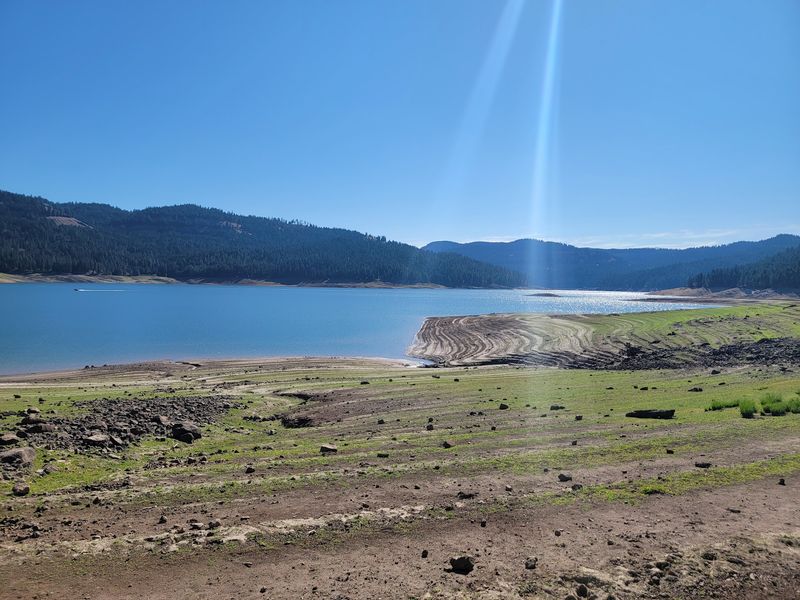
Freeman Creek Swim Beach belongs to Dworshak State Park, which hugs the western shore of Dworshak Reservoir near Lenore. Thick forest surrounds nearly every campsite.
Swimming here comes with an unusual perk. Water levels shift through the season, so the beach changes shape.
Boating rules this reservoir in summer. Waterskiing and tubing happen constantly on calm mornings.
Anglers chase rainbow trout and smallmouth bass. Kokanee salmon show up in strong numbers certain years.
Dworshak State Park currently lists 103 campsites, with the Freeman Creek area providing direct access to the reservoir and designated swimming area.
A large picnic shelter handles family reunions well. Tables, grills, and restrooms round out the basics.
Hiking trails climb through pine and fir above the shoreline. Views open suddenly at the ridge tops.
Birdwatching is one of the park’s listed activities, with forest, meadow, and reservoir habitats creating opportunities to watch wildlife throughout the property.
Ospreys nest on snags near the water. Bald eagles cruise the reservoir through winter months.
Elk sometimes appear in meadows during early morning. Drive slowly on the park roads. Cell service drops out quickly in these canyons. Download your maps before leaving the highway.
Head toward Lenore, then follow signs along the reservoir. The final miles wind, so allow extra time.
Quiet water and tall trees give Freeman Creek a relaxed setting, though visitor levels vary during the summer recreation season.
6. Winchester Lake State Park Swimming Area, Winchester
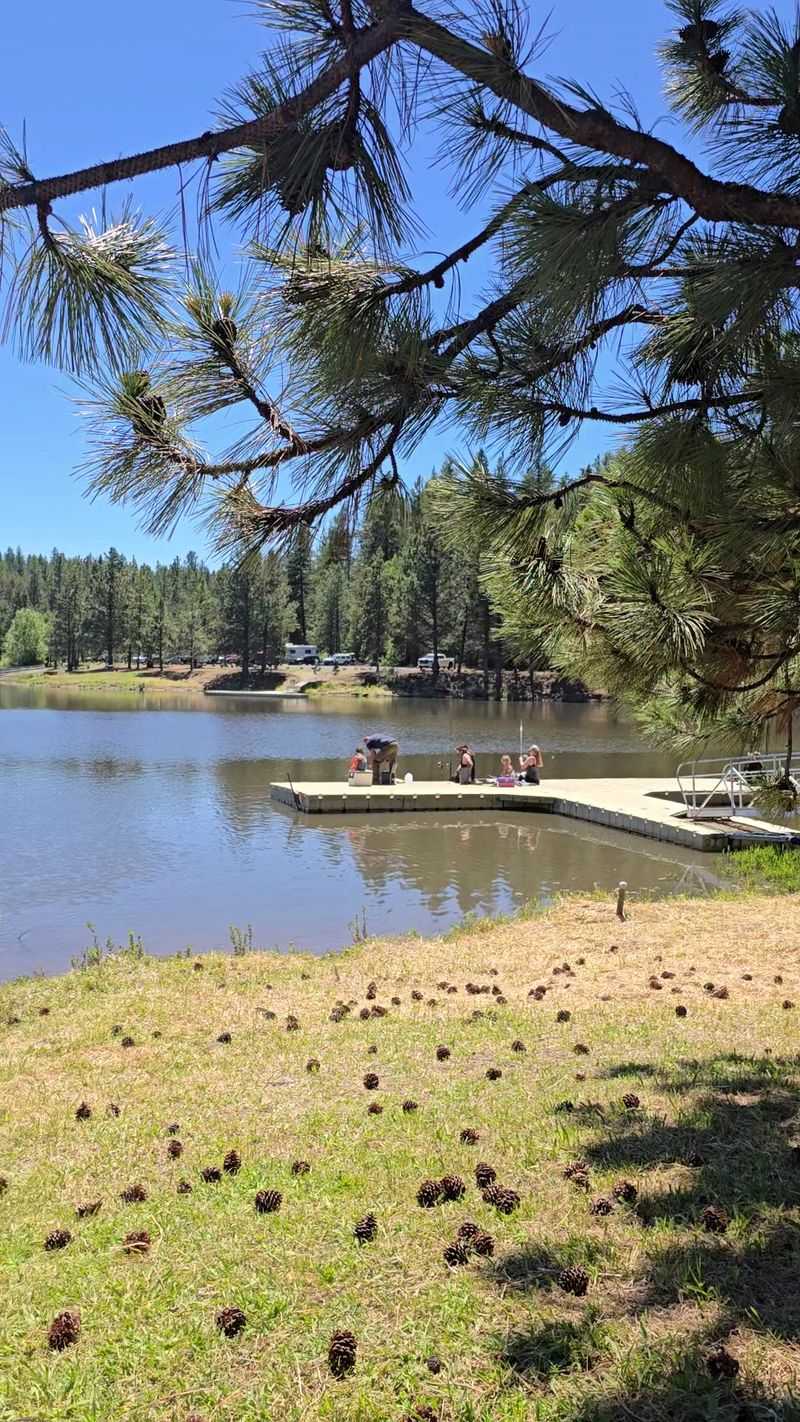
Gas engines are prohibited at Winchester Lake, helping reduce motorboat noise while electric and nonmotorized boats remain allowed.
Winchester Lake State Park spreads across 418 acres on the southern edge of Winchester. The 103-acre lake sits at the foot of the Craig Mountains.
Electric-powered and nonmotorized boats are allowed on Winchester Lake, while gas engines are prohibited.
The swimming area cools you off after a hot prairie drive. Grass borders much of the shoreline.
Rainbow trout and smallmouth bass are among the lake’s established sport fish, with fishing available through multiple seasons.
The official 3.3-mile Lakeshore Trail circles Winchester Lake and is open for hiking and biking, with additional trail connections around the park.
Mountain bikers use the wider paths. Early mornings bring mist off the water and total calm. Huge ponderosa pines scent the air on warm days. That vanilla-bark smell is unmistakable.
White-tailed deer graze near the campground loops. Bald eagles perch on snags across the lake. Yurts can be rented year-round. Winter guests snowshoe and ice fish, then warm up inside.
Nearby Nez Perce National Historical Park sites can add cultural and historical context to a visit through this part of north-central Idaho.
Elevation sits high enough that nights turn cool. Pack a jacket even in July. Look for the park entrance in Winchester, just off Highway 95. Signs make the turn obvious.
Few small lakes deliver this much peace with so little effort required to reach them.
7. North Beach At Bear Lake State Park, St. Charles
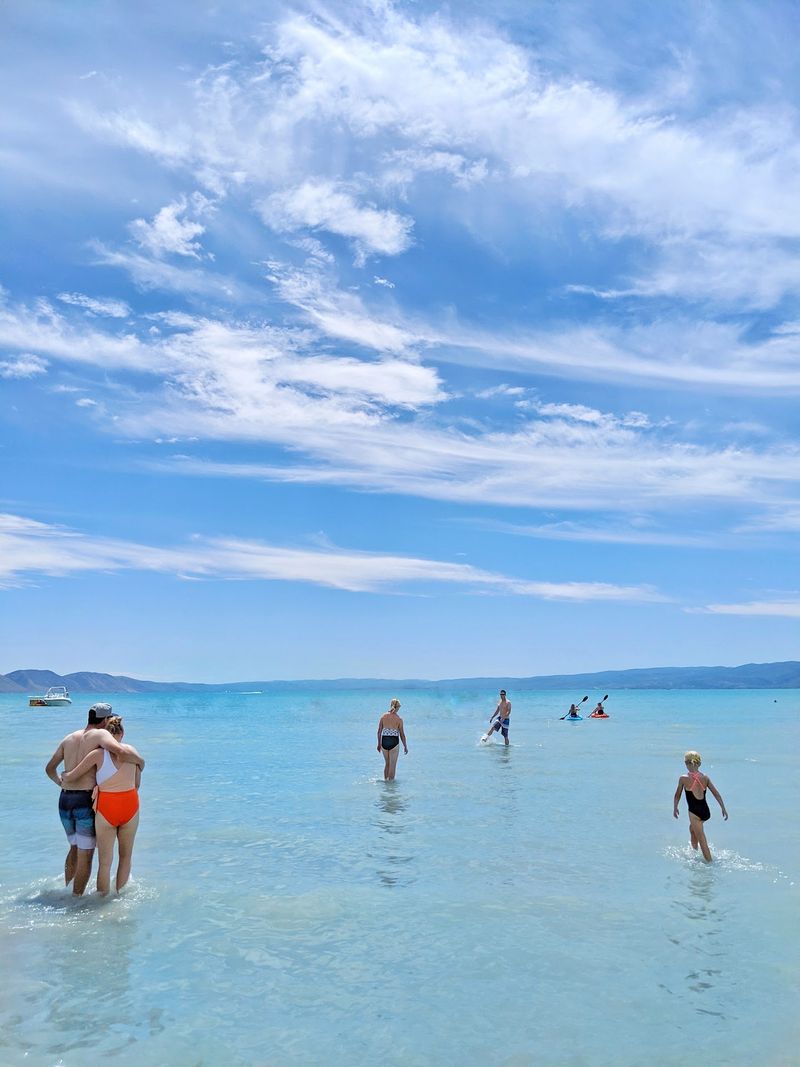
Let me be real for a second, the turquoise water genuinely looks unreal. People nickname it the Caribbean of the Rockies for good reason.
North Beach currently offers more than a mile of sand near St. Charles, while suspended calcium carbonate from surrounding limestone contributes to Bear Lake’s famous turquoise color.
The bottom slopes very gradually outward. You can wade a long way and still touch sand. The lake bottom slopes gradually at North Beach, creating a broad shallow swimming area during summer.
Boat ramps sit close to the sand. Water skiers head out early before wind picks up.
Kayaks and paddleboards work beautifully on calm mornings. Afternoon breezes can build real chop, so plan ahead.
Soft sand invites castle building and long naps. Beach volleyball games start up on busy weekends.
Picnic facilities sit behind the beach line. Shade is limited, so bring an umbrella or canopy.
North Beach often reaches capacity in warmer months, and visitors can currently reserve a parking day pass in advance to guarantee parking.
The lake straddles the Idaho and Utah border. Its unique fish species exist nowhere else on earth. Raspberry farms nearby ripen in late summer. The local festival celebrates them every August.
Sunsets turn the water from turquoise to gold. Stay late and watch the color shift.
Find this remarkable shoreline outside St. Charles. The parking area sits right beside the sand. Two miles of open beach and glowing blue water make ordinary lakes look a little dull.
8. North Beach Unit At Ponderosa State Park, McCall
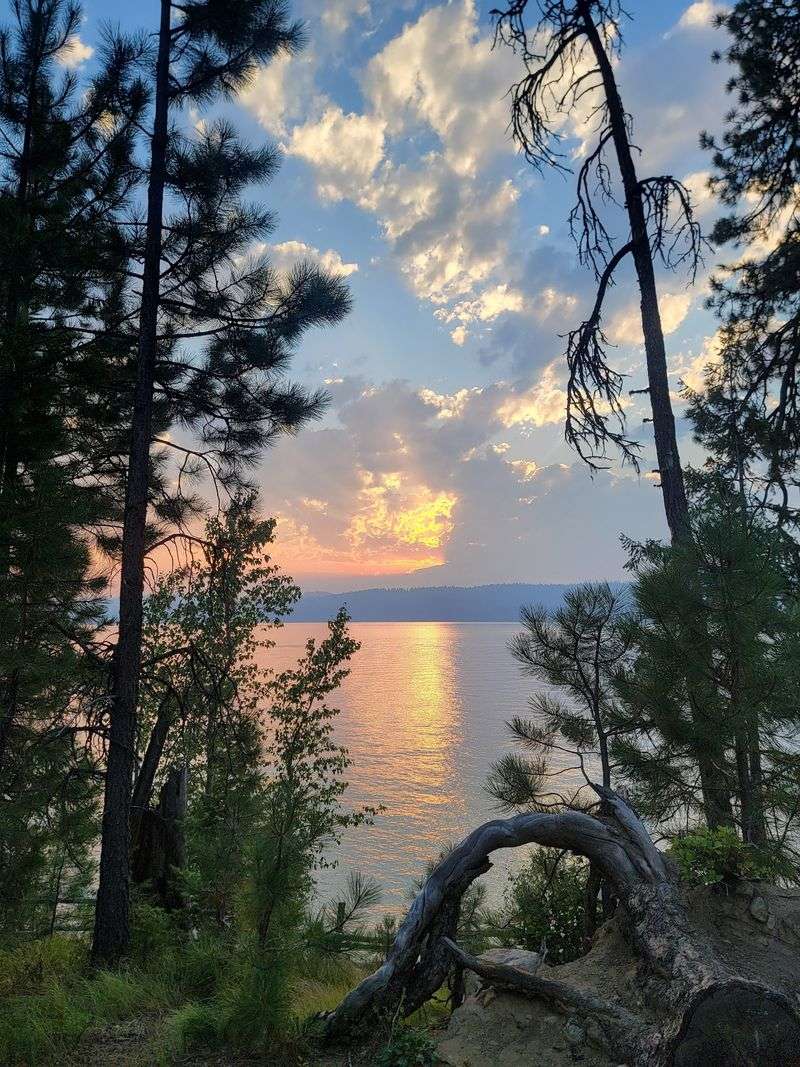
Ponderosa State Park has two distinct areas on Payette Lake: the forested Peninsula Unit near McCall and the separate North Beach Unit at the lake’s northern end.
The North Beach Unit of Ponderosa State Park sits about six miles north of McCall. The North Beach Unit occupies the northern end of Payette Lake near the mouth of the North Fork Payette River.
Wide sand meets shallow, clear water at this end. Kayakers launch here and paddle into quiet inlets.
The North Fork of the Payette River feeds the lake nearby. Marshy edges attract all kinds of birds. Canada geese gather in noisy groups. Bald eagles watch from tall snags above the water.
The main Peninsula Unit contains much of Ponderosa’s established hiking and biking trail network, while North Beach focuses more heavily on sandy shoreline and river access.
Naturalist walks, interpretive programs, and Junior Ranger activities are offered seasonally within Ponderosa State Park, primarily around the developed Peninsula Unit.
Summer interpretive programs are held at the park amphitheater in the Peninsula Unit, while North Beach offers a simpler shoreline-focused experience.
Osprey Point is a scenic overlook in Ponderosa’s separate Peninsula Unit and can be added to a visit if you explore both sections of the park.
Western larch grows within Ponderosa State Park and can add golden color as fall progresses, though exact timing varies each year.
Ponderosa State Park remains a year-round destination, with groomed Nordic skiing and snowshoeing concentrated in its developed winter trail system.
Swimming gets best in late July and August. Snowmelt keeps the lake brisk earlier in the season.
The main entrance at 1920 N Davis Ave serves Ponderosa’s Peninsula Unit; North Beach is a separate unit roughly six to seven miles north of McCall and is commonly reached via Warren Wagon Road.