Pioneers Carved Their Names Into This Nebraska Bluff In The 1850s And The Signatures Are Still Readable
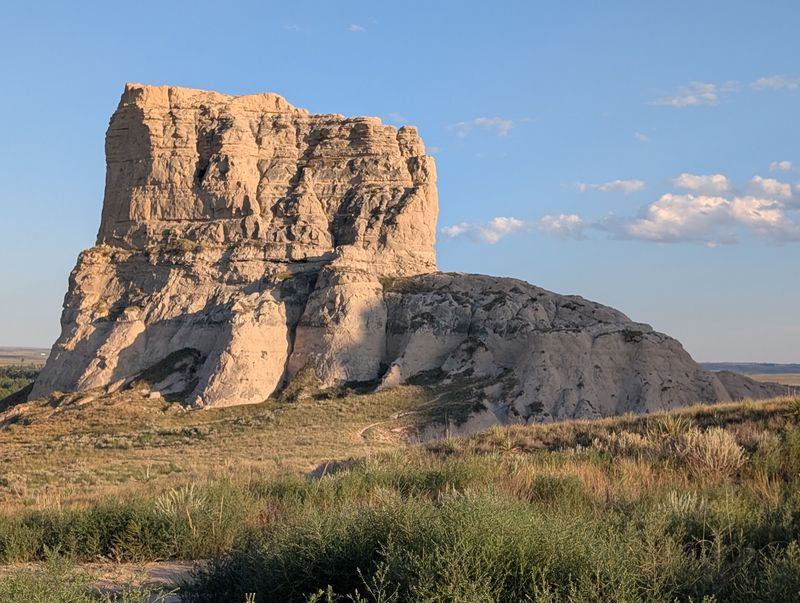
Trail travelers in the 1840s and 1850s took one look at a giant lump of clay and sandstone and decided it resembled a courthouse back in St. Louis. Then they named its smaller neighbor the jail.
That’s frontier humor, and the names stuck.
Plenty of those travelers did more than squint and joke. Emigrant diaries describe people scrambling up the soft rock to carve their names into it.
Weather has worked on those surfaces for more than 160 years.
I love that this whole story sits in the Nebraska Panhandle with no ticket booth attached. You park on a dirt lot, read a sign, and walk a short trail toward the same landmark wagon trains used.
So how much of that old frontier graffiti can a modern eye still find? And what else waits out there on the prairie?
Two Giant Rocks, One Free Parking Lot, And Zero Excuses
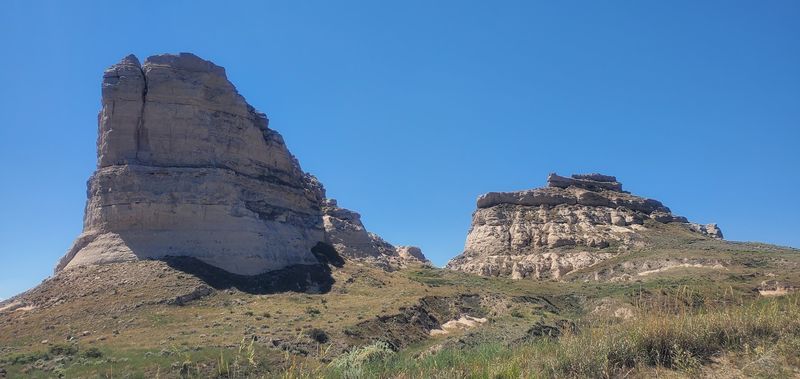
Two hulking rock formations rise straight out of the prairie south of Bridgeport, and one of them really does look like a public building. The spot where you meet them is called the Courthouse and Jail Rocks Parking Area.
Courthouse Rock is the big one, climbing roughly 400 feet above the surrounding valley floor. Jail Rock sits just beside it, smaller and blockier, like a sidekick that never got the spotlight.
The setup here is wonderfully simple. A drive-up lot, informational signs, and a short trail make up the whole visitor experience.
Access and parking are free, with no tickets or entrance fees to worry about. You just pull in, step out, and walk toward the rocks.
That low-key approach suits a landmark this old. Courthouse and Jail Rocks were already famous long before anyone thought about paving a road to them.
For Nebraskans who drive Highway 88 or cut through the Panhandle, this is a stop that rewards even a brief detour. Twenty minutes gets you a stretch, a history lesson, and a view wagon travelers wrote about in their journals.
Not a bad trade for a little gravel dust on the tires.
A Nickname Borrowed From A St. Louis Courthouse
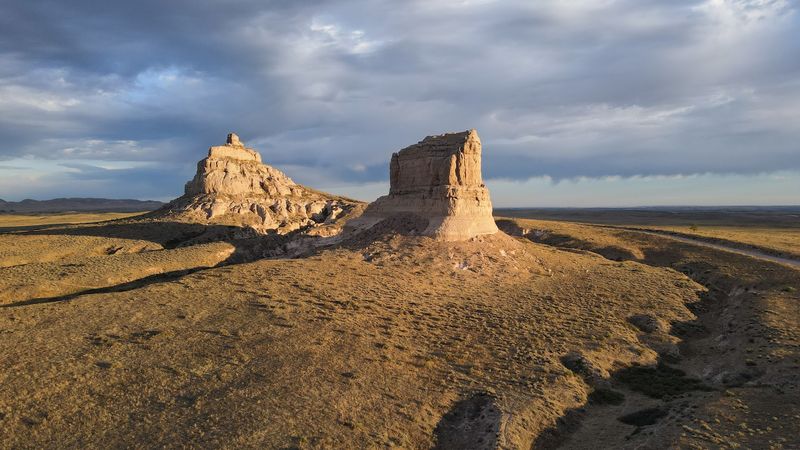
Frontier travelers had a knack for naming things after whatever they missed back home. Many emigrants began their overland journeys near Missouri, and the big formation reminded them of a courthouse in St. Louis.
Once the larger rock had a legal identity, the smaller one needed a role. Jail Rock was the obvious answer, and suddenly the prairie had its own little justice system.
Earlier names floated around too. Some accounts mention travelers calling it a castle or a solitary tower, depending on their imagination and the light that day.
The courthouse label won out over time. Diaries and guidebooks repeated it until it became the name everyone recognized on the trail.
I can’t help liking the humor in it. These were people walking hundreds of miles beside oxen, yet they still made time for a running joke.
The names also served a practical purpose. A memorable name made a landmark easier to describe, and that helped later travelers know they were on the right path.
Today the same names greet you on the parking area sign, still doing their job for a whole new set of road-trippers.
The Names Pioneers Scratched Into Soft Stone
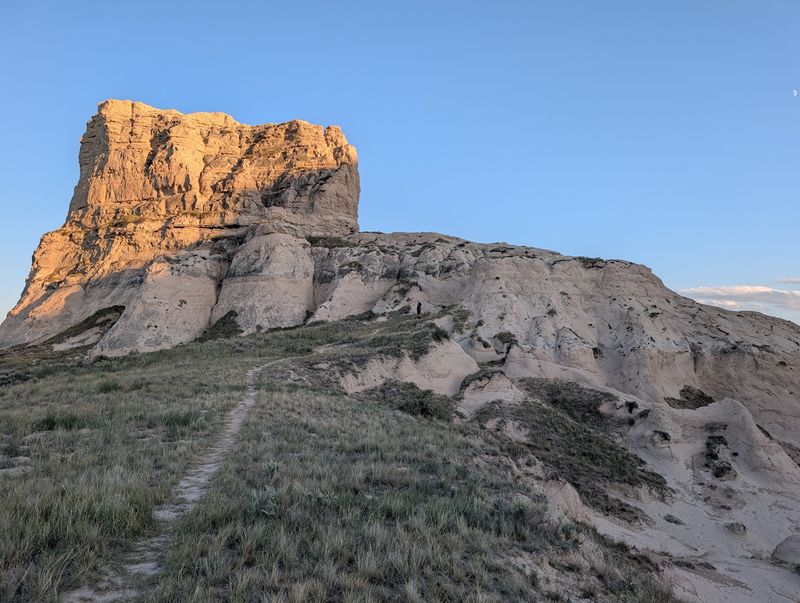
Carving your name into a rock was the 1850s version of posting a check-in. Emigrant diaries mention travelers climbing Courthouse Rock and leaving their names and dates on its surface.
The catch is the material itself. Courthouse Rock is made largely of soft clay and sandstone layers, which wear down faster than harder stone.
That means time has been busy here. Wind, rain, and freeze-thaw cycles have softened or erased many of the marks emigrants left behind.
So keep your expectations honest. The thrill at this site comes more from standing near the same surface those travelers touched than from reading a perfect autograph.
Please treat whatever traces remain gently. Adding new initials would only speed up the weathering and blur the real history underneath.
If clear, readable pioneer signatures are your top goal, Nebraska has other trail stops famous for them. Courthouse and Jail Rocks make a great companion visit, though.
Here you get the scale and the story, then the imagination does the rest. Somewhere on that pale face, a wagon traveler once paused long enough to say, I was here.
Layers Of Clay, Sandstone, And Ancient Ash
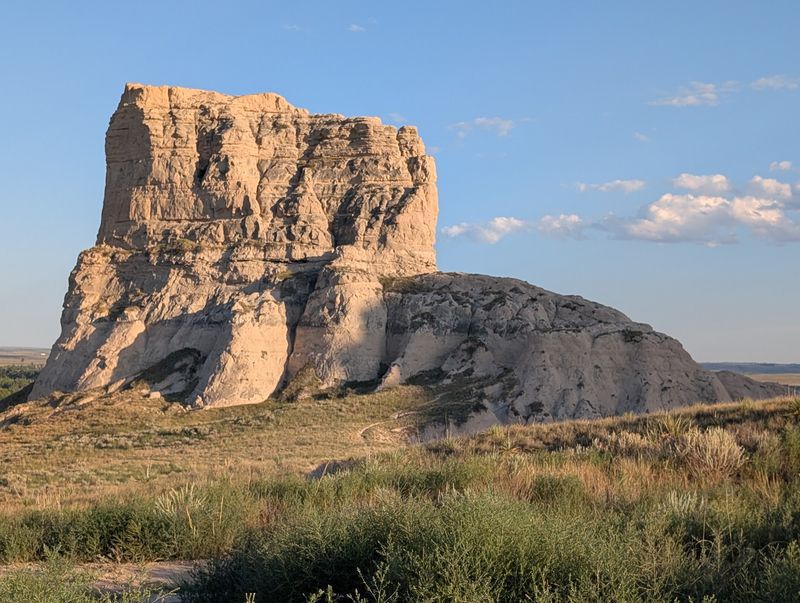
Geologists see these rocks as leftovers. Courthouse and Jail Rocks are remnants of a much higher plain that once covered this part of Nebraska.
Over millions of years, water and wind carried most of that plain away. The two formations survived as stubborn islands of stone.
Their layers tell the story in stripes. You’ll find clay, sandstone, and bands of volcanic ash that drifted in from far-off eruptions long ago.
That mix explains the soft look of the rock faces. It also explains why erosion keeps slowly reshaping them, season after season.
Bring a curious kid along and this becomes a free science lesson. Point out the color changes in each band and ask what might have made them.
The same geology links these rocks to other famous Panhandle landmarks. Chimney Rock and Scotts Bluff share a similar origin story, carved from the same ancient high plain.
Seen together, they feel like chapters in one long book about wind and water. Courthouse Rock just happens to be the chapter many westbound travelers read first, which gives it a special place on the shelf.
Where Four Famous Trails Found Their First Big Signpost
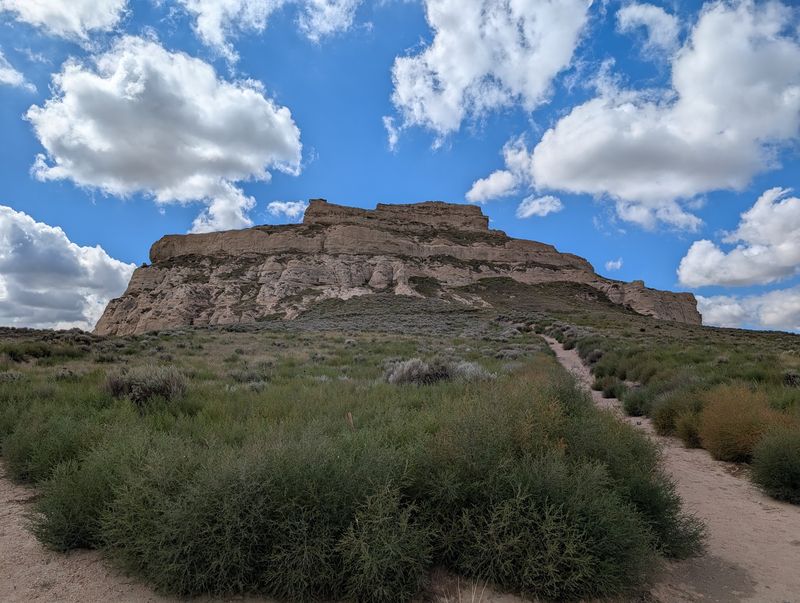
Flat prairie makes for long days and short conversations. After weeks of open plains, westbound travelers finally spotted something tall on the horizon.
Courthouse Rock became one of the first major landmarks along the route through western Nebraska. Travelers on the Oregon, California, and Mormon trails all passed within sight of it.
Pony Express riders later sped through this same corridor too. For a brief stretch in the early 1860s, mail moved past these rocks faster than wagons ever could.
Seeing the formation meant progress. It told tired families that the next string of landmarks, including Chimney Rock, was not far ahead.
Some travelers left the main trail to get a closer look. That side trip explains how so many names ended up carved into the rock.
Standing at the parking area today, you share their exact view. The rocks haven’t moved, even if the wagons have.
It’s a quiet kind of time travel that costs nothing and asks only for a little attention. I believe that’s what makes this stop feel so personal for anyone with Nebraska roots.
A Short Trail With Plenty Of Wandering Room
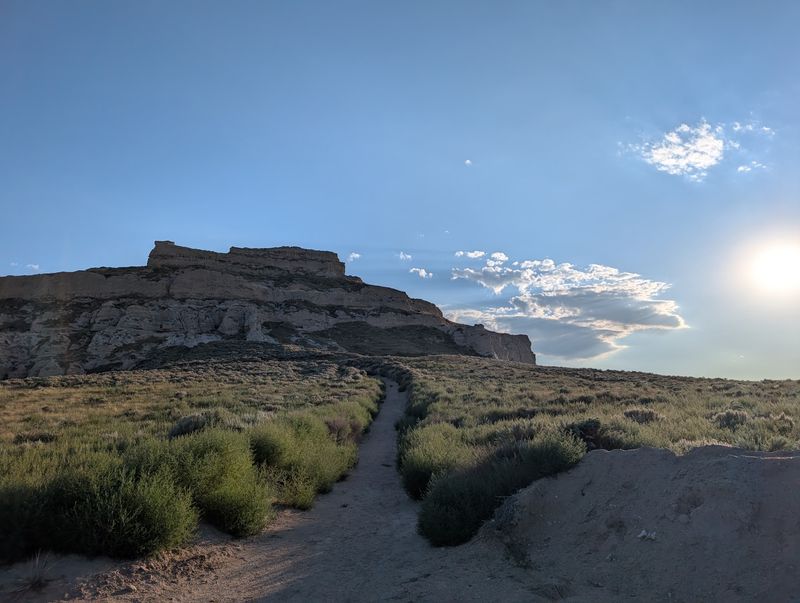
Good news for anyone with stiff legs after a long drive. The official trail at the Courthouse and Jail Rocks Parking Area is short and easy to manage.
It leads you closer to the formations and serves up shifting angles along the way. Each few steps reframes the rocks against the sky.
Beyond the main path, smaller informal trails branch around the area. They give curious walkers more ways to explore the base and surrounding prairie.
Wear sturdy shoes anyway. Dirt paths and uneven ground can be slick after rain or dusty during dry spells.
This walk works well for a quick leg stretch on a road trip. It also fits families who want something active without committing to a full hike.
Keep an eye on the clock and the weather, especially in summer. Western Nebraska sun can feel strong out in open country, and shade is scarce near the rocks.
A hat and a full water bottle make the stroll far more pleasant. Then you can take your time, pause often, and let the scale of these old landmarks sink in.
Sunset Paints These Rocks Every Shade Of Orange
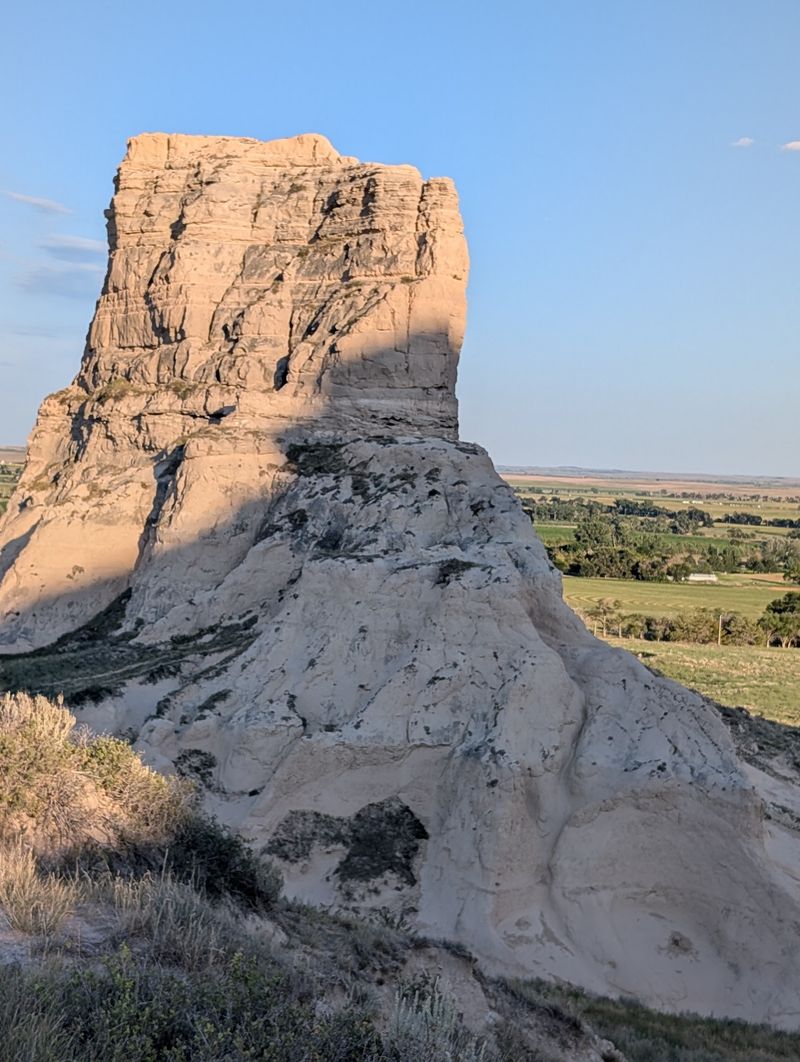
Timing your visit can change everything. Late evening light turns the pale rock faces warm, soaking them in gold, orange, and soft pink.
Because the formations stand alone on open prairie, nothing blocks the show. The sky stretches wide in every direction, which makes sunsets here feel huge.
Photographers will appreciate how the layered stone catches shifting light. Each band seems to glow a slightly different color as the sun drops.
Midday visits have their own charm, with crisp shadows and bright blue skies. Still, golden hour is when these rocks look almost lit from within.
Plan ahead if you’re chasing that glow. There are no lights or structures on site, so heading back to the car before full dark is smart.
A sunset stop also pairs nicely with a road trip schedule. You can tour other Panhandle landmarks during the day, then swing by here as the light softens.
It’s a fitting way to end an afternoon of trail history. Those emigrant travelers watched these same skies change color, probably while thinking about tomorrow’s miles instead of their camera roll.
Gateway To The Wildcat Hills
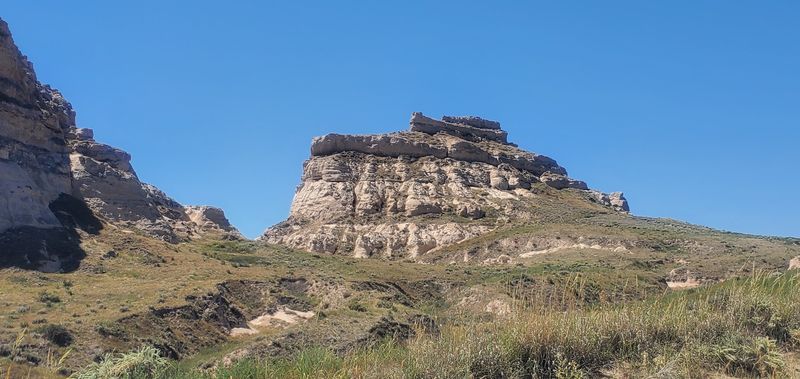
Look past the two big rocks and you’ll notice the land starting to rise. Courthouse and Jail Rocks mark the eastern edge of the Wildcat Hills region.
That ridge country stretches west through the Panhandle. It holds pine-covered bluffs, canyons, and rugged ground that feels nothing like the flat stereotype of Nebraska.
For trail travelers, this shift in landscape mattered. The change in terrain helped wagon trains track their progress as they moved west.
For modern visitors, it means more adventure nearby. The Wildcat Hills offer plenty to explore once you’ve finished admiring Courthouse Rock.
I like how this stop works as an opening act. It introduces the dramatic side of western Nebraska before the bigger bluffs take over the horizon.
Map out a loop and you can cover several landmarks in a single day. Chimney Rock and Scotts Bluff National Monument both sit farther west along the same historic corridor.
Starting here gives the whole drive a natural order, just like the emigrants experienced it. First the courthouse, then the chimney, then the towering bluff that welcomed travelers onward.
Pack Like A Pioneer Because Nothing Is Provided
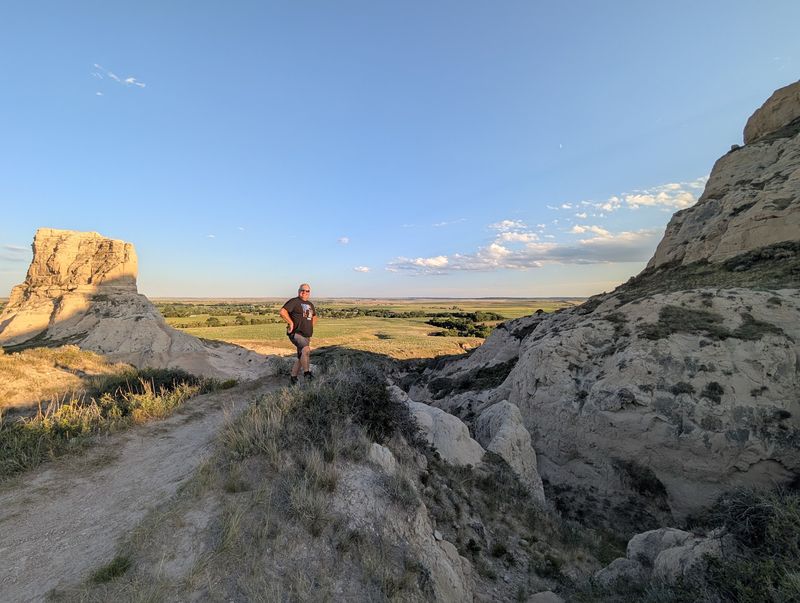
Here’s a refreshingly old-fashioned detail. The Courthouse and Jail Rocks Parking Area has no visitor center, bathrooms, water, or other structures.
What you get is parking, a short trail, and informational signs. Those signs do a solid job explaining the rocks and their role on the trail.
So plan like the travelers who came before you, just with better snacks. Bring water, especially on warm days, since there’s none available on site.
Take care of restroom stops before you arrive. Bridgeport, a few miles north, is the closest town for those basics.
Sunscreen and a hat earn their spot in the bag too. The prairie offers little shade, and the sun can feel intense in open country.
Carry out everything you bring in, from wrappers to bottles. With no trash service here, keeping the area clean depends on each visitor.
That simple habit keeps the site looking as wide open as it did in the 1850s. Honestly, a little self-reliance makes the visit feel more connected to the people who first admired these rocks.
Finding Your Way South Of Bridgeport
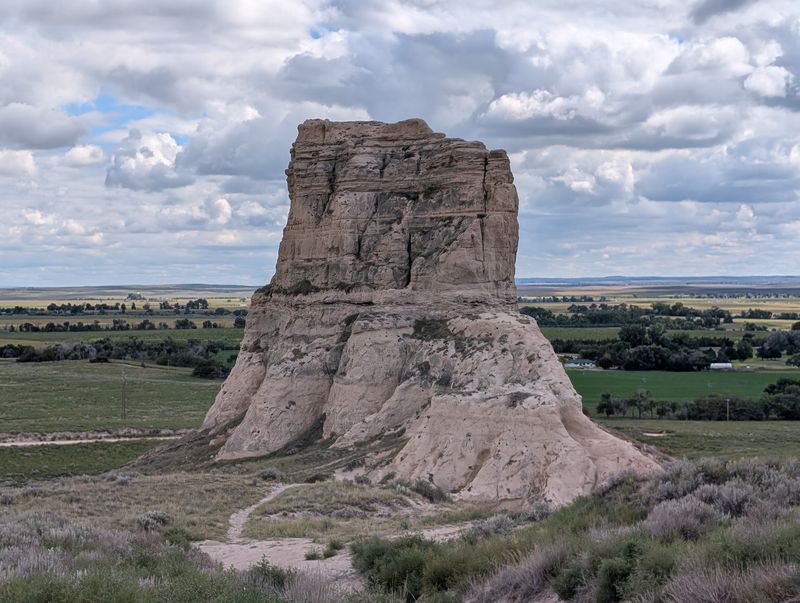
Bridgeport makes an easy launching point for this trip. The rocks sit just a few miles south of town in Morrill County, Nebraska.
The parking area’s address is Rd 81, Bridgeport, NE 69336. Most drivers head south on Highway 88 and then follow the signs toward the formations.
The final stretch is a dirt road. It’s typically fine for regular cars, though wet weather can make it muddy or rutted.
Check conditions if heavy rain has recently passed through. Driving slowly keeps both your car and the road in better shape.
The good news is that you can’t really miss the destination. Courthouse Rock towers over the landscape long before you reach the lot.
Entry is free, so there’s no need to budget beyond fuel and snacks. That makes this a strong choice for families, retirees, or anyone wanting an affordable outing.
You can combine it with other Panhandle stops without blowing a travel budget. Few places offer this much frontier history for the price of a tank of gas and a little dust on the windshield.
Why These Old Rocks Still Deserve Your Afternoon
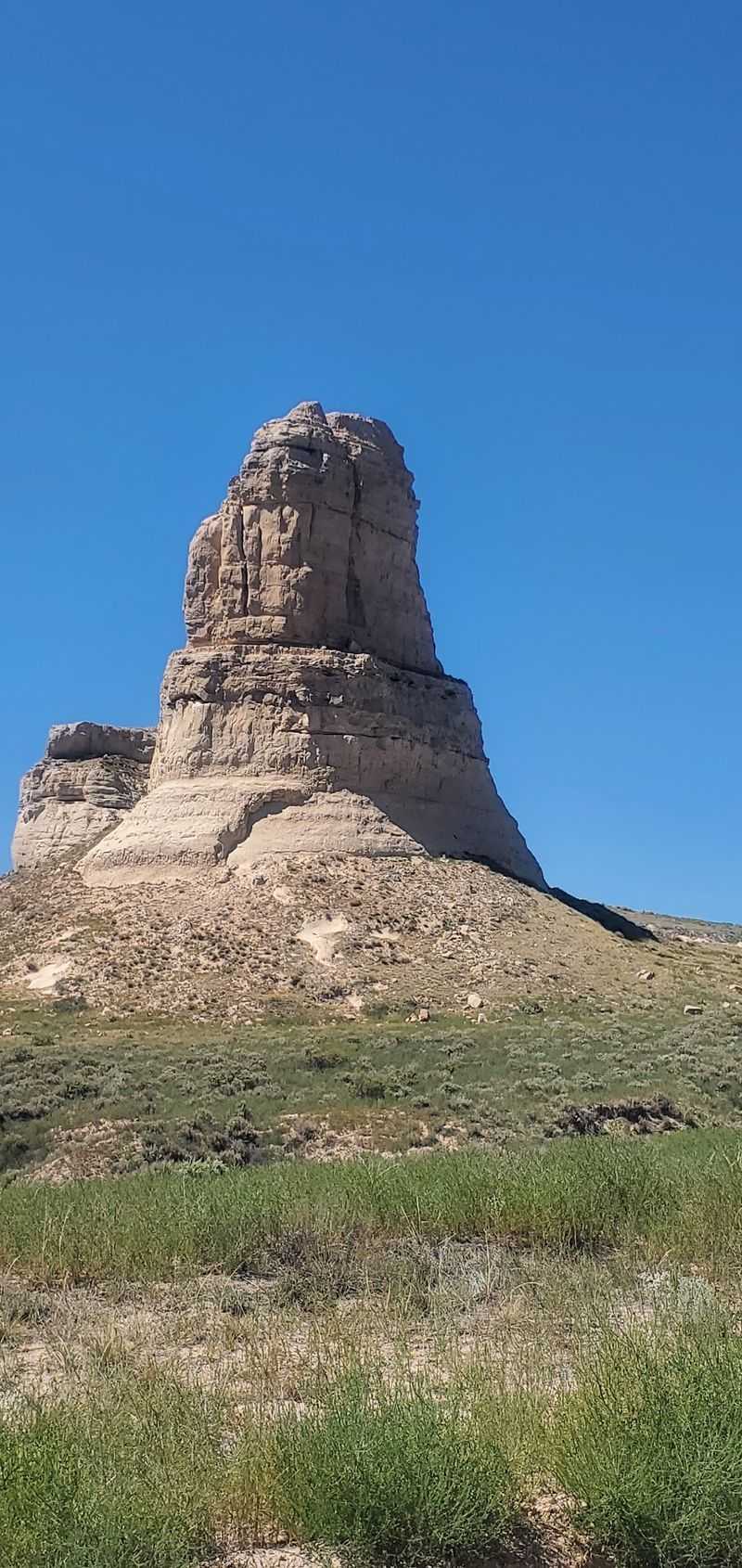
Some landmarks need fancy exhibits to tell their story. Courthouse and Jail Rocks get by with stone, sky, and a sign or two.
That simplicity is the charm. You stand where wagon travelers stood and see almost exactly what they saw.
The pioneer carvings add a fascinating layer, even if weather has softened many of them. Knowing people once climbed up to leave their names makes the rocks feel personal.
History fans will love the trail connections. Families will appreciate the short walk, and photographers get a fantastic sunset canvas.
It’s also one of the easiest history stops in Nebraska to fit into a road trip. Free access and a quick trail mean you don’t have to rearrange your whole day.
Just remember the essentials, since the site keeps things bare bones. Bring water, plan your restroom breaks, and give yourself time to wander.
Then look up at that big courthouse-shaped rock and picture a wagon train inching past below. I’d call that a pretty great way to spend an afternoon in the Panhandle.