Seeds Planted By Plains Tribes Two Centuries Ago Still Grow Behind This Nebraska Museum
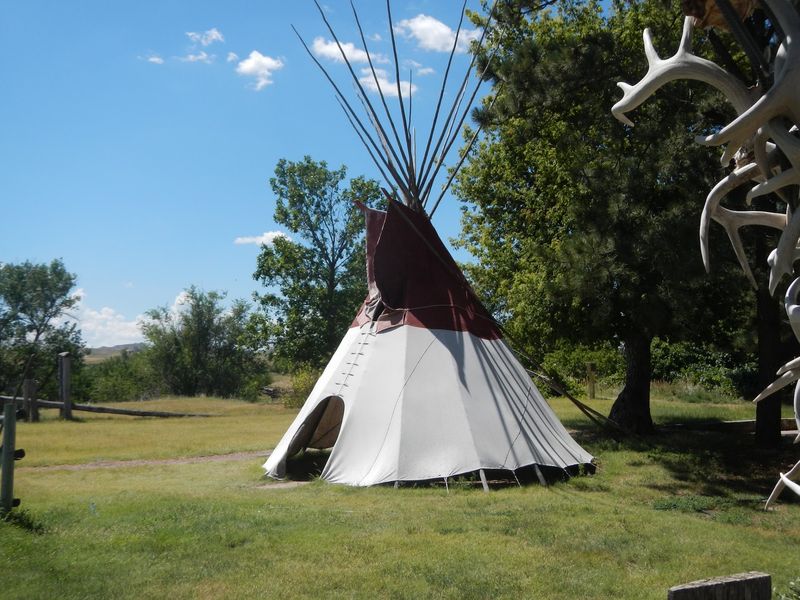
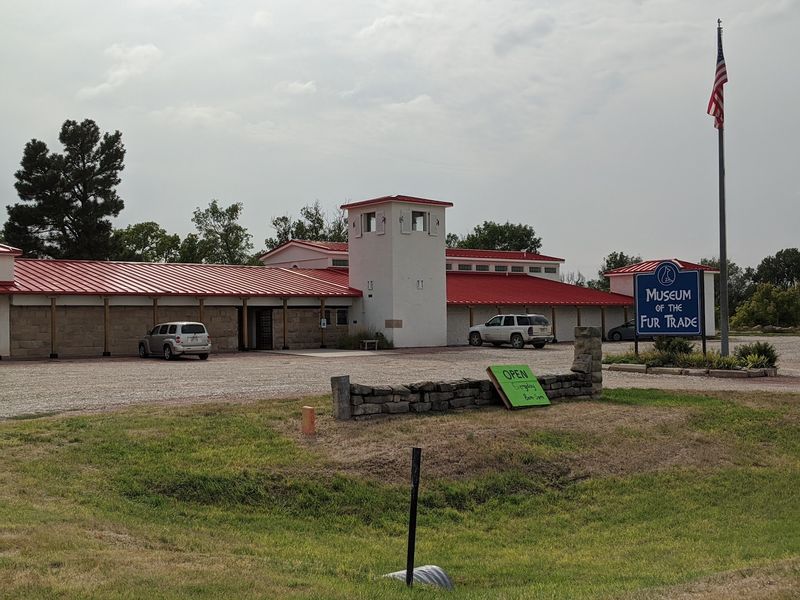
Driving the long stretch of Highway 20 across northwestern Nebraska, you pass a low brick building with a gravel lot and almost nothing to announce itself. Pull in anyway.
Inside are thousands of objects from the fur trade era, and out back, in ordinary Nebraska dirt, grows corn and tobacco descended from seed that Plains Tribes were planting generations ago. It is one of the few places where history is still putting down roots every single summer.
A Low Brick Building East of Chadron
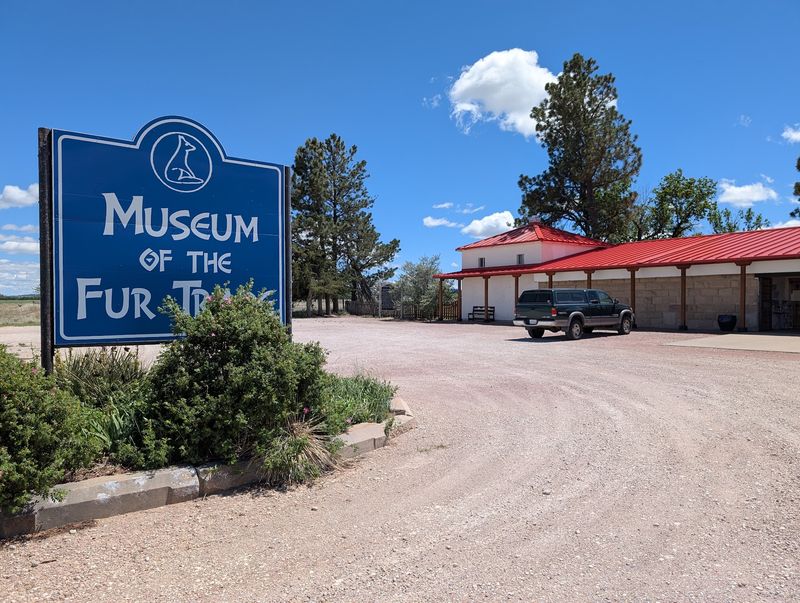
Pine-covered ridges roll along the horizon here, and the building itself does very little bragging. It sits beside the highway a few miles east of Chadron in Dawes County, sized and shaped like a county office rather than a major institution.
Inside is the Museum of the Fur Trade, holding one of the deepest collections of fur trade material anywhere in the world. The number of artifacts runs into the thousands, spanning Hudson’s Bay Company goods, Native-made clothing and beadwork, trapping tools, and trade items that traveled from Europe and Asia to the American West.
What surprises most people walking in is scale. The exterior suggests a quick fifteen-minute stop; the interior swallows two hours without effort, and plenty of people wish they had budgeted more.
Out the back door, the ground shifts from display cases to soil. A garden grows there each season, planted with heirloom varieties that tie directly to the Indigenous communities of the Northern Plains and Missouri Valley.
That garden is the reason so many people keep coming back.
Built on the Footings of the Bordeaux Trading Post
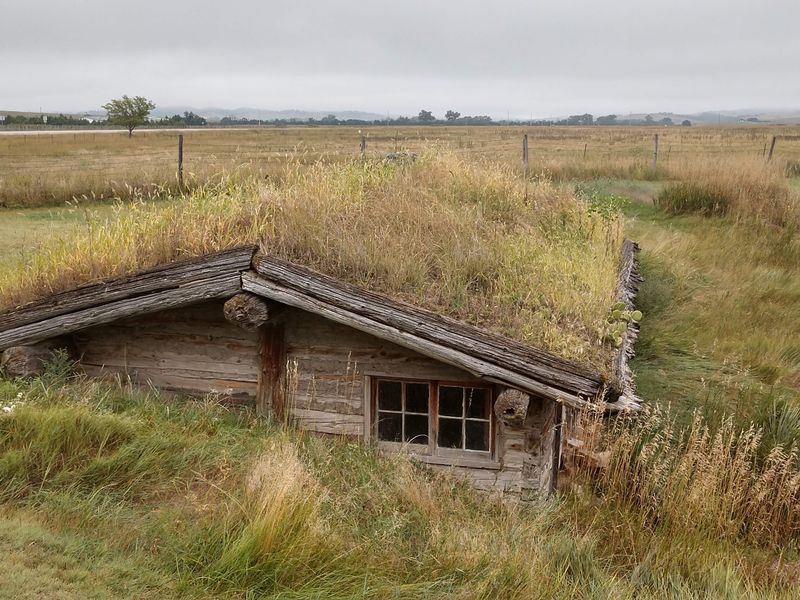
In 1837, James Bordeaux set up a trading post on this exact ground, and the museum stands on its original footings. That detail matters more than it might sound, because most posts of that period were temporary, thrown up fast and abandoned almost as quickly.
NaKaya Fester, Director of the Museum of the Fur Trade, points out that the Bordeaux post lasted “40 winters,” while many competitors barely made it through one. Four decades in the same spot means relationships, marriages, trade agreements, and yes, gardens.
A reconstructed version of the post sits behind the main building, giving the site a physical anchor rather than a plaque and a guess. Walking from a glass case of trade goods to the actual dirt where those goods changed hands does something no exhibit label manages.
The longevity also explains the seed collection. Crops need continuity.
A post that survived forty winters was embedded in a farming landscape, and the plants growing out back are what remains of it.
The Heirloom Indian Garden
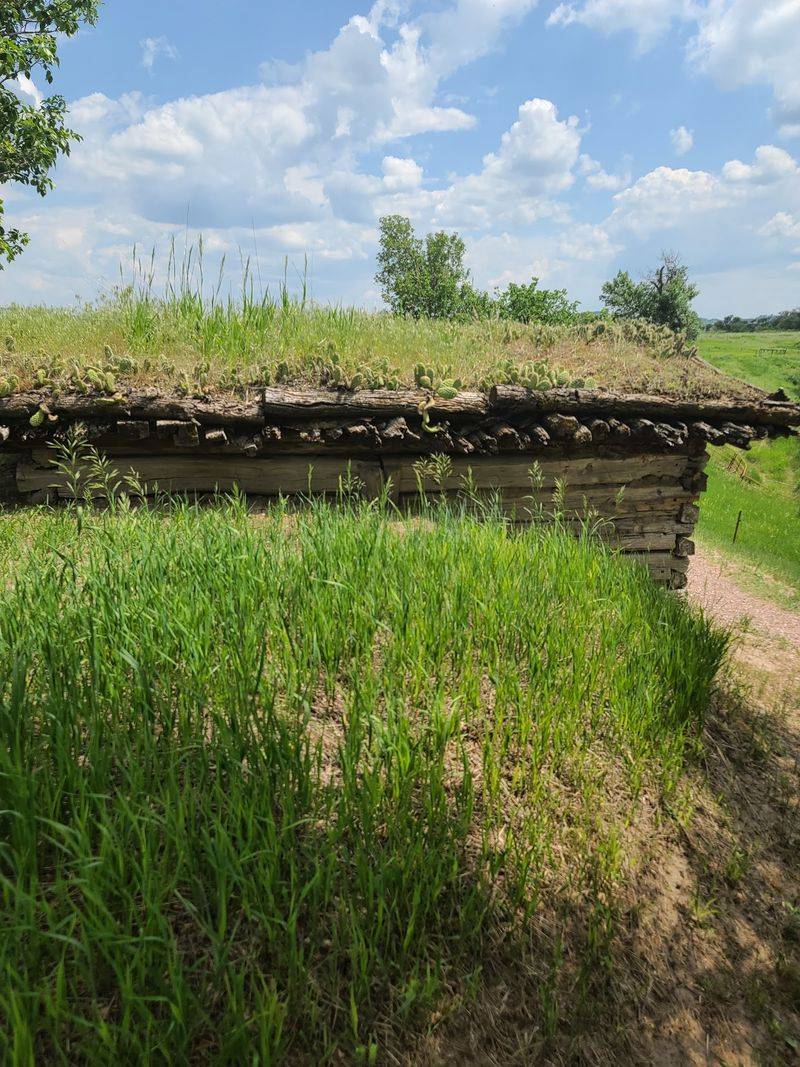
Corn stalks rustling in a Panhandle breeze do not look like a museum exhibit, and that is exactly the point. The Heirloom Indian Garden grows behind the building each season, planted from seed stock originally obtained from Native American tribes more than 125 years ago.
Assiniboin flint corn comes up here. So does midget Mandan tobacco, along with beans and squash varieties that fed Plains communities long before wagon ruts crossed Nebraska.
These are not lookalike substitutes bought from a catalog. They descend from the genuine crops grown during the trading post era, carried forward through careful replanting season after season.
Standing between the rows, the three-sisters logic becomes obvious in a way no diagram conveys: beans climbing corn, squash leaves shading the ground and holding moisture in dry high-plains soil. It is agricultural engineering, worked out over centuries.
The garden peaks in late summer, when the corn is tall and the squash has color. Time a visit for August or September and you see it at full height.
Seeds You Can Carry Home
Here is the part that tends to catch people off guard: some of those historic seeds are available to take home. The museum offers them so the varieties keep spreading beyond one fenced plot in Dawes County.
Think about what that means for a gardener in Grand Island or a hobby farmer near Valentine. You can plant flint corn in your own row that traces back through more than a century of continuous cultivation to Plains Tribal agriculture.
Seed saving is how these varieties survived at all. Commercial agriculture narrowed the field drastically over the last hundred years, and open-pollinated heirlooms live or perish depending on whether someone bothers to replant them.
Availability shifts with the harvest, so stock varies from season to season. Asking at the counter is the only reliable way to know what is on hand when you show up.
Few souvenirs improve with time. A packet of seed that turns into ten-foot corn stalks in your backyard is a rare exception.
Six Thousand Artifacts Under One Roof
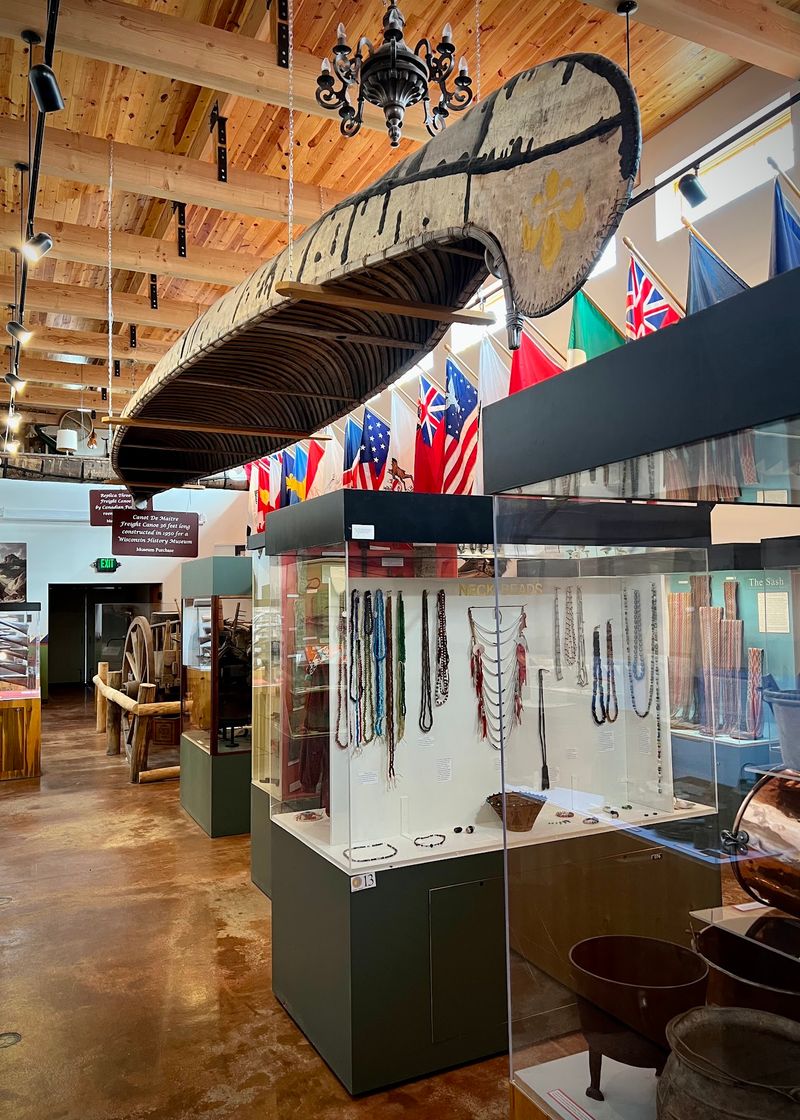
Over 6,000 authentic artifacts fill the exhibit halls, forming what is regarded as the most comprehensive fur trade collection anywhere. That is a heavy claim for a building on a Nebraska highway, and the cases back it up.
Coverage stretches far past the Great Plains. Objects trace trade from Florida to Alaska, from Hudson’s Bay Company operations down through the mountain men era and into the modern day.
The textile holdings include the oldest known point blanket, made in 1775. Items like that usually end up behind velvet ropes in coastal institutions, not forty minutes from the South Dakota line.
Displays are labeled clearly enough that a curious kid can follow along, and organized well enough that an obsessive history reader can spend half a day working through them methodically.
What keeps the collection from feeling like clutter is the through-line. Every object explains how a beaver pelt pulled from a Nebraska creek connected to a hat shop in London, and how those goods circled back as blankets, beads, and metal tools.
An Arms Collection That Stops People Cold
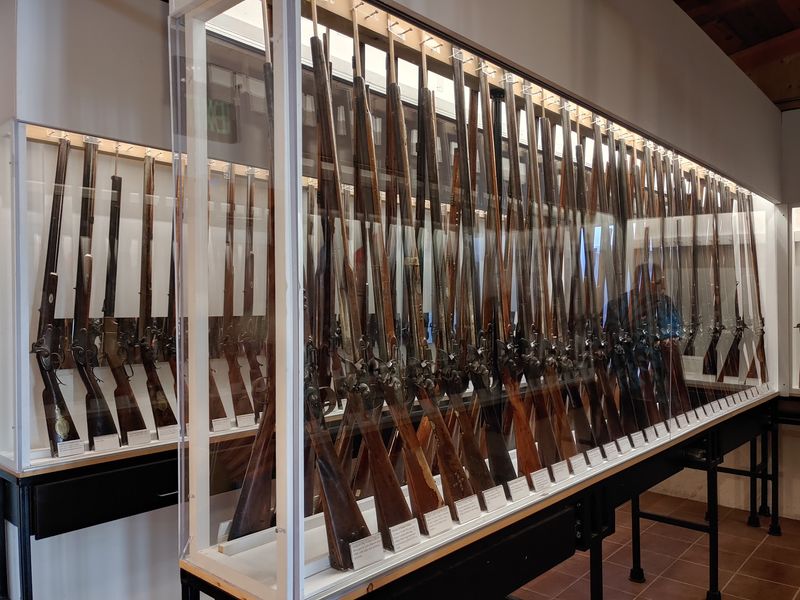
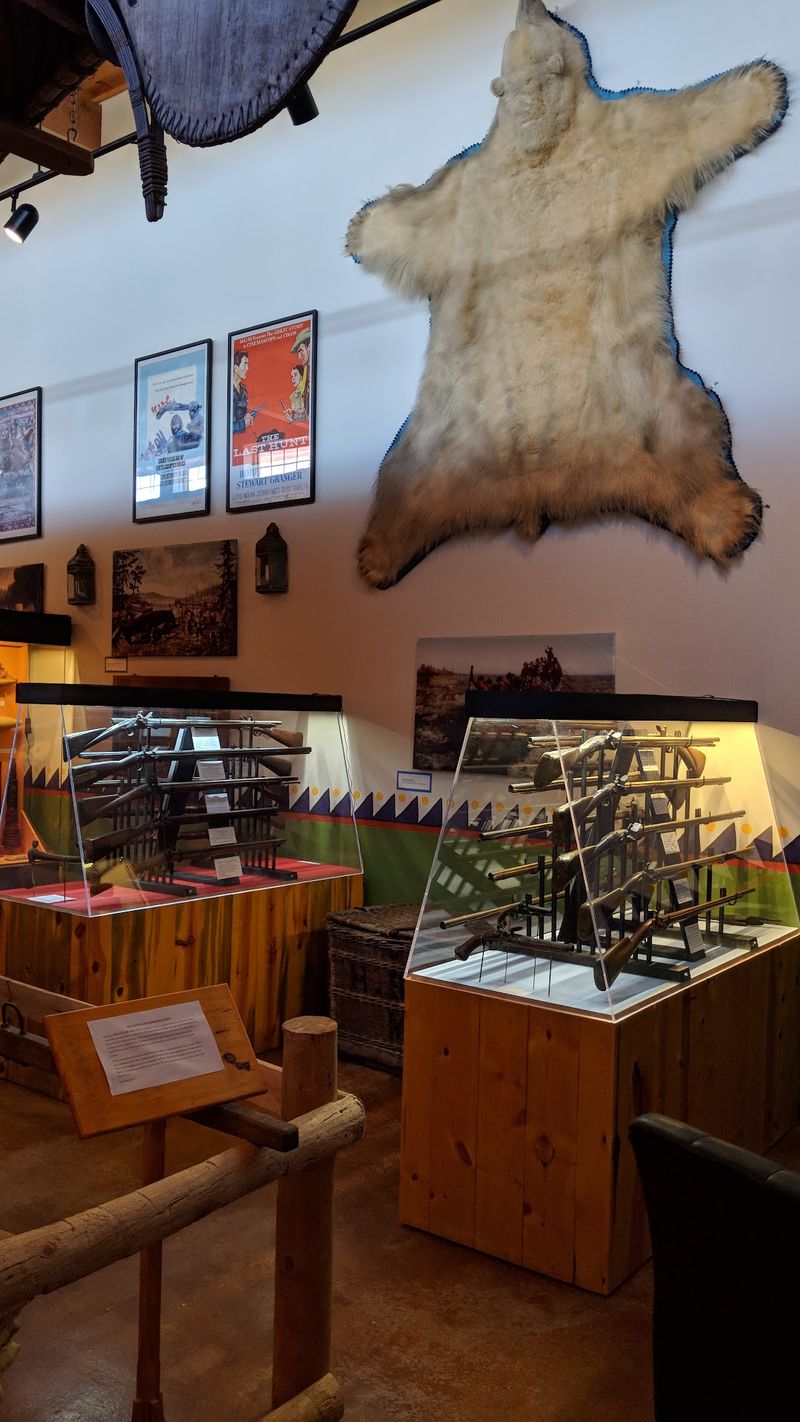
Row after row of flintlock trade rifles line the walls, and the collection of period firearms ranks among the most complete assembled for the fur trade era. Some pieces carry attributions to figures from the old West.
Trade rifles were currency as much as equipment. Understanding what a trapper or a tribal hunter could obtain, and at what exchange rate in pelts, explains a surprising amount about how the Plains economy actually functioned.
Craftsmanship on the older pieces is the real draw. Brass inlay, carved stocks, maker’s marks from British and American shops, all of it hauled thousands of miles by river and horseback.
The scale of the display genuinely surprises people who wandered in expecting a modest small-town collection. It runs longer than many state museums manage.
Even for someone with zero interest in antique arms, the cases work as a visual timeline. Lock mechanisms evolve as you walk, and the technology story lines up neatly with the decades the fur trade rose and faded across the Northern Plains.
Native Craftwork and Trade Goods
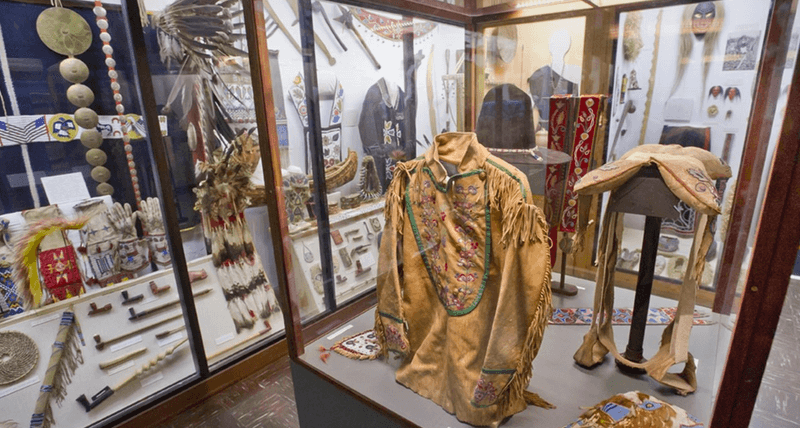
Quillwork on hide. Beadwork in patterns that shifted as glass beads arrived from Venice and Bohemia.
Wool blankets with distinctive stripes traded across the continent for generations.
The Native American holdings run deep here, covering clothing, hunting tools, adornment, and everyday household objects from communities across North America rather than one narrow region.
Seeing trade beads displayed near the finished garments they ended up decorating makes the exchange concrete. Materials came in; Plains artisans transformed them into something entirely their own.
That transformation is the quiet argument running through the whole museum. Trade was not a one-direction transaction where goods arrived and cultures absorbed them passively.
Indigenous makers selected, rejected, and reworked what came their way.
The garden out back completes the thought. Corn, beans, squash, and tobacco went outward along the same routes the beads and blankets came inward, feeding trappers and traders who would not have lasted a Nebraska winter without them.
Standing in front of these cases, the agriculture and the artistry read as parts of one system rather than separate exhibits.
The Gift Shop and the Used Book Corner
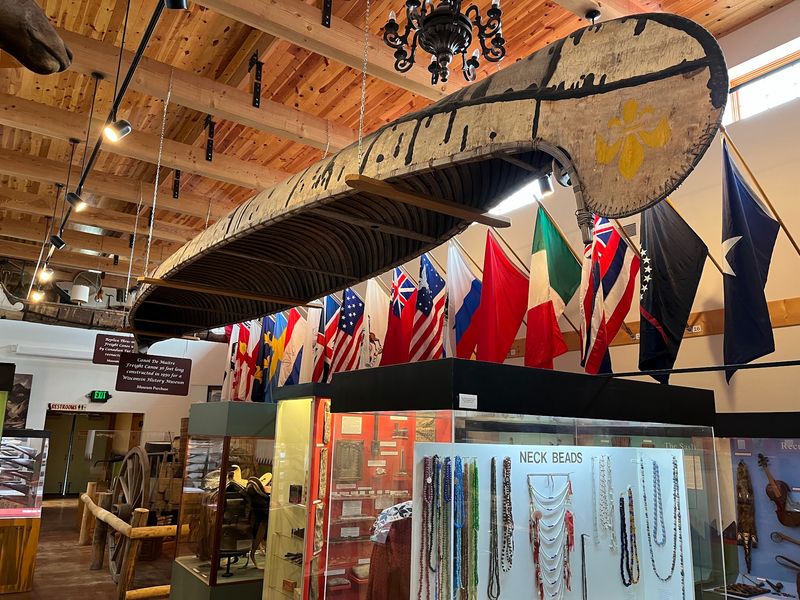
Handmade jewelry, books on frontier history, reproduction trade items, and a rack of secondhand paperbacks that feels pleasantly out of place. The shop here is better than the building’s size suggests.
Prices stay reasonable across most of the merchandise, and the handmade pieces cover a range rather than clustering at the expensive end. Bring a little cash if you tend to browse.
The used book section is admittedly random, a mix of donated titles arranged with no particular system. It sits off to one side, proceeds go toward the museum, and hunting through it is half the fun.
Reproduction goods make sense in this context in a way that gift shop trinkets usually do not. A trade bead strand or a period-correct tool connects directly to something you just spent an hour studying behind glass.
Seed packets from the heirloom garden turn up here too when the harvest allows. Between those and a book on the Bordeaux post, you can leave with a souvenir that keeps doing something after you get home.
Who Gets the Most Out of a Stop Here
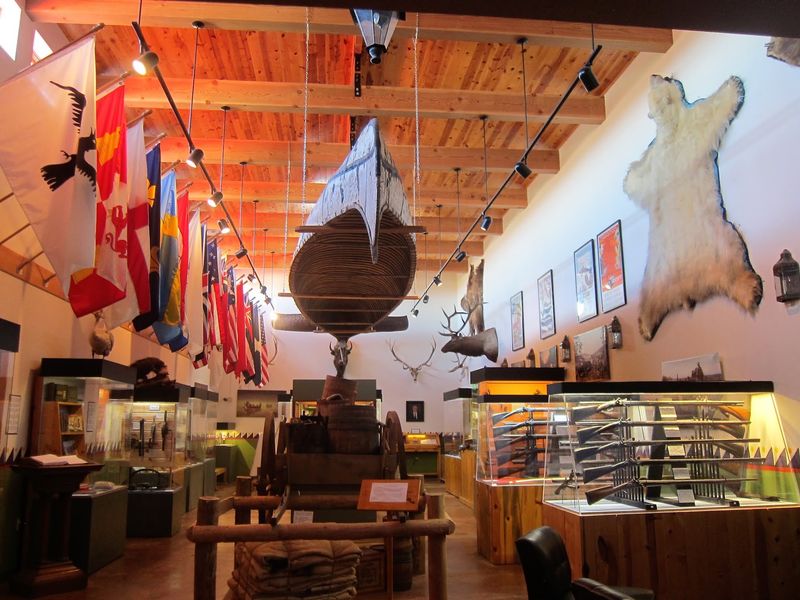
History readers hit the jackpot. The labeling is detailed, the chronology holds together, and the depth rewards anyone willing to slow down and work through the cases properly.
Kids do fine too, though the presentation leans adult in places. A short film plays during visits, and the coin displays plus the outdoor exhibits give younger visitors something to circle back to while adults finish reading.
People with no particular interest in trapping or frontier history often come out surprised. The collection contains objects that simply are not on display in larger city museums, and that novelty carries the visit.
Two hours is a realistic minimum. Rushing it in thirty minutes is possible but wastes the trip, and plenty of people run long without meaning to.
The building is cool inside, the restrooms are clean, and parking is easy, which matters on a hot Panhandle afternoon. Staff know the collection well and are happy to point out what first-timers tend to walk past.
Planning the Drive Across Northwestern Nebraska
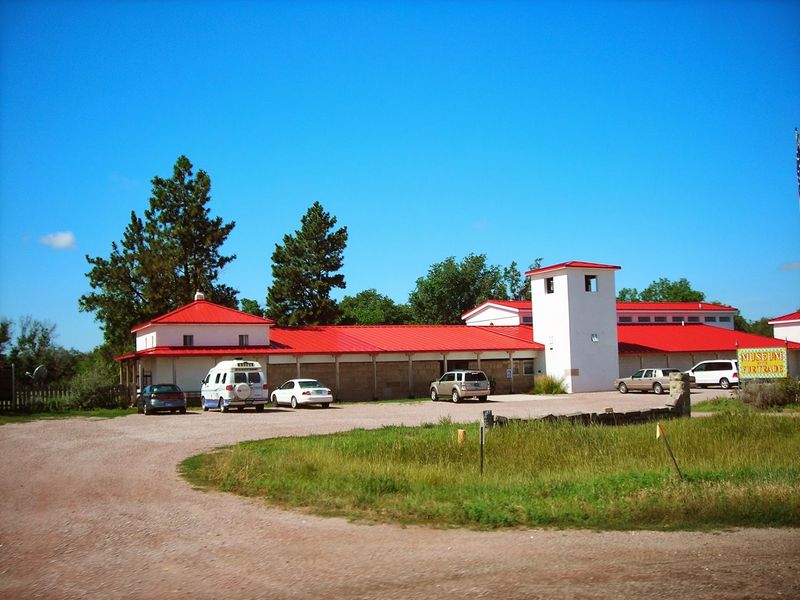
Getting here means committing to the Panhandle. The address is 6321 US-20, Chadron, NE 69337, a few miles east of town in the Pine Ridge country of Dawes County.
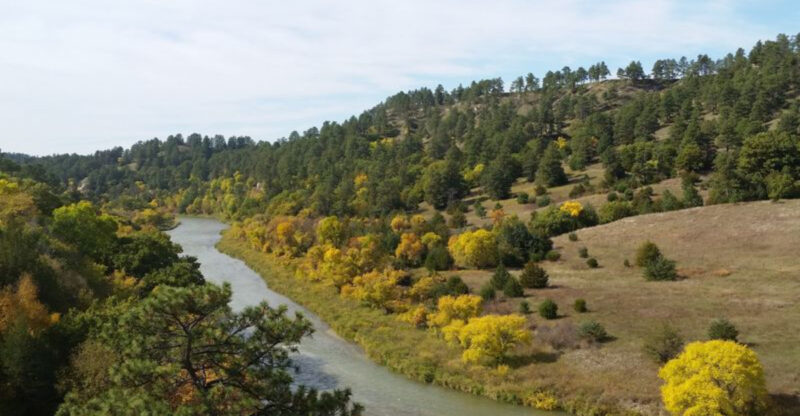
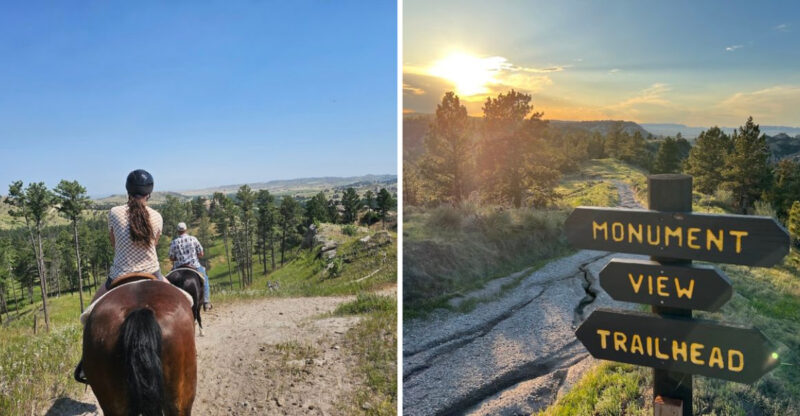
From Chadron itself it is a short hop. From Alliance, Valentine, or the Black Hills it becomes a proper road trip through some of the most distinctive terrain in the state, ponderosa pines and buttes replacing the flat expectation people carry about Nebraska.
The museum keeps daily hours through its main season, roughly May into October, with winter visits available by appointment. Admission runs just a few dollars, with discounts offered for AAA members and military.
Hours and seasonal access can shift, so a quick check before driving out saves frustration.
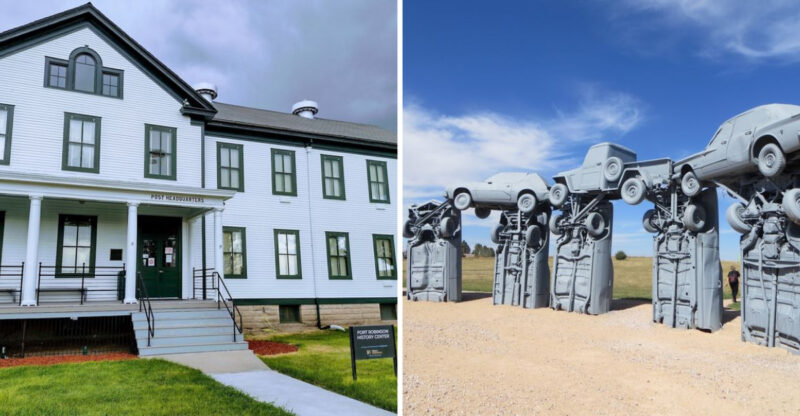
Plenty of people fold this into a trip toward the Black Hills, and it works well as a mid-route break. Toadstool Geologic Park, Chadron State Park, and Fort Robinson all sit within reasonable driving distance if you want to build a full day around it.
Why This Patch of Ground Still Matters
Most museums preserve things by stopping them. Objects go into climate-controlled cases, and the goal is to keep them exactly as they are for as long as possible.
The garden behind this building works the opposite way. Those seeds survive only by being planted, harvested, saved, and planted again, which means the preservation depends on somebody showing up every spring with a hoe.
There is something clarifying about that. The blankets and rifles inside tell you what happened.
The corn outside is still happening.
For Nebraskans, the site offers a version of state history that reaches back well before homesteads and railroads, grounded in agriculture that was already sophisticated when Bordeaux showed up in 1837.
Go for the artifacts, which are remarkable by any standard. Then walk out the back door and stand in the rows while the stalks move in the wind.
It costs a few dollars and an afternoon, and it delivers something most roadside stops cannot: a living thing, still growing, planted by hands two centuries gone.