Silver City’s Little Hilltop Church Nearly Became A Roadhouse In 1933 And Still Holds Summer Mass
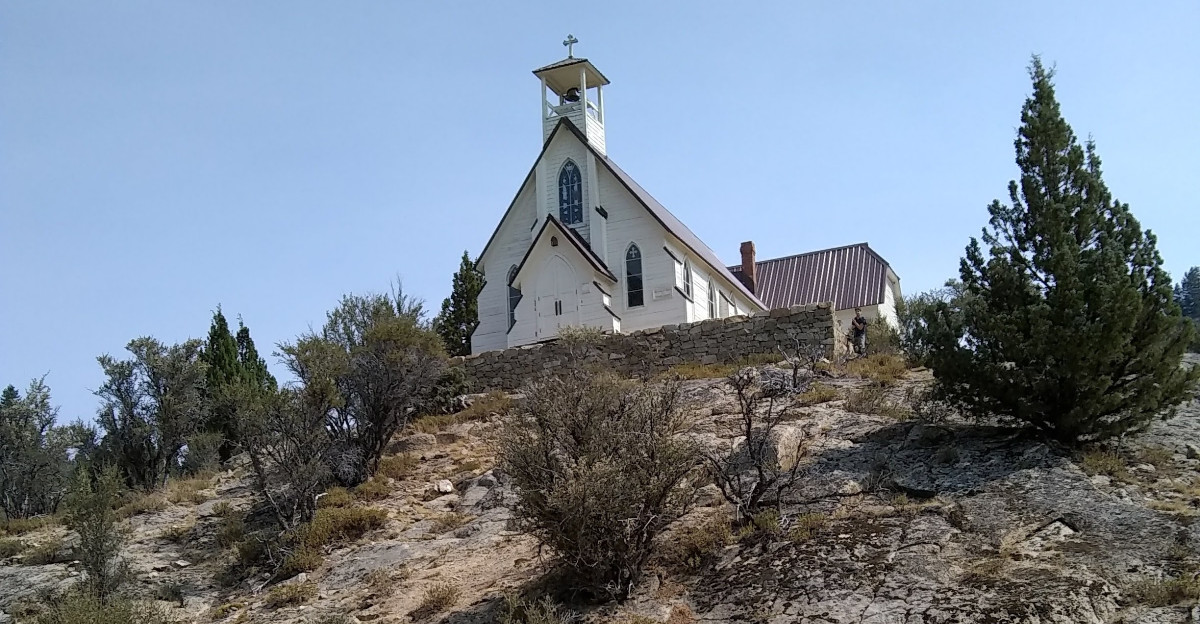
A little wooden church in the Idaho mountains came close to becoming a roadhouse in 1933.
Catholic leaders stepped in, took over the building, and kept its doors open for worship instead.
The church first went up in 1898 as the home of an Episcopal congregation.
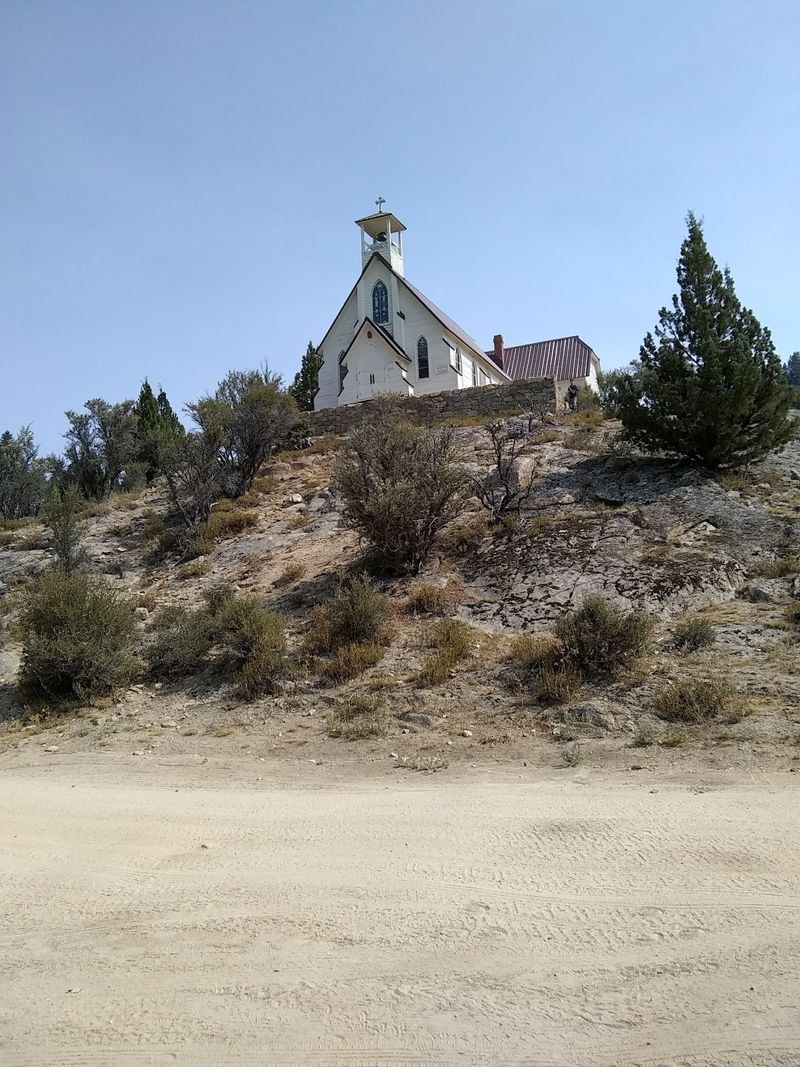
It still sits on a big rock high above an old mining town, and the only way up is a steep rock ramp with a single railing.
I like how stubborn this small building feels, perched up there like it simply refuses to budge.
Its town boomed, emptied out, and went quiet, yet Mass still happens inside a few times each summer.
Reaching it means bumpy dirt roads that usually open only from late spring into fall.
So what keeps a church going when most of its neighbors packed up generations ago?
A Pointed Little Church Keeping Watch From Its Own Rock
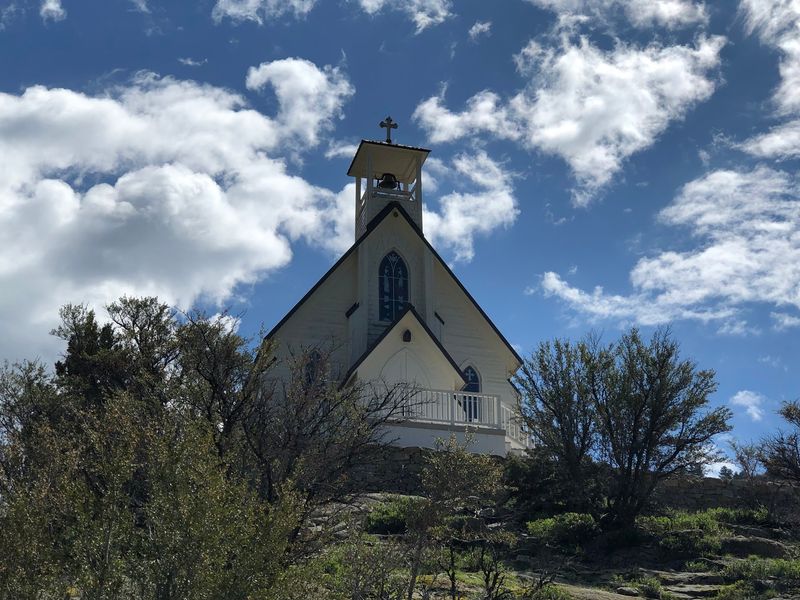
High in the Owyhee Mountains, a slim wooden steeple pokes above the rooftops of an old mining camp. That steeple belongs to Our Lady of Tears Catholic Church, and it sits on a large rock all its own.
The church stands in Silver City, one of the best-preserved ghost towns in Idaho. Its mailing address points to Murphy, the small Owyhee County seat down below in the valley.
The building is a frame church in the Gothic Revival style. Think pointed windows, a steep roofline, and a profile that looks borrowed from a storybook village.
Because it sits on the hill, it shows up almost the moment you roll into town. Plenty of buildings in Silver City huddle along the creek, but this one prefers a clear view.
It also serves as a working mission church today. Masses are scheduled during the summer, tying it to the Catholic parish in Nampa down in the Treasure Valley.
So the church is both a landmark and a living congregation’s outpost. That combination is rare in a town where most of the action happened well over a century ago.
How An Episcopal Chapel Dodged Life As A Roadhouse
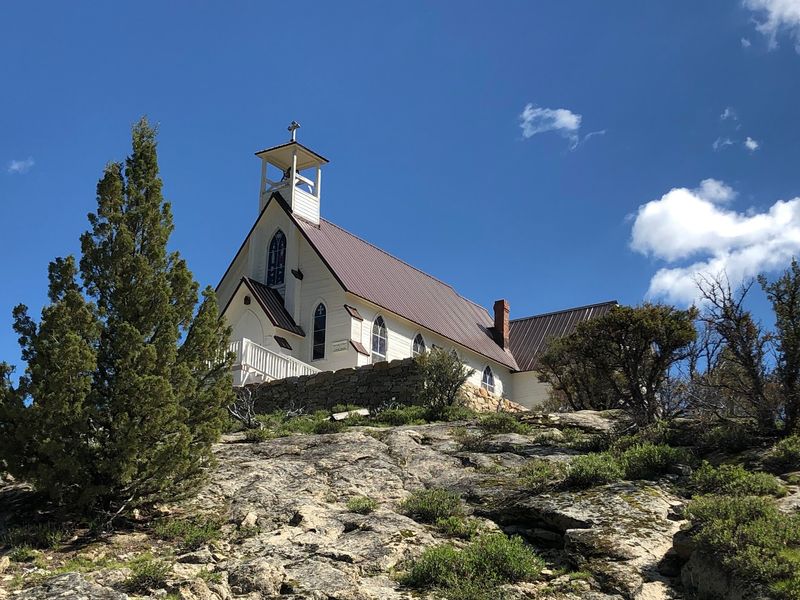
Here’s a twist few visitors expect. The church that Catholics now call Our Lady of Tears started out in 1898 as St. James Episcopal Church.
Silver City was still a busy mining town back then. Miners, merchants, and families filled the streets, and the Episcopal congregation built this tidy frame church on the hill.
Mining slowly faded in the early 1900s, and people drifted away. Buildings that once held crowds started losing their reasons to exist.
By 1933, the old Episcopal church faced a real threat. There was a chance it would be converted into a roadhouse, a fate that had already claimed earlier church structures in town.
The Catholic Church acquired the building for a token sum to prevent that conversion. Instead of serving travelers, the sanctuary kept serving as a place of worship.
I can’t imagine the hillside without it. One quiet decision in the 1930s kept a piece of Idaho mining history standing, and it changed the building’s story for good.
Even the deal itself feels like a small act of preservation. Nobody got rich from the trade, but the town kept its church.
Catholic Roots That Reach Back To Territorial Days
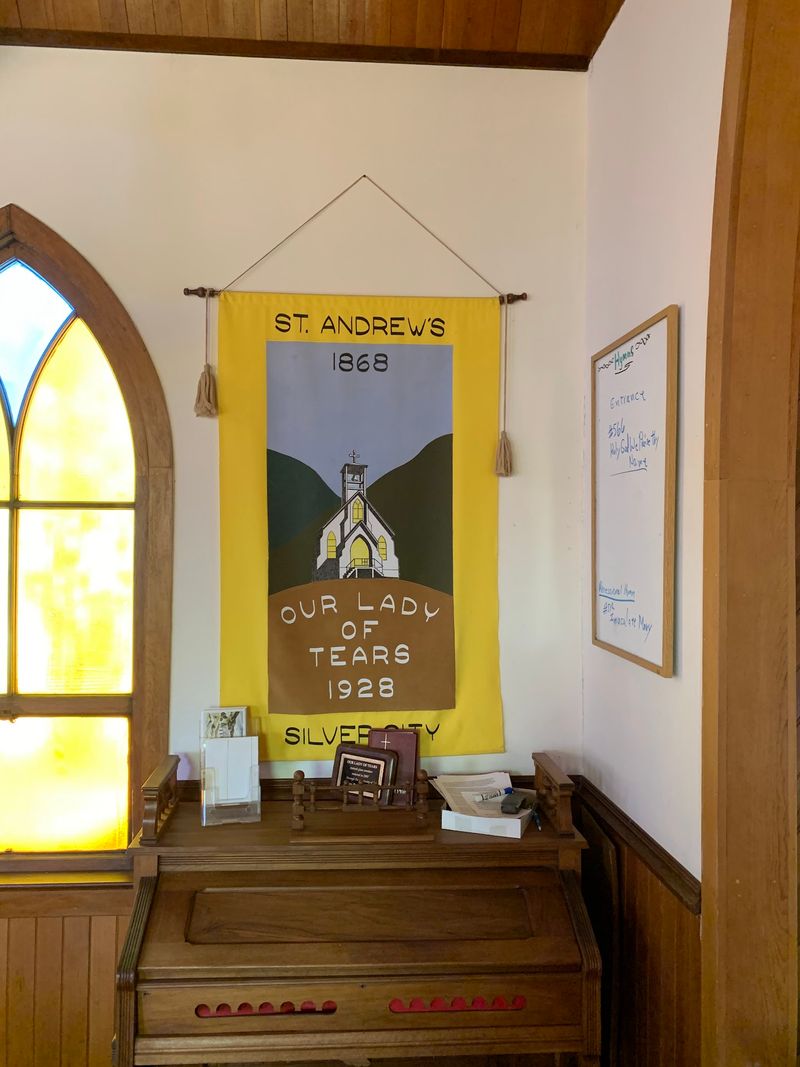
Long before 1933, Catholics in Silver City already had a church history of their own. It reaches back to the days when Idaho was still a territory.
The first Catholic church in town, St. Andrew’s, was dedicated in 1868. That’s just four years after Silver City was founded in 1864.
After that first building was sold, another St. Andrew’s took its place. In 1882, it was rededicated as Our Lady of Sorrows.
The town was near its peak during that stretch. Silver City had roughly 2,500 residents and around 75 businesses in the 1880s, and it served as the Owyhee County seat.
As the mines declined in the early 20th century, Our Lady of Sorrows fell into disrepair. Eventually, the building was abandoned.
That gap left local Catholics without a home until the former Episcopal church became available. The 1933 transfer gave the congregation a fresh start on the hill.
So the current building carries two traditions under one roof. The Episcopal founders built it, and Catholics have kept it going for more than ninety years since.
A Rock Ramp, One Railing, And A Peek Through The Door
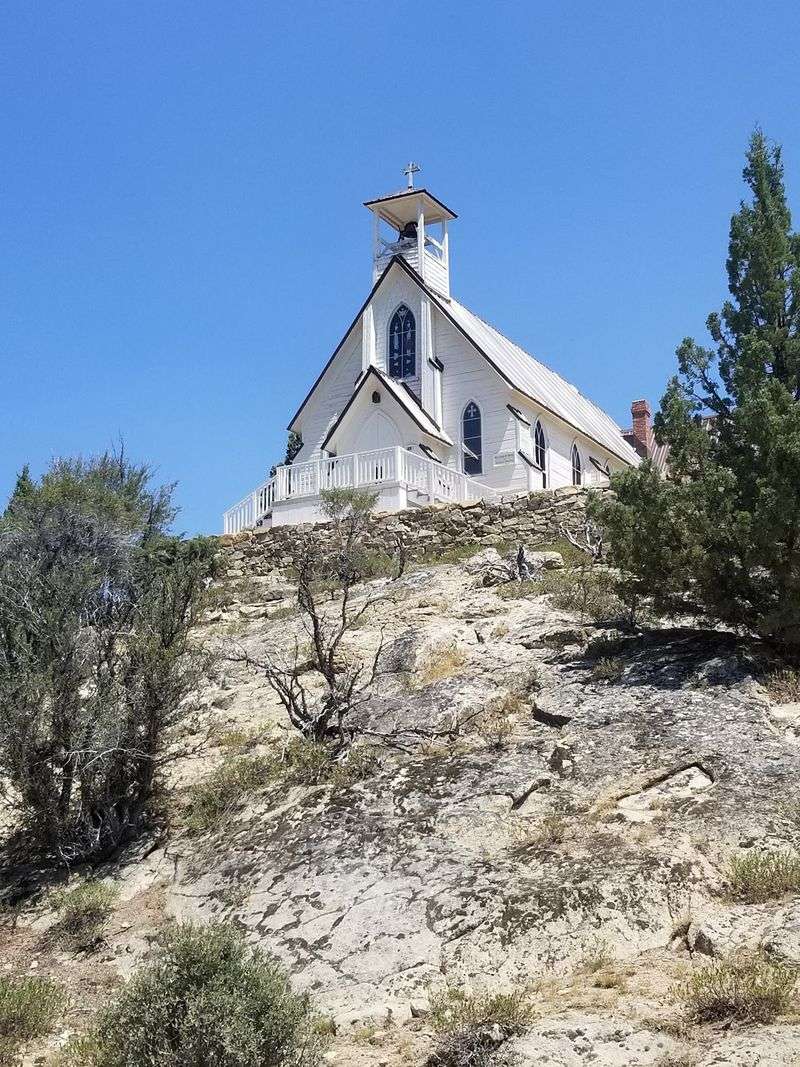
Good shoes are your best friend for this part. The path up to Our Lady of Tears isn’t a staircase so much as a steep rock ramp with a railing on one side.
The front door sits at the top of that climb. The approach is not ADA accessible, so anyone with mobility challenges should plan accordingly.
Still, the effort pays off in views. From the church’s perch, you can look across the historic town and the rugged slopes surrounding it.
Here’s a fun little detail. The front door has a peephole that lets you glimpse a bit of the interior when the church is locked.
That tiny window turns into a treat on non-Mass days. You get a sneak peek at the restored sanctuary without the doors ever swinging open.
Take your time on the way back down, too. Loose rock and gravity make a strong team, and nobody wants to finish the visit with a slide.
Bring water on warm afternoons. At this elevation, even a short climb can leave you pausing to catch your breath.
Period Pews, A Vintage Organ, And Fresh Stained Glass
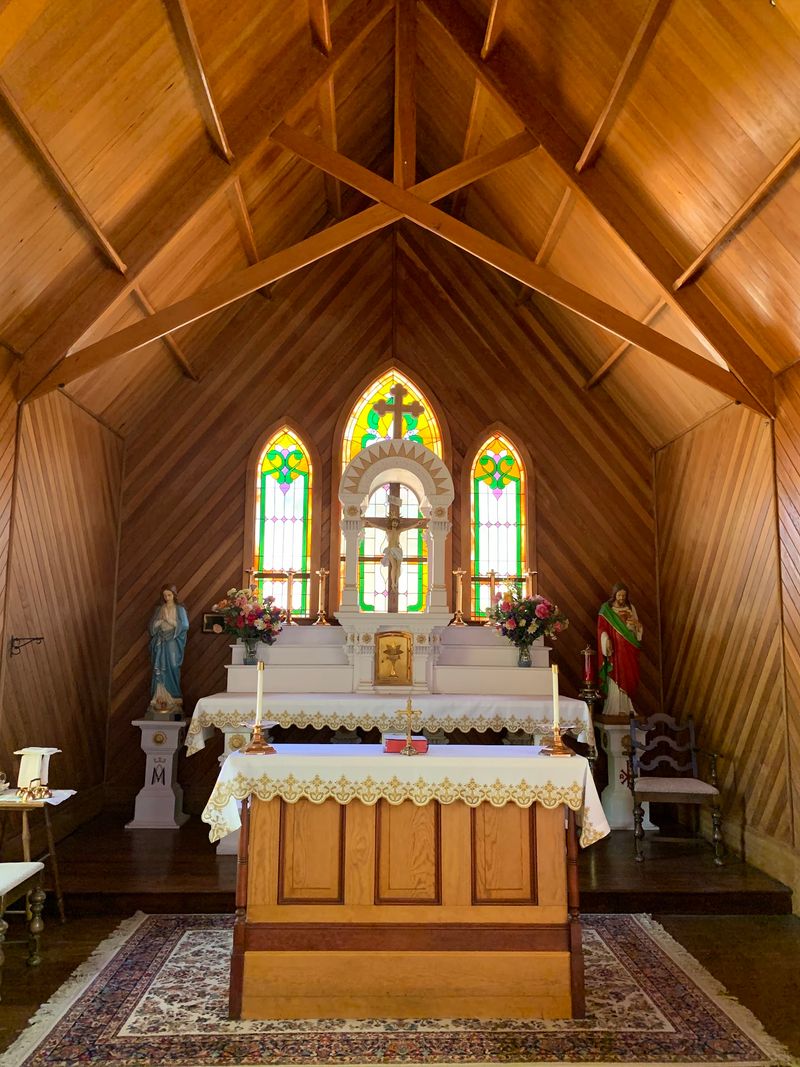
Restoration work here came with a careful eye for history. The Friends of Our Lady of Tears, with support from the Diocese of Boise, brought the sanctuary back to life.
They didn’t just grab any furniture that fit. Pews, an organ, and an altar were sourced from buildings of a similar age to keep the space authentic.
New stained-glass windows now sit above the main entrance. When sunlight hits them, color spills across the nave.
The front doors are new as well. They were custom-built to match the originals, so the building’s face still looks true to its 1890s roots.
I believe that kind of patience shows real respect for a place. It would have been easier to modernize, yet the group chose to match the past piece by piece.
The result feels calm and fitting for a church this size. Inside, the polish of the restoration contrasts with the rough mining landscape just beyond the walls.
If you can only see the interior through the peephole, you’ll still spot some of that care. A summer Mass offers the full view.
Living Ghost Town Neighbors Running On Sunshine
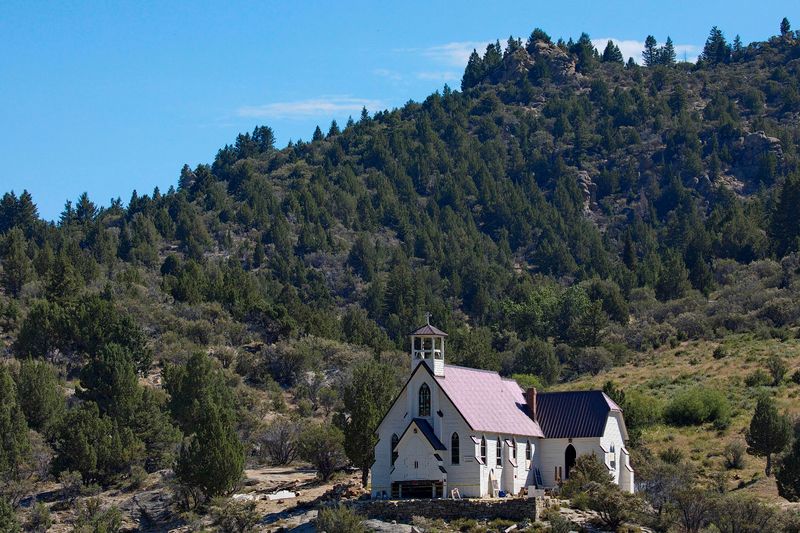
About 70 original buildings still stand around the church. Many remain privately owned, some by descendants of early miners and residents.
The entire Silver City townsite is listed on the National Register of Historic Places. That status helps protect its 19th-century character from modern makeovers.
Weathered wooden storefronts line the streets. Together, they give the church a backdrop that actually matches its age.
The Idaho Hotel has been restored and welcomes guests during the season. It even runs on solar power, a practice dating back to 1983.
Power lines never became part of the scene here. The town relies on solar, which keeps the off-grid feel firmly intact.
The old Silver City Schoolhouse is another standout. It features pressed metal pediments and Greek Revival touches worth a slow look.
Don’t expect a gas station or a convenience store. Fill your tank and pack snacks before heading up the mountain.
That lack of modern clutter is exactly the appeal. Standing beside Our Lady of Tears, it’s easy to see the town much as miners once did.
Summer Masses In A Town Most Folks Left Behind
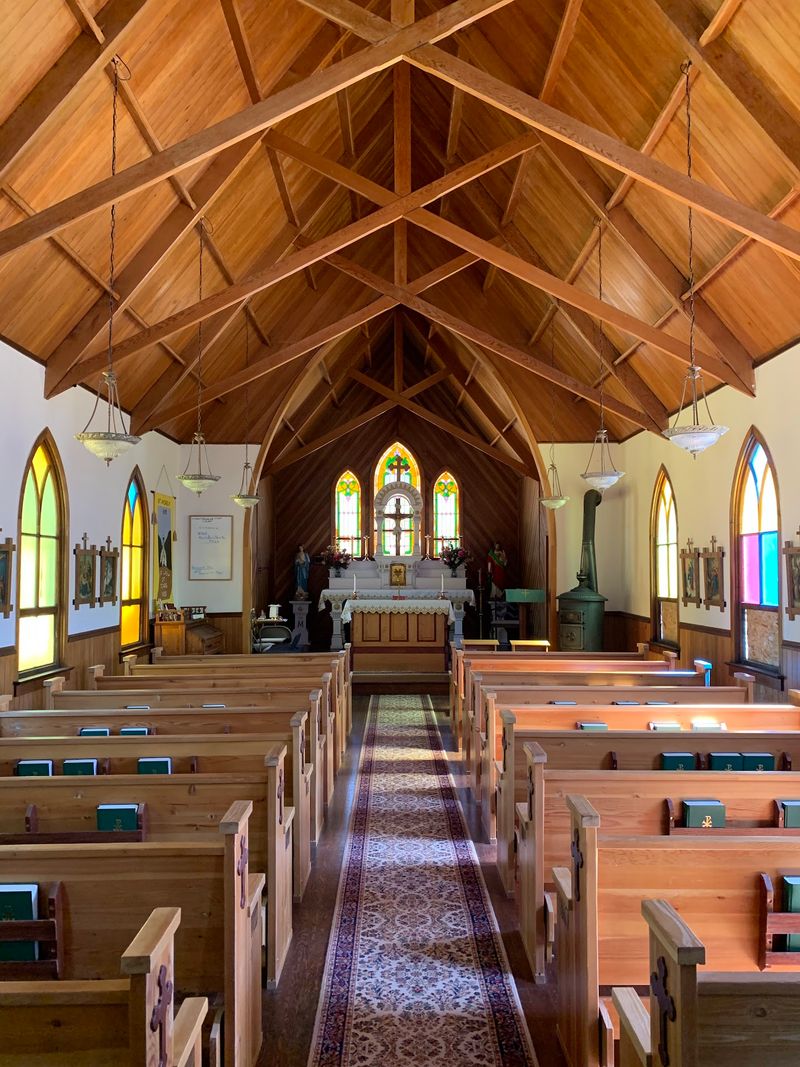
Mass in a ghost town sounds like a riddle, yet it happens. Our Lady of Tears still hosts services during the warmer months.
Masses are typically held once a month from June through September. The church operates as a mission connected to St. Paul’s Catholic Church in Nampa.
Schedules can shift from year to year. Check with the Nampa parish before you plan a trip around a service.
Google currently lists a short Sunday window, but that’s no substitute for confirming. Roads, weather, and clergy availability all play a part up here.
Attending a service adds a special layer to a visit. You’d be joining a tradition that has carried on in this building since the 1930s.
Non-Catholic visitors interested in history may still find the experience meaningful. Simply arriving early, dressing respectfully, and following along quietly works well.
Outside of Mass days, the building is usually closed. That’s when the peephole and the hilltop views become the main attractions.
Either way, a Sunday drive up the mountain feels a little more purposeful with a summer Mass waiting at the top.
Dirt Roads, Short Seasons, And Planning Ahead
Timing matters more than almost anything for this trip. The unpaved roads into Silver City are typically passable only from May through October.
Winter snow shuts the route down for much of the year. Even in summer, expect a slow, bumpy ride on gravel and dirt.
The church’s listed address is Murphy, ID 83650. Murphy sits down the mountain and serves as the Owyhee County seat.
Once in Silver City, look up the hill on Morning Star Road. The church on its rock is hard to miss.
A vehicle with decent clearance makes the drive more comfortable. Check road conditions before you leave the Treasure Valley.
Cell service can be spotty in the Owyhee Mountains. Download maps ahead of time so you aren’t guessing at forks in the road.
Pack water, snacks, and layers, since mountain weather changes quickly. With no gas stations in town, start with a full tank.
A little preparation turns the drive into part of the adventure. The reward is a church and a town that look much the way they did over a century ago.