12 Small California Towns Locals Swear By For Early Autumn Road Trips
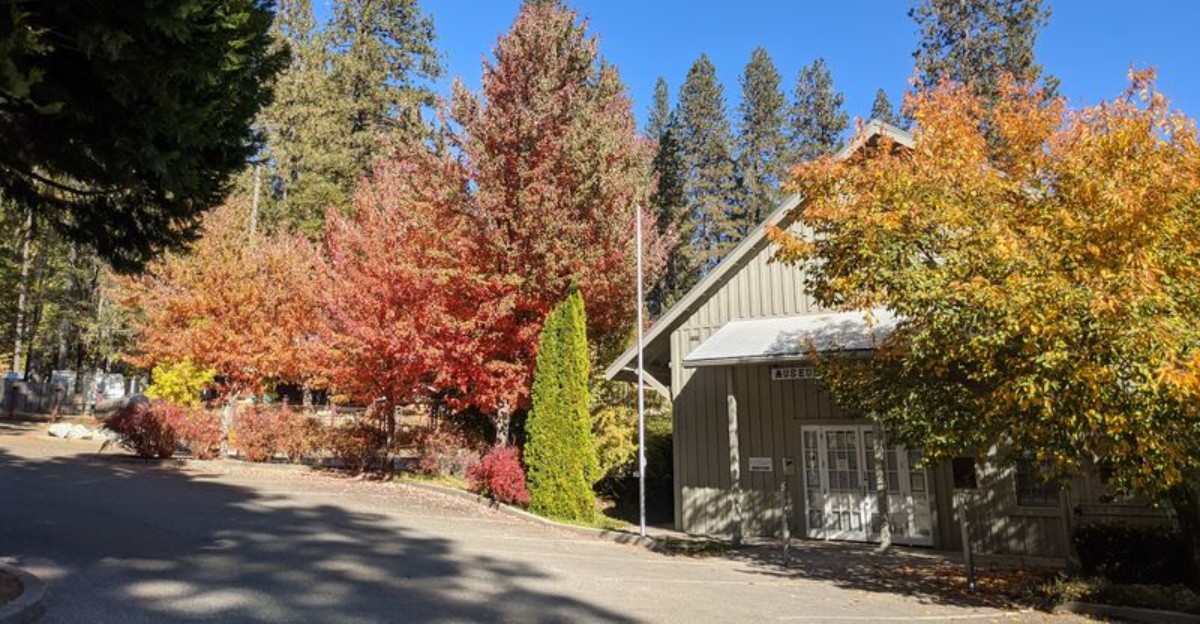
Early autumn has its own kind of road-trip weather.
Summer crowds begin thinning, afternoons soften, and small-town stops suddenly feel easier to enjoy without turning the day into a race.
Across California, locals know plenty of places that become especially appealing once September settles in.
These 12 towns are good candidates for the kind of trip built around wandering instead of rushing.
A main street, a good lunch, a scenic stretch of road, or one unexpected stop can be enough to carry the day. That is the charm of going small.
You are not chasing a packed itinerary. You are giving the season room to show off a little.
1. June Lake, Mono County
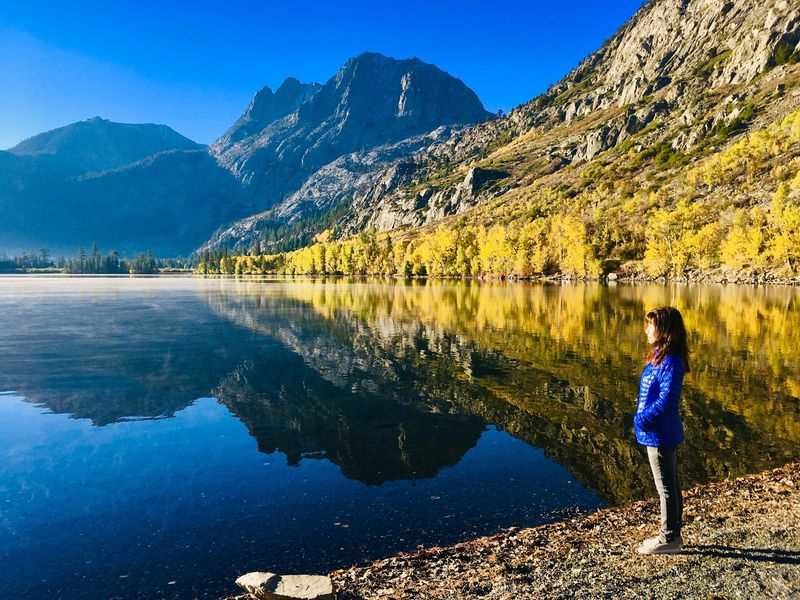
Aspens do the heavy lifting here every fall, turning whole hillsides bright yellow while Carson Peak stands gray and quiet above the water.
The June Lake Loop follows Highway 158 for about 14 miles in a horseshoe shape, passing four lakes along the way.
Color usually peaks somewhere between mid-September and mid-October, though the exact timing shifts each year with temperature and rainfall.
Walking around the village area is easy and mostly flat, and street parking is generally available near the shops.
Parking lots are limited along the Loop itself, so vehicles pulled over on Highway 158 need to be completely off the roadway.
Gull Lake Park has room to park and works well for a picnic or a late afternoon sit by the shore.
Boat rentals are available at Gull Lake Marina during the fishing season, including kayaks and pontoons. The marina sits right beside the lake itself.
Grant Lake, the largest of the four, has its own marina with fishing boat rentals, a launch, snacks, and tackle.
Visitor information, trail conditions, and lodging details can be found at the June Lake Visitor Center.
June Lake Beach charges a day-use parking fee, and the lot holds roughly one hundred cars, so early arrival helps on weekends.
2. Bridgeport, Mono County
Few places feel as wide open as the valley that surrounds this small ranching town, where meadows stretch toward the jagged Sawtooth Ridge.
Highway 395 runs straight through the middle, which makes it a natural stop between Lake Tahoe and the Eastern Sierra.
Autumn mornings here can be genuinely cold, since the valley sits above 6,400 feet and frost arrives early.
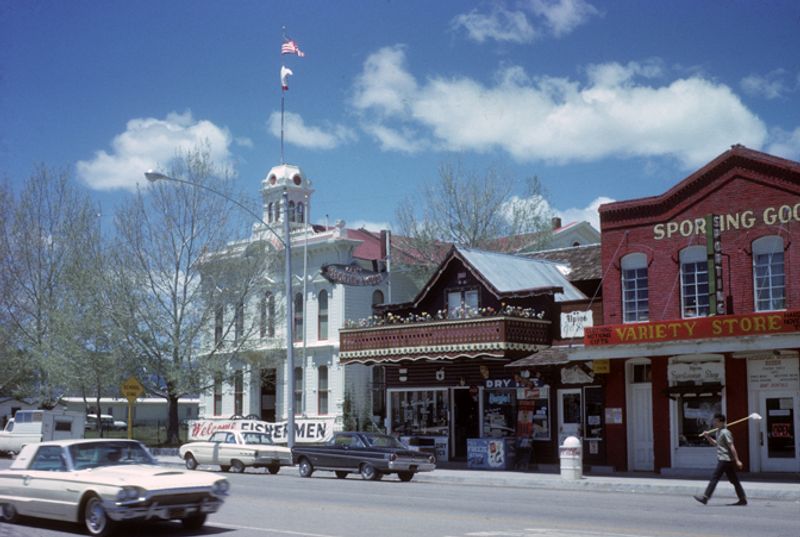
The Mono County Courthouse anchors the town and has been in continuous use since the late 1800s. The white wooden building is easy to spot from the highway.
Walking the length of Main Street takes only a few minutes, and parking is typically found right along the street.
Bodie State Historic Park lies east of town and preserves an entire gold mining ghost town in arrested decay.
The final stretch of road to Bodie is unpaved and rough, so slower driving and a check on current conditions make sense.
Travelers should know that several local businesses reduce hours or close entirely once winter approaches.
Fuel and food options are limited compared to larger towns, which is worth planning around before a long drive north or south.
Cottonwoods along the creeks turn gold in late September, giving the pale meadows a warmer edge.
Quiet is the main attraction, along with an enormous sky that turns pink over the ridge at dusk.
3. Bishop, Inyo County
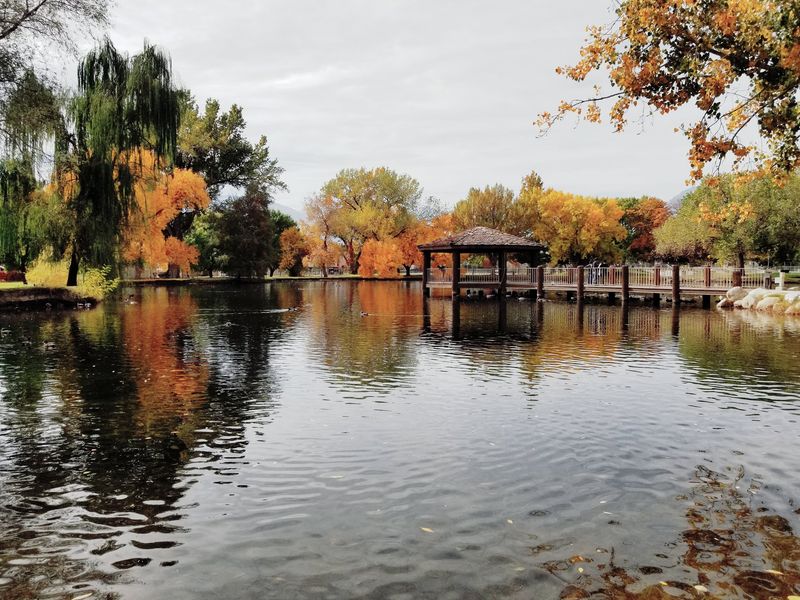
Baked goods and big mountains make an unusual pairing, but that combination is exactly why so many drivers plan a stop here.
Sitting in the Owens Valley beneath both the Sierra Nevada and the White Mountains, the town serves as the practical hub for the whole region.
Erick Schat’s Bakkery has been a fixture on the main drag for decades and draws a steady line most mornings.
Autumn brings comfortable daytime temperatures after the intense heat of summer, which makes walking the downtown blocks pleasant.
Bishop Creek Canyon sits west of town up Highway 168 and holds some of the most reliable aspen color in the state.
Lake Sabrina, North Lake, and South Lake all sit at the top of that road, though the pavement narrows considerably near the end.
The Laws Railroad Museum and Historic Site preserves narrow gauge railway buildings and equipment north of town.
Rock climbers arrive in force during fall, so lodging can book up on weekends around holidays.
Grocery stores, gas stations, and outdoor gear shops are all easy to reach, making the town a sensible resupply point.
4. Dunsmuir, Siskiyou County
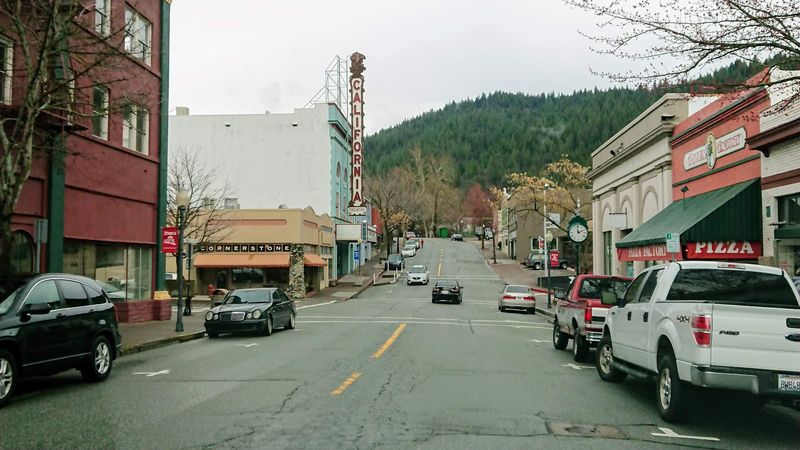
Train whistles still echo through the canyon here, a reminder that the whole town grew up around the railroad.
The Sacramento River runs right below downtown, and the water stays cold and clear well into October.
Fall color comes from big-leaf maples and oaks along the river rather than mountain aspens, which gives the canyon a deeper orange tone.
Downtown sits on a slope, so walking the historic blocks involves a bit of climbing between the upper and lower streets.
Hedge Creek Falls sits at the north end of town with a short trail that leads behind the falling water.
Access to the trail is from Dunsmuir Avenue near the visitor turnout, and the walk down takes only a few minutes.
Railroad Park Resort keeps restored cabooses and railcars available as lodging, which appeals to families and railway fans alike.
Mount Shasta rises to the north and stays visible from many points along Interstate 5.
Weekdays in early autumn are notably quiet, with less traffic through downtown than during summer. Cool canyon air settles in at night, so a warm layer is useful even after a mild afternoon.
5. Graeagle, Plumas County
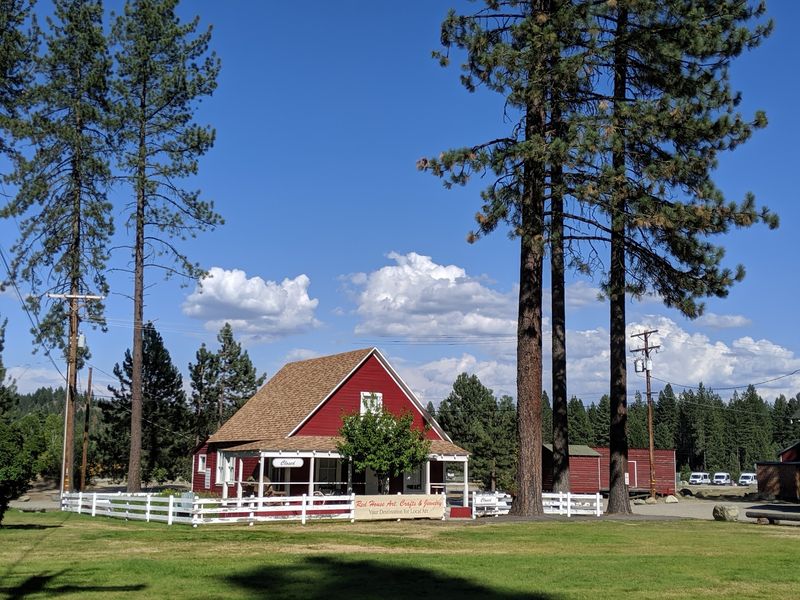
Bright red buildings lined up along the highway give this former lumber town an instantly recognizable look.
Built as a company town in the 1920s, the original mill housing still stands and now holds shops and small businesses.
The Middle Fork of the Feather River flows nearby, and cottonwoods along the banks turn yellow through late September and October.
Walking the shop area takes very little effort, with wide sidewalks and level ground between buildings.
Golf courses surround the community, which keeps the landscape open and green longer than the surrounding forest.
Lakes Basin Recreation Area sits west of town up a winding road and holds dozens of small alpine lakes.
Frazier Falls has a short paved trail that leads to an overlook of a tall waterfall, though flow drops considerably by autumn.
Nearby Portola is home to the Western Pacific Railroad Museum, where visitors can walk among full-size locomotives.
Some seasonal businesses in the area begin closing after the middle of October, so calling ahead helps.
Mornings can dip below freezing at this elevation, while afternoons often stay comfortable in short sleeves.
Pacing is the appeal here, with little reason to rush from one stop to the next.
6. Nevada City, Nevada County
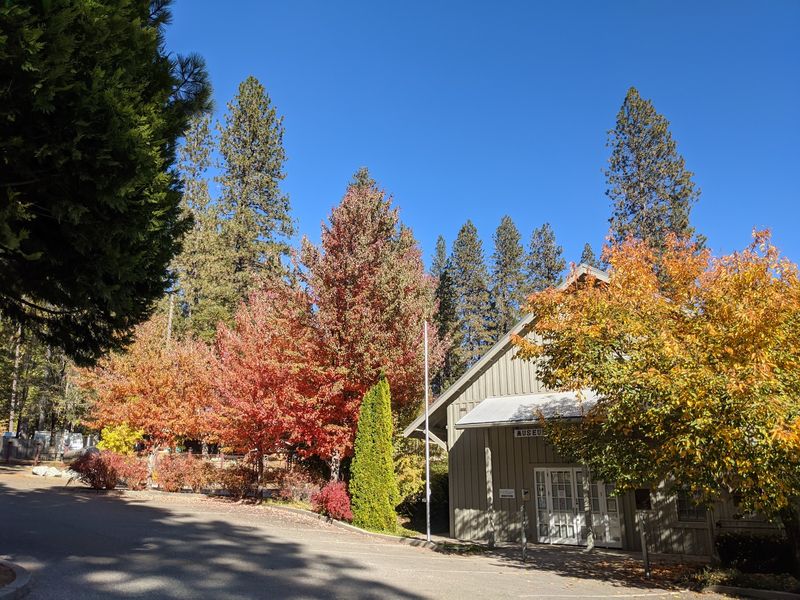
Gas lamps, wooden balconies, and steep narrow streets make the downtown feel like a movie set that happens to be real.
Gold rush wealth built these blocks in the 1850s, and much of the original architecture survives intact.
Broad Street forms the center of things, though the grade is genuinely steep and comfortable shoes matter.
Fall color arrives from maples, liquidambars, and oaks planted throughout the neighborhoods, usually peaking in late October.
The Nevada Theatre is among the oldest surviving theater buildings in the state and still hosts performances. Performances take place in the middle of the historic district.
Empire Mine State Historic Park sits a short drive away in neighboring Grass Valley and preserves one of the deepest hard rock gold mines in California.
Weekend afternoons bring more visitors downtown, while weekday mornings feel considerably calmer.
Parking is mostly on-street with some small public lots, and spaces closest to Broad Street fill first.
The South Yuba River runs below town with swimming holes that stay accessible into early fall, though water levels drop.
Coffee shops, bookstores, and small galleries fill most of the storefronts.
7. Sutter Creek, Amador County
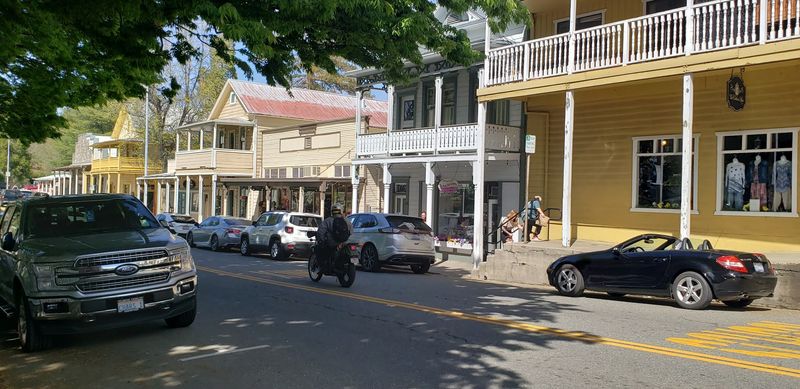
Wooden balconies hang over the sidewalks along Main Street, shading storefronts that have looked much the same for over a century.
Often called the jewel of the Mother Lode, the town grew from hard rock gold mining rather than placer claims.
The entire commercial district fits into a walkable stretch of a few blocks, which suits a slow afternoon.
Grape harvest season brings extra activity to the surrounding Shenandoah Valley during September and early October.
The Sutter Creek Theatre operates inside a building from 1919 and hosts live music and film screenings. The venue can be found in the heart of the historic block.
Knight Foundry, a water-powered foundry and machine shop, sits nearby and opens to the public on scheduled days.
Antique shops, small bakeries, and clothing boutiques occupy most of the ground floor spaces downtown.
Sidewalks are uneven in places, with a few steps up into older buildings, so mobility needs some consideration.
Parking is free along Main Street and in a lot behind the shops, though weekend spaces go quickly.
Daytime temperatures in the foothills stay warm into October, cooling off noticeably once the sun drops.
8. Murphys, Calaveras County
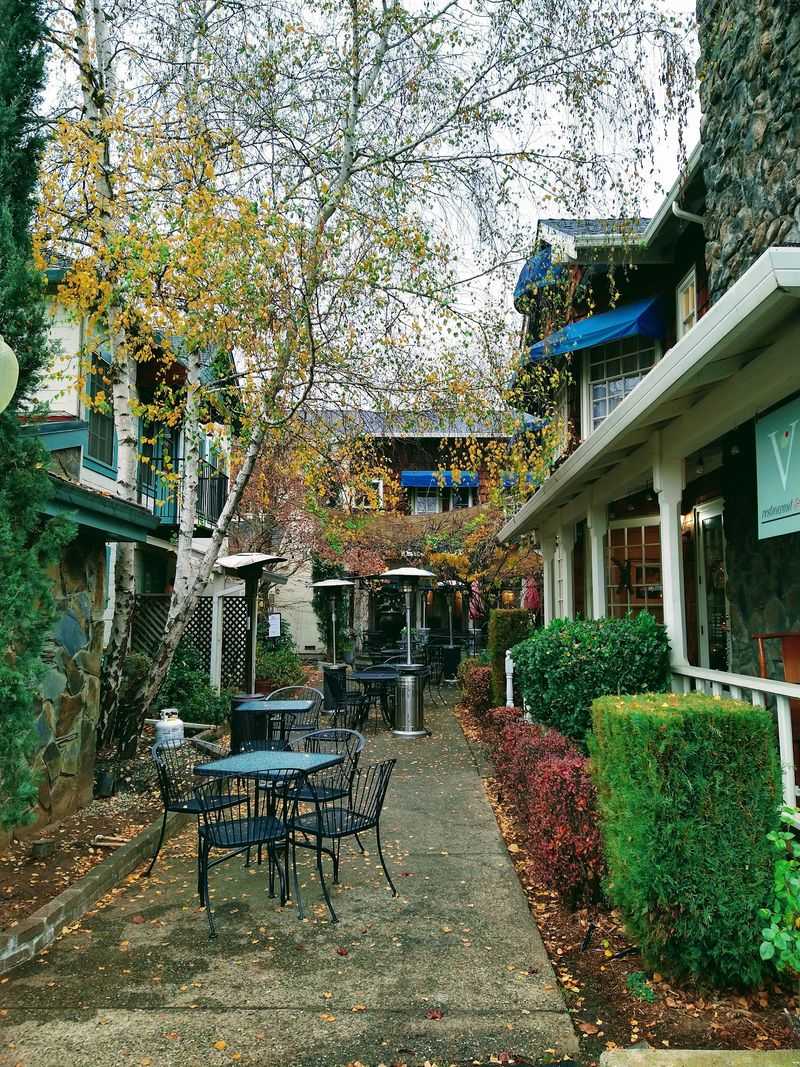
Shade trees arch over Main Street here, and their leaves turning color in October is part of what draws repeat visitors.
Founded during the gold rush, the town kept its stone and brick buildings and filled them with shops and eateries.
The whole downtown stretches only a few blocks, making it one of the easier foothill towns to explore on foot. Murphys Creek runs beside the main street with a small park and benches along the water.
Mercer Caverns sits just north of town and offers guided walking tours through underground chambers.
Calaveras Big Trees State Park lies about twenty five minutes east and protects two groves of giant sequoias.
Dogwoods within the sequoia groves turn red and pink in autumn, a nice contrast against the massive trunks.
Weekends bring noticeably more foot traffic downtown, especially during harvest events in September.
Street parking exists but fills up, and side streets a block away usually have space.
Evening temperatures drop faster than expected at this elevation, so a jacket belongs in the car.
9. Groveland, Tuolumne County
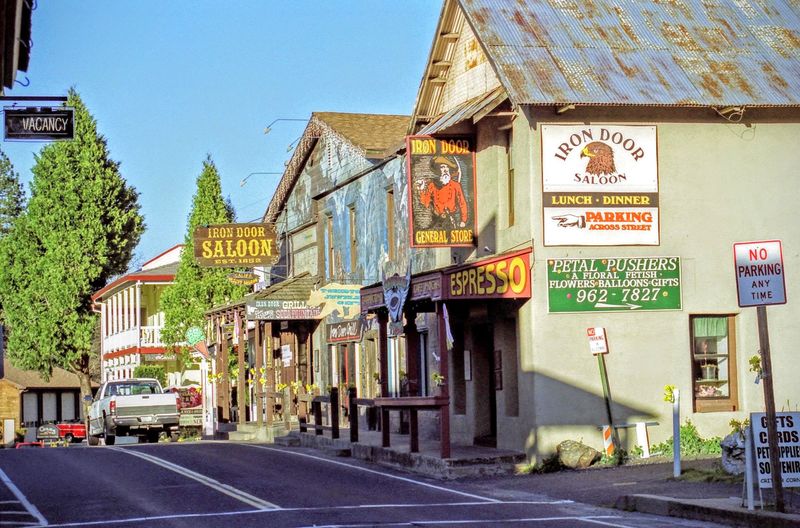
Serving as a gateway to Yosemite has shaped this small town, but autumn strips away the summer rush and leaves it feeling local again.
Highway 120 passes straight through, putting the Big Oak Flat entrance to the national park roughly a half hour east.
Old wooden storefronts and a few brick buildings line the short main street, which is easily covered on foot.
The Groveland Hotel dates to 1849 and still operates as lodging and a dining spot. The hotel stands right in the center of the historic block.
Rainbow Pool along Highway 120 has a swimming hole and small waterfall, though flow decreases through the fall.
Yosemite reservation requirements have changed from year to year, so checking current park rules before driving in is wise.
Tioga Road inside the park usually stays open into fall but closes with the first significant snow. Oaks and dogwoods around town bring modest fall color, with the bigger show found at higher elevations in the park.
Gas here costs more than in the Central Valley, so filling up before the climb saves money.
Weekday visits in late September feel calm, with parking easy to find along the street.
10. Mendocino, Mendocino County
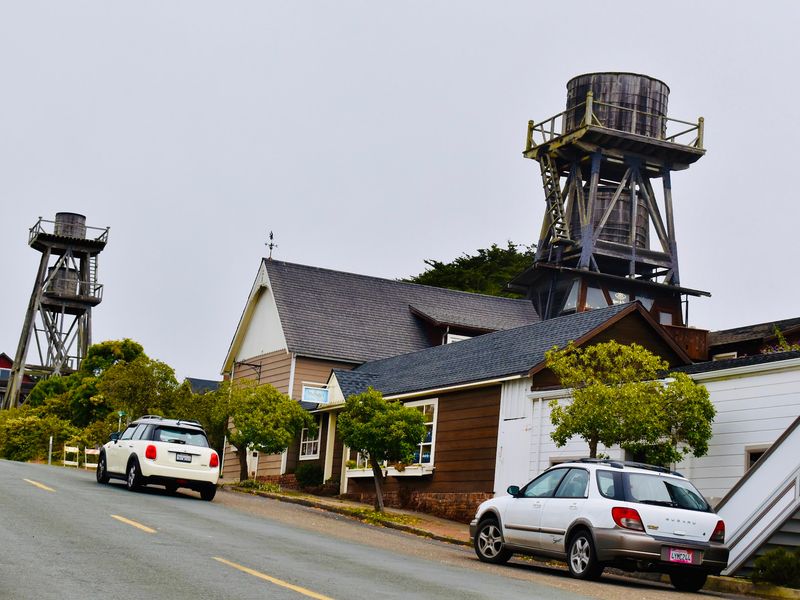
Wooden water towers rise above the rooftops of this bluff-top village, leftovers from a time before municipal plumbing.
New England style architecture came with the lumber crews who settled here in the 1850s, and the look stuck.
Early autumn often brings the clearest coastal weather of the year, with less fog than midsummer mornings.
Mendocino Headlands State Park wraps around the village with flat bluff trails and constant ocean sound below.
The Point Cabrillo Light Station sits a short drive north and includes a restored lighthouse and keeper’s houses.
Village streets are compact and walkable, though the ground can be damp and wind picks up in the afternoon.
Mendocino Coast Botanical Gardens in nearby Fort Bragg has coastal bluff trails and seasonal plantings. The gardens are spread across acreage that reaches the ocean.
Whale watching is not the draw this time of year, but shorebirds and dramatic surf certainly are.
Highway 1 north of town is narrow with sharp curves, so allowing extra driving time makes the trip less stressful.
11. Cambria, San Luis Obispo County
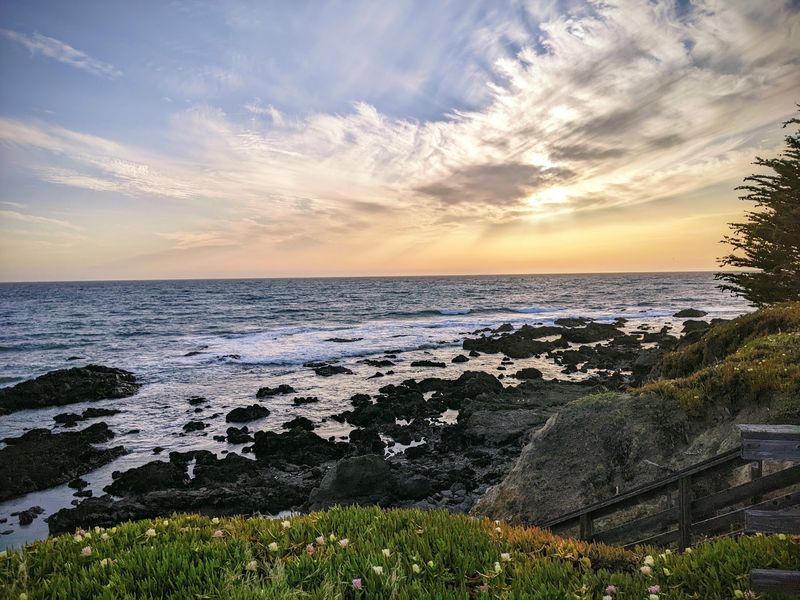
Twisted Monterey pines and a driftwood-strewn shoreline set the tone in this coastal town halfway between Los Angeles and San Francisco.
Moonstone Beach has a wooden boardwalk running along the bluff, flat and accessible for most walkers.
September and October often deliver the warmest, clearest days on this stretch of the Central Coast.
The town splits into an East Village and a West Village, each with its own cluster of shops and eateries.
Nit Wit Ridge is a folk art house built from salvaged materials and recognized as a California Historical Landmark. The property can be viewed from outside or by arranged tour.
Elephant seals gather at the Piedras Blancas rookery north of town, with a boardwalk viewing area along Highway 1.
Fiscalini Ranch Preserve offers bluff trails right in town with ocean views and gentle grades.
Hearst Castle is about fifteen minutes north and requires advance tickets for tours.
Mornings often start overcast before clearing by midday, which is worth factoring into photo plans.
Parking along Moonstone Beach Drive is free but limited on weekends.
12. Idyllwild, Riverside County
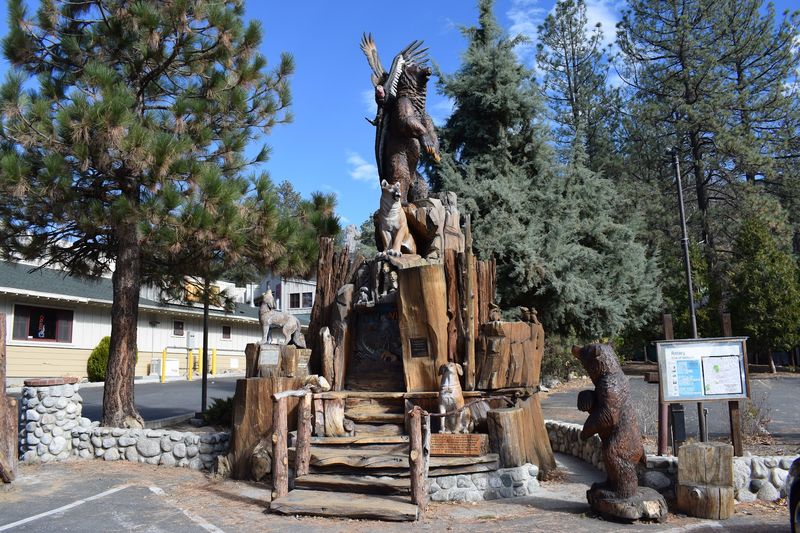
Granite domes and tall pines make this mountain village feel far removed from the desert heat sitting just below it.
Perched above 5,000 feet in the San Jacinto Mountains, the town cools down considerably once September arrives.
The main commercial area centers on a compact set of streets that can be covered comfortably on foot.
Black oaks scattered among the conifers turn yellow and brown through October, giving the forest some seasonal variation.
Deer Springs and Devils Slide trails lead into the San Jacinto wilderness, with permits required for certain routes.
The Idyllwild Nature Center has short interpretive trails and exhibits on local plants and wildlife.
Humber Park serves as a trailhead area with parking, though spaces fill early on clear weekend mornings.
Roads up from Banning and Hemet are both winding, and drivers prone to motion sickness should plan accordingly.
A carved wooden mayor statue honoring a golden retriever who held the honorary title sits downtown and remains a favorite photo stop.
Wood smoke and pine become the dominant smells once evening temperatures drop.