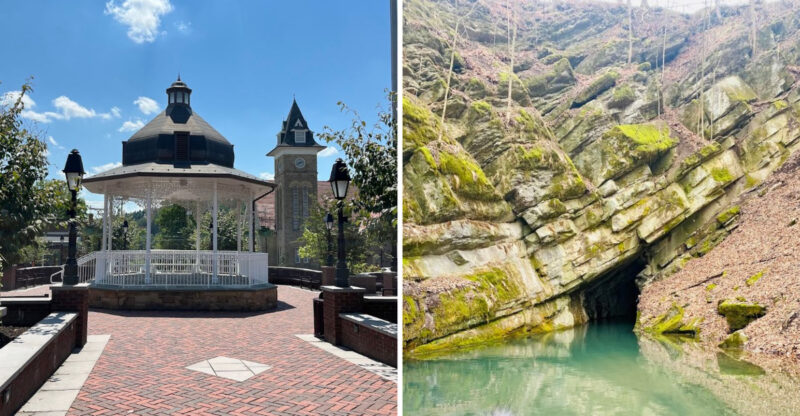
10 State Parks In Pennsylvania That Feel Like National Parks Without The Chaos
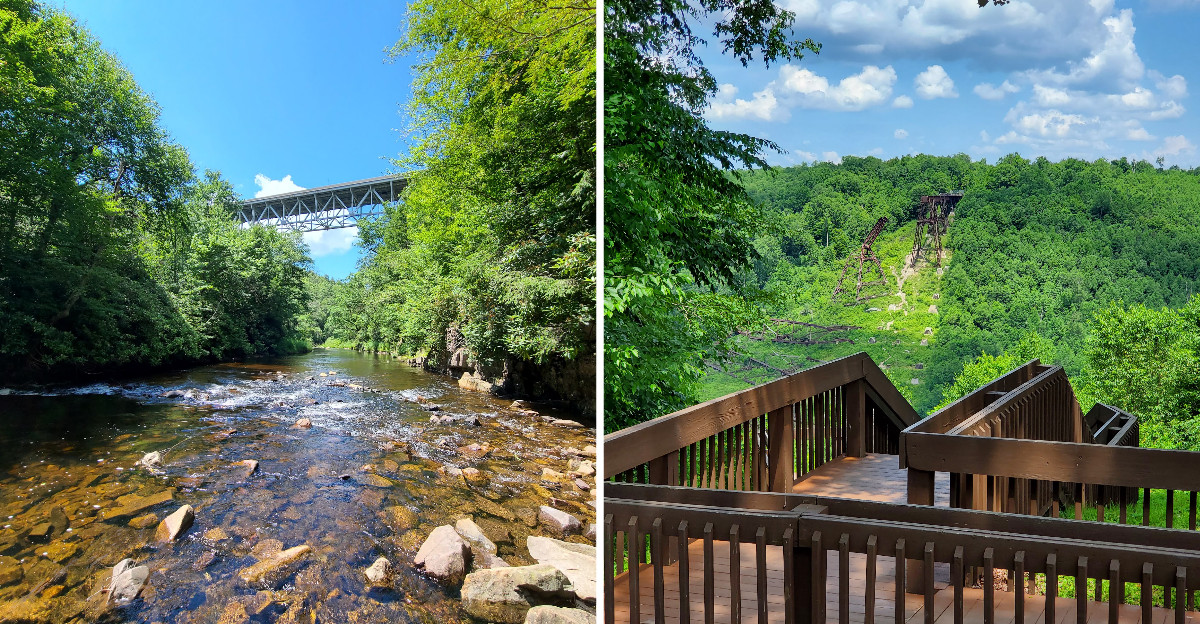
The quieter the trail, the bigger the scenery seems. Pennsylvania state parks understand that better than most crowded attractions ever could.
Big scenery can feel even better when you catch a quieter trail or visit outside peak hours. Space changes the experience.
You stop longer. You hear more. Even a familiar landscape can feel grander when the pace slows down.
That is why these parks can deliver national-park-scale scenery without leaving Pennsylvania. The drama is still there. The pressure is not.
For travelers who want awe without the traffic jam, that balance may be the real luxury.
1. Ricketts Glen State Park, Benton
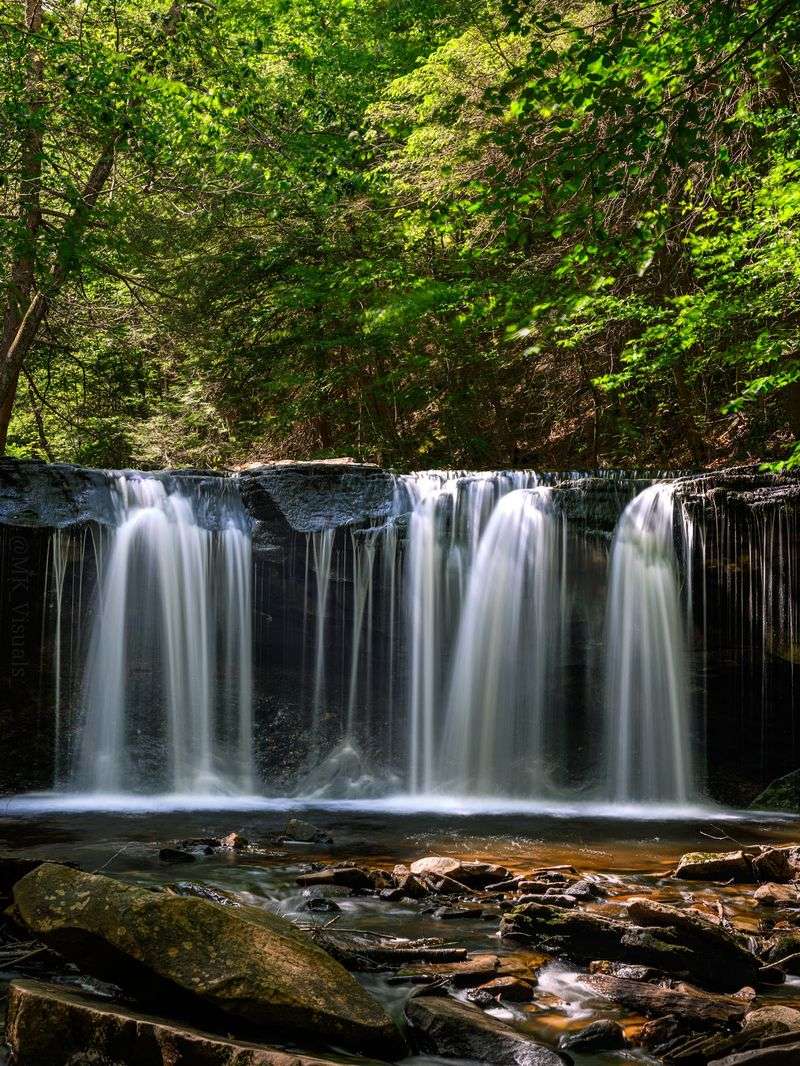
Ricketts Glen State Park near Benton spreads across more than 13,000 acres of forest and rock. Its Glens Natural Area holds National Natural Landmark status.
Twenty-two named waterfalls tumble through narrow rocky clefts here. Ganoga Falls leads the pack at a towering 94 feet.
The Falls Trail System links the best of them in one unforgettable loop. Old-growth timber and plenty of wildlife share the route with you.
Lake Jean handles the swimming, fishing, and boating side of things. Summer rentals mean you do not need to haul your own boat.
Cold months bring snowmobiling, cross-country skiing, and snowshoeing across the plateau. Hunting is permitted on 10,287 acres of park and nearby game lands.
April and May deliver the strongest water flow thanks to snowmelt and rain. Mid-October wraps the falls in gold and crimson foliage.
Want big water without the parking lot shuffle? Aim for late May or September instead.
Winter freezes the cascades into sculpted ice columns, which is stunning and slippery. Winter access to the Falls Trail is limited to properly equipped hikers and ice climbers carrying at least ice crampons, ice axes, and rope.
You will find the entrance at 695 State Route 487. Go early, walk slowly, and let the sound of falling water do the rest.
2. Ohiopyle State Park, Ohiopyle
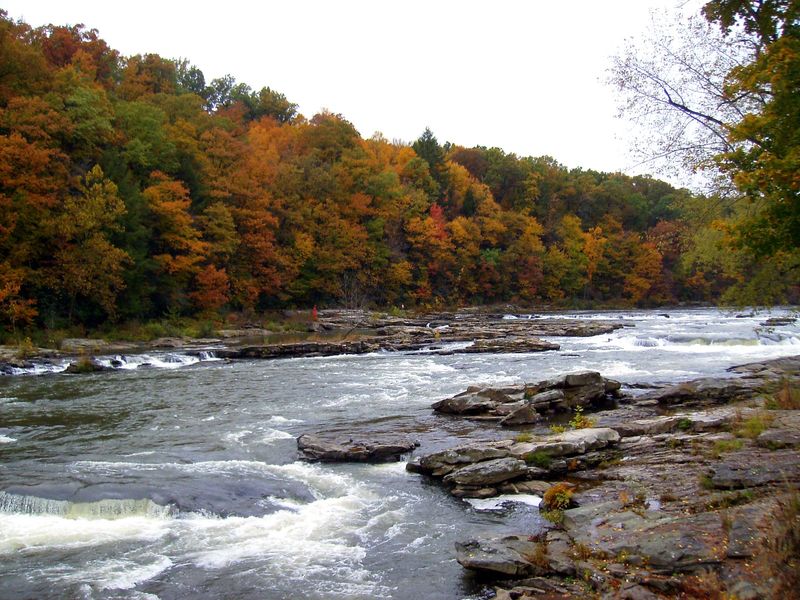
I had to do a double-take when the river roared into view. That white froth is not a trick of the light.
The name Ohiopyle, or Ohiopehelle, is believed to come from Native American words meaning white, frothy water. One look at the Youghiogheny River explains everything.
Ohiopyle State Park in the Laurel Highlands sits in the town of Ohiopyle itself. Locals simply call the river the Yough.
Whitewater boating here ranks among the finest in the eastern United States. Rafts, kayaks, and paddles fill the water all season long.
Ohiopyle Falls drops about 20 feet right in the park’s center. Cucumber Falls nearby may be the most photographed cascade around.
Jonathan Run Falls rewards hikers who keep going a little farther. Meadow Run also contains two natural waterslides, a separate feature from the Cascades.
Trail options include the Great Gorge Trail and the Ferncliff Peninsula loop. Tough legs can tackle sections of the 70-mile Laurel Highlands Hiking Trail.
Cyclists roll the Great Allegheny Passage straight through the heart of it all. Anglers find quiet pockets along the banks.
Spring means rushing water and peak rafting energy. Summer belongs to the waterslides and long biking days.
Autumn paints the ridges, while winter turns falls into frozen art. Head to 124 Main St and let the current set your schedule.
3. Cherry Springs State Park, Coudersport
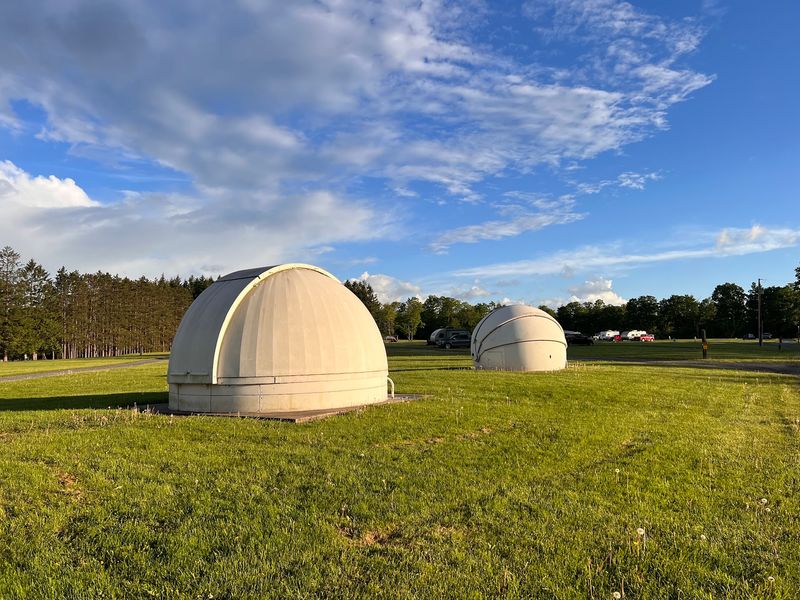
Just imagine for a second a sky so crowded with stars it looks unfamiliar. That is the nightly show here.
Cherry Springs State Park, near Coudersport, holds some of the darkest skies in the eastern United States. It carries a Gold Level Dark Sky Park designation from the International Dark Sky Association.
DCNR highlights the park’s exceptionally dark skies and excellent view of the Milky Way’s core. That darkness becomes especially noticeable on a clear, moonless night.
The park is known for views of the Milky Way, planets, and faint astronomical objects when conditions cooperate.
With the right season, conditions, and equipment, observers can target galaxies, nebulae, and other deep-sky objects. Meteor showers turn the field into a shared celebration.
Lunar viewing is unusually sharp from this high plateau. Astro Cabins nearby include private stargazing fields for longer stays.
Daylight hours belong to the surrounding Susquehannock State Forest. Hiking and hunting fill the time before dark.
Fall and winter bring lower humidity and longer nights for the clearest views. Bundle up, because the clarity is worth the chill.
Spring and summer trade some sharpness for warmth and a strong Milky Way. Planning around the new moon makes faint stars pop.
Check the Cherry Springs Clear Sky Chart before driving out. The address is 4639 Cherry Springs Rd, and red flashlights are your best friend.
4. Presque Isle State Park, Erie
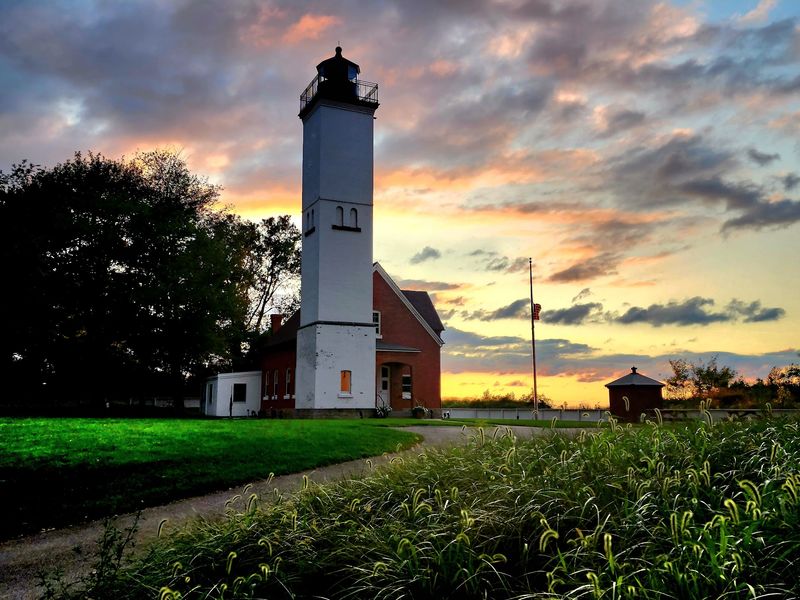
Sand under your toes in Pennsylvania? Yes, and quite a lot of it.
Presque Isle State Park curves out into Lake Erie as a sandy peninsula. The city of Erie sits just behind it.
Nowhere else in the state can you swim in actual lake surf. Seven miles of sandy shoreline include several designated guarded swimming beaches, while other beach sections prohibit swimming.
A network of interior lagoons and ponds winds through the peninsula. Herons, turtles, and water lilies make paddling there feel almost secret.
Kayak and canoe rentals help anyone without gear get on the water. The Karl Boyes Multi-Purpose Trail and its extension form a 13.5-mile circuit through the park.
Bikers, runners, and walkers share those views of water on both sides. Fishing and wildlife watching round out the list.
Sunset Point draws kite flyers and evening photographers. The historic Presque Isle Lighthouse and the North Pier add landmarks worth finding.
Guarded swimming runs from Memorial Day weekend through Labor Day, with beach hours set seasonally. Spring and fall calm things down and light up bird migration season.
Late October usually marks peak foliage along the trails. Winter is the wild card, with big waves for surfers and ice fishing shacks.
Cross-country skiing, snowshoeing, and iceboating keep the peninsula busy in the cold. Find it all at 301 Peninsula Dr Suite 1, and stay for the sunset.
5. Worlds End State Park, Forksville
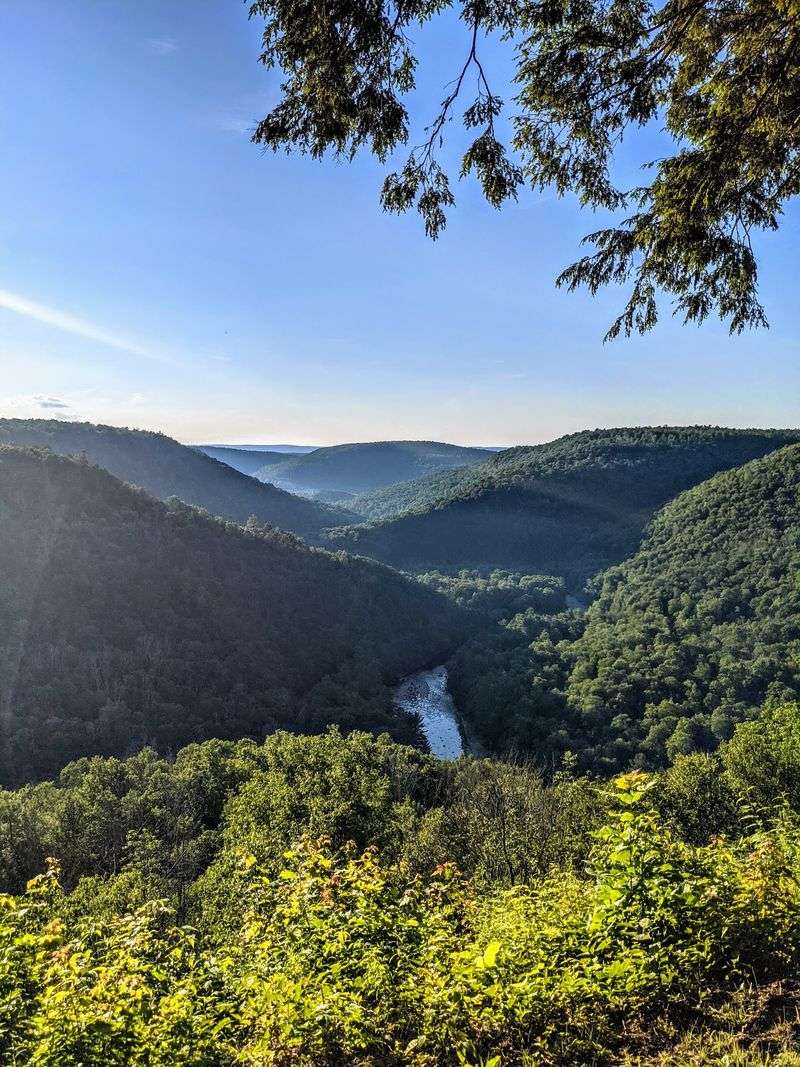
Some names sound dramatic until you actually arrive. Then they make perfect sense.
Worlds End State Park sits in the Endless Mountains near Forksville. Loyalsock Creek carved the twisting valley that defines the whole area.
Rolling hillsides and deep forested hollows surround the water. The park first opened back in 1932.
Iroquois, Shawnee, and Lenape peoples lived across this region long before that. History runs as deep as the gorge.
Waterfall hunters have plenty to chase here. Mineral Spring Falls, Ketchum Run Falls, Alpine Falls, Dutchman Falls, and Dry Run Falls all wait nearby.
Trails include the Worlds End Trail and the historic Pioneer Road. Sections of the famous Loyalsock Trail pass through too.
Loyalsock Canyon Vista and nearby High Knob Vista provide sweeping views of the Endless Mountains. Both can be reached by road, while Worlds End and High Rock vistas require hiking.
A Civilian Conservation Corps dam created the swimming area in the creek. That cold water feels incredible in July.
Loyalsock Creek usually has its best whitewater from March through May, but rapidly changing water levels require checking conditions before launching. Stocked trout in Loyalsock Creek keep anglers busy through much of the year.
Winter opens snowmobiling and cross-country skiing routes. Educational programs run April through October.
Just outside, the Forksville Covered Bridge from 1850 still carries traffic. The park address is 82 Cabin Bridge Rd, so bring a map and curiosity.
6. Cook Forest State Park, Cooksburg
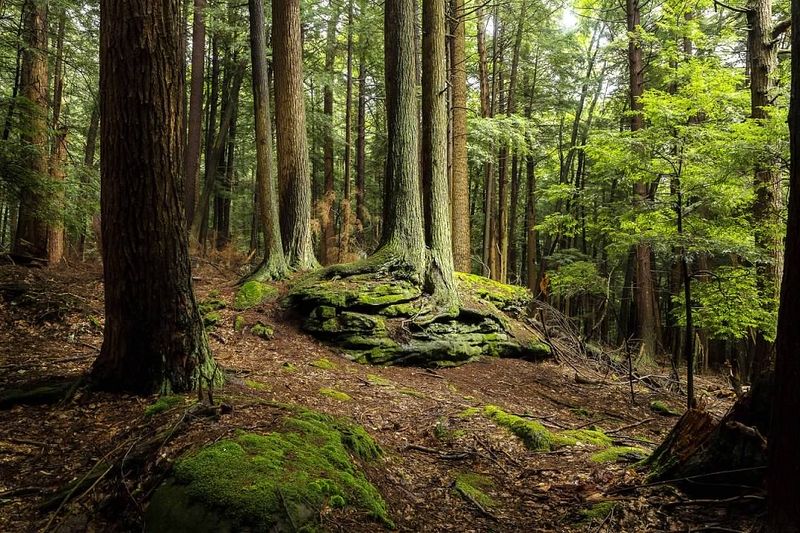
Cook Forest protects more than 2,300 acres of old-growth areas, including exceptional white pine and hemlock stands.
The Forest Cathedral holds federal recognition as a National Natural Landmark. Ancient white pines and hemlocks fill it.
Standing among them is humbling in the quietest way. Sound seems to soften under the canopy.
The Clarion River, a Class 1 waterway, threads through the park. Slow, calm stretches make it friendly for families and first-timers.
Tubing, canoeing, and kayaking rule the warm months. Rentals and shuttles keep things simple.
Hiking is the main event, with Longfellow, Liggett, and Seneca Trail leading past moss, ferns, and small creeks. The Tobecco Trail runs 7.5 miles within Cook Forest before continuing into Clear Creek State Park.
Climbing the Cook Forest Fire Tower gives you the big-picture view. Treetops roll out in every direction.
Mid to late October is widely considered the finest window. Reds, oranges, and yellows flood the forest with crisp hiking air.
Summer draws river crowds, while spring brings rushing streams and quiet paths. Snowshoeing and cross-country skiing take over once snow falls.
Head to 100 Rt 36 and give those old giants the time they deserve.
7. Hickory Run State Park, White Haven
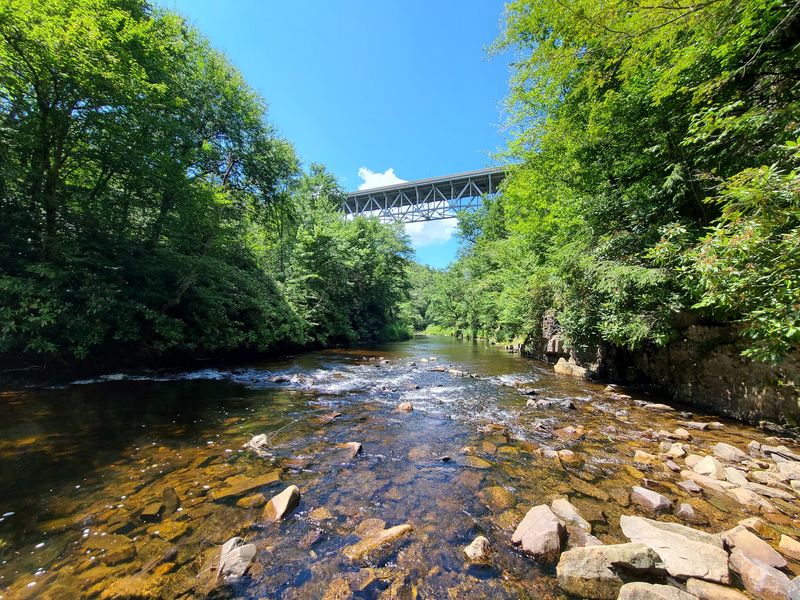
Are you seeing what I am seeing? An entire field made of rocks, with no soil in sight.
Hickory Run State Park near White Haven covers nearly 16,000 acres in the western Pocono foothills. Its Boulder Field is a National Natural Landmark.
Roughly 16 acres of stone stretch out with no trees breaking it up. Nothing else in the Appalachian region matches its size.
The field formed over 20,000 years ago during the last Ice Age. It has barely shifted since.
More than 40 miles of hiking trails wind through varied habitats. Hawk Falls, Shades of Death, and Fireline are the names hikers trade.
Views open toward Stametz Dam and Lehigh Gorge along the way. Rhododendron blooms peak from mid-June into mid-July.
Sand Spring Lake has a sandy swimming beach open late May through mid-September. Trout streams like Mud Run and Hickory Run keep anglers casting.
September and October light the woods in red, orange, and gold. Cooler fall weather can reduce insect activity, but bugs do not disappear entirely.
Summer suits lake days and long trail loops. Spring means surging waterfalls and early wildflowers.
Winter opens cross-country skiing, snowmobiling, and ice skating. Guided walks and nature programs run March through November.
The address is 3 Family Camp Rd, and sturdy soles matter on that boulder maze.
8. Pine Grove Furnace State Park, Gardners
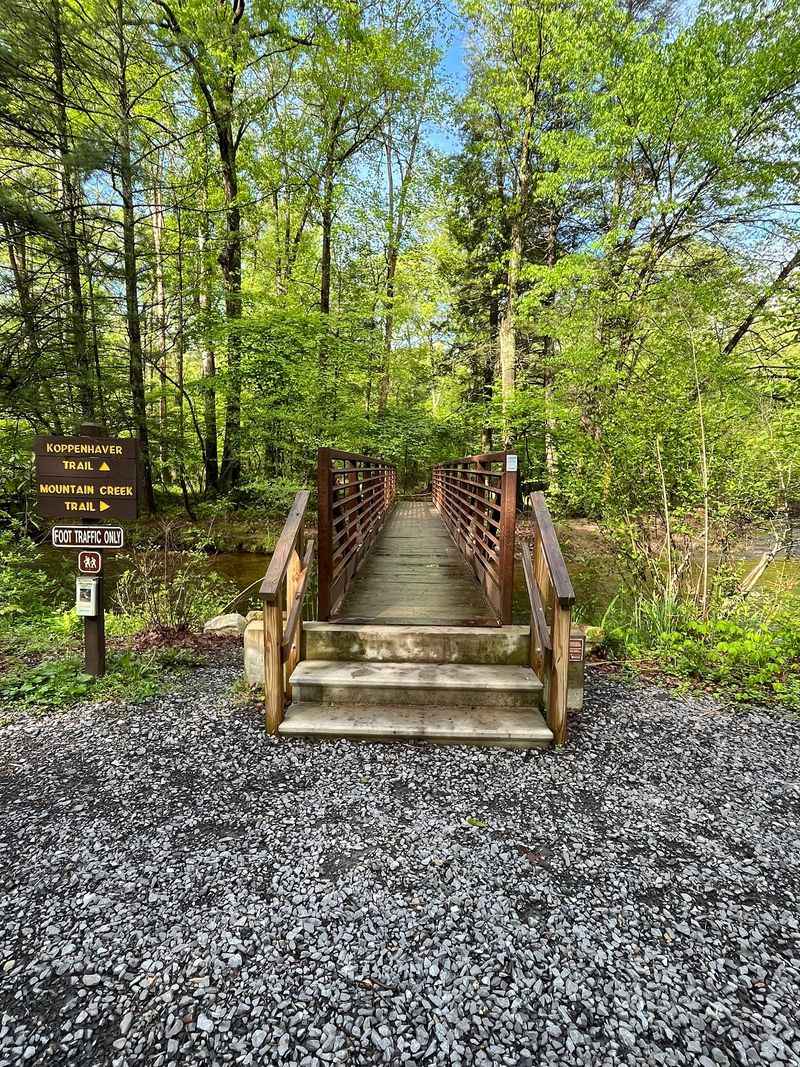
Here is a crazy thought: one park marks the middle of America’s most famous long trail. Thru-hikers count down to it for weeks.
Pine Grove Furnace State Park in Gardners sits below the Blue Ridge Mountains and borders Michaux State Forest.
Pine Grove Furnace is the Appalachian Trail’s traditional halfway celebration point, while the exact midpoint currently lies several miles south in Michaux State Forest.
Hikers celebrate with the legendary half-gallon challenge at the park store. Ice cream has never carried such bragging rights.
The Appalachian Trail Museum inside the park tells that footpath’s long story. Old gear and maps fill the exhibits.
Two lakes reflect the area’s industrial past. Fuller Lake was once an iron ore quarry and now hosts supervised summer swimming with lifeguards.
Laurel Lake once powered the historic Laurel Forge. Today it suits kayaking, canoeing, and patient fishing.
Pole Steeple Trail climbs to a rocky overlook that pays off fast. Mountain biking routes add another gear to the day.
Winter recreation includes skiing and snowshoeing in and around the park, ice skating at a maintained area on Laurel Lake, and snowmobile access from nearby Michaux State Forest.
September through October is the signature stretch, with foliage circling both lakes. Mild highs make hiking and biking easy, though weekends fill up.
Spring wakes wildflowers and migrating songbirds. Look for 1100 Pine Grove Rd, and save room for that ice cream.
9. Leonard Harrison State Park, Wellsboro
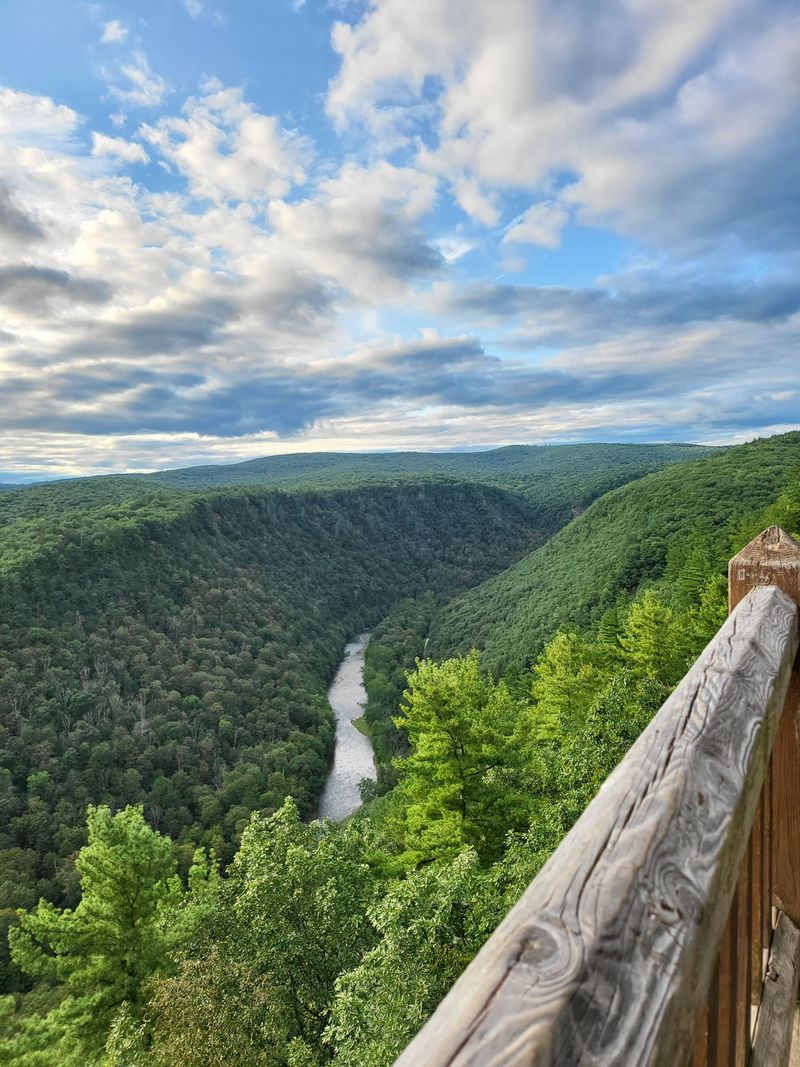
Let’s look at it from this angle: Pennsylvania has its own canyon, and the best seat is on the east rim. The drop-off does the talking.
Leonard Harrison State Park in Wellsboro overlooks Pine Creek Gorge. Overlooks perch roughly 800 feet above the canyon floor.
Locals call the whole thing the Pennsylvania Grand Canyon. Ancient glacial meltwater carved it thousands of years ago.
The Turkey Path trail plunges from the rim to the bottom. Its one-mile descent passes a small waterfall on Little Four-Mile Run before reaching the canyon floor.
At the base it meets the 62-mile Pine Creek Trail. Hikers and cyclists use the full rail trail, while horseback riding is permitted only on designated portions.
Fishing along Pine Creek adds a slower pace to the day. Bring patience and good shoes.
The modern environmental interpretive center runs programs April through October. Topics cover geology, wildlife, and the region’s lumber heritage.
Color-correcting viewfinders help colorblind guests see the autumn hues. That thoughtful detail sticks with you.
Late September through mid-October delivers vivid foliage across the gorge. Reds, yellows, and oranges spill down both walls, and weekends get busy.
Summer brings pleasant weather and longer center hours. Winter clears the leaves for wider views and opens the Pine Creek Trail to skiers.
Point your car toward 4797 Route 660 and hold onto your hat at the railing.
10. Kinzua Bridge State Park, Kane
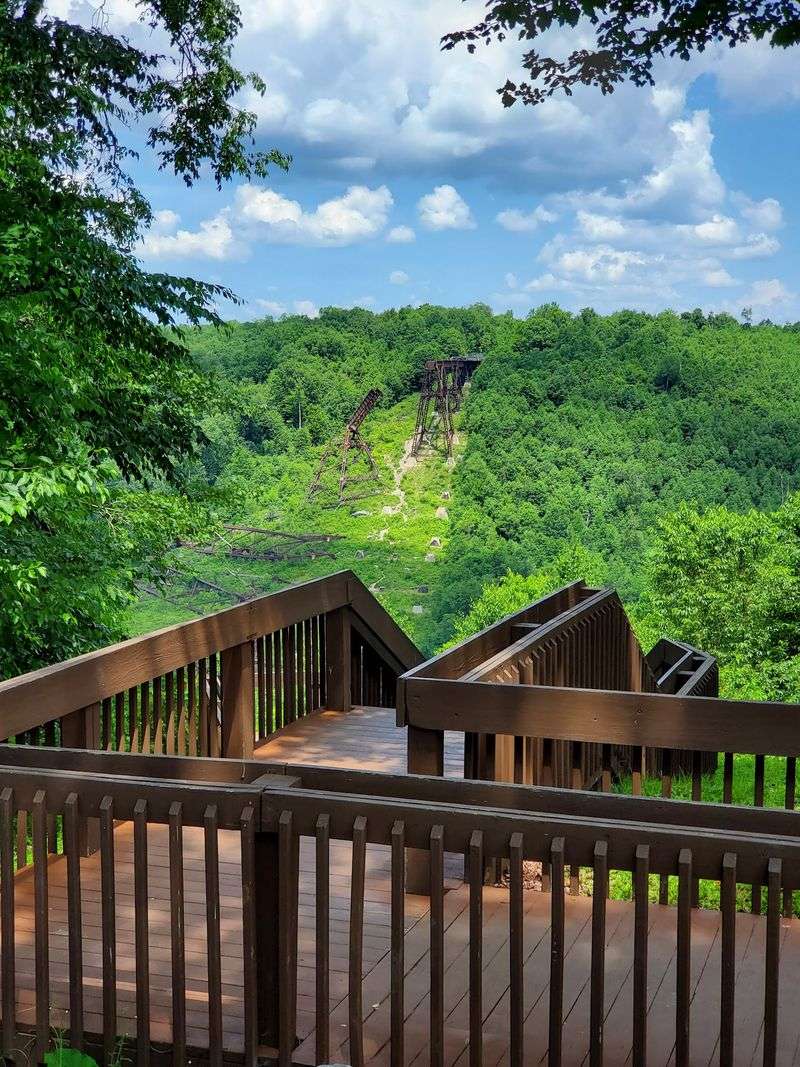
I’ll believe it when I see it, but a railroad bridge once ranked tallest on Earth now doubles as a skywalk. Turns out it is completely true.
Kinzua Bridge State Park in Kane holds the Kinzua Sky Walk. The Skywalk extends about 600 feet out over the remaining support towers.
Built in 1882 as the Kinzua Viaduct, it was then the highest and longest railroad structure in the world. Iron and ambition, side by side.
A tornado in 2003 tore down 11 of its 20 towers. The twisted wreckage still lies in the valley below. Six remaining steel towers became a pedestrian walkway. The invitation is to walk the tracks across the sky.
A partial glass floor at the far end reveals a 225-foot drop. Knees wobble, cameras click.
The center inside the park explains the viaduct’s construction and transformation. Photos of the aftermath are striking.
The Knox and Kane Rail Trail connects to the grounds for longer outings. Kinzua Creek Trail handles the hiking crowd.
The Skywalk has become one of the Pennsylvania Wilds’ best-known overlooks. Preservation work has closed it at times.
A temporary reopening for fall foliage is scheduled September 1 through October 31, 2026. Weekdays and early mornings dodge the crowds. History, engineering, and scenery meet at 296 Viaduct Rd.