10 Washington Cities That Make Tourists Want To Stay Longer
Washington State has a serious problem, and that problem is that nobody ever wants to leave.
I say this as someone who packed for a weekend, rerouted my itinerary three times, and still drove home feeling like I had barely scratched the surface.
There is something genuinely unfair about a state that gives you snow-capped mountains, moody coastlines, world-class food scenes, and charming downtowns all within a few hours of each other.
Every city has its own personality, its own reason to linger, and its own way of making your planned departure time feel more like a suggestion than a reality.
Whether you are a first-time visitor or someone who thinks they already know Washington well, this list will almost certainly send you straight to your calendar to start blocking off dates.
Consider yourself warned, and maybe go ahead and pack that extra bag now.
1. Seattle
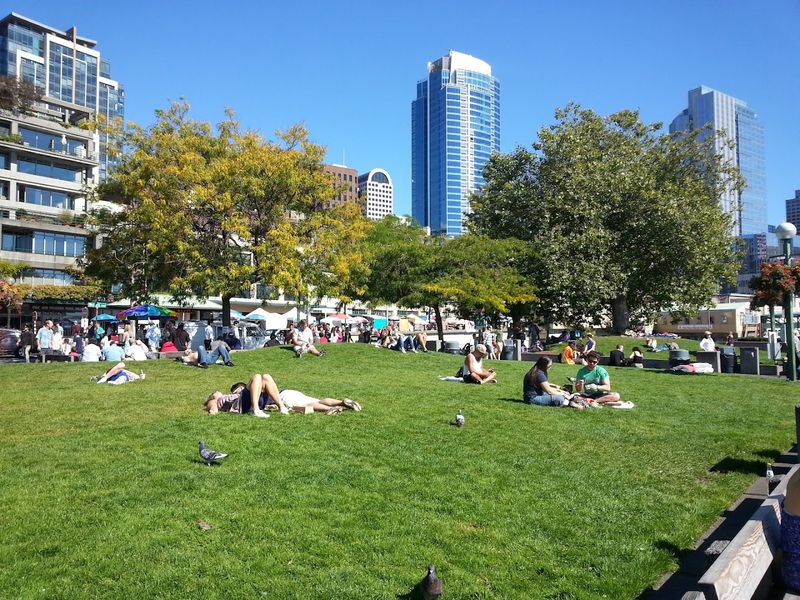
Seattle hits differently when you arrive without a plan. The city is loud, layered, and impossibly interesting all at once.
You think you know it from postcards, but postcards never capture the smell of fresh fish flying through the air at Pike Place Market.
The neighborhoods are what keep you here longer than expected. Capitol Hill has bookshops squeezed between vintage clothing stores.
Fremont has a giant troll sculpture under a bridge, which is exactly as strange and wonderful as it sounds.
Pike Place is the obvious first stop, and it earns every bit of the hype. Vendors have been selling flowers, produce, and handmade goods there since 1907.
That kind of history walks right up and shakes your hand.
The waterfront got a serious upgrade recently with the new Seattle Aquarium Ocean Pavilion. Chihuly Garden and Glass near the Space Needle is a genuine jaw-dropper.
Even people who think they do not care about art end up standing there with their mouths open. Seattle rewards curiosity in a way few cities manage.
2. Leavenworth
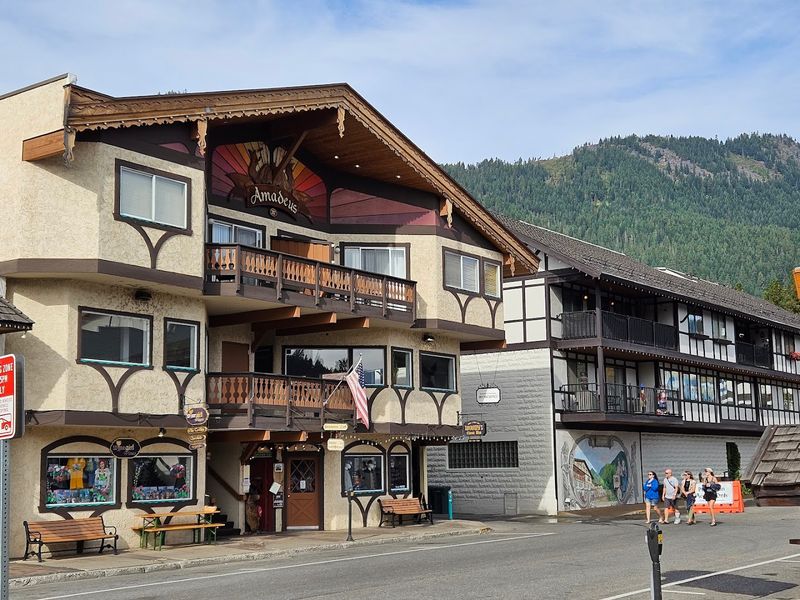
Leavenworth is the kind of place that makes you do a double take when you first roll into town.
The entire downtown looks like it was airlifted from a Bavarian mountain village and gently placed in the Cascade foothills. It is not a theme park.
It is a real, functioning city that simply decided to go full Bavarian in the 1960s to save its economy, and honestly, the gamble paid off spectacularly.
The streets are lined with half-timbered buildings, flower boxes bursting with color, and shops selling everything from nutcrackers to fresh pretzels.
In summer, the surrounding mountains make every view feel like a painting. In winter, the whole town lights up with thousands of twinkling lights that draw visitors from across the Pacific Northwest.
Beyond the charming aesthetic, Leavenworth sits right at the edge of serious outdoor adventure. The Icicle Creek trail system offers hiking for every skill level.
Rock climbers travel here specifically for the granite walls nearby.
The Nutcracker Museum is a quirky must-see with over 7,000 nutcrackers on display. It is oddly fascinating.
You will spend more time there than you planned, guaranteed.
3. Port Townsend
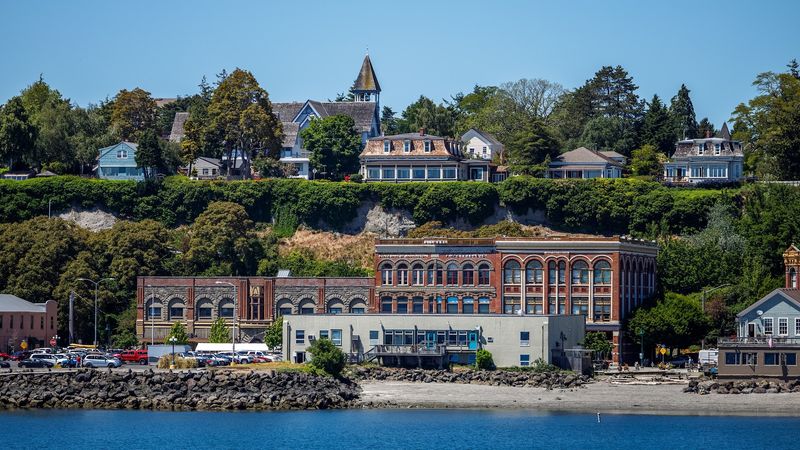
This town feels like someone pressed pause on the 1890s and forgot to press play again.
Victorian mansions line the bluffs above a working waterfront, and the whole town carries this relaxed, artsy energy that is genuinely hard to find anywhere else.
The city was once expected to become the major metropolis of the Pacific Northwest. When the railroad bypassed it, the boom stopped cold.
What got left behind was an extraordinary collection of Victorian architecture that is now a National Historic Landmark District. Lucky accident for all of us.
Fort Worden State Park sits just outside the main drag and offers everything from camping to a marine science center.
The park’s grounds are stunning, with views across the Strait of Juan de Fuca toward the Olympic Mountains. On a clear day it looks almost unrealistic.
The arts scene here punches way above its weight for a town of 10,000 people. Galleries, live theater, and the Centrum Foundation bring serious creative energy year-round.
The wooden boat festival each September draws craftspeople and enthusiasts from around the world. Port Townsend makes you want to slow down, and somehow that feels like exactly the right speed.
4. Walla Walla
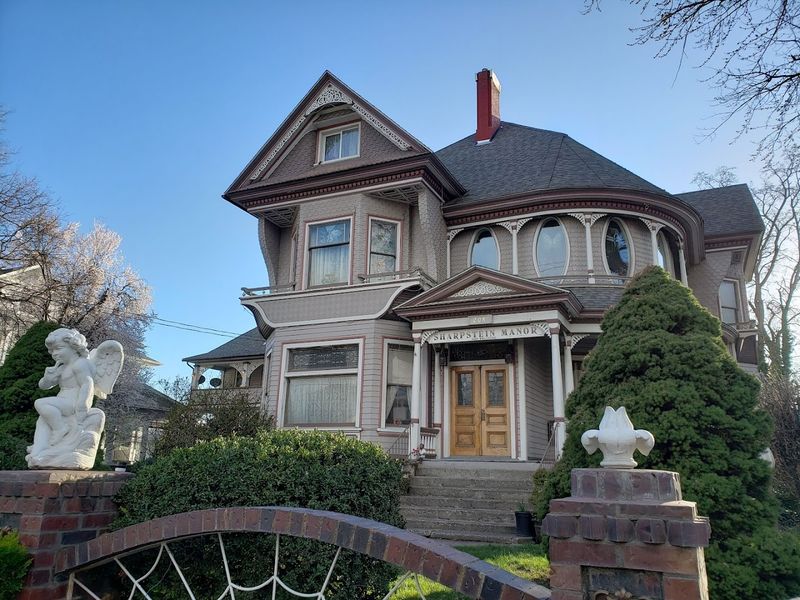
The town that surprised me more than almost any other stop on my Washington travels is Walla Walla. The name is fun to say, but the city itself is genuinely sophisticated in a way that sneaks up on you.
It sits in the southeastern corner of the state, surrounded by rolling wheat fields and one of the most respected wine regions in the entire country.
The downtown is compact, walkable, and full of excellent restaurants and local shops.
Historic brick buildings line the main streets, giving the whole area a grounded, old-fashioned feel that pairs well with the modern food scene thriving inside them. Whitman College adds a lively academic energy to the mix.
Walla Walla sweet onions are famous nationwide, and locals will talk about them with the same passion that other regions reserve for their most prized exports.
The farmers market here in summer is a genuine treat. Fresh produce, local vendors, and a community vibe that feels completely authentic.
Fort Walla Walla Museum covers the region’s deep history, from the pioneer era through agricultural development.
The Whitman Mission National Historic Site is just outside town. History and flavor coexist here in a combination that makes the drive from anywhere feel completely worth it.
5. Spokane
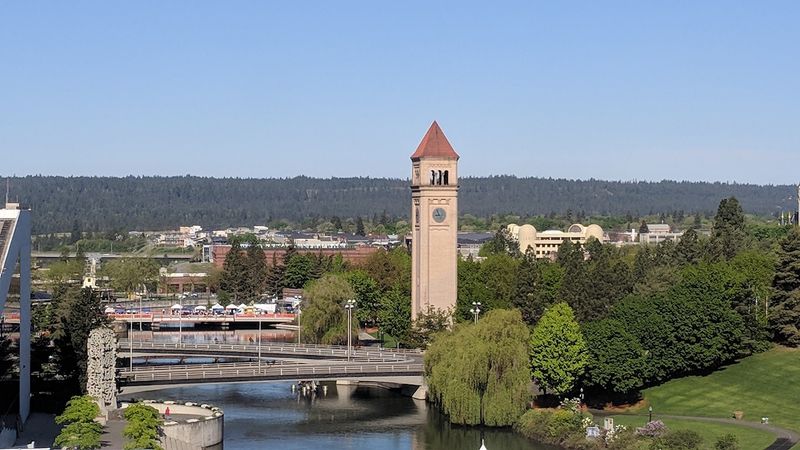
This is Washington’s second-largest city and it carries itself with a confidence that does not need to borrow anything from Seattle.
It has its own rhythm, its own neighborhoods, and a downtown that has been quietly becoming one of the most interesting urban spaces in the inland Pacific Northwest.
Riverfront Park is the heart of the city and a genuinely spectacular piece of urban design. The Spokane River runs right through it, with waterfalls, walking paths, and the iconic Radio Flyer wagon sculpture that kids cannot resist.
The park was built on the grounds of the 1974 World’s Fair, which explains its impressive scale.
The South Perry and Garland districts are where the local food and creative scene really lives. Independent restaurants, record shops, and coffee roasters fill storefronts that feel lived-in and real.
There is no performance here, just people running businesses they actually care about.
Manito Park is one of the most beautiful city parks in the entire state, with formal gardens, a duck pond, and a conservatory that is free to visit.
Spokane also serves as the gateway to eastern Washington’s outdoor adventures. The city is a launching pad and a destination at the same time.
6. Bellingham
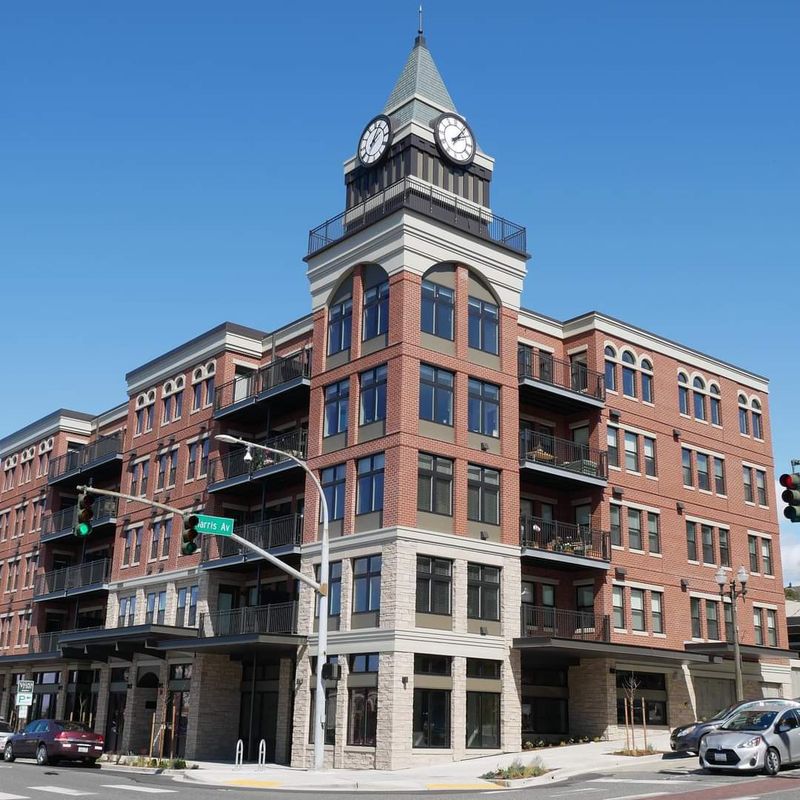
Bellingham is the kind of city that outdoor lovers stumble into and then never quite find a good reason to leave.
Sitting between the Cascade Mountains and Puget Sound, with the San Juan Islands visible on clear days, the geography alone is enough to make you reconsider your current zip code.
Western Washington University sits on a ridge above the city, giving Bellingham a youthful, creative energy that keeps the arts scene surprisingly active.
The Whatcom Museum is one of the best regional museums in the state. The collection spans natural history, Pacific Northwest art, and indigenous cultures in a way that feels thoughtful rather than obligatory.
Fairhaven, the historic village neighborhood on Bellingham’s south side, is worth an entire afternoon on its own.
Victorian-era buildings house independent bookstores, bakeries, and shops that have clearly been run by the same passionate people for decades.
Village Books has been a community anchor there since 1980.
Chuckanut Drive, which begins just south of Bellingham, is considered one of the most scenic roads in Washington State. It hugs sandstone cliffs above Samish Bay with views that stop conversation cold.
Bellingham gives you mountains, water, culture, and community all within a few square miles.
7. Sequim
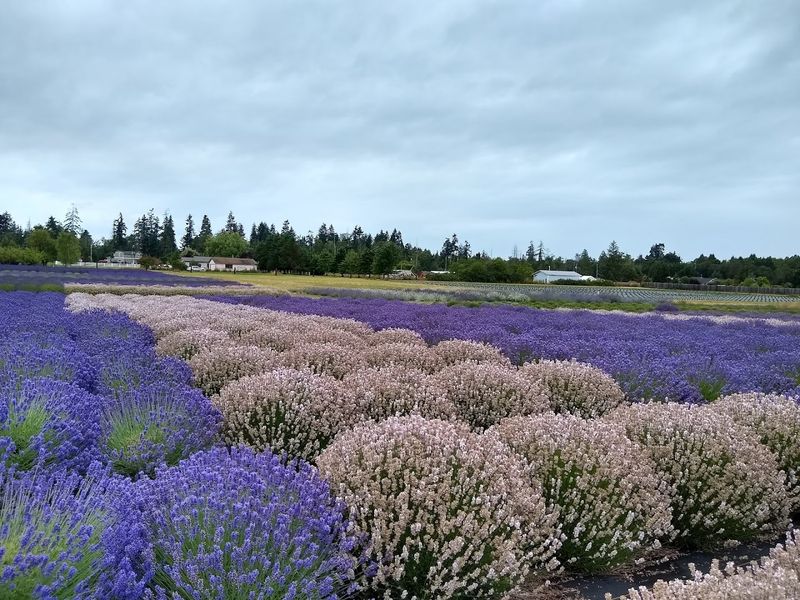
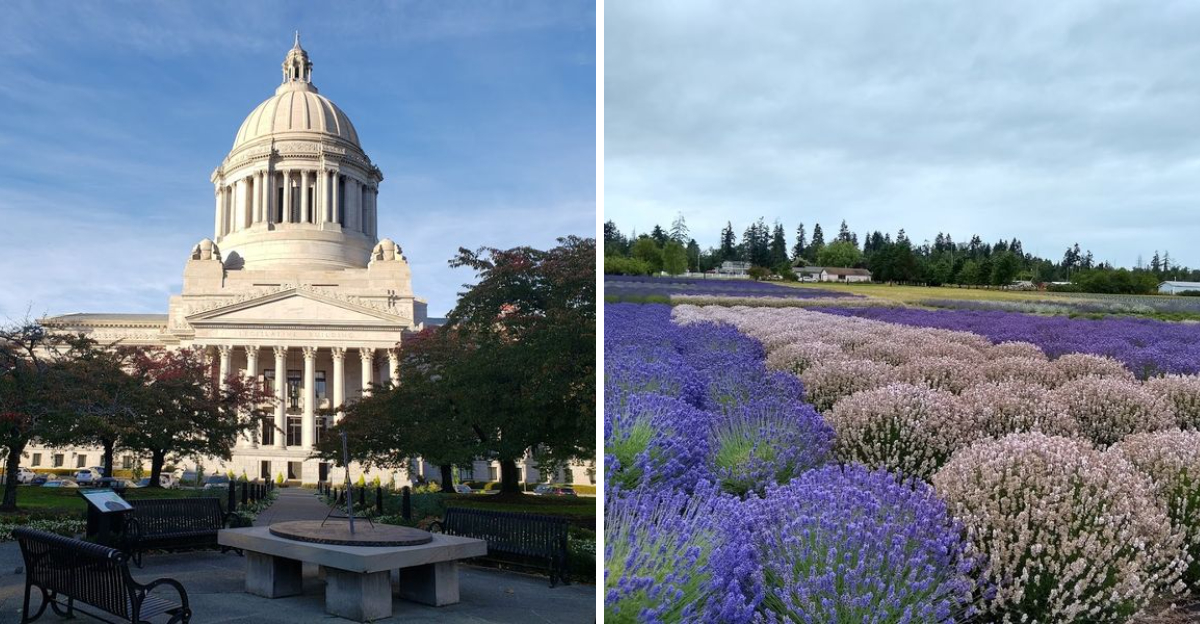
It sits in a geographical oddity called a rain shadow, which means while the rest of the Olympic Peninsula soaks in Pacific moisture, Sequim gets roughly the same annual rainfall as Los Angeles.
For a town in western Washington, that is practically miraculous and the lavender farms here exist because of exactly that quirk.
The Sequim Lavender Weekend every July draws visitors from across the country.
Walking through fields of purple blooms with the Olympic Mountains rising in the background is a sensory experience that photographs can only partially capture.
Around 30 lavender farms operate in the area, each with its own personality and products.
Olympic Game Farm is a local institution where you can drive through and hand-feed animals including bison, zebras, and bears. Kids lose their minds.
Adults pretend to be calm while a bison presses its enormous face against the car window.
The Olympic Discovery Trail runs through Sequim and offers some of the finest cycling and walking paths in the region.
Dungeness Spit, a natural sand spit extending nearly six miles into the Strait of Juan de Fuca, is a National Wildlife Refuge. Sequim is small, specific, and completely unforgettable in all the right ways.
8. Olympia
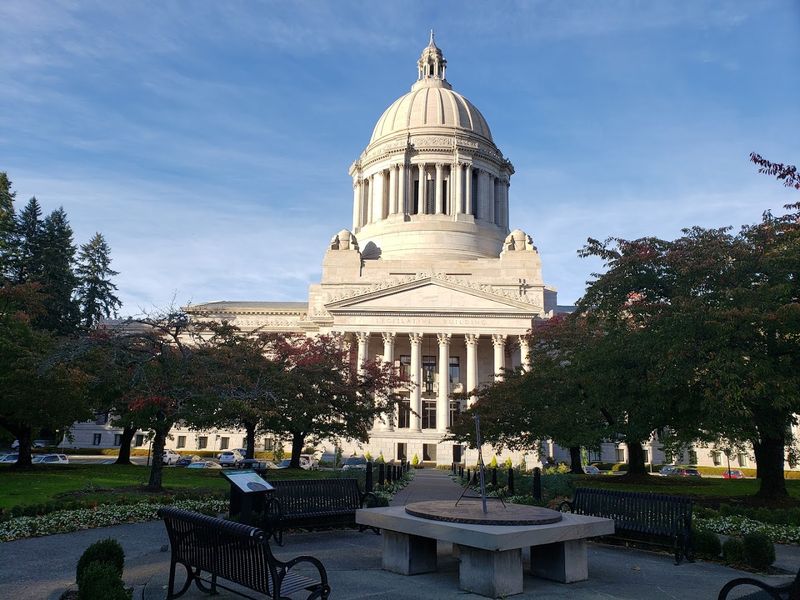
Olympia has a personality that is entirely its own and makes no apologies for it. As the state capital, it carries political weight, but the city itself is far more interesting than its government title suggests.
The arts community here is fiercely independent and has been for decades.
The Capitol Campus is genuinely beautiful, with the domed Legislative Building reflected in Capitol Lake on calm mornings.
Cherry trees bloom around the grounds each spring in a display that rivals anything you might see in more famous destinations. Free tours of the building run regularly and the interior is worth seeing.
The Olympia Farmers Market runs from April through December and is one of the oldest and largest in the state.
Vendors line the waterfront with local produce, seafood, crafts, and food that makes it impossible to leave empty-handed. Saturday mornings here feel like the whole city shows up at once.
Percival Landing Park connects the downtown to the waterfront with a boardwalk that makes evening strolls genuinely enjoyable.
The Hands On Children’s Museum is one of the best in the Pacific Northwest for families. Olympia rewards people who look past the political symbolism and explore what the locals actually love about living there.
9. Winthrop
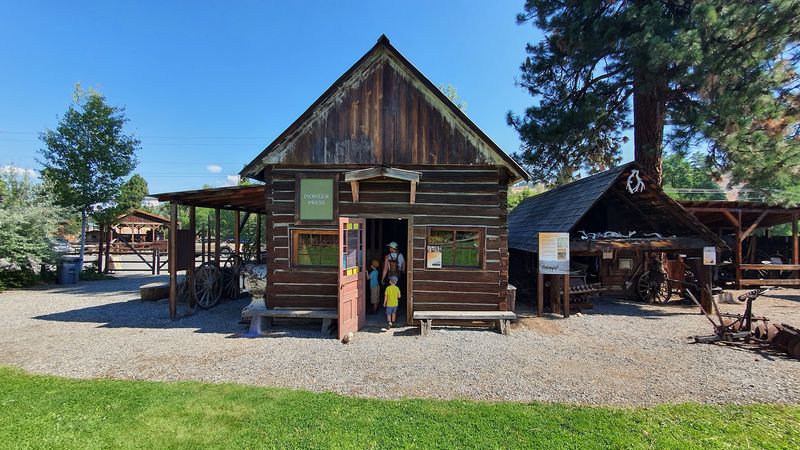
This is a small town at the eastern entrance to the North Cascades that decided to lean fully into its Old West identity, and the result is one of the most charming and genuinely fun main streets in the entire state.
Wooden boardwalks, frontier-style storefronts, and mountain views in every direction make it feel like a movie set that people actually live in.
The Methow Valley surrounding Winthrop is an outdoor recreation paradise across all four seasons. In summer, the valley offers world-class mountain biking, hiking, and river activities.
In winter, the Methow Valley Sport Trails Association maintains over 120 miles of groomed cross-country ski trails, one of the largest systems in North America.
The town itself is tiny, with a permanent population of around 400 people. But the energy during peak seasons is anything but quiet.
Restaurants, galleries, and shops fill the historic buildings with genuine local character.
The Winthrop Rhythm and Blues Festival each summer brings serious musical talent to this unlikely mountain setting.
Sun Mountain Lodge, perched above the valley, offers some of the most dramatic views in Washington from its dining room and trails.
Winthrop proves that small does not mean boring. It just means every single thing about it was worth the drive.
10. Long Beach
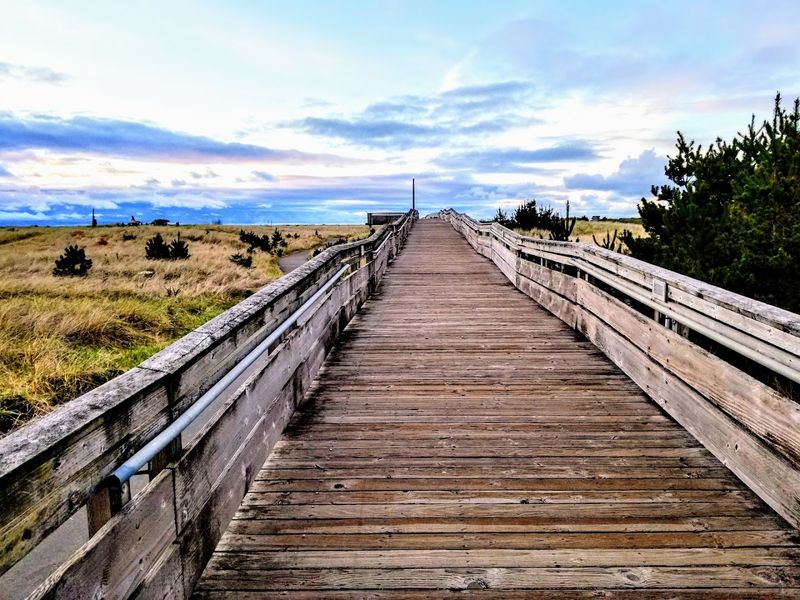
Long Beach sits at the tip of a 28-mile peninsula on Washington’s Pacific Coast and holds the distinction of being one of the longest beach strands in the United States.
The wind here is constant and enthusiastic, which is exactly why the World Kite Museum calls this stretch of coast home.
The museum is a legitimate delight, with kites from around the world and a history of the sport that goes back centuries further than most people expect.
The annual Washington State International Kite Festival every August fills the sky with hundreds of kites in an event that has been running since 1981. It is one of those rare experiences that feels completely unique.
Driving on the beach is legal in designated areas of Long Beach, which remains one of Washington’s more unusual and beloved coastal traditions.
The Lewis and Clark Interpretive Center at Cape Disappointment State Park tells the story of the Corps of Discovery’s arrival at the Pacific in 1805.
Standing at that same coastline with that context in mind is surprisingly moving.
The town itself is refreshingly unpretentious, with clam chowder shacks, taffy shops, and seafood restaurants that have been serving locals for generations.
Long Beach is the kind of place that makes you feel like the ocean is sharing a secret just with you.