The Mysterious Connecticut Covered Bridge You Might Want To Avoid After Dark
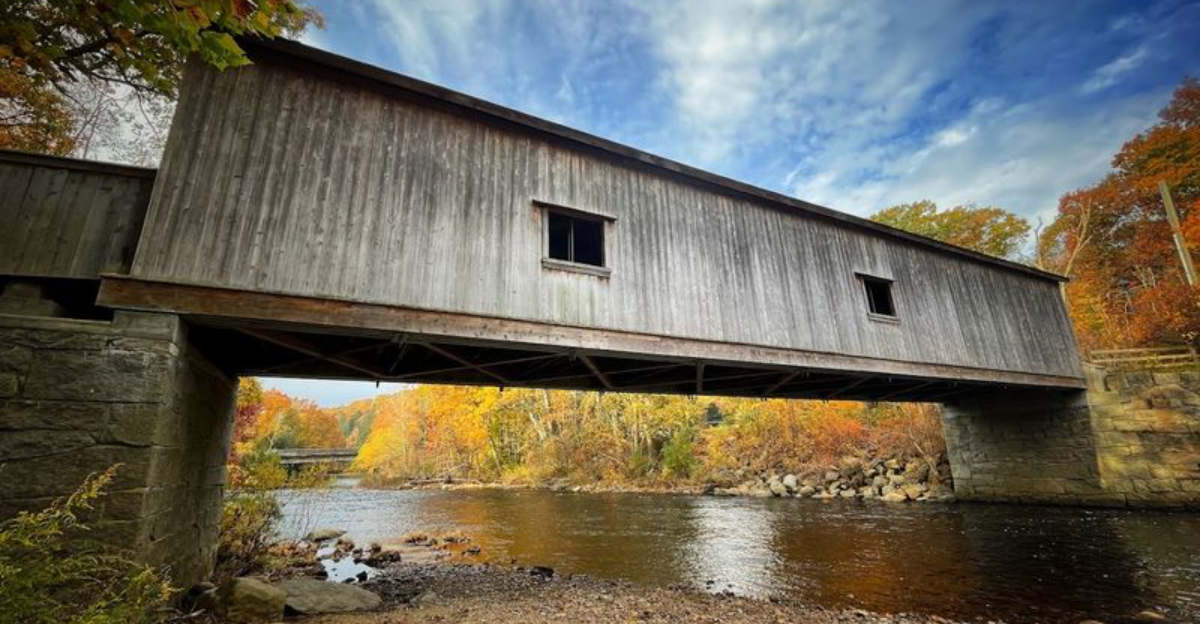
Covered bridges already have a way of making daylight feel dim, but this one becomes especially atmospheric when evening settles in. Built above the Salmon River, the old wooden crossing carries more history than its quiet setting suggests.
Its dark interior frames the water like a moving picture, while the weathered boards soften every sound around you. A surviving Connecticut landmark turns an ordinary river crossing into something that feels wonderfully eerie after sunset.
The bridge dates to the nineteenth century and was designed with a sturdy truss system that helped it endure. It has also survived serious damage and later restoration, which gives the structure an even stronger sense of resilience.
Today, only pedestrians pass through. Nothing here needs a ghost story to feel mysterious.
The fading light does enough on its own. As shadows gather beneath the roof, the peaceful river and enclosed passage create a mood that lingers long after the crossing ends.
1. A Wooden Passage Spans The Salmon River
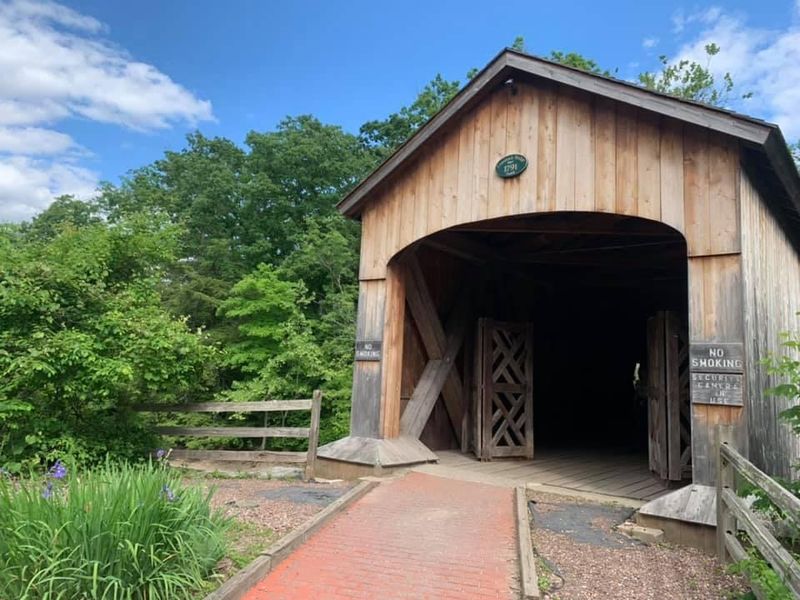
The sound of the Salmon River sets the mood before the covered bridge comes into view. Surrounded by forest, the weathered wooden span crosses between East Hampton and Colchester with a presence that suits the landscape.
Built in 1873, Comstock Bridge is one of the state’s surviving historic covered bridges. It now welcomes pedestrians rather than vehicles, allowing visitors to explore the structure at an easy pace.
Gates at each end keep traffic out, while a Route 16 crossing carries cars across the river.
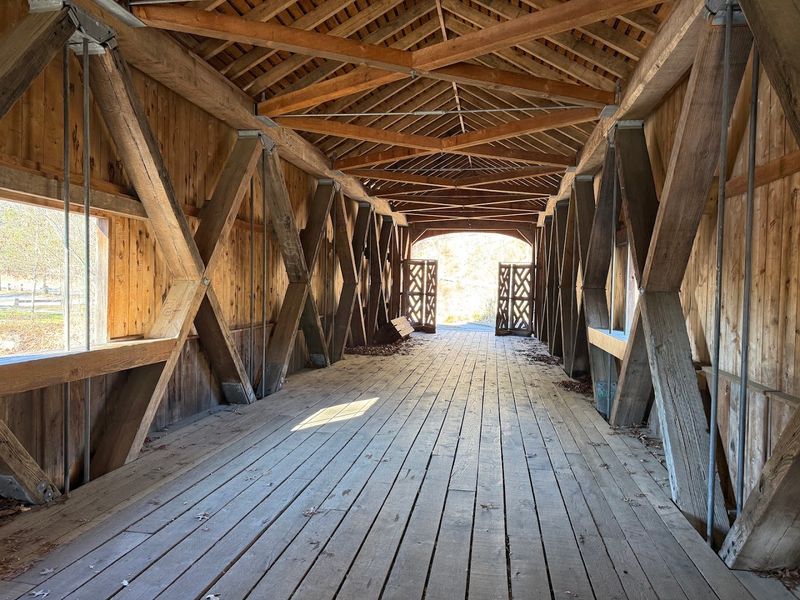
The bridge combines an 80-foot covered Howe truss with a shorter approach span. From inside, its openings frame glimpses of the water and trees, and the old floorboards add character beneath each step.
A recreation area nearby offers opportunities for picnicking and fishing, while surrounding trails extend the visit into Salmon River State Forest.
Visitors can find the bridge at 14 Comstock Bridge Road, near the boundary between the two towns. The approach leads over ground and stone toward the wooden entrance.
Pausing near the center reveals one of the site’s best details: the steady rush of water below, a fitting soundtrack for a landmark that has crossed the Salmon River for more than 150 years.
2. The Present Bridge Has Stood Since Eighteen Seventy Three
Generations of travelers have crossed the Salmon River at this historic site, though the bridge has changed considerably over time. Local residents began seeking a dependable crossing around 1785 because reaching church services and conducting business across the water had become difficult.
Workers completed an uncovered bridge roughly six years later.
As transportation needs grew, the structure was strengthened in 1840 to accommodate heavier traffic. A more substantial rebuilding followed in 1873, when Colchester and Chatham, now East Hampton, approved a covered Howe truss bridge.
The project cost $3,958.59, a significant investment during an era when ordinary laborers often earned about one dollar per day.
Later generations continued that pattern of preservation. The bridge underwent rehabilitation during the 1930s, and another extensive reconstruction finished in 2011, incorporating some timbers from the previous span.
These changes helped retain its historic character while keeping the crossing accessible to modern visitors.
Recognition came on January 1, 1976, when Comstock Bridge joined the National Register of Historic Places. Interpretive signs near the site explain much of this timeline, helping visitors understand that the landmark is not a completely untouched artifact.
Its story reflects repeated community choices to repair, rebuild, and preserve an important connection across the river for future generations to appreciate.
3. A Howe Truss Holds Up The Historic Crossing
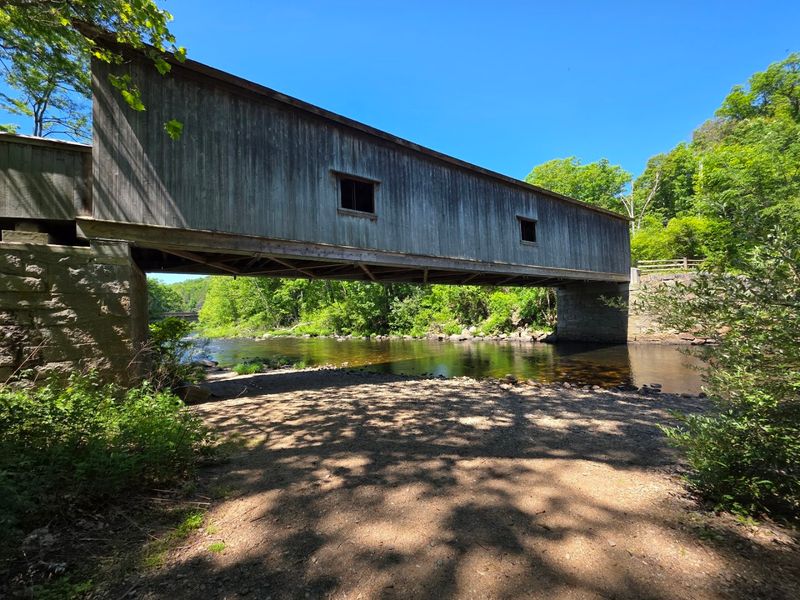
Engineering history is built directly into the bones of this bridge, and the Howe truss design responsible for holding it up is a big part of what makes the structure remarkable.
William Howe patented this truss type in 1840, and it represented a meaningful leap forward in bridge construction by pairing crossed wooden diagonal members with vertical iron tie rods.
The combination of wood and metal gave builders a more reliable and adjustable system than purely wooden designs of earlier decades.
The Comstock Covered Bridge is the only remaining example in Connecticut of a wooden pony truss configuration, which means the load-bearing span runs between two parallel side structures that are not connected across the top.
The main span measures 80 feet long with a roadbed 12 feet wide, dimensions that feel snug when standing inside but were entirely practical for the era.
The iron rods running vertically through the truss framework are visible from within the bridge and worth a close look.
A secondary uncovered wooden span of roughly 30 feet connects the east pier to the eastern shore, adding a structural note that many casual visitors overlook.
The trusses of that shorter section are encased in vertical planking and capped with a peaked cover, while the floor and bracing below remain exposed.
Together, the two spans create a crossing that rewards those who pay attention to its details.
4. Dark Timber Frames A Bright Opening Above The Water
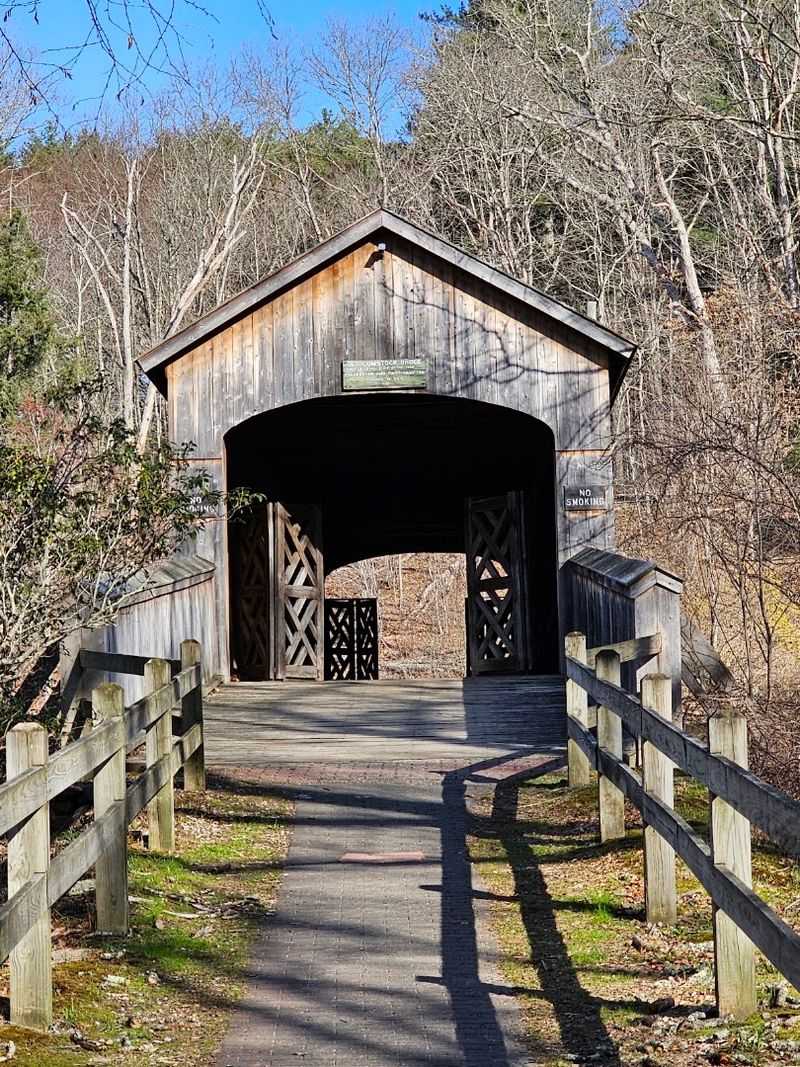
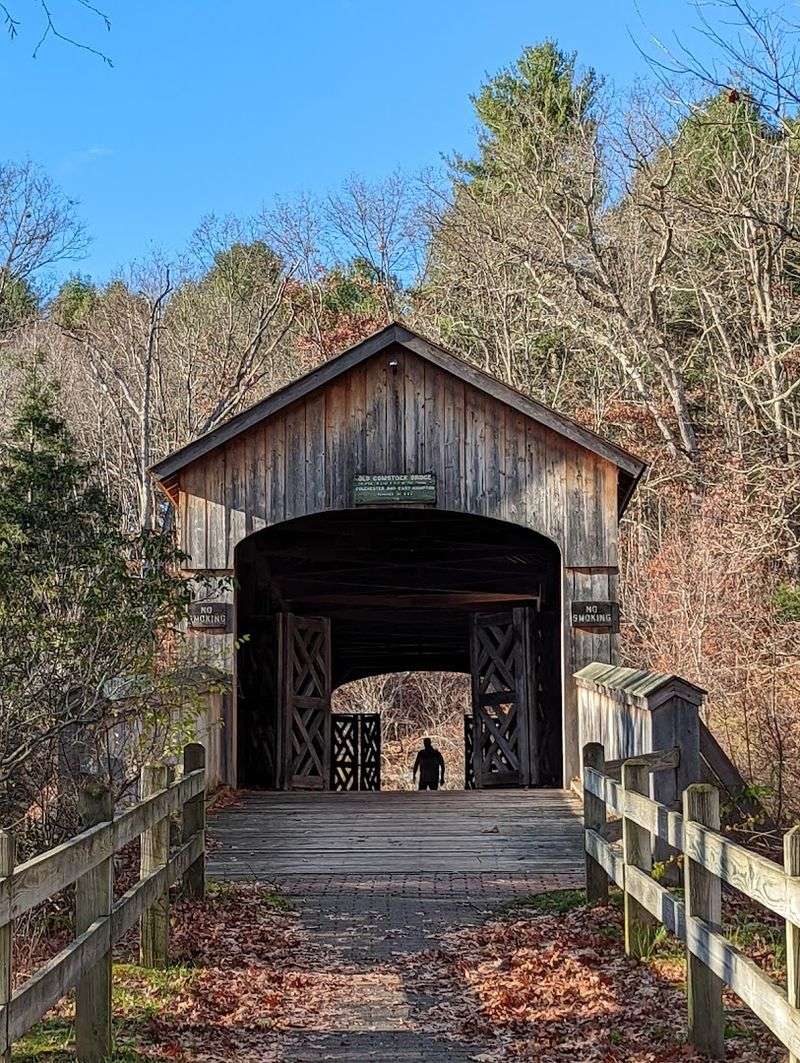
Crossing the threshold changes the experience almost immediately. Daylight fades into a cooler wooden passage, while the bright opening ahead pulls the eye toward the opposite bank.
The gabled roof and vertical board siding shelter the structure, giving the interior a quiet, enclosed character that contrasts with the forest outside.
Two square, unglazed windows break through the side walls and bring narrow bands of sunlight across the floor. Their purpose is practical rather than decorative, providing visibility inside while the covered design helps protect the bridge’s timber framework from harsh weather.
As the eyes adjust, more details begin to emerge, including the Howe truss system, which combines wooden diagonal members with iron tie rods.
Oval portals soften the otherwise angular geometry and create one of the bridge’s most recognizable features. Wooden latticed gates at both entrances prevent vehicles from crossing, leaving the span open to pedestrians and helping preserve it.
The best perspective often comes after reaching the far side and turning around. From there, the dark interior forms a natural frame around the riverbank, trees, and light beyond.
A slower return across the bridge reveals changing patterns on the boards, glimpses through the windows, and the steady contrast between the sheltered corridor and the open landscape waiting at either end. Every step offers another angle on its historic design.
5. Stone Abutments Reveal Details Many Walkers Miss
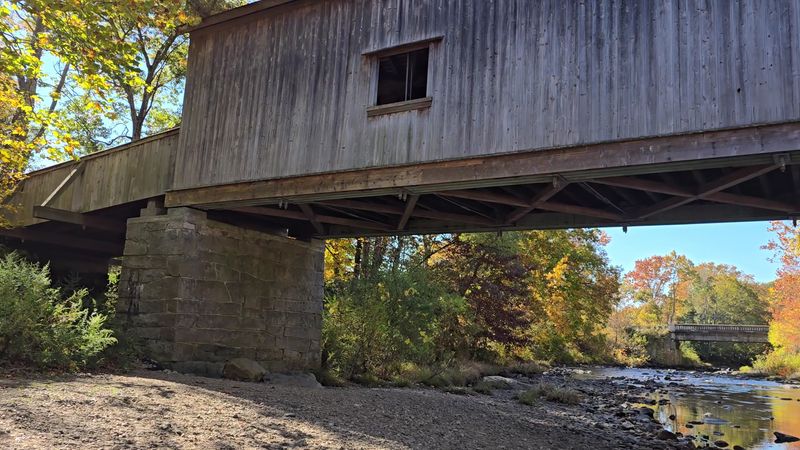
The bridge’s stonework reveals a quieter side of its engineering, one that can be easy to miss from the walkway above. Beneath the covered span, the eastern pier is built from dressed granite arranged in regular ashlar courses, showing the care given to shaping and placing each block.
The western abutment has a less uniform appearance. Granite is combined with mortared mixed-stone rubble, a difference that may point to later rebuilding or repair.
On the eastern side, the shorter uncovered approach span rests on abutments made from unmortared rubblestone, much of it formed by flat stones stacked without binding material. The contrast between these foundations becomes clearer from the riverbank.
From below, visitors can also see how the wooden framework meets the masonry supports. The approach span leaves its floor system and angled bracing exposed, offering a look at construction details hidden by the covered section.
This lower viewpoint changes the bridge from a scenic landmark into a piece of practical engineering.
Taking time to study the base adds another layer to the visit. The granite, rubble, timber, and river meet in one compact scene, showing how materials have supported the crossing through repairs and changing needs over many years.
6. A Truck Crash Nearly Ended The Crossing
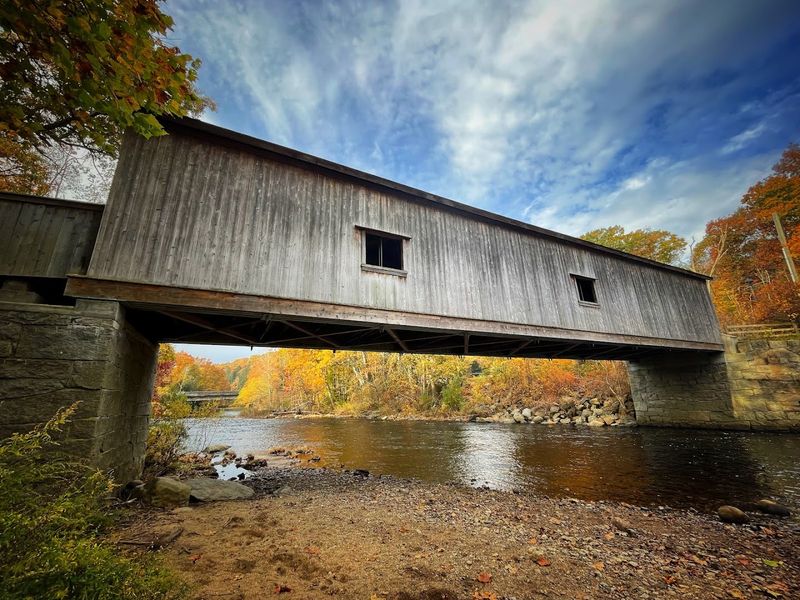
For a structure that has survived well over a century, the Comstock Covered Bridge has faced its share of close calls, and the most dramatic of these came from a vehicle that should never have been on it in the first place.
In the 1920s, a truck drove onto the bridge and crashed through the floor, causing damage significant enough to require major repair work.
That incident accelerated conversations about restricting the bridge to lighter traffic.
By the 1930s, the decision was made to close the crossing to vehicles entirely, a move that likely saved the structure from further deterioration.
A new concrete bridge was built downstream to handle motor traffic, allowing the covered bridge to step back from its working role and settle into its current identity as a pedestrian landmark.
That shift in purpose probably extended its lifespan by decades.
Local tradition also holds that during the Prohibition era, a separate truck carrying illegal alcohol overturned on the bridge, spilling its cargo across the old floorboards. The story goes that nearby residents managed to recover a notable portion of that cargo before authorities arrived.
Whether the account is fully accurate or partly embellished over generations of retelling, it adds a layer of character to a bridge that already has plenty of history to stand on. These stories give the crossing a personality that goes well beyond its timber and iron.
7. Restoration Crews Gave The Bridge A Second Life
After the truck crash and years of gradual wear, the bridge received serious attention from a Civilian Conservation Corps crew during the 1930s, a period when federal work programs were putting people to work on exactly these kinds of preservation projects.
The crew installed a new wood-shingled roof and replaced siding boards, with some of the new material reportedly salvaged from an old barn.
That kind of resourceful approach to repair was common during that era and added a layer of informal history to the structure.
A new window was added on the north side during the same project, and wooden gates were installed at the portals to restrict vehicle access going forward.
Some of the main chord timbers were replaced, and a remnant of the original structure was reportedly kept inside the bridge for display purposes for many years.
The 1970s brought steel plates bolted to the timbers to address sagging and support joints that had taken on more stress than the original design anticipated.
The most recent major intervention came in 2012, when the bridge was rebuilt after a lightning strike caused fire damage. Restoration crews used approximately 50 percent of the original wood in that reconstruction, preserving as much historic material as could be safely retained.
The result is a structure that has been genuinely renewed multiple times while still carrying the physical memory of its 1873 origins in its surviving timbers.
8. Forest Trails Continue Beyond The Covered Span
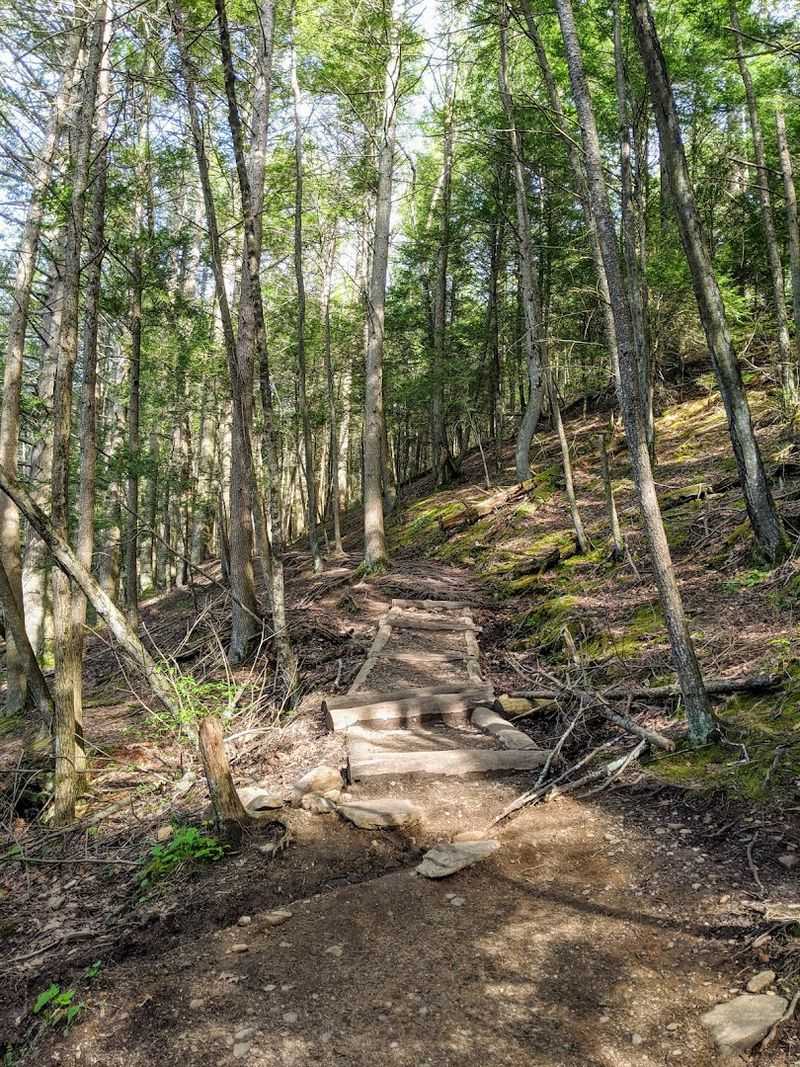
Crossing the bridge is often just the beginning of a longer outing for visitors who come prepared with sturdy shoes and a little extra time.
The Salmon River State Forest surrounds the bridge on multiple sides, offering hiking trails, fishing access, and picnic areas within easy walking distance of the parking lot.
The unpaved lot sits adjacent to the bridge and can get muddy after rain, so checking conditions beforehand is a practical consideration worth keeping in mind.
The Salmon River Trail, part of the Connecticut Forest and Park Association Blue Blaze Trails system, begins at the bridge and forms a loop estimated between 5 and 6.9 miles in length.
The route climbs moderately to a ridge overlooking the Salmon River Valley and passes through a mix of pine and hardwood forest that changes noticeably with each season.
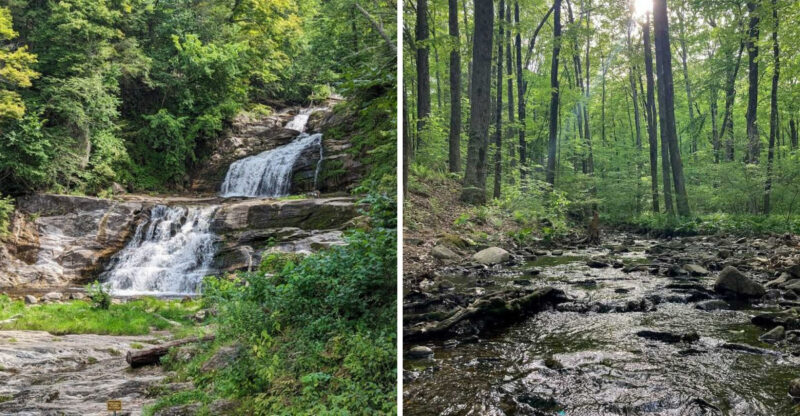
Hikers who follow the full loop may come across old farmstead stone walls and small waterfalls hidden along quieter sections of the trail.
Trout fishing draws a steady stream of anglers to the Salmon River, particularly in spring and fall when water levels tend to be more favorable. The river is accessible from the bank near the bridge, and the flat stones along the shore make for easy footing when approaching the water.
Bald eagles have been spotted in the area on occasion, which adds an element of unpredictability to any visit that extends past the bridge itself.