The Panoramic Summit View In Connecticut That Will Leave You Absolutely Speechless
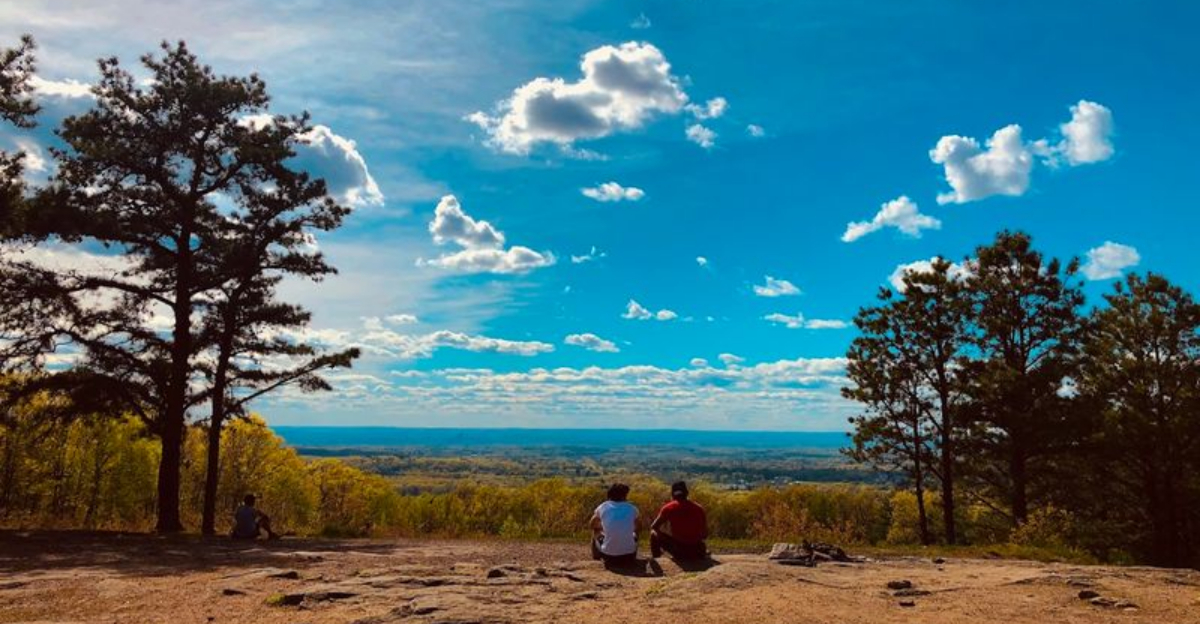
Some views just do something to you that no photo ever quite captures and this is one of them. The trail up is worth it on its own but nothing really prepares you for what happens when you finally reach the top and the whole landscape opens up in front of you.
The kind of moment where conversation just naturally stops because nobody can think of anything to say that would do it justice. Panoramic summit views like this one in Connecticut are the reason people lace up their hiking boots on a Saturday morning without needing much convincing.
Manchester locals have known about this spot forever and somehow it still feels like a genuine discovery every single time someone new finds it.
Go on a clear day, give yourself enough time to actually sit with it, and try not to spend the whole way down already planning your next visit.
1. A Manchester Hike With A Big Payoff
Not every great hike requires a long drive or an early alarm set for before sunrise. Case Mountain in Manchester, Connecticut sits just minutes from a highway exit, and the trailhead is easy to reach without much planning.
The shortest route to the summit can be done fairly quickly, while longer loops give hikers more time to explore the wooded trails before reaching the view. Hikers who push through the steeper sections near the beginning tend to find that the terrain levels out as they approach the peak.
The path transitions from a gravel-heavy lower section to smoother ground closer to the summit. What makes the payoff feel so genuine is that the view appears almost without warning.
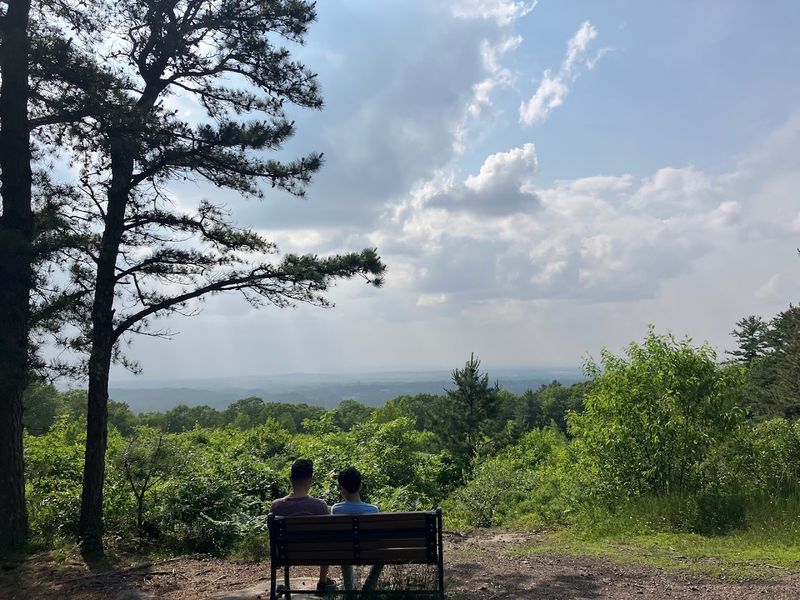
Trees give way to open sky and a wide rocky ledge where a few park benches have been placed for resting and taking in the scenery. The entrance is at 640 Spring St, Manchester, CT 06040, making it straightforward to find even on a first visit.
The whole experience from parking lot to summit and back can fit comfortably into a lunch break or an early evening outing.
2. Why The Summit Scene Feels So Surprising
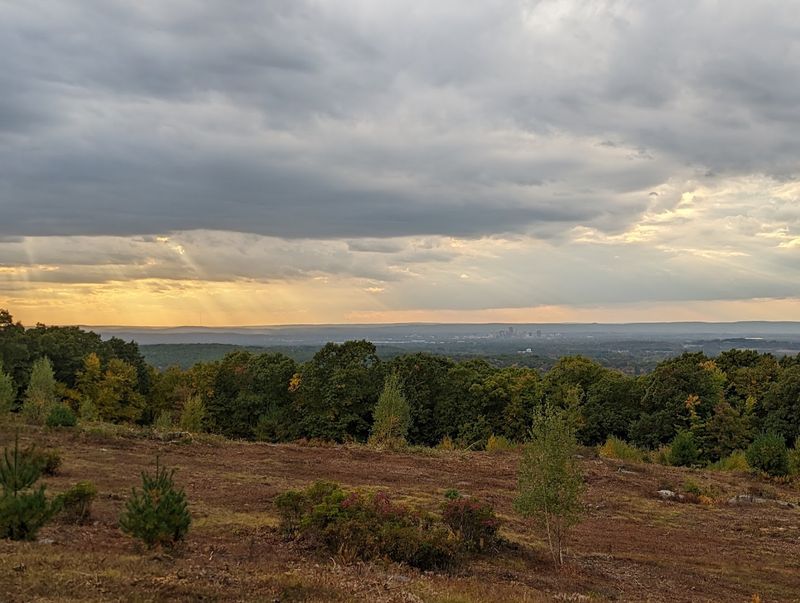
Standing at the top of Case Mountain for the first time tends to produce a moment of genuine pause. The surrounding area is suburban and familiar, so arriving at a wide-open ledge with sweeping views in multiple directions feels unexpected in the best possible way.
The summit sits at a height that clears the surrounding tree canopy and opens up a broad visual field.
Park benches placed at the top give hikers a chance to sit down and actually absorb the view rather than just glance at it before heading back down. On clear days the visibility stretches far enough to make the effort feel well worth every uphill step.
The openness of the summit also means that wind tends to pass through steadily, which makes it a comfortable spot even on warmer afternoons.
What surprises many visitors is how quiet the summit can feel despite the trail being relatively popular. Sound from the surrounding neighborhoods does not carry up in any significant way, and the atmosphere at the top tends to feel calm and removed from the everyday pace of life below.
That contrast between the familiar and the unexpected is a big part of what makes the summit scene so memorable.
3. The Hartford Skyline From Lookout Mountain
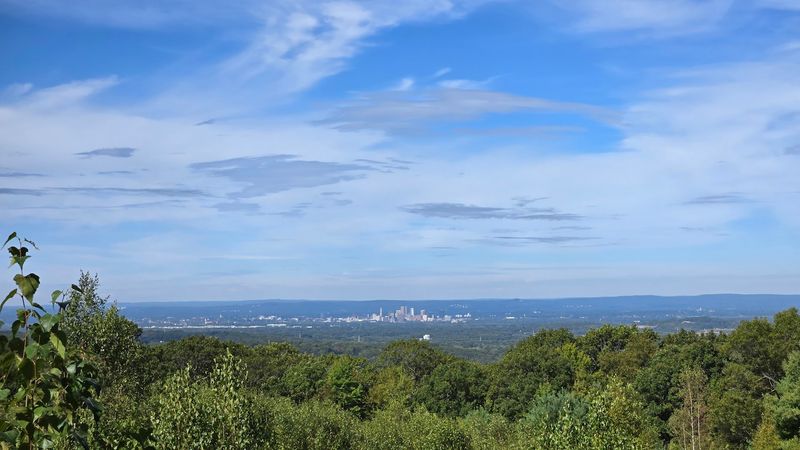
One of the most talked-about features of Case Mountain is the view of the Hartford skyline visible from the summit area known as Lookout Mountain. On a clear day the city appears as a distinct cluster of buildings rising above the treeline in the distance, giving the hike a sense of scale that feels genuinely satisfying.
The sight of an actual city skyline from a wooded hilltop in Manchester adds an unexpected urban dimension to an otherwise natural outing.
The best conditions for seeing the Hartford skyline tend to be on days with low humidity and strong visibility. Morning light can cast a different quality across the horizon compared to late afternoon, and both times of day offer their own version of the view.
Hikers who arrive on overcast days may find the skyline harder to spot, so checking the weather beforehand is worth considering.
Lookout Mountain sits within the broader Case Mountain trail network and is reachable from multiple trail approaches. The view from this point is one of the clearest and most open in the entire area, making it a natural stopping point for most hikers.
Bringing a camera or simply taking a few minutes to look out across the horizon tends to be a highlight of the visit.
4. Wooded Trails, Rock Formations, And Quiet Forest
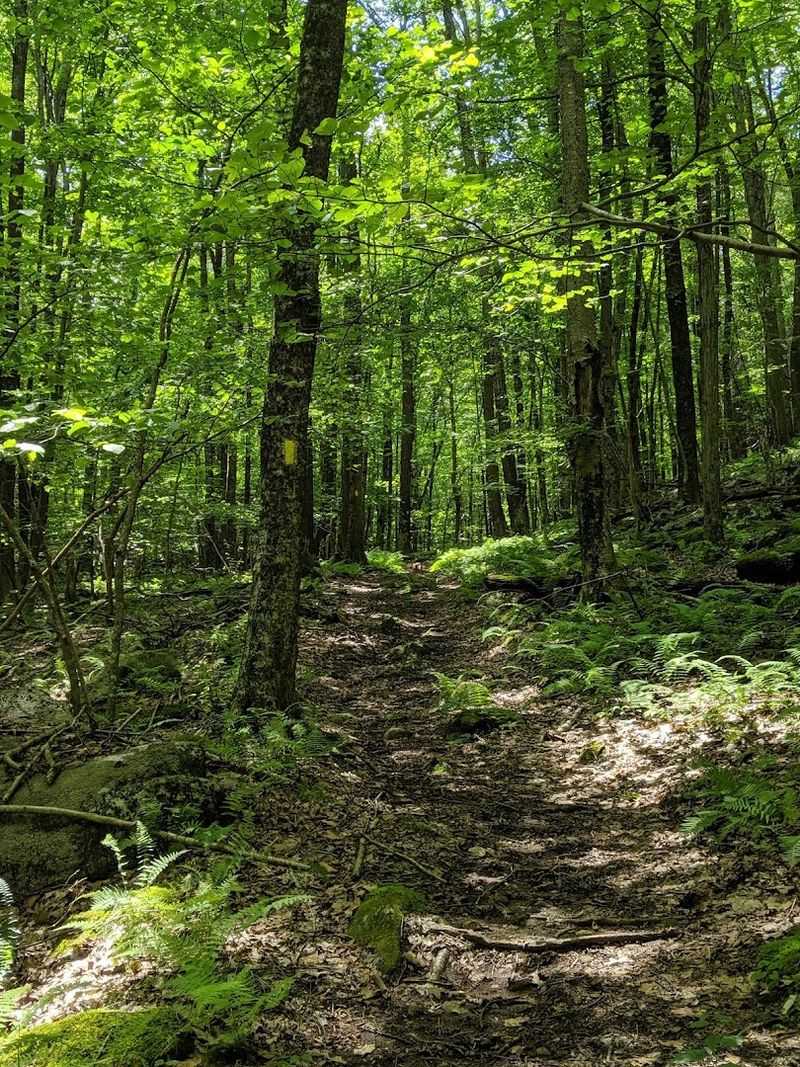
The trail experience at Case Mountain goes well beyond the summit view. Much of the hike takes place inside a canopy of mature trees that filter light in shifting patterns throughout the day.
The forest floor is textured with exposed roots, loose stone, and patches of packed earth that change character depending on recent rainfall.
Rock formations appear at various points along the trails and add a rugged quality to the landscape that feels more remote than the surrounding area might suggest. Some sections feature solid rock underfoot that requires a bit of careful footing, while others open into smoother stretches that allow for a more relaxed pace.
The variety in terrain keeps the hike from feeling repetitive even on longer loops.
Sound plays a role in the experience too. Wind moving through the upper branches and the occasional creak of a tall tree create a natural ambient texture that feels distinct from the quiet of a city park.
Wildlife sightings are possible throughout the trail network, and the forest tends to feel genuinely inhabited rather than manicured. Hikers who slow down and pay attention to the surroundings often find that the wooded sections of Case Mountain offer just as much interest as the summit itself.
5. Case Pond And Natural Spots Along The Way
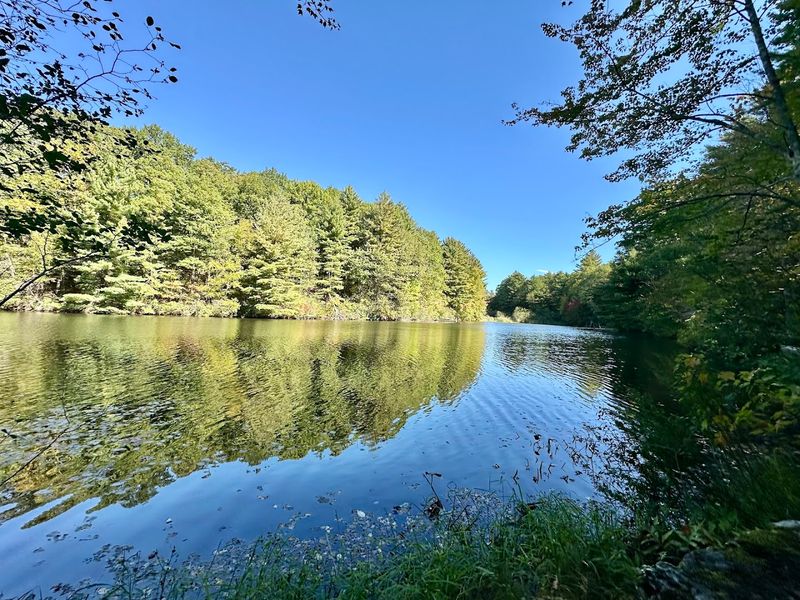
Case Pond adds a calm water stop within the trail network and brings a quieter, more reflective feel to the overall hike. The water reflects the surrounding trees and tends to feel like a natural resting point during a longer hike.
Ducks are often spotted on the surface, and the area near the pond has a softer, quieter atmosphere compared to the rocky upper trails.
The ground near the pond can be muddy in spots, particularly after rain, so waterproof footwear is worth considering if the weather has been wet recently. Walking along the outer edges of the muddier sections tends to be the most practical approach for keeping the hike comfortable.
Despite the occasional soft ground, the pond area is generally accessible and easy to navigate.
A historic log cabin sits within the Case Mountain property and adds a layer of character to the landscape that feels worth noticing. The cabin has been undergoing repairs and may not be open to enter, but its presence along the trail gives the area a sense of history that goes beyond a typical suburban park.
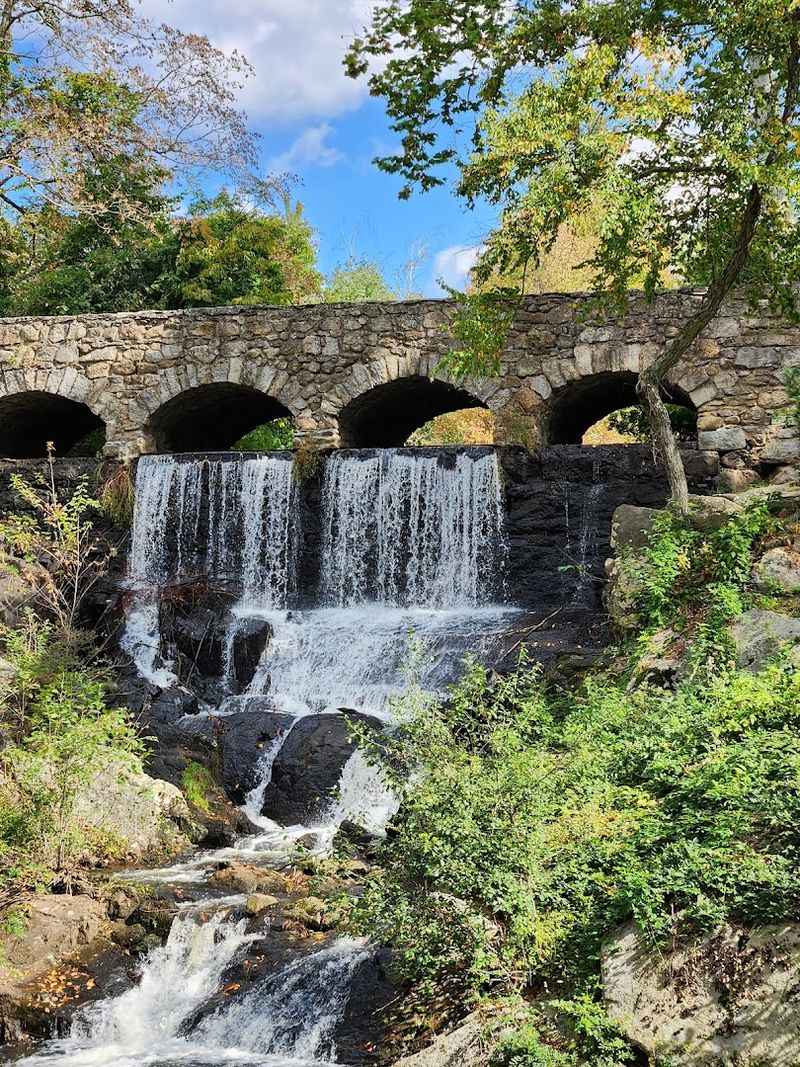
A stone arch bridge near the trailhead also draws attention from visitors and provides a scenic starting point for the hike before the trail climbs toward the summit.
6. A Trail Network Made For Different Skill Levels
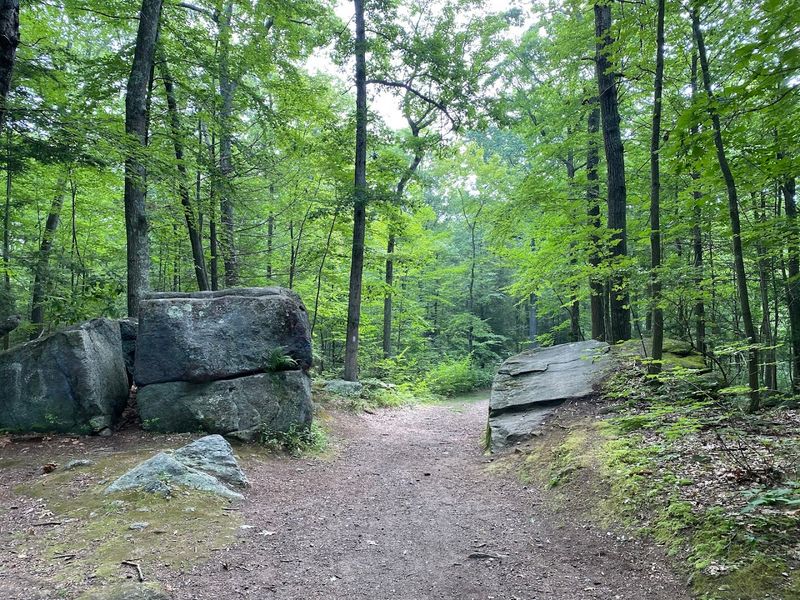
Case Mountain offers a trail system that can accommodate a wide range of hikers without feeling overwhelming or overly simple. The white-blazed Carriage Path is one of the most commonly used routes and can be a reliable choice for first-time visitors.
It is mostly well-marked and provides a clear path to the summit and back with a manageable level of effort.
Beyond the white trail, additional routes branch off through the woods and vary in technical difficulty. Some of these paths are better suited for mountain bikers or more experienced hikers who are comfortable with uneven terrain and less predictable footing.
The trail network as a whole covers enough ground to make an extended outing possible for those who want more than a quick loop.
Trail markings can occasionally be confusing in areas where multiple paths intersect, so carrying a phone with a maps application or downloading the trail map beforehand is a practical step. The terrain near certain junctions may look similar from multiple angles, and a few hikers have noted that it is possible to take an unintended detour without realizing it right away.
Approaching the trail network with a loose plan rather than a rigid route tends to make the experience feel more enjoyable and less stressful.
7. When To Go For Sunset Or Fall Color
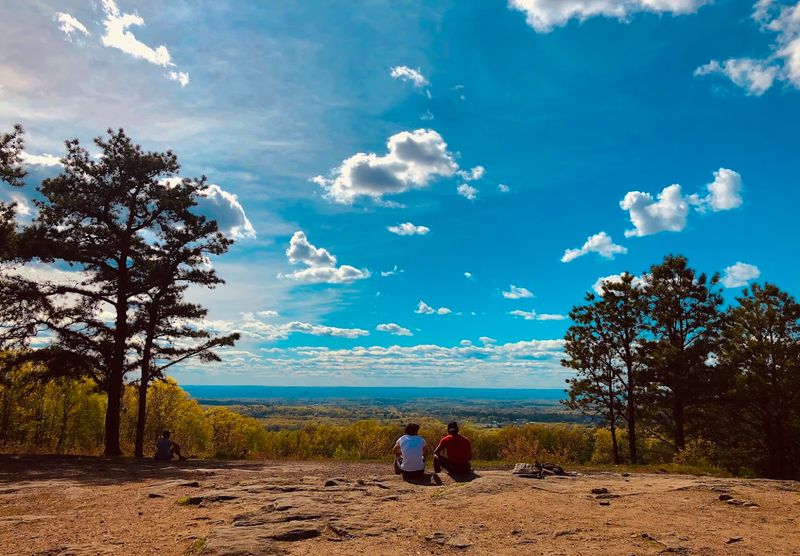
Timing a visit to Case Mountain can make a noticeable difference in the overall experience. Sunset hikes can be especially rewarding when conditions are clear, with the summit offering broad views as the light shifts across the landscape.
Arriving at the trailhead about an hour before sunset gives enough time to reach the top comfortably without rushing.
Fall is widely considered one of the most rewarding seasons to visit. The foliage across the trail network turns in shades of gold, orange, and deep red that transform the forest into something genuinely striking.
The air tends to be cooler and crisper during autumn, which makes the uphill sections feel more manageable and the time at the summit more comfortable.
Summer mornings offer a different but equally appealing experience, with quieter trails and softer light filtering through the full canopy. Weekday visits tend to draw smaller crowds than weekend outings, which can make a real difference in how peaceful the summit feels.
Case Mountain can be visited throughout the year, but hikers should check current town rules before planning an early-morning or after-dark outing. Checking the forecast for clear skies remains the most reliable way to ensure the best possible view from the top.
8. Where To Start Your Case Mountain Hike
Getting started at Case Mountain is straightforward once the main parking area is located. The park entrance sits at 640 Spring St, Manchester, CT 06040, and the lot provides a reasonable amount of space though it can fill up on busy weekend mornings.
A one-way bridge near the entrance is worth noting since it requires a bit of attention when navigating by car.
From the lower parking area, the trailhead begins near a waterfall that many hikers describe as a memorable way to start the experience. The sound of moving water and the stone arch bridge nearby set a tone that feels more adventurous than the suburban surroundings might suggest.
Trail markers are visible from the beginning and help orient first-time visitors before the path climbs upward.
Visitors should not count on restroom facilities at the trailhead, so planning accordingly before arriving is a practical consideration. The park is open every day of the week with no posted closing time, which gives hikers flexibility in scheduling a visit around weather, light, and personal preference. Reaching the trailhead from the highway takes only a minute or two, making Case Mountain one of the more accessible natural spaces in the Manchester area for anyone looking to spend time outdoors without a long commute.