There Are 7 Idaho Bridges With Views Worth Pulling Over For
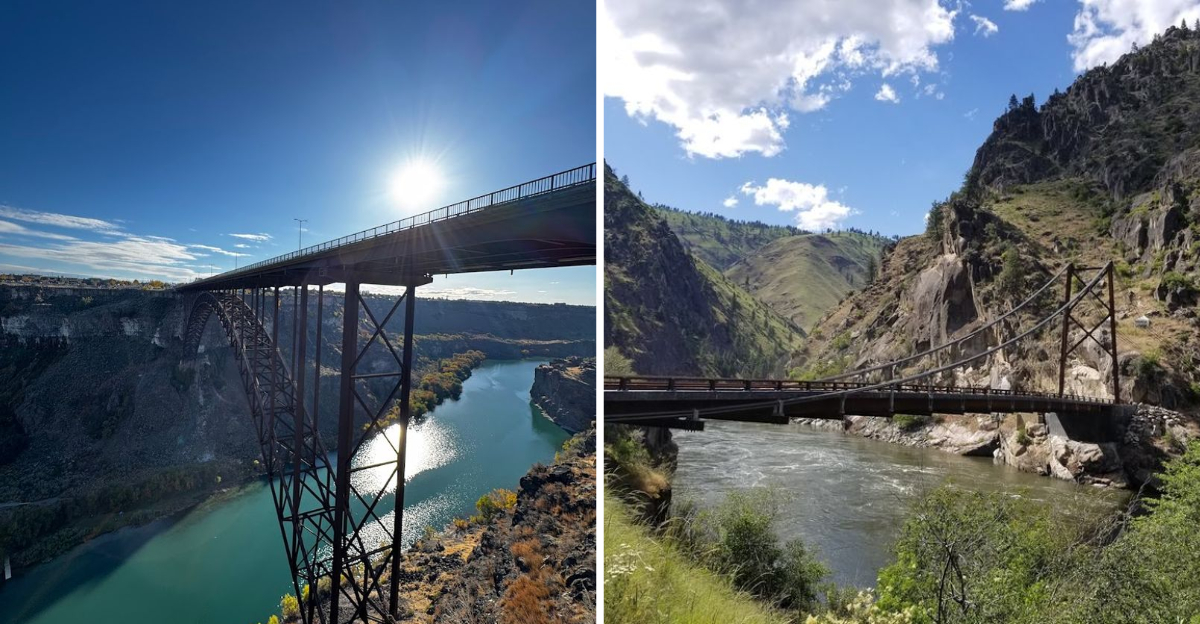
Some of the most unforgettable views in Idaho appear when you least expect them.
One moment you’re focused on the road ahead. The next, you’re slowing down because the scenery beyond the guardrail is impossible to ignore.
I’ve had that happen more times than I can count across this state.
A quick glance out the window turns into a long stop, a few photos, and a memory that sticks around long after the trip ends.
What surprised me most is that some of Idaho’s best views aren’t found at famous overlooks or major attractions.
They’re hiding above deep canyons, wide rivers, sparkling lakes, and valleys that seem to stretch forever.
This state knows how to leave an impression, and sometimes the perfect vantage point is right beneath your tires.
1. Shoup Bridge, Salmon
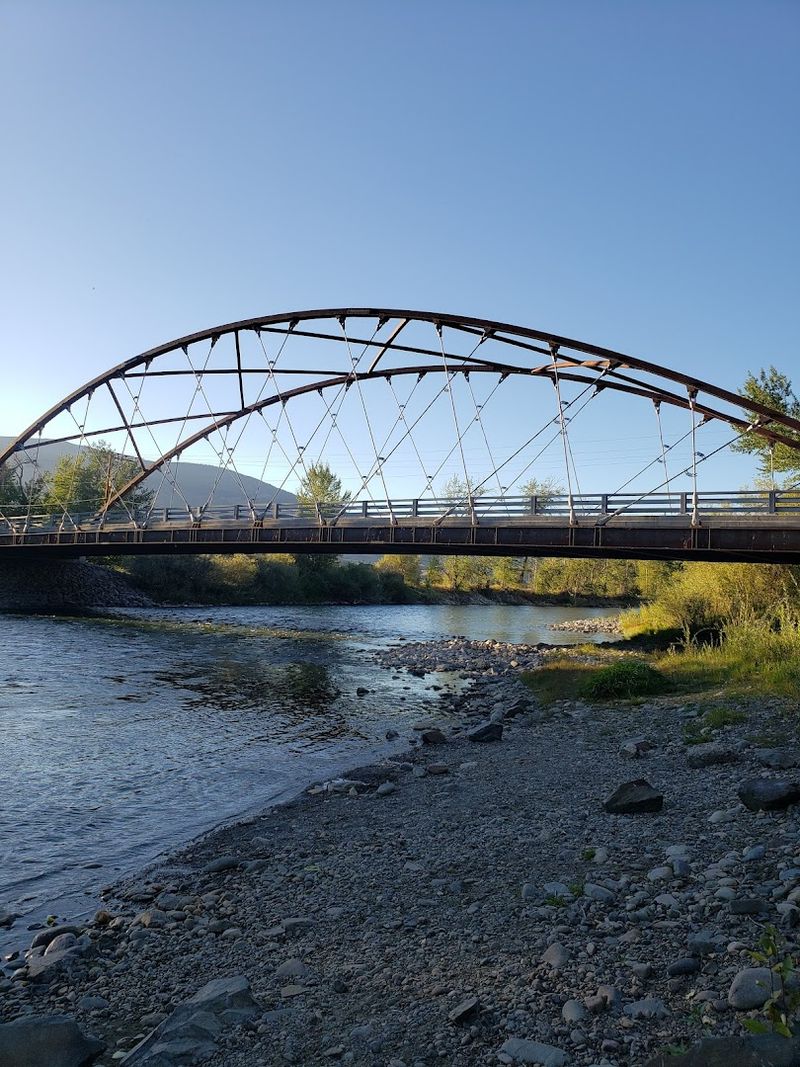
Would you ever think that one of the rarest bridge designs in Idaho would be tucked quietly along the Salmon River south of a small mountain town?
The Shoup Bridge near Salmon is a tied-arch span, one of only a couple of that structural type in the entire state, and it’s worth seeking out for both its engineering and its setting.
A tied-arch bridge is distinctive because the arch and the deck are connected by vertical hangers, and the horizontal thrust of the arch is absorbed by the deck itself rather than by the ground.
That design gives it a clean, almost sculptural appearance. The arch rises above the bridge deck in a graceful curve that frames the river view perfectly.
The Salmon River here is clear, cold, and fast-moving, fed by the upper Salmon basin and the Sawtooth high country upstream.
The mountains visible from the bridge are part of the Salmon River Mountains, a rugged and largely roadless range that defines central Idaho’s wild character.
Salmon is a small town with a big outdoors reputation. Rafting, fishing, and backcountry hunting all draw people here, but the Shoup Bridge is the kind of quiet find that rewards the curious traveler who slows down and looks around.
The river sound from the bridge is constant and calming. The arch catches afternoon light beautifully.
Few people make a specific trip here, which means you’ll likely have this remarkable river view entirely to yourself.
Who wouldn’t want to trade the busy highway for a hidden architectural gem and a peaceful corner of the Salmon River all to themselves?
2. Dent Bridge, Orofino
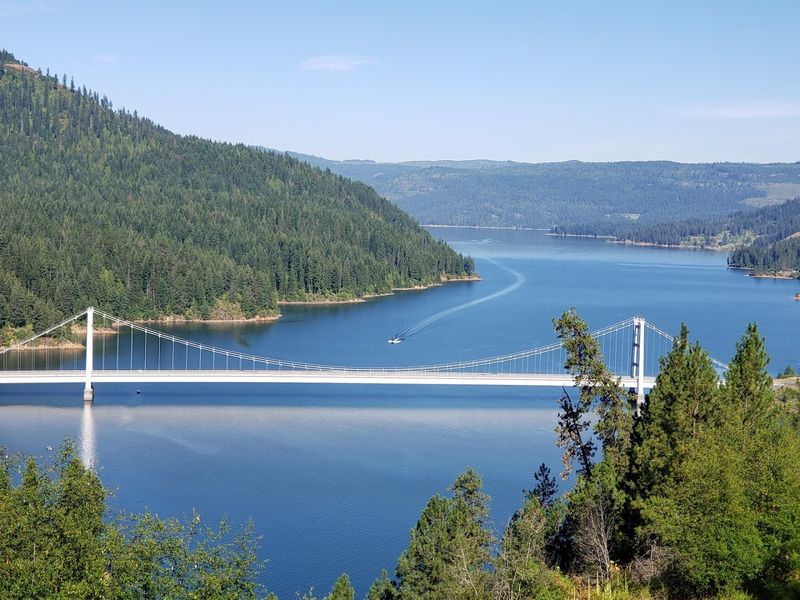
I never would’ve guessed that a reservoir bridge in north-central Idaho could deliver this kind of visual drama.
Dent Bridge near Orofino proved me completely wrong. Built in 1971, this suspension bridge crosses Dworshak Reservoir with a main span of 1,050 feet, making it one of the most impressive crossings in the entire state.
Dworshak Reservoir is massive. It stretches for miles into the forested hills of Clearwater County, and from the bridge deck you get a panoramic sweep of that water in both directions.
The scale of the reservoir is hard to fully grasp until you’re standing above it.
The bridge’s profile is striking from any angle. The suspension towers rise cleanly above the deck, and the cables curve in that satisfying geometric arc that only suspension bridges can pull off.
Early morning light hits the water and cables in a way that makes the whole scene feel almost cinematic.
Getting there takes a bit of a drive north of Orofino, but that journey through the Clearwater Valley is worth it on its own.
The winding route snakes through dense timberlands, dropping clues of the isolation that waits at the final destination. The surrounding terrain is rugged and forested, with wildlife sightings fairly common along the road.
Osprey and bald eagles patrol the reservoir regularly. Once you’re on the bridge, the combination of open water, mountain ridgelines, and suspension engineering creates a view that’s hard to leave behind.
This one earns its pullover without any argument.
It proves that sometimes the most spectacular destinations are found where engineering perfectly complements the wild spirit of nature.
3. Hansen Bridge, Hansen
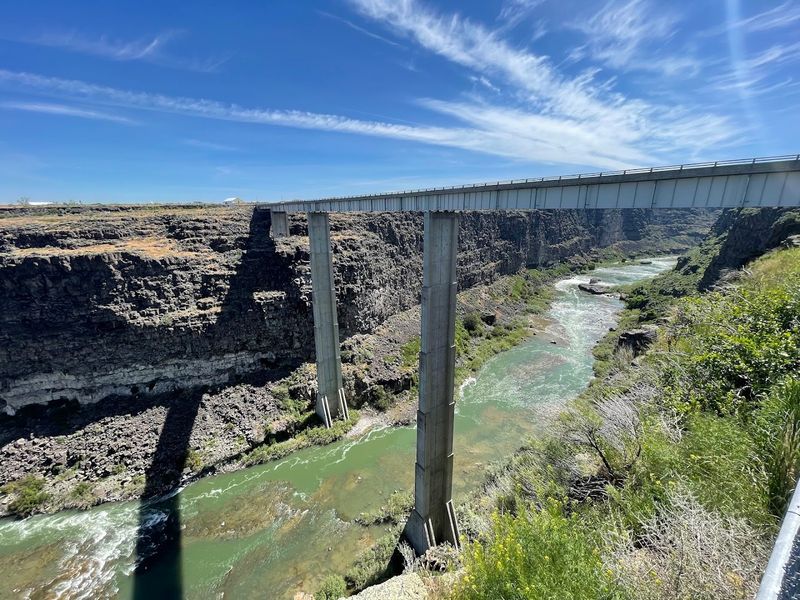
Can you believe that a bridge just north of the small town of Hansen gives you a canyon view nearly as jaw-dropping as anything you’d find at a national park?
The Hansen Bridge carries State Highway 50 about 350 feet above the Snake River Canyon, and that elevation makes every glance over the railing feel slightly daring.
Built in 1966, this concrete deck-girder bridge isn’t flashy in terms of engineering style. What it lacks in architectural drama, though, it more than compensates for with location.
The Snake River Canyon here is wide, rugged, and deeply carved into the southern Idaho landscape.
The river far below catches sunlight differently depending on the time of day. Morning light turns the water golden.
Midday brings out the sharp contrast between the dark basalt walls and the bright ribbon of water. Late afternoon casts long shadows across the canyon floor that make the depth look even more extreme.
The area around Hansen is agricultural and quiet, which means this bridge doesn’t draw the crowds that the more famous I.B. Perrine Bridge does just a few miles away. That’s actually a point in its favor.
You can stand at the railing here in relative peace and really absorb the view.
Instead of fighting tour buses or maneuvering through heavy foot traffic, you are left alone with the rhythmic sound of the wind sweeping through the chasm.
The canyon stretches east and west with no buildings in sight, just basalt, sagebrush, and the river.
For a bridge that most people pass without slowing down, it absolutely deserves a proper stop. It rewards those who pause with an authentic, unfiltered look at the immense scale of Idaho’s canyon country.
4. Interstate Bridge (Blue Bridge), Lewiston
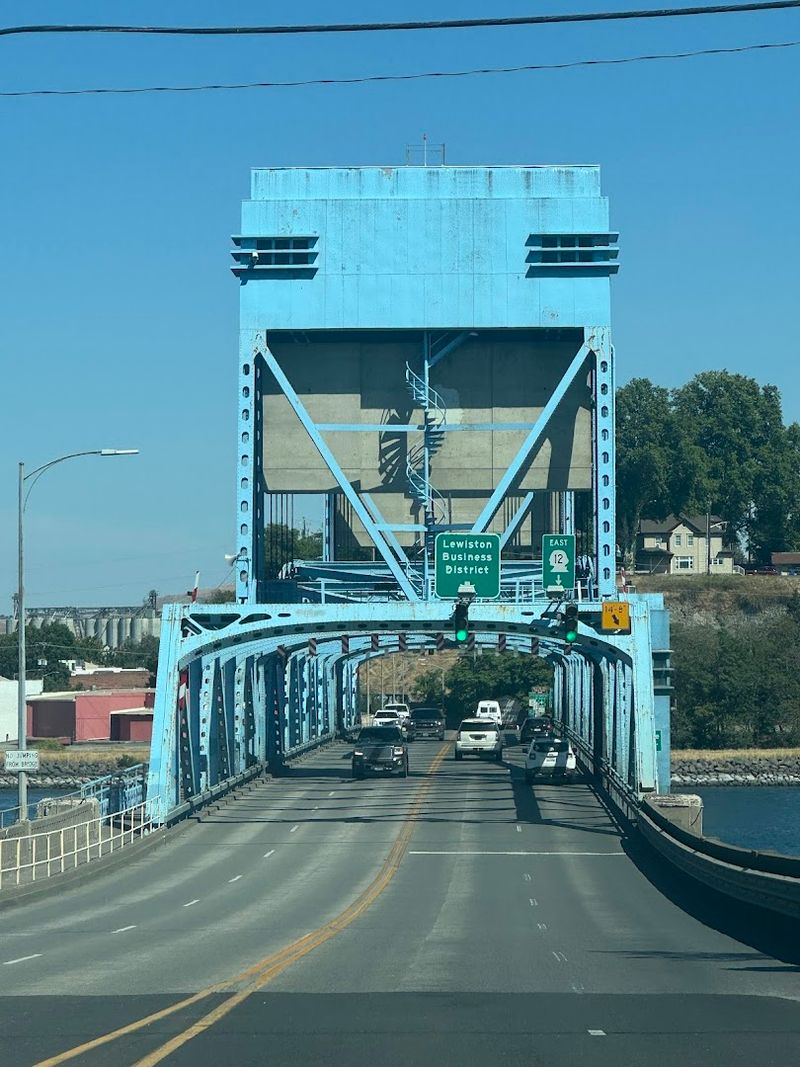
Trust me, there aren’t many bridges in the Pacific Northwest where you can stand above the confluence of two major rivers and look into two states at once.
The Interstate Bridge in Lewiston commonly known as the Blue Bridge, connects Lewiston with Clarkston, Washington, spanning the Snake River right where it meets the Clearwater.
The blue paint job is iconic in this region. Local residents have known this bridge for decades as a regional landmark.
The color stands out sharply against the tawny canyon walls and the blue-green river water below, making it immediately recognizable from miles away.
The confluence visible from this bridge is historically significant. Lewis and Clark passed through this exact stretch of river during their expedition to the Pacific, and the rivers here have been a crossroads of trade and travel for centuries before that.
Standing on the bridge and looking at the joining of those two waterways connects you to a long chain of human movement through this landscape.
Lewiston is Idaho’s lowest elevation city, sitting at just around 738 feet above sea level. That mild climate means the area is green and accessible year-round.
The bridge offers a clear view downstream into Hells Canyon country, where the Snake River begins its deepest and most dramatic cut through the continent.
Crossing the Blue Bridge at golden hour, when the canyon walls go warm and the rivers turn copper, is one of those scenes that stays with you long after you’ve driven on.
5. Kootenai River Bridge, Bonners Ferry
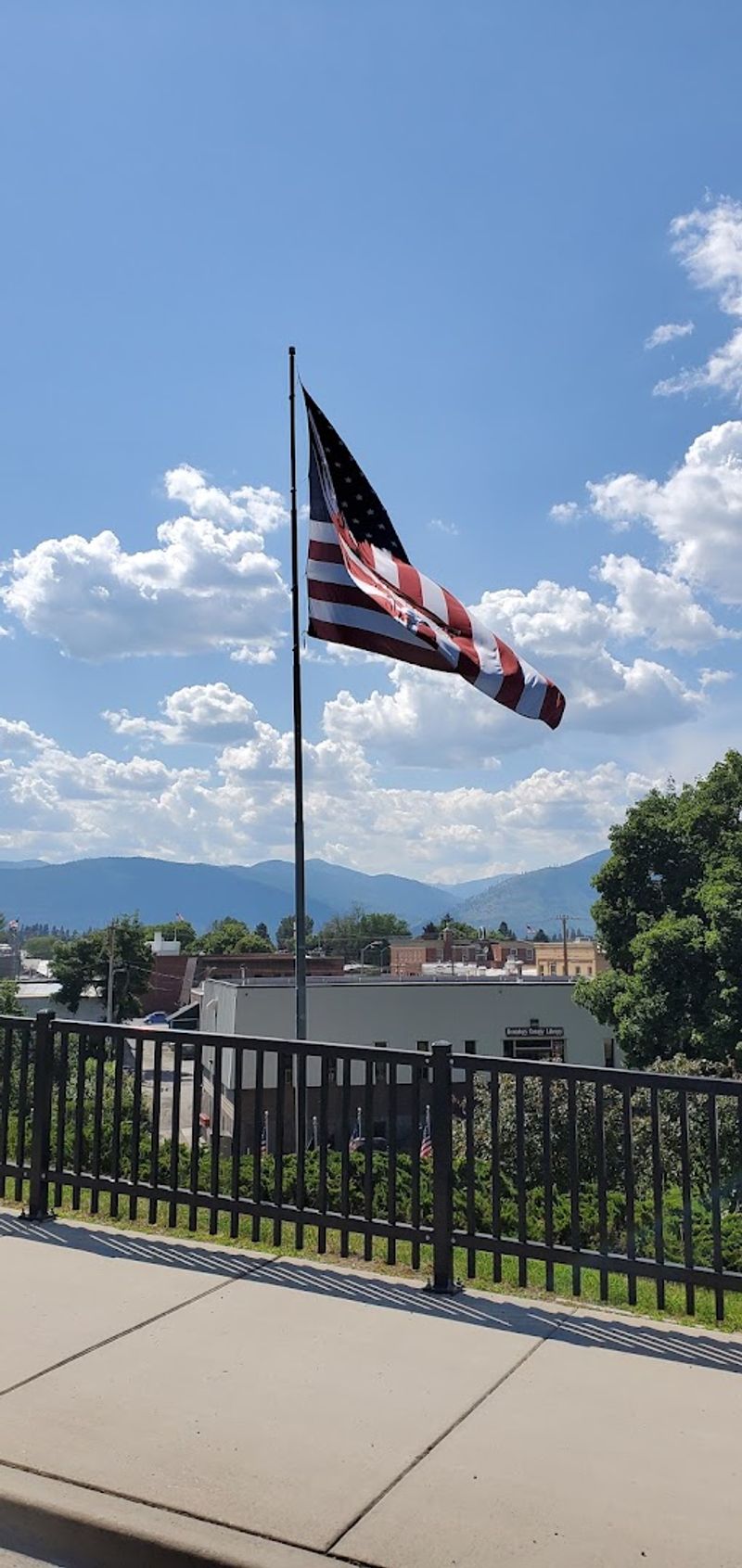
Doesn’t it seem almost too peaceful to be real, a highway bridge set in a forested valley in the far northern tip of Idaho, with a river that moves slow and wide beneath it?
The Kootenai River Bridge near Bonners Ferry carries US-2 across the Kootenai River, and the surrounding landscape is some of the most serene in the entire state.
Bonners Ferry sits in the Idaho Panhandle, tucked between the Selkirk Mountains to the west and the Purcell Mountains to the east.
The Kootenai River meanders through this broad valley floor in wide, sweeping curves. From the bridge, you can see how the river interacts with the floodplain, spreading into wetlands and side channels that support enormous amounts of wildlife.
Great blue herons are practically residents here. Bald eagles, white-tailed deer, and even the occasional moose make appearances in the valley below the bridge.
The Kootenai National Wildlife Refuge is just a short drive away, adding to the ecological richness of the whole area.
The bridge itself is straightforward in design, a utilitarian US highway crossing that does its job efficiently. But the setting does all the heavy lifting scenically.
The forested ridgelines rise on both sides of the valley, and on clear days the valley to the north points toward the Canadian border, roughly 25 miles downstream.
Crossing this bridge on a quiet weekday morning, with mist in the valley and herons in the shallows, feels like a genuine privilege.
6. Manning Crevice Bridge, Riggins
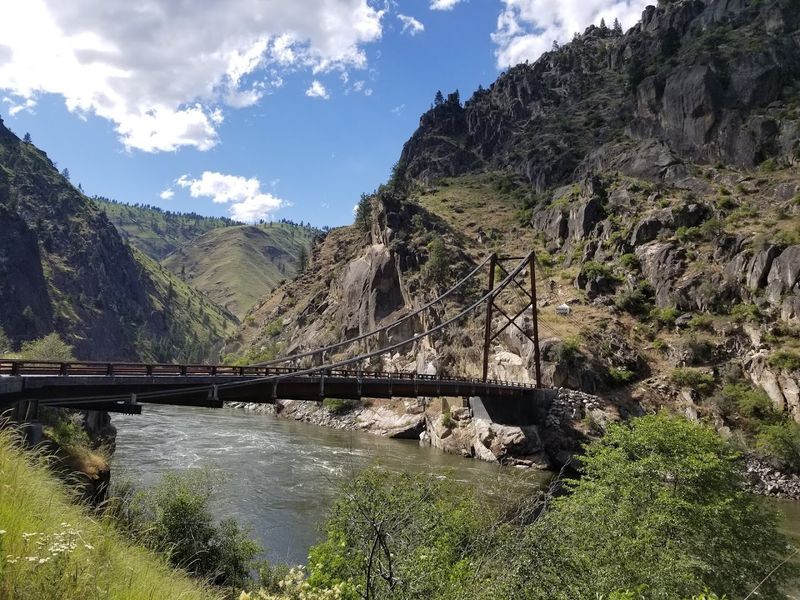
Believe me, finding a single-tower suspension bridge tucked into a V-shaped canyon about 14 miles upstream from Riggins was not something I had on my radar before this trip.
The Manning Crevice Bridge crosses the Salmon River in one of the most dramatically narrow canyon sections in the entire state.
The canyon walls here are steep and close. The river runs fast and green below, squeezed between rock faces that rise sharply on both sides.
Getting to Manning Crevice Bridge requires driving a forest road along the Salmon River, which is an adventure in itself. The corridor is remote, rugged, and largely undeveloped, which means wildlife encounters are genuinely common.
River otters, deer, and various raptors have all made appearances along this stretch. The unpaved track commands your full attention as it hugs the water’s edge, building a sense of anticipation with every sharp curve.
Once you reach the bridge and step out to look upstream and downstream through that tight canyon, the scenery hits hard and fast.
It’s the sort of view that makes you forget whatever was on your to-do list for the day.
The bridge acts as a front-row seat to the raw power of the Salmon River, suspended in mid-air over a landscape shaped entirely by water and stone.
Standing over the rushing current, you feel fully disconnected from the busy world and completely tuned into the wild beauty of the backcountry.
It is a powerful example of how a hidden detour can easily become the most unforgettable highlight of an entire journey.
Are you ready to leave the highway behind and discover what is waiting for you at the end of the dirt road?
7. I.B. Perrine Bridge, Twin Falls
Have you ever stood on a structure so massive that it completely reshaped your perspective on an entire state?
You might not believe me when I say a bridge changed the way I think about Idaho, but this one did.
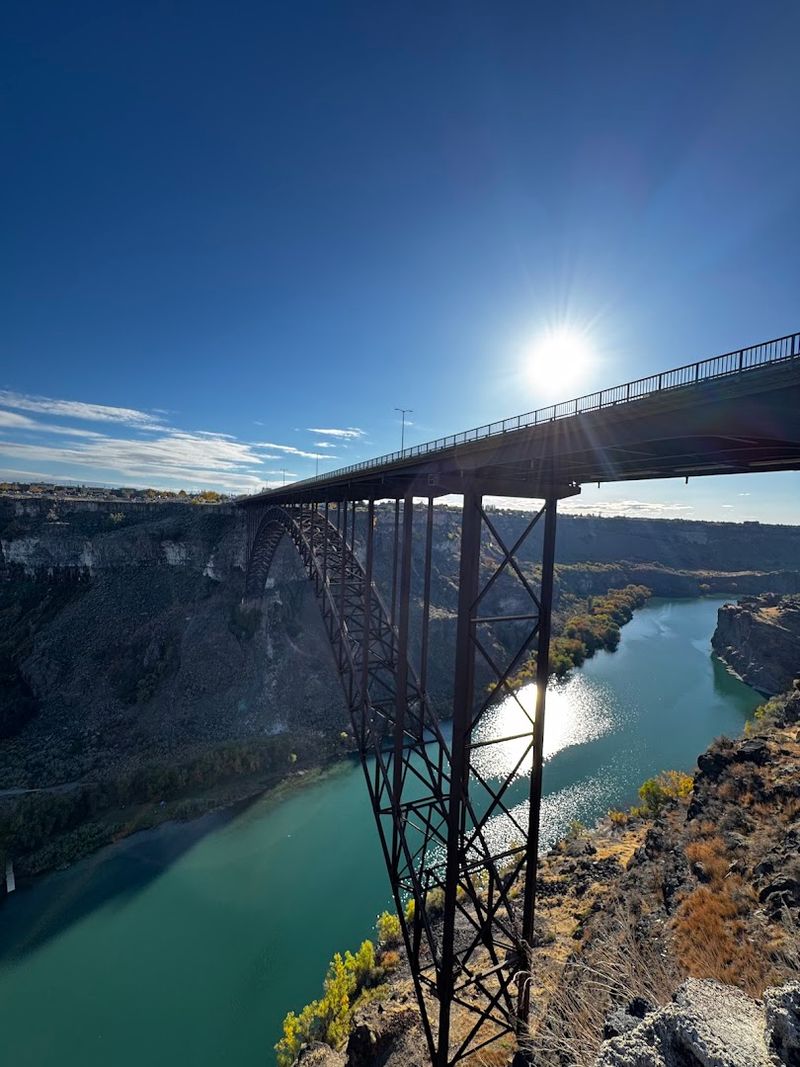
Standing at the edge of the I.B. Perrine Bridge in Twin Falls looking straight down into the Snake River Canyon is a moment that rewires your brain.
The bridge stretches 1,500 feet across the canyon. It sits 486 feet above the river, which is taller than most skyscrapers you’ve seen.
Opened in 1976, this four-lane US-93 truss-arch span replaced an older structure that simply couldn’t keep up with the region’s growth.
What makes this crossing so unforgettable is the raw scale of it. The canyon walls drop away sharply on both sides.
The Snake River looks like a thin ribbon of silver far below. On clear days, the contrast between the desert rim and the blue water is almost unreal.
This bridge is also Idaho’s legal BASE-jumping site, meaning on any given day you might watch someone leap from the railing with a parachute. That fact alone makes it unlike any other bridge in the state.
Pedestrian walkways run along both sides, so you can take your time without worrying about traffic. The nearby Visitor Center has good overlook spots too.
Pull over, breathe deeply, and look down into one of Idaho’s most dramatic natural features right from the middle of a public road.
It is a striking reminder that sometimes the most unforgettable views are the ones hiding in plain sight along the highway.