These 10 Georgia Road Trip Stops Feel So Magical They Barely Seem Real
Georgia has a way of hiding its best kept secrets along roads most people treat as shortcuts. These stops are proof of that.
Each one made this list because it produces a specific feeling, the kind where you pause and question how a place this special even exists.
Waterfalls that seem borrowed from another landscape entirely. Overlooks so wide the sky feels completely rearranged.
Small towns with one extraordinary thing that changes the whole drive. None of them require advance planning or expensive tickets.
They just require curiosity and a willingness to turn off the highway. Georgia truly rewards that decision better than almost anywhere.
1. Atlanta Botanical Garden
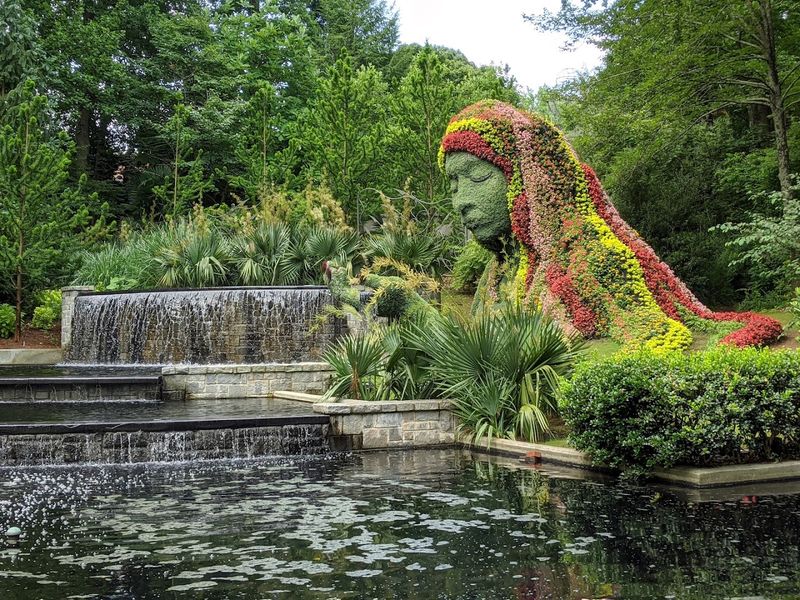
Would you believe me if I told you that not many places in the entire Southeast pack this much natural drama into a single city block? The Atlanta Botanical Garden sits right on the edge of Piedmont Park in Atlanta.
A visit to the Fuqua Orchid Center feels like being transported to a rainforest. Hundreds of rare orchid species bloom in carefully controlled humidity that makes the air feel thick and warm.
The Canopy Walk is one of the most thrilling features here. It stretches 600 feet through the forest canopy, putting you eye-level with the treetops in a way that changes your whole perspective.
Spring and early summer bring the most dramatic blooms across the outdoor gardens. The rose garden and edible garden sections are especially rewarding during those warmer months.
Families with kids will love the Children’s Garden, which has splash pads and interactive planting stations. It is hands-on learning wrapped inside a truly gorgeous outdoor setting.
Arriving early on weekends helps you beat the crowds and enjoy the quieter, more peaceful atmosphere this extraordinary urban garden at 1345 Piedmont Ave NE truly deserves.
2. Gibbs Gardens
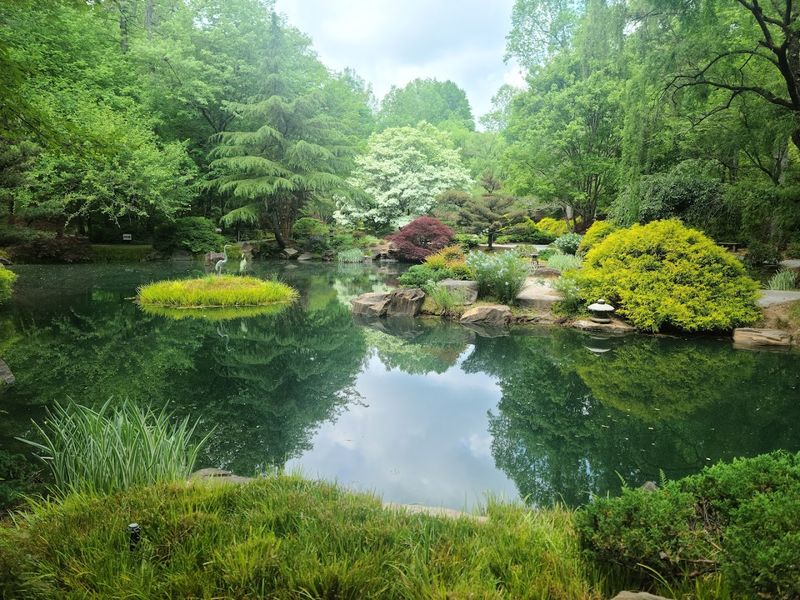
Somewhere between a dream and a postcard, this garden sits quietly in the foothills of the North Georgia mountains.
Gibbs Gardens in Ball Ground covers around 300 acres of breathtaking cultivated landscape. The timing is everything here, and mid-March is usually the sweet spot.
The Japanese gardens are arguably the crown jewel of the entire property. Koi ponds, stone lanterns, and perfectly manicured shrubs create a scene of almost unreal tranquility.
Fall foliage season is another magical window to plan your trip around. The tree canopy transforms into deep reds and burnt oranges, reflecting beautifully in the still garden ponds.
Gibbs Gardens is privately owned and admission is ticketed, so booking ahead online is strongly recommended.
Weekdays are noticeably quieter than weekends, giving you more space to wander at your own pace at 1987 Gibbs Dr. Bring comfortable walking shoes because the terrain involves gentle hills and long pathways.
3. Cloudland Canyon State Park
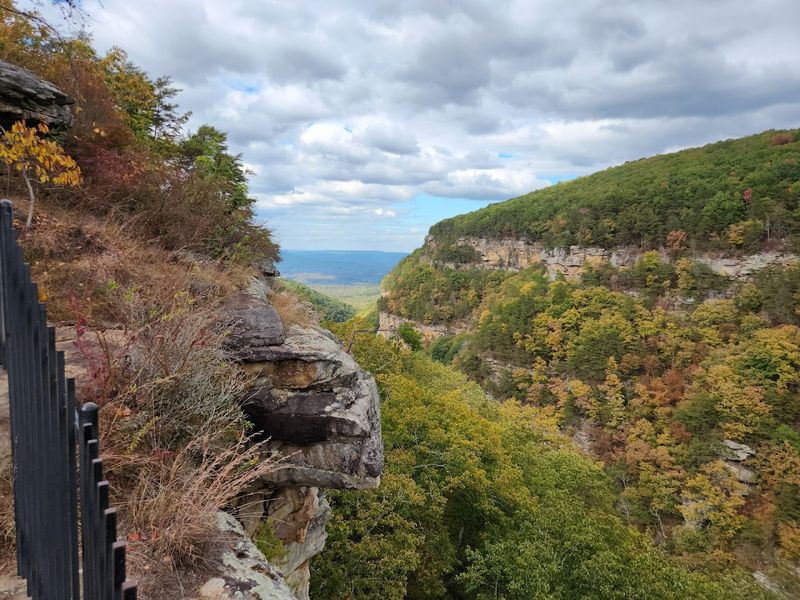
Standing at the rim of this canyon for the first time genuinely takes your breath away before you even start hiking. Cloudland Canyon State Park is in Rising Fawn on the western edge of Lookout Mountain.
The canyon drops nearly 1,000 feet, revealing layer after layer of ancient sandstone and shale. Two stunning waterfalls wait at the bottom of a steep staircase trail that challenges even experienced hikers.
The West Rim Loop Trail is the most popular route and offers jaw-dropping overlook views at multiple points. It stretches about 5 miles and takes most hikers between two and three hours to complete.
Camping inside the park at 122 Cloudland Canyon Park Rd is a fantastic option for those who want to experience the canyon at dawn. The morning light hitting the canyon walls creates colors that no camera can fully capture.
Fall is widely considered the best season to visit, when foliage turns the canyon rim into a sea of color. Summer brings lush greenery and flowing waterfalls, especially after heavy rain.
The park has well-maintained facilities including restrooms, picnic shelters, and a playground. Planning to arrive early on weekends will save you from parking headaches at this incredibly popular North Georgia treasure.
4. Providence Canyon State Park
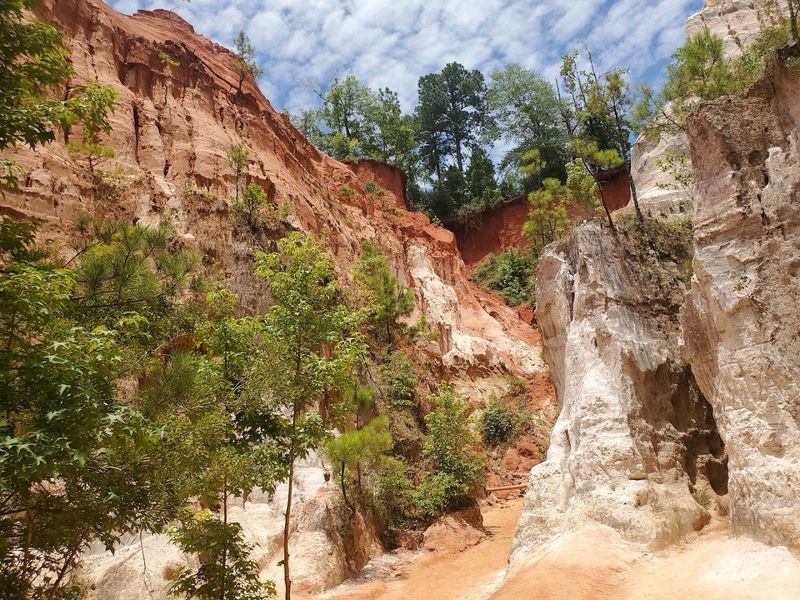
Most people do not expect to find canyon country in southwest Georgia, which is exactly what makes this stop so wonderfully disorienting. Providence Canyon State Park in Lumpkin is nicknamed the Little Grand Canyon, and the comparison feels earned.
The canyon walls display an almost surreal range of colors, from creamy white to deep burgundy and soft lavender. These vivid hues come from different mineral compositions in the soil layers exposed over centuries of erosion.
Here is the twist: this entire canyon was created by soil erosion from poor farming practices in the 1800s. What started as a gully is now a 150-foot-deep geological wonder that draws visitors from across the country.
The 3-mile loop trail takes hikers down into the canyon floor, where the walls tower overhead in every direction. Hiking inside the canyon rather than just at the rim is a completely different and far more immersive experience.
Late afternoon light is the best time to photograph the canyon walls. The warm golden tones make the already colorful soil look even more dramatic and painterly.
The park at 8930 Canyon Rd is open year-round, and admission is affordable. Wildflowers bloom along the canyon floor in late spring, adding soft pops of color to an already vivid natural canvas that surprises nearly every first-time visitor.
5. Helton Creek Falls
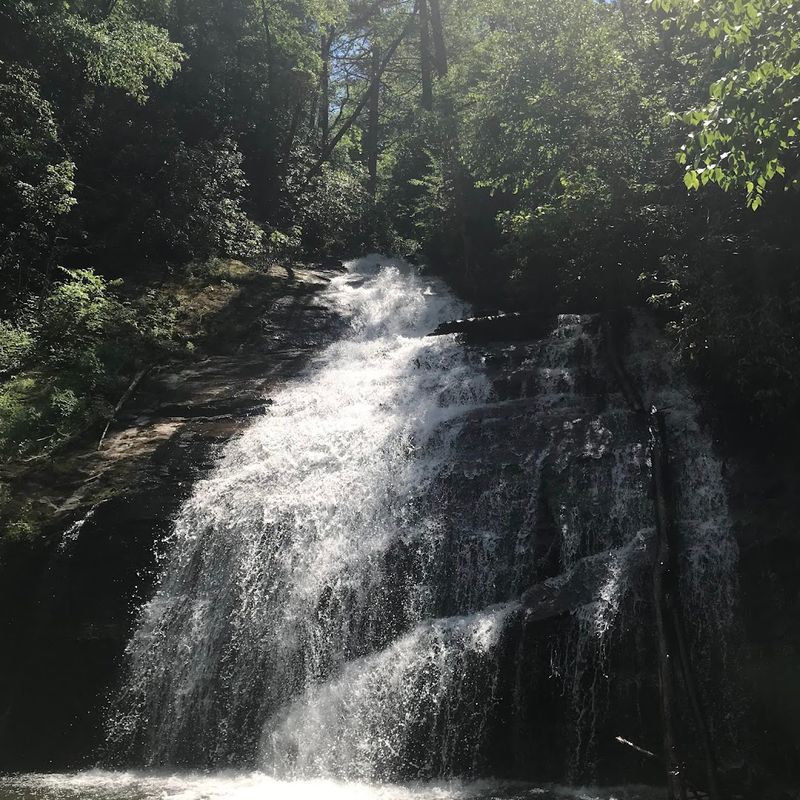
Some waterfalls demand a grueling hike to earn the view, but this one practically meets you halfway down the trail. Helton Creek Falls is located off Helton Creek Rd near Blairsville, in the heart of the Blue Ridge Mountains.
The falls actually come in two tiers, and most hikers agree the upper falls is the showstopper. It drops about 50 feet over a smooth granite face into a crystal-clear pool that practically begs you to sit beside it.
The trail to the lower falls is short and easy, making it accessible for families with young children. Reaching the upper falls requires a bit more effort, but the path is well-marked and manageable for most fitness levels.
Rhododendrons line much of the trail and bloom spectacularly in late spring, usually around May and June. The combination of white blossoms and roaring water creates one of the most photogenic scenes in all of North Georgia.
The water is shockingly cold even in summer, which actually makes it incredibly refreshing on a hot hiking day. Many people wade in the lower pool after the hike, making this a natural reward at the end of the trail.
6. Raven Cliffs Trailhead
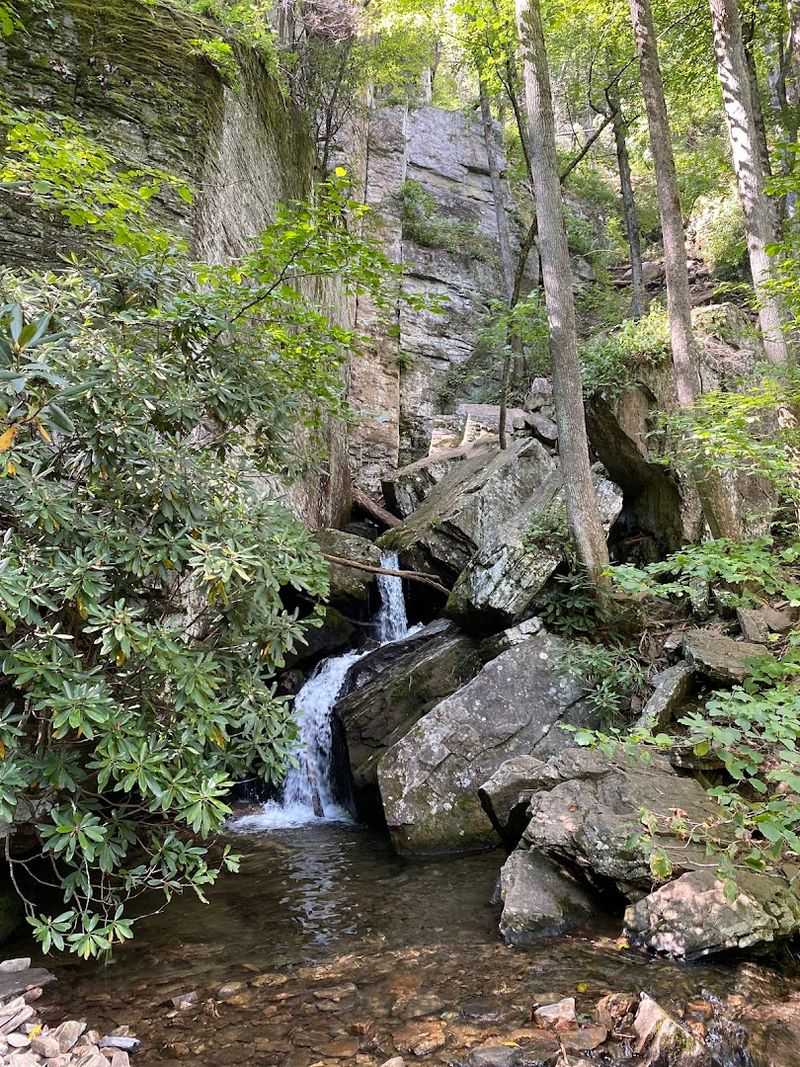
There is something almost mythical about following a stream deep into a gorge where the cliffs seem to close in around you with every step.
The trail follows Dodd Creek for most of its 5-mile round trip, crossing the stream multiple times on stepping stones and small log bridges. Each crossing adds a little adventure to an already enchanting hike.
The final destination is a dramatic cliffside where a waterfall pours through a narrow crack in the rock face. The effect is genuinely unlike anything else in the Georgia mountains, and it rewards hikers who push through to the end.
The trail itself is rated moderate, with some rocky and rooted sections that require careful footing. Waterproof shoes or trail boots are highly recommended, especially after recent rainfall when the creek crossings get slippery.
Spring is arguably the best season to tackle this trail. Wildflowers carpet the forest floor, the creek runs strong, and the cool temperatures make the uphill sections far more enjoyable.
Raven Cliffs Trailhead starts at 3000 Richard B Russell Scenic Hwy near Cleveland, in the Blue Ridge Mountains of northeastern Georgia.
7. Best Scenic Overlook #2
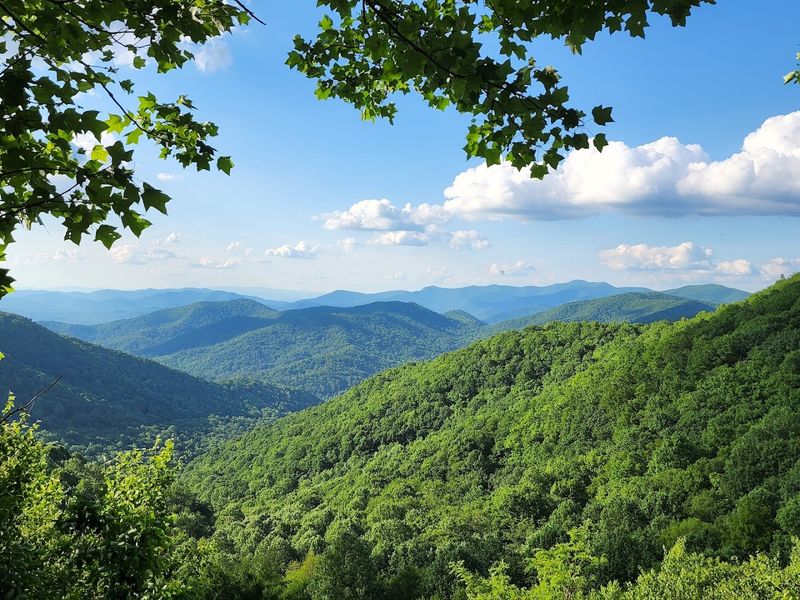
Not every great road trip moment happens at a trailhead or a garden. Sometimes the most memorable stop is simply pulling over and staring at a view that makes your jaw drop completely.
Best Scenic Overlook #2 is at 6931-6529 Russell Scenic Hwy near Cleveland, along one of the most celebrated mountain drives in the entire state.
The Richard B Russell Scenic Highway is a winding two-lane road that curves through the Blue Ridge Mountains with breathtaking results.
This particular overlook opens up a wide panoramic view across layered mountain ridges that seem to stretch endlessly toward the horizon. On clear days, the visibility reaches for miles, and the blue haze that settles over the distant peaks is almost hypnotic.
Sunset is the most popular time to stop here, and for very good reason. The light shifts from golden to deep orange and finally to purple in a way that makes even the most jaded travelers reach for their cameras.
Fall foliage season turns this overlook into something truly extraordinary. The entire mountain canvas below transforms into a patchwork of red, orange, and yellow that looks almost too vivid to be real.
There is no admission fee and no trail required. Just pull over, breathe the cool mountain air, and take a long moment to appreciate how spectacularly beautiful the North Georgia mountains truly are from this remarkable vantage point.
8. Coastal Georgia Botanical Gardens At The Historic Bamboo Farm
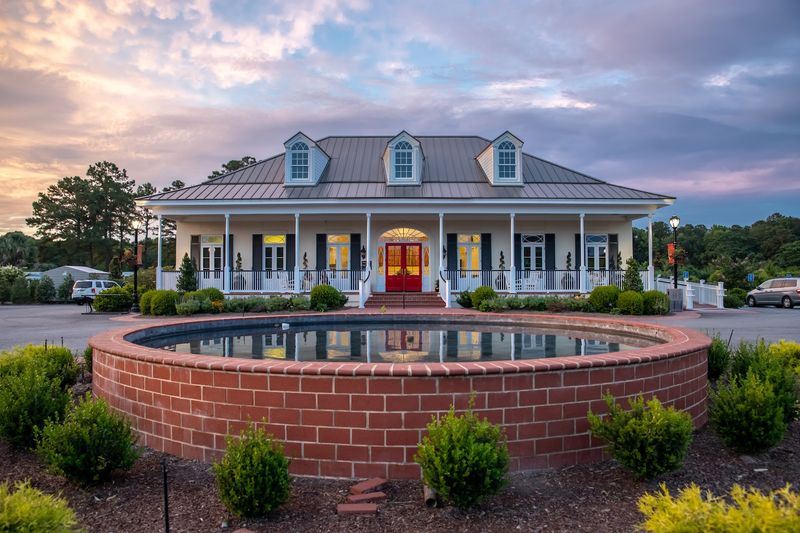
Imagine going through a tunnel of bamboo so tall and dense that it blocks out the Georgia sun entirely. That experience is waiting at the Coastal Georgia Botanical Gardens at the Historic Bamboo Farm in Savannah.
This fascinating property is managed by the University of Georgia Cooperative Extension and spans 18 acres of diverse plant collections.
The bamboo collection alone features dozens of species, some growing to extraordinary heights that make you feel genuinely small by comparison.
The history here runs deep. The farm dates back to the early 1900s when the U.S. Department of Agriculture used it to test bamboo as a potential commercial crop for the American South.
Beyond the bamboo groves, the gardens include a camellia collection, a Japanese garden area, and a beautiful live oak allee draped in Spanish moss. Each section of the property has its own distinct character and charm.
The gardens are open most days of the week, though checking hours ahead of the trip is always a good idea. Morning visits offer the best light for photography, especially inside the bamboo groves where filtered sunlight creates dramatic patterns on the ground.
This unique and historically rich garden at 2 Canebrake Rd is one of Savannah’s most underrated natural treasures.
9. Burnt Mountain Lookout
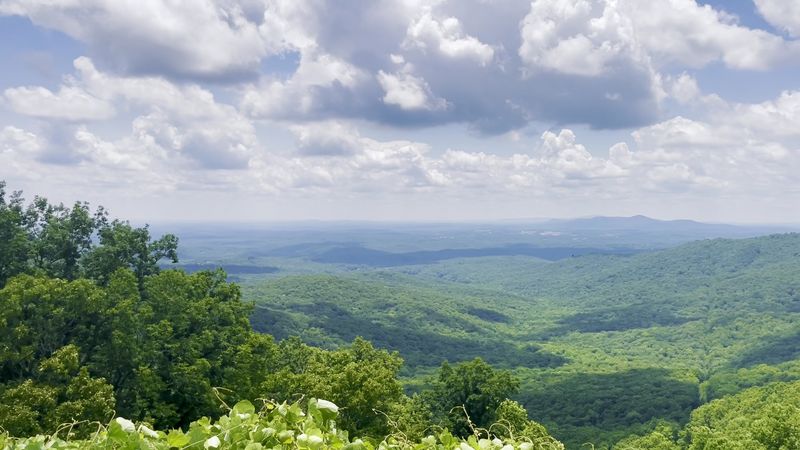
If you’re a fan of hiking like me, this destination will probably be one of your favorites.
A relatively short hike with a big payoff is exactly what Burnt Mountain Lookout delivers to anyone willing to make the drive to Jasper.
The trailhead is accessible from GA-136, and the summit is like a gift to the hikers with one of the most unobstructed views in all of Pickens County.
The trail to the top is roughly 2 miles round trip, making it an accessible option for hikers of varying experience levels. The final stretch does get steep, but the rocky summit views make every uphill step completely worth the effort.
From the top, the panorama stretches across rolling forested ridgelines in every direction. On exceptionally clear days, you can spot landmarks far into the distance, including the outline of the Appalachian foothills to the north.
The mountain earned its name from historical burning practices used to clear land in the region. Today the summit is open and grassy, which actually enhances the 360-degree view rather than limiting it.
Sunrise hikes are especially rewarding here during cooler months. Watching the morning light spill across the ridges below while you stand on that rocky summit is the kind of experience that makes road tripping through Georgia feel genuinely special.
Parking near the trailhead is limited but manageable on weekdays. Burnt Mountain is a quiet and underappreciated North Georgia summit that consistently surprises hikers who discover it for the first time.
10. Fall Branch Falls
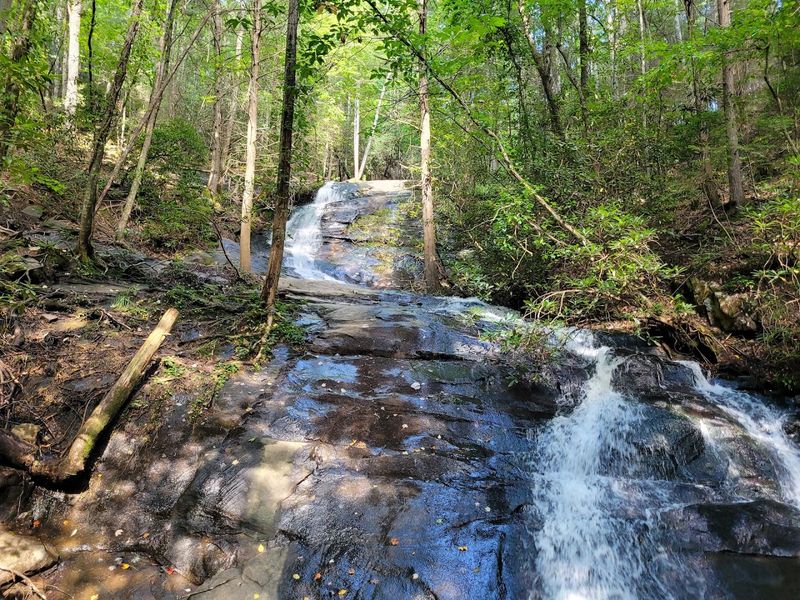
I’m so glad that I can recommend this destination that will round out your trip around Georgia perfectly.
Hidden along a quiet forest road in the Cohutta Wilderness area, this waterfall feels like it’s specifically designed for curious road trippers who refuse to stay on the main highway. Fall Branch Falls is located off Stanley Creek Rd near Cherry Log.
The falls drop in a series of cascades over layered rock shelves, creating a multi-stage effect that is especially dramatic after heavy rainfall. The surrounding forest stays lush and green through most of the year, framing the waterfall in dense natural beauty.
Getting here requires navigating a few miles of gravel road, which adds to the sense of adventure. A standard vehicle can usually manage the road in dry conditions, but checking recent weather before heading out is always smart.
The hike from the parking area to the falls is relatively short, around half a mile each way. That accessibility makes it a wonderful option for families or anyone who wants a rewarding nature experience without committing to a full-day hike.
Autumn is a particularly stunning time to visit, when the surrounding hardwood trees turn brilliant shades of orange and gold. The contrast between the colorful canopy and the white rushing water is genuinely striking.