These 11 Historic North Carolina Restaurants Still Serve Recipes Passed Down For Generations
Nobody keeps a recipe alive for 100 years because it is merely “pretty good.”
Across North Carolina, certain restaurants have spent decades serving the kinds of meals that inspire family arguments, road trips, and suspiciously strong opinions about barbecue sauce.
Their dining rooms may have changed, but many of the dishes still follow traditions established generations ago.
History arrives on a plate here. Smoke drifts from old barbecue pits.
Biscuits disappear before the entrées land.
Regulars order without opening the menu, while newcomers quietly wonder why nobody told them about the place sooner.
These restaurants have survived changing trends, rising prices, and every strange food craze the internet could invent. They did it without turning dinner into a science experiment.
So what keeps people coming back after 50, 75, or even 100 years? The answer may be hiding in recipes that were never supposed to become legendary.
They simply refused to stop tasting good.
1. Jarrett House Dining Room
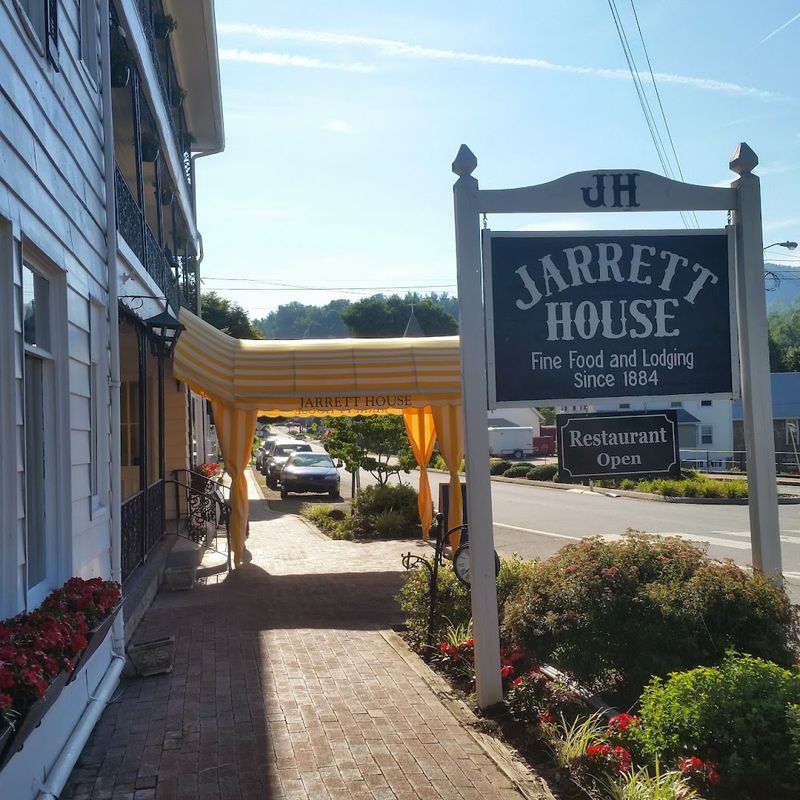
A major restoration has given this historic Dillsboro property a new chapter while preserving the family-style dining experience long associated with the Jarrett House. The building opened in 1884 as the Mount Beulah Hotel and later became one of western North Carolina’s best-known lodging and dining landmarks.
Today, its public materials emphasize Southern hospitality, shared meals, homemade desserts, and a restored setting that reflects the property’s nineteenth-century origins.
Fried chicken and ham remain strongly connected with the Jarrett House identity, appearing prominently in the restaurant’s dining imagery and descriptions.
Visitors should be careful with older articles, however, because the current property is listed at 518 Haywood Road, not 100 Haywood Road.
The renovated complex now includes accommodations, a historic dining room, courtyard spaces, a dessert café, and other gathering areas.
That broader operation makes the Jarrett House more than a preserved restaurant frozen in one period.
Its strongest historical connection comes from continuing the custom of bringing generous Southern food to shared tables inside a building that has welcomed travelers since the late nineteenth century.
Menus and service formats may evolve, so guests hoping for a particular country-ham plate, chicken-and-dumplings meal, or family-style selection should confirm current offerings before arriving.
2. Dan’l Boone Inn Restaurant
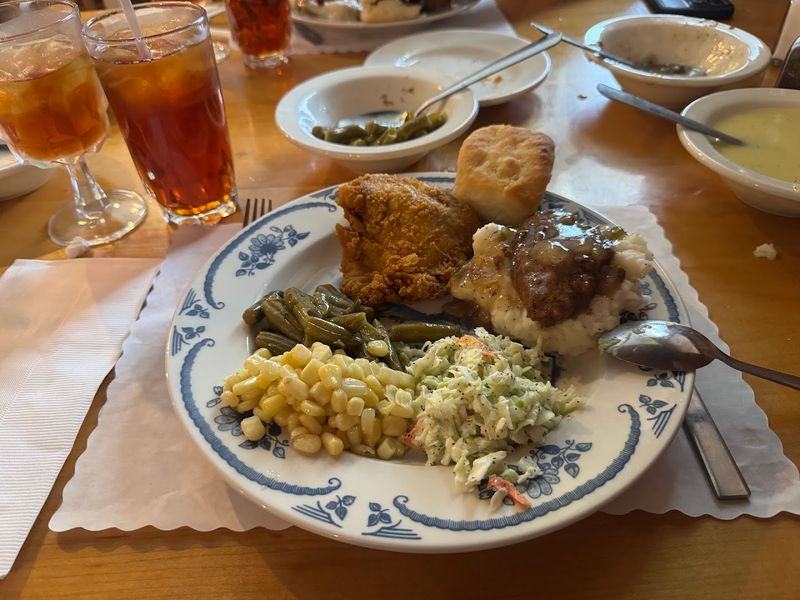
Large bowls, passing platters, and refillable family-style servings have shaped meals at Dan’l Boone Inn since the restaurant opened in 1959.
Its building dates to 1925 and originally served as Boone’s first hospital, giving the property an unusual history before it became one of the town’s most recognizable dining establishments.
Rather than ordering separate entrées from a long menu, guests receive a coordinated meal built around familiar Southern dishes and shared sides.
Fried chicken, country-style steak, ham, mashed potatoes, vegetables, biscuits, preserves, and desserts remain closely associated with the experience.
Seasonal menu changes can affect which dishes appear, so older descriptions should not be treated as guarantees for every visit.
The restaurant’s appeal comes from consistency in the overall format rather than proof that every recipe has remained entirely untouched since opening day.
Families often return because the dining room, service style, and abundant plates feel recognizable across generations. Dan’l Boone Inn continues operating at 130 Hardin Street in Boone, close to the Appalachian State University campus.
Calling it Boone’s oldest continuously operating restaurant may depend on how different businesses are classified, so the safer and more supportable description is that it has been a longstanding local institution for more than six decades.
3. Snappy Lunch
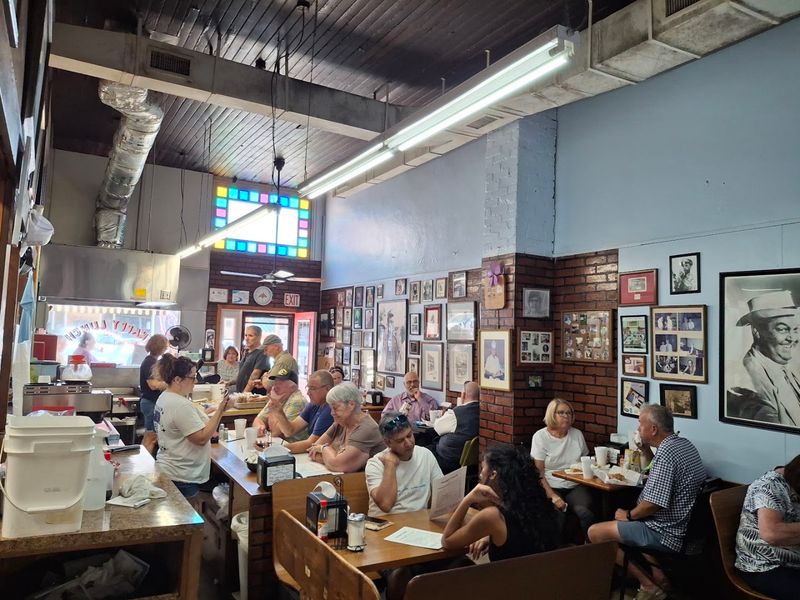
Small dimensions have never limited the reputation of Snappy Lunch, a Mount Airy institution that first opened in 1923. George Roberson and Deuce Hodge established the business as a quick place for workers to eat, long before television fame brought additional attention to the town.
Its best-known dish came later through Charles Dowell, whose pork chop sandwich developed into the restaurant’s signature order.
The sandwich combines a tenderized, breaded pork chop with chili, slaw, mustard, tomato, and onion, creating a messy but distinctive local specialty that still draws lines.
Snappy Lunch also holds a rare connection to The Andy Griffith Show because it was the only existing Mount Airy business mentioned during the series.
That detail adds cultural interest, but the restaurant’s longevity rests on serving breakfast and lunch rather than relying entirely on television tourism.
Classic sandwiches, diner breakfasts, burgers, and hot dogs support a menu built for straightforward daytime meals. Snappy Lunch remains at 125 North Main Street in Mount Airy, where space is limited and busy periods can create waits outside.
The pork chop sandwich is not served during every hour of operation, so visitors traveling specifically for it should check the current schedule before arriving.
4. Fuzzy’s Bar-B-Q
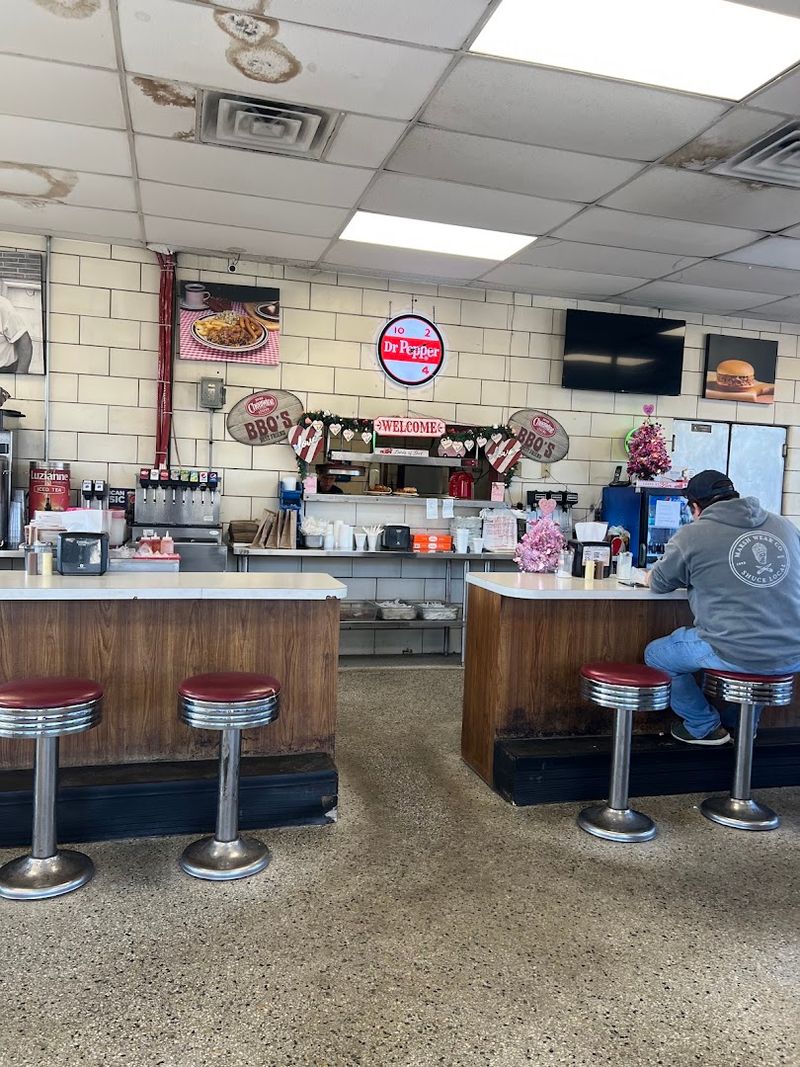
Hickory coals and a family recipe remain central to the identity of Fuzzy’s Bar-B-Q in Madison. The restaurant’s official site states that it has served Western North Carolina-style barbecue since 1954 and continues using the same family recipe.
Pork is pit-cooked over hickory coals, giving the restaurant a stronger claim to generational continuity than businesses that rely only on vintage décor or a long operating history.
Barbecue plates and sandwiches anchor the menu, but Fuzzy’s also serves breakfast and a broader collection of diner-style meals.
That mix reflects its role as a community restaurant rather than a destination focused exclusively on one famous item.
Older accounts sometimes describe the business as a Piedmont barbecue landmark, though the restaurant itself uses the broader “Western NC style” label.
Avoiding a more precise regional classification is sensible unless the owners define it more narrowly. Fuzzy’s operates at 407 North Highway Street in Madison, where it continues to serve both longtime residents and travelers passing through Rockingham County.
Hours listed on different sections of the official website are not entirely consistent, making a phone call useful before an early breakfast or late visit.
What remains clear is the restaurant’s continued commitment to hickory-cooked barbecue and a recipe the business traces back to its founding year.
5. Stamey’s Barbecue
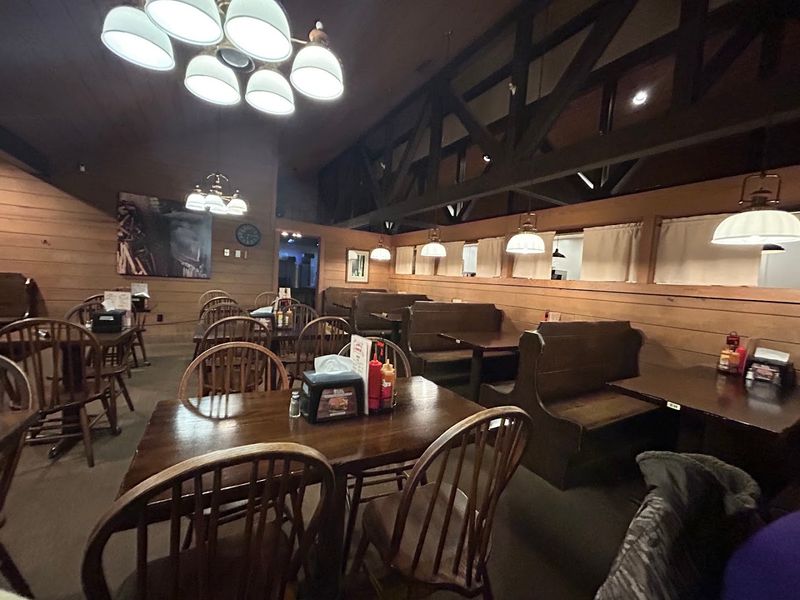
Warner Stamey helped carry Lexington-style barbecue traditions beyond Davidson County when he built a restaurant business that eventually became a Greensboro institution.
He began cooking professionally in the early twentieth century and opened the West Gate City Boulevard location in 1953, although the wider Stamey’s story dates to 1930.
Today, the restaurant continues cooking pork shoulders over hardwood coals and serving the meat chopped or sliced with red slaw, hushpuppies, and a vinegar-and-tomato sauce associated with Piedmont barbecue.
Family involvement has continued across several generations, strengthening the restaurant’s connection to the techniques Warner Stamey learned and developed during his career.
Claims that he invented or single-handedly popularized hushpuppies with barbecue are difficult to prove and should not be stated as settled fact. His influence on North Carolina barbecue is significant enough without adding an unsupported origin story.
Stamey’s currently operates two Greensboro restaurants, including 2206 West Gate City Boulevard and 2812 Battleground Avenue.
The Gate City Boulevard location across from the Greensboro Coliseum remains the address most closely associated with the historic business.
Peach cobbler, barbecue sandwiches, and pork plates continue attracting customers, but the strongest generational connection is still visible in the wood-cooking process behind the restaurant.
6. Lexington Barbecue
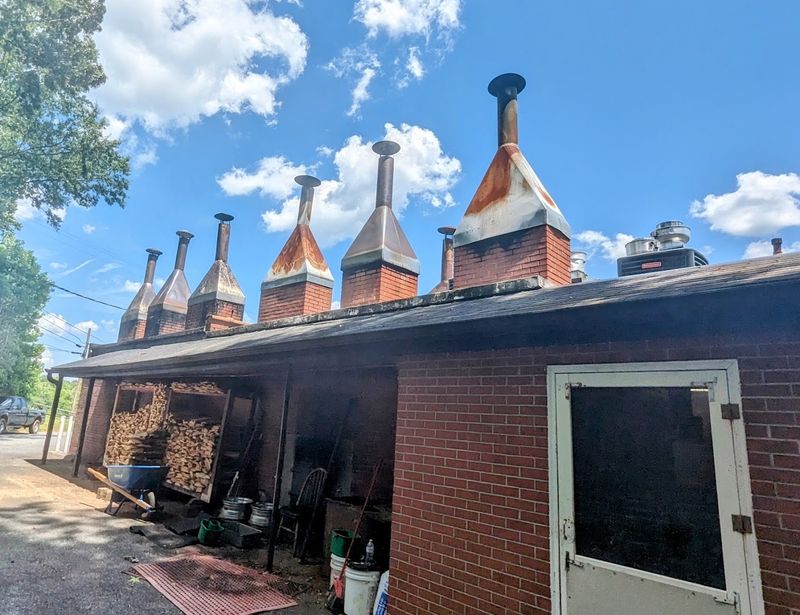
Wayne Monk opened Lexington Barbecue in 1962 and built its reputation around a focused version of Piedmont barbecue.
Known locally as Lexington Number One or the Honeymonk, the restaurant cooks pork shoulders over hickory wood before serving the meat chopped, coarsely chopped, or sliced.
A thin dip made with vinegar, tomato, and seasonings brings the region’s characteristic flavor, while red slaw, hushpuppies, fries, and other familiar sides complete the plates.
Family members have remained deeply involved in the business, allowing its core methods and standards to continue across generations.
The restaurant’s longevity does not mean every detail of the operation has remained frozen since 1962, but the essential cooking style still reflects the approach that established its reputation.
Lexington Barbecue operates at 100 Smokehouse Lane in Lexington, a city widely identified with this form of pork barbecue.
Its national profile has grown through television, travel coverage, food writing, and the city’s annual barbecue festival, yet the restaurant still functions as a working local dining room rather than a museum.
Guests who want to understand why wood, shoulder meat, red slaw, and a lightly tomatoed dip define Lexington-style barbecue will find a particularly clear example here.
7. Amedeo’s Italian Restaurant
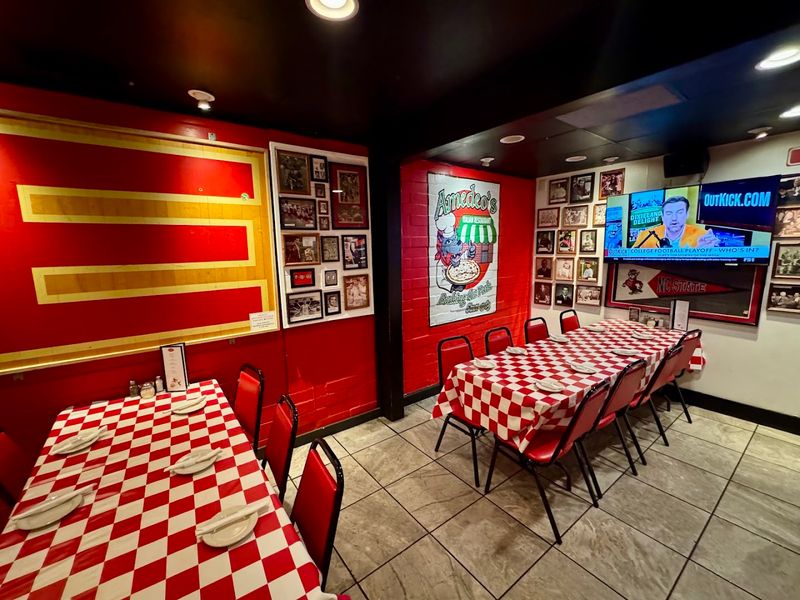
Italian-American comfort food and NC State history have shared the dining room at Amedeo’s since former Wolfpack football player Amedeo DeAngelis opened the restaurant in 1963.
Lasagna, baked pasta, pizza, calzones, sandwiches, and other familiar dishes helped build a loyal following among students, alumni, neighborhood families, and sports fans.
The restaurant describes itself as a tradition shaped by authentic Italian flavors and a strong connection to the university.
Family recipes are part of its story, although specific claims that every dish comes directly from DeAngelis’s mother or has remained completely unchanged are more difficult to document.
Amedeo’s is better understood as a longstanding Italian-American restaurant that has preserved its core menu identity while growing into a Wolfpack gathering place. Walls filled with jerseys, photographs, trophies, and memorabilia make the dining room closely tied to Raleigh sports history.
The restaurant currently operates at 3905 Western Boulevard in Raleigh, but its future at that exact property is not guaranteed. In March 2026, ownership confirmed that it was exploring redevelopment and a possible relocation connected with the site.
Amedeo’s remained open at the time of that reporting, so diners should confirm the address before traveling in case plans move forward.
8. Lovick’s Cafe
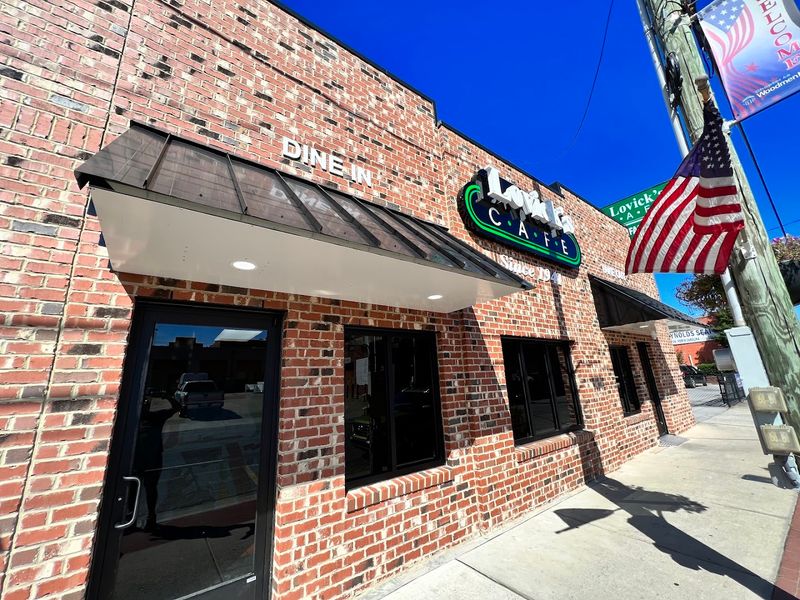
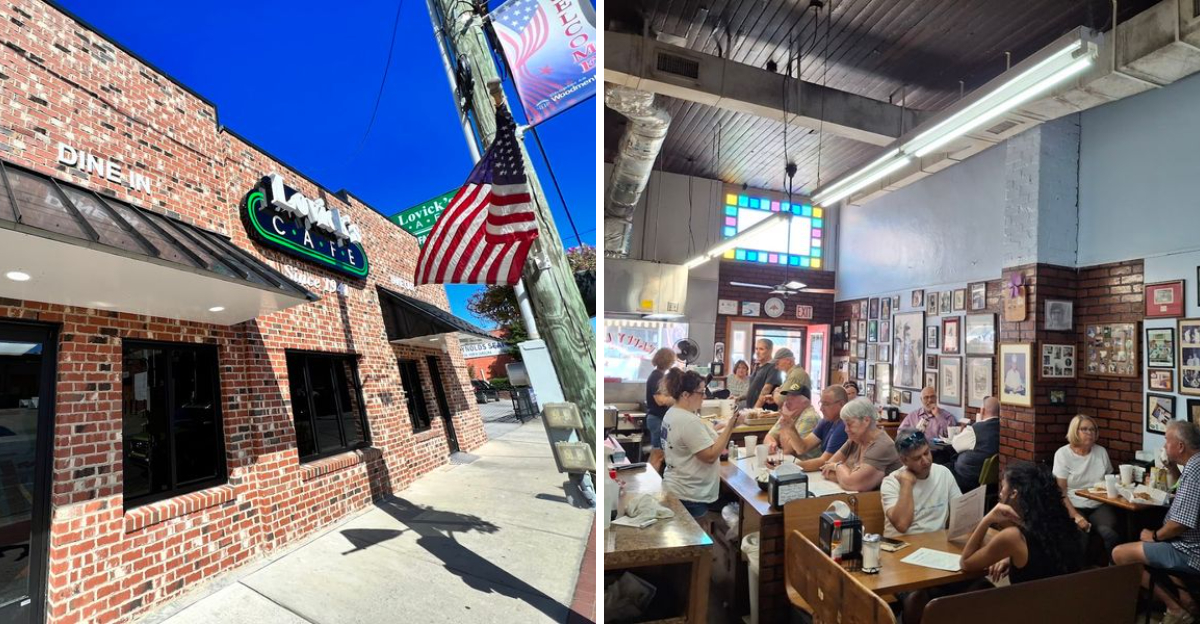
A recipe created to stretch limited ingredients became the defining specialty of Lovick’s Cafe. Milton and Eva Lovick borrowed $180 and opened Lovick’s Quick Lunch in downtown Kinston in 1941.
During wartime rationing and economically difficult years, ground beef could be extended with flour and onions to create an affordable sandwich known locally as the dough burger.
The mixture is seasoned, cooked as a patty, and traditionally served on white bread or a bun, preserving a practical food tradition that grew from necessity rather than culinary fashion.
Lovick’s still identifies the dough burger as a central part of its story, alongside pancakes, breakfast plates, sandwiches, and straightforward café meals. Family operation and community loyalty have allowed the restaurant to remain a gathering place for more than eight decades.
Earlier sources occasionally list 1942 as the founding year, but the restaurant’s own history gives 1941 and explains the original loan, ownership, and connection to nearby tobacco warehouses.
Lovick’s operates at 320 North Heritage Street in Kinston, though its official story misspells the street as “Herritage” in one place.
Lines can form during busy breakfast and lunch periods, especially when regular customers arrive for dough burgers. The dish remains a genuine example of a recipe passed down through changing generations of the same local business.
9. Parker’s Barbecue
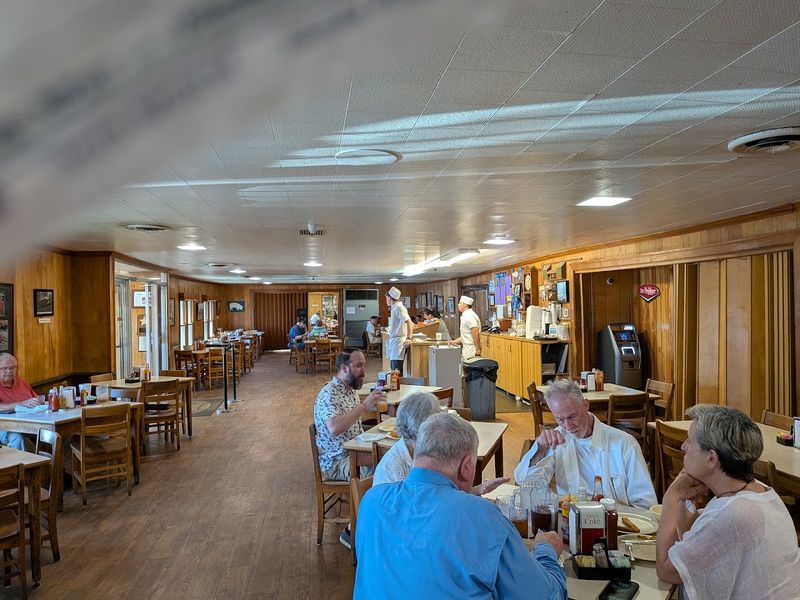
Generous platters of barbecue, fried chicken, Brunswick stew, boiled potatoes, slaw, and hushpuppies have made Parker’s Barbecue part of Wilson dining since August 1946.
Graham Parker, Ralph Parker, and Henry Parker Brewer founded the restaurant near Highway 301 as a family-focused destination built around pit-cooked barbecue and fried chicken.
The current business continues highlighting those same two foods, though ownership has expanded beyond the founding family. That distinction matters because Parker’s preserves a long-running restaurant tradition without necessarily remaining under direct Parker family control.
Its barbecue is associated with Eastern North Carolina, where vinegar seasoning and chopped pork dominate, but claims that every plate is prepared exactly as it was in 1946 should be treated cautiously unless confirmed by the restaurant.
Parker’s historic strengths are visible in its broad family-style meals, large dining rooms, old-fashioned uniforms, and dependable combination plates.
The restaurant remains at 2514 U.S. Highway 301 South in Wilson, where it has served local families, travelers, factory groups, and special events for decades.
One famous early milestone came in 1954, when Parker’s fed thousands of people during the opening of a Ralston Purina plant. That scale helped establish a reputation for quick service and enormous community gatherings that still shapes the restaurant’s identity.
10. Skylight Inn BBQ
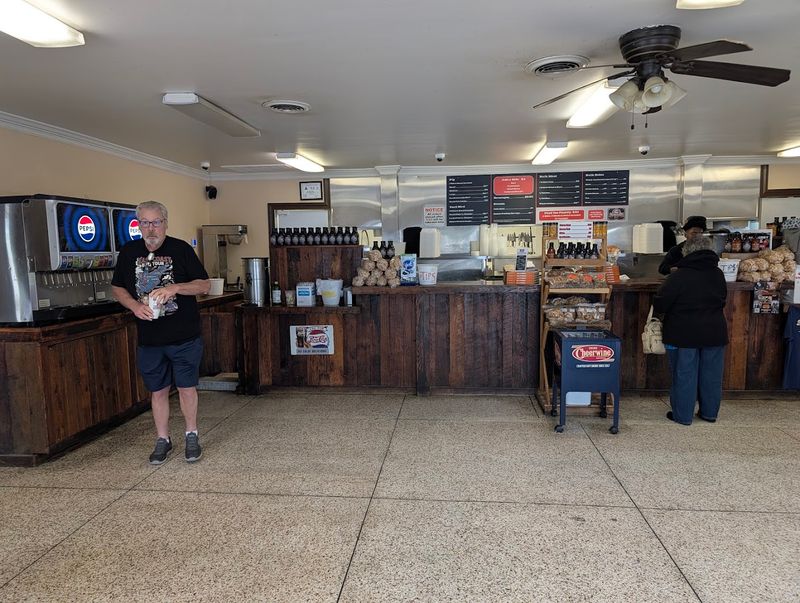
Whole hogs, wood-fired pits, chopped skin, vinegar seasoning, slaw, and dense cornbread define the tradition at Skylight Inn BBQ. Pete Jones opened the Ayden restaurant in 1947 when he was still a teenager, building on barbecue knowledge that had existed within the Jones family for generations.
The restaurant continues cooking whole hogs over wood, then chopping meat from different parts of the animal together so each serving contains varied textures and flavors.
Crisp skin is added during chopping, producing the small crunchy pieces that distinguish its barbecue from many pulled-pork restaurants.
Cornbread remains another important tradition. Its extremely simple preparation uses cornmeal and water, with pork drippings contributing additional flavor during baking.
The recipe predates the restaurant and reflects an era when wheat flour was less affordable or available. Skylight Inn operates at 4618 South Lee Street in Ayden, beneath a small replica of the United States Capitol dome that has become part of its visual identity.
National recognition has included a James Beard America’s Classics Award, yet the restaurant’s menu remains deliberately narrow. Barbecue, slaw, cornbread, chicken, and a limited collection of sides continue demonstrating how consistency can be more important than menu size.
11. Beck’s Restaurant
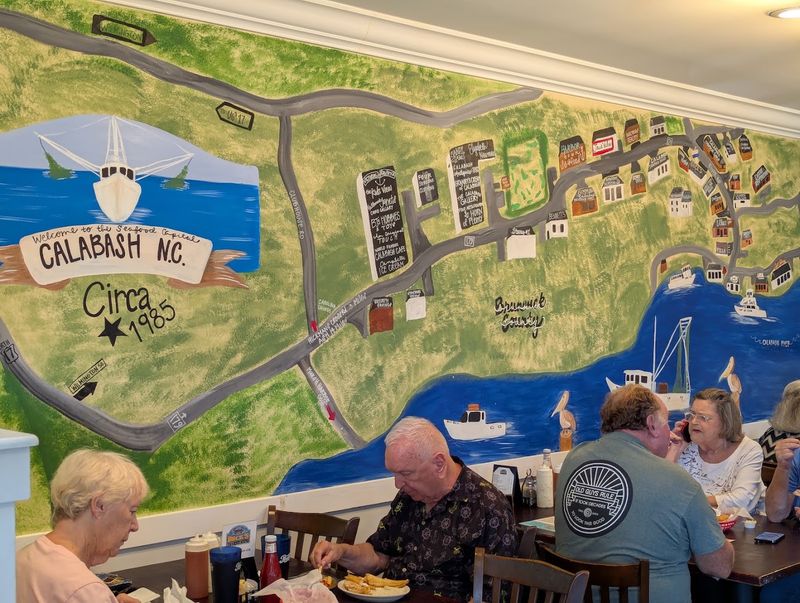
Lightly coated fried seafood has connected Beck’s Restaurant with the culinary identity of Calabash for more than eight decades. The restaurant’s official history gives 1940 as its founding year, correcting the frequently repeated 1942 date.
Ruth Beck, one of the family members associated with the early development of what became known as Calabash-style seafood, opened the restaurant and helped establish a method centered on lightly breading and quickly frying fresh seafood.
Shrimp, oysters, flounder, scallops, and other selections are cooked so the coating supports rather than overwhelms the seafood.
Beck’s states that the restaurant has remained within the same family across generations and continues using its original approach to Calabash cooking.
That makes it one of the strongest fits for an article about recipes and techniques preserved through family ownership.
Fire destroyed the former restaurant building in 2012, but the business later reopened, meaning today’s structure should not be described as the original 1940 building.
Beck’s now operates at 1014 River Road in Calabash, close to the waterfront and several other seafood restaurants that followed the style’s regional success.
Its history demonstrates how one family’s practical frying method grew into a culinary label recognized far beyond Brunswick County while remaining connected to the town where it began.