These 8 Idaho Hiking Trails Offer The Perfect Mix Of Adventure And Incredible Views
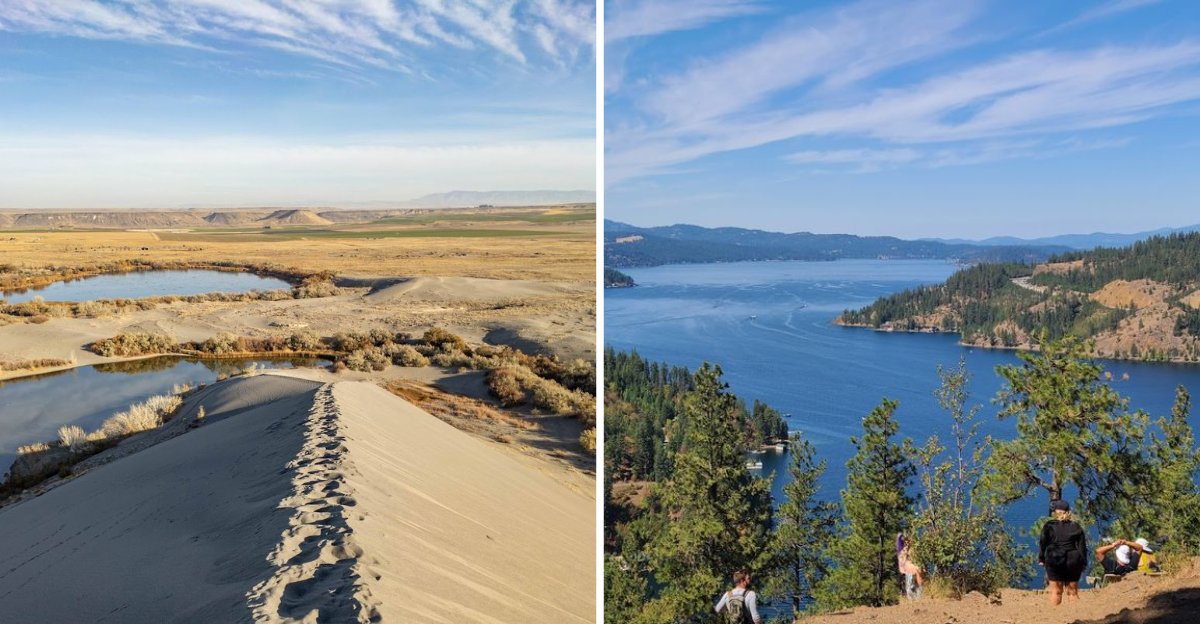
Hiking trails that balance challenge and beauty attract every kind of outdoor lover.
Idaho has some that deliver both without letting either one dominate the experience.
Ridge walks, forest paths, and meadow crossings all appear across these routes. Challenge and scenery share equal billing on each and every one of these trails.
Right when your legs start to question the plan, the views answer back immediately.
I keep returning to Idaho trails because they understand pacing and payoff so well. Honestly, the mix of effort and visual reward here is hard to find elsewhere.
These trails exist for the hiker who refuses to choose between workout and wonder. Pick any one and plan to talk about it for weeks afterward.
1. Upper Mesa Falls
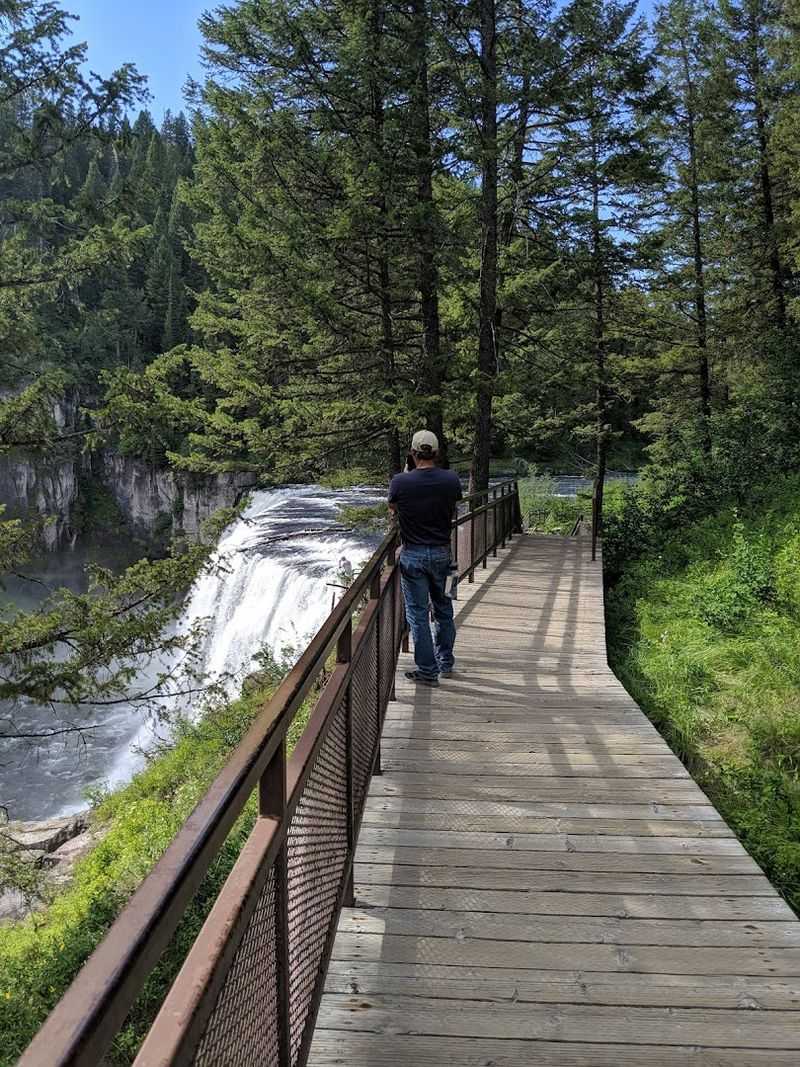
I must admit, nothing quite prepares you for your first look at this one. Standing at the edge of the viewing platform, the sheer power of the water hits you before you even see it.
Upper Mesa Falls is located near Ashton in the Caribou-Targhee National Forest. It is one of the few large waterfalls in Idaho that remains completely unchanged by human development.
The falls drop roughly 114 feet over ancient basalt cliffs. The roar is constant and the mist cools the air around you on even the hottest summer days.
The trail to reach the main viewpoint is short and paved, making it accessible for most hikers. A longer loop trail winds through the surrounding forest for those who want more time outdoors.
Late spring and early summer bring the highest water volume, turning the falls into a thundering wall of white water.
The boardwalk and viewing decks were carefully built to protect the natural rock formations. You can get surprisingly close to the edge, which makes for dramatic photos.
Wildlife sightings are common along the forested trail sections. Moose, osprey, and various songbirds have all made appearances during my hikes here.
The surrounding Henry’s Fork region is worth exploring beyond just the falls. Pair this hike with a visit to Lower Mesa Falls just downstream for a full day of natural wonder along this wild Idaho river corridor.
2. Ranch Loop Trail, Harriman State Park
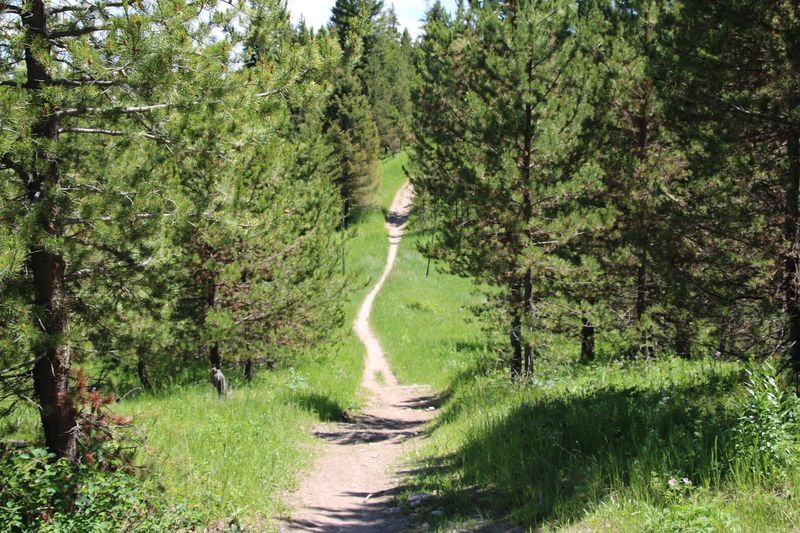
Who would have thought that a trail built around a historic ranch could feel this peaceful and wild at the same time? The contrast here is striking from the very first step.
Harriman State Park sits near Island Park, and the Ranch Loop Trail is its signature route. The trail circles the old Railroad Ranch property, which was donated to the state in 1977.
Covering roughly five miles, the loop is relatively flat and easy to complete in a few hours. The terrain moves through open meadows, dense forest sections, and along the banks of the Henry’s Fork River.
That river is legendary among fly fishing enthusiasts, but hikers benefit from its presence too. The water is crystal clear, and watching trout hold in the current is oddly mesmerizing.
Wildlife viewing here is exceptional. Trumpeter swans, sandhill cranes, bald eagles, and moose are regularly spotted along this route, especially in the early morning hours.
The historic ranch buildings are preserved and visible from the trail. They add a sense of living history to an otherwise very natural landscape.
Fall is my favorite season to walk this loop. The meadows turn amber and rust, the air carries that sharp autumn chill, and the crowds thin out considerably compared to summer months.
Harriman State Park also connects to a larger network of trails. If you have extra time and energy, extending your hike deeper into the park rewards you with even more solitude and scenery along this remarkable stretch of eastern Idaho wilderness.
3. Goldbug Hot Springs, Salmon
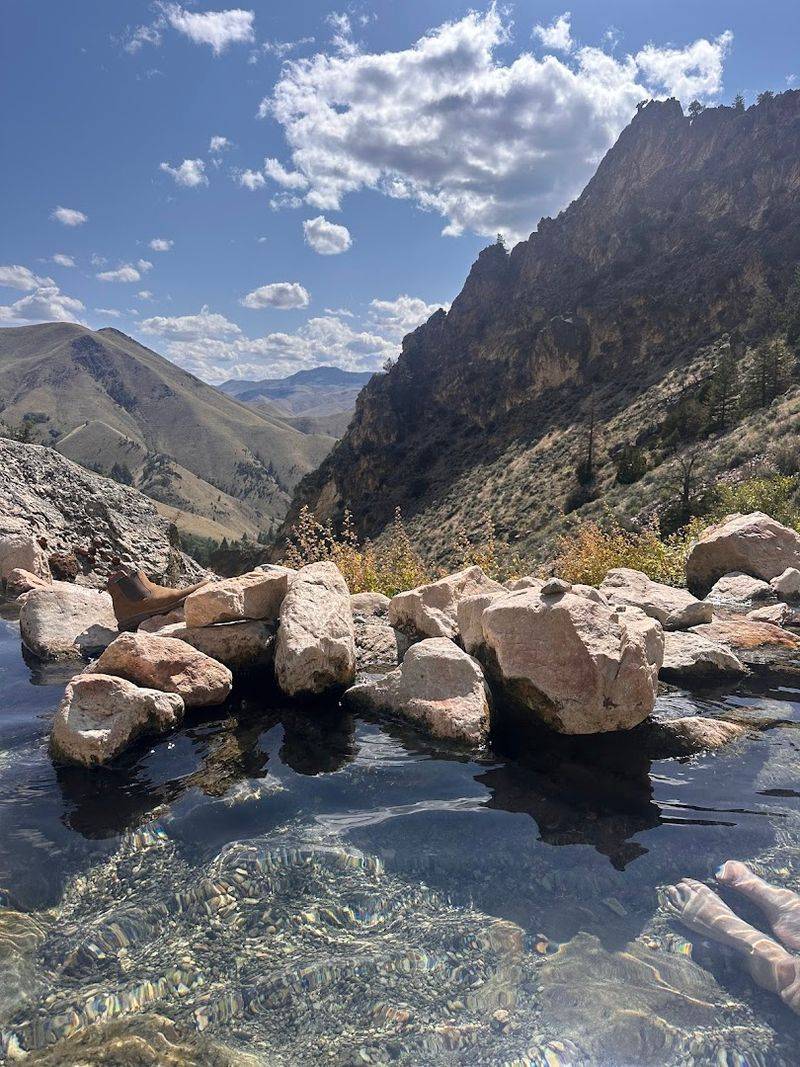
Can you believe that a hike through a rugged Idaho canyon leads to natural hot spring pools perched on a cliff? That combination sounds invented, but it is absolutely real.
Goldbug Hot Springs is located near Salmon in the Salmon-Challis National Forest. The trailhead sits off Highway 93 and the hike covers about four miles round trip.
The elevation gain is steady and real, climbing roughly 1,500 feet through a narrow canyon carved by Warm Springs Creek. The creek follows you the entire way, which makes the sound of rushing water your constant companion on the ascent.
At the top, a series of terraced pools spill down the hillside at varying temperatures. Each pool offers a slightly different soaking experience, from steaming hot at the source to comfortably warm lower down.
The views from the pools stretch across the canyon below and toward the mountains beyond. Sitting in warm water while looking out at that landscape is a view that feels almost unfair after a moderate hike.
Spring and fall are the best seasons for this trail. Summer can bring large crowds and the pools become less enjoyable when packed with too many hikers.
Wearing water shoes is a smart choice here. The rocks around the pools are slippery and the terrain between pools requires careful footing.
The canyon itself has a dramatic, almost ancient quality to it. Sheer rock walls, twisted pines, and the sound of water make every step toward those pools feel like an adventure through raw Idaho backcountry.
4. Craters Of The Moon
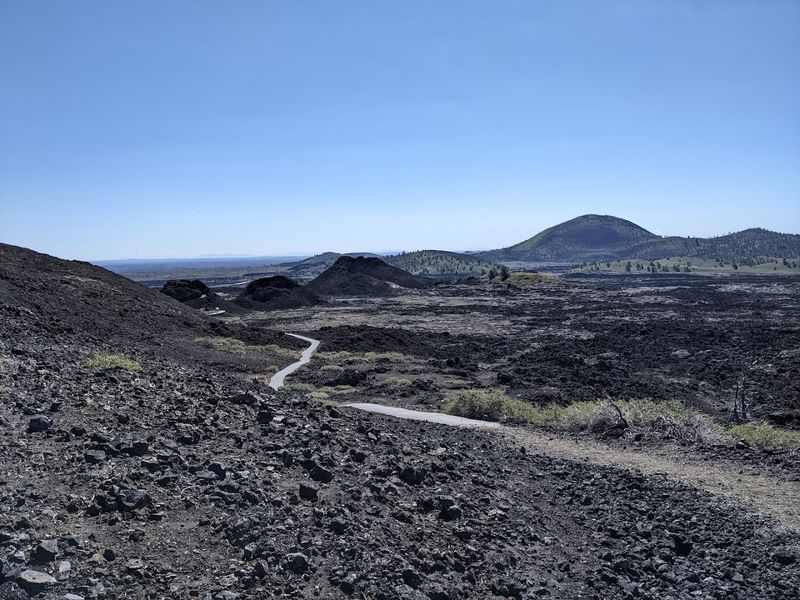
Trust me, walking across a landscape that looks like another planet entirely is one of those experiences that rewires how you think about Idaho. This trail does exactly that.
Craters of the Moon National Monument and Preserve is located near Arco in the high desert of the Snake River Plain. The park protects one of the most dramatic lava fields in North America.
Several trails wind through the monument, ranging from short paved loops to longer backcountry routes. The North Crater Flow Trail is a favorite for first-time hikers, covering about 1.7 miles across twisted black basalt.
The lava formations here are surprisingly varied. Squeeze-ups, spatter cones, lava tubes, and pressure ridges all tell the story of volcanic eruptions that happened as recently as 2,000 years ago.
Hiking into the lava tubes is a highlight that most visitors do not expect. Carrying a flashlight and ducking into those cool underground passages feels like exploring a hidden world beneath the surface.
Summer temperatures on the black lava can be extreme, easily exceeding 100 degrees Fahrenheit at ground level. Early morning hikes are strongly recommended during July and August.
Spring brings wildflowers to the cinder fields in surprising bursts of color. Seeing bright blooms against the dark volcanic rock is one of the more visually striking contrasts in all of Idaho.
The night sky above Craters of the Moon is internationally recognized for its darkness. Staying past sunset turns this already extraordinary landscape into one of the finest stargazing locations in the American West.
5. Ponderosa State Park
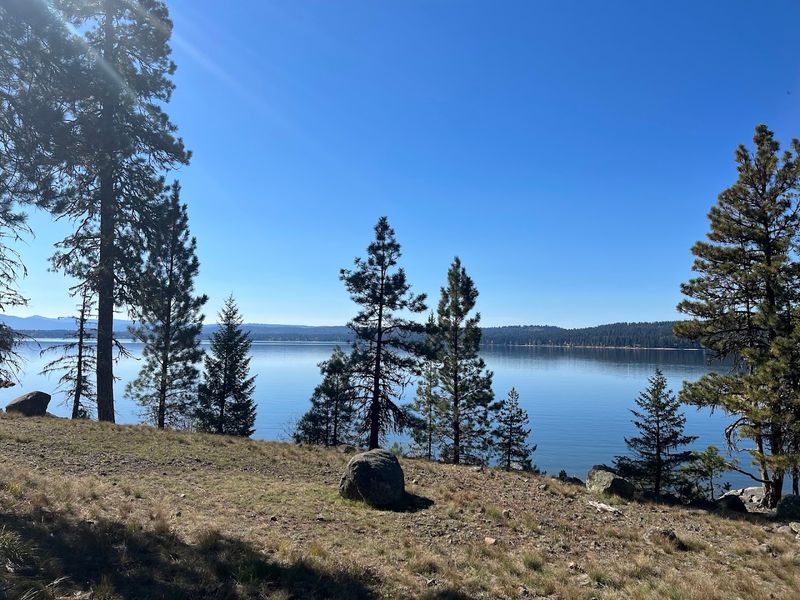
I never would have guessed that a peninsula jutting into a mountain lake could deliver this much variety in a single hiking experience. Ponderosa State Park near McCall manages exactly that.
The park occupies a forested peninsula surrounded by Payette Lake at an elevation of about 5,000 feet. Towering ponderosa pines, some over 150 years old, define the landscape throughout.
The trail system here covers more than 14 miles of well-maintained paths. Routes range from gentle lakeside walks to hillside climbs that open up sweeping views across the water and toward the surrounding mountains.
The Meadow Marsh Trail is a quieter option that winds through wetland areas where deer, osprey, and great blue herons are frequently seen. Early morning is the best window for wildlife activity along this section.
Summer brings warm temperatures and clear lake views, but fall is when the park truly transforms. The combination of golden larch trees, deep blue water, and crisp mountain air creates a sensory experience that is hard to match anywhere in Idaho.
Paddleboard and kayak rentals are available near the park, so you can combine a morning hike with an afternoon on the water. McCall itself is a charming small mountain town worth spending extra time in.
The park is family-friendly and well-signed throughout. Trails are clearly marked and distances are manageable for hikers of various fitness levels.
Winter transforms the trail network into a cross-country skiing and snowshoeing paradise. Ponderosa rewards every season with something worth making the drive to McCall for.
6. Boulder Lake
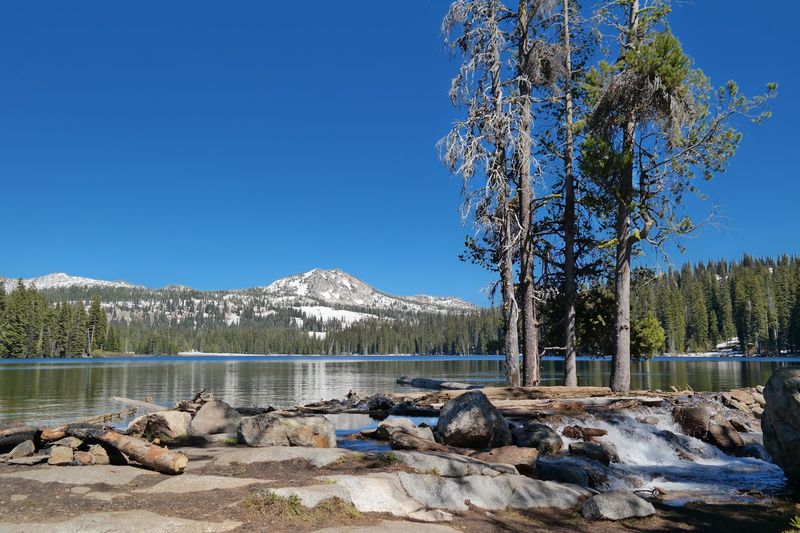
Believe me, the effort required to reach this alpine lake makes the moment you finally see it feel like a genuine payoff. Few trailheads in Idaho lead somewhere this dramatically beautiful.
Boulder Lake sits in the Sawtooth Wilderness near Stanley, at an elevation of around 8,600 feet. The trail to reach it covers around six miles one way with significant elevation gain.
The route climbs through dense lodgepole pine forest before breaking out into open rocky terrain near the upper basin. That transition from forest to alpine landscape is one of the more exciting moments on the entire hike.
The lake itself is a deep, cold blue-green color set against a backdrop of jagged granite peaks. Wildflowers crowd the shoreline during July and early August, adding splashes of purple, yellow, and red to the rocky landscape.
Fishing for brook trout is popular here among those willing to carry a rod the full distance. The lake is remote enough that fishing pressure stays relatively low compared to more accessible waters in the region.
Camping near Boulder Lake is permitted with a proper backcountry permit. Spending a night here means waking up to complete silence broken only by wind and birdsong at high elevation.
Afternoon thunderstorms are common in the Sawtooths during summer. Starting early and planning to be off the exposed ridge sections before noon is the smart approach for this trail.
The drive into Stanley through the Sawtooth Valley is stunning on its own. Combining that scenic approach with this hike makes for one of the finest full days in all of Idaho.
7. Bruneau Dunes State Park
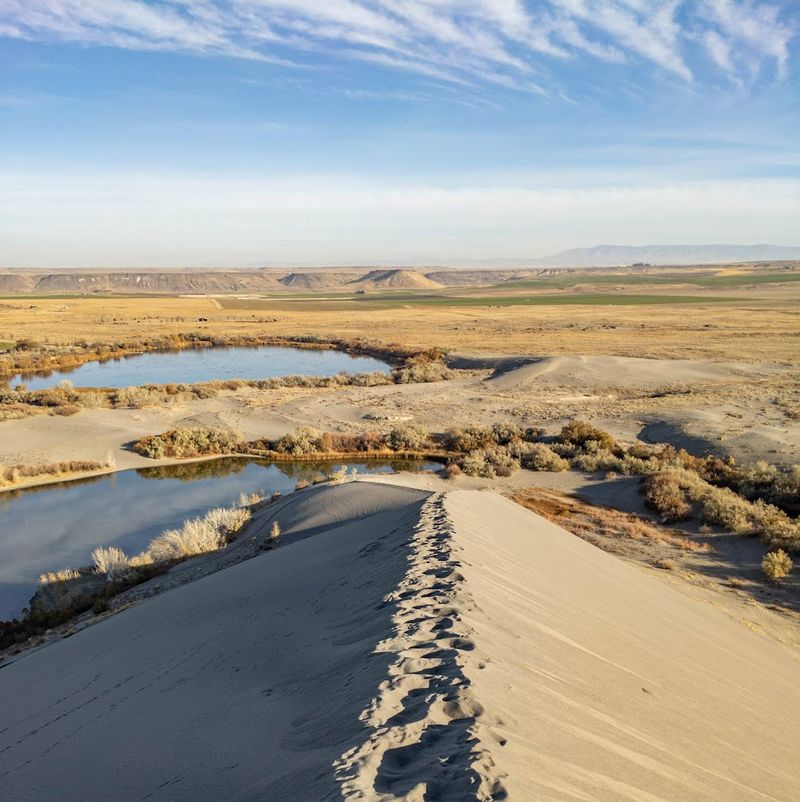
You might not believe me, but Idaho is home to the tallest single-structured sand dune in North America. Trust me, walking up that dune is a workout and a wonder rolled into one.
Bruneau Dunes State Park is located near Bruneau in the high desert of the Snake River Canyon region. The main dune rises about 470 feet above the surrounding desert floor.
Climbing the dune itself is the main event for most hikers. The loose sand makes every step feel like two steps forward and one step back, which is challenging but strangely fun once you accept the pace.
The views from the top stretch across the Snake River Plain in every direction. On clear days, mountains are visible on the horizon, making the panorama surprisingly vast for a desert hike.
Two small lakes sit at the base of the dunes, which is an unusual sight in such an arid setting. These lakes support a healthy population of largemouth bass and attract waterfowl throughout the year.
The park also features a network of flat desert trails that wind through sagebrush and around the lakes. These lower paths are much easier and offer close-up views of the dune from below.
Bruneau Dunes has a dedicated observatory on-site, open on weekends during the spring and fall. Stargazing here is extraordinary given the low light pollution across the surrounding desert.
Sunset is the most magical time to hike up the dune. The light turns the sand warm shades of orange and pink, and the shadows created by the ridgeline make the whole landscape look sculpted by something truly ancient.
8. Mineral Ridge
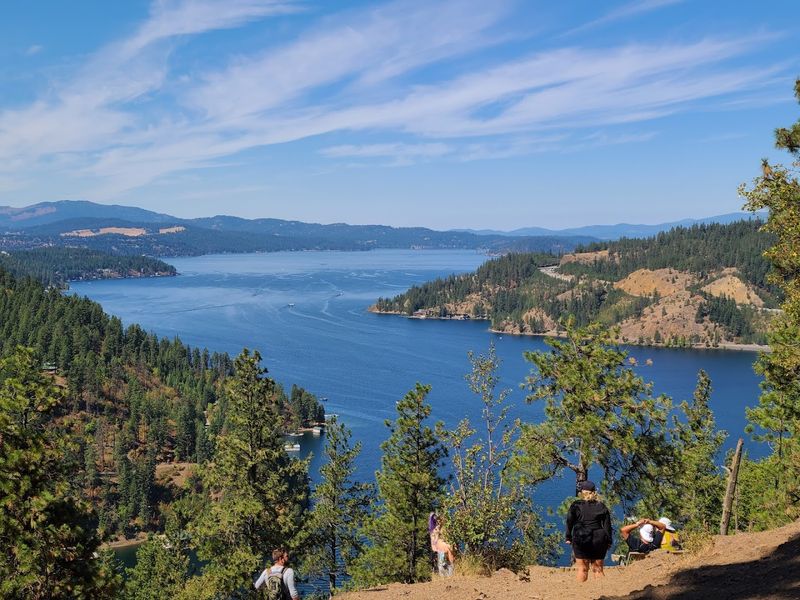
Doesn’t it seem like the best views should always require a serious expedition?
Mineral Ridge near Coeur d’Alene proves that theory wrong in the most satisfying way possible.
The Mineral Ridge Scenic Area sits above Lake Coeur d’Alene in the Idaho Panhandle National Forests. The loop trail covers about 3.3 miles with around 740 feet of elevation gain.
The climb starts through a shaded forest of ponderosa pine and Douglas fir. Within the first mile, the trees begin to open up and the lake starts appearing in blue glimpses between the trunks.
Three numbered viewpoints are positioned along the upper ridge section. Each one frames a slightly different angle of Lake Coeur d’Alene, which stretches more than 25 miles to the south.
The lake itself is one of the most beautiful bodies of water in the Pacific Northwest. Its clarity and the way it winds between forested hills creates a view that stops hikers mid-stride.
Osprey are a constant presence above the lake, and bald eagles are spotted regularly from the ridge viewpoints. Deer are common in the lower forest sections, especially during morning hours.
Spring wildflowers line the trail in April and May when the hillside comes alive with color. Fall brings brilliant reds and oranges from the vine maples scattered throughout the forest understory.
The trail is well-maintained and clearly signed throughout. Parking at the trailhead fills quickly on summer weekends, so arriving before 9 a.m. is strongly recommended for a relaxed start.