These 14 Savannah River Street Details Are Things Only Georgia Locals Know
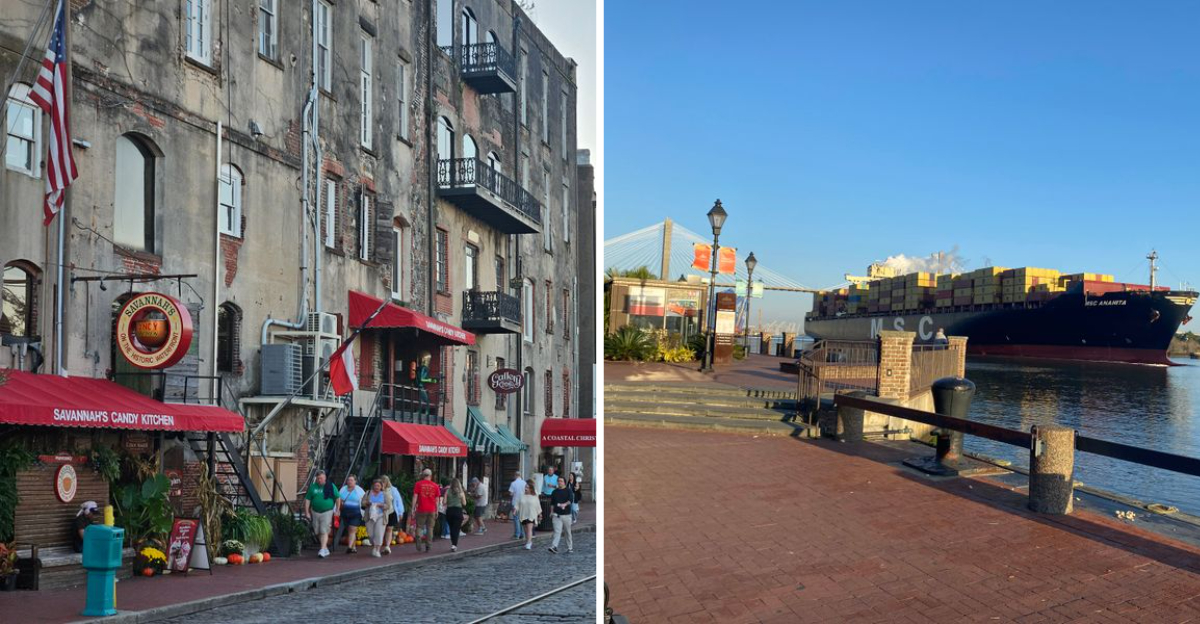
Walking along Savannah’s River Street feels completely different once you understand what you are really seeing. To most visitors, it is simply a lively waterfront lined with shops, music, and river views. To locals, it is a place layered with history, stories, and details that quietly reveal themselves over time.
The uneven stones beneath your feet once carried cargo from ships around the world. Old buildings along the river still show marks from a working port that helped shape the city. Even the sound of the water carries echoes of Savannah’s past, from trade and travel to hardship and resilience.
Georgians who have spent real time here notice things others overlook, like subtle changes in elevation or hidden entrances built into the bluff. River Street is not just a scenic stroll. It is a living reminder of how Savannah grew, survived, and became the city people fall in love with today.
1. Savannah Stone Stairs Of Death
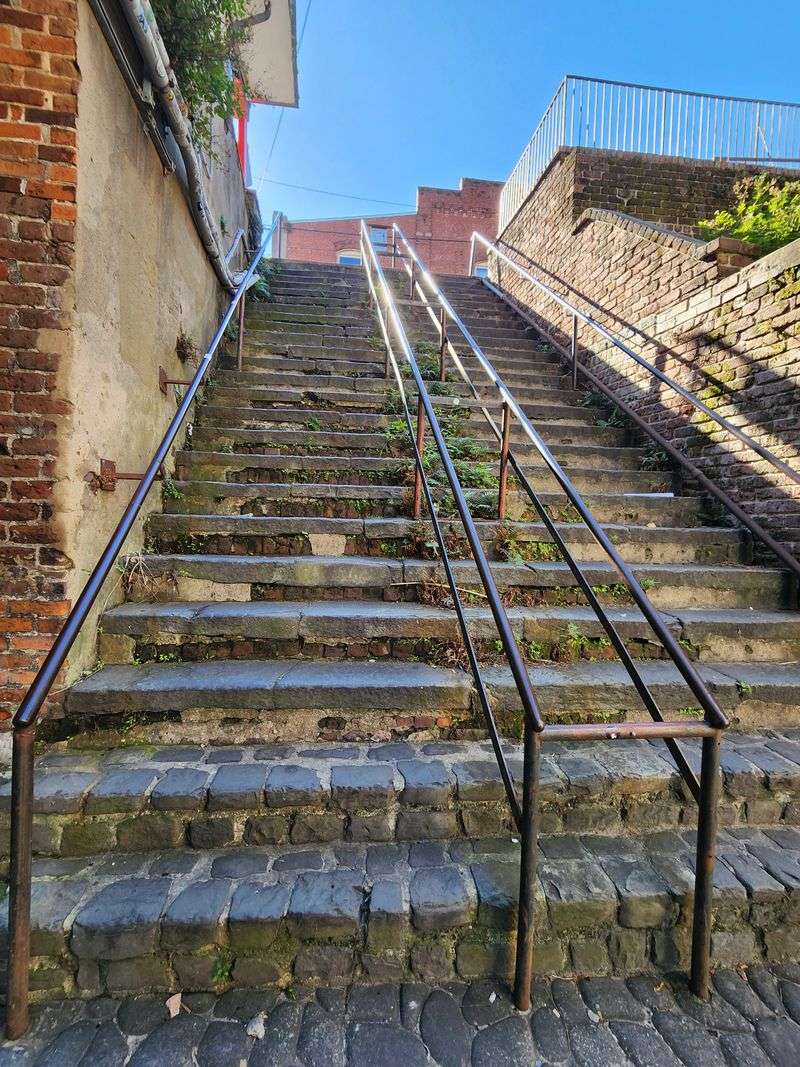
Ask any Savannah local about those staircases connecting Bay Street to River Street, and you’ll get a knowing laugh. We call them the “Stone Stairs Of Death” for good reason. They’re steep, uneven, and have tripped up more people than anyone’s bothered counting over the decades.
These aren’t your typical city steps. Built into the bluff when River Street was Savannah’s industrial heart, they were designed for workers hauling cargo, not for comfort. The stone treads have worn smooth from generations of use, making them slippery when wet or when you’re wearing the wrong shoes.
Locals know to grab the railing and watch every single step. We’ve mastered the awkward shuffle-climb that keeps you upright. Watching tourists bound down confidently in flip-flops always makes us wince we know what’s probably coming next, and it usually involves a stumble or an embarrassing slide.
2. Cobblestones Are Old Ship Ballast
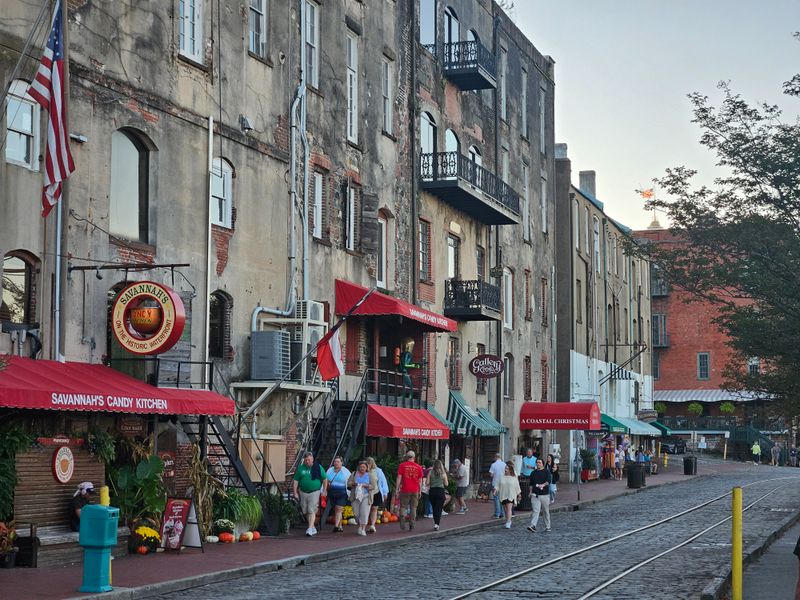
Every step you take on River Street connects you to centuries of maritime history in a way most people never realize. Those uneven stones weren’t quarried for paving. They crossed oceans first as ballast in the bellies of trading ships that docked right where you’re standing now.
Captains needed weight to stabilize empty vessels sailing to America. Once they arrived and loaded cotton or other cargo, they dumped the stones. Savannah put them to work as street material, turning necessity into lasting infrastructure that’s still here today.
Walking on them feels different once you know their story. Your feet touch rocks that might have come from Europe, Africa, or the Caribbean. That’s why locals smile when tourists complain about the bumpy surface—we’re walking on actual pieces of international trade history that helped build Georgia’s economy.
3. Factors Walk Hidden Passages
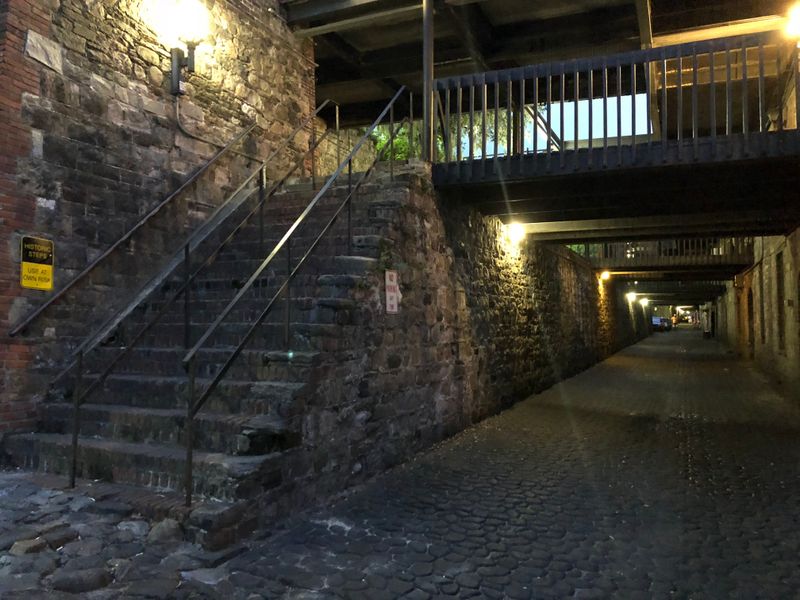
Most visitors never venture behind the River Street shops into Factors Walk, which means they’re missing an entire layer of Savannah’s history. This elevated network of iron walkways and hidden passages runs parallel to the waterfront. Cotton factors—the middlemen who bought and sold cotton—conducted business here in the 1800s.
Locals know these back alleys hold doorways that look like they lead nowhere but actually connect to upper floors and secret spaces. Some entrances are so weathered and unmarked that you’d walk past them a dozen times without noticing. The brick archways and tucked-away staircases create a maze that feels frozen in time.
I love exploring this area because it’s quieter and more authentic than the tourist-packed street below. You’ll find original architectural details, old iron work, and spaces that haven’t changed much in 150 years. It’s where Savannah’s commercial past still whispers if you know where to listen.
4. Upper Floors Aren’t What They Seem
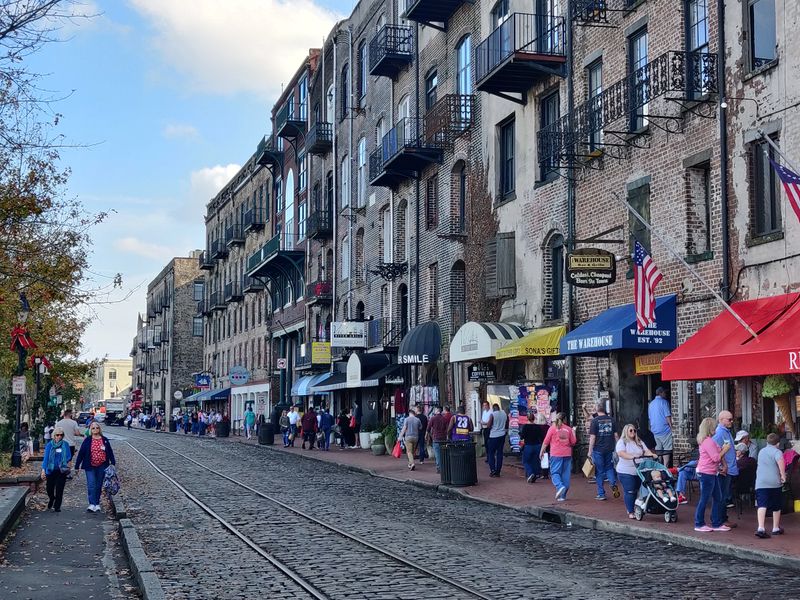
Look up while you’re shopping on River Street, and you’ll notice windows and doors on upper levels. Tourists assume they’re just storage or closed-off historical spaces. Locals know better—people actually live and work up there, accessing their spaces from Factors Walk behind the buildings rather than through the street-level shops.
These hidden apartments and offices occupy the same structures that once warehoused cotton and goods during Savannah’s shipping boom. The layout is unusual because buildings were designed with commerce on the river side and offices on the bluff side. That dual-access design still works today, just for different purposes.
I’ve been in a few of these spaces, and they’re surprisingly modern inside despite the historic exteriors. Residents get incredible river views and the charm of living in a 19th-century building. But they also deal with tourist noise below and those challenging stairs every single day, which takes a special kind of commitment to historic Savannah living.
5. The Waving Girl Statue and Her Legacy
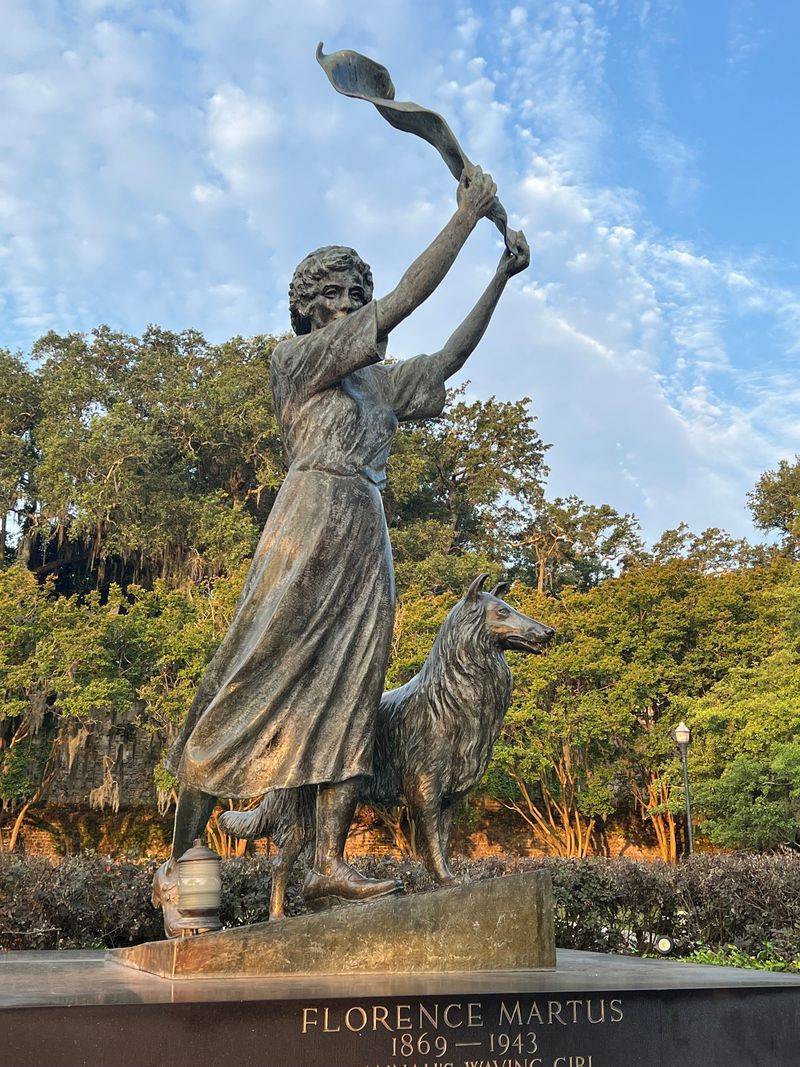
Florence Martus waved at passing ships for 44 years from her home on Elba Island, and her statue on River Street at East River Street and East Broad Street keeps that tradition alive. Most tourists snap a photo and move on. Locals know the real story she greeted every vessel entering and leaving Savannah’s port from 1887 to 1931, rain or shine, day or night.
Ships still honor her memory today. When large vessels pass River Street, many blow their horns in tribute to Florence. If you’re standing nearby when it happens, the sound is powerful enough to rattle your chest.
It’s a moment that connects modern maritime traffic to Georgia’s port history.
I always point out her statue to visitors because it represents something special about Savannah—the way we hold onto our stories and the people who made this city what it is. Florence never married, never traveled far, but she became legendary simply by showing up with kindness every single day.
6. Ghost Stories and Haunted History
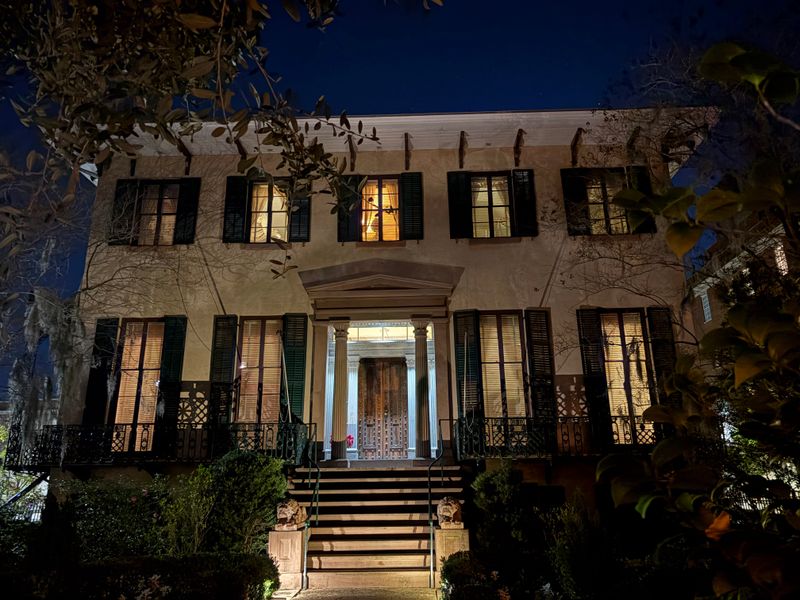
River Street’s reputation for paranormal activity isn’t just tourist marketing—locals genuinely respect this area’s spooky side. The intense labor history, including the brutal treatment of enslaved people and dangerous working conditions in the warehouses, left emotional imprints that many believe still linger in these buildings.
Several shops and restaurants occupy structures that witnessed suffering and death during Savannah’s cotton trade era. Workers died in accidents, diseases spread through cramped quarters, and the underground areas held people in chains. That heavy history creates an atmosphere you can feel, especially after dark when the crowds thin out.
I’ve heard too many consistent stories from people who work down here to dismiss it all as imagination. Unexplained footsteps, cold spots in summer heat, shadows moving where no one stands—these experiences get reported regularly. Whether you believe in ghosts or not, River Street after midnight definitely feels different than it does at noon, and locals know to respect that energy.
7. Historic Warehouse Architecture Details
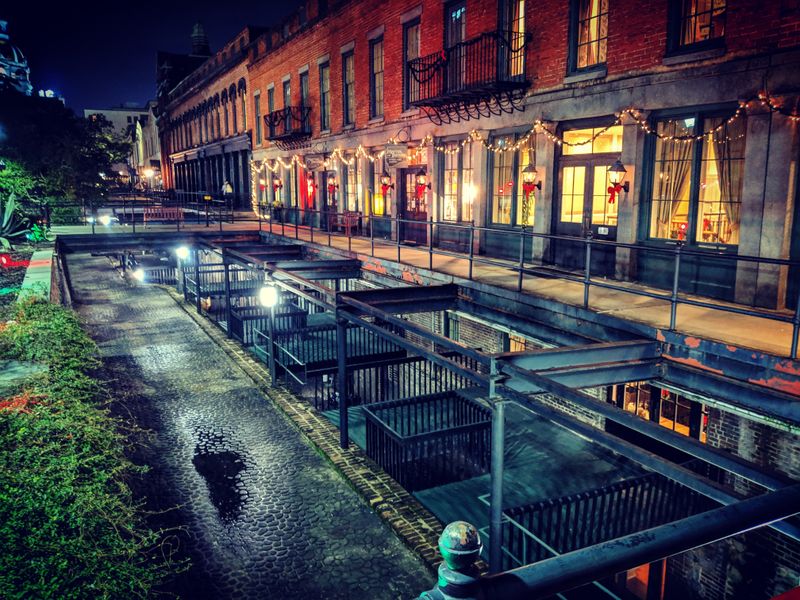
The brick buildings lining River Street aren’t just pretty backdrops—they’re architectural records of Savannah’s cotton trade dominance. Locals notice the iron walkways, massive timber beams, and loading dock remnants that tourists overlook while hunting for souvenir shops. These warehouses moved millions of pounds of cotton during Georgia’s agricultural peak.
Look closely at the brickwork and you’ll spot variations in color and pattern that indicate different construction periods and repairs over 150-plus years. The iron details weren’t decorative they served functional purposes for hauling, securing, and protecting valuable cargo. Those thick walls provided fire resistance, crucial when cotton bales were stacked floor to ceiling.
I appreciate how these buildings got repurposed instead of demolished. Savannah kept the bones and character while adapting interiors for modern use. You’re drinking craft beer or buying pralines in spaces where fortunes were made and lost, where the American South’s economy literally moved through these doors on the backs of enslaved laborers—a reality that shouldn’t be forgotten.
8. Riverboat Horn Echoes and Maritime Tradition
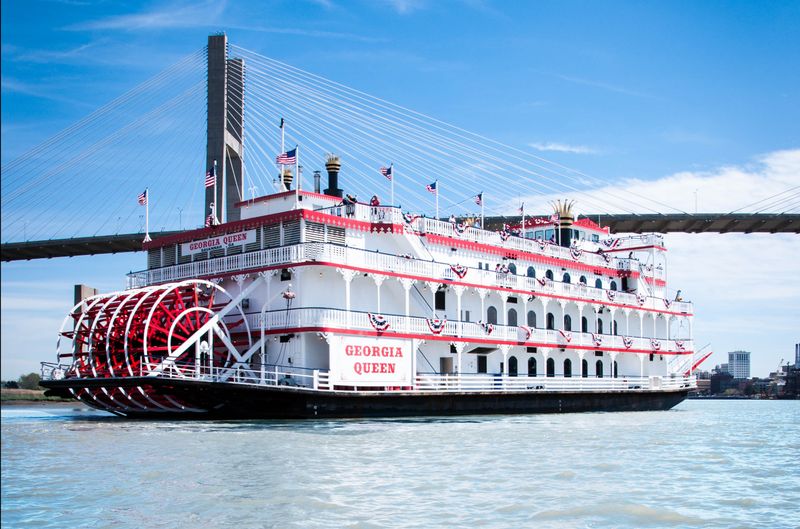
Hearing a riverboat horn blast across the water is so common for locals that we barely react anymore. Visitors jump or look around startled, but Georgians who spend time on River Street know these echoing calls are part of daily maritime tradition. The horns serve practical purposes—signaling departures, warnings, and communication with the port—but they also connect us to Savannah’s shipping heritage.
The sound carries differently depending on weather and river conditions. On foggy mornings, the horn seems to come from everywhere at once. Clear afternoons make it sharp and directional.
Each vessel has its own pattern, and longtime locals can sometimes identify which boat is passing just by the horn sequence.
I find something comforting about these regular interruptions. They remind me that Savannah is still a working port, not just a tourist destination. The same waters that carried colonial ships, Civil War vessels, and cotton barges still move commercial traffic today.
Those horns are Georgia’s river speaking.
9. Cobblestone Ankle Challenge and Shoe Choices
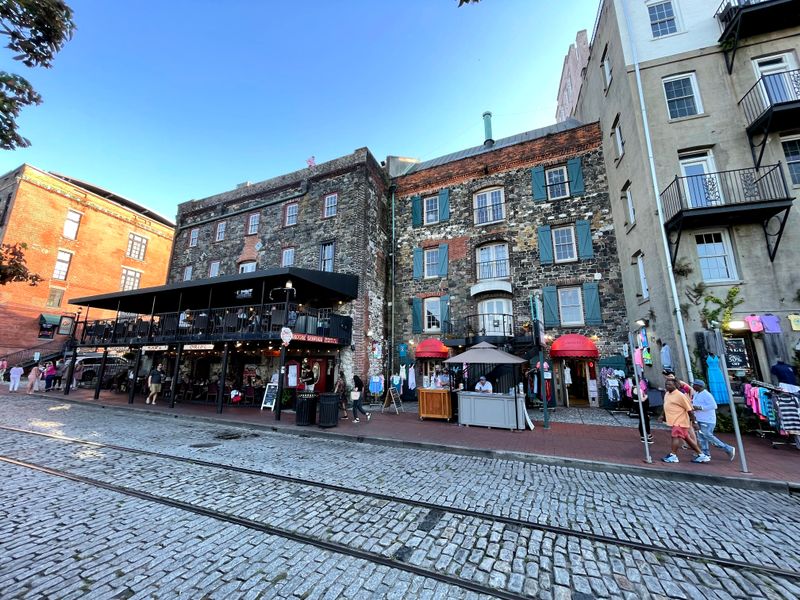
Wearing heels, flip-flops, or smooth-soled dress shoes on River Street’s cobblestones is basically announcing you’re not from around here. Locals know this street demands proper footwear—sneakers, boots, or anything with grip and ankle support. The rounded ballast stones create an uneven surface that turns walking into a balance exercise.
I’ve watched countless tourists hobble along, ankles rolling with every step, while their shoes slip into gaps between stones. Women in stilettos face an especially brutal challenge as heels wedge between cobblestones. Meanwhile, locals stride past confidently in practical shoes, having learned this lesson the hard way years ago.
The cobblestone ankle challenge is an unspoken rite of passage. Your first twisted ankle or near-fall teaches you to respect this historic street’s quirks. After that, you automatically check your footwear before heading down here.
It’s such common knowledge among Georgians that we don’t even discuss it—we just know, and we judge those who didn’t get the memo.
10. Historic Holding Cell Remnants
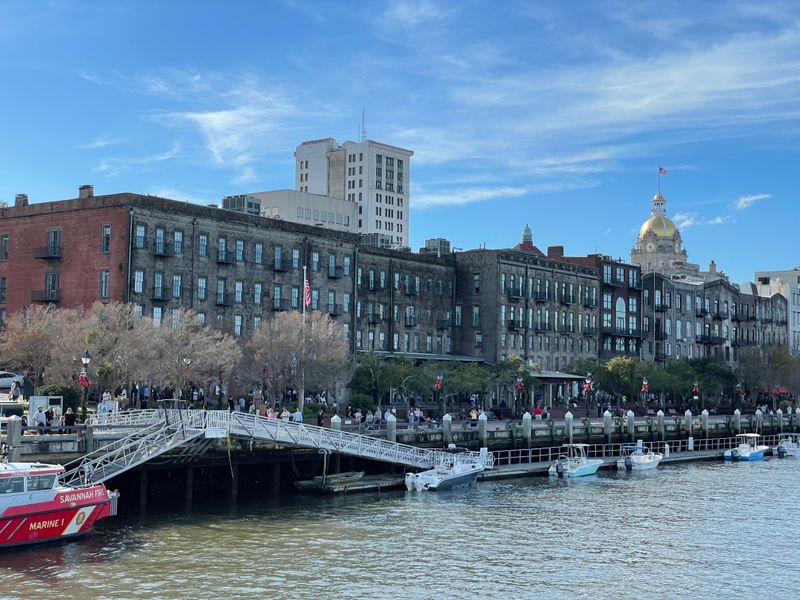
Parts of River Street buildings contain spaces that once served as holding cells for enslaved people during Savannah’s role in the domestic slave trade. This isn’t prominently marked or advertised, but locals who’ve studied Georgia’s history know these rooms exist beneath and behind the current shops and restaurants. The sobering reality is that human beings were confined in these spaces, treated as cargo alongside cotton and other goods.
Some of these areas are accessible through basements or back rooms, though many remain closed to the public. The brick walls, iron rings, and cramped dimensions tell a story that makes River Street’s charm feel complicated. Savannah’s wealth was built partially on this brutal system, and these physical remnants are undeniable proof.
I believe it’s important that locals acknowledge this history rather than glossing over it for tourism’s sake. River Street represents both architectural beauty and human suffering. Understanding both aspects gives you a complete picture of what this place really is and what Georgia’s past truly involved, uncomfortable as that may be.
11. Emmet Park Civil War and Irish-American History
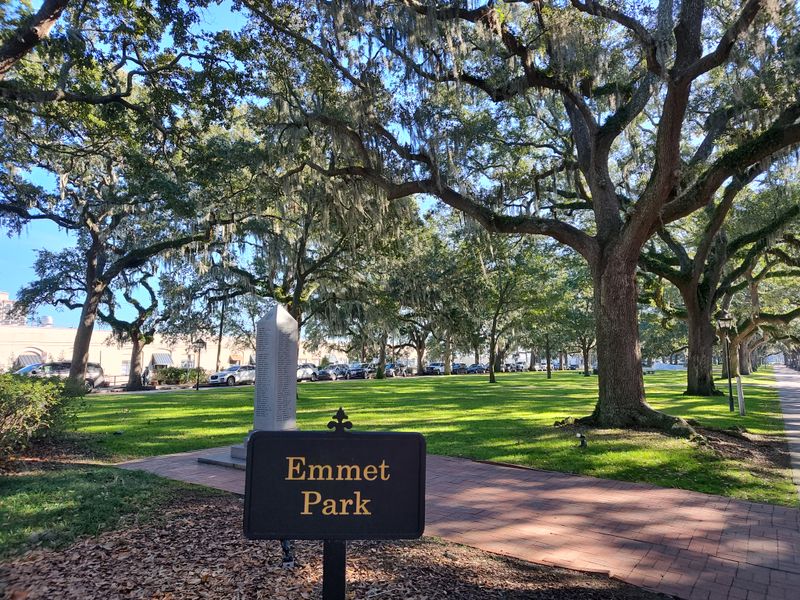
Right beside River Street sits Emmet Park, which most tourists walk through without reading the monuments. Locals know this small green space at East Bay Street and East River Street honors Irish immigrants who shaped Savannah’s history and commemorates Civil War events that unfolded nearby. The Irish memorial specifically recognizes the thousands of Irish workers who died building Georgia’s railroads and infrastructure in brutal conditions.
The park’s Civil War markers tell stories of Savannah’s occupation and the complicated loyalties that divided Georgia families. Standing here, you’re literally between the commercial waterfront and the historic city grid, which is exactly where much of Savannah’s tension played out during that era. The location isn’t random—it’s meaningful.
I appreciate that Emmet Park exists as a quiet counterpoint to River Street’s commercial energy. It offers historical context that deepens your understanding of who built this city and what they sacrificed. The Irish contribution to Georgia often gets overlooked, but this park insists on remembering them and the price they paid.
12. Watching Container Ships Slide Past
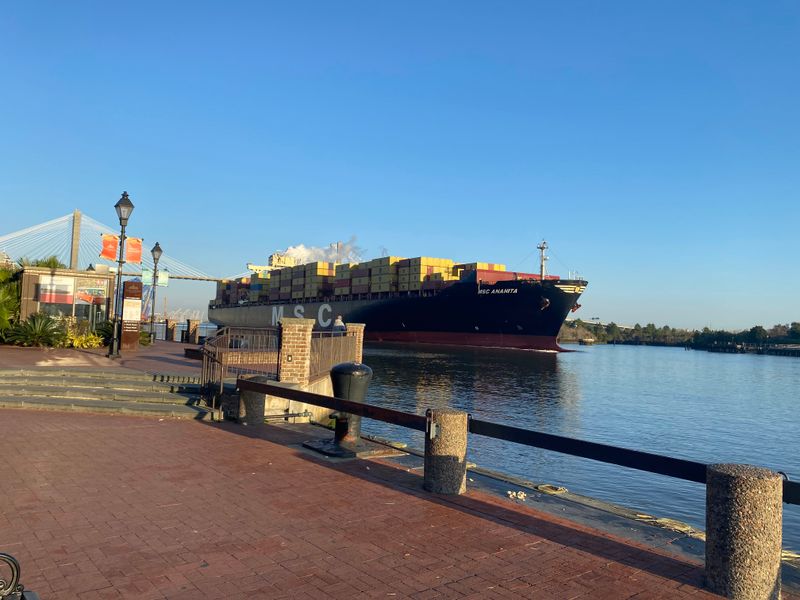
Savannah’s port is one of the busiest on the East Coast, and River Street offers a rare front-row seat to massive container ships navigating the river. Locals know to pause and watch when these giants pass—they’re so close you can see crew members on deck and read shipping company names on the stacked containers. It’s one of the few places in Georgia where you’re this near to international commerce in motion.
The size of these vessels is genuinely impressive. They dwarf the riverboats and tour boats that share the water. Watching them maneuver the river’s curves requires skill from the pilots guiding them.
The ships move slowly, almost gracefully despite their bulk, creating wakes that slap against the seawall minutes after they’ve passed.
I never get tired of this view. Each ship represents global trade, goods moving between continents, and Savannah’s continued importance as a shipping hub. Tourists might glance and move on, but locals understand we’re watching Georgia’s economy float past.
That connection to something bigger than our small waterfront makes every sighting feel significant.
13. Free Ferry to Hutchinson Island
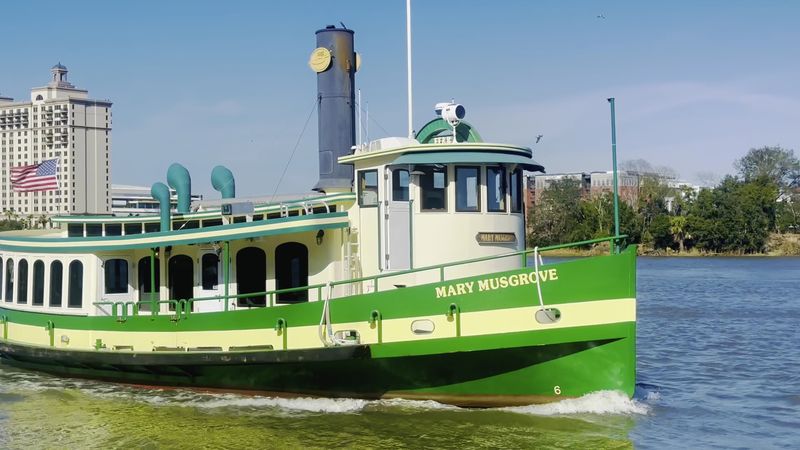
One of the best-kept local secrets is the free ferry that runs between River Street and Hutchinson Island. Most visitors have no idea it exists, but Georgians who know Savannah use it regularly for a quick river crossing and different perspective on the waterfront. The ride takes just a few minutes and costs nothing, making it perfect for a brief escape or a scenic shortcut.
Hutchinson Island offers walking trails, event spaces, and quieter river views away from River Street’s crowds. The ferry operates on a regular schedule, and locals treat it casually hopping on for a round trip just to enjoy the breeze or to show out-of-town friends something unexpected. It’s functional transportation that doubles as a mini river tour.
I recommend the ferry to anyone who wants to see River Street from the water without paying for a riverboat cruise. The view back toward the historic waterfront is beautiful, especially at sunset when the old buildings glow. It’s a simple pleasure that reminds me why locals love Savannah—we’ve got these little gems that don’t require spending money or fighting tourist crowds.
14. Nightlife Versus History Contrast
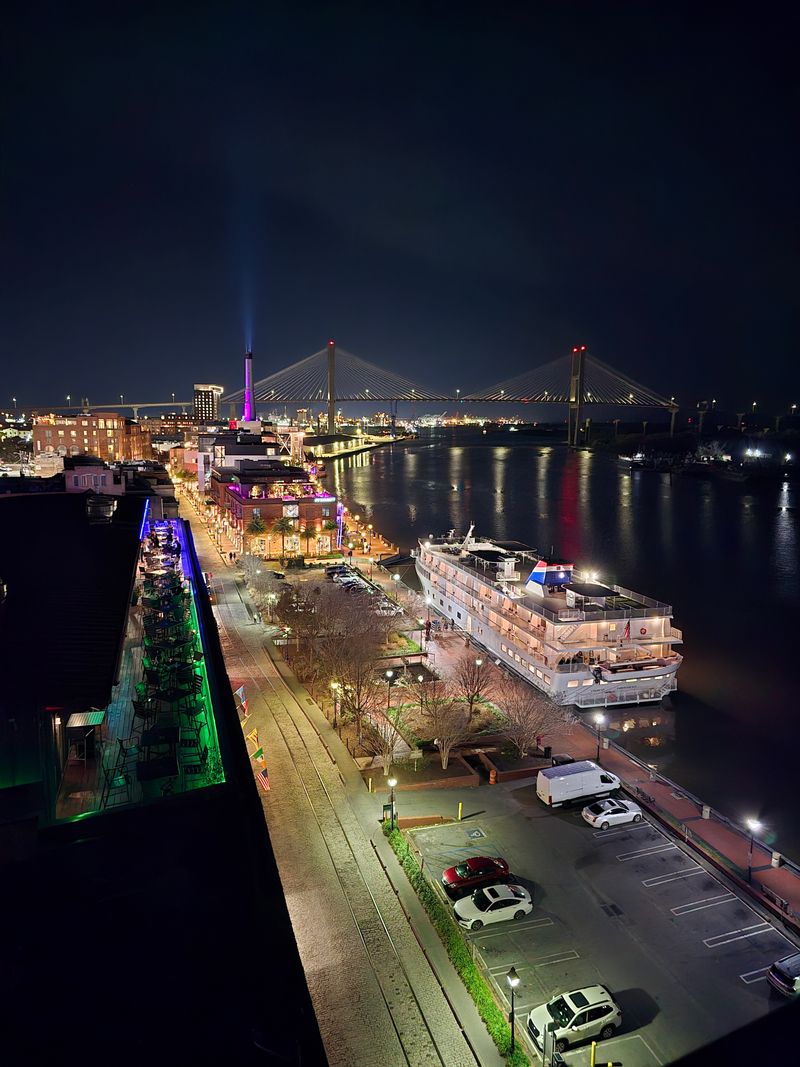
River Street’s identity shift from industrial docks to entertainment district creates a contrast that locals find both amusing and slightly jarring. Buildings that once stored cotton and goods now house bars blasting music and restaurants serving tourists. Historic markers share wall space with neon beer signs.
It’s a weird blend that somehow works, though not everyone appreciates the transformation equally.
Daytime River Street leans into history and shopping. After dark, the bar scene dominates, especially on weekends when crowds spill onto the cobblestones with drinks in hand. The party atmosphere feels disconnected from the somber history these buildings represent.
Locals who remember quieter times sometimes shake their heads at the changes, while younger Georgians embrace the nightlife energy.
I see both sides of this tension. Savannah needed to adapt these structures for modern use or risk losing them to decay. Tourism and entertainment provide the revenue that funds preservation.
But something does feel odd about doing shots in a building where enslaved people suffered. That uncomfortable coexistence of past and present defines much of River Street’s current character.