This Bizarre North Carolina Museum Has A 2,000-Year-Old Cat Mummy And Real Cats Roaming Inside
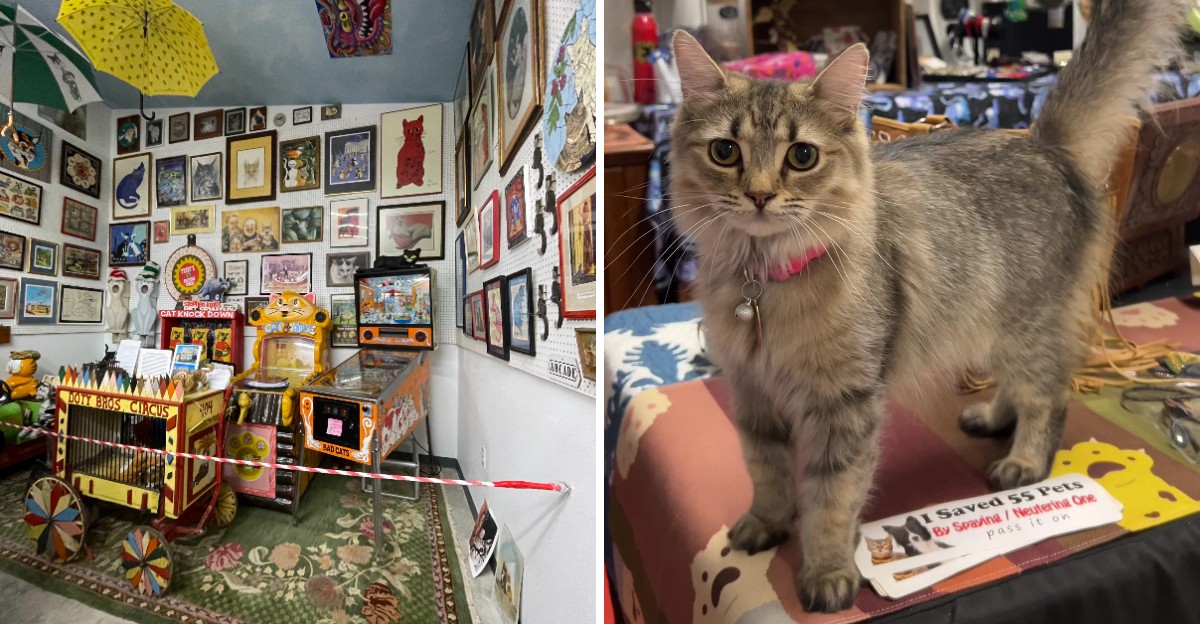
A 2,000-year-old Egyptian cat mummy sharing a building with living cats is enough to derail my entire road-trip plan.
I would go for the ancient relics and probably end up following one of the resident kitties from room to room.
This North Carolina museum packs thousands of feline artifacts into one wonderfully strange stop, including pieces tied to ancient Egypt and centuries-old European homes.
The roaming cats make the whole place even harder to treat like a normal museum.
Some wander the halls like they own the collection, which, honestly, feels appropriate.
My favorite part comes at the end.
Admission helps support a nearby cat shelter, so the visit does more than satisfy my curiosity.
Ancient history, bizarre cat art, and purring little tour guides under one roof?
I would be there embarrassingly fast.
Your Furry Tour Guides Clock In Every Single Day
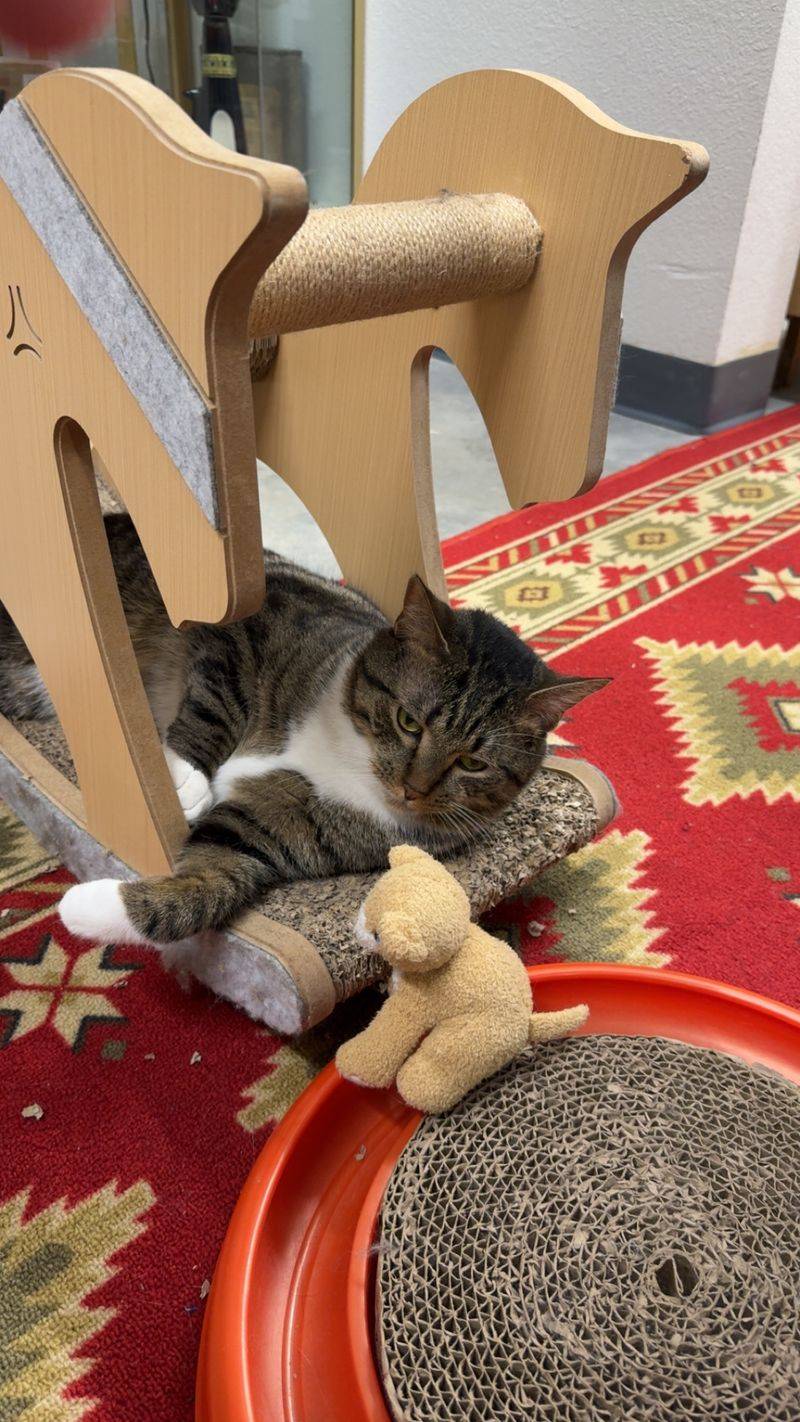
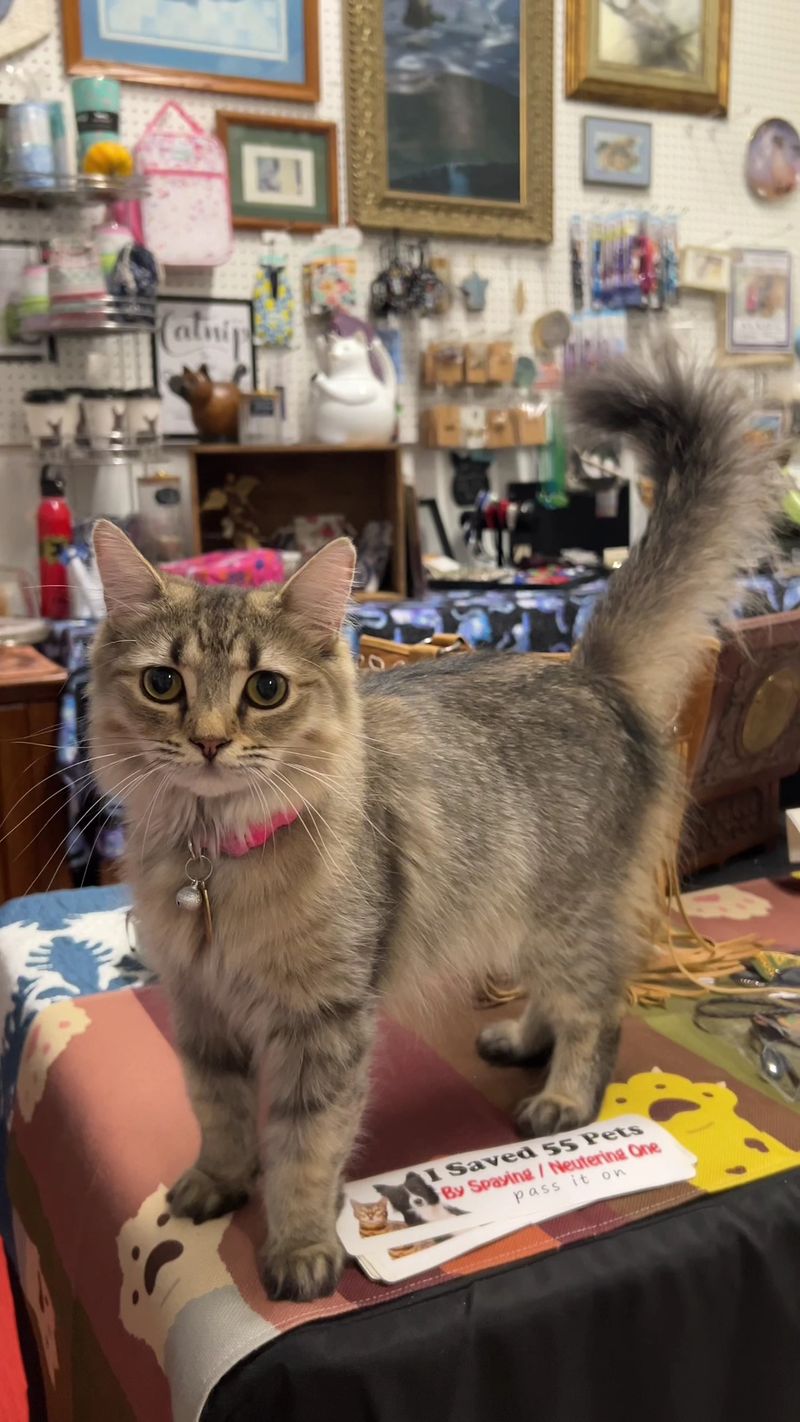
Most museums post guards near the good stuff, but the American Museum of the House Cat posts actual cats. Several resident felines live inside and wander the exhibits as they please.
The museum calls them its MuseumCats, and each one seems to take the job seriously.
The museum’s current lineup of feline hosts includes Amelie, Oliver, Finnegan, Galileo, and Keelie. These resident MuseumCats welcome visitors in their own unpredictable ways.
Some may wander through the exhibits or approach guests for attention, while others prefer watching the activity from a comfortable resting spot.
Socialization is a fancy word for getting used to people, so your friendly hello actually helps. Just let each cat decide how much attention it wants.
Cats run on their own schedules, of course. One might trot beside you through a gallery, while another stays curled up and completely unbothered.
Each cat has its own vibe, which keeps things interesting. You never quite know who will greet you at the next display case.
Bring a lint roller if you’re wearing black. Fur souvenirs are free here, and nobody checks them at the door.
A 2,000-Year-Old Cat Mummy Steals The Spotlight
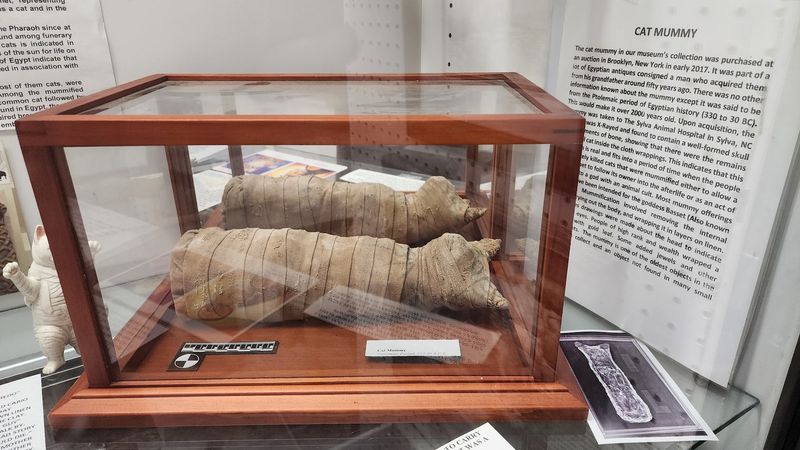
Somewhere between 300 and 30 B.C., someone in ancient Egypt carefully wrapped a cat for eternity. Today, that very mummy sits in a mountain museum in North Carolina.
That’s the star behind this article’s headline, and it earns the attention. The cat mummy is genuine, not a prop or a clever replica.
Ancient Egyptians held cats in high regard. They admired them for guarding grain from mice and linked them to their gods.
Seeing a real mummy up close helps that history click. A textbook picture is one thing, but a 2,000-year-old artifact in front of you feels very different.
Take your time at this display. Notice the wrapping patterns and think about the hands that made them so long ago.
Parents of younger kids may want to give a quick heads-up first. Some children find mummies fascinating, while others find them a little spooky.
Either reaction is fair, honestly. A cat that has been around longer than the Roman Empire deserves a little awe.
Afterward, look around for the living cats nearby. The contrast between ancient and modern felines is half the fun.
A Goddess And A Chimney Cat Share The Spotlight For Weirdest Relic
Bastet was a big deal in ancient Egypt. She was a feline goddess linked to home, protection, and joy.
The museum displays a bronze statue of Bastet dating back to about 600 B.C. That makes her even older than the famous cat mummy.
Bronze cat figures were common offerings in Egyptian temples. It makes sense, since cats have always carried themselves like royalty.
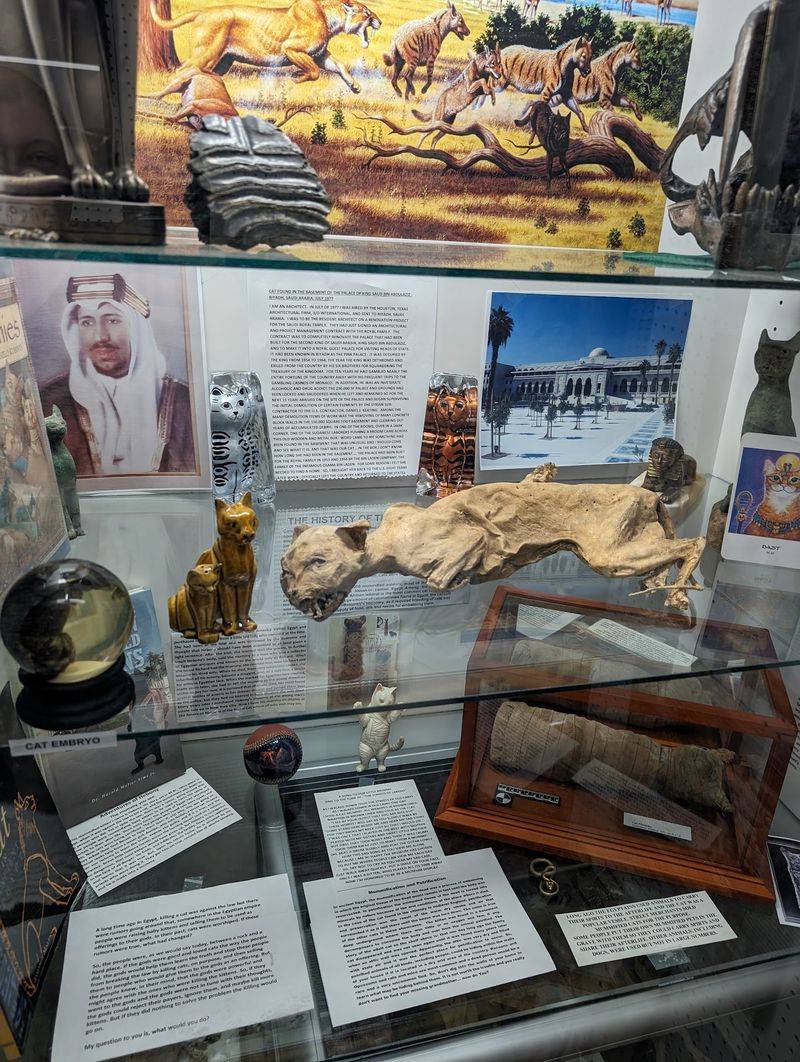
Now for the stranger neighbor. A petrified cat, found in the chimney of a 16th-century home in England, is also on display.
The unusual specimen was discovered inside the chimney of an old English house. Its remarkable preservation offers a glimpse into a centuries-old practice of concealing cats within buildings.
Put these two side by side in your mind, and you get a wild timeline. One cat was honored as divine, while another ended up hidden in a chimney.
It’s odd, a little eerie, and impossible to forget. You’ll probably still be talking about this one on the drive home.
Kids who love weird science will have plenty of questions. Use them as a chance to talk about how people long ago thought about cats.
Carousel Cats And Clockwork Toys Bring Out Your Inner Kid
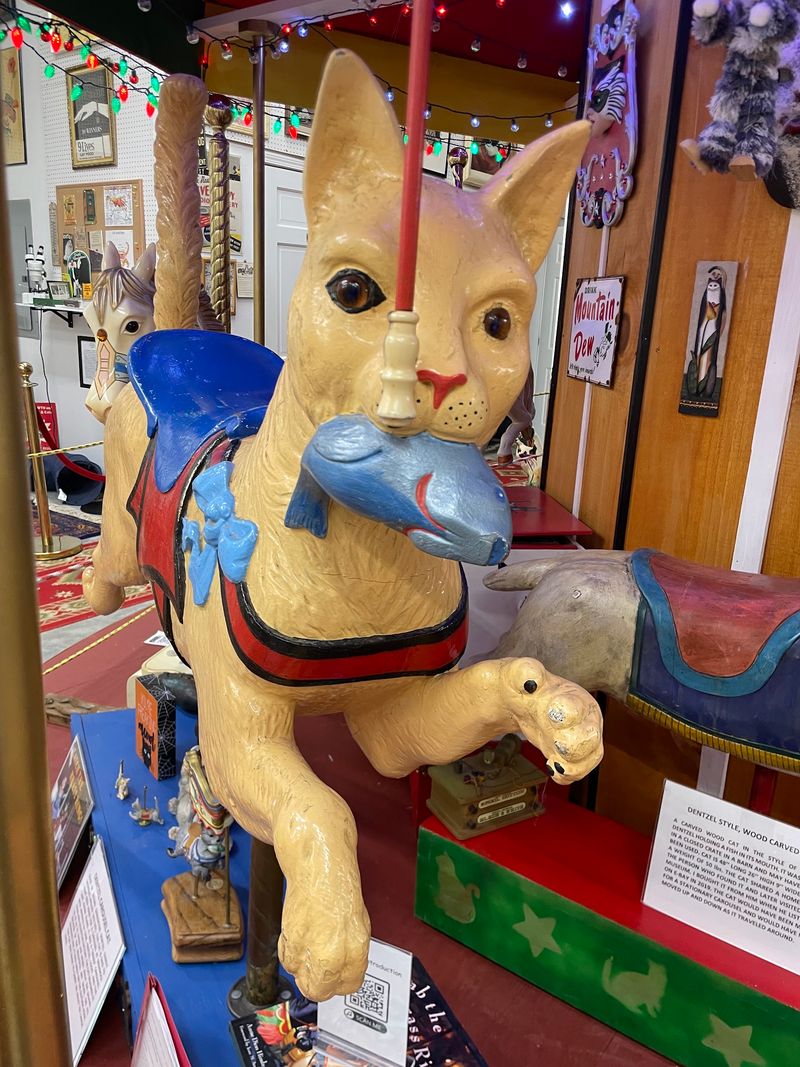
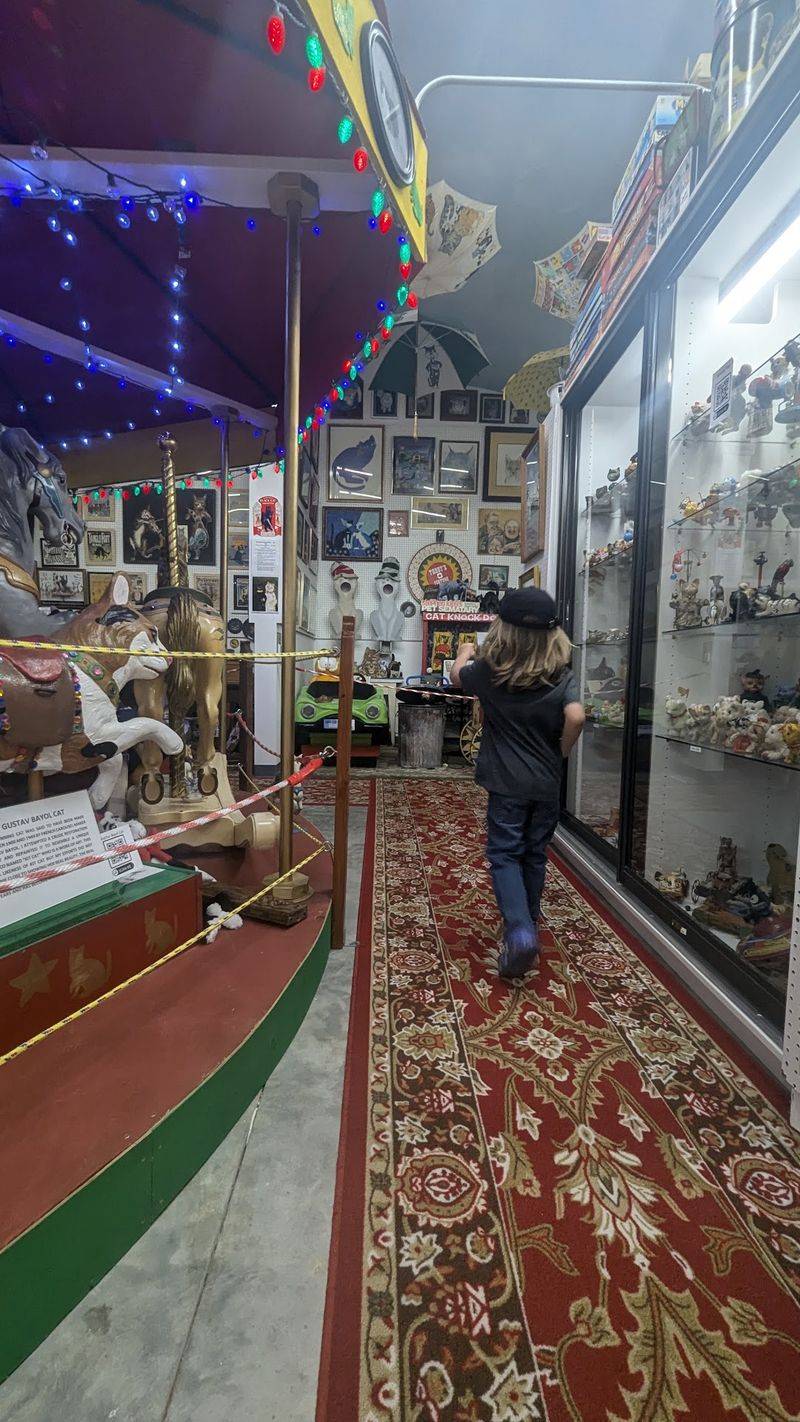
Carousel horses get all the glory, so it’s nice to see cats finally take a turn. The museum features carousel cats, and some are cleverly disguised as horses.
That sneaky detail makes this area feel like a game. Look closely at each one and see which riders are really felines wearing a clever costume.
Nearby, shelves hold vintage and antique toy cats from many eras. Some of the most impressive are automatons from the 1890s.
An automaton is an early mechanical toy that could move on its own. Think of them as the great-great-grandparents of today’s battery-powered gadgets.
These toys were built long before screens existed. People back then got their thrills from gears, springs, and clever design.
Kids often connect with this section fast, since toys speak a universal language. Grown-ups might spot a few pieces that look like something from grandma’s attic.
Keep your phone camera ready for this area. Whimsical old toys make some of the most charming photos in the building.
Still, keep your hands to yourself. Antique toys are fragile, and the resident cats already have dibs on anything worth batting around.
Every Wall Hides Cat Art Worth A Second Look
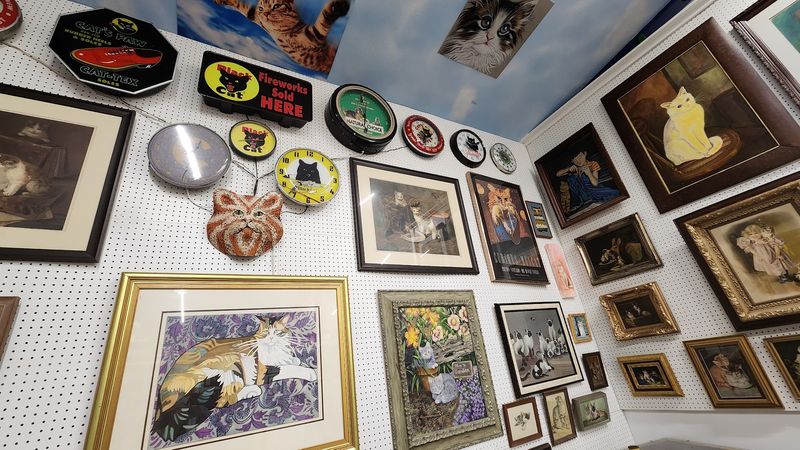
Cats have been posing for artists for centuries, and they rarely charge a fee. The fine art here dates back to the late 1800s.
Modern art and folk art fill out the collection too. That mix means a formal painting might hang near something playful and handmade.
Fans of quirky illustration should hunt for the works by Louis Wain. He was a British artist famous for drawing cats that act like people.
Glass lovers get a treat as well. The museum shows art glass cats from glassmakers around the world.
Then comes the advertising. Cats once helped sell all kinds of products, and the museum keeps rare ad pieces, clocks, and storefront displays.
Those old ads offer a fun peek at everyday life from decades past. They also prove marketers figured out the power of a cute cat long before social media.
Cat poster art adds even more color to the mix. Give yourself time here, because details hide on shelves, walls, and corners.
Rushing through would be like skimming a great book. You’d technically finish, but you’d miss the best parts.
The Retired Professor Known As The Catman Built All Of This
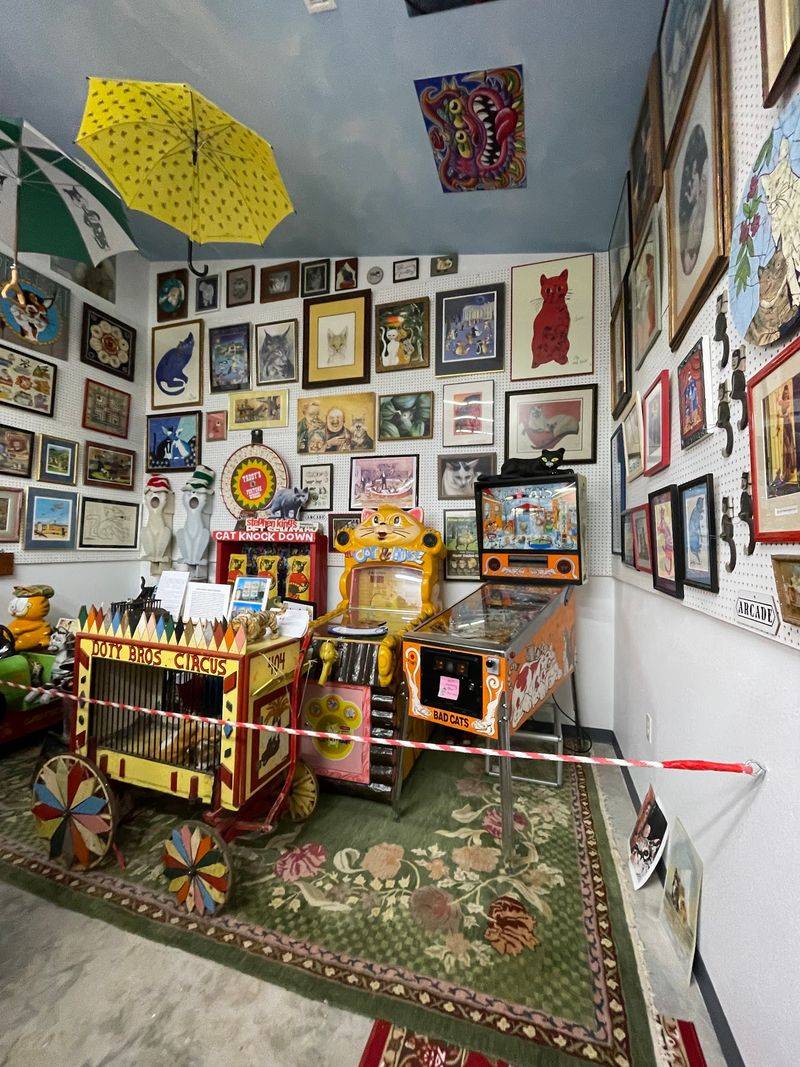
Every great collection starts with one person who couldn’t stop. For the American Museum of the House Cat, that person was Dr. Harold Sims.
Dr. Sims was a retired biology professor. Friends and fans affectionately called him The Catman, a nickname he clearly earned.
He spent roughly 30 to 35 years gathering cat items. The result grew into thousands of artifacts, with estimates ranging from 5,000 to 10,000 pieces.
That’s a serious commitment to a single theme. Most of us can’t stick with one hobby for a full summer, let alone three decades.
The museum opened on April 1, 2017. In 2020, it moved to a larger building to give the collection more room.
Dr. Sims passed away in 2024, and the museum carries on in his honor. His passion still shows in every carefully arranged shelf.
Knowing his story changes how you see the place. You’re not just browsing random objects, you’re looking at one man’s lifelong love letter to cats.
Keep that in mind as you explore. Collections like this take decades to build and only exist because someone cared enough to start.
Your Admission Ticket Quietly Rescues Shelter Cats
Here’s the part that makes a quirky outing feel even better. Admission revenue helps keep the museum operating while also supporting Catman2 Shelter and its feline rescue programs.
Dr. Sims founded Catman2 in 1996, creating a cage-free shelter where cats could live and interact without spending their days confined to cages.
In 2002, he moved the operation into a specially built shelter, allowing the rescue mission to grow.
The museum was created partly to raise money for that shelter. It also shares the history of how people and cats have lived together.
Your visit supports shelter programs, including discounted spay and neuter services. Those services help keep the local cat population healthy and manageable.
The museum is a 509(a)(2) public charity. In plain words, it’s a nonprofit built to help cats, not to make someone rich.
So every admission pulls double duty. You get an afternoon of oddities, and shelter cats in North Carolina get real support.
Cat lovers often wonder how to help beyond their own homes. Buying a ticket here is about the easiest way possible.
Want to go a step further? Many shelters welcome supply donations, so check with Catman2 directly before you drop anything off.
That feels like a fair trade for an hour of browsing. Few souvenirs come with that kind of feel-good bonus.
Bookworms And Leashed Pets Both Get A Warm Welcome
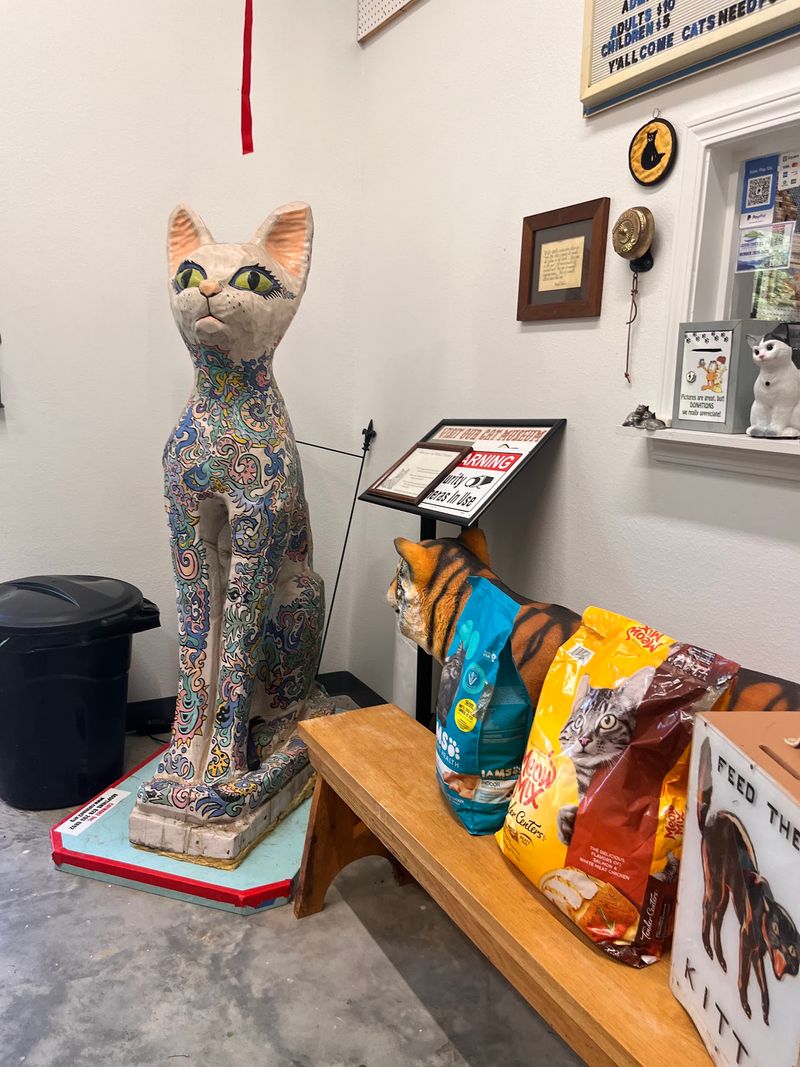
Not every museum invites you to bring your own cat. This one does, as long as your pet stays on a leash, in a harness, or in a carrier.
Dogs are welcome under the same rules, provided they behave. A calm pup in a cat museum is a funny sight, but it’s allowed.
Think about your own pet’s personality first. A shy cat might prefer the couch at home over a building full of new smells and resident felines.
Book lovers have something special waiting too. The museum offers a research library focused on the history of the house cat.
That’s a rare resource, since only two museums in the United States focus solely on house cats. Students, writers, and serious cat fans could easily lose track of time there.
Bring a notebook if you enjoy research. A question sparked by one display might lead you straight to the shelves.
Restrooms are available for museum patrons, which matters on a long mountain drive. Small comforts like that make a stop easy to plan.
Between the books, the pets, and the artifacts, the place covers a lot of ground. Curiosity of any kind gets rewarded here.
Plan Your Stop Before You Hit The Mountain Highway
Good news for spontaneous travelers. The American Museum of the House Cat is open seven days a week.
Hours run 10 a.m. to 5 p.m. Monday through Saturday. On Sundays, doors open at noon and close at 5 p.m.
The last tour usually starts at 4:30 p.m., so don’t cut it close. Arriving earlier gives you time to soak in the collection without hurrying.
Mark your calendar around holidays too. The museum closes on Thanksgiving Day, Christmas Eve, Christmas Day, and New Year’s Day.
You’ll find it at 5063 US Highway 441 South, Sylva, NC 28779. The spot sits in western North Carolina, which makes it an easy add-on to a mountain road trip.
The museum stretched its schedule to a full seven-day week in May 2024. That change makes it easier for weekday travelers to swing by.
A quick check before holiday trips is always smart. It beats facing a closed door after a long drive.
Pack a little patience for the cats, too. They might block a hallway, demand a scratch, or ignore you completely.
All three outcomes count as the authentic experience. Honestly, getting snubbed by a museum cat might be the best souvenir of all.