This California All-You-Can-Eat Seafood Buffet Was Voted The Best In Los Angeles
A seafood dinner usually requires choices. Shrimp or crab? Something hot or something chilled? One reasonable plate or the inevitable second round?
A good buffet makes restraint harder. Committing to a single favorite feels unnecessary when you can wander back and reconsider your priorities as many times as your appetite allows.
California seafood lovers may want to arrive hungry, because choosing just one plate here would almost defeat the purpose.
This particular spread has attracted serious attention in Los Angeles, earning recognition in a city where diners certainly are not short on options.
That alone makes the experience intriguing, but a buffet lives by what happens once you actually start filling the plate.
And that is when strategy becomes surprisingly important. After all, nobody wants to discover something irresistible when they have already run out of room.
A Buffet That Earned Top Honors In Los Angeles
Awards come and go in the restaurant world, but a title like best buffet in LA sticks around for years.
Cafe Sierra was previously voted The Best Buffet in LA by the Los Angeles Daily News, and that recognition still shapes how people talk about the place.
Forbes has also pointed to it as a top luxe brunch spot, which helps explain the steady weekend crowds.
What makes the reputation interesting is that the restaurant sits inside a hotel rather than a standalone dining room.
Hotel buffets often get overlooked, yet the seafood focus here pushed this one into the spotlight.
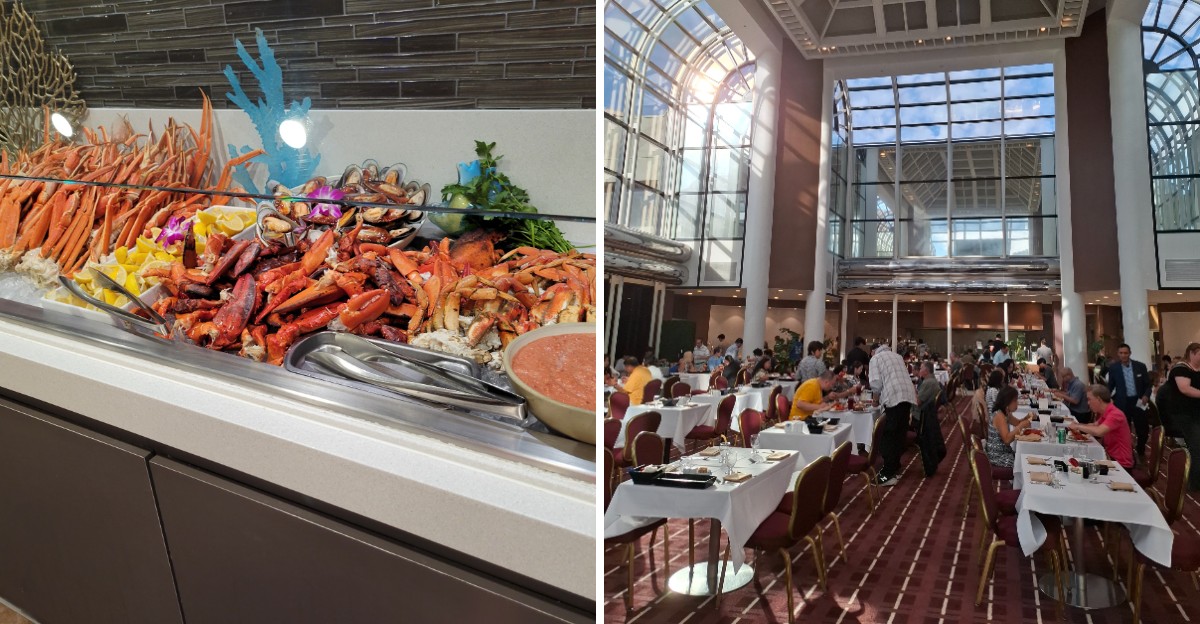
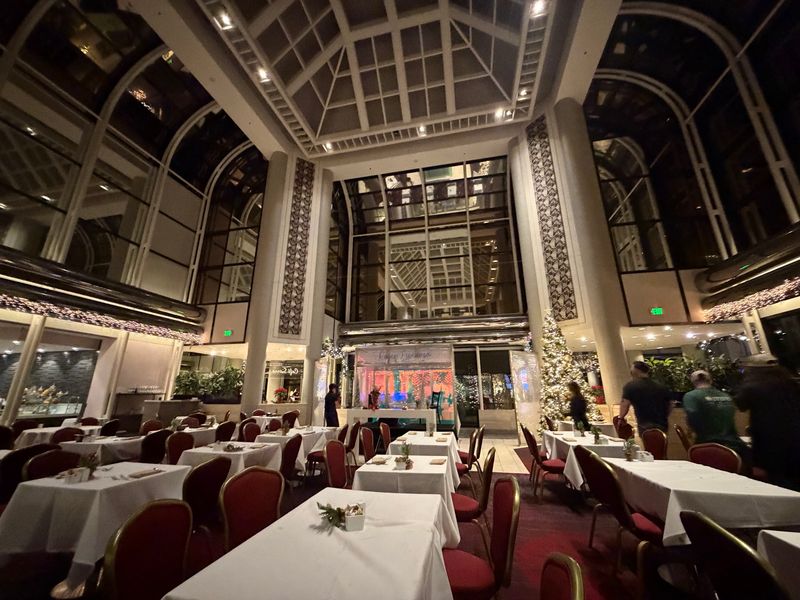
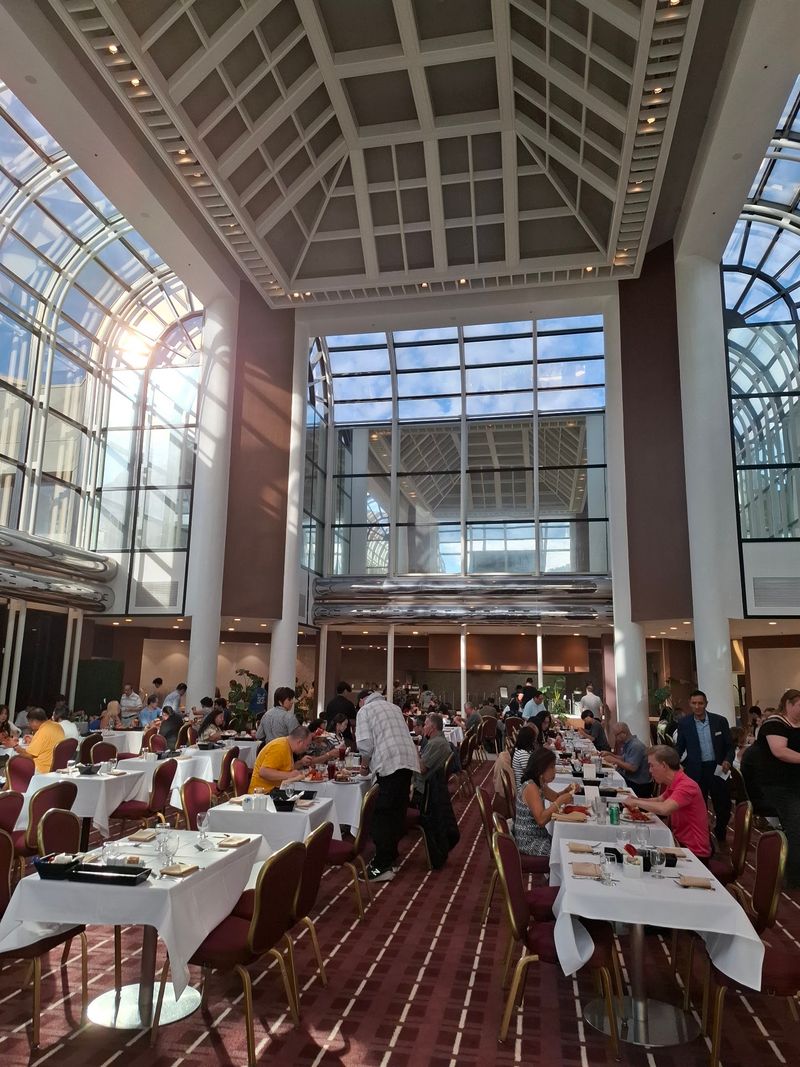
The dining room itself reads as comfortable rather than formal. Tables are spaced for groups, the carpet and chairs show their age, and the overall feel leans toward relaxed hotel dining instead of fine-dining polish.
Live music appears on many evenings, usually a single musician performing near the center of the room. The sound stays soft enough for conversation while adding a little warmth to the space.
Guests generally describe the staff as attentive and friendly, with servers checking in regularly and station chefs happy to explain what is being served.
Anyone expecting a glossy, modern interior may find the room plain, so setting expectations around food and service rather than decor tends to make the visit more enjoyable.
Set Inside The Hilton Los Angeles/Universal City
Finding the restaurant is simple once the hotel tower comes into view above the freeway.
Cafe Sierra operates inside the Hilton Los Angeles/Universal City at 555 Universal Hollywood Drive, Universal City, CA 91608.
The location puts it directly across from Universal Studios Hollywood and the CityWalk entertainment area.
Guests staying at the hotel can reach the restaurant without stepping outside, which helps on hot afternoons or rainy weekends. Visitors driving in will use the same parking structure as hotel guests.
Self-parking runs about $12 and valet service runs about $18 according to current information, though rates can change.
Validation at the restaurant matters, since unvalidated parking has cost diners considerably more at the exit gate.
The area around the hotel stays busy on weekends because of theme park traffic. Arriving with extra time built in keeps the start of the meal calm rather than rushed.
Pairing a buffet visit with a park day works well for some families, though a full afternoon at Universal followed by a heavy dinner can feel like a lot in one stretch.
Splitting the two across different days gives the meal more room to breathe.
Accessibility is generally straightforward since the restaurant sits within a full-service hotel with elevators and level interior walkways.
Whole Lobsters Headline The Dinner Spread
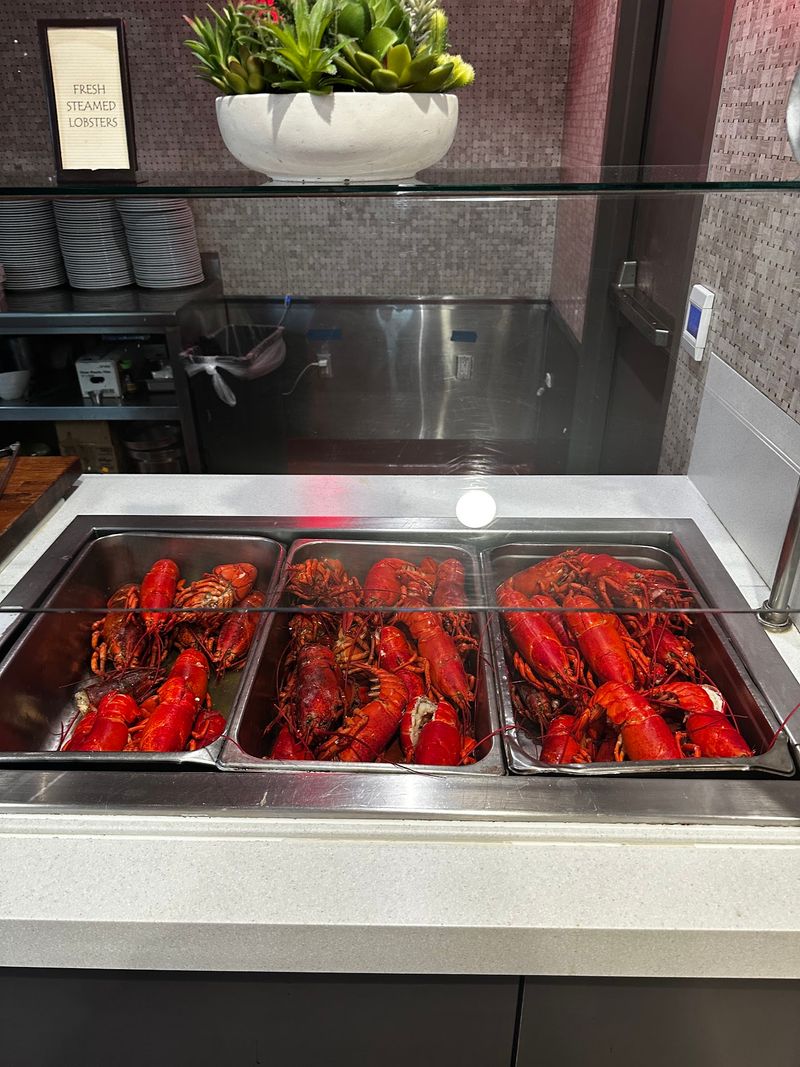
Most buffets hand out a single lobster tail and call it a luxury item.
Here the dinner menu lists whole lobster among the unlimited seafood choices, which puts the restaurant in a small category nationwide.
Seeing an entire lobster arrive rather than a portioned tail changes the feel of the meal right away.
Pulling apart a whole lobster takes a bit of work, so the pace of eating naturally slows down.
Cracking tools and butter are provided, and staff at the station will help guests who are new to the process.
A one-lobster-at-a-time policy has been reported by diners, meaning repeat trips to the station are part of the routine.
Anyone planning to eat several will spend time walking back and forth rather than stacking plates.
Preparation quality does vary, and experiences with texture have ranged from excellent to disappointing depending on the visit.
Ordering a fresh one from the station rather than taking from a tray that has been sitting may improve the odds.
The lobster is genuinely a centerpiece rather than a garnish, and it explains much of why guests travel across Southern California for a table.
King Crab And Snow Crab Share The Spotlight
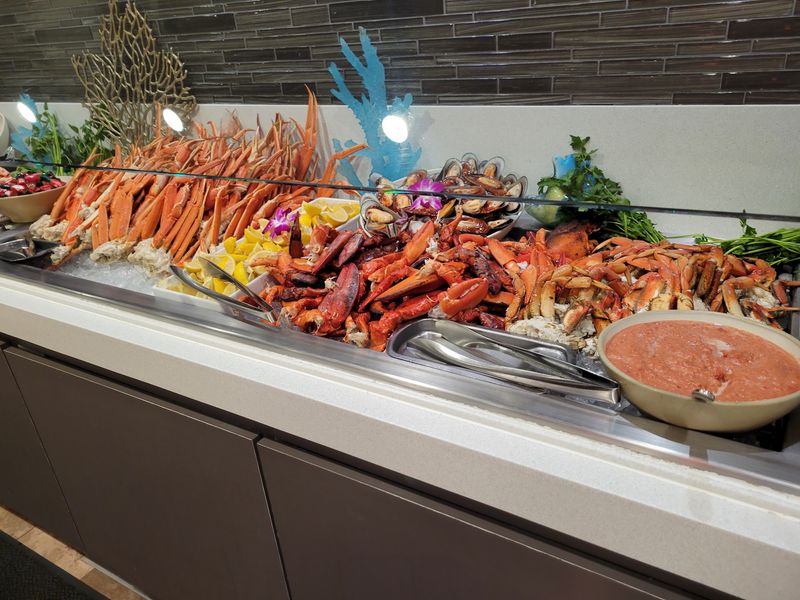
Crab is the reason plenty of guests book a table in the first place.
Dinner service currently includes both king crab and snow crab legs, giving diners two distinct textures and flavors to work through.
King crab brings thicker, meatier segments while snow crab clusters tend to be sweeter and easier to crack.
The crab station ranks among the most mentioned features of the restaurant, and Alaskan king crab in particular draws attention. Sizes can vary from visit to visit, so expectations should stay flexible.
Brunch service also features snow crab, which gives daytime visitors a shot at the same experience for a lower price.
Shell crackers and small forks are available, though the work still takes patience. Building a small pile before sitting down saves trips, and a second plate for shells keeps the table manageable.
Crab pairs well with simple sides rather than heavy sauces, and many guests eat it plain with a squeeze of lemon. Melted butter is available for those who want it.
Pacing matters here more than anywhere else on the buffet. Filling up on rice, bread or pasta early leaves less room for the items that justify the price tag, so starting with crab is a common strategy among regulars.
Sushi And Sashimi Get Their Own Station
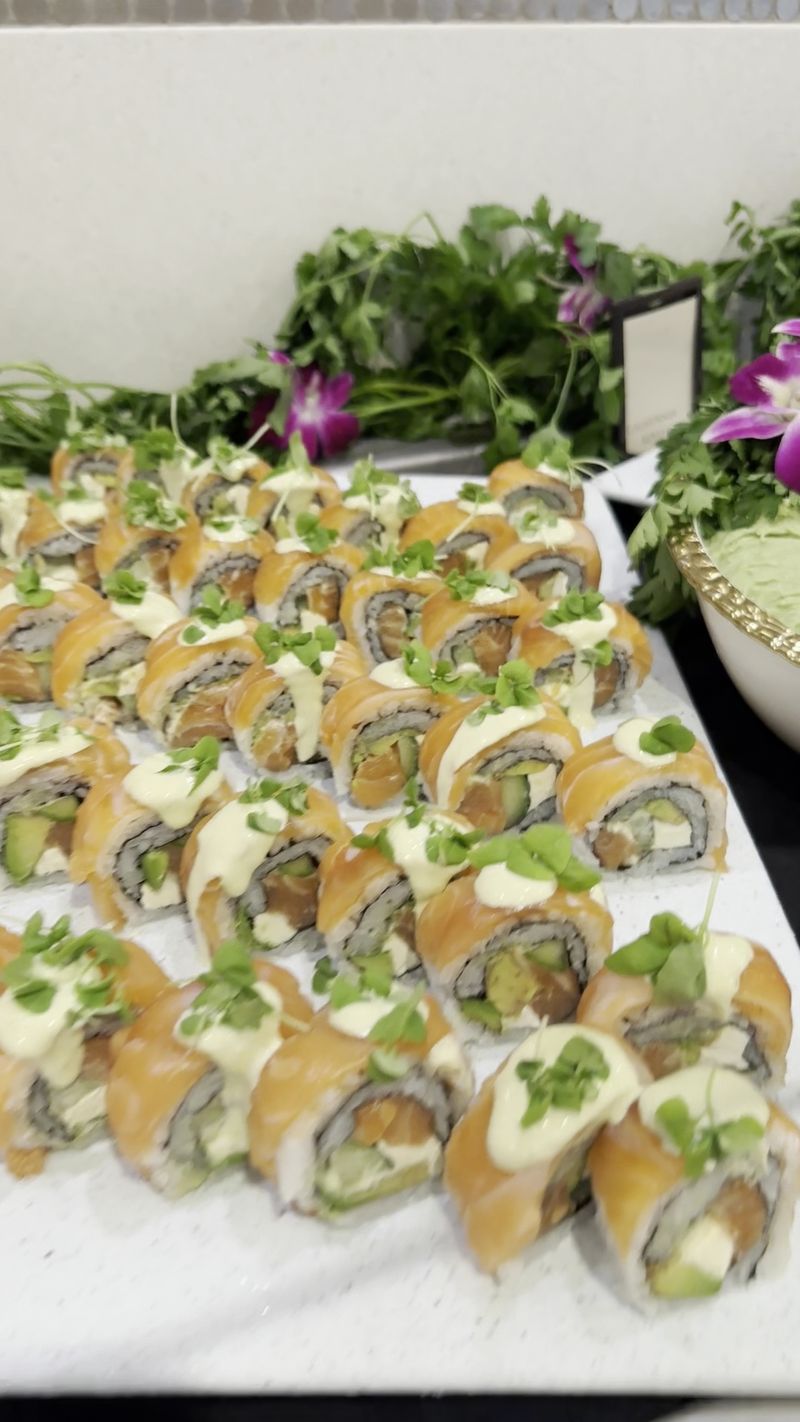
Not every seafood buffet bothers with a real sushi program.
Freshly prepared sushi and sashimi appear on the dinner spread, with a dedicated station handling the work. A sushi chef is often on hand making hand rolls to order.
Made-to-order hand rolls give the section a different rhythm than the rest of the buffet. Instead of grabbing from a tray, guests wait a minute or two while the roll is assembled.
Tuna and crab show up regularly among the fillings, and the quality of the fish has drawn consistent compliments. Soy sauce, wasabi and pickled ginger are set out alongside.
Timing helps at this station. Visiting shortly after opening or during a lull means shorter waits and fresher cuts than during the peak rush.
Sashimi works nicely as a palate reset between rounds of buttery lobster and rich prime rib. A few slices in the middle of the meal can make the later courses easier to enjoy.
Guests with rice-heavy appetites should be careful here, since sushi fills a stomach quickly. Ordering hand rolls with lighter rice or sticking to sashimi keeps room available for the rest of the spread.
The station adds genuine range to a meal that could otherwise feel like one long shellfish marathon.
Carving Station Options For Land Lovers
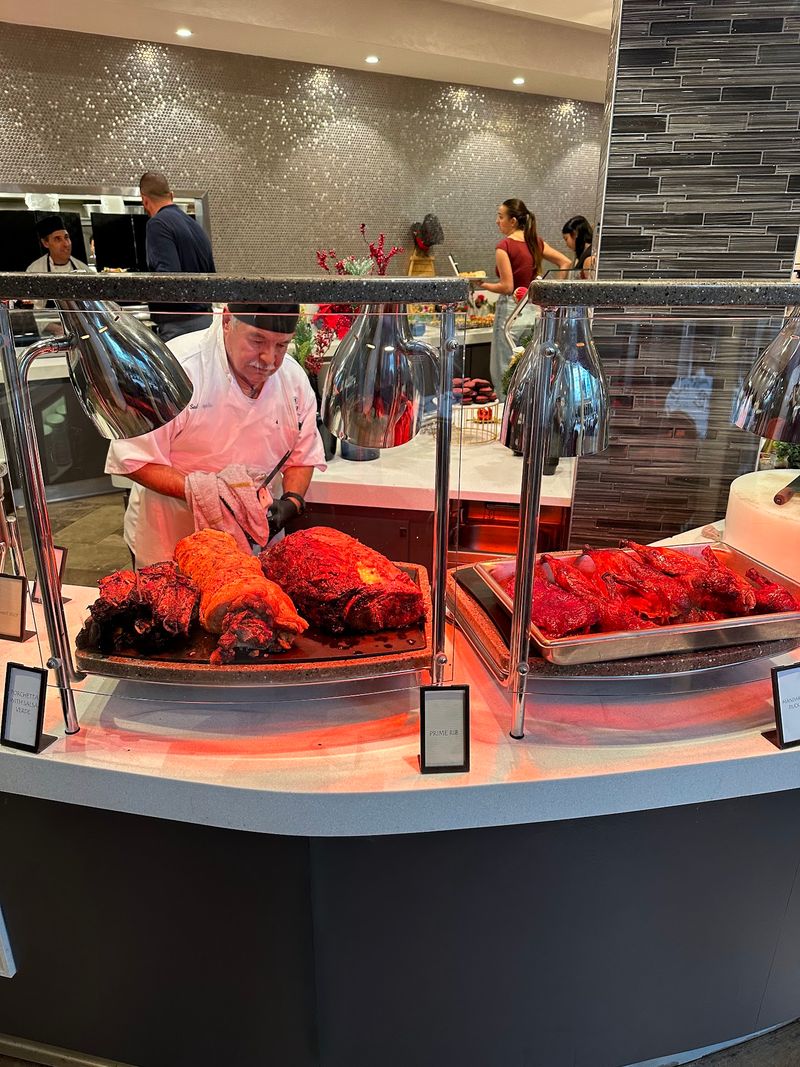
Bringing a non-seafood eater along does not mean settling for salad and bread rolls.
Current dinner offerings include New York steak, short ribs and pork belly, along with additional items such as filet mignon and lamb chops. Prime rib is one of the most frequently mentioned dishes at the restaurant.
A carving station handles the larger cuts, with a chef slicing portions to order. Station staff are generally happy to explain what is available and answer questions about preparation.
Roast duck has also appeared on the spread, reflecting the kitchen’s long history with Pacific Rim style cooking.
The mix of Californian and Pan-Asian dishes gives the hot side more variety than a standard steakhouse lineup.
Side dishes such as rice, macaroni and roasted vegetables round out the hot section for guests who want a more traditional plate.
Allergy cards are stationed around the buffet, which makes navigating the spread easier for anyone avoiding shellfish, dairy or other ingredients.
Staff have also been known to walk guests through the stations when dietary needs come up.
Dessert Station Worth Holding Back For
Saving room sounds like advice nobody follows, and yet it applies here.
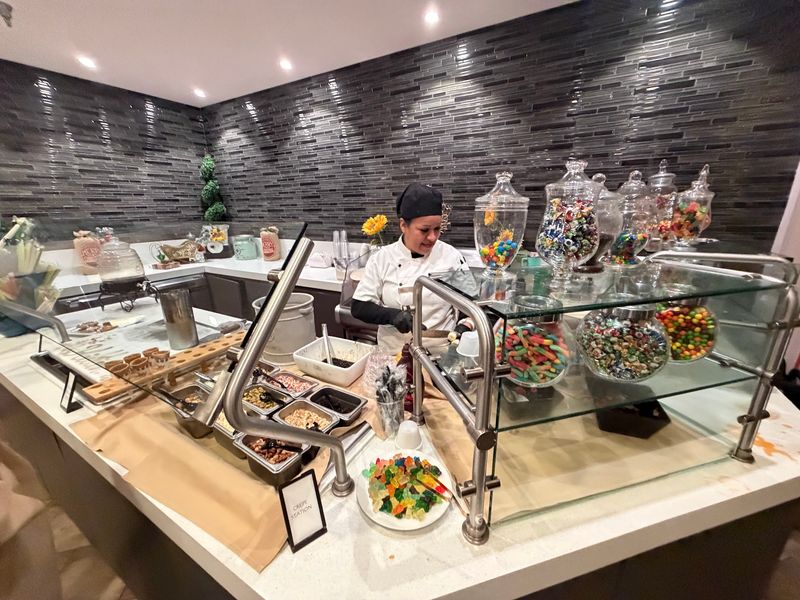
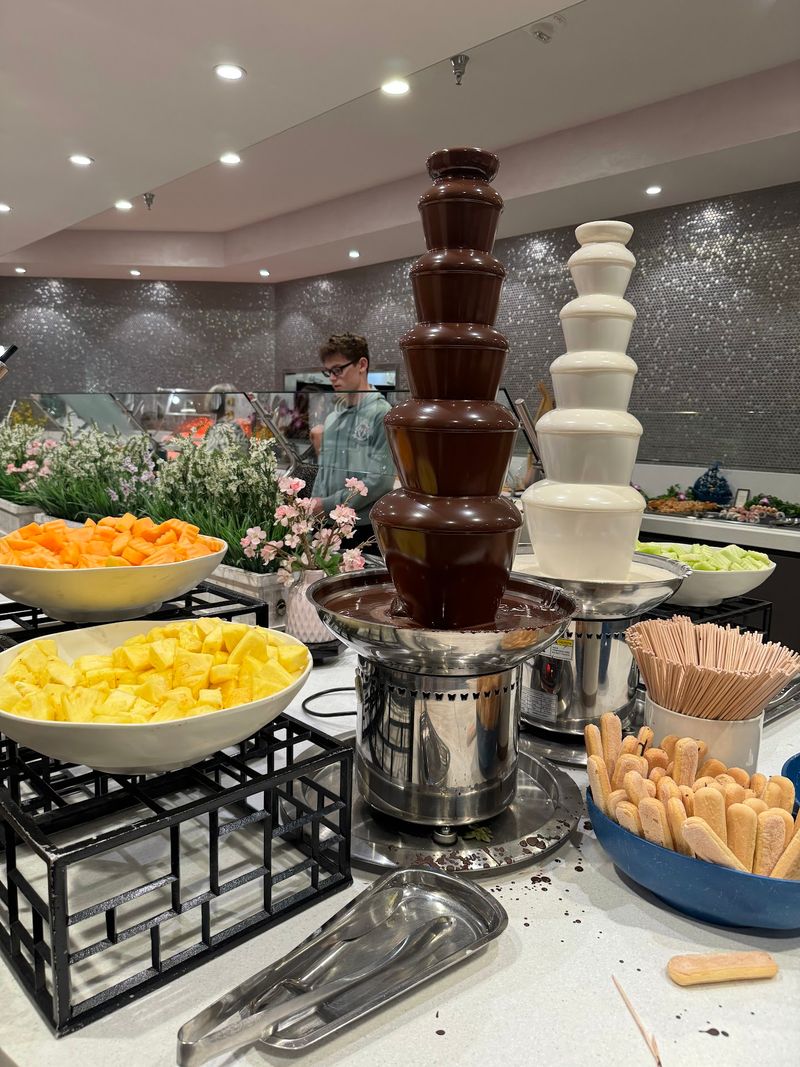
A dedicated dessert station anchors the end of the meal, and special-event spreads have featured everything from crepes and ice cream to a chocolate fountain.
Cakes, pies, creme brulee and bread pudding have also appeared among the choices.
Crepes made fresh at the station give the area a little theater, and the chocolate fountain is a reliable draw for kids and adults alike. Strawberries for dipping sit nearby.
Ice cream options let guests build simple combinations rather than committing to a full slice of cake. Smaller portions across several items tend to work better than one large plate.
Desserts function as a pleasant finish rather than the main reason to visit, which is worth keeping in mind after a heavy round of crab and lobster.
A short break between the savory stations and the sweets helps. Sipping water or coffee for ten minutes makes the last course far more enjoyable.
Families with children often find this section the easiest part of the meal, since the chocolate fountain and ice cream need no explanation.
Pricing Places It Firmly In Splurge Territory
Sticker shock is a real part of the conversation around this restaurant.
As of September 2026, the posted regular prices are $95 for weekend brunch and $139 for dinner. Those numbers place the buffet among the most expensive of its kind in the region.
Special occasions drive most visits as a result. Birthdays, anniversaries and milestone celebrations fill the dining room far more often than casual weeknight appetites.
Soft drinks are included with the meal, while other beverages are sold separately. Assuming anything beyond the listed inclusions can lead to surprises at the end.
Brunch offers the gentler entry point for anyone curious but hesitant about the dinner rate. The seafood selection remains substantial even at the lower price.
Planning a lighter meal earlier in the day helps guests make the most of a reservation. Arriving genuinely hungry changes the equation considerably.
Prices are subject to change, so checking the restaurant’s current listing before booking is a sensible habit rather than relying on older figures found online.