This Connecticut Church Hides A Stunning Gothic Revival Interior Behind Its Stone Walls
Stone walls can make a building seem almost stern from outside. Then you step through the doors and the entire mood changes. That contrast is what makes this church so striking.
Its Gothic Revival interior pulls your attention upward, where the architecture begins revealing details that are easy to miss if you only pass by on the street.
One Connecticut church saves some of its most impressive beauty for anyone curious enough to see what lies beyond the stone exterior.
The space feels designed to make you slow down.
Even visitors who know little about architectural styles can appreciate the craftsmanship involved. The scale becomes clearer indoors, and features that might sound like small details on paper become much more powerful when seen together.
You do not need to be an architecture expert to understand why the interior leaves an impression.
From outside, you might think you already know what awaits. Opening the door proves otherwise.
1. Stone Walls Give Little Away From Outside
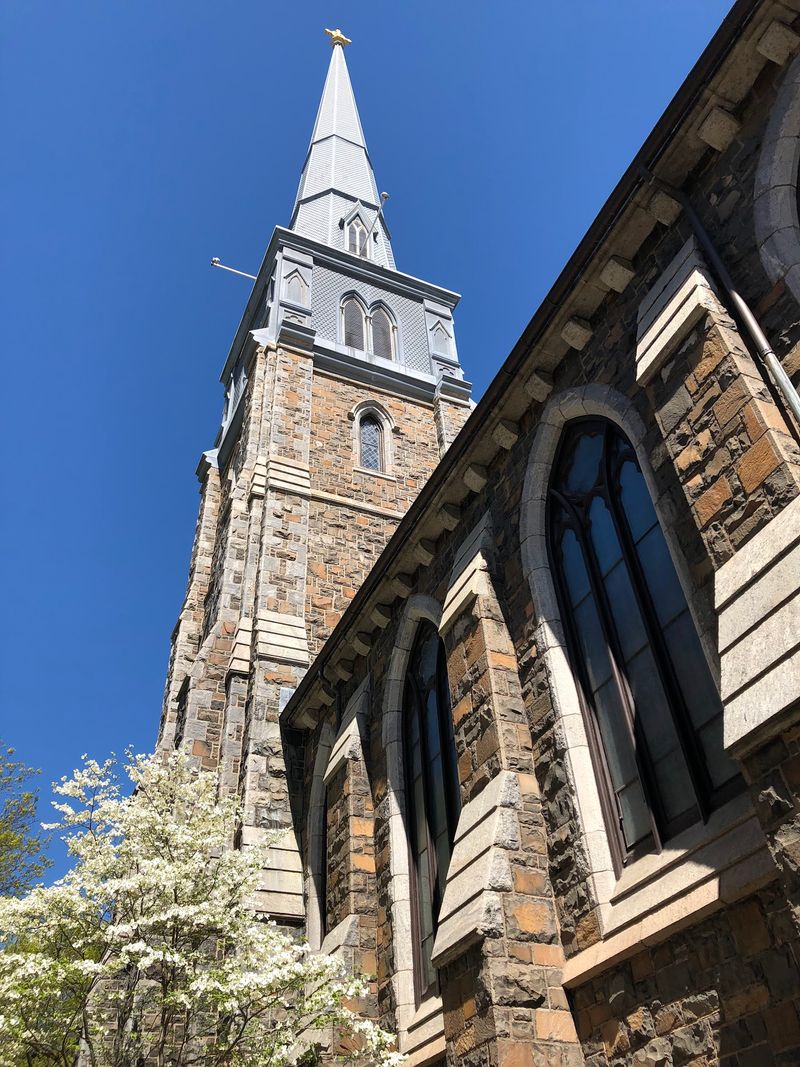
Save your first impression until you get inside. From the street, St. Mary Church looks surprisingly restrained, with dark stone walls and a tall spire rising above the neighborhood. The real burst of detail comes later.
Blue stone covers much of the exterior, while lighter gray granite highlights the edges and architectural details. Large wooden arched doors sit above a flight of steps, adding to the building’s traditional Gothic Revival appearance.
Even the spire comes with a good story. Plans originally called for one, but a lack of money meant the church tower remained without it for more than a century.
That finally changed in the 1980s, when the Knights of Columbus helped fund its completion.
The connection makes perfect sense. Father Michael J.
McGivney founded the Knights of Columbus at St. Mary in 1882, giving the church an important place in the organization’s history.
Today, the spire reaches roughly 179 feet and is visible from several surrounding streets.
Before heading through the doors, spend a moment taking in the contrasting stonework and towering exterior.
It makes the transition inside much more interesting.
Beyond those heavy doors, the restrained exterior gives way to the colorful Gothic Revival details that make the church such an unexpected New Haven stop.
2. Gothic Revival Details Take Over Indoors
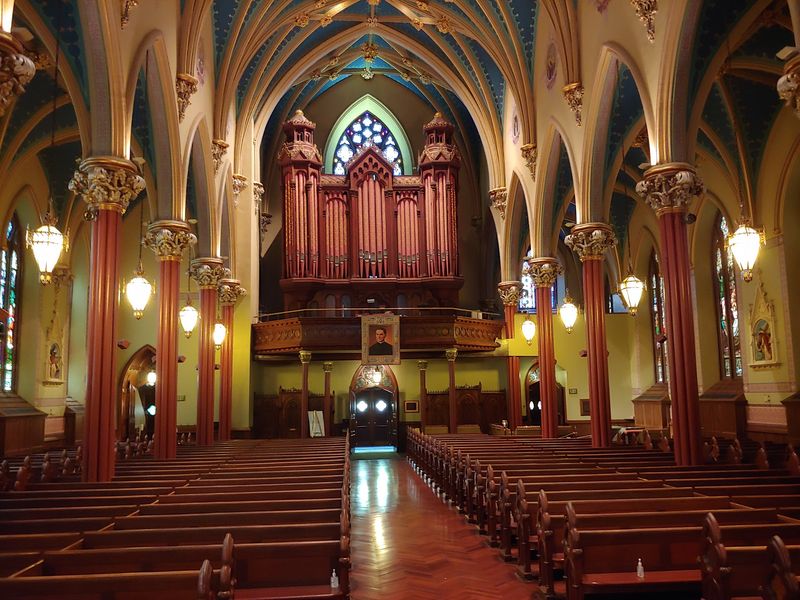
The change happens fast. One moment you hear traffic and student chatter, and the next you are surrounded by a hush and a soft, warm glow.
Lanterns hang between the piers, and daylight drifts in through colored glass.
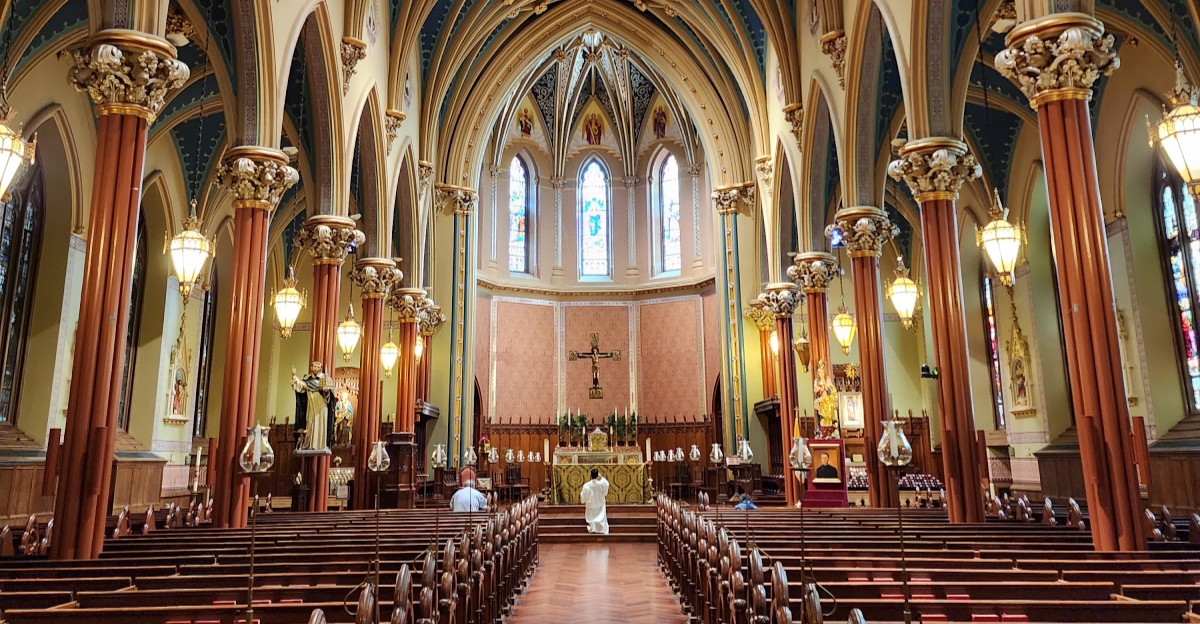
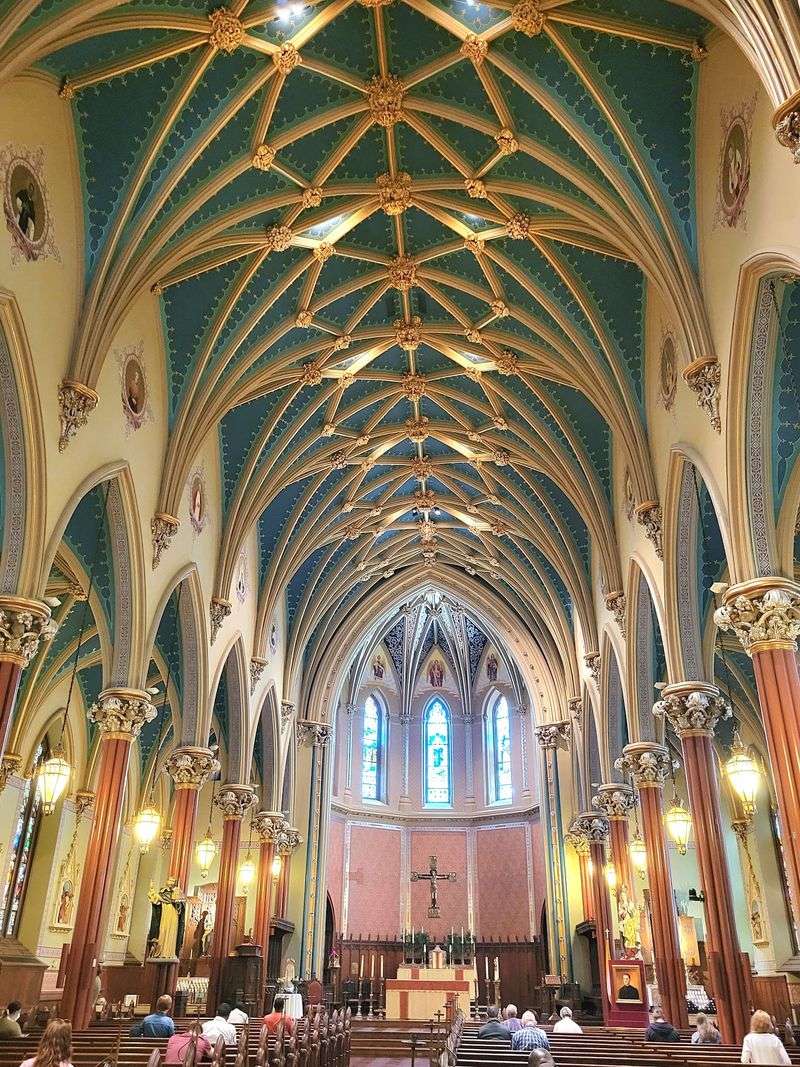
The layout is classic Gothic Revival. A long nave runs toward the altar, with an aisle on each side.
Overhead, ribbed vaults cross the ceiling like the bones of a giant leaf.
Color is the real star, though. A restoration finished in 2020 brought back a rich royal blue ceiling with turquoise scalloped borders and golden fleur-de-lis.
Each ceiling rib is painted a warm beige with a thin, shining strip of gold down the middle.
Many of the patterns honor Mary, the church patroness. Designers based the work on historical research, and some ceiling designs are meant to suggest the delicate blue lace of her garments.
Along the side aisle walls, you will find stenciled lilies, crosses, and Marian monograms.
Visitors often mention how vivid the blues, greens, and yellows look together. If you love pattern and color, give your eyes time to adjust.
New details keep appearing the longer you stand there and look around.
3. A Historic City Neighborhood Surrounds The Church
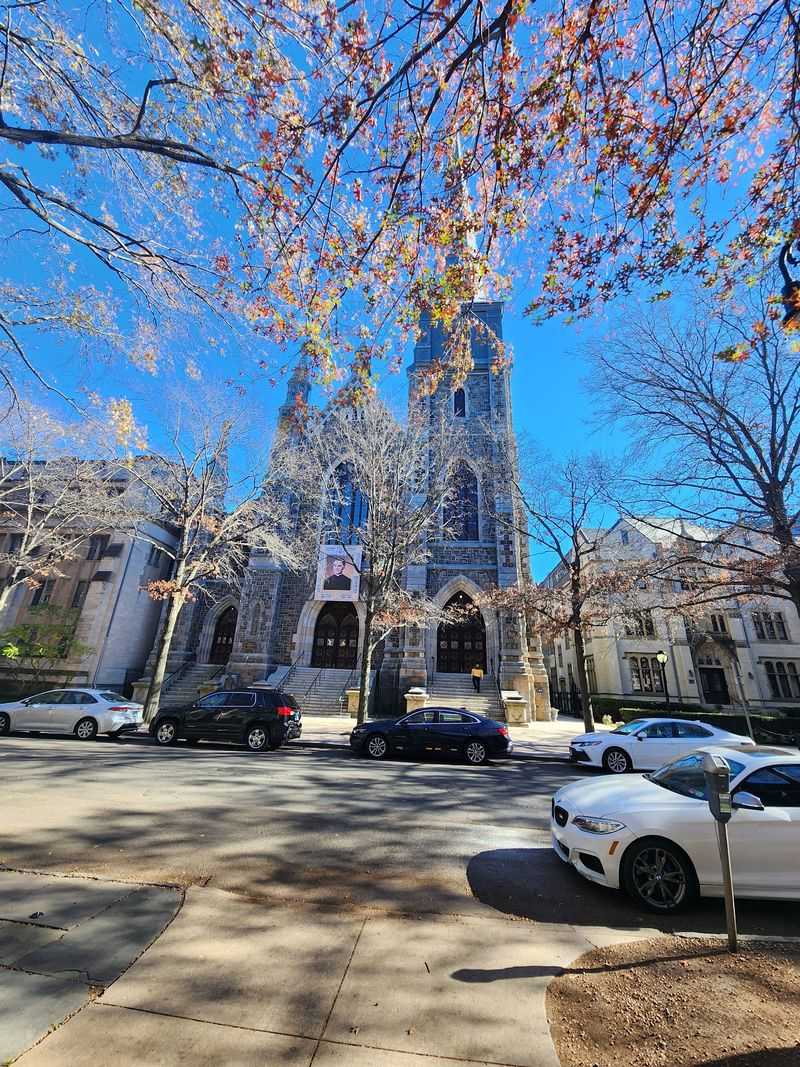
This street has stories. Lots of them. Hillhouse Avenue has long been known for its grand homes and impressive architecture, and the church adds another fascinating chapter to the neighborhood.
Its arrival was controversial. During the 1800s, some wealthy Protestant residents opposed plans for a Catholic church on the prestigious avenue.
Construction moved forward, and St. Mary eventually became an important gathering place for the city’s growing Catholic population, including immigrant families building new lives in New Haven.
The land beneath it has another unexpected connection to local history. Part of the area was once associated with the New Haven and Northampton transportation corridor, which developed along the route of the former Farmington Canal.
That past is easy to miss while exploring the neighborhood today.
Yale University buildings are close by, making the church an easy addition to a walk through this historic part of the city. Mature trees and stately architecture give the surrounding streets plenty to look at along the way.
The church stands at 5 Hillhouse Avenue, New Haven, CT 06511. Take your time rather than rushing straight to the next stop.
A relaxed walk makes it easier to notice how the university, historic homes and church all fit together.
It is a small stretch of New Haven packed with an impressive amount of history.
4. Tall Arches Draw Your Eyes Upward
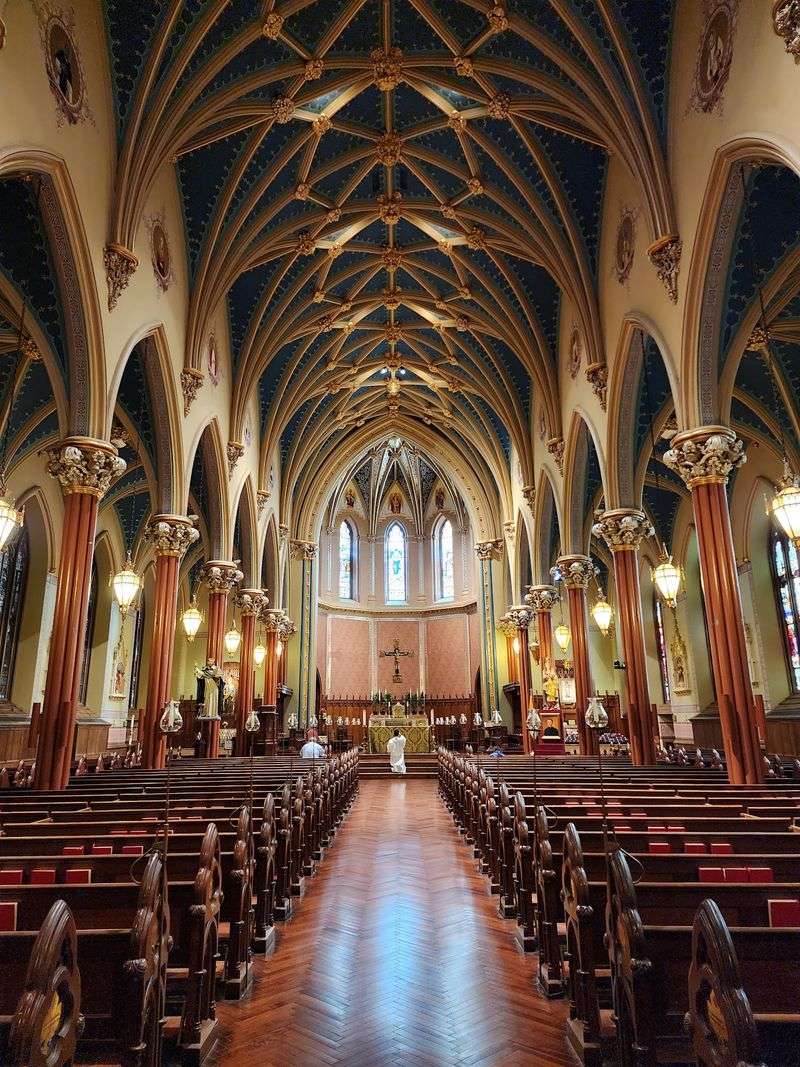
Try this simple test once you find a seat. Look straight ahead for a few seconds, then notice where your eyes want to go. Almost every time, they drift up.
That is the magic of the pointed arch. In Gothic design, these tall shapes spring from carved capitals and climb toward the ceiling.
Builders used them for centuries to make spaces feel lofty and full of light.
At St. Mary, the arches repeat throughout the nave like a steady rhythm in music. The windows along the aisle walls share the same pointed shape, so everything seems to echo everything else.
Your gaze moves from arch to window to vault without stopping.
Above it all, the ribbed vaults meet against that deep blue ceiling. The gold-striped ribs catch the light and guide your view even higher.
It is a clever trick, and it still works more than 150 years later.
Photographers love this part of the church. For a great shot, stand in the center aisle near the back and tilt your camera upward.
Just remember to be respectful, especially if people are praying or a service is underway.
5. Stained Glass Adds Rich Color Throughout
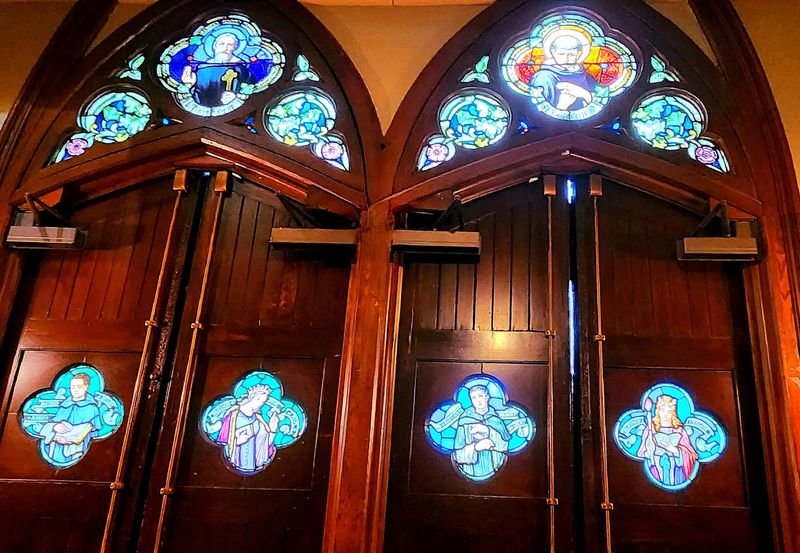
Sunny mornings turn the floor into a quilt of color. Light pours through the stained-glass windows and spills soft reds, blues, and golds across the pews.
On cloudy days, the glass glows more quietly, which has its own charm.
The most important windows sit high in the apse behind the main altar. Five of them focus on Mary, showing her alongside Dominican saints such as Dominic, Thomas Aquinas, Catherine of Siena, and Rose of Lima.
Those choices make sense, since Dominican friars cared for this parish for 135 years.
The arched windows around the altar help pull attention forward. Many visitors say the whole room seems to lead your eyes straight to that spot.
Light and design work together like a spotlight.
Keep an eye out for a window showing Jesus crowned with thorns. It came all the way from Innsbruck, Austria.
That small fact shows how much care went into gathering art for this church.
To really enjoy the glass, walk slowly along the side aisles. Each window tells its own story.
Bring a small pair of binoculars if you have them, because the higher panels hold lovely tiny details.
6. Ornate Details Reward A Slower Look
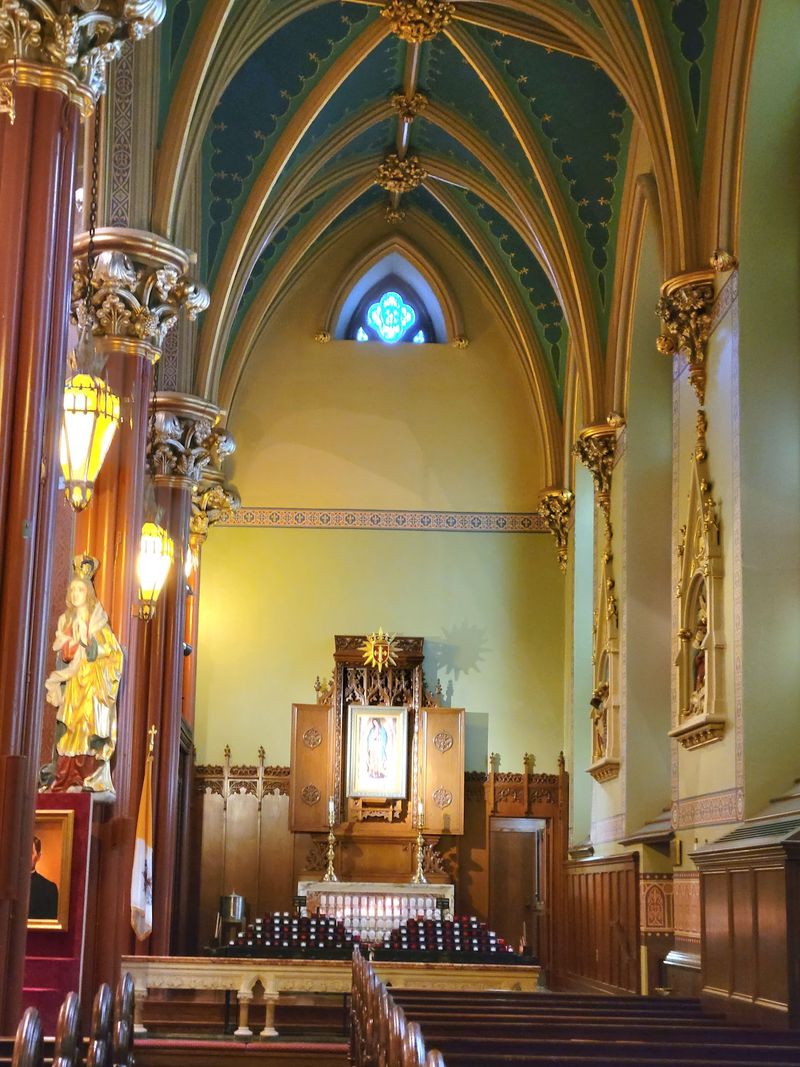
Rushing through St. Mary would be like skimming a great book. The best surprises hide in the small stuff. A slower pace pays off here.
Start with the piers. Their capitals are carved with flowers, and tiny angel-shaped ornaments appear among the gold trim along the arches.
Then look between the side windows, where the Stations of the Cross appear in relief, framed in creamy plaster against a pale olive-green wall.
High on the nave walls, 17 round paintings of saints and archangels were added during the 2019 to 2020 restoration. They range from St. Anne to modern saints like Pope St. John Paul II and St. Maximilian Kolbe.
Above the sanctuary windows, the archangels Michael, Gabriel, and Raphael appear beneath the words Sanctus, Sanctus, Sanctus.
Life-size painted wooden statues also stand inside, carved by a Bavarian woodcarver for the Knights of Columbus centennial in 1982. Look for St. Dominic holding a little model of St. Mary Church itself.
It is a charming detail many people miss.
Side altars honor St. Joseph and the Infant of Prague. Pick one corner, sit for a few minutes, and let the details come to you.
7. Sacred History Runs Deep Within These Walls
In 1882, a young assistant pastor gathered a group of men in the church basement. Their goal was simple but powerful: help widows and children of working men and strengthen their faith.
That meeting started the Knights of Columbus, now a worldwide organization.
The priest was Blessed Michael McGivney, and his remains are entombed inside the church. Many visitors note that the tomb sits on the left side just after you enter.
People travel from far away to pray there, especially since his beatification in 2020.
The parish community was established in 1832, with its first church completed and named Christ Church in 1834; after that building was destroyed by fire in 1848, plans eventually moved forward for St. Mary Church on Hillhouse Avenue.
It is the oldest Catholic parish in New Haven and the second oldest in Connecticut.
The current building was dedicated in 1874 and designed by Irish immigrant architect James Murphy. Dominican friars served here from 1886 until 2021.
Since 2023, St. Mary has been part of Blessed Michael McGivney Parish, which united eight Catholic churches in New Haven.
Even if history is not usually your thing, standing in the spot where a global movement began feels pretty remarkable.
8. The Interior Is The Unexpected Highlight
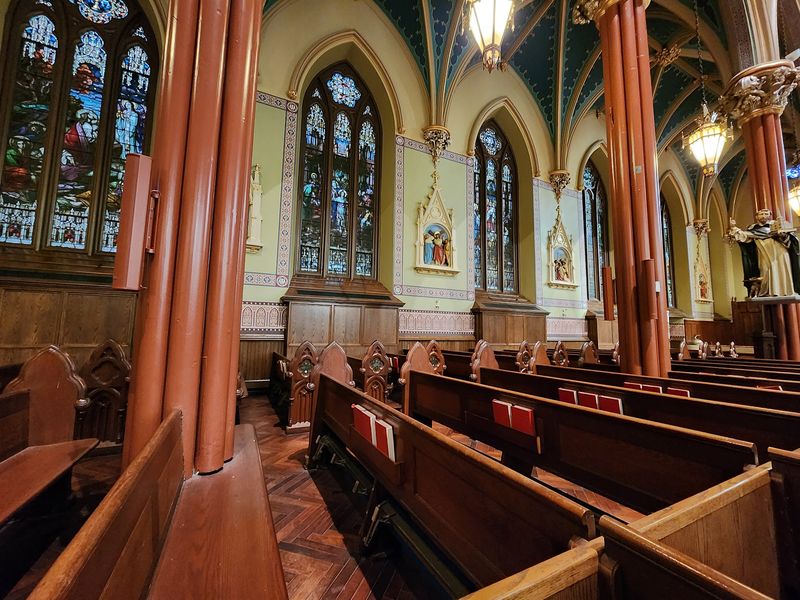
The outside sets expectations high. Somehow, the interior raises them.
St. Mary quickly shifts from dark stone and Gothic architecture to a space filled with color, carved details and one especially memorable ceiling.
Deep blue stretches overhead, giving the church a calm atmosphere that feels very different from the busy streets outside. Stained-glass windows add bursts of color, while detailed woodwork gives visitors plenty to study around the sanctuary.
Music adds another dimension. The church’s acoustics allow voices and instruments to carry beautifully through the large interior, particularly during Masses, ceremonies and other gatherings.
Since this remains an active parish, a service may be underway during a visit. Entering quietly and keeping phones silent helps preserve the peaceful setting for worshippers.
Guests can attend Mass or simply sit toward the back and take in the surroundings.
There is no need to rush through.
Spend some time studying the stained glass and religious artwork, then visit the tomb of Blessed Michael McGivney. Look upward before leaving, too.
That rich blue ceiling is difficult to forget, especially after approaching a church whose dark stone exterior gives almost nothing away about the colorful space waiting inside.