This Connecticut Flea Market Is A Treasure Hunter’s Paradise With Bargains That Rival Big-Box Stores
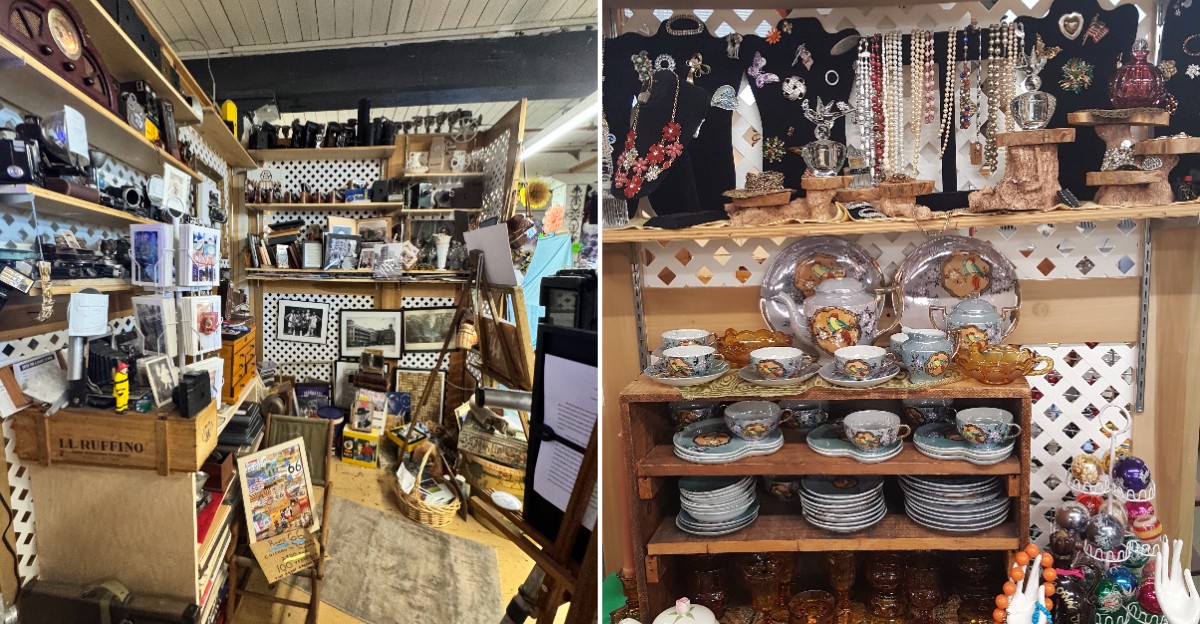
Flea markets are dangerous places for anyone who loves a bargain. You arrive with twenty dollars and a perfectly sensible plan, then spot something you didn’t even know you wanted.
Goodbye, sensible plan.
One Connecticut flea market gives bargain hunters a chance to browse unexpected finds and potentially score deals on everyday treasures.
I love the unpredictability of it all. Unlike a regular store, you can’t always guess what might be waiting around the next corner.
And finding something useful for less than you’d expected feels like a tiny personal victory.
Of course, not every price is automatically a bargain. That’s where a little comparison comes in handy.
But the possibility of discovering something unusual makes browsing half the fun, even when you leave empty-handed.
1. A Magician Left, And The Treasure Showed Up
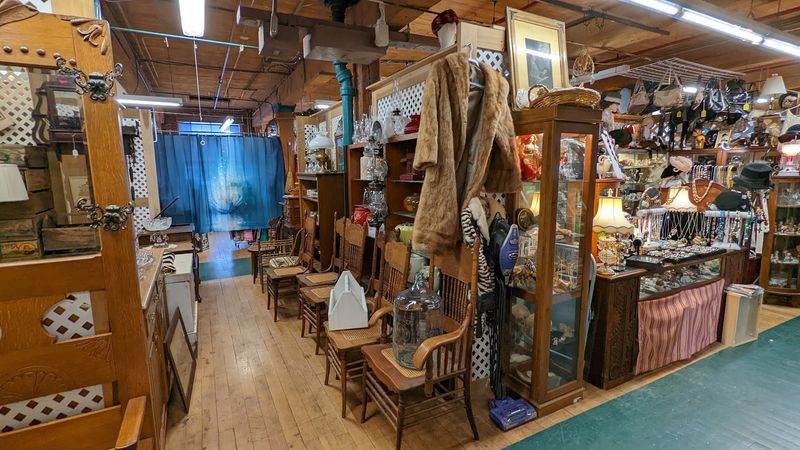
One vendor. An empty floor.
Somehow, that was enough to get a flea market started.
The story behind Flea Market at the Crossing in Plainville is pretty unusual. Back in 1998, the building had recently been purchased, and its upstairs space was sitting empty after a magician moved out.
Rather than leave the floor unused, the new owner decided to turn it into a flea market. There was just one problem.
Running a market was completely new territory.
Opening day didn’t exactly draw a crowd of sellers. Only one vendor showed up, making the whole operation feel more like a tiny yard sale than a proper shopping destination.
But nobody gave up on the idea.
Over time, more dealers joined, and the market gradually developed the friendly, independent character that made it a familiar part of Plainville.
What makes the place especially interesting is knowing how close it came to being a very different business. That upstairs space could easily have remained empty.
Instead, one inexperienced owner and a single determined vendor helped start something that lasted for decades.
And considering the building’s history with a magician, it’s hard not to smile at how that little experiment turned out.
2. Every Booth Has Its Own Personality
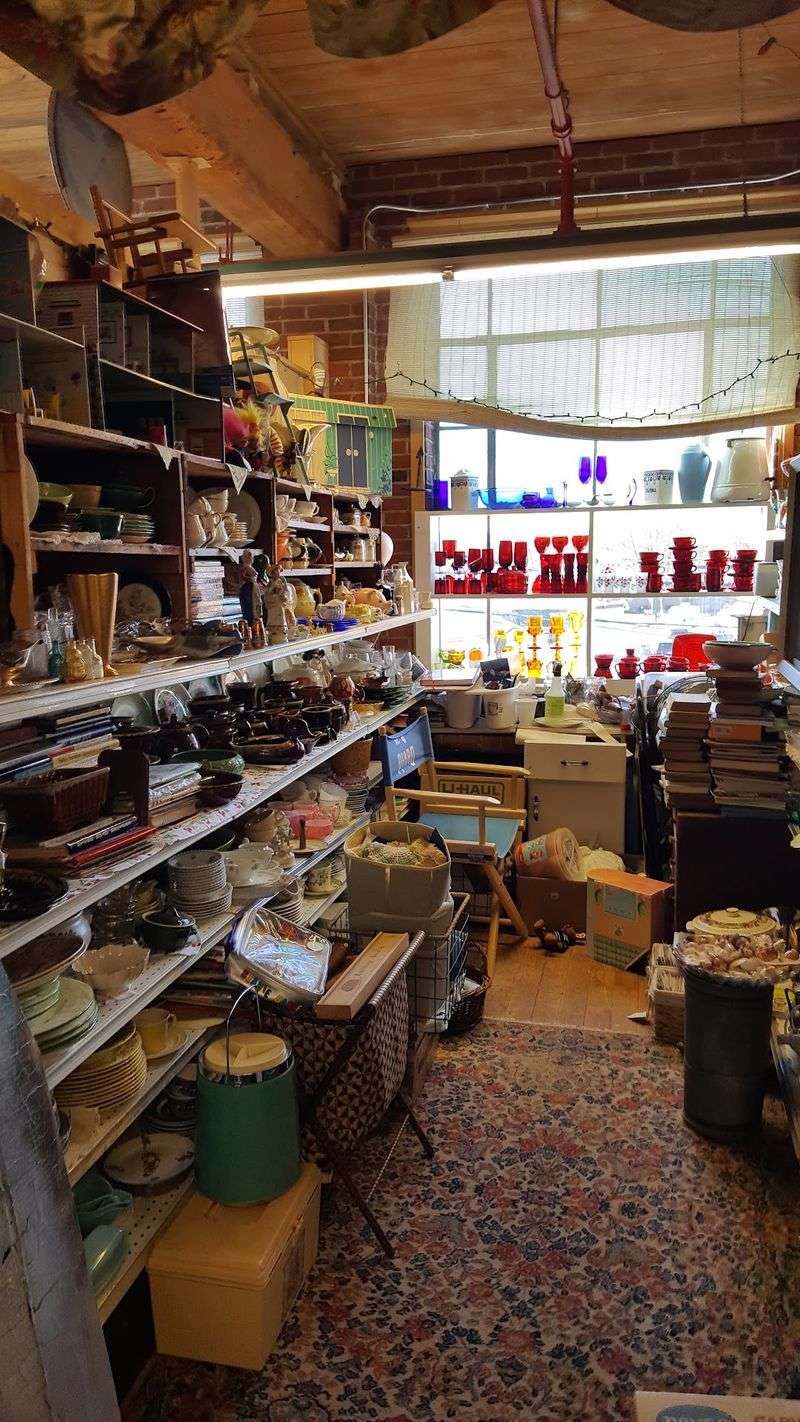
Most big stores want every aisle to look the same. Here, the opposite is true, and that’s a big part of the fun.
Dealers manage and style their own booths. One space might feel like a tidy collector’s den, while another looks like grandma’s attic in the best way.
That variety keeps your eyes busy. You never get that sleepy, repetitive feeling that comes from walking past matching shelves.
Sources put the dealer count around 20, though some mention even more. Either way, there’s plenty of ground to cover.
The mix includes long-running vendors and newer faces. That blend means familiar favorites stick around while fresh finds keep showing up.
Inventory changes from week to week, too. A lamp you skipped last Saturday could be gone, and something better might take its spot.
My advice? Treat each booth like its own tiny shop.
Slow down, look up, and peek at the lower shelves where small surprises tend to hide.
It’s a bit like flipping through a dozen different scrapbooks in one afternoon. Each one tells a different story about what someone loves to collect.
3. Bring Your Inner Kid To The Toy Aisles
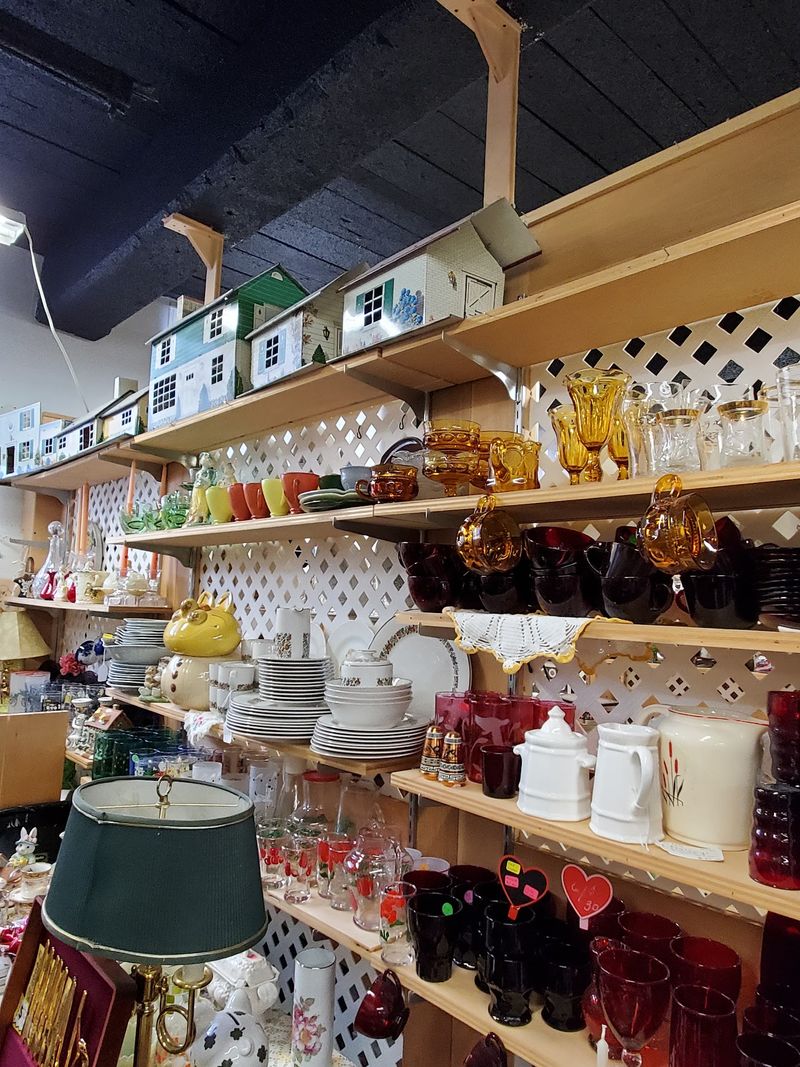
Action figures, baseball cards, dolls, and video games all turn up here. Good luck walking past them without a wave of nostalgia.
Collectible toys are a real strength at Flea Market at the Crossing. Sports memorabilia shows up often, so card fans should plan extra time.
Retro gamers have reasons to smile as well. Video games are among the items shoppers regularly find in the mix.
Kids can have a blast here, honestly. Watching them spot a toy from their parents’ childhood is its own kind of entertainment.
Parents might get a little sidetracked too. It’s hard to stay focused when the exact figure you begged for years ago is sitting right there.
Here’s a helpful tip. Set a loose budget before you start, because toy booths can be dangerously persuasive.
Collectors should also check back often. Stock rotates, and rare pieces tend to move quickly once someone spots them.
Big-box toy aisles carry what’s new this season. This place carries what’s been loved for decades, and that difference feels pretty special.
Bring the kids, bring your patience, and maybe bring a little extra room in the car.
4. Your Kitchen Cabinets Might Need More Room
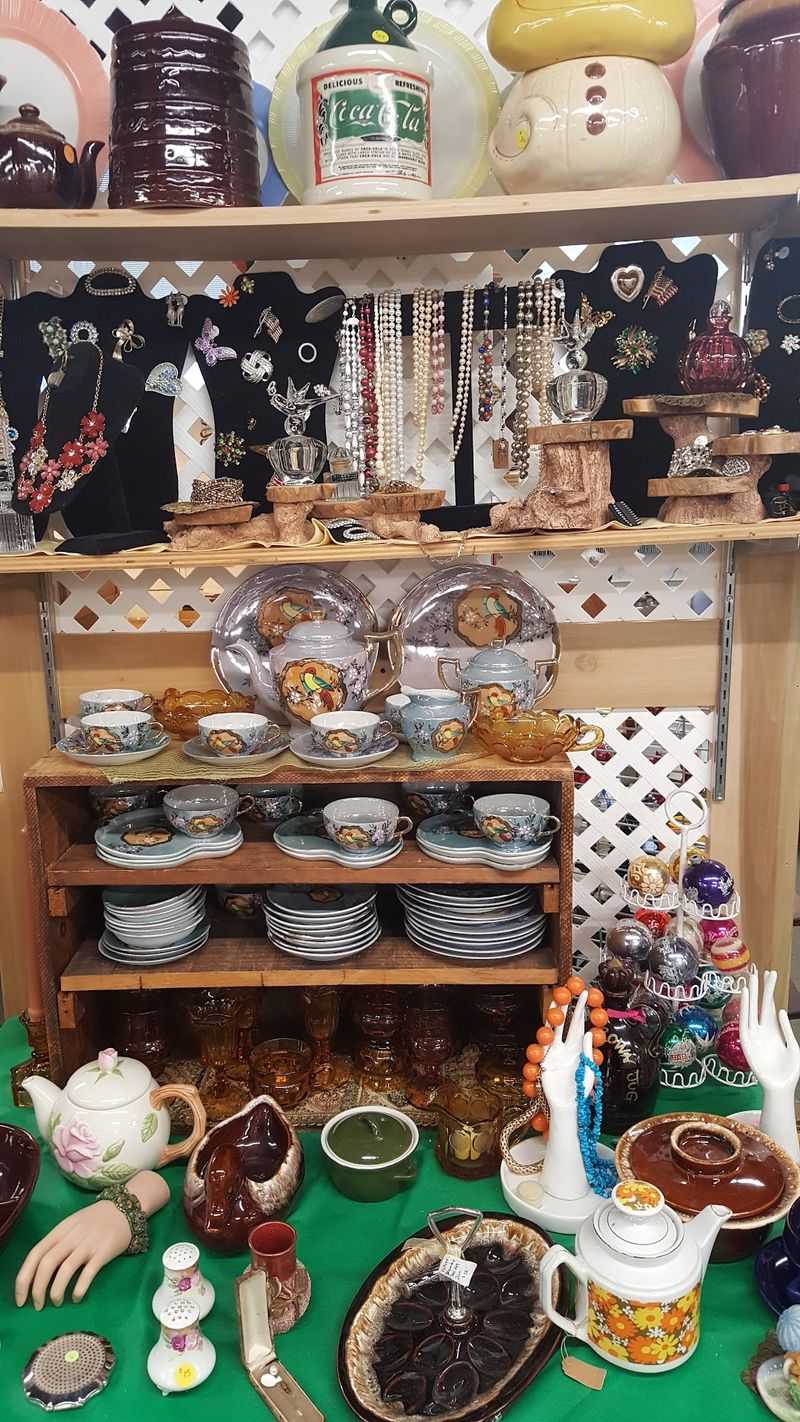
Depression glass catches the light like candy. Spotting a pink or green piece on a shelf can make any treasure hunter stop in their tracks.
Glassware and kitchenware are big categories at this market. You might find colorful dishes, sturdy old pots, or quirky serving pieces with real character.
Vintage kitchen gear often has a solid, heavy feel. It was built to last, which makes it a smart pick for everyday cooking.
Housewares get attention upstairs, too. The upper floor is often singled out as a strong spot for home goods.
So if you’re setting up a first apartment, this is worth a look. Mixing old pieces with new ones gives a kitchen instant personality.
One quick tip: check glass carefully before buying. Run a finger gently along rims and look for small chips or cracks.
Also think about what you’ll actually use. A gorgeous cake stand is lovely, but only if cake is in your future.
Okay, cake is always in the future. Grab the cake stand, and maybe a matching set of dessert plates while you’re there.
5. Old Tools, Coins, And Curios Worth A Closer Look
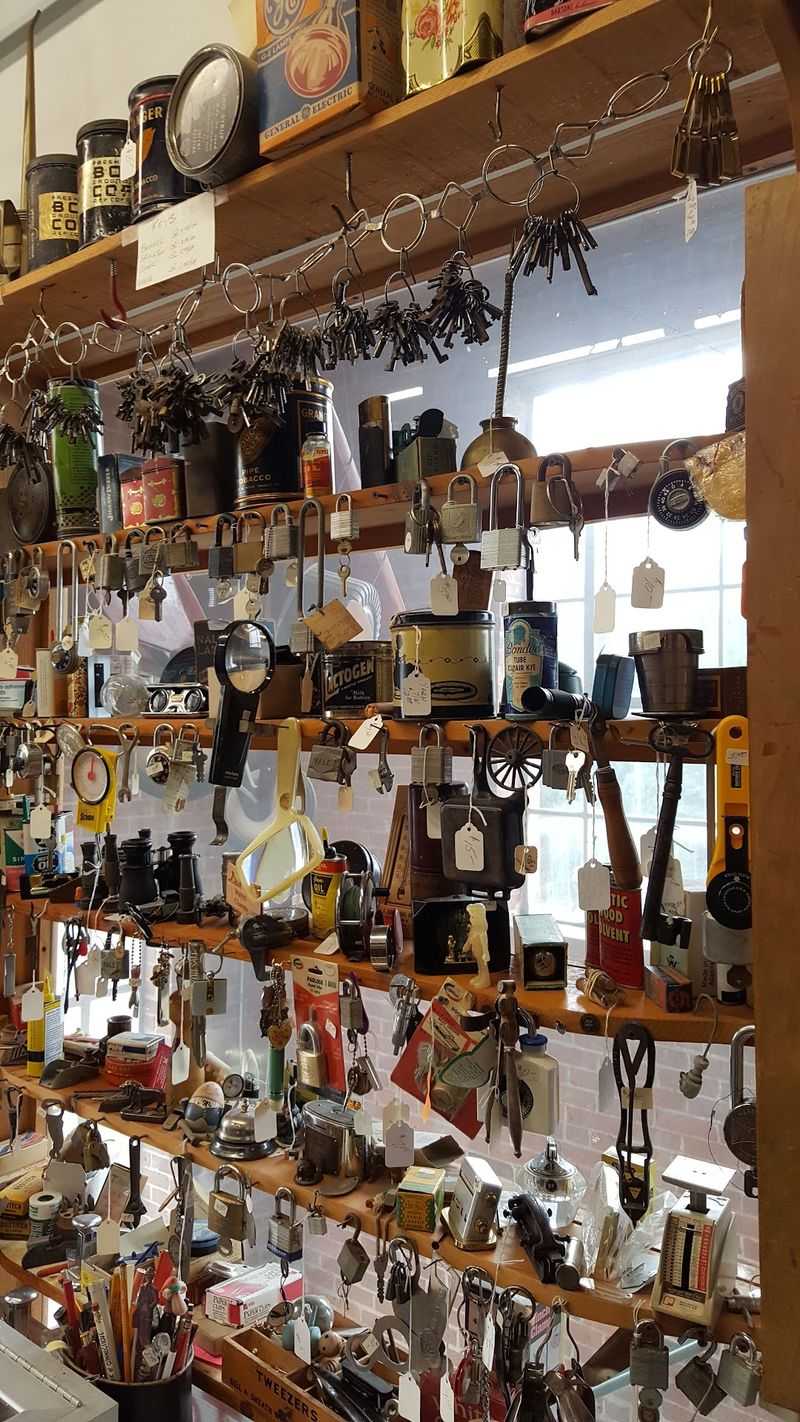
Antique coins sit near old tools. Stamps share space with vintage signs.
It’s a wonderfully mixed-up world for curious browsers.
Some shoppers compare a visit to exploring a museum. The difference is simple, though.
Here, you can actually take the exhibit home.
Old tools are a quiet highlight. Many were made with care and still work well, which makes them great for hobbyists and woodworkers.
Coin collectors can scan trays for interesting years and designs. Stamp fans have their own reasons to linger.
Vintage signs bring big personality to a garage or game room. One good sign can change the whole mood of a wall.
Then there are the small curios. These odd little objects don’t fit any category, and that’s exactly why they’re fun.
Ask vendors about items that puzzle you. Dealers here are known for being friendly and happy to share what they know.
You may leave with a story along with your purchase. That’s something no checkout lane at a big store can offer.
Honestly, a mystery gadget with a backstory beats another plastic organizer any day of the week.
6. Climb The Stairs, Because The Top Floor Delivers
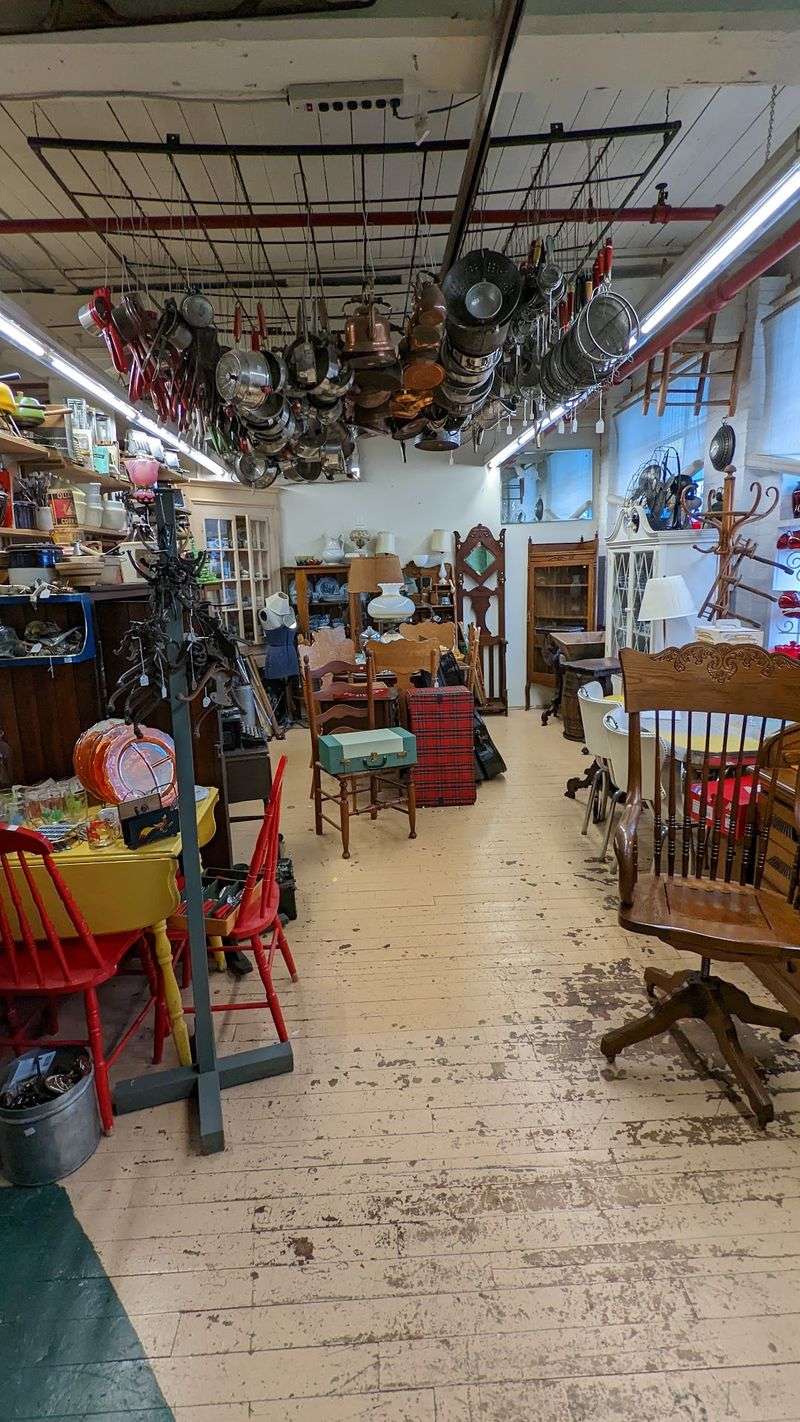
Two floors and more than 10,000 square feet of indoor space. That’s a lot of shopping squeezed into one red brick building.
The interior has an industrial warmth that many people find appealing. Brick and older bones give it more charm than a shiny mall ever could.
Stairs connect the floors. Shoppers with mobility concerns should keep that in mind before planning a visit.
Don’t skip the upper level if you can manage the climb. Plenty of shoppers point to it as a favorite stop.
The building also holds H&B Woodworking on the second floor. This shop handles custom cabinets, furniture building, and restoration work.
That’s a neat bonus for anyone eyeing old furniture. Seeing craftsmanship nearby might spark ideas for restoring your own finds.
Indoor shopping also makes this a handy rainy-day plan. Snow, drizzle, or summer heat won’t wreck your weekend treasure hunt.
Wear comfy shoes and pace yourself. With two levels and many rooms, it’s easy to lose track of time.
Think of it as a workout with prizes. Every set of stairs could lead you straight to your next great find.
7. Cash Talks Louder Than Cards Here
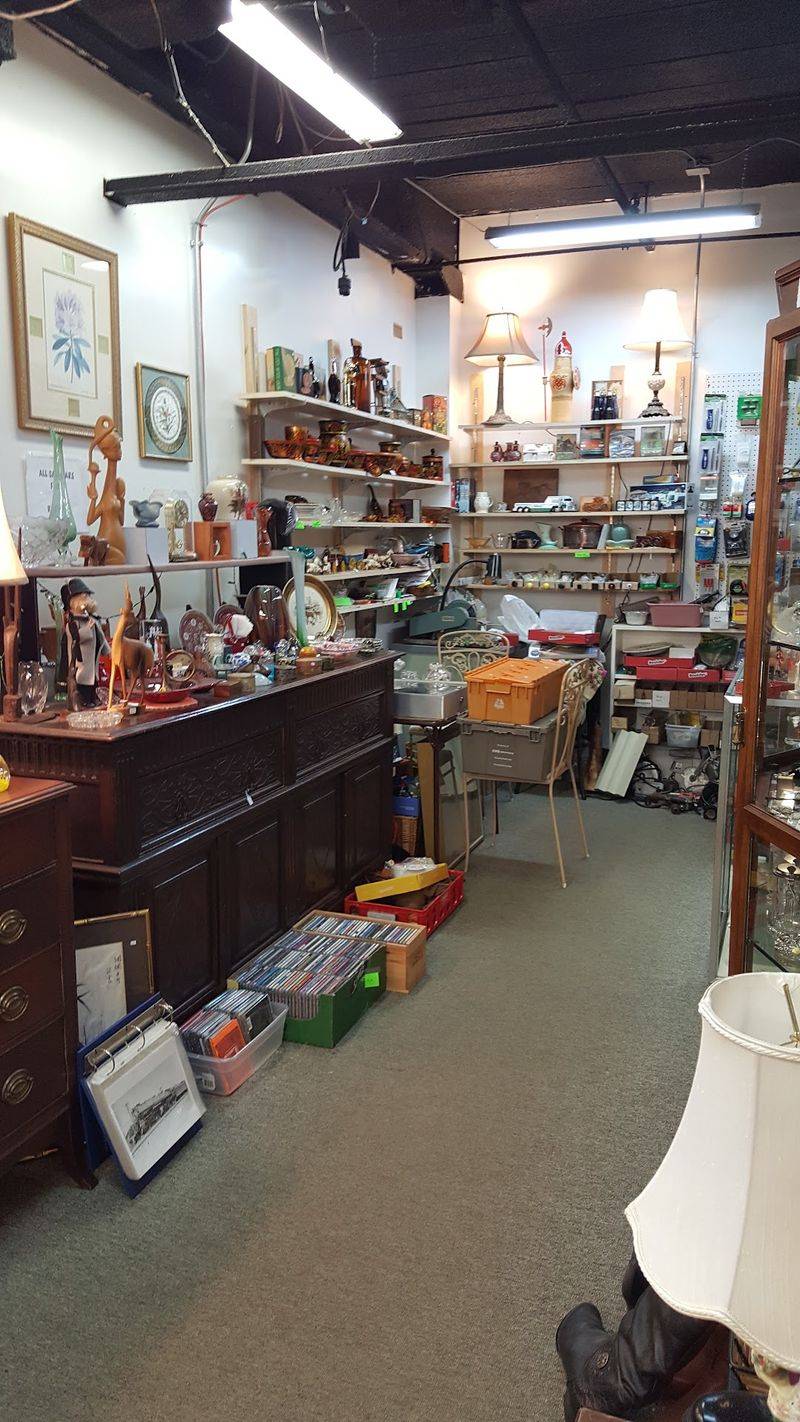
Free admission is a great start. Keeping your money in smart shape once inside is the next step.
Many vendors prefer cash, so plan ahead. Small bills make life easier for everyone, especially early when sellers have less change.
Each booth is run by its own dealer. That means you usually pay the person who owns the items, which adds a friendly, personal touch.
Prices often have some wiggle room. Polite questions work better than pushy haggling, and a smile never hurts.
Not every deal will beat a discount store. Some items carry collector prices, so compare before you commit.
Still, the value here goes beyond the tag. Vintage pieces often offer quality and character that cheaper mass-made goods simply can’t match.
Check items closely before paying. Ask questions about condition, and make sure everything works as described.
Also note that not every booth is staffed or open on every visit. A little flexibility keeps the day relaxed.
Treat it like a friendly conversation, not a contest. You’ll likely walk away with better deals and better memories.
8. Early Birds Grab The Best Finds
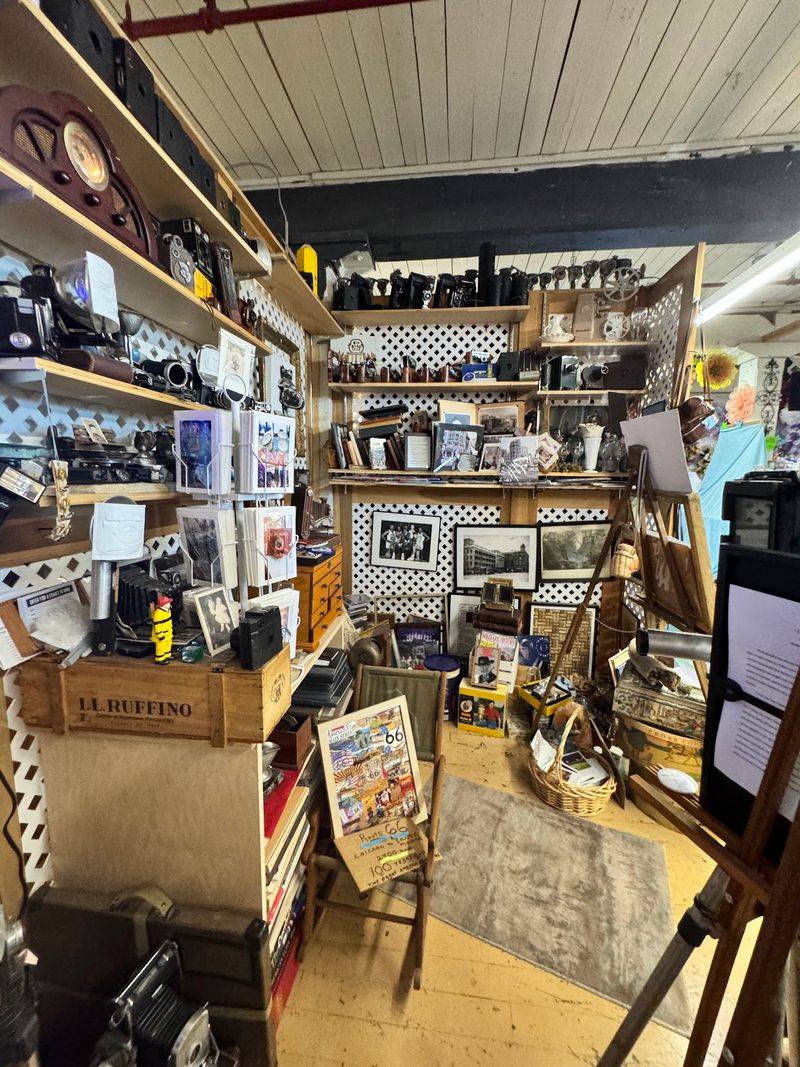
Timing matters more than you’d think. The most wanted items tend to disappear before midday, so early shoppers have a real edge.
Flea Market at the Crossing runs on Saturdays and Sundays from 9 a.m. to 4 p.m. It stays open year-round, except on Easter Sunday, and remains closed on weekdays.
Arriving right at opening gives you first pick. It also gives you calmer aisles for slow, careful browsing.
Free morning coffee may be available, too. Check when you arrive, because a warm cup makes browsing even better.
The overall mood is generally relaxed. You can take your time browsing and circle back to booths that catch your interest.
That said, hesitation has a cost. If something special catches your eye early, it may not wait for your second lap.
A good plan is to scan everything quickly first. Then go back for a deeper look at your favorite booths.
Afternoons still have charm, of course. You’ll just want to accept that someone else may have scooped up that perfect lamp.
Set the alarm, grab your tote bag, and get moving.
9. Downtown Plainville Makes It An Easy Day Trip
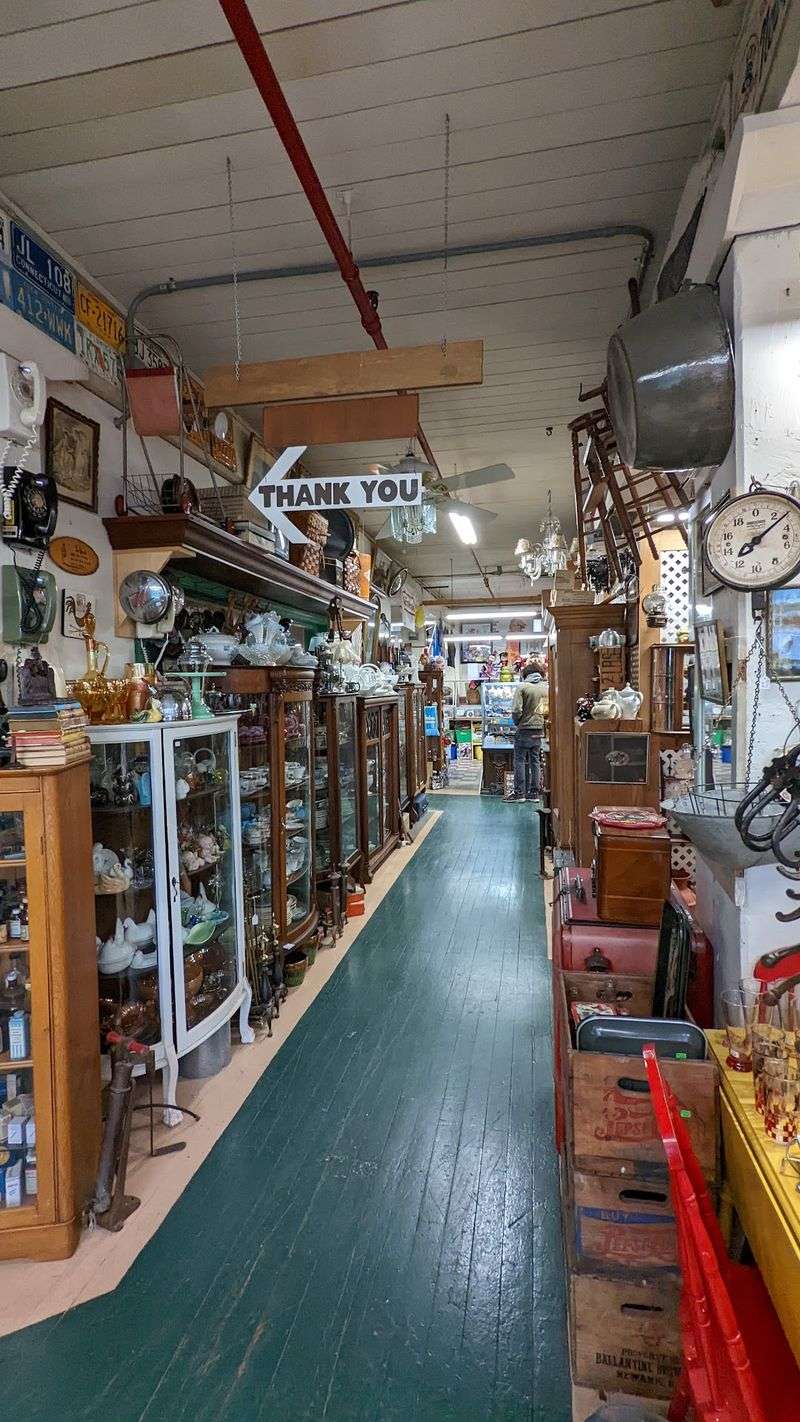
Railroad tracks run right across the way. That view fits perfectly with a building full of things from decades past.
Flea Market at the Crossing sits at 105 East Main Street, Plainville, CT 06062. It’s just off Main Street and within walking distance of downtown.
That location makes it easy to turn shopping into a full outing. Stroll around town before or after your hunt.
Getting there without a car is possible too. The market sits on a bus line, with service available on Saturdays.
A restaurant stands across the street as well. That’s handy when shopping makes you hungry, which it absolutely will.
Plainville sits in central Connecticut, so many shoppers can reach it easily. It works nicely as a weekend plan with friends or family.
Bring a reusable bag and leave room in your trunk. Furniture and framed art have a funny way of coming home with you.
Big-box stores will always be around. But a place with this much history, variety, and character deserves a spot on your weekend list.
Your next favorite treasure could be waiting on Main Street.