This Dreamy Washington Town Feels Like A Real-Life Movie Set You’ll Want To Wander Through
There are places you visit and places that visit you right back, and this town is firmly in the second category.
I stepped off the ferry expecting a pleasant enough afternoon and got something considerably more dangerous, which is the sudden, overwhelming urge to never leave.
The streets are lined with the kind of independent shops, waterfront restaurants, and unhurried charm that most towns spend decades trying to manufacture and never quite pull off.
Everything here looks like a location scout already approved it.
The harbor views are unfairly beautiful, the pace is exactly what your nervous system has been quietly begging for, and the whole island has this remarkable ability to make your real life feel very optional.
Washington State is full of wonderful places, but this town operates on a different level entirely. Some towns are worth a visit, and some towns rewire you completely.
This is one of those.
Ferry Arrival Experience
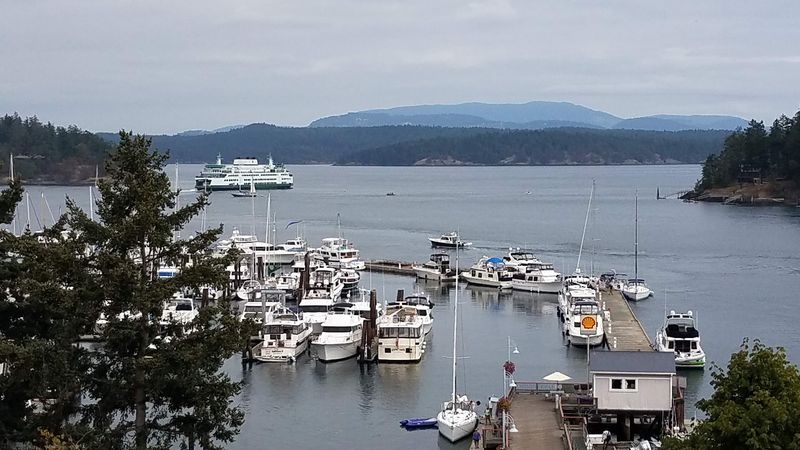
Friday Harbor announces itself before you even step off the boat.
The Washington State Ferry glides into the dock and suddenly the whole town is right there, framed like a postcard someone actually bothered to design well.
Seagulls circle overhead. The smell of salt water hits you first, then the sound of ropes hitting the dock.
It is one of those arrivals that makes you feel like the main character of something good.
The ferry ride from Anacortes takes about an hour and twenty minutes, and it is absolutely part of the experience. Watching the San Juan Islands appear out of the morning mist is genuinely cinematic.
Passengers crowd the outer decks with cameras, and honestly, same.
First-timers should book ferry reservations in advance, especially in summer, because space fills up fast. Foot passengers have more flexibility than vehicles.
Bring a jacket for the deck, even in July.
The views on the way in make the whole trip feel like it started the moment you left the mainland.
FCompact And Walkable Downtown
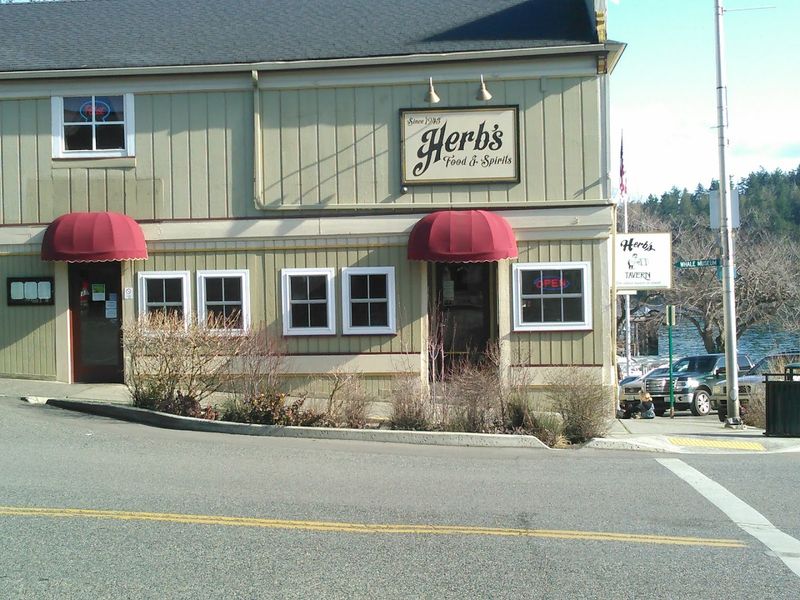
Friday Harbor has one of those downtowns that is small enough to walk in an afternoon but interesting enough to fill an entire weekend.
Spring Street is the main artery, and it runs straight up from the ferry landing into a cluster of bookshops, bakeries, boutiques, and cafes that feel genuinely local.
Nothing here feels like a chain or a tourist trap. The shop owners actually know their stuff, and the handwritten signs in the windows have personality.
I wandered into a map shop once and ended up staying for forty minutes just talking about cartography.
The whole downtown area is easy on foot, which is refreshing when you are used to places that require a car for everything. Most of what you want to see is within a ten-minute walk of the ferry.
That kind of accessibility makes the whole visit feel relaxed rather than rushed.
Stop into any of the small cafes along First Street for a coffee and watch the foot traffic. People here move at a different pace.
It is not slow exactly, just unhurried in a way that feels contagious after about thirty minutes.
The Whale Museum
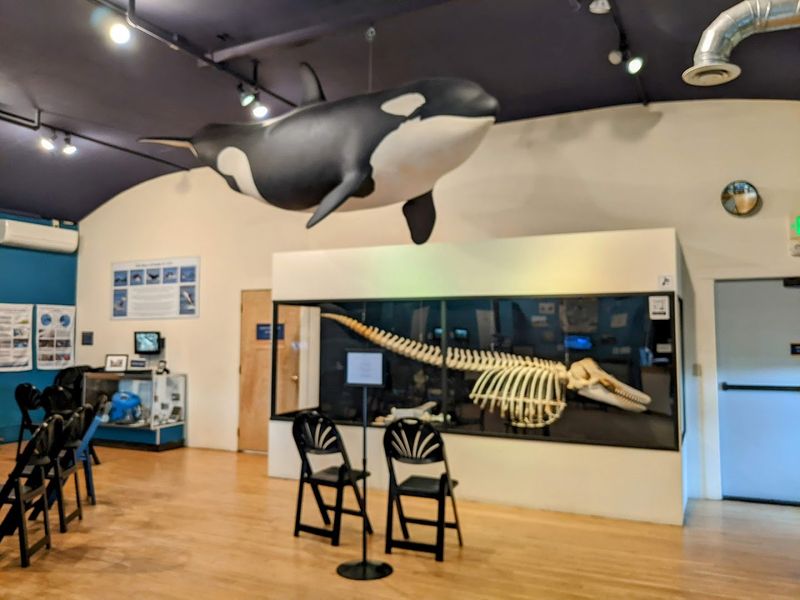
The Whale Museum in Friday Harbor is the kind of place that surprises you by being genuinely excellent.
It opened in 1979 and holds the distinction of being the first museum in the United States dedicated entirely to whales in their natural habitat. That alone earns it serious points.
Inside, you will find life-sized whale skeletons, detailed exhibits on orca behavior, and a surprisingly moving collection of recordings of whale vocalizations. Kids love it.
Adults who thought they were just being polite end up riveted.
San Juan Island sits inside the core range of the Southern Resident orca population, so this museum is not just decorative. It is doing real educational work about a community of whales that actually lives nearby.
That context makes every exhibit feel more urgent and less like a nature documentary you half-watched.
Admission is affordable and the staff are knowledgeable without being preachy.
Plan for at least ninety minutes. The gift shop has thoughtful items that are actually worth buying, which is rarer than it should be.
The Whale Museum is one of those stops that earns its spot on the itinerary without any convincing.
Lime Kiln Point State Park
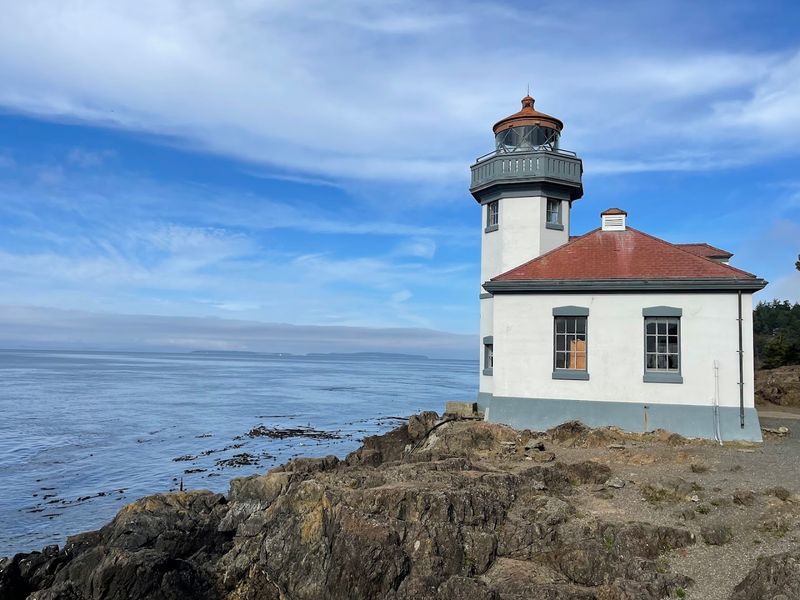
Lime Kiln Point State Park is where you go when you want to watch orcas from dry land, which is a sentence I still cannot believe I get to say.
The park sits on the west side of San Juan Island and is considered one of the best land-based whale watching spots in the entire world.
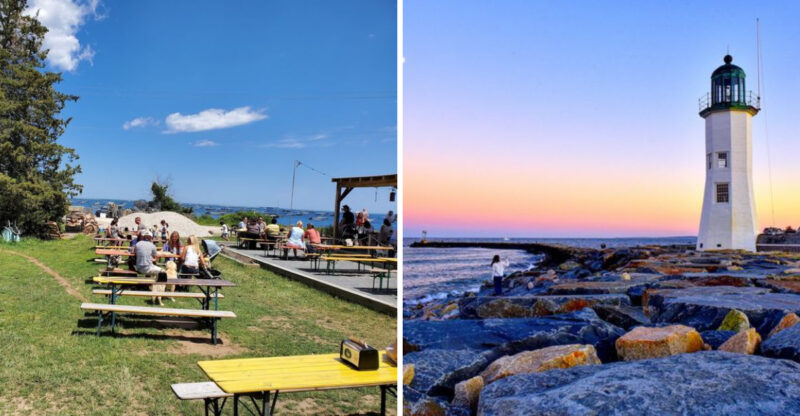
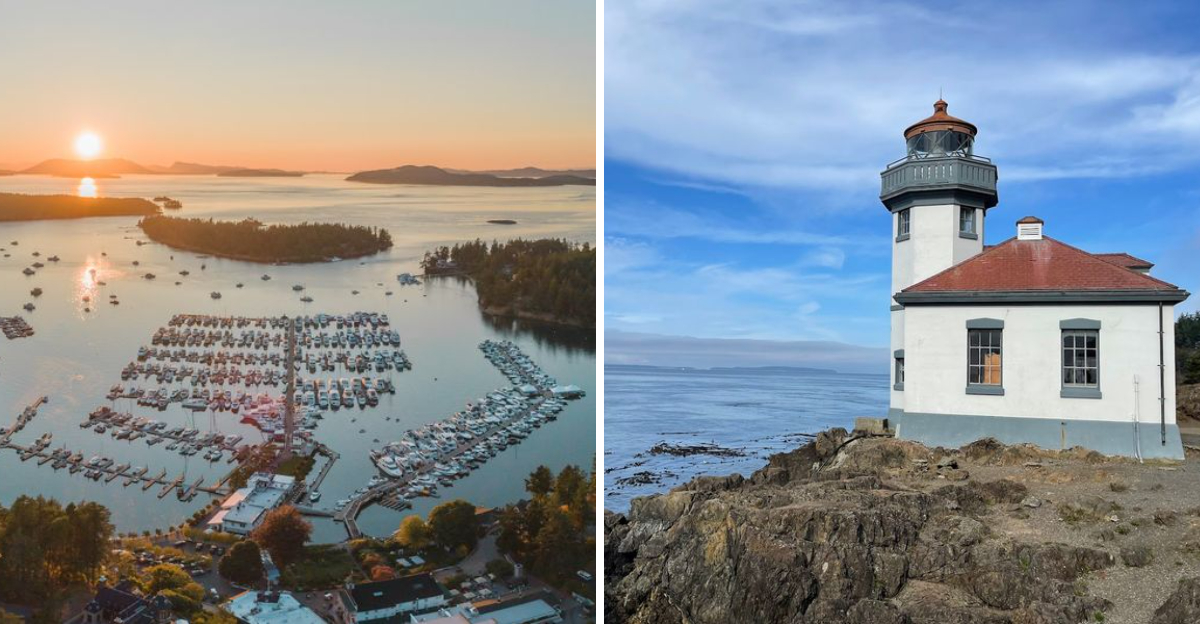
The lighthouse at Lime Kiln is photogenic in every direction. Rocky outcroppings drop straight into the Haro Strait, and on a clear day you can see Vancouver Island across the water.
The views are genuinely dramatic without requiring any hiking credentials.
Orca sightings are most common between late spring and early fall, when salmon runs bring the whales close to shore. Bring binoculars and patience.
Researchers from the Lime Kiln research station have been studying orcas here for decades, so you are standing in a place with real scientific history.
The park also has walking trails through old-growth forest if the shoreline gets crowded. Admission is covered by the Washington Discover Pass.
Arrive early in the morning for the best combination of light, solitude, and wildlife activity. This park earns its reputation every single time.
San Juan Island National Historical Park
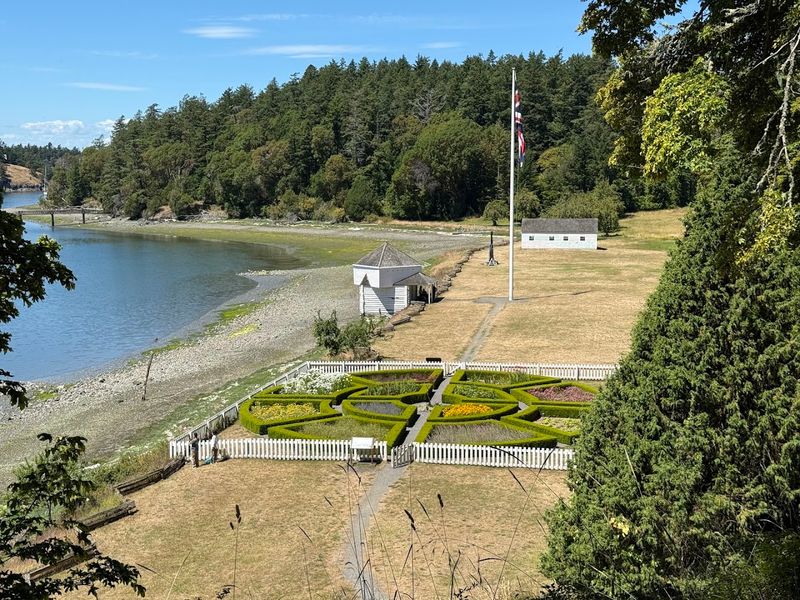
San Juan Island National Historical Park tells one of the strangest diplomatic stories in American history, and it does so across two separate camps on opposite ends of the island.
The Pig War of 1859 is the reason this park exists, and yes, the name is exactly as absurd as it sounds.
A boundary dispute between the United States and Britain over San Juan Island nearly escalated into full military conflict, all triggered by a farmer shooting a pig that wandered into his garden.
The standoff lasted over a decade before being peacefully resolved. Both countries maintained military camps on the island during that time.
Today, American Camp and English Camp are both open to visitors and free to enter. American Camp has sweeping prairie views and access to South Beach, which is one of the longest stretches of public beach on the island.
English Camp sits in a sheltered bay with restored historic buildings and a formal garden.
The park rangers give talks that are actually entertaining, which is not always a given.
The history here is specific enough to feel real and strange enough to hold your attention. This is the kind of park that makes you want to go home and read more about what you just saw.
Friday Harbor’s Local Food Scene
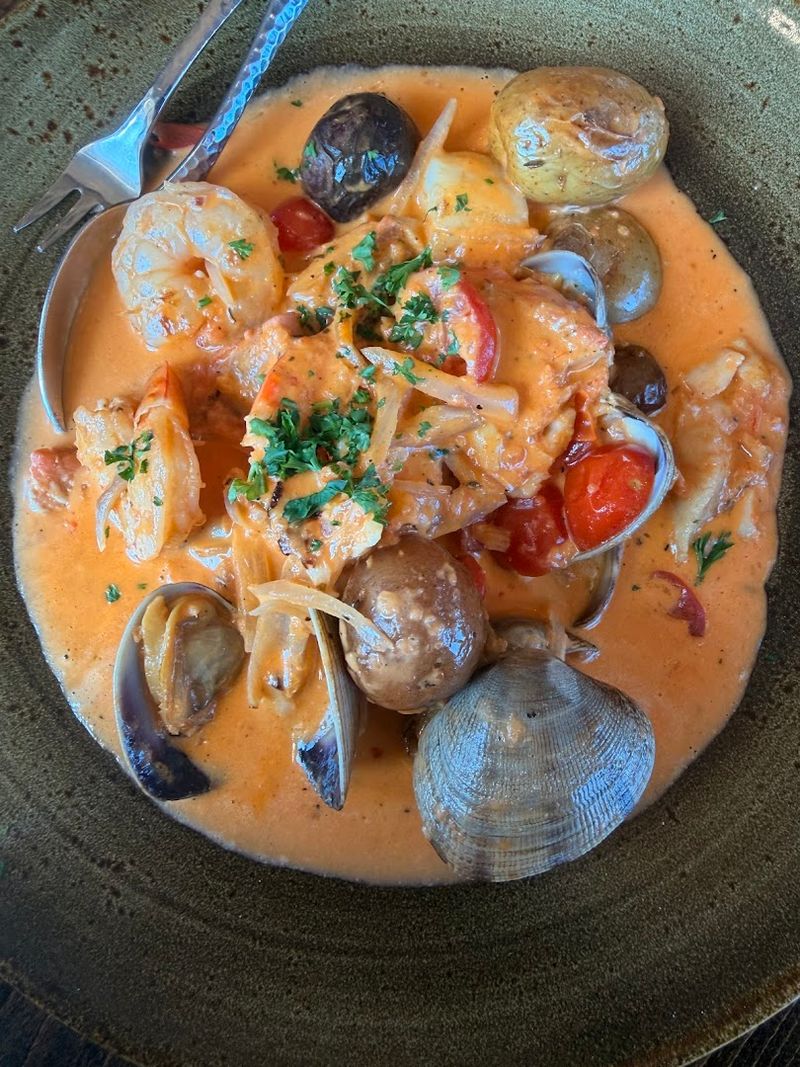
Eating well in Friday Harbor is genuinely easy, which is not something you can say about every small island town. The restaurants here lean into local seafood in a way that feels earned rather than marketed.
Dungeness crab, fresh halibut, and locally caught salmon show up on menus regularly and taste the way they are supposed to taste.
The breakfast spots along the waterfront fill up fast on weekend mornings. Showing up early is not optional if you want a table with a view.
The coffee is strong and the pastries are the kind that make you reconsider your travel schedule.
Lunch options range from casual fish and chips eaten on a bench near the dock to more composed meals at spots that take reservations.
The town is small enough that most places know their regulars, and that familiarity shows up in the service.
Friday Harbor rewards slow eating. Sitting with a meal and watching the harbor is one of those experiences that does not require a special occasion to justify.
The food quality here punches well above what you would expect from a town of roughly two thousand people. Come hungry and plan to linger.
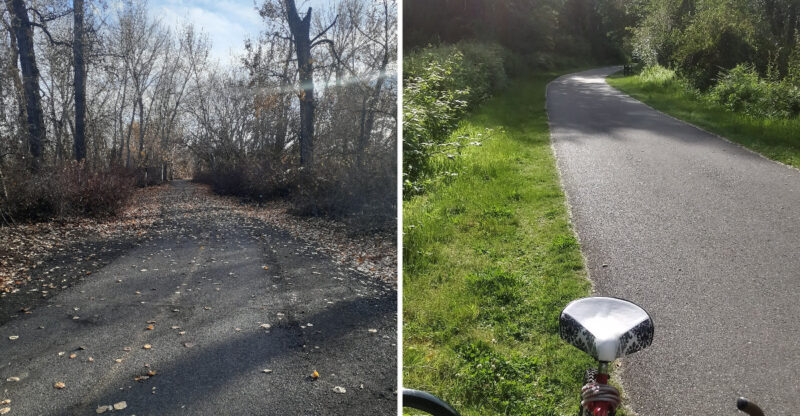
Cycling The Island Roads
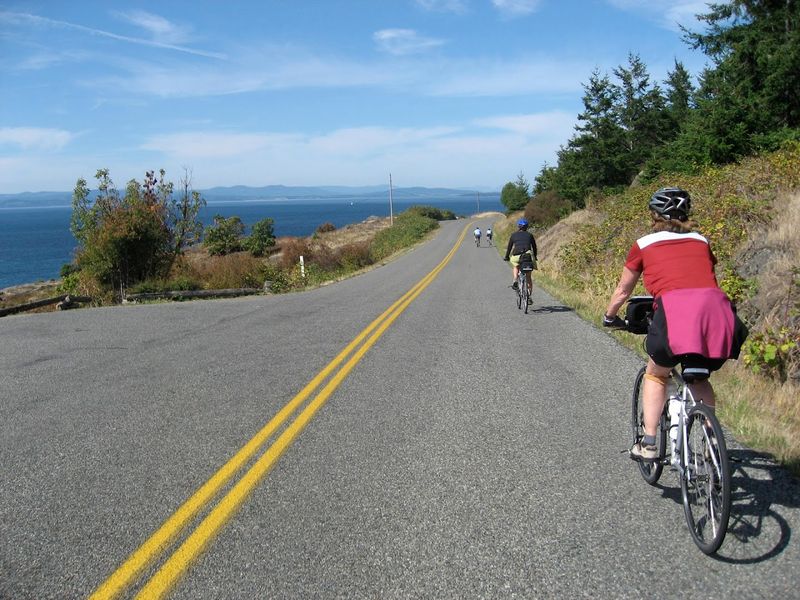
San Juan Island is built for cycling in a way that feels intentional.
The roads are paved, the traffic is light, and the scenery changes every few miles in ways that keep the ride interesting without demanding professional-level fitness. Renting a bike in Friday Harbor is straightforward and affordable.
The loop around the island covers roughly thirty-five miles and takes most people a full day with stops.
That route passes farms, forest stretches, coastal views, and the occasional llama farm, which I mention because it genuinely caught me off guard the first time.
Shorter routes are easy to map from downtown. Riding out to Roche Harbor along West Valley Road is one of the most scenic stretches on the island, with open farmland on one side and glimpses of water on the other.
The elevation is manageable for most riders.
Bike rentals are available near the ferry landing, and some shops offer electric bikes for those who want the views without the full cardio commitment.
Early morning rides are especially good before the summer tourist traffic picks up. Cycling here feels less like exercise and more like an excuse to go slowly through a beautiful place.
Roche Harbor Resort And Village
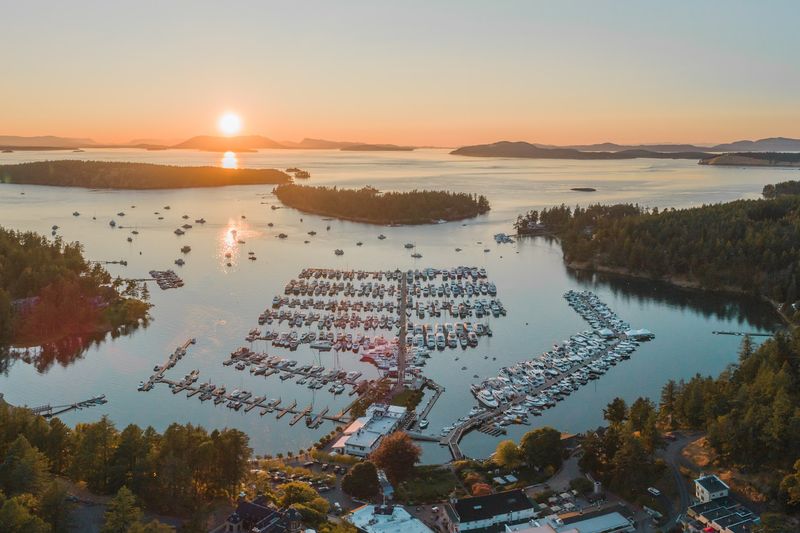
Roche Harbor sits at the northwest corner of San Juan Island and operates on a completely different frequency than the rest of the island.
It is part historic resort, part marina village, and part outdoor sculpture garden, and somehow all of those things coexist without feeling confused.
The Hotel de Haro at the center of the resort dates back to 1886 and has hosted guests including Theodore Roosevelt and John Wayne.
The building has been maintained rather than renovated into blandness, which means the character is still very much intact. The wide porch alone is worth the drive.
The marina at Roche Harbor is one of the most active on the island, with boats arriving from across the Pacific Northwest throughout the summer.
Watching the evening flag ceremony, a nightly tradition at the resort, is oddly moving even if you stumble upon it by accident.
The sculpture park called the Afterglow Vista mausoleum sits in the woods above the resort and is one of the more unusual things you will see on any vacation. It is open to visitors and free to walk through.
Roche Harbor rewards the extra twenty minutes it takes to get there from Friday Harbor.