This Hauntingly Beautiful Sculpture Garden In Wisconsin Feels Like A Secret Few People Know
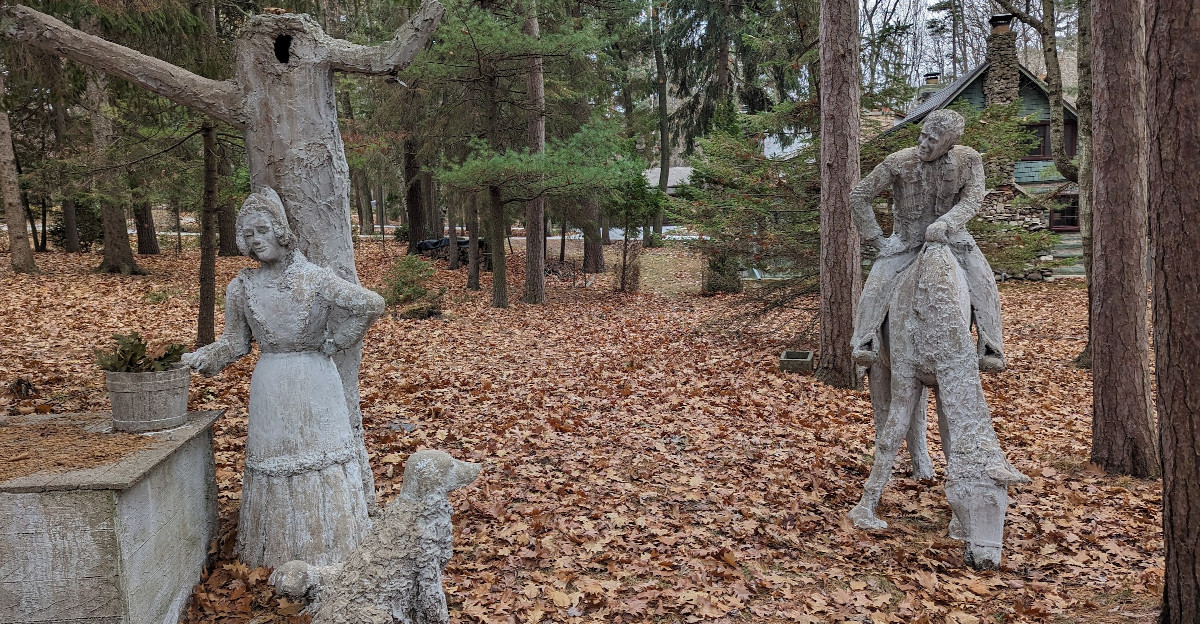
Did that statue just appear between the trees, or was it watching the whole time?
A quiet Wisconsin sculpture garden has a wonderfully eerie way of making concrete figures emerge from the woods when you least expect them.
The path stays peaceful, but the artwork keeps adding little jolts of surprise.
One figure feels solemn. Another is almost funny. Then the forest shifts around them and changes the mood again.
That slow reveal is what makes the place so memorable. Nothing screams for attention. It waits for you to notice.
Honestly, art feels a lot more mysterious when it looks like it wandered into the woods by itself.
A Path Full Of Surprises
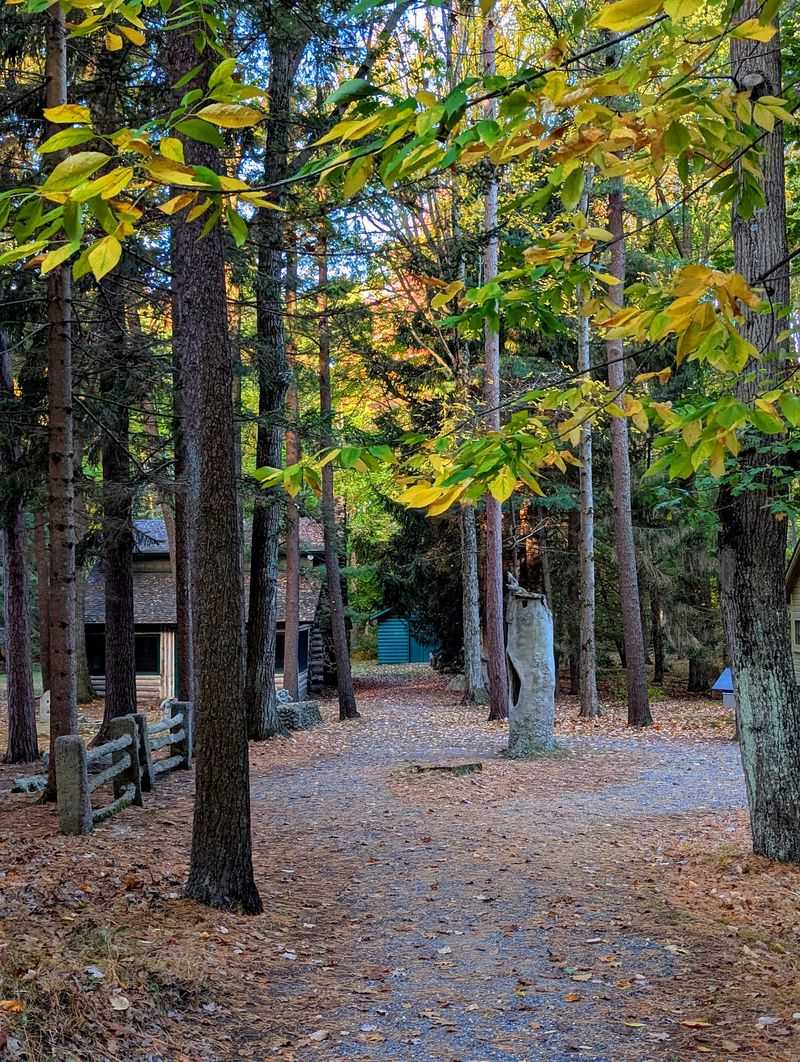
The first surprise is how quietly the sculptures enter my view. I follow the path, then notice a figure standing between trees.
James Tellen Woodland Sculpture Garden sits in the Black River area near Sheboygan, Wisconsin. Its wooded setting makes the art feel tucked away rather than displayed.
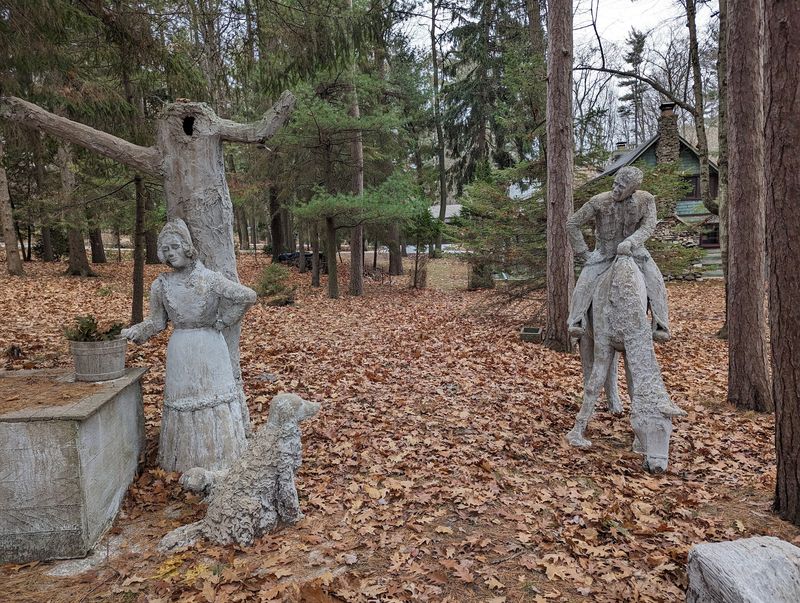
Concrete figures appear around the family’s old summer cabin and along a winding woodland path. Some are life-size, while others form much smaller scenes.
The collection includes more than 30 sculptures created between 1942 and 1957. They are arranged as tableaux rather than lined up like objects in a conventional gallery.
That layout rewards careful looking because smaller scenes can be easy to miss.
The surrounding trees bring shade and help the works blend into the landscape. Because the route follows a natural woodland setting, sturdy footwear is useful after wet weather.
Staying on the established route also helps protect both the ground and the artwork. The sculptures have spent decades outdoors and remain vulnerable to weather and accidental damage.
Find the garden at 5634 Evergreen Dr, Sheboygan, in the Town of Wilson just south of the city.
The Idea Behind The Garden
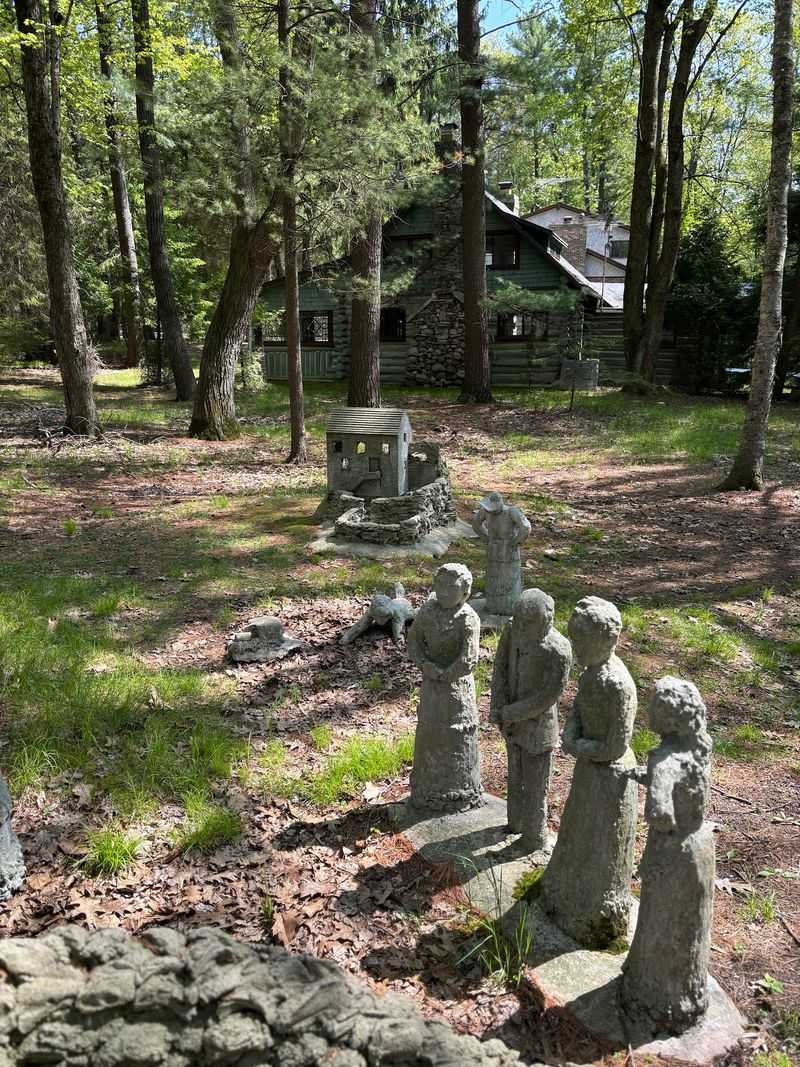
An unexpected idea started this remarkable collection. During a hospital stay in 1942, the garden’s creator noticed religious statues and grottoes across the street at Holy Name Church.
He was 62 when that sight sparked his own project. His earlier work included decorative furniture painting, woodcarving, oil painting, and several years of industrial art classes before he turned to large-scale concrete sculpture.
The sculptures were made for the wooded property around his family’s summer log cabin. That setting was part of the project from the beginning, not a backdrop added later.
Work began in 1942 and continued until his death in 1957. Over those fifteen years, historical, religious, mythic, and humorous subjects spread through the property.
The figures reflect both personal interests and a strong religious outlook. Some scenes carry moral messages, while others lean toward history, folklore, or everyday humor.
Building the cabin had already given him practical experience with concrete before he turned to large outdoor figures.
These pieces were never planned for a formal museum gallery. Their relationship with trees, open ground, and the cabin remains central to how the site is experienced today.
Concrete Made By Hand
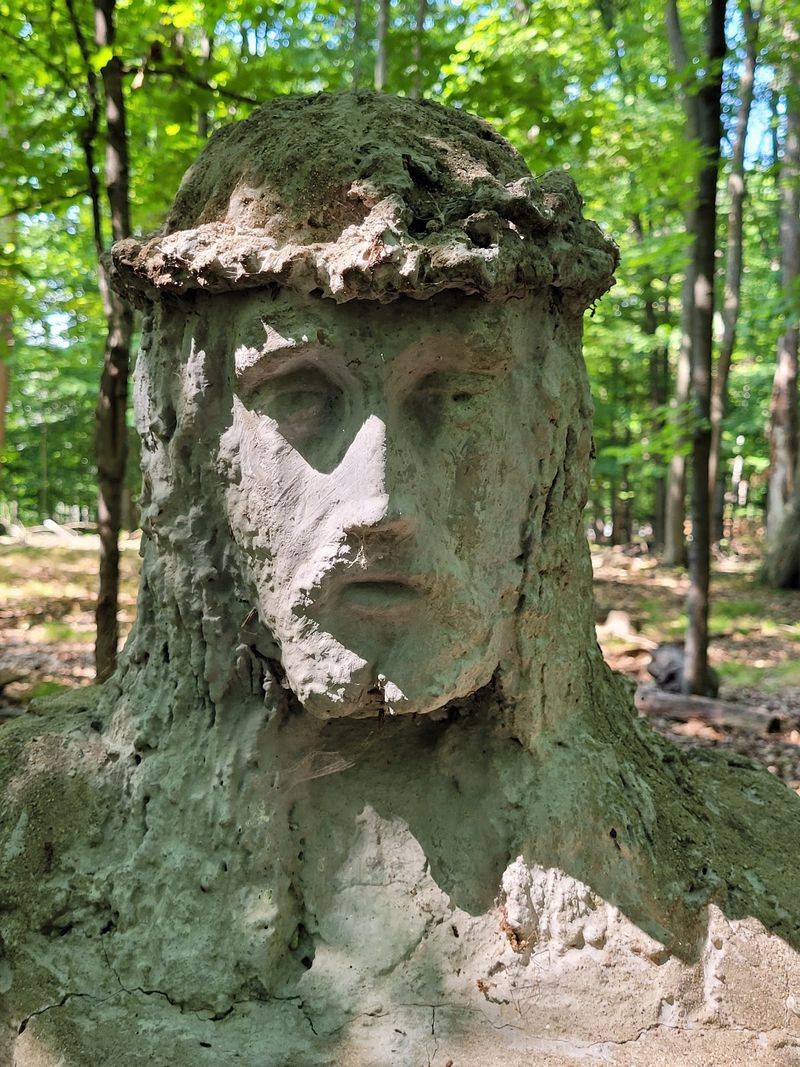
Concrete might sound plain until the construction process comes into focus. Faces, clothing, posture, and textured surfaces required several different stages of work.
The artist often began work during Wisconsin winters. He shaped clay models, made plaster molds, and cast heads in concrete.
Warmer months brought the work outdoors. There, he placed heads onto metal supports and wire mesh forms.
He built the bodies with cement carried in dishpans. That small-scale method produced figures large enough to stand among the trees.
Historical accounts describe repeated attempts at anatomy and facial features as he worked toward greater realism.
Some sculptures retain painted details, while others show more of the concrete surface beneath years of outdoor exposure.
Weathering is part of the site’s history, but preservation work has also been necessary. One religious sculpture required restoration after being badly damaged by a windstorm in 2022.
Because these works remain outdoors in their original setting, viewing without climbing or handling them helps protect fragile surfaces. The material may be ordinary, but the finished environment is anything but.
Characters Around Every Turn
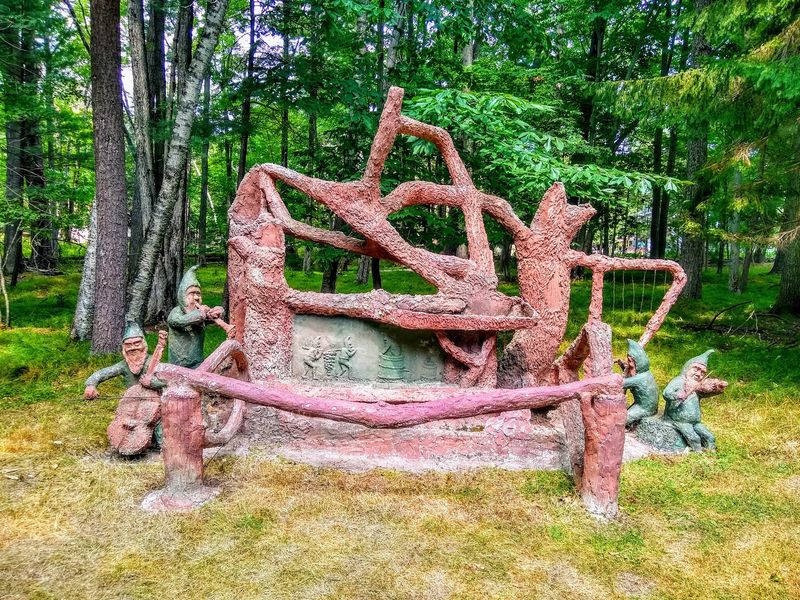
A single theme would have been too tidy for this collection. Religious figures, historical subjects, mythic characters, animals, and humorous scenes all appear along the route.
James Tellen Woodland Sculpture Garden includes both large figures and miniature scenes. That change in scale keeps the path visually unpredictable.
Some works are solemn, while others use humor or theatrical placement. The natural setting acts almost like scenery around the figures.
Faith appears repeatedly throughout the collection. Historical portrayals add another layer, including a scene of a young Abraham Lincoln splitting wood.
Elsewhere, elves and other playful characters shift the mood. Smaller tableaux reward visitors who look beyond the most obvious full-size figures.
Families can turn the walk into a simple spotting game by looking for animals, miniature figures, or changes in scale.
Decades outdoors have left visible weathering on parts of the environment, making ongoing conservation especially important.
The variety rewards an unhurried pace and a closer look at smaller scenes.
The Fallen Log That Looks Real
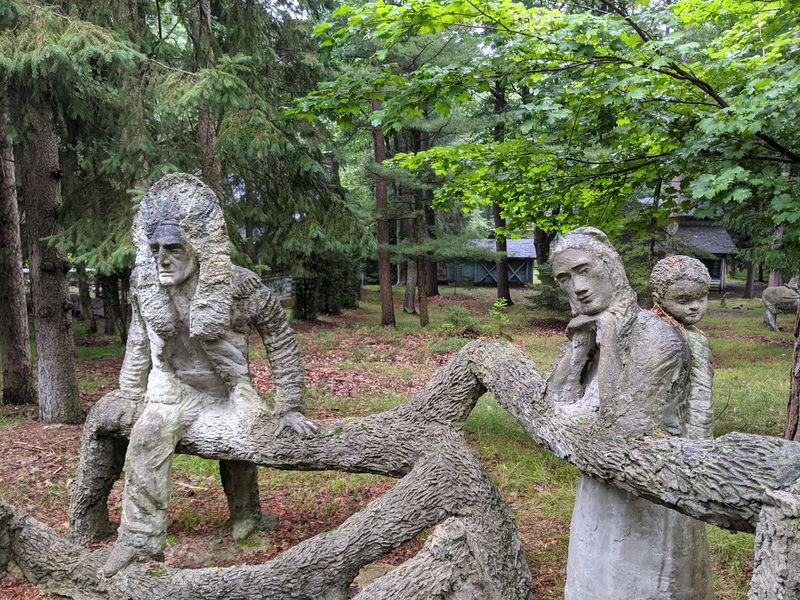
One of the garden’s best-known works asks for a second look. What appears to be a long arrangement of rough fallen timber is actually concrete.
Known as Fallen Log, the work stretches about 65 feet through the garden. Bark-like texture helps the surface imitate weathered wood.
The piece incorporates more than the false logs alone. Bears and human figures are worked into the larger scene, turning the structure into one of the site’s most ambitious tableaux.
According to preservation records, Fallen Log was probably the artist’s first major concrete work. That makes its scale especially striking.
The illusion works because the sculpture shares space with real trees, branches, leaf litter, and changing light. From certain angles, concrete and woodland texture begin to overlap visually.
Nearby scenes continue that same habit of mixing art with the landscape rather than separating the two.
A few steps sideways can completely change how one of these works reads. A figure partly hidden by trees may become obvious, while another disappears into the background.
This section of the garden rewards patience more than speed.
A Woodland Mood All Its Own
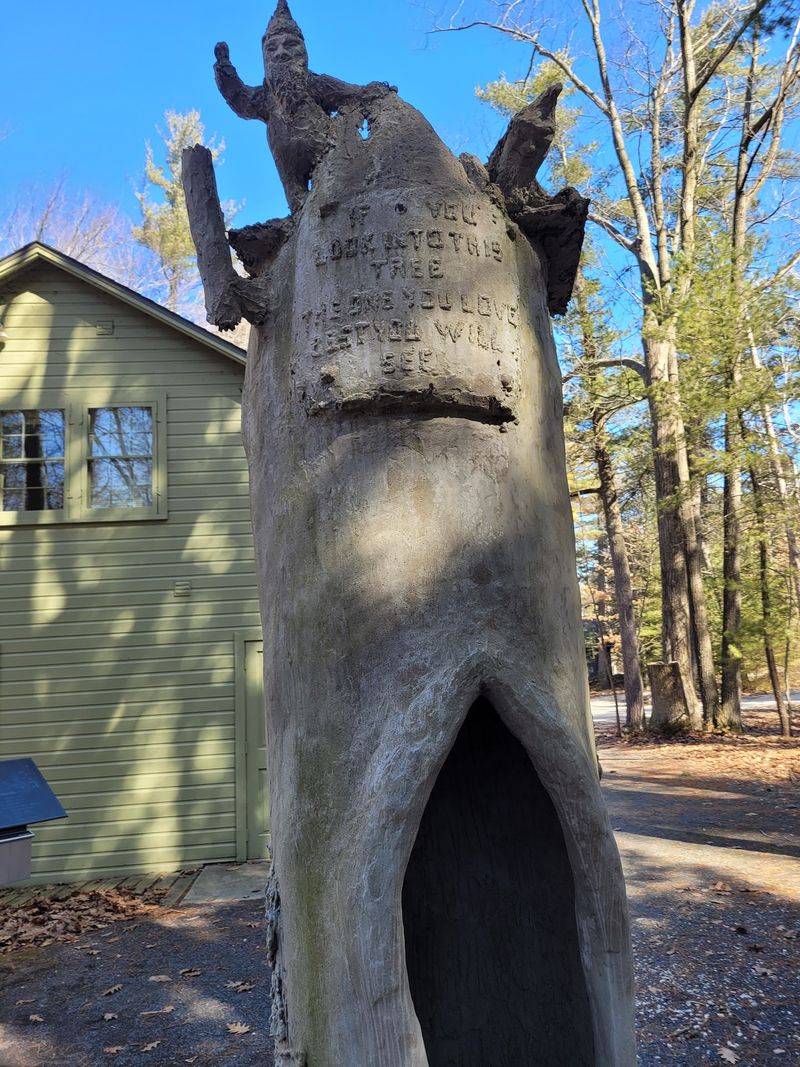
The quiet setting changes the way the sculptures are seen. Without indoor walls, every figure shares space with trees, shadows, weather, and seasonal growth.
At James Tellen Woodland Sculpture Garden, that relationship feels especially strong. A sculpture can look different after a cloud moves overhead or leaves shift around it.
The mood is curious rather than frightening. Weathered concrete and shaded spaces give the place its haunting beauty.
White-tailed deer are among the wildlife seen in the surrounding woods, although sightings are never guaranteed.
Seasonal changes alter the backdrop, with dense foliage giving way to clearer views through the trees later in the year.
That changing environment is part of what separates the garden from an indoor sculpture display.
The site also preserves more than statues. The original log home and the small Brat Haus remain part of the historic environment, helping explain how closely the artwork was tied to family life on the property.
The woods do not compete with the art. They complete the setting the sculptures were made for.
Planning A Comfortable Visit
A little planning leaves more attention for the sculptures. The garden is currently free and open to the public during daylight hours.
There is a small parking area off Evergreen Drive, and the sculpture environment is explored on foot.
The route follows a woodland path rather than a fully paved museum walkway. Natural surfaces can be damp or uneven after rain, so supportive footwear is a practical choice.
The sculptures are concentrated around the cabin and along the wooded route rather than spread across a large formal park.
Visitors with mobility concerns should expect an outdoor woodland setting and plan around natural ground conditions.
The original cabin and other preserved structures are part of the environment, while the sculptures remain the main public experience.
Families are welcome, but the historic concrete works are best treated as artworks rather than climbing features.
The address is 5634 Evergreen Dr, Sheboygan, and the site is open seven days a week during daylight hours.
Simple preparation keeps the experience comfortable without turning it into a complicated outing.
Why The Garden Endures
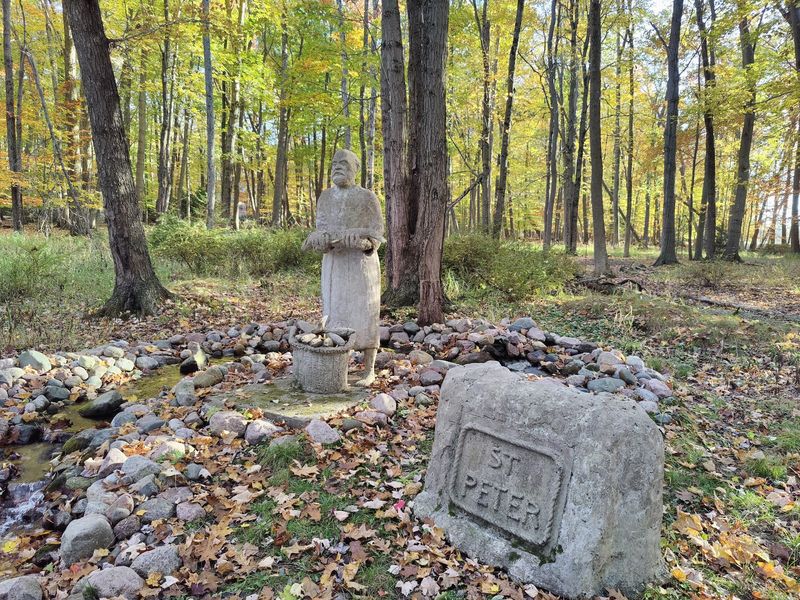
What stays with the site is its patient creativity. More than thirty concrete works grew through fifteen years of effort in one wooded place.
James Tellen Woodland Sculpture Garden remains open for the public to explore. The environment was fully conserved by Kohler Foundation and gifted to the John Michael Kohler Arts Center in 2000.
The Arts Center now manages the property and continues preservation work when outdoor conditions damage individual pieces.
The garden also belongs to Wandering Wisconsin, a network of nine artist-built environments around the state.
That connection places the site within a broader tradition of people transforming homes, yards, and personal property into highly individual works of art.
No background in sculpture is required to understand the appeal. The basic story is easy to follow: one person began making figures beside a family cabin and kept building until an entire environment had taken shape.
The result remains unusual because the art is still experienced where it was made.
A final look toward the trees may reveal one more figure that was easy to miss on the way in.